

Chromatin remodeling dysfunction extends the etiological spectrum of schizophrenia: a case report
Open accessThe DOI matches its Crossref record; 37 of the 37 references it cites were found in a registry or an index.
Abstract
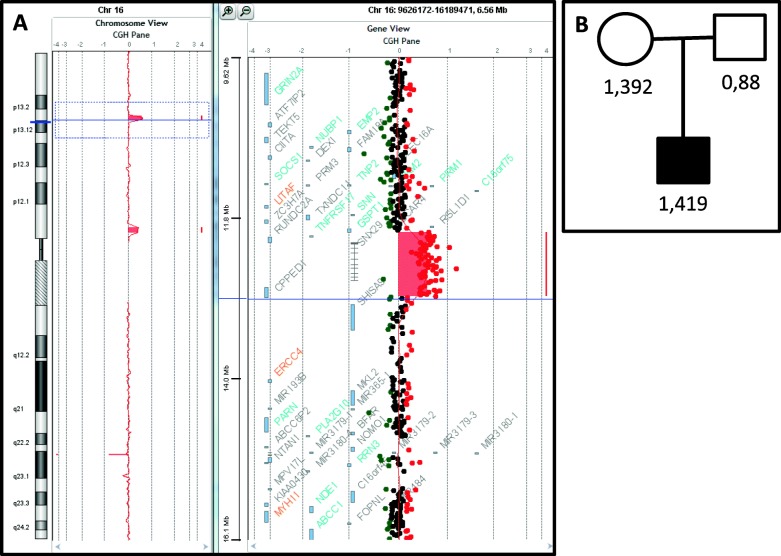
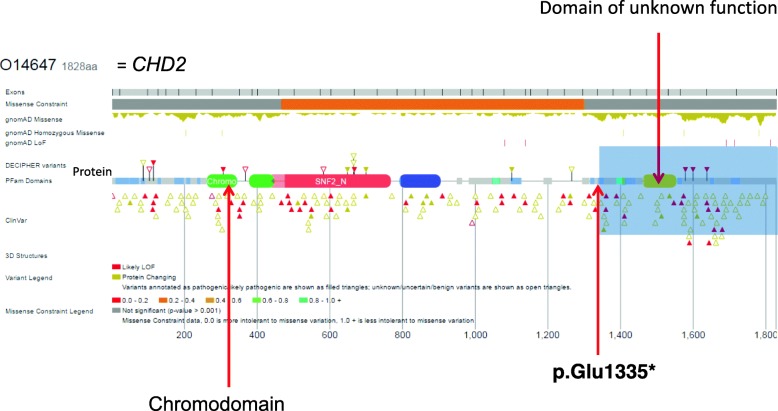
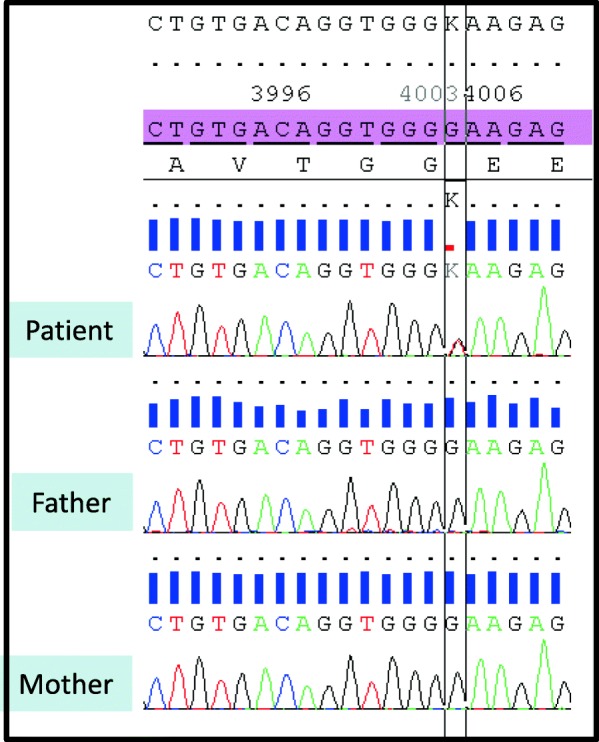
Background: The role of deleterious copy number variations in schizophrenia is well established while data regarding pathogenic variations remain scarce. We report for the first time a case of schizophrenia in a child with a pathogenic mutation of the chromodomain helicase DNA binding protein 2 (CHD2) gene. Case presentation: The proband was the second child of unrelated parents. Anxiety and sleep disorders appeared at the age of 10 months. He presented febrile seizures and, at the age of 8, two generalized tonic-clonic seizures. At the age of 10, emotional withdrawal emerged, along with a flat affect, disorganization and paranoid ideation, without seizures. He began to talk and giggle with self. Eventually, the patient presented daily auditory and visual hallucinations. The diagnosis of childhood onset schizophrenia (DSM V) was then evoked. Brain imaging was unremarkable. Wakefulness electroencephalography showed a normal background and some bilateral spike-wave discharges that did not explain the psychosis features. A comparative genomic hybridization array (180 K, Agilent, Santa Clara, CA, USA) revealed an 867-kb 16p13.3 duplication, interpreted as a variant of unknown significance confirmed by a quantitative PCR that also showed its maternal inheritance. Risperidone (1,5 mg per day), led to clinical improvement. At the age of 11, an explosive relapse of epilepsy occurred with daily seizures of various types. The sequencing of a panel for monogenic epileptic disorders and Sanger sequencing revealed a de novo pathogenic heterozygous transition in CHD2 (NM_001271.3: c.4003G > T). Conclusions: This case underlines that schizophrenia may be, sometimes, underpinned by a Mendelian disease. It addresses the question of systematic genetic investigations in the presence of warning signs such as a childhood onset of the schizophrenia or a resistant epilepsy. It points that, in the absence of pathogenic copy number variation, the investigations should also include a search for pathogenic variations, which means that some of the patients with schizophrenia should benefit from Next Generation Sequencing tools. Last but not least, CHD2 encodes a member of the chromodomain helicase DNA-binding (CHD) family involved in chromatin remodeling. This observation adds schizophrenia to the phenotypic spectrum of chromodomain remodeling disorders, which may lead to innovative therapeutic approaches.
Overview
The claims and statistics of this paper haven’t been checked yet.
Free: it reads the open-access text and checks the first 5 claims that cite a source we can check. Create a free account to check every claim.
Integrity signals
Registry
Cites
Statistics
Figures
Verification
Claims the paper makes
The claims and statistics of this paper haven’t been checked yet.
Free: it reads the open-access text and checks the first 5 claims that cite a source we can check. Create a free account to check every claim.
Claims other papers make about this one
Each is checked against this paper’s own text: does it say what the citing paper says it does?
The cited source says what the claim attributes to it.
In the citing paper
“For the SCZ–GERD pair (n = 377), enrichment was observed in the GO:0030527 (chromatin components) pathway, aligning with known chromatin remodeling mechanisms in schizophrenia [37], [38], although its relevance to SCZ–GERD comorbidity is newly established.”
From The hidden genetic and microbial networks connecting neuropsychiatric and digestive disorders (2025) · cites this paper as [38]
Self-check
Percentages, sums and reported differences re-computed from the paper’s own numbers.
The self-check needs the paper’s full text.
Citations
Cites
Biological insights from 108 schizophrenia-associated genetic loci
Schizophrenia Working Group of the Psychiatric Genomics Consortium (2014) · Nature · doi:10.1038/nature13595 · Cited by 7,577
DECIPHER: Database of Chromosomal Imbalance and Phenotype in Humans Using Ensembl Resources
Firth, H. V., Richards, S. M., Bevan, A. P., Clayton, S., Corpas, M., Rajan, D., Vooren, S. V., Moreau, Y., Pettett, R. M., & Carter, N. P. (2009) · The American Journal of Human Genetics · doi:10.1016/j.ajhg.2009.03.010 · Cited by 1,990
Prevalence and architecture of de novo mutations in developmental disorders
Study, D. D. D. (2017) · Nature · doi:10.1038/nature21062 · Cited by 1,480
A polygenic burden of rare disruptive mutations in schizophrenia
Purcell, S. M., Moran, J. L., Fromer, M., Ruderfer, D., Solovieff, N., Roussos, P., O’Dushlaine, C., Chambert, K., Bergen, S. E., Kähler, A., et al. (2014) · Nature · doi:10.1038/nature12975 · Cited by 1,385
Contribution of copy number variants to schizophrenia from a genome-wide study of 41,321 subjects
Marshall, C. R., Howrigan, D. P., Merico, D., Thiruvahindrapuram, B., Wu, W., Greer, D. S., Antaki, D., Shetty, A., Holmans, P. A., Pinto, D., et al. (2017) · Nature Genetics · doi:10.1038/ng.3725 · Cited by 1,058
Rauch, A., Wieczorek, D., Graf, E., Wieland, T., Endele, S., Schwarzmayr, T., Albrecht, B., Bartholdi, D., Beygo, J., Di Donato, N., et al. (2012) · The Lancet · doi:10.1016/s0140-6736(12)61480-9 · Cited by 1,041
CNVs conferring risk of autism or schizophrenia affect cognition in controls
Stefansson, H., Meyer-Lindenberg, A., Steinberg, S., Magnusdottir, B., Morgen, K., Arnarsdottir, S., Bjornsdottir, G., Walters, G. B., Jonsdottir, G. A., Doyle, O. M., et al. (2014) · Nature · doi:10.1038/nature12818 · Cited by 699
Targeted resequencing in epileptic encephalopathies identifies de novo mutations in CHD2 and SYNGAP1
Carvill, G. L., Heavin, S. B., Yendle, S. C., McMahon, J. M., O'Roak, B. J., Cook, J., Khan, A., Dorschner, M. O., Weaver, M., Calvert, S., et al. (2013) · Nature Genetics · doi:10.1038/ng.2646 · Cited by 687
Genome-wide association analysis identifies 30 new susceptibility loci for schizophrenia
Li, Z., Chen, J., Yu, H., He, L., Xu, Y., Zhang, D., Yi, Q., Li, C., Li, X., Shen, J., et al. (2017) · Nature Genetics · doi:10.1038/ng.3973 · Cited by 442
Recurrent de novo mutations implicate novel genes underlying simplex autism risk
O'Roak, B. J., Stessman, H. A., Boyle, E. A., Witherspoon, K. T., Martin, B., Lee, C., Vives, L., Baker, C., Hiatt, J. B., Nickerson, D. A., et al. (2014) · Nature Communications · doi:10.1038/ncomms6595 · Cited by 336
Developmental brain dysfunction: revival and expansion of old concepts based on new genetic evidence
Moreno-De-Luca, A., Myers, S. M., Challman, T. D., Moreno-De-Luca, D., Evans, D. W., & Ledbetter, D. H. (2013) · The Lancet Neurology · doi:10.1016/s1474-4422(13)70011-5 · Cited by 330
Systematic resequencing of X-chromosome synaptic genes in autism spectrum disorder and schizophrenia
Piton, A., Gauthier, J., Hamdan, F. F., Lafrenière, R. G., Yang, Y., Henrion, E., Laurent, S., Noreau, A., Thibodeau, P., Karemera, L., et al. (2011) · Molecular Psychiatry · doi:10.1038/mp.2010.54 · Cited by 312
Kushima, I., Aleksic, B., Nakatochi, M., Shimamura, T., Okada, T., Uno, Y., Morikawa, M., Ishizuka, K., Shiino, T., Kimura, H., et al. (2018) · Cell Reports · doi:10.1016/j.celrep.2018.08.022 · Cited by 251
Genome-wide nucleosome specificity and function of chromatin remodellers in ES cells
de Dieuleveult, M., Yen, K., Hmitou, I., Depaux, A., Boussouar, F., Dargham, D. B., Jounier, S., Humbertclaude, H., Ribierre, F., Baulard, C., et al. (2016) · Nature · doi:10.1038/nature16505 · Cited by 221
Suls, A., Jaehn, J. A., Kecskés, A., Weber, Y., Weckhuysen, S., Craiu, D. C., Siekierska, A., Djémié, T., Afrikanova, T., Gormley, P., et al. (2013) · The American Journal of Human Genetics · doi:10.1016/j.ajhg.2013.09.017 · Cited by 219
Exonic Mosaic Mutations Contribute Risk for Autism Spectrum Disorder
Krupp, D. R., Barnard, R. A., Duffourd, Y., Evans, S. A., Mulqueen, R. M., Bernier, R., Rivière, J.-B., Fombonne, E., & O’Roak, B. J. (2017) · The American Journal of Human Genetics · doi:10.1016/j.ajhg.2017.07.016 · Cited by 204
Diverse types of genetic variation converge on functional gene networks involved in schizophrenia
Gilman, S. R., Chang, J., Xu, B., Bawa, T. S., Gogos, J. A., Karayiorgou, M., & Vitkup, D. (2012) · Nature Neuroscience · doi:10.1038/nn.3261 · Cited by 200
The many colours of chromodomains
Brehm, A., Tufteland, K. R., Aasland, R., & Becker, P. B. (2004) · BioEssays · doi:10.1002/bies.10392 · Cited by 176
High-resolution copy number variation analysis of schizophrenia in Japan
Kushima, I., Aleksić, B., Nakatochi, M., Shimamura, T., Shiino, T., Yoshimi, A., Kimura, H., Takasaki, Y., Wang, C., Xing, J., et al. (2016) · Molecular Psychiatry · doi:10.1038/mp.2016.88 · Cited by 141
High rate of disease-related copy number variations in childhood onset schizophrenia
Ahn, K., Gotay, N., Andersen, T. M., Anvari, A. A., Gochman, P., Lee, Y., Sanders, S., Guha, S., Darvasi, A., Glessner, J. T., et al. (2014) · Molecular Psychiatry · doi:10.1038/mp.2013.59 · Cited by 132
CHD2 myoclonic encephalopathy is frequently associated with self-induced seizures
Thomas, R. H., Zhang, L. M., Carvill, G. L., Archer, J. S., Heavin, S. B., Mandelstam, S. A., Craiu, D., Berkovic, S. F., Gill, D. S., Mefford, H. C., et al. (2015) · Neurology · doi:10.1212/wnl.0000000000001305 · Cited by 100
Chénier, S., Yoon, G., Argiropoulos, B., Lauzon, J., Laframboise, R., Ahn, J. W., Ogilvie, C. M., Lionel, A. C., Marshall, C. R., Vaags, A. K., et al. (2014) · Journal of Neurodevelopmental Disorders · doi:10.1186/1866-1955-6-9 · Cited by 94
Common polygenic variation and risk for childhood-onset schizophrenia
Ahn, K., An, S. S., Shugart, Y. Y., & Rapoport, J. L. (2016) · Molecular Psychiatry · doi:10.1038/mp.2014.158 · Cited by 74
CHD2 mutations in Lennox–Gastaut syndrome
Lund, C., Brodtkorb, E., Øye, A.-M., Røsby, O., & Selmer, K. K. (2014) · Epilepsy & Behavior · doi:10.1016/j.yebeh.2014.02.005 · Cited by 74
Meganathan, K., Lewis, E. M. A., Gontarz, P. M., Liu, S., Stanley, E. G., Elefanty, A. G., Huettner, J. E., Zhang, B., & Kroll, K. L. (2017) · Proceedings of the National Academy of Sciences · doi:10.1073/pnas.1712365115 · Cited by 68
Chromatin Remodeling Proteins in Epilepsy: Lessons From CHD2-Associated Epilepsy
Lamar, K.-M. J., & Carvill, G. L. (2018) · Frontiers in Molecular Neuroscience · doi:10.3389/fnmol.2018.00208 · Cited by 65
Human CHD2 Is a Chromatin Assembly ATPase Regulated by Its Chromo- and DNA-binding Domains
Liu, J. C., Ferreira, C. G., & Yusufzai, T. M. (2014) · Journal of Biological Chemistry · doi:10.1074/jbc.m114.609156 · Cited by 55
Semba, Y., Harada, A., Maehara, K., Oki, S., Meno, C., Ueda, J., Yamagata, K., Suzuki, A., Onimaru, M., Nogami, J., et al. (2017) · Nucleic Acids Research · doi:10.1093/nar/gkx475 · Cited by 42
Jensen, M., Kooy, R. F., Simon, T. J., Reyniers, E., Girirajan, S., & Tassone, F. (2017) · European Journal of Medical Genetics · doi:10.1016/j.ejmg.2017.11.016 · Cited by 25
Verhoeven, W. M. A., Egger, J. I. M., Knegt, A. C., Zuydam, J., & Kleefstra, T. (2016) · Neuropsychiatric Disease and Treatment · doi:10.2147/ndt.s102272 · Cited by 21
Bernardo, P., Galletta, D., Iasevoli, F., D’Ambrosio, L., Troisi, S., Gennaro, E., Zara, F., Striano, S., de Bartolomeis, A., & Coppola, A. (2017) · Seizure · doi:10.1016/j.seizure.2017.09.001 · Cited by 18
Pinto, A. M., Bianciardi, L., Mencarelli, M. A., Imperatore, V., Marco, C. D., Furini, S., Suppiej, A., Salviati, L., Tenconi, R., Ariani, F., et al. (2016) · Brain and Development · doi:10.1016/j.braindev.2015.12.006 · Cited by 16
Lebrun, N., Parent, P., Gendras, J., Billuart, P., Poirier, K., & Bienvenu, T. (2017) · Clinical Genetics · doi:10.1111/cge.13073 · Cited by 15
Vorstman, J. A. S., Loohuis, L. M. O., GROUP Investigators, Kahn, R. S., Ophoff, R. A., GROUP investigators, Alizadeh, B. Z., Bartels‐Velthuis, A. A., van Beveren, N. J. M., Bruggeman, R., et al. (2018) · Human Molecular Genetics · doi:10.1093/hmg/ddy175 · Cited by 13
Nieto‐Estévez, V., & Hsieh, J. (2018) · Neuron · doi:10.1016/j.neuron.2018.11.036 · Cited by 13
16q12.2q21: A new susceptibility locus for schizophrenia?
Poisson, A., Schluth‐Bolard, C., Martin, B., Babinet, M.-N., Sanlaville, D., & Demily, C. (2016) · Schizophrenia Research · doi:10.1016/j.schres.2016.09.007 · Cited by 5
Self-citationAn ambiguous psychiatric diagnosis resolved by genetic investigations
Poisson, A., Favre, É., Peyroux, É., Nicolas, A., Schluth‐Bolard, C., & Demily, C. (2017) · Schizophrenia Research · doi:10.1016/j.schres.2017.09.022 · Cited by 2
Self-citation
Cited by
Maria, B. D., Balestrini, S., Mei, D., Melani, F., Pellacani, S., Pisano, T., Rosati, A., Scaturro, G. M., Giordano, L., Cantalupo, G., et al. (2021) · American Journal of Medical Genetics Part A · doi:10.1002/ajmg.a.62548 · Cited by 31
Genetic insights into childhood-onset schizophrenia: The yield of clinical exome sequencing
Alkelai, A., Greenbaum, L., Shohat, S., Povysil, G., Malakar, A., Ren, Z., Motelow, J. E., Schechter, T., Draiman, B., Chitrit-Raveh, E., et al. (2023) · Schizophrenia Research · doi:10.1016/j.schres.2022.12.033 · Cited by 23
L1 Retrotransposons: A Potential Endogenous Regulator for Schizophrenia
Jahangir, M., Li, L., Zhou, J., Lang, B., & Wang, X. (2022) · Frontiers in Genetics · doi:10.3389/fgene.2022.878508 · Cited by 13
Fu, F., Li, R., Yu, Q., Dang, X., Yan, S., Zhou, H., Cheng, K., Huang, R., Wang, Y., Zhang, Y., et al. (2022) · Genes · doi:10.3390/genes13122365 · Cited by 10
Trakadis, Y. J., Accogli, A., Qi, B., Bloom, D., Joober, R., Levy, E., & Tabbane, K. (2021) · Neurogenetics · doi:10.1007/s10048-021-00664-3 · Cited by 8
Metadata
- Authors
- Poisson, A., Chatron, N., Labalme, A., Fourneret, P., Ville, D., Mathieu, M. L., Sanlaville, D., Demily, C., & Lesca, G.
- Affiliations
- Lyon 1 Université (FR)
- Corresponding author
- Poisson, Alice
- ORCID
- Venue
- BMC Medical Genetics
- Published
- 2020-01-08
- Volume
- 21
- Issue
- 1
- Pages
- 10-10
- ISSN
- 1471-2350 (ISSN-L)
- PMC
- PMC6950831
- OpenAlex
- W3001916643
- Semantic Scholar
- 29f6d9d6036caf286740be939452f1be2a4114b2
- Cited by
- 16
- References
- 37
- Citations by year
- 2026: 2 · 2025: 4 · 2024: 2 · 2023: 2 · 2022: 3 · 2021: 2 · 2020: 1
- FWCI
- 1.46
- Type
- journal article
- Language
- en
- Open access
- gold
- doi.org
- Licence
- cc-by
- creativecommons.org/licenses/by/4.0/ (tdm)
- creativecommons.org/licenses/by/4.0/ (vor)
- Locations
- BMC Medical Genetics (publishedVersion, cc-by)
- PubMed Central (publishedVersion, cc-by)
- PubMed (publishedVersion)
- DOAJ (DOAJ: Directory of Open Access Journals) (submittedVersion)
- Topics
- Health Sciences › Medicine › Psychiatry and Mental health › Schizophrenia research and treatment
- Life Sciences › Biochemistry, Genetics and Molecular Biology › Genetics › Genomic variations and chromosomal abnormalities
- Life Sciences › Biochemistry, Genetics and Molecular Biology › Genetics › Genetics and Neurodevelopmental Disorders
- Keywords
- schizophrenia, CHD2, chromatin remodeling, childhood schizophrenia, de novo mutations, variants of uncertain significance, epilepsy, febrile seizures, paranoid ideation, genetic diagnosis
- MeSH terms
- Brain, Child, Chromatin, Seizures, Febrile, DNA-Binding Proteins, Electroencephalography, Female, Heterozygote, Humans, Male, Mutation, Phenotype, Schizophrenia, Chromatin Assembly and Disassembly, DNA Copy Number Variations
About these checks
Registry, retraction, Cites and statistics results are computed, not judged, with one exception: a printed reference that no index lists is read once by a model before it counts as a citation error. Claims are extracted by a model and kept only when their quote appears verbatim in the text; each cited source is then checked, with a model’s help, for whether it says what the claim relies on. Those verdicts can be wrong — read the claim’s quote and the cited source before relying on one.
Statistics and arithmetic are recomputed, not judged.
Confidence bands are shown only for fields calibrated on our annotated test set. None is calibrated yet, so no band is shown.
What counts as a claim ›How we measure confidence ›How we check this ›
Are you an author, or do you see a problem with this page? Request a review
Data sources
Bibliographic data: Semantic Scholar, OpenAlex, Crossref.
Contains information from the Semantic Scholar Academic Graph Datasets, made available under the ODC Attribution License (ODC-BY 1.0).
Semantic Scholar’s data is described in: Kinney, R., et al. (2023). The Semantic Scholar Open Data Platform. arXiv:2301.10140.
