

The DOI matches its Crossref record; 1 of the 1 references it cites were found in a registry or an index.
Applicability of the low-grade inflammation score in predicting 90-day functional outcomes after acute ischemic stroke
Open accessPublished version of a preprint
Abstract
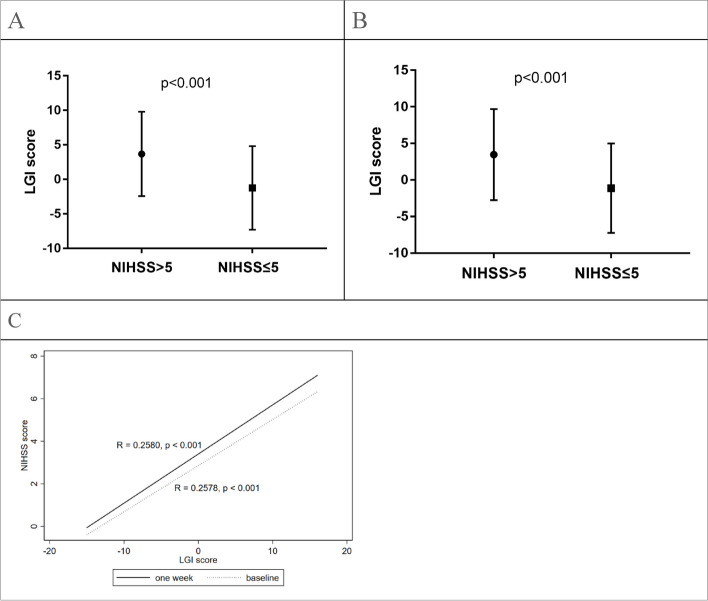
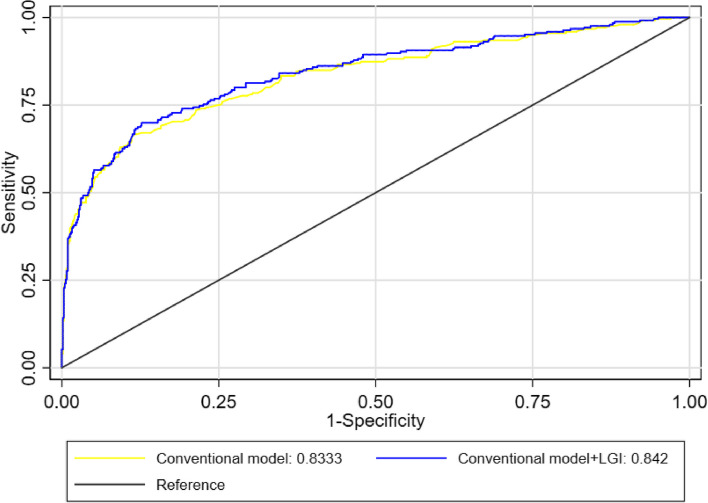
Background and purpose: The low-grade inflammation (LGI) score, a novel indicator of chronic LGI, combines C-reactive protein (CRP), leukocyte counts, the neutrophil/lymphocyte ratio (NLR), and the platelet (PLT) count to predict outcomes of patients with various conditions, such as cardiovascular diseases, cancers, and neurodegenerative diseases. However, few studies have examined the role of the LGI score in predicting functional outcomes of patients with ischemic stroke. The present study aimed to evaluate the association between the LGI score and functional outcomes of patients with ischemic stroke. Methods: A total of 1,215 patients were screened in the present study, and 876 patients were finally included in this retrospective observational study based on the inclusion and exclusion criteria. Blood tests were conducted within 24 h of admission. Severity of ischemic stroke was assessed using the NIHSS score with severe stroke denoted by NIHSS > 5. Early neurological deterioration (END) was defined as an increment in the total NIHSS score of ≥ 2 points within 7 days after admission. Patient outcomes were assessed on day 90 after stroke onset using the modified Rankin Scale (mRS). Results: The LGI score was positively correlated with baseline and the day 7 NIHSS scores (R2 = 0.119, p < 0.001;R2 = 0.123, p < 0.001). Multivariate regression analysis showed that the LGI score was an independent predictor of stroke severity and END. In the crude model, the LGI score in the fourth quartile was associated with a higher risk of poor outcomes on day 90 compared with the LGI score in the first quartile (OR = 5.02, 95% CI: 3.09–8.14, p for trend < 0.001). After adjusting for potential confounders, the LGI score in the fourth quartile was independently associated with poor outcomes on day 90 (OR = 2.65, 95% CI: 1.47–4.76, p for trend = 0.001). Finally, the ROC curve analysis showed an AUC of 0.682 for poor outcomes on day 90 after stroke onset. Conclusion: The LGI score is strongly correlated with the severity of acute ischemic stroke and that the LGI score might be a good predictor for poor outcomes on day 90 in patients with acute ischemic stroke.
Overview
The claims and statistics of this paper haven’t been checked yet.
Run the check — free, no account needed. It reads the open-access text and checks the sources it cites.
Integrity signals
Registry
Cites
Statistics
Figures
Verification
Claims the paper makes
The claims and statistics of this paper haven’t been checked yet.
Run the check — free, no account needed. It reads the open-access text and checks the sources it cites.
Self-check
Percentages, sums and reported differences re-computed from the paper’s own numbers.
The self-check needs the paper’s full text.
Citations
Cites
Feigin, V. L., Forouzanfar, M. H., Krishnamurthi, R., Mensah, G. A., Connor, M., Bennett, D. A., Moran, A. E., Sacco, R. L., Anderson, L., Truelsen, T., et al. (2014) · The Lancet · doi:10.1016/s0140-6736(13)61953-4 · Cited by 3,899 · cited 1×
“Stroke is a leading cause of disability and death world-wide [1, 2].”
Background
Research works printed but not linked: 50
- Zhou M, Wang H, Zhu J, Chen W, Wang L, Liu S, Li Y, Wang L, Liu Y, Yin P, et al. Cause-specific mortality for 240 causes in China during 1990–2013: a systematic subnational analysis for the Global Burden of Disease Study 2013. Lancet. 2016;387(10015):251–72. · DOI
- GBD 2016 Neurology Collaborators. Global, regional, and national burden of neurological disorders, 1990–2016: a systematic analysis for the global burden of disease study 2016. Lancet Neurol. 2019;18(5):459–80. · DOI · Paper page
- Yang G, Wang Y, Zeng Y, Gao GF, Liang X, Zhou M, Wan X, Yu S, Jiang Y, Naghavi M, et al. Rapid health transition in China, 1990–2010: findings from the global burden of disease study 2010. Lancet. 2013;381(9882):1987–2015. · DOI
- Dong X, Gao J, Su Y, Wang Z. Nanomedicine for ischemic stroke. Int J Mol Sci. 2020;21(20):7600. · DOI
- Maida CD, Norrito RL, Daidone M, Tuttolomondo A, Pinto A. Neuroinflammatory mechanisms in ischemic stroke: focus on cardioembolic stroke, background, and therapeutic approaches. Int J Mol Sci. 2020;21(18):6454. · DOI
- Chauhan G, Debette S. Genetic risk factors for ischemic and hemorrhagic stroke. Curr Cardiol Rep. 2016;18(12):124. · DOI
- Macrez R, Ali C, Toutirais O, Le Mauff B, Defer G, Dirnagl U, Vivien D. Stroke and the immune system: from pathophysiology to new therapeutic strategies. Lancet Neurol. 2011;10(5):471–80. · DOI
- Song SY, Zhao XX, Rajah G, Hua C, Kang RJ, Han YP, Ding YC, Meng R. Clinical significance of baseline neutrophil-to-lymphocyte ratio in patients with ischemic stroke or hemorrhagic stroke: an updated meta-analysis. Front Neurol. 2019;10:1032. · DOI
- Semerano A, Laredo C, Zhao Y, Rudilosso S, Renú A, Llull L, Amaro S, Obach V, Planas AM, Urra X, et al. Leukocytes, collateral circulation, and reperfusion in ischemic stroke patients treated with mechanical thrombectomy. Stroke. 2019;50(12):3456–64. · DOI
- Shi K, Tian DC, Li ZG, Ducruet AF, Lawton MT, Shi FD. Global brain inflammation in stroke. Lancet Neurol. 2019;18(11):1058–66. · DOI
- Tsuyama J, Nakamura A, Ooboshi H, Yoshimura A, Shichita T. Pivotal role of innate myeloid cells in cerebral post-ischemic sterile inflammation. Semin Immunopathol. 2018;40(6):523–38. · DOI
- Malone K, Amu S, Moore AC, Waeber C. The immune system and stroke: from current targets to future therapy. Immunol Cell Biol. 2019;97(1):5–16. · DOI
- Jian Z, Liu R, Zhu X, Smerin D, Zhong Y, Gu L, Fang W, Xiong X. The involvement and therapy target of immune cells after ischemic stroke. Front Immunol. 2019;10:2167. · DOI
- Tang H, Yan S, Wu C, Zhang Y. Characteristics and outcomes of intravenous thrombolysis in mild ischemic stroke patients. Front Neurol. 2021;12:744909. · DOI
- Kenmuir CL, Hammer M, Jovin T, Reddy V, Wechsler L, Jadhav A. Predictors of outcome in patients presenting with acute ischemic stroke and mild stroke scale scores. J Stroke Cerebrovasc Dis. 2015;24(7):1685–9. · DOI
- Liu YL, Wu ZQ, Qu JF, Qiu DH, Luo GP, Yin HP, Fang XW, Wang F, Chen YK. High neutrophil-to-lymphocyte ratio is a predictor of poor short-term outcome in patients with mild acute ischemic stroke receiving intravenous thrombolysis. Brain Behav. 2020;10(12):e1857.
- Huang G, Chen H, Wang Q, Hong X, Hu P, Xiao M, Shu M, He J. High platelet-to-lymphocyte ratio are associated with post-stroke depression. J Affect Disord. 2019;246:105–11. · DOI
- Arenillas JF, Alvarez-Sabín J, Molina CA, Chacón P, Montaner J, Rovira A, Ibarra B, Quintana M. C-reactive protein predicts further ischemic events in first-ever transient ischemic attack or stroke patients with intracranial large-artery occlusive disease. Stroke. 2003;34(10):2463–8. · DOI
- Gao B, Pan W, Hu X, Huang H, Ren J, Yang C, Zhou X, Zeng T, Hu J, Li S, et al. Neutrophil-related ratios predict the 90-day outcome in acute ischemic stroke patients after intravenous thrombolysis. Front Physiol. 2021;12:670323. · DOI
- Deng QW, Wang H, Sun CZ, Xing FL, Zhang HQ, Zuo L, Gu ZT, Yan FL. Triglyceride to high-density lipoprotein cholesterol ratio predicts worse outcomes after acute ischaemic stroke. Eur J Neurol. 2017;24(2):283–91. · DOI
- Chen Y, Xiao Y, Lin Z, Xiao X, He C, Bihl JC, Zhao B, Ma X, Chen Y. The role of circulating platelets microparticles and platelet parameters in acute ischemic stroke patients. J Stroke Cerebrovasc Dis. 2015;24(10):2313–20. · DOI
- Engström G, Hedblad B, Stavenow L, Jonsson S, Lind P, Janzon L, Lindgärde F. Incidence of obesity-associated cardiovascular disease is related to inflammation-sensitive plasma proteins: a population-based cohort study. Arterioscler Thromb Vasc Biol. 2004;24(8):1498–502. · DOI
- Coussens LM, Werb Z. Inflammation and cancer. Nature. 2002;420(6917):860–7. · DOI · Paper page
- Samuels MA. Inflammation and neurological disease. Curr Opin Neurol. 2004;17(3):307–9. · DOI
- Spencer SJ, Mouihate A, Pittman QJ. Peripheral inflammation exacerbates damage after global ischemia independently of temperature and acute brain inflammation. Stroke. 2007;38(5):1570–7. · DOI
- Hoekstra SP, Bishop NC, Leicht CA. Elevating body termperature to reduce low-grade inflammation: a welcome strategy for those unable to exercise? Exerc Immunol Rev. 2020;26:42–55.
- Adams HJ, Bendixen BH, Kappelle LJ, Biller J, Love BB, Gordon DL, Marsh ER. Classification of subtype of acute ischemic stroke. Definitions for use in a multicenter clinical trial TOAST. Trial of Org 10172 in acute stroke treatment. Stroke. 1993;24(1):35–41. · DOI
- Bonaccio M, Di Castelnuovo A, Pounis G, De Curtis A, Costanzo S, Persichillo M, Cerletti C, Donati MB, de Gaetano G, Iacoviello L. A score of low-grade inflammation and risk of mortality: prospective findings from the Moli-sani study. Haematologica. 2016;101(11):1434–41. · DOI
- Hou D, Wang C, Luo Y, Ye X, Han X, Feng Y, Zhong P, Wu D. Systemic immune-inflammation index (SII) but not platelet-albumin-bilirubin (PALBI) grade is associated with severity of acute ischemic stroke (AIS). Int J Neurosci. 2021;131(12):1203–8. · DOI · Paper page
- Hu W, Liu D, Li Q, Wang L, Tang Q, Wang G. Decreasing serum 25-hydroxyvitamin D levels and risk of early neurological deterioration in patients with ischemic stroke. Brain Behav. 2019;9(3):e1227.
- Churilov L, Arnup S, Johns H, Leung T, Roberts S, Campbell BC, Davis SM, Donnan GA. An improved method for simple, assumption-free ordinal analysis of the modified Rankin Scale using generalized odds ratios. Int J Stroke. 2014;9(8):999–1005. · DOI
- Tsivgoulis G, Saqqur M, Sharma VK, Brunser A, Eggers J, Mikulik R, Katsanos AH, Sergentanis TN, Vadikolias K, Perren F, et al. Timing of recanalization and functional recovery in acute ischemic stroke. J Stroke. 2020;22(1):130–40. · DOI · Paper page
- Li J, Pan Y, Xu J, Li S, Wang M, Quan K, Meng X, Li H, Lin J, Wang Y, et al. Residual inflammatory risk predicts poor prognosis in acute ischemic stroke or transient ischemic attack patients. Stroke. 2021;52(9):2827–36. · DOI
- Li LH, Chen CT, Chang YC, Chen YJ, Lee IH, How CK. Prognostic role of neutrophil-to-lymphocyte ratio, platelet-to-lymphocyte ratio, and systemic immune inflammation index in acute ischemic stroke: a STROBE-compliant retrospective study. Medicine (Baltimore). 2021;100(25):e26354. · DOI
- Tian C, Ji Z, Xiang W, Huang X, Wang S, Wu Y, Pan S, Zhou L, Deng Z. Association of lower leukocyte count before thrombolysis with early neurological improvement in acute ischemic stroke patients. J Clin Neurosci. 2018;56:44–9. · DOI
- Qu X, Shi J, Cao Y, Zhang M, Xu J. Prognostic value of white blood cell counts and c-reactive protein in acute ischemic stroke patients after intravenous thrombolysis. Curr Neurovasc Res. 2018;15(1):10–7. · DOI
- Wang L, Song Q, Wang C, Wu S, Deng L, Li Y, Zheng L, Liu M. Neutrophil to lymphocyte ratio predicts poor outcomes after acute ischemic stroke: a cohort study and systematic review. J Neurol Sci. 2019;406:116445. · DOI · Paper page
- Wu M, Zhang X, Chen J, Zha M, Yuan K, Huang K, Xie Y, Xue J, Liu X. A score of low-grade inflammation for predicting stroke recurrence in patients with ischemic stroke. J Inflamm Res. 2021;14:4605–14. · DOI
- Hou D, Wang C, Ye X, Zhong P, Wu D. Persistent inflammation worsens short-term outcomes in massive stroke patients. BMC Neurol. 2021;21(1):62. · DOI
- Kollikowski AM, Schuhmann MK, Nieswandt B, Müllges W, Stoll G, Pham M. Local leukocyte invasion during hyperacute human ischemic stroke. Ann Neurol. 2020;87(3):466–79. · DOI
- Gawaz M, Langer H, May AE. Platelets in inflammation and atherogenesis. J Clin Invest. 2005;115(12):3378–84. · DOI
- Zhu B, Pan Y, Jing J, Meng X, Zhao X, Liu L, Wang D, Johnston SC, Li H, Wang Y, et al. Neutrophil counts, neutrophil ratio, and new stroke in minor ischemic stroke or TIA. Neurology. 2018;90(21):e1870–8. · DOI
- Jander S, Kraemer M, Schroeter M, Witte OW, Stoll G. Lymphocytic infiltration and expression of intercellular adhesion molecule-1 in photochemically induced ischemia of the rat cortex. J Cereb Blood Flow Metab. 1995;15(1):42–51. · DOI
- Gan Y, Liu Q, Wu W, Yin JX, Bai XF, Shen R, Wang Y, Chen J, La Cava A, Poursine-Laurent J, et al. Ischemic neurons recruit natural killer cells that accelerate brain infarction. Proc Natl Acad Sci U S A. 2014;111(7):2704–9. · DOI
- Gill D, Veltkamp R. Dynamics of T cell responses after stroke. Curr Opin Pharmacol. 2016;26:26–32. · DOI
- Tanaka A, Shimada K, Sano T, Namba M, Sakamoto T, Nishida Y, Kawarabayashi T, Fukuda D, Yoshikawa J. Multiple plaque rupture and C-reactive protein in acute myocardial infarction. J Am Coll Cardiol. 2005;45(10):1594–9. · DOI
- Kashiwagi M, Tanaka A, Kitabata H, Tsujioka H, Matsumoto H, Arita Y, Ookochi K, Kuroi A, Kataiwa H, Tanimoto T, et al. Relationship between coronary arterial remodeling, fibrous cap thickness and high-sensitivity C-reactive protein levels in patients with acute coronary syndrome. Circ J. 2009;73(7):1291–5. · DOI
- Pearson TA, Mensah GA, Alexander RW, Anderson JL, Cannon RR, Criqui M, Fadl YY, Fortmann SP, Hong Y, Myers GL, et al. Markers of inflammation and cardiovascular disease: application to clinical and public health practice: a statement for healthcare professionals from the centers for disease control and prevention and the American heart association. Circulation. 2003;107(3):499–511. · DOI · Paper page
- Easton AS. Neutrophils and stroke - can neutrophils mitigate disease in the central nervous system? Int Immunopharmacol. 2013;17(4):1218–25. · DOI
- Emsley HC, Smith CJ, Georgiou RF, Vail A, Hopkins SJ, Rothwell NJ, Tyrrell PJ. A randomised phase II study of interleukin-1 receptor antagonist in acute stroke patients. J Neurol Neurosurg Psychiatry. 2005;76(10):1366–72. · DOI
Metadata
- Authors
- Zhou, Y., Luo, Y., Liang, H., Zhong, P., & Wu, D.
- Affiliations
- Shaoxing People's Hospital (CN)
- Shanghai Medical College of Fudan University (CN)
- Suzhou Research Institute (CN)
- Corresponding author
- Zhong, Ping
- Wu, Danhong
- Venue
- BMC Neurology
- Published
- 2023-09-07
- Volume
- 23
- Issue
- 1
- Pages
- 320-320
- ISSN
- 1471-2377 (ISSN-L)
- PMC
- PMC10483771
- OpenAlex
- W4386516074
- Cited by
- 11
- References
- 1
- Citations by year
- 2026: 7 · 2025: 3 · 2024: 1
- FWCI
- 2.20
- Type
- journal article
- Language
- en
- Open access
- gold
- doi.org
- Locations
- BMC Neurology (publishedVersion, cc-by)
- Research Square (acceptedVersion, cc-by)
- PubMed Central (publishedVersion, cc-by)
- PubMed (publishedVersion)
- Monash University Research Portal (Monash University) (submittedVersion, cc-by)
- DOAJ (DOAJ: Directory of Open Access Journals) (submittedVersion, cc-by-sa)
- Funders
- Zhejiang Medical Science and Technology Project (2023RC287)
- Shaoxing Basic Public Welfare Program (2022A14018)
- Shanghai Committee of Science and Technology (20S31904400)
- Beijing Health Alliance Charitable Foundation (B21088CS)
- Cooperation Programme of Fudan University – Minhang District Joint Health Center (2021FM22)
- Shanghai Minhang District Health and Family Planning Commission (2020MWDXK01)
- Topics
- Health Sciences › Medicine › Clinical Neurology › Acute Ischemic Stroke Management
- Health Sciences › Medicine › Oncology › Inflammatory Biomarkers in Disease Prognosis
- Life Sciences › Neuroscience › Neurology › Neuroinflammation and Neurodegeneration Mechanisms
- Keywords
- acute ischemic stroke, functional outcome, C-reactive protein, neutrophil-to-lymphocyte ratio, platelet count, stroke severity, early neurological deterioration, modified Rankin Scale, prognostic factors, inflammatory markers, NIHSS score
- MeSH terms
- Ischemic Stroke, C-Reactive Protein, Cardiovascular Diseases, Humans, Inflammation, Stroke
About these checks
Registry, retraction, Cites and statistics results are computed, not judged, with one exception: a printed reference that no index lists is read once by a model before it counts as a citation error. Claims are extracted by a model and kept only when their quote appears verbatim in the text; each cited source is then checked, with a model’s help, for whether it says what the claim relies on. Those verdicts can be wrong — read the claim’s quote and the cited source before relying on one.
Statistics and arithmetic are recomputed, not judged.
Confidence bands are shown only for fields calibrated on our annotated test set. None is calibrated yet, so no band is shown.
What counts as a claim ›How we measure confidence ›How we check this ›
Are you an author, or do you see a problem with this page? Request a review
How to cite
Cite CoChat for the checks on this page, and the paper for its own findings.
- This page
- CoChat. (2026). Citation check: Applicability of the low-grade inflammation score in predicting 90-day functional outcomes after acute ischemic stroke. https://app.cochat.ai/papers/10.1186/s12883-023-03365-6
- The paper
- Zhou, Y., Luo, Y., Liang, H., Zhong, P., & Wu, D. (2023). Applicability of the low-grade inflammation score in predicting 90-day functional outcomes after acute ischemic stroke. BMC Neurology. https://doi.org/10.1186/s12883-023-03365-6
