

The fourth delay and community-driven solutions to reduce maternal mortality in rural Haiti: a community-based action research study
Open accessThe DOI matches its Crossref record; 21 of the 21 references it cites were found in a registry or an index.
Abstract
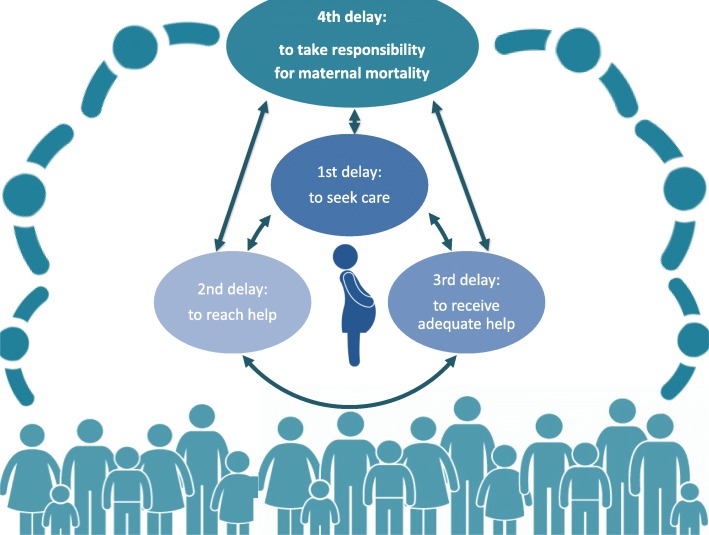
BACKGROUND: In Haiti, the number of women dying in pregnancy, during childbirth and the weeks after giving birth remains unacceptably high. The objective of this research was to explore determinants of maternal mortality in rural Haiti through Community-Based Action Research (CBAR), guided by the delays that lead to maternal death. This paper focuses on socioecological determinants of maternal mortality from the perspectives of women of near-miss maternal experiences and community members, and their solutions to reduce maternal mortality in their community. METHODS: The study draws on five semi-structured Individual Interviews with women survivors of near-misses, and on four Focus Group Discussions with Community Leaders and with Traditional Birth Attendants. Data collection took place in July 2013. A Community Research Team within a resource-limited rural community in Haiti undertook the research. The methods and analysis process were guided by participatory research and CBAR. RESULTS: Participants identified three delays that lead to maternal death but also described a fourth delay with respect to community responsibility for maternal mortality. They included women being carried from the community to a healthcare facility as a special example of the fourth delay. Women survivors of near-miss maternal experiences and community leaders suggested solutions to reduce maternal death that centered on prevention and community infrastructure. Most of the strategies for action were related to the fourth delay and include: community mobilization by way of the formation of Neighbourhood Maternal Health/Well-being Committees, and community support through the provision/sharing of food for undernourished women, offering monetary support and establishment of a communication relay/transport system in times of crisis. CONCLUSIONS: Finding sustainable ways to reduce maternal mortality requires a community-based/centred and community-driven comprehensive approach to maternal health/well-being. This includes engagement of community members that is dependent upon community knowledge, political will, mobilization, accountability and empowerment. An engaged/empowered community is one that is well placed to find ways that work in their community to reduce the fourth delay and in turn, maternal death. Potentially, community ownership of challenges and solutions can lead to more sustainable improvements in maternal health/well-being in Haiti.
Overview
The claims and statistics of this paper haven’t been checked yet.
Free: it reads the open-access text and checks the first 5 claims that cite a source we can check. Create a free account to check every claim.
Integrity signals
Registry
Cites
Statistics
Figures
Verification
Claims the paper makes
The claims and statistics of this paper haven’t been checked yet.
Free: it reads the open-access text and checks the first 5 claims that cite a source we can check. Create a free account to check every claim.
Claims other papers make about this one
Each is checked against this paper’s own text: does it say what the citing paper says it does?
The cited source says what the claim attributes to it.
In the citing paper
“In a way, by involving the community leaders and the community, the referral hub addresses the fourth delay mentioned in the literature, which occurs when there is no collective action in the community to enable the pregnant mother to reach the facility [27].”
Self-check
Percentages, sums and reported differences re-computed from the paper’s own numbers.
The self-check needs the paper’s full text.
Citations
Cites
Too far to walk: Maternal mortality in context
Thaddeus, S., & Maine, D. (1994) · Social Science & Medicine · doi:10.1016/0277-9536(94)90226-7 · Cited by 3,240 · cited 1×
“In 1991 Thaddeus and Maine introduced the Three Delays framework to describe obstetric obstacles that lead to maternal death [6].”
BackgroundThe “three delays” as a framework for examining maternal mortality in Haiti
Barnes-Josiah, D., Myntti, C., & Augustin, A. (1998) · Social Science & Medicine · doi:10.1016/s0277-9536(97)10018-1 · Cited by 319 · cited 3×
“Barnes-Josiah and colleagues concluded that improving the maternity care system would most greatly impact maternal mortality in Haiti [7].”
BackgroundMethodInfluentialThe role of delays in severe maternal morbidity and mortality: expanding the conceptual framework
Pacagnella, R. C., Cecatti, J. G., Osis, M. J., & Souza, J. P. (2012) · Reproductive Health Matters · doi:10.1016/s0968-8080(12)39601-8 · Cited by 229
Conceptual models for health education research and practice
Earp, J. A., & Ennett, S. T. (1991) · Health Education Research · doi:10.1093/her/6.2.163 · Cited by 181 · cited 2×
“1) was developed for our study as a visual representation of causal linkages together with their effects and impacts [16].”
BackgroundRoro, M. A., Hassen, E. M., Lemma, A., Gebreyesus, S. H., & Afework, M. F. (2014) · BMC Research Notes · doi:10.1186/1756-0500-7-556 · Cited by 119 · cited 3×
“There is some overlap between our findings and research done in Ethiopia where community women’s and their partners’ perspectives were explored regarding decisions to deliver at home versus in health facilities [23].”
BackgroundResultA Participatory Group Process to Analyze Qualitative Data
Jackson, S. F. (2008) · Progress in Community Health Partnerships: Research, Education, and Action · doi:10.1353/cpr.0.0010 · Cited by 100
Self-citationStoreng, K. T., Murray, S. F., Akoum, M. S., Ouattara, F., & Filippi, V. (2010) · Social Science & Medicine · doi:10.1016/j.socscimed.2010.03.056 · Cited by 97 · cited 1×
“and social identity/stability as a result of their near-loss of life experiences [27], and women’s fear of”
BackgroundRestrepo–Méndez, M. C., Barros, A. J. D., Requejo, J. H., Durán, P., de Francisco, L. A., de França, G. V. A., Wehrmeister, F. C., & Victora, C. G. (2015) · PubMed · Cited by 97
Conceptual Models in Educational Research and Practice
von Glasersfeld, E., & Steffe, L. P. (2018) · Journal of educational thought. · doi:10.55016/ojs/jet.v25i2.44297 · Cited by 79
Tunçalp, Ö., Hindin, M. J., Adu-Bonsaffoh, K., & Adanu, R. (2012) · PLoS ONE · doi:10.1371/journal.pone.0044536 · Cited by 72
Personal accounts of ‘near‐miss’ maternal mortalities in Kampala, Uganda
Weeks, A. D., Lavender, T., Nazziwa, E., & Mirembe, F. M. (2005) · BJOG An International Journal of Obstetrics & Gynaecology · doi:10.1111/j.1471-0528.2005.00703.x · Cited by 71 · cited 3×
“These results support other literature regarding the second delay [11, 12, 22].”
BackgroundResultHaddad, S. M., Cecatti, J. G., Parpinelli, M. Â., Souza, J. P., Costa, M. L., Sousa, M. H., Surita, F. G., Silva, J. L. P. E., Pacagnella, R. C., de Camargo, R. S., et al. (2011) · BMC Public Health · doi:10.1186/1471-2458-11-283 · Cited by 56
Factors associated with use of maternal health services in Haiti: a multilevel analysis.
Babalola, S. O. (2014) · PubMed · Cited by 50
Health Seeking Behavior Among Pregnant Women in Rural Haiti
White, K., Small, M. J., Frédéric, R., Joseph, G., Bateau, R., & Kershaw, T. (2006) · Health Care For Women International · doi:10.1080/07399330600880384 · Cited by 34 · cited 5×
“Schweitzer, a nongovernmental hospital serving a population of over 350,000 [11, 15, 17].”
BackgroundResultInfluentialDeterminants of Institutional Delivery Among Women of Childbearing Age in Rural Haiti
Séraphin, M. N., Ngnie‐Teta, I., Ayoya, M. A., Khan, M. R., Striley, C. W., Boldon, E., Mamadoultaibou, A., Saint‐Fleur, J. E., Koo, L., & Clermont, M. (2014) · Maternal and Child Health Journal · doi:10.1007/s10995-014-1646-1 · Cited by 30 · cited 2×
“education, parity, distance from services) [12, 20].”
Narayan, K. C., KC, A., Sharma, N., Malla, H., Thapa, N., Aryal, K. K., Vitrakoti, R., & Bhandari, R. M. (2011) · Journal of Nepal Health Research Council · doi:10.33314/jnhrc.v0i0.283 · Cited by 28 · cited 1×
“The second type corresponds to a community-based accountability for maternal (and newborn) health, and recognizes that the reduction of maternal mortality “takes a village” in order to affect change [10, 25].”
BackgroundArps, S. (2009) · Social Science & Medicine · doi:10.1016/j.socscimed.2009.06.005 · Cited by 26 · cited 1×
“death in their community; they also identified the impact of economic status and how the status of the woman plays into maternal outcomes and women’s health-seeking behaviours [21].”
BackgroundCharacteristics of preeclampsia- and eclampsia-related maternal death in rural Haiti
Small, M. J., Kershaw, T., Frédéric, R., Blanc, C., Neale, D. M., Copel, J. A., & Williams, K. P. (2005) · The Journal of Maternal-Fetal & Neonatal Medicine · doi:10.1080/14767050500312433 · Cited by 23 · cited 4×
“Schweitzer, a nongovernmental hospital serving a population of over 350,000 [11, 15, 17].”
BackgroundMethodInfluentialPostpartum contraceptive needs in northern Haiti
Lathrop, E., Telemaque, Y., Goedken, P., Andes, K. L., Jamieson, D. J., & Cwiak, C. A. (2011) · International Journal of Gynecology & Obstetrics · doi:10.1016/j.ijgo.2010.09.012 · Cited by 18 · cited 1×
“Conversely, a few studies examined community views of Haitian women and healthcare workers as they relate to contraceptive needs in Northern Haiti [13], and a maternal/child health needs assessment [14] to help inform program development in maternal/child health.”
BackgroundMaternal - Child Health Needs Assessment in Haiti.
Cianelli, R., Mitchell, E. M., Albuja, L. D., Wilkinson, C., Anglade, D., Chery, M. P., & Peragallo, N. P. (2014) · PubMed · Cited by 14
Haiti's push for safe motherhood
Huber, B. (2015) · The Lancet · doi:10.1016/s0140-6736(15)61490-8 · Cited by 2 · cited 1×
“Haiti’s push toward safe motherhood continues to have its challenges related to unintended and adolescent pregnancies and abortion [19], provision of maternal health service among rural Haitian women, accessibility to antenatal care and skilled birth attendance and structural inequalities as they relate to socioeconom…”
Background
Cited by
Danna, V. A., Bedwell, C., Wakasiaka, S., & Lavender, T. (2020) · Global Health Action · doi:10.1080/16549716.2020.1819052 · Cited by 164
“In a number of studies [14,29,33,39,44], long travel time due to distance was cited among the main challenges to reach healthcare promptly.”
BackgroundMethodResultInfluentialShah, B., Krishnan, N., Kodish, S. R., Yenokyan, G., Fatema, K., Uddin, K. B., Rahman, A., & Razzak, J. (2020) · BMJ Open · doi:10.1136/bmjopen-2020-042690 · Cited by 74
Odland, M. L., Whitaker, J., Nepogodiev, D., Aling’, C. A., Bagahirwa, I., Dushime, T., Erlangga, D., Mpirimbanyi, C., Muneza, S., Nkeshimana, M., et al. (2020) · World Journal of Surgery · doi:10.1007/s00268-020-05571-6 · Cited by 65
Seeking maternal health care in rural Nigeria: through the lens of negofeminism
Udenigwe, O., Okonofua, F. E., Ntoimo, L. F. C., & Yaya, S. (2023) · Reproductive Health · doi:10.1186/s12978-023-01647-3 · Cited by 31
“attributes poor maternal health outcomes to delays in community action or lack of collective responsibility [9, 10].”
BackgroundAmosse, F., Boene, H., Kinshella, M.-L. W., Drebit, S., Sharma, S., Makanga, P. T., Valá, A., Magee, L. A., von Dadelszen, P., Vidler, M., et al. (2021) · Global Health: Science and Practice · doi:10.9745/ghsp-d-20-00511 · Cited by 23
“community transport programs, to reduce maternal deaths.(12) In a systematic reviewof studies conducted in Bangladesh, Ghana, India, Malawi, Nepal,”
Background
Metadata
- Authors
- MacDonald, T., Jackson, S., Charles, M.-C., Periel, M., Jean-Baptiste, M.-V., Salomon, A., & Premilus, É.
- Affiliations
- Laurentian University (CA)
- University of Toronto (CA)
- Cégep du Vieux Montréal (CA)
- Corresponding author
- MacDonald, Tonya
- ORCID
- MacDonald, Tonya
- Venue
- BMC Pregnancy and Childbirth
- Published
- 2018-06-20
- Volume
- 18
- Issue
- 1
- Pages
- 254-254
- ISSN
- 1471-2393 (ISSN-L)
- PMC
- PMC6011389
- OpenAlex
- W2809215140
- Cited by
- 47
- References
- 21
- Citations by year
- 2026: 4 · 2025: 4 · 2024: 9 · 2023: 13 · 2022: 5 · 2021: 2 · 2020: 6 · 2019: 4
- FWCI
- 3.31
- Type
- journal article
- Language
- en
- Open access
- gold
- doi.org
- Licence
- cc-by
- creativecommons.org/licenses/by/4.0/ (tdm)
- Locations
- BMC Pregnancy and Childbirth (publishedVersion, cc-by)
- Europe PMC (PubMed Central) (publishedVersion, other-oa)
- PubMed Central (publishedVersion, cc-by)
- PubMed (publishedVersion)
- TSpace (University of Toronto) (submittedVersion, cc-by)
- DOAJ (DOAJ: Directory of Open Access Journals) (submittedVersion, cc-by-sa)
- Funders
- St. Joseph's Healthcare Hamilton International Outreach Program (n/a)
- University of Toronto (CA) Global Health Student Research Award (n/a)
- Topics
- Health Sciences › Medicine › Pediatrics, Perinatology and Child Health › Global Maternal and Child Health
- Health Sciences › Medicine › Pediatrics, Perinatology and Child Health › Maternal and fetal healthcare
- Health Sciences › Medicine › Pediatrics, Perinatology and Child Health › Maternal and Neonatal Healthcare
- Keywords
- maternal mortality, community-based action research, community mobilization, community health committees, traditional birth attendants, community responsibility, rural Haiti, maternal health, community infrastructure
- MeSH terms
- Near Miss, Healthcare, Maternal Health, Adult, Aged, Communication, Community Participation, Female, Haiti, Humans, Interviews as Topic, Male, Maternal Mortality, Middle Aged, Midwifery, Patient Acceptance of Health Care, Pregnancy, Pregnancy Complications, Rural Population, Social Support, Transportation of Patients, Focus Groups, Survivors, Lifting, Community-Based Participatory Research, Young Adult, Time-to-Treatment
About these checks
Registry, retraction, Cites and statistics results are computed, not judged, with one exception: a printed reference that no index lists is read once by a model before it counts as a citation error. Claims are extracted by a model and kept only when their quote appears verbatim in the text; each cited source is then checked, with a model’s help, for whether it says what the claim relies on. Those verdicts can be wrong — read the claim’s quote and the cited source before relying on one.
Statistics and arithmetic are recomputed, not judged.
Confidence bands are shown only for fields calibrated on our annotated test set. None is calibrated yet, so no band is shown.
What counts as a claim ›How we measure confidence ›How we check this ›
Are you an author, or do you see a problem with this page? Request a review
Data sources
Bibliographic data: Semantic Scholar, OpenAlex, Crossref.
Contains information from the Semantic Scholar Academic Graph Datasets, made available under the ODC Attribution License (ODC-BY 1.0).
Semantic Scholar’s data is described in: Kinney, R., et al. (2023). The Semantic Scholar Open Data Platform. arXiv:2301.10140.
