

Effect of implementation of the WHO intrapartum care model on maternal and neonatal outcomes: a randomized control trial
Open accessThe DOI matches its Crossref record; 58 of the 58 references it cites were found in a registry or an index.
Abstract
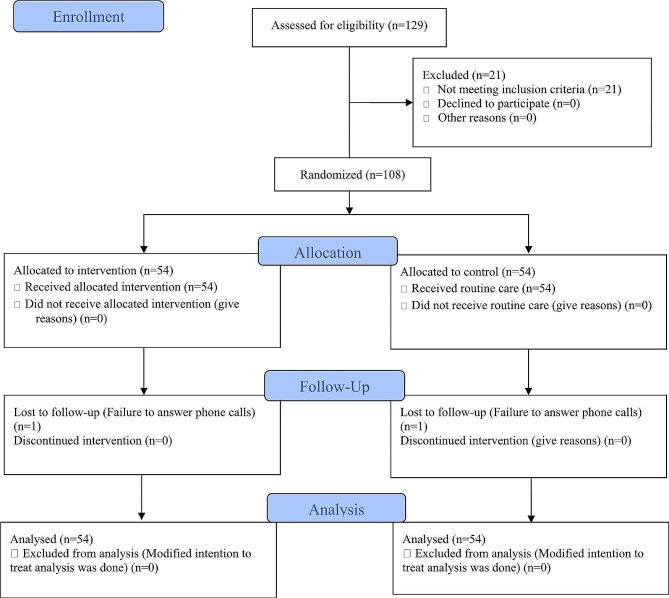
Background: In 2018, the World Health Organization published a set of recommendations for further emphasis on the quality of intrapartum care to improve the childbirth experience. This study aimed to determine the effects of the WHO intrapartum care model on the childbirth experience, fear of childbirth, the quality of intrapartum care (primary outcomes), as well as post-traumatic stress disorder symptoms, postpartum depression, the duration of childbirth stages, the frequency of vaginal childbirth, Apgar score less than 7, desire for subsequent childbearing, and exclusive breastfeeding in the 4 to 6 weeks postpartum period (secondary outcomes). Methods: This study was a randomized controlled trial involving 108 pregnant women admitted to the maternity units of Al-Zahra and Taleghani hospitals in Tabriz-Iran. Participants were allocated to either the intervention group, which received care according to the ' ‘intrapartum care model, or the control group, which received the’ ‘hospital’s routine care, using the blocked randomization method. A Partograph chart was drawn for each participant during pregnancy. A delivery fear scale was completed by all participants both before the beginning of the active phase (pre-intervention) and during 7 to 8 cm dilation (post-intervention). Participants in both groups were followed up for 4 to 6 weeks after childbirth and were asked to complete questionnaires on childbirth experience, postpartum depression, and post-traumatic stress disorder symptoms, as well as the pregnancy and childbirth questionnaire and checklists on the desire to have children again and exclusive breastfeeding. The data were analyzed using independent T and Mann-Whitney U tests and analysis of covariance ANCOVA with adjustments for the parity variable and the baseline scores or childbirth fear. Results: The average score for the childbirth experience total was notably higher in the intervention group (Adjusted Mean Difference (AMD) (95% Confidence Interval (CI)): 7.0 (0.6 to 0.8), p < 0.001). Similarly, the intrapartum care quality score exhibited a significant increase in the intervention group (AMD (95% CI): 7.0 (4.0 to 10), p < 0.001). Furthermore, the post-intervention fear of childbirth score demonstrated a substantial decrease in the intervention group (AMD (95% CI): -16.0 (-22.0 to -10.0), p < 0.001). No statistically significant differences were observed between the two groups in terms of mean scores for depression, PTSD symptoms, duration of childbirth stages, frequency of vaginal childbirth, Apgar score less than 7, and exclusive breastfeeding in the 4 to 6 weeks postpartum (p > 0.05). Conclusion: The intrapartum care model endorsed by the World Health Organization (WHO) has demonstrated effectiveness in enhancing childbirth experiences and increasing maternal satisfaction with the quality of obstetric care. Additionally, it contributes to the reduction of fear associated with labor and childbirth. Future research endeavors should explore strategies to prioritize and integrate respectful, high-quality care during labor and childbirth alongside clinical measures.
Overview
The claims and statistics of this paper haven’t been checked yet.
Free: it reads the open-access text and checks the first 5 claims that cite a source we can check. Create a free account to check every claim.
Integrity signals
Registry
Cites
Statistics
Figures
Verification
Claims the paper makes
The claims and statistics of this paper haven’t been checked yet.
Free: it reads the open-access text and checks the first 5 claims that cite a source we can check. Create a free account to check every claim.
Self-check
Percentages, sums and reported differences re-computed from the paper’s own numbers.
The self-check needs the paper’s full text.
Citations
Cites
Detection of Postnatal Depression: Development of the 10-item Edinburgh Postnatal Depression Scale
Cox, J. L., Holden, J. M., & Sagovsky, R. (1987) · British Journal of Psychiatry · doi:10.1192/bjp.150.6.782 · Cited by 14,183
Hao (2015) · doi:10.1002/14651858 · Cited by 11,321
Midwife-led continuity models versus other models of care for childbearing women
Sandall, J., Soltani, H., Gates, S., Shennan, A., & Devane, D. (2013) · Cochrane Database of Systematic Reviews · doi:10.1002/14651858.cd004667.pub3 · Cited by 1,226
Miller, S., Abalos, E., Chamillard, M., Ciapponi, A., Colaci, D., Comandé, D., Diaz, V., Geller, S., Hanson, C., Langer, A., et al. (2016) · The Lancet · doi:10.1016/s0140-6736(16)31472-6 · Cited by 1,181 · cited 2×
“In some regions, women and newborns die due to limited professional care, while in other regions, they suffer from unnecessary, redundant, or even harmful interventions that stem from medicalized childbirth [6].”
BackgroundQuality of care for pregnant women and newborns—the WHO vision
Tunçalp, Ӧ., Were, W., MacLennan, C., Oladapo, O., Gülmezoglu, A., Bahl, R., Daelmans, B., Mathai, M., Say, L., Kristensen, F., et al. (2015) · BJOG: An International Journal of Obstetrics & Gynaecology · doi:10.1111/1471-0528.13451 · Cited by 1,101
Midwife-led continuity models versus other models of care for childbearing women
Sandall, J., Soltani, H., Gates, S., Shennan, A., & Devane, D. (2016) · Cochrane Database of Systematic Reviews · doi:10.1002/14651858.cd004667.pub5 · Cited by 906
Psychometric aspects of the W-DEQ; a new questionnaire for the measurement of fear of childbirth
Wijma, K., Wijma, B., & Zar, M. (1998) · Journal of Psychosomatic Obstetrics & Gynecology · doi:10.3109/01674829809048501 · Cited by 816 · cited 1×
“Higher scores indicate greater fear during labor [24].”
BackgroundPrevalence and risk factors of postpartum posttraumatic stress disorder: A meta-analysis
Grekin, R., & O'Hara, M. W. (2014) · Clinical Psychology Review · doi:10.1016/j.cpr.2014.05.003 · Cited by 647
Psychosocial and psychological interventions for treating postpartum depression
Dennis, C.-L., & Hodnett, E. D. (2007) · Cochrane Database of Systematic Reviews · doi:10.1002/14651858.cd006116.pub2 · Cited by 565
Position in the second stage of labour for women without epidural anaesthesia
Gupta, J. K., Sood, A., Hofmeyr, G. J., & Vogel, J. P. (2017) · Cochrane Database of Systematic Reviews · doi:10.1002/14651858.cd002006.pub4 · Cited by 487
Research works printed but not linked: 5
- WHO recommendations:. intrapartum care for a positive childbirth experience. Geneva: World Health Organization; 2018. https://www.who.int/reproductivehealth/publications/intrapartum-care-guidelines/en/ 30070803
- Australian Health ‘. Ministers’ Conference. National maternity services plan. Canberra: Commonwealth of Australia, 2011.
- Ghanbari-Homayi S Fardiazar Z Meedya S Charandabi SMA Asghari-Jafarabadi M Mohammadi S Predictors of traumatic birth experience among a group of Iranian primipara women: a cross sectional study BMC Pregnancy Childbirth 2019 19 182 10.1186/s12884-019-2333-4 31117987 PMC6532129 · DOI · Paper page
- Ali MJ Ocheke AN Egbodo CO Tsoho FM Maternal satisfaction with intrapartum care at the Jos University Teaching Hospital Highland Med Res J 2022 22 1 51 5
- Mohamed MA El Bigawy AF Effect of back massage and relaxation training on the act of labor: a randomized controlled clinical trial Int J Chemtech Res 2017 10 2 243 52
Cited by
Abdelaziz, E. M., Alshammari, A. M., Elsharkawy, N. B., Oraby, F. A., & Ramadan, O. M. E. (2025) · BMC Pregnancy and Childbirth · doi:10.1186/s12884-025-07341-5 · Cited by 26
“The long-term implications of reducing tokophobia are substantial [49, 50].”
Çankaya, S., Tezgören, E., & Dikmen, H. A. (2024) · Archives of Gynecology and Obstetrics · doi:10.1007/s00404-024-07844-0 · Cited by 7
Wen, L. M., Li, J. H., Peng, Z. F., Chen, G., Li, J., Cheng, L., Li, J., Zhang, T., & Nie, X. F. (2025) · International Journal of Nursing Studies · doi:10.1016/j.ijnurstu.2025.105186 · Cited by 4
Wu, S., Wang, J., Yin, X.-L., Hé, Y., & Kang, H.-X. (2025) · World Journal of Psychiatry · doi:10.5498/wjp.v15.i9.110656 · Cited by 4
Assessing the quality of childbirth care in Mexico: findings from the maternal eCohort
Doubova, S. V., Paredes-Cruz, M., Perez-Moran, M. D., Pérez‐Cuevas, R., Arsenault, C., & Fresnedo, C. Q. (2025) · BMC Pregnancy and Childbirth · doi:10.1186/s12884-025-07397-3 · Cited by 2
“In Iran, an intrapartum care model based on WHO recommendations significantly enhanced child-birth experiences and maternal satisfaction [31].”
Ebrahimian, A., Abedi, P., Cheraghian, B., & Iravani, M. (2025) · Iranian Journal of Nursing and Midwifery Research · doi:10.4103/ijnmr.ijnmr_297_24 · Cited by 2
“[28] The results of that study are consistent with the findings of the present study According to a study by Vogel et al ., no significant difference was observed in women’s experiences when using the WHO LCG, which contrasts with the findings of our study.”
Meler, K. M., & Çankaya, S. (2025) · Postgraduate Medicine · doi:10.1080/00325481.2025.2501943 · Cited by 2
“…pregnant women admitted to the maternity units of Al-Zahra and Taleghani hospitals in Tabriz, Iran, found that care provided in accordance with the WHO Antenatal Care Model was significantly superior in terms of comfort during delivery compared to pregnant women who did not receive this care [31].”
InfluentialJafari, E., Mirghafourvand, M., Abbasalizadeh, S., Meedya, S., Doshmangir, L., & Mohammad-Alizadeh-Charandabi, S. (2026) · PLOS One · doi:10.1371/journal.pone.0353118 · Cited by 1
“Despite official guidelines on respectful care, these are inconsistently followed, and midwifery-led care, including continuous care, is not routinely implemented [30].”
Self-citationSulemana, H. T., Alhassan, A. S., & Ziblim, S. (2026) · BMC Pregnancy and Childbirth · doi:10.1186/s12884-025-08581-1 · Cited by 1
“Most studies tend to concentrate more on prenatal or intrapartum care, neglecting the unique challenges and needs faced by first-time mothers postpartum [22, 23].”
Martin, G. C. D. C., Servidoni, A. C. P., Machado, G. F., Alves, L. H., Armstrong, B. B. S., Rodrigues, C. G., Lemos, M. J., Lopes, M. D., & Zugaib, M. (2026) · American Journal of Perinatology · doi:10.1055/a-2849-7990 · Cited by 1
Sukmawati, & Kurniadi (2025) · Jurnal Pengabdian Masyarakat Cendikia Jenius · doi:10.70920/pengabmaskes.v2i2.168 · Cited by 1
Bastidas, N. A. G., & Fernández, R. E. A. (2025) · ASCE MAGAZINE · doi:10.70577/asce/621.635/2025
Perfil Epidemiológico e Condições de Saúde em Missões Humanitária no Brasil e África
de Araújo, E. S. A., Barros, C. R. D. S., Nunes, R. D., Spricigo, F. A., Collares, C. F., & Bizário, J. C. D. S. (2025) · CERES - Health & Education Medical Journal · doi:10.62234/ceresv3n3-003
Dr Zunera Tariq, D. M. A., Amjid, M., Khan, B., Tariq, S. A., Tariq, H., & Farwa, D. U. (2025) · The Research of Medical Science Review · doi:10.5281/zenodo.18159460
Taqiyah, Y., & Anggraeni, M. D. (2026) · Al-Rafidain Journal of Medical Sciences · doi:10.54133/ajms.v10i2.2837
Boka, A., Gela, D., & Deressa, J. T. (2026) · AJOG Global Reports · doi:10.1016/j.xagr.2026.100654
Chinonso, U. C., & Edward, M. M. (2026) · Health Science Reports · doi:10.1002/hsr2.72490
“The WHO's intrapartum care model, for instance, has demonstrated effectiveness in enhancing childbirth experiences, increasing maternal satisfaction with the quality of obstetric care, and reducing fear associated with labour and childbirth [3].”
Kanıta Dayalı Yaklaşımlar Işığında Normal Doğum Yönetimi: Ebelik Hizmetlerinin Rolü
Çamlı, Ç., & Kılıç, K. N. (2026) · Özgür Yayınları eBooks · doi:10.58830/ozgur.pub1373.c5576
Katushabe, E., Steen, M., & Musa-Maliki, A. U. (2026) · BMC Health Services Research · doi:10.21203/rs.3.rs-10296307/v1
Anderson, C. A., & Vera, T. (2026) · Nursing for Women s Health · doi:10.1016/j.nwh.2026.05.008
Ssemwanga, N. (2026) · Open University of Cape Town (University of Cape Town)
Abdolalipour, S., Abbasalizadeh, S., Mohammad-Alizadeh, S., Abbasalizadeh, F., & Mirghafourvand, M. (2026) · Heliyon · doi:10.1016/j.heliyon.2026.e45249
Self-citationZhu, W., Min, H., Dai, Y., Zhu, C., Wang, X., & Gu, C. (2026) · Journal of Nursing Management · doi:10.1155/jonm/2066972
Peanut Ball Dan Relaksasi Optimal: Strategi Manajemen Nyeri Kala I Yang Inovatif
Vitania, W., Pratami, Y. R., Hasnia, H., Astutik, E. D. W., Handayani, E. P., Nurhijraheni, P. K. C., Dinge, F., Paisal, F. I., Yuliana, Y., & Wahyuni, I. S. (2025) · Al-Suaibah Midwifery Journal.
Percepção de mulheres acerca dos exercícios de mobilidade pélvica no trabalho de parto e parto
Mafetoni, R. R., Gonçalves, S. A., Sanfelice, C. F. D. O., Jorge, H. M. F., Jacob, L. M. D. S., Balaminut, T., & dos Santos, G. G. (2026) · Rev Rene · doi:10.36517/2175-6783.20262797397
Jafari, E., Mirghafourvand, M., Abbasalizadeh, S., Meedya, S., Doshmangir, L., & Mohammad‐Alizadeh‐Charandabi, S. (2026) · Health Promotion Perspectives · doi:10.34172/hpp.45154
“In teaching hospitals, midwives assist during labor, and female obstetric residents primarily provide care following a medicalized approach 37 .”
Self-citation
Metadata
- Authors
- Abdolalipour, S., Abbasalizadeh, S., Mohammad-Alizadeh-Charandabi, S., Abbasalizadeh, F., Jahanfar, S., Raphi, F., & Mirghafourvand, M.
- Affiliations
- Tabriz University of Medical Sciences (IR)
- Tufts University (US)
- Venue
- BMC Pregnancy and Childbirth
- Published
- 2024-04-17
- Volume
- 24
- Issue
- 1
- Pages
- 283-283
- ISSN
- 1471-2393 (ISSN-L)
- PMC
- PMC11022439
- OpenAlex
- W4394883107
- Cited by
- 19
- References
- 58
- Citations by year
- 2026: 11 · 2025: 7 · 2024: 1
- FWCI
- 10.47
- Type
- journal article
- Language
- en
- Open access
- gold
- doi.org
- Licence
- cc-by
- creativecommons.org/licenses/by/4.0 (tdm)
- creativecommons.org/licenses/by/4.0 (vor)
- Locations
- BMC Pregnancy and Childbirth (publishedVersion, cc-by)
- PubMed Central (publishedVersion, cc-by-nc-sa)
- PubMed (publishedVersion)
- DOAJ (DOAJ: Directory of Open Access Journals) (submittedVersion, cc-by-sa)
- Funders
- Tabriz University of Medical Sciences
- Topics
- Health Sciences › Medicine › Obstetrics and Gynecology › Maternal and Perinatal Health Interventions
- Health Sciences › Medicine › Pediatrics, Perinatology and Child Health › Global Maternal and Child Health
- Health Sciences › Medicine › Public Health, Environmental and Occupational Health › Maternal Mental Health During Pregnancy and Postpartum
- Keywords
- childbirth experience, fear of childbirth, postpartum depression, post-traumatic stress disorder, vaginal delivery, Apgar score, exclusive breastfeeding, partograph, obstetric care, maternal outcomes, neonatal outcomes, childbirth education, midwifery care
- MeSH terms
- Female, Humans, Infant, Newborn, Labor, Obstetric, Pregnancy, Depression, Postpartum, Parturition, Delivery, Obstetric, Postpartum Period
About these checks
Registry, retraction, Cites and statistics results are computed, not judged, with one exception: a printed reference that no index lists is read once by a model before it counts as a citation error. Claims are extracted by a model and kept only when their quote appears verbatim in the text; each cited source is then checked, with a model’s help, for whether it says what the claim relies on. Those verdicts can be wrong — read the claim’s quote and the cited source before relying on one.
Statistics and arithmetic are recomputed, not judged.
Confidence bands are shown only for fields calibrated on our annotated test set. None is calibrated yet, so no band is shown.
What counts as a claim ›How we measure confidence ›How we check this ›
Are you an author, or do you see a problem with this page? Request a review
Data sources
Bibliographic data: Semantic Scholar, OpenAlex, Crossref.
Contains information from the Semantic Scholar Academic Graph Datasets, made available under the ODC Attribution License (ODC-BY 1.0).
Semantic Scholar’s data is described in: Kinney, R., et al. (2023). The Semantic Scholar Open Data Platform. arXiv:2301.10140.
