

The effect of antibiotics on the clinical outcomes of patients with solid cancers undergoing immune checkpoint inhibitor treatment: a retrospective study
Open accessThe DOI matches its Crossref record; 31 of the 31 references it cites were found in a registry or an index.
Abstract
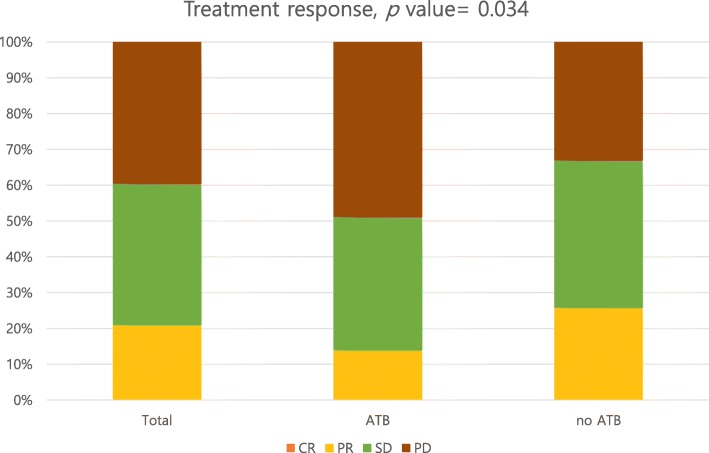
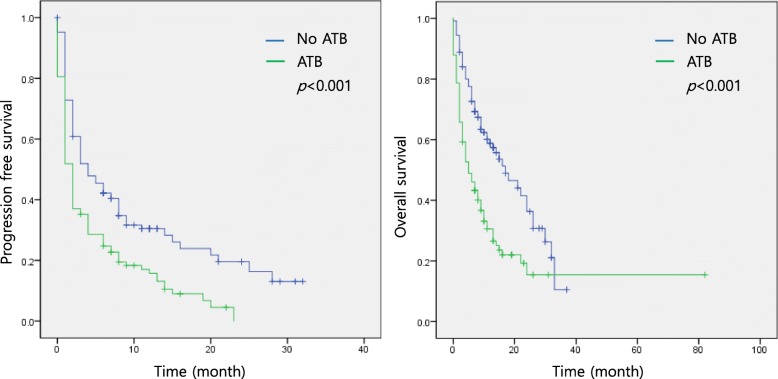
Background: This study aimed to assess the effect of antibiotics on the clinical outcomes of patients with solid cancers undergoing treatment with immune checkpoint inhibitors (ICIs). Methods: The medical records of 234 patients treated with ICIs for any type of solid cancer between February 2012 and May 2018 at the Seoul St. Mary’s Hospital were retrospectively reviewed. The data of patients who received antibiotics within 60 days before the initiation of ICI treatment were analyzed. The patients’ responses to ICI treatment and their survival were evaluated. Results: Non-small-cell lung carcinoma was the most common type of cancer. About half of the patients were treated with nivolumab (51.9%), and cephalosporin (35.2%) was the most commonly used class of antibiotics. The total objective response rate was 21%. Antibiotics use was associated with a decreased objective response (odds ratio 0.466, 95% confidence interval [CI] 0.225–0.968, p = 0.040). The antibiotics group exhibited shorter progression-free survival (PFS) and overall survival (OS) than the no antibiotics group (median PFS: 2 months vs. 4 months, p < 0.001; median OS: 5 months vs. 17 months, p < 0.001). In the multivariate analysis, antibiotics use was a significant predictor of patient survival (PFS: hazard ratio [HR] 1.715, 95% CI 1.264–2.326, p = 0.001; OS: HR 1.785, 95% CI 1.265–2.519, p = 0.001). Conclusions: The use of antibiotics may affect the clinical outcomes of patients with solid cancers treated with ICIs. Careful prescription of antibiotics is warranted in candidates who are scheduled for ICI treatment. Trial registration: Not applicable (retrospective study).
Overview
The claims and statistics of this paper haven’t been checked yet.
Free: it reads the open-access text and checks the first 5 claims that cite a source we can check. Create a free account to check every claim.
Integrity signals
Registry
Cites
Statistics
Figures
Verification
Claims the paper makes
The claims and statistics of this paper haven’t been checked yet.
Free: it reads the open-access text and checks the first 5 claims that cite a source we can check. Create a free account to check every claim.
Claims other papers make about this one
Each is checked against this paper’s own text: does it say what the citing paper says it does?
In the citing paper
“Notably, antibiotics may increase engraftment but have been associated with reduced ICI efficacy in patients not undergoing microbiota modulation.167–169”
From Melanoma and microbiota: Current understanding and future directions (2024) · cites this paper as [167]
Self-check
Percentages, sums and reported differences re-computed from the paper’s own numbers.
The self-check needs the paper’s full text.
Citations
Cites
New response evaluation criteria in solid tumours: revised RECIST guideline (version 1.1)
Eisenhauer, E. A., Therasse, P., Bogaerts, J., Schwartz, L. H., Sargent, D., Ford, R., Dancey, J., Arbuck, S., Gwyther, S., Mooney, M., et al. (2009) · European Journal of Cancer · doi:10.1016/j.ejca.2008.10.026 · Cited by 29,534
Adverse Renal Effects of Immune Checkpoint Inhibitors: A Narrative Review
Wanchoo, R., Karam, S., Uppal, N. N., Barta, V. S., Deray, G., Devoe, C., Launay-Vacher, V., Jhaveri, K. D., & on behalf of Cancer and Kidney International Network Workgroup on Immune Checkpoint Inhibitors (2017) · American Journal of Nephrology · doi:10.1159/000455014 · Cited by 15,256
Improved Survival with Ipilimumab in Patients with Metastatic Melanoma
Hodi, F. S., O'Day, S. J., McDermott, D. F., Weber, R. W., Sosman, J. A., Haanen, J. B., Gonzalez, R., Robert, C., Schadendorf, D., Hassel, J. C., et al. (2010) · New England Journal of Medicine · doi:10.1056/nejmoa1003466 · Cited by 15,155
Pembrolizumab versus Chemotherapy for PD-L1-Positive Non-Small-Cell Lung Cancer
Reck, M., Rodríguez-Abreu, D., Robinson, A. G., Hui, R., Csőszi, T., Fülöp, A., Gottfried, M., Peled, N., Tafreshi, A., Cuffe, S., et al. (2016) · New England Journal of Medicine · doi:10.1056/nejmoa1606774 · Cited by 10,089
Nivolumab versus docetaxel in advanced nonsquamous non-small-cell lung cancer
Borghaei, H., Paz-Ares, L., Horn, L., Spigel, D. R., Steins, M., Ready, N. E., Chow, L. Q., Vokes, E. E., Felip, E., Holgado, E., et al. (2015) · New England Journal of Medicine · doi:10.1056/nejmoa1507643 · Cited by 9,335
Gut microbiome influences efficacy of PD-1-based immunotherapy against epithelial tumors
Routy, B., Le Chatelier, E., Derosa, L., Duong, C. P. M., Alou, M. T., Daillère, R., Fluckiger, A., Messaoudene, M., Rauber, C., Roberti, M. P., et al. (2018) · Science · doi:10.1126/science.aan3706 · Cited by 5,671
Commensal Bifidobacterium promotes antitumor immunity and facilitates anti–PD-L1 efficacy
Sivan, A., Corrales, L., Hubert, N., Williams, J. B., Aquino-Michaels, K., Earley, Z. M., Benyamin, F. W., Man Lei, Y., Jabri, B., Alegre, M.-L., et al. (2015) · Science · doi:10.1126/science.aac4255 · Cited by 3,888
Anticancer immunotherapy by CTLA-4 blockade relies on the gut microbiota
Vétizou, M., Pitt, J. M., Daillère, R., Lepage, P., Waldschmitt, N., Flament, C., Rusakiewicz, S., Routy, B., Roberti, M. P., Duong, C. P. M., et al. (2015) · Science · doi:10.1126/science.aad1329 · Cited by 3,488
Dethlefsen, L., Huse, S., Sogin, M. L., & Relman, D. A. (2008) · PLoS Biology · doi:10.1371/journal.pbio.0060280 · Cited by 2,361
CTLA-4 and PD-1 Pathways: Similarities, Differences, and Implications of Their Inhibition
Buchbinder, E. I., & Desai, A. (2016) · American Journal of Clinical Oncology · doi:10.1097/coc.0000000000000239 · Cited by 2,360
Cited by
Tumor-resident intracellular microbiota promotes metastatic colonization in breast cancer
Fu, A., Yao, B., Dong, T., Chen, Y., Yao, J., Liu, Y., Li, H., Bai, H., Liu, X., Zhang, Y., et al. (2022) · Cell · doi:10.1016/j.cell.2022.02.027 · Cited by 981
New Insights Into the Cancer–Microbiome–Immune Axis: Decrypting a Decade of Discoveries
Jain, T., Sharma, P., Are, A. C., Vickers, S. M., & Dudeja, V. (2021) · Frontiers in Immunology · doi:10.3389/fimmu.2021.622064 · Cited by 183
Gut microbiota shapes cancer immunotherapy responses
Lei, W., Zhou, K., Lei, Y., Li, Q., & Zhu, H. (2025) · npj Biofilms and Microbiomes · doi:10.1038/s41522-025-00786-8 · Cited by 195
“However, these interventions inevitably alter the gut microbiota, potentially affecting immunotherapy outcomes 204 – 206 .”
The Role of Gut Microbiota in Lung Cancer: From Carcinogenesis to Immunotherapy
(2021) · doi:10.3389/fonc.2021.720842 · Cited by 136
Gut microbiota-mediated immunomodulation in tumor
Liu, X., Chen, Y., Zhang, S., & Dong, L. (2021) · Journal of Experimental & Clinical Cancer Research · doi:10.1186/s13046-021-01983-x · Cited by 112
“Kim et al. 2019 [125] NSCLC (n = 72) Nivolumab Those receiving ATB within 2 months before and 1month after ICI initiation 30 (42”
Diet, Microbiome, and Cancer Immunotherapy—A Comprehensive Review
Szczyrek, M., Bitkowska, P., Chunowski, P., Czuchryta, P., Krawczyk, P. A., & Milanowski, J. (2021) · Nutrients · doi:10.3390/nu13072217 · Cited by 113
“One must remember that the differences in cancer biology, cancer staging, and cancer grading are the main factors responsible for the varied treatment response [69,88,89].”
BackgroundAghamajidi, A., & Vareki, S. M. (2022) · Cancers · doi:10.3390/cancers14153563 · Cited by 110
Melanoma and microbiota: Current understanding and future directions
Routy, B., Jackson, T., Mählmann, L., Baumgartner, C. K., Blaser, M., Byrd, A., Corvaia, N., Couts, K., Davar, D., Derosa, L., et al. (2024) · Cancer Cell · doi:10.1016/j.ccell.2023.12.003 · Cited by 89
Crespin, A., Bescop, C. L., de Gunzburg, J., Vitry, F., Zalcman, G., Cervesi, J., & Bandinelli, P.-A. (2023) · Frontiers in Oncology · doi:10.3389/fonc.2023.1075593 · Cited by 88
Giordan, Q., Salleron, J., Vallance, C., Moriana, C., & Clément-Duchêne, C. (2021) · Frontiers in Immunology · doi:10.3389/fimmu.2021.716317 · Cited by 84
Tsikala-Vafea, M., Belani, N., Vieira, K., Khan, H., & Farmakiotis, D. (2021) · International Journal of Infectious Diseases · doi:10.1016/j.ijid.2021.03.063 · Cited by 75
Lopes, S., Pabst, L., Dory, A., Klotz, M., Gourieux, B., Michel, B., & Mascaux, C. (2023) · Frontiers in Immunology · doi:10.3389/fimmu.2023.1070076 · Cited by 75
Liu, X., Wang, L., Jing, N., Jiang, G., & Liu, Z. (2020) · Microorganisms · doi:10.3390/microorganisms8020175 · Cited by 72
“reported that antibiotics are associated with poor progression-free survival (PFS) and overall survival (OS) in patients with solid cancers treated with ICIs [49].”
BackgroundHussain, N., Naeem, M., & Pinato, D. J. (2021) · Human Vaccines & Immunotherapeutics · doi:10.1080/21645515.2020.1769398 · Cited by 69
Tsiogka, A., Bauer, J., & Patsatsi, A. (2021) · Acta Dermato Venereologica · doi:10.2340/00015555-3740 · Cited by 65
Huang, C.-L., Li, M., Liu, B., Zhu, H., Dai, Q., Fan, X., Mehta, K. D., Huang, C. H., Neupane, P. C., Wang, F., et al. (2021) · Frontiers in Oncology · doi:10.3389/fonc.2021.642110 · Cited by 68
Yang, M., Wang, Y., Yuan, M., Tao, M., Kong, C., Li, H., Tong, J., Zhu, H., & Yan, X. (2020) · International Immunopharmacology · doi:10.1016/j.intimp.2020.106876 · Cited by 64
Nyein, A., Bari, S., Hogue, S., Zhao, Y., Maller, B., Sha, S. T., Gómez, M. F. L., Rollison, D. E. M., & Robinson, L. A. (2022) · BMC Cancer · doi:10.1186/s12885-022-09210-2 · Cited by 54
Zhou, J., Huang, G., Wong, W.-C., Hu, D., Zhu, J.-W., Li, R., & Zhou, H. K. (2022) · Frontiers in Immunology · doi:10.3389/fimmu.2022.968729 · Cited by 53
The impact of the gut microbiome on tumor immunotherapy: from mechanism to application strategies
Guo, C., Kong, L., Xiao, L., Liu, K., Cui, H., Xin, Q., Gu, X., Jiang, C., & Wu, J. (2023) · Cell & Bioscience · doi:10.1186/s13578-023-01135-y · Cited by 48
The role of gut microbiome in modulating response to immune checkpoint inhibitor therapy in cancer
Naqash, A. R., Kihn-Alarcón, A. J., Stavraka, C., Kerrigan, K. C., Vareki, S. M., Pinato, D. J., & Puri, S. (2021) · Annals of Translational Medicine · doi:10.21037/atm-20-6427 · Cited by 54
“There is a growing body of evidence associating the use of ATB with adverse response rates and survival outcomes in patients receiving ICPIs across a range of solid tumors (21-29).”
BackgroundMicrobiota in cancer: molecular mechanisms and therapeutic interventions
Chen, Z., Guan, D., Wang, Z., Li, X., Dong, S., Huang, J., & Zhou, W. (2023) · MedComm · doi:10.1002/mco2.417 · Cited by 50
The Hodgkin Lymphoma Immune Microenvironment: Turning Bad News into Good
Menéndez, V., Solórzano, J. L., Fernández, S., Montalbán, C., & García, J. F. (2022) · Cancers · doi:10.3390/cancers14051360 · Cited by 50
Peng, K., Chen, K., Teply, B. A., Yee, G. C., Farazi, P. A., & Lyden, E. R. (2022) · Annals of Pharmacotherapy · doi:10.1177/10600280211033938 · Cited by 40
“56(4) 377 –386 © The Author(s) 2021 Article reuse guidelines: sagepub.”
Lessons learned from a decade of immune checkpoint inhibition: The good, the bad, and the ugly
Adashek, J. J., Moran, J. A., Le, D. T., & Kurzrock, R. (2025) · Cancer and Metastasis Reviews · doi:10.1007/s10555-025-10260-8 · Cited by 37
“As an example, antibiotic use has been correlated with worse outcome after ICIs, perhaps because of a microbiome effect [47, 48].”
Poonacha, K. N. T., Villa, T. G., & Notario, V. (2022) · Antibiotics · doi:10.3390/antibiotics11030331 · Cited by 39
Xin, Y., Liu, C., Zang, D., & Chen, J. (2024) · Frontiers in Immunology · doi:10.3389/fimmu.2024.1343450 · Cited by 40
Cell membrane-coated nanoparticles for targeting carcinogenic bacteria
Sun, L., Wang, D., Feng, K., Zhang, J. A., Gao, W., & Zhang, L. (2024) · Advanced Drug Delivery Reviews · doi:10.1016/j.addr.2024.115320 · Cited by 34
Effects of Concomitant Antibiotics Use on Immune Checkpoint Inhibitor Efficacy in Cancer Patients
Jiang, S., Geng, S., Chen, Q., Zhang, C., Cheng, M., Yu, Y., Zhang, S., Shi, N., & Dong, M. (2022) · Frontiers in Oncology · doi:10.3389/fonc.2022.823705 · Cited by 35
The Urinary Microbiome in Health and Disease: Relevance for Bladder Cancer
Kuštrimović, N. Z., Bilato, G., Mortara, L., & Baci, D. (2024) · International Journal of Molecular Sciences · doi:10.3390/ijms25031732 · Cited by 33
Lu, P., Tsai, T., Chang, J. W., Deng, S., & Cheng, C. (2020) · Journal of Clinical Pharmacy and Therapeutics · doi:10.1111/jcpt.13298 · Cited by 31
Xu, J., Song, J., Fu, Z., Zhou, H. K., Zhang, Y., & Chen, S. (2025) · BMC Cancer · doi:10.1186/s12885-025-15094-9 · Cited by 28
Lim, M. Y., Hong, S., & Nam, Y. (2025) · Frontiers in Immunology · doi:10.3389/fimmu.2024.1512683 · Cited by 27
Self-citationMalczewski, A. B., Ketheesan, N., Coward, J. I. G., & Navarro, S. (2021) · Frontiers in Immunology · doi:10.3389/fimmu.2021.624434 · Cited by 22
Pizzutilo, E. G., Romanò, R., Roazzi, L., Agostara, A. G., Oresti, S., Zeppellini, A., Giannetta, L. G., Cerea, G., Signorelli, D., Siena, S., et al. (2023) · Cancer Research · doi:10.1158/0008-5472.can-23-0161 · Cited by 20
Abdelhamid, A., Tuminello, S., Ivic‐Pavlicic, T., Flores, R. M., & Taioli, E. (2023) · Translational Lung Cancer Research · doi:10.21037/tlcr-23-597 · Cited by 21
“Studies on a variety of cancers have suggested a lower overall survival (OS) and progression-free survival (PFS) in patients treated with ICIs that have also been treated with antibiotics (9-12).”
BackgroundCould β-Lactam Antibiotics Block Humoral Immunity?
Melenotte, C., Pontarotti, P., Pinault, L., Mège, J., Devaux, C. A., & Raoult, D. (2021) · Frontiers in Immunology · doi:10.3389/fimmu.2021.680146 · Cited by 19
Microbiota and Extracellular Vesicles in Anti-PD-1/PD-L1 Therapy
Mishra, S., Amatya, S. B., Salmi, S., Koivukangas, V., Karihtala, P., & Reunanen, J. (2022) · Cancers · doi:10.3390/cancers14205121 · Cited by 19
“Nevertheless, patients receiving antibiotic treatment are generally in a compromised health status, which may impact the overall treatment outcome [32].”
BackgroundGiudice, T. D., Staropoli, N., Tassone, P., Tagliaferri, P., & Barbieri, V. (2024) · Cancers · doi:10.3390/cancers16101806 · Cited by 17
“It is not surprising, therefore, that antibiotic exposition correlates with cancer onset and progression or immunotherapeutic efficacy [17–19].”
BackgroundAlotaibi, F., Albalawi, I. A. S., Anis, A. M., Alotaibi, H., KHASHWAYN, S. A., Alshammari, K. M., & Al‐Tawfiq, J. A. (2024) · Frontiers in Medicine · doi:10.3389/fmed.2024.1415093 · Cited by 16
Song, Y., Peng, Y., Qin, C., Jiang, S., Lin, J., Lai, S., Wu, J., Ding, M., Du, Y., Yu, L., et al. (2024) · International Journal of Surgery · doi:10.1097/js9.0000000000001901 · Cited by 15
Chen, H., Han, K., He, Z., & Huang, Y. (2021) · Technology in Cancer Research & Treatment · doi:10.1177/15330338211033498 · Cited by 14
Yu, H., Wu, L.-Y., Hsu, P., Lee, C.-W., & Su, B. (2023) · Probiotics and Antimicrobial Proteins · doi:10.1007/s12602-023-10130-1 · Cited by 14
“Thus, the use of traditional antibiotics for management of infections in NSCLC cancer patients might negatively impact clinical outcomes [ 42].”
BackgroundLi, Y., Feng, Z., Liang, C., Lu, S., Wang, G., & Meng, G. (2025) · BMC Gastroenterology · doi:10.1186/s12876-025-03819-w · Cited by 9
“Additionally, another study across various solid tumors revealed that patients who used ATBs within 60 days prior to ICI therapy had poorer PFS (2 months vs. 4 months) and OS (5 months vs. 17 months) [21].”
Yu, J., Yin, Y., Yu, Y., Cheng, M., Zhang, S., Jiang, S., & Dong, M. (2022) · Immunopharmacology and Immunotoxicology · doi:10.1080/08923973.2022.2145966 · Cited by 9
Zheng, X., Zhang, L., Wu, L., Zhao, J., Sun, J., Fang, Y., Zhou, J., Chu, Q., Shen, Y., Yang, Z., et al. (2023) · BMC Cancer · doi:10.1186/s12885-023-11737-x · Cited by 8
“In particular, our dataset lacks systematic data on short-term antibiotic use, known to negatively impact PFS and OS around the initiation of ICI therapy [42].”
BackgroundAngrish, M. D., & Pezo, R. C. (2021) · Advances in Cancer Biology - Metastasis · doi:10.1016/j.adcanc.2021.100020 · Cited by 8
Deng, F., Du, X., Zhang, P., Xu, J., Li, Y., & Yang, Z. (2024) · Thoracic Cancer · doi:10.1111/1759-7714.15490 · Cited by 8
Microbiotoxicity: an under-recognised player in drug efficacy, toxicity, and health outcomes
Nascimento, S. S., Theodosiou, A. A., & Sergaki, C. (2025) · npj Antimicrobials and Resistance · doi:10.1038/s44259-025-00165-5 · Cited by 4
“While further work is needed, this association between antibiotic-induced gut dysbiosis and lower survival rates in ICI-treated cancer patients is concerning, particularly given the increased healthcare costs relating to patient hospitalisation and intensive care 25 .”
Targeting the gut-pancreatic axis: microbial modulation of immunotherapy in pancreatic cancer
Yuan, Y., Zhang, W., & Wang, D. (2026) · Frontiers in Immunology · doi:10.3389/fimmu.2026.1682390 · Cited by 4
The Role of Gut Microbiome in Prostate Cancer: Current Evidence and Emerging Opportunities
Huang, J., Zhu, X.-H., Trotman, L. C., & Tsao, C. (2026) · Cancers · doi:10.3390/cancers18060998 · Cited by 4
“Dysbiosis also diminishes androgen deprivation therapy efficacy, augments androgen receptor signaling, and reduces neutrophil and T-cell–mediated tumor surveillance [23,46].”
Minnaar, C. A., Szász, A., Lee, S. Y., Szigeti, G. P., Szász, A. M., & Máthé, D. (2022) · International Journal of Clinical Medicine · doi:10.4236/ijcm.2022.137024 · Cited by 4
“The regular use of antibiotics could be a risk-factor for cancer [140], and in general has a risk of shortening survival [141].”
BackgroundCao, X., Wang, Y., Huang, W., Li, P., Guo, C., & Li, Y. (2023) · American Journal of Clinical Oncology · doi:10.1097/coc.0000000000000991 · Cited by 4
Xu, H., Yu, J., Xia, L., Lei, X., Zhou, L., Lin, P., Su, S., Li, Y., & Chen, C. (2026) · Precision Clinical Medicine · doi:10.1093/pcmedi/pbag001 · Cited by 3
Antibiotic Use and Survival in Patients With Late-Stage NSCLC Treated With Chemoimmunotherapy
Taioli, E., Flores, R. M., Abdelhamid, A., Untalan, M., Ivic‐Pavlicic, T., & Tuminello, S. (2024) · JTO Clinical and Research Reports · doi:10.1016/j.jtocrr.2024.100710 · Cited by 5
Stylianakis, D., Bertaglia, V., Sangiolo, D., Podda, M., Saba, G., Stylianakis, I., Denaro, N., Pisanu, A., Agelaki, S., Scartozzi, M., et al. (2026) · Cancer Treatment Reviews · doi:10.1016/j.ctrv.2026.103162 · Cited by 3
Chen, Q., Zhang, Z., Li, X., Feng, S., & Liu, S. (2023) · Frontiers in Oncology · doi:10.3389/fonc.2023.1204248 · Cited by 3
Huang, C.-L., Li, M., Liu, B., Zhu, H., Dai, Q., Fan, X., Mehta, K. D., Huang, C. H., Neupane, P. R., Wang, F., et al. (2020) · Research Square · doi:10.21203/rs.3.rs-73124/v1 · Cited by 2
Microbiome‐urothelium crosstalk in bladder cancer: From dysbiosis to clinical translation
Xu, H., Li, Z., Yang, L., Zheng, J., Li, W., Liao, R., Huang, W., Sun, B., Li, Z., Ma, C., et al. (2026) · iMetaOmics. · doi:10.1002/imo2.70081 · Cited by 1
“Substantial clinical evidence indicates that antibiotic (ATB) use during ICI administration is consistently associated with poorer outcomes in patients with urothelial carcinoma (UC) [175 – 177] and other malignancies [178 – 181].”
Zhai, Z., Ma, S., Shang, S., Liang, X., Yin, S., Lin, H., Ding, R., Jiang, A., Zhang, R., Wu, M., et al. (2026) · The Oncologist · doi:10.1093/oncolo/oyag264 · Cited by 1
Reimbursement Team (2021) · Canadian Journal of Health Technologies · doi:10.51731/cjht.2021.158
Mono-Immunotherapy in Non-Small Cell Lung Cancer: Controversies and Challenges
Kuş, T. (2022) · Journal of Oncological Sciences · doi:10.37047/jos.2022-93252
Pizzutilo, E. G., Romanò, R., Roazzi, L., Agostara, A. G., Oresti, S., Zeppellini, A., Giannetta, L. G., Cerea, G., Signorelli, D., Siena, S., et al. (2023) · doi:10.1158/0008-5472.c.6742369
Zheng, X., Zhang, L., Wu, L., Zhao, J., Sun, J., Fang, Y., Zhou, J., Chu, Q., Shen, Y., Yang, Z., et al. (2023) · Figshare · doi:10.6084/m9.figshare.24847153
Chen, K. (2021) · DigitalCommons@UNMC
Rao, X., Zhou, R., Li, W., Chai, X., & Zhang, H. (2026) · Critical Reviews in Oncology/Hematology · doi:10.1016/j.critrevonc.2026.105308
Antibiotics and probiotics differentially shape immunotherapy outcomes in non-small cell lung cancer
Ma, S., Zhai, Z., Ding, R., Shang, S., Liang, X., Yin, S., Lin, H., Sha, G., Zhang, R., Yu, J., et al. (2026) · Cancer Biology and Medicine · doi:10.20892/j.issn.2095-3941.2025.0844
Alotaibi, B. S. (2026) · Saudi Pharmaceutical Journal · doi:10.1007/s44446-026-00107-w
“Nonetheless, these interventions can alter GM and can potentially affect therapeutic outcomes of IMTs (Kim et al. 2019; Domzaridou et al. 2023).”
Wang, K., Song, W., Bai, Q., Shen, S., Lu, X., Su, C., Yang, S., Wang, Y., Xia, Y., Zan, R., et al. (2026) · Cancer Science · doi:10.1111/cas.70516
“There are clinical evidences confirmed that antibiotics application would alter the immune response in tumor treatment, resulting in the worse survival of cancer patients [48–50].”
Cancer pharmacomicrobiomics: Targeting microbiota to optimize cancer therapy outcomes
Punuri, S. V., Dagar, W., Vodnala, S., Bhyan, B., & Jangra, S. (2026) · Elsevier eBooks · doi:10.1016/b978-0-443-33206-7.00011-x
To, K. K. W., Ma, T., Wang, L., & Cho, W. C. S. (2026) · Expert Opinion on Therapeutic Targets · doi:10.1080/14728222.2026.2747520
Antibiotics and outcomes of cancer immunotherapy: An updated meta-analysis and clinical applications
Porcari, S., Bolte, L. A., Björk, J. R., Elkrief, A., Derosa, L., Ferrari, M., Pezzullo, A. M., Severino, A., Fusco, W. G., Messaoudene, M., et al. (2026) · Cancer Cell · doi:10.1016/j.ccell.2026.09.012
Metadata
- Authors
- Kim, H., Lee, J. E., Hong, S. H., Lee, M. A., Kang, J. H., & Kim, I.-H.
- Affiliations
- The Catholic University of Korea St. Vincent's Hospital (KR)
- The Catholic University of Korea Seoul St. Mary's Hospital (KR)
- Corresponding author
- Kim, In-Ho
- Venue
- BMC Cancer
- Published
- 2019-11-12
- Volume
- 19
- Issue
- 1
- Pages
- 1100-1100
- ISSN
- 1471-2407 (ISSN-L)
- PMC
- PMC6852740
- OpenAlex
- W2987253676
- Cited by
- 72
- References
- 31
- Citations by year
- 2026: 12 · 2025: 6 · 2024: 8 · 2023: 14 · 2022: 12 · 2021: 15 · 2020: 5
- FWCI
- 3.34
- Type
- journal article
- Language
- en
- Open access
- gold
- doi.org
- Licence
- cc-by
- creativecommons.org/licenses/by/4.0/ (tdm)
- creativecommons.org/licenses/by/4.0/ (vor)
- Locations
- BMC Cancer (publishedVersion, cc-by)
- PubMed Central (publishedVersion, cc-by)
- PubMed (publishedVersion)
- DOAJ (DOAJ: Directory of Open Access Journals) (submittedVersion, cc-by-sa)
- Funders
- National Research Foundation of Korea (NRF-2018R1C1B6008724)
- Topics
- Health Sciences › Medicine › Oncology › Cancer Immunotherapy and Biomarkers
- Health Sciences › Medicine › Oncology › Neutropenia and Cancer Infections
- Health Sciences › Medicine › Infectious Diseases › Antibiotic Use and Resistance
- Keywords
- antibiotics, immune checkpoint inhibitors, solid tumors, nivolumab, objective response rate, progression-free survival, overall survival, non-small cell lung cancer, cephalosporins
- MeSH terms
- Antineoplastic Agents, Immunological, Anti-Bacterial Agents, Drug Interactions, Female, Humans, Male, Neoplasms, Prognosis, Retrospective Studies, Biomarkers, Tumor, Odds Ratio, Survival Analysis, Treatment Outcome
About these checks
Registry, retraction, Cites and statistics results are computed, not judged, with one exception: a printed reference that no index lists is read once by a model before it counts as a citation error. Claims are extracted by a model and kept only when their quote appears verbatim in the text; each cited source is then checked, with a model’s help, for whether it says what the claim relies on. Those verdicts can be wrong — read the claim’s quote and the cited source before relying on one.
Statistics and arithmetic are recomputed, not judged.
Confidence bands are shown only for fields calibrated on our annotated test set. None is calibrated yet, so no band is shown.
What counts as a claim ›How we measure confidence ›How we check this ›
Are you an author, or do you see a problem with this page? Request a review
Data sources
Bibliographic data: Semantic Scholar, OpenAlex, Crossref.
Contains information from the Semantic Scholar Academic Graph Datasets, made available under the ODC Attribution License (ODC-BY 1.0).
Semantic Scholar’s data is described in: Kinney, R., et al. (2023). The Semantic Scholar Open Data Platform. arXiv:2301.10140.
