

Utilizing serum metabolomics for assessing postoperative efficacy and monitoring recurrence in gastric cancer patients
Open accessThe DOI matches its Crossref record; 33 of the 33 references it cites were found in a registry or an index.
Abstract
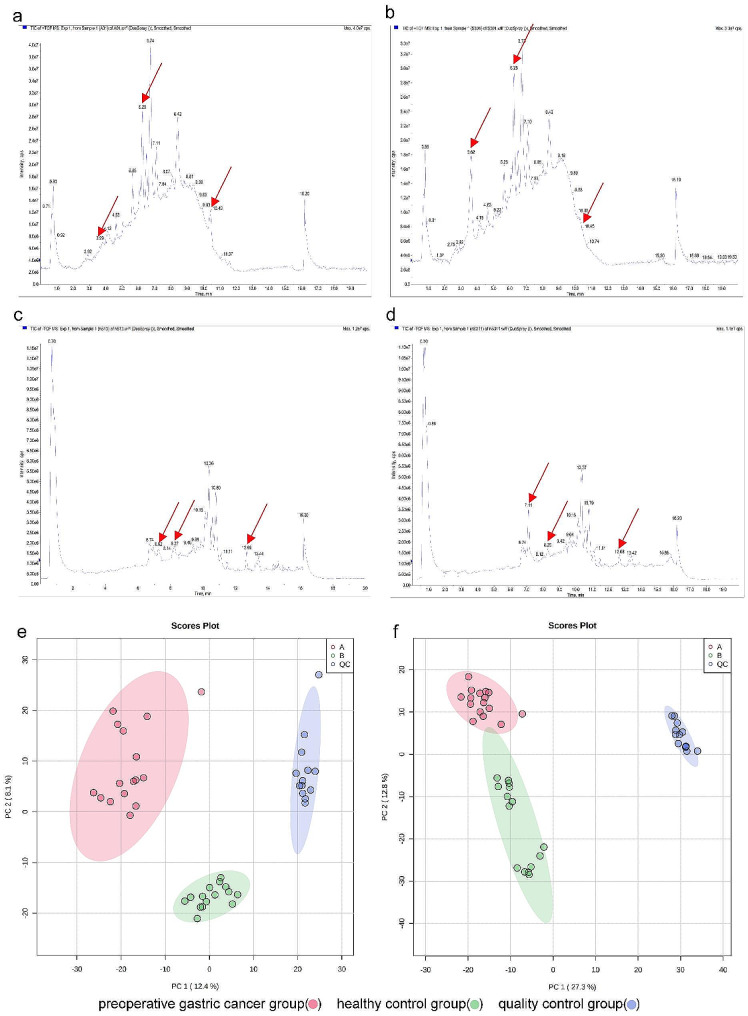
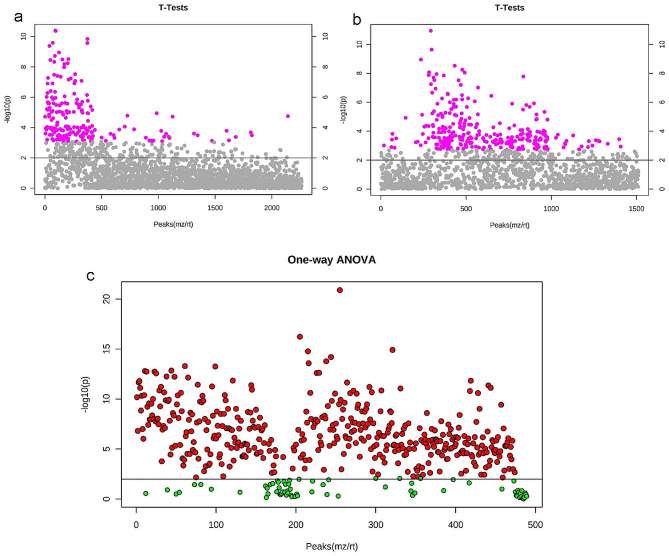
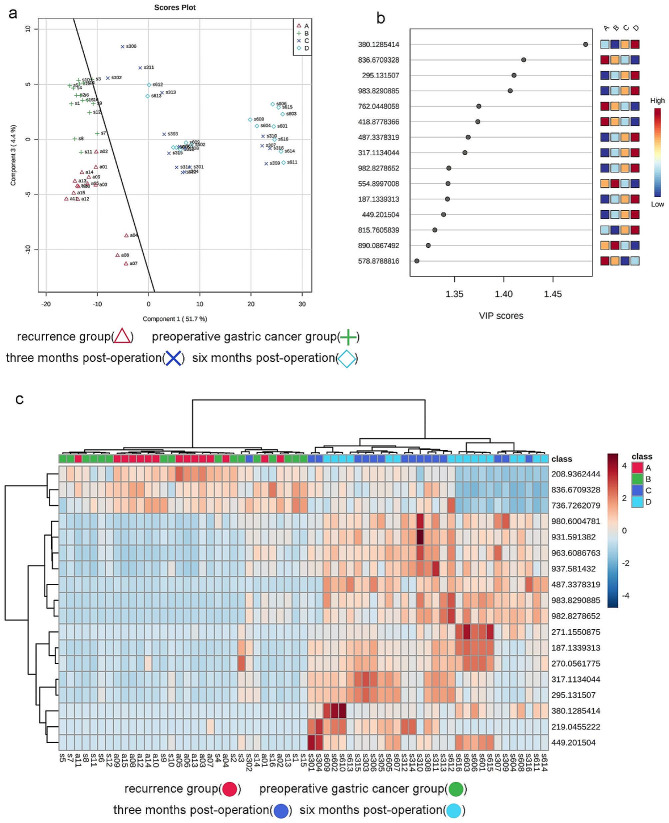
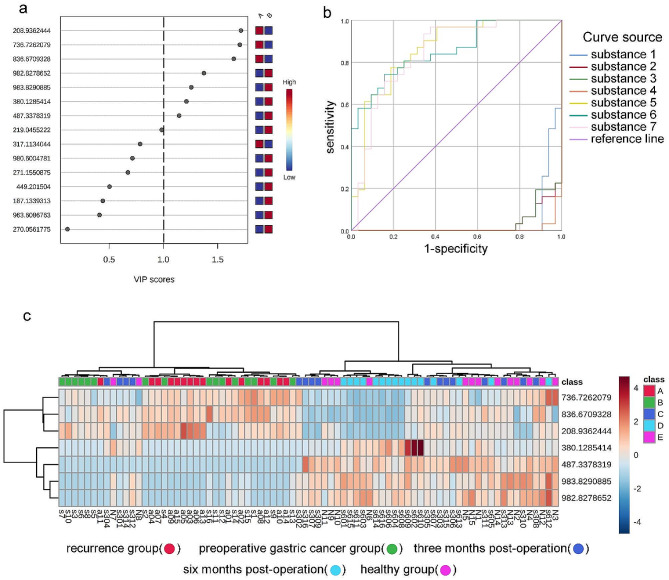
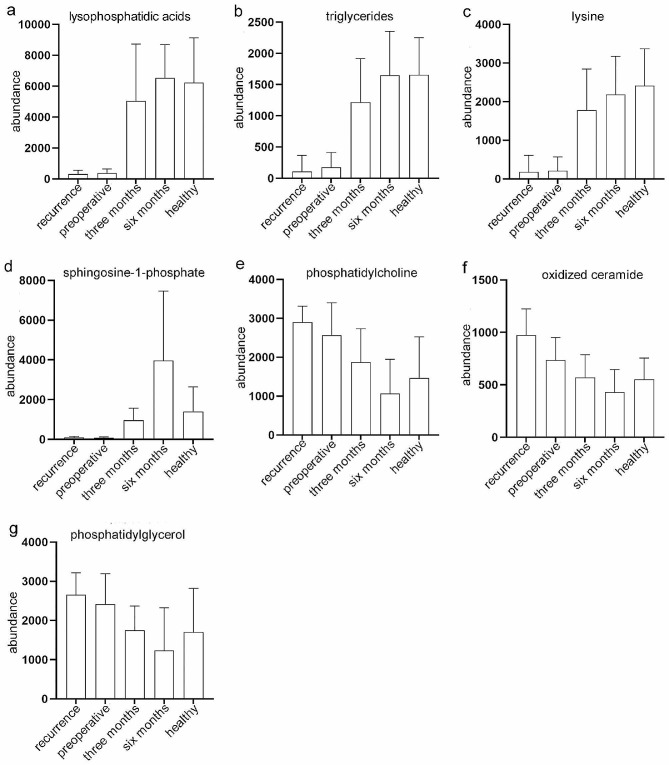
Objective: (1) This study aims to identify distinct serum metabolites in gastric cancer patients compared to healthy individuals, providing valuable insights into postoperative efficacy evaluation and monitoring of gastric cancer recurrence; (2) Methods: Serum samples were collected from 15 healthy individuals, 16 gastric cancer patients before surgery, 3 months after surgery, 6 months after surgery, and 15 gastric cancer recurrence patients. T-test and analysis of variance (ANOVA) were performed to screen 489 differential metabolites between the preoperative group and the healthy control group. Based on the level of the above metabolites in the recurrence, preoperative, three-month postoperative, and six-month postoperative groups, we further selected 18 significant differential metabolites by ANOVA and partial least squares discriminant analysis (PLS-DA). The result of hierarchical clustering analysis about the above metabolites showed that the samples were regrouped into the tumor-bearing group (comprising the original recurrence and preoperative groups) and the tumor-free group (comprising the original three-month postoperative and six-month postoperative groups). Based on the results of PLS-DA, 7 differential metabolites (VIP > 1.0) were further selected to distinguish the tumor-bearing group and the tumor-free group. Finally, the results of hierarchical clustering analysis showed that these 7 metabolites could well identify gastric cancer recurrence; (3) Results: Lysophosphatidic acids, triglycerides, lysine, and sphingosine-1-phosphate were significantly elevated in the three-month postoperative, six-month postoperative, and healthy control groups, compared to the preoperative and recurrence groups. Conversely, phosphatidylcholine, oxidized ceramide, and phosphatidylglycerol were significantly reduced in the three-month postoperative, six-month postoperative, and healthy control groups compared to the preoperative and recurrence groups. However, these substances did not show significant differences between the preoperative and recurrence groups, nor between the three-month postoperative, six-month postoperative, and healthy control groups; (4) Conclusions: Our findings demonstrate the presence of distinct metabolites in the serum of gastric cancer patients compared to healthy individuals. Lysophosphatidic acid, triglycerides, lysine, sphingosine-1-phosphate, phosphatidylcholine, oxidized ceramide, and phosphatidylglycerol hold potential as biomarkers for evaluating postoperative efficacy and monitoring recurrence in gastric cancer patients. These metabolites exhibit varying concentrations across different sample categories.
Overview
The claims and statistics of this paper haven’t been checked yet.
Free: it reads the open-access text and checks the first 5 claims that cite a source we can check. Create a free account to check every claim.
Integrity signals
Registry
Cites
Statistics
Figures
Verification
Claims the paper makes
The claims and statistics of this paper haven’t been checked yet.
Free: it reads the open-access text and checks the first 5 claims that cite a source we can check. Create a free account to check every claim.
Claims other papers make about this one
Each is checked against this paper’s own text: does it say what the citing paper says it does?
The cited source says what the claim attributes to it.
In the citing paper
“Particularly, lysophosphatidic acids, triglycerides, lysine, and sphingosine-1-phosphate revealed increased levels in the postoperative groups compared with the preoperative and recurrence groups.”
From Bioinformatics Analysis and Validation of Potential Markers Associated with Prediction and Prognosis of Gastric Cancer (2024) · cites this paper as [61]
The cited source says what the claim attributes to it.
In the citing paper
“Meanwhile, phosphatidylcholine, oxidized ceramide, and phosphatidylglycerol displayed decreased levels.”
From Bioinformatics Analysis and Validation of Potential Markers Associated with Prediction and Prognosis of Gastric Cancer (2024) · cites this paper as [61]
The cited source says what the claim attributes to it.
In the citing paper
“These results may suggest that these differential metabolites may be useful biomarkers for validating the prognosis and monitoring the recurrence of GC.”
From Bioinformatics Analysis and Validation of Potential Markers Associated with Prediction and Prognosis of Gastric Cancer (2024) · cites this paper as [61]
The cited source says what the claim attributes to it.
In the citing paper
“Interestingly, a study examining differential serum metabolites showed significant alterations in the abundance of several metabolites among patients before and after surgery [61].”
From Bioinformatics Analysis and Validation of Potential Markers Associated with Prediction and Prognosis of Gastric Cancer (2024) · cites this paper as [61]
Self-check
Percentages, sums and reported differences re-computed from the paper’s own numbers.
The self-check needs the paper’s full text.
Citations
Cites
Smyth, E. C., Nilsson, M., Grabsch, H. I., van Grieken, N. C., & Lordick, F. (2020) · The Lancet · doi:10.1016/s0140-6736(20)31288-5 · Cited by 4,803
Global burden of cancer attributable to infections in 2018: a worldwide incidence analysis
de Martel, C., Georges, D., Bray, F., Ferlay, J., & Clifford, G. M. (2020) · The Lancet Global Health · doi:10.1016/s2214-109x(19)30488-7 · Cited by 2,475 · cited 1×
“Despite declining cancer incidence and mortality rates worldwide over the past five decades, gastric cancer remains the third leading cause of cancer-related deaths [2, 3].”
BackgroundThrift, A. P., & El-Serag, H. B. (2020) · Clinical Gastroenterology and Hepatology · doi:10.1016/j.cgh.2019.07.045 · Cited by 1,456 · cited 1×
“Gastric cancer is a major global health concern, with more than one million newly diagnosed cases yearly and approximately 800,000 deaths in 2020 [1].”
BackgroundGunderson, L. L., & Sosin, H. (1982) · International Journal of Radiation Oncology*Biology*Physics · doi:10.1016/0360-3016(82)90377-7 · Cited by 488
Patterns of failure following curative resection of gastric carcinoma
Landry, J., Tepper, J. E., Wood, W. C., Moulton, E. O., Koerner, F., & Sullinger, J. (1990) · International Journal of Radiation Oncology*Biology*Physics · doi:10.1016/0360-3016(90)90344-j · Cited by 262 · cited 1×
“Nevertheless, despite advancements in treatment outcomes [7–9], the overall survival rate for recurrent gastric cancer patients remains low [10].”
BackgroundGastric Cancer: Where Are We Heading?
Petryszyn, P., Chapelle, N., & Matysiak-Budnik, T. (2020) · Digestive Diseases · doi:10.1159/000506509 · Cited by 198 · cited 1×
“Notably, epidemiological studies have revealed an alarming rise in gastric cancer incidence among young individuals, potentially linked to factors such as autoimmune responses [4, 5].”
BackgroundCeramides as Novel Disease Biomarkers
Kurz, J., Parnham, M. J., Geisslinger, G., & Schiffmann, S. (2019) · Trends in Molecular Medicine · doi:10.1016/j.molmed.2018.10.009 · Cited by 188 · cited 1×
“Recent studies have underscored the significant impact of interfering with ceramide production and metabolism on cancer treatment, highlighting their potential as signaling molecules with antiproliferative and pro-apoptotic effects [32, 33].”
BackgroundKumar, A., & Deep, G. (2020) · Cancer Letters · doi:10.1016/j.canlet.2020.03.017 · Cited by 185 · cited 1×
“Various factors, such as chemotherapy drugs, cytotoxic agents, hypoxic microenvironments, malnutrition, radiation, and hyper-thermia, promote apoptosis in tumor cells by increasing enzymatic activity related to the synthesis of ceramides [30, 31].”
BackgroundGastric cancer—Patterns of relapse after surgical resection
GUNDERSON, L. (2002) · Seminars in Radiation Oncology · doi:10.1053/srao.2002.30817 · Cited by 176
Burden of non-communicable diseases from infectious causes in 2017: a modelling study
Coates, M. M., Kintu, A., Gupta, N., Wroe, E. B., Adler, A. J., Kwan, G. F., Park, P. H., Rajbhandari, R., Byrne, A. L., Casey, D. C., et al. (2020) · The Lancet Global Health · doi:10.1016/s2214-109x(20)30358-2 · Cited by 155 · cited 1×
“Despite declining cancer incidence and mortality rates worldwide over the past five decades, gastric cancer remains the third leading cause of cancer-related deaths [2, 3].”
BackgroundLi, X., Zhang, C., Zhao, T., Su, Z., Li, M., Hu, J., Wen, J., Shen, J., Wang, C., Pan, J., et al. (2020) · Journal of Experimental & Clinical Cancer Research · doi:10.1186/s13046-020-01681-0 · Cited by 146 · cited 1×
“Notably, lactate dehydrogenase A succinylation at K222 has been shown to inhibit its degradation, promoting invasion and proliferation in gastric cancer [25].”
BackgroundCeramides and ceramide synthases in cancer: Focus on apoptosis and autophagy
Alizadeh, J., da Silva Rosa, S. C., Weng, X., Jacobs, J., Lorzadeh, S., Ravandi, A., Vitorino, R., Pecic, S., Zivkovic, A., Stark, H., et al. (2023) · European Journal of Cell Biology · doi:10.1016/j.ejcb.2023.151337 · Cited by 93 · cited 1×
“Oxidized ceramides play significant roles in cancer development and treatment [29].”
BackgroundSurgical Management of Gastric Cancer: A Systematic Review
MOCAN, L. C. (2021) · Journal of Clinical Medicine · doi:10.3390/jcm10122557 · Cited by 83 · cited 1×
“While radiotherapy and chemotherapy may improve outcomes, curative treatment largely relies on surgery-based multimodal therapies [15].”
BackgroundMetabolomics in endometrial cancer diagnosis: A systematic review
Raffone, A., Troisi, J., Boccia, D., Travaglino, A., Capuano, G., Insabato, L., Mollo, A., Guida, M., & Zullo, F. (2020) · Acta Obstetricia Et Gynecologica Scandinavica · doi:10.1111/aogs.13847 · Cited by 77 · cited 1×
“…focused on investigating serum metabolites in gastric cancer patients, revealing significant increases in phosphatidylcholine, oxidized ceramide, and phosphatidylglycerol levels, while Lyso-phosphatidic acid, triglycerides, lysine, and Sphingosine-1-phosphate were significantly decreased [12, 13].”
BackgroundYu, L., Lai, Q., Feng, Q., Li, Y., Feng, J., & Xu, B. (2021) · Frontiers in Oncology · doi:10.3389/fonc.2021.636917 · Cited by 70
Urinary metabolomics for discovering metabolic biomarkers of bladder cancer by UPLC-MS
Wang, R., Kang, H., Zhang, X., Qing, N., Wang, H., Wang, C., & Zhou, S. (2022) · BMC Cancer · doi:10.1186/s12885-022-09318-5 · Cited by 55 · cited 1×
“However, recent advancements in metabolomics offer new opportunities for identifying novel cancer diagnostic markers and prognostic assessments [19–21].”
BackgroundTargeting the Sphingolipid System as a Therapeutic Direction for Glioblastoma
Tea, M. N., Poonnoose, S. I., & Pitson, S. M. (2020) · Cancers · doi:10.3390/cancers12010111 · Cited by 52 · cited 1×
“Sphingolipids comprise a series of novel lipid bio-regulators that play crucial roles in maintaining barrier function and fluidity and regulating multiple signals during tumorigenesis [27].”
BackgroundEmerging Role of Metabolomics in Ovarian Cancer Diagnosis
Saorin, A., Gregorio, E. D., Miolo, G., Steffan, A., & Corona, G. (2020) · Metabolites · doi:10.3390/metabo10100419 · Cited by 50
Salustiano, E. J., da Costa, K. M., Freire‐de‐Lima, L., Mendonça‐Previato, L., & Previato, J. O. (2020) · Journal of Biological Chemistry · doi:10.1074/jbc.ra120.013090 · Cited by 49 · cited 1×
“Recent studies have underscored the significant impact of interfering with ceramide production and metabolism on cancer treatment, highlighting their potential as signaling molecules with antiproliferative and pro-apoptotic effects [32, 33].”
BackgroundHu, X. Y., Wang, J., Ju, Y., Zhang, X., Li, C., Li, C., Yue, L., Tuohetaerbaike, B., Li, Y., Wen, H., et al. (2022) · BMC Infectious Diseases · doi:10.1186/s12879-022-07694-8 · Cited by 48
Discovering Biomarkers in Peritoneal Metastasis of Gastric Cancer by Metabolomics
Pan, G., Ma, Y., Suo, J., Li, W., Zhang, Y., Qin, S., Jiao, Y., Zhang, S., Li, S., Kong, Y., et al. (2020) · OncoTargets and Therapy · doi:10.2147/ott.s245663 · Cited by 45 · cited 1×
“Currently, tumor staging and prognosis evaluation methods have limitations [16–18].”
BackgroundSelf-citationPrognostic impact of CEA/CA19-9 at the time of recurrence in patients with gastric cancer
Moriyama, J., Oshima, Y., Nanami, T., Suzuki, T., Yajima, S., Shiratori, F., Funahashi, K., & Shimada, H. (2021) · Surgery Today · doi:10.1007/s00595-021-02248-y · Cited by 45 · cited 1×
“Nevertheless, despite advancements in treatment outcomes [7–9], the overall survival rate for recurrent gastric cancer patients remains low [10].”
BackgroundCeramide glycosylation and related enzymes in cancer signaling and therapy
Li, Z., Zhang, L., Liu, D., & Wang, C. (2021) · Biomedicine & Pharmacotherapy · doi:10.1016/j.biopha.2021.111565 · Cited by 44 · cited 3×
“Additionally, inflammation and increased phosphatidic acid signaling contribute to immune evasion, thereby protecting cancer cells from immune system destruction [24].”
BackgroundInfluentialCorona, G., Cannizzaro, R., Miolo, G., Caggiari, L., Zorzi, M. D., Repetto, O., Steffan, A., & Re, V. D. (2018) · International Journal of Molecular Sciences · doi:10.3390/ijms19030750 · Cited by 43 · cited 1×
“It has played a vital role in diagnosing various cancers and other diseases, making it an ideal tool for this research [11].”
MethodAslan, M., Afşar, E., Konuk, E., Çeker, T., & Yılmaz, Ç. (2020) · Nutrition and Cancer · doi:10.1080/01635581.2020.1751216 · Cited by 42 · cited 1×
“Various factors, such as chemotherapy drugs, cytotoxic agents, hypoxic microenvironments, malnutrition, radiation, and hyper-thermia, promote apoptosis in tumor cells by increasing enzymatic activity related to the synthesis of ceramides [30, 31].”
BackgroundSun, H., Huang, X., Wang, Z., Zhang, G., Mei, Y., Wang, Y., Nie, Z., & Wang, S. (2019) · Journal of Cancer · doi:10.7150/jca.35939 · Cited by 38 · cited 2×
“Cancer cells exploit lipid metabolism to facilitate proliferation, survival, invasion, and metastasis and to influence the tumor microenvironment, providing energy, membrane components, and signaling molecules required for cancer progression and treatment [22].”
BackgroundTreatment Options for Surgically Resectable Gastric Cancer
Rajdev, L. N. (2010) · Current Treatment Options in Oncology · doi:10.1007/s11864-010-0117-1 · Cited by 37 · cited 1×
“Surgical resection has demonstrated improved survival rates for early-stage gastric cancer compared to endoscopic resection [6], while for advanced-stage cases, surgical resection remains the sole curative treatment option.”
BackgroundUranbileg, B., Kurano, M., Kano, K., Sakai, E., Arita, J., Hasegawa, K., Nishikawa, T., Ishihara, S., Yamashita, H., Seto, Y., et al. (2022) · Clinical and Translational Medicine · doi:10.1002/ctm2.1056 · Cited by 35
Autotaxin and Breast Cancer: Towards Overcoming Treatment Barriers and Sequelae
Benesch, M. G. K., Tang, X., & Brindley, D. N. (2020) · Cancers · doi:10.3390/cancers12020374 · Cited by 34
Sun, Z., Wang, Q., Yu, X., Ou, C., Yao, L., Liu, K., Liu, L., Ge, L., Fang, F., Zhao, Z., et al. (2015) · PubMed · Cited by 28
Clinicopathologic significance of protein lysine methyltransferases in cancer
Vougiouklakis, T., Bernard, B., Nigam, N., Burkitt, K., Nakamura, Y., & Saloura, V. (2020) · Clinical Epigenetics · doi:10.1186/s13148-020-00897-3 · Cited by 18
Badamasi, I. M., Maulidiani, M., Lye, M. S., Ibrahim, N., Shaari, K., & Stanslas, J. (2021) · Current Neuropharmacology · doi:10.2174/1570159x19666210611095320 · Cited by 11
Efficacy of Analytical Technologies in Metabolomics Studies of the Gastrointestinal Cancers
Aftabı, Y., Soleymani, J., & Jouyban, A. (2021) · Critical Reviews in Analytical Chemistry · doi:10.1080/10408347.2021.1901646 · Cited by 10 · cited 1×
“Currently, tumor staging and prognosis evaluation methods have limitations [16–18].”
Background
Cited by
Matsuoka, T., & Yashiro, M. (2024) · International Journal of Molecular Sciences · doi:10.3390/ijms25115880 · Cited by 83
“Interestingly, a study examining differential serum metabolites showed significant alterations in the abundance of several metabolites among patients before and after surgery [61].”
BackgroundFan, S., Wang, W., Che, W., Xu, Y., Jin, C., Dong, L., & Xia, Q. (2025) · Metabolites · doi:10.3390/metabo15030201 · Cited by 50
Beyond Biomarkers: Machine Learning-Driven Multiomics for Personalized Medicine in Gastric Cancer
Ma, D., Fan, C., Sano, T., Kawabata, K., Nishikubo, H., Imanishi, D., Sakuma, T., Maruo, K., Yamamoto, Y., Matsuoka, T., et al. (2025) · Journal of Personalized Medicine · doi:10.3390/jpm15050166 · Cited by 34
Daliri, A., Roudposhti, K. K., Alimoradi, M., Sheikhha, M., Saraei, M. R. S., & Mohammadzadeh, J. (2025) · doi:10.1109/ipria68579.2025.11263556 · Cited by 5
“Metabolomics, the comprehensive study of metabolites within a biological system, holds significant potential for the early detection of gastric cancer [20].”
Zhang, H., Shen, W.-B., & Chen, L. (2024) · World Journal of Gastrointestinal Oncology · doi:10.4251/wjgo.v16.i6.2419 · Cited by 2
“Studies have shown that the polymerase activity of DNA and RNA synthesis in tumor tissues is greater than that in normal tissue, nucleotide synthesis is increased, and decomposition is reduced[30-32].”
Metadata
- Authors
- Qu, T., Zhang, S., Yang, S., Li, S., & Wang, D.
- Affiliations
- First Hospital of Jilin University (CN)
- Corresponding author
- Wang, Daguang
- Venue
- BMC Cancer
- Published
- 2024-01-02
- Volume
- 24
- Issue
- 1
- Pages
- 27-27
- ISSN
- 1471-2407 (ISSN-L)
- PMC
- PMC10763142
- OpenAlex
- W4390510150
- Cited by
- 8
- References
- 33
- Citations by year
- 2026: 2 · 2025: 4 · 2024: 2
- FWCI
- 1.09
- Type
- journal article
- Language
- en
- Open access
- gold
- doi.org
- Licence
- cc-by
- creativecommons.org/licenses/by/4.0 (tdm)
- creativecommons.org/licenses/by/4.0 (vor)
- Locations
- BMC Cancer (publishedVersion, cc-by)
- PubMed Central (publishedVersion, cc-by)
- PubMed (publishedVersion)
- DOAJ (DOAJ: Directory of Open Access Journals) (submittedVersion, cc-by-sa)
- Funders
- Major Research Program of the National Natural Science Foundation of China (91959201)
- Topics
- Life Sciences › Biochemistry, Genetics and Molecular Biology › Molecular Biology › Metabolomics and Mass Spectrometry Studies
- Health Sciences › Medicine › Oncology › Gastric Cancer Management and Outcomes
- Life Sciences › Biochemistry, Genetics and Molecular Biology › Cancer Research › Cancer, Lipids, and Metabolism
- Keywords
- gastric cancer, serum metabolomics, tumor recurrence monitoring, biomarkers, lysophosphatidic acid, triglycerides, lysine, sphingosine-1-phosphate, phosphatidylcholine, phosphatidylglycerol, differential metabolites, PLS-DA, hierarchical clustering
- MeSH terms
- Ceramides, Humans, Lysine, Lysophospholipids, Neoplasm Recurrence, Local, Phosphatidylcholines, Phosphatidylglycerols, Sphingosine, Stomach Neoplasms, Triglycerides, Metabolomics
About these checks
Registry, retraction, Cites and statistics results are computed, not judged, with one exception: a printed reference that no index lists is read once by a model before it counts as a citation error. Claims are extracted by a model and kept only when their quote appears verbatim in the text; each cited source is then checked, with a model’s help, for whether it says what the claim relies on. Those verdicts can be wrong — read the claim’s quote and the cited source before relying on one.
Statistics and arithmetic are recomputed, not judged.
Confidence bands are shown only for fields calibrated on our annotated test set. None is calibrated yet, so no band is shown.
What counts as a claim ›How we measure confidence ›How we check this ›
Are you an author, or do you see a problem with this page? Request a review
Data sources
Bibliographic data: Semantic Scholar, OpenAlex, Crossref.
Contains information from the Semantic Scholar Academic Graph Datasets, made available under the ODC Attribution License (ODC-BY 1.0).
Semantic Scholar’s data is described in: Kinney, R., et al. (2023). The Semantic Scholar Open Data Platform. arXiv:2301.10140.
