

The DOI matches its Crossref record; its reference list is not available.
Early change of plasma Epstein-Barr virus DNA load and the viral lytic genome level could positively predict clinical outcome in recurrent or metastatic nasopharyngeal carcinoma receiving anti-programmed cell death 1 monotherapy
Open accessAbstract
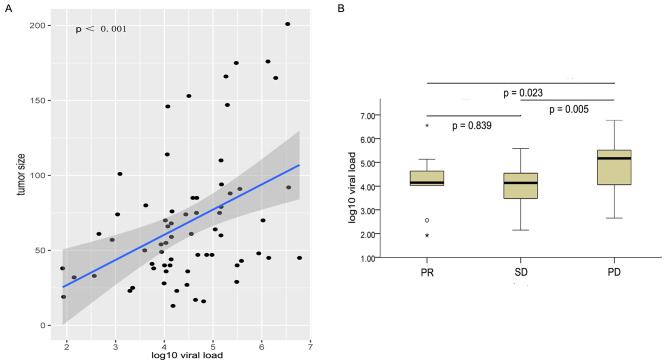
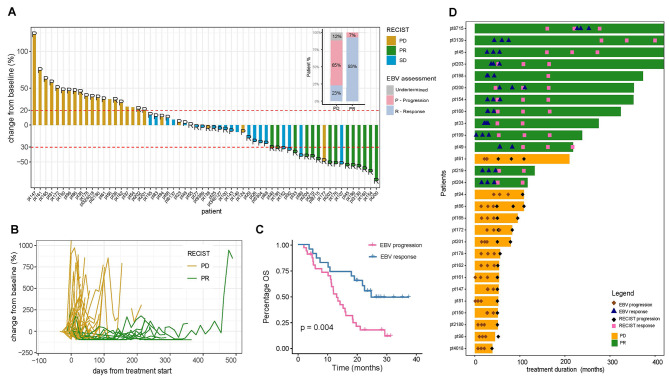
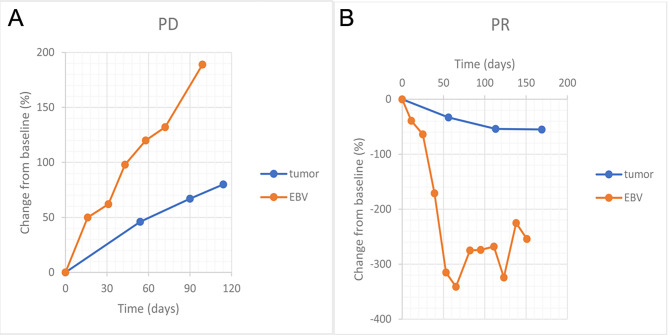
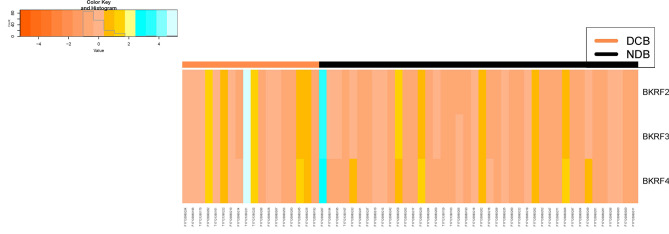
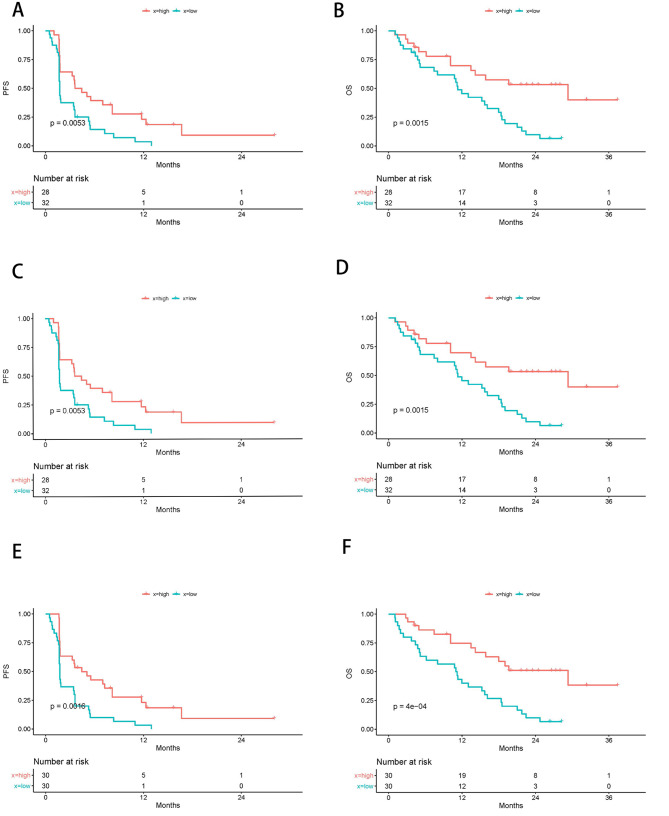
Purpose: Patients with recurrent or metastatic nasopharyngeal carcinoma (RM-NPC) have proven benefit from anti-programmed cell death 1 (anti-PD-1) monotherapy. Here, we retrospectively analyze the association of plasma Epstein-Barr virus (EBV) DNA load and tumor viral lytic genome with clinical outcome from 2 registered phase I trials. Methods: Patients with RM-NPC from Checkmate 077 (nivolumab phase I trial in China) and Camrelizumab phase I trial between March 2016 and January 2018 were enrolled. Baseline EBV DNA titers were tested in 68 patients and EBV assessment was performed in 60 patients who had at least 3 post-baseline timepoints of EBV data and at least 1 post-baseline timepoint of radiographic assessment. We defined “EBV response” as 3 consecutive timepoints of load below 50% of baseline, and “EBV progression” as 3 consecutive timepoints of load above 150% of baseline. Whole-exome sequencing was performed in 60 patients with available tumor samples. Results: We found that the baseline EBV DNA load was positively correlated with tumor size (spearman p < 0.001). Both partial response (PR) and stable disease (SD) patients had significantly lower EBV load than progression disease (PD) patients. EBV assessment was highly consistent with radiographic evaluation. Patients with EBV response had significantly improved overall survival (OS) than patients with EBV progression (log-rank p = 0.004, HR = 0.351 [95% CI: 0.171–0.720], median 22.5 vs. 11.9 months). The median time to initial EBV response and progression were 25 and 36 days prior to initial radiographic response and progression, respectively. Patients with high levels of EBV lytic genomes at baseline, including BKRF2, BKRF3 and BKRF4, had better progression-free survival (PFS) and OS. Conclusion: In summary, early clearance of plasma EBV DNA load and high levels of lytic EBV genes were associated with better clinical outcome in patients with RM-NPC receiving anti-PD-1 monotherapy.
Overview
The claims and statistics of this paper haven’t been checked yet.
Run the check — free, no account needed. It reads the open-access text and checks the sources it cites.
Integrity signals
Registry
Cites
Statistics
Figures
Verification
Claims the paper makes
The claims and statistics of this paper haven’t been checked yet.
Run the check — free, no account needed. It reads the open-access text and checks the sources it cites.
Claims other papers make about this one
Each is checked against this paper’s own text: does it say what the citing paper says it does?
The cited source doesn’t support the claim as written.
In the citing paper
“Furthermore, patients demonstrating response to anti-PD-1 therapy exhibited significantly enhanced clinical benefits compared to those characterized by Epstein-Barr virus progression (defined as viral DNA load exceeding 1.5-fold baseline), viral response (defined as DNA load below 0.5-fold baseline), or early clearance of plasma EBV DNA50.”
From Microbiome meets immunotherapy: unlocking the hidden predictors of immune checkpoint inhibitors (2025) · cites this paper as [50]
Checked by a reasoning model — may be wrong.
Experimental — accuracy not yet measured
Self-check
Percentages, sums and reported differences re-computed from the paper’s own numbers.
The self-check needs the paper’s full text.
Citations
No citation lists for this paper
No citation lists for this paper yet — checked again daily.
References 38 · Cited by 10
Research works printed but not linked: 35
- Chen YP, Chan ATC, Le QT, Blanchard P, Sun Y, Ma J. Nasopharyngeal carcinoma. Lancet. 2019;394(10192):64–80. · DOI
- Caudell JJ, Gillison ML, Maghami E, Spencer S, Pfister DG, Adkins D, Birkeland AC, Brizel DM, Busse PM, Cmelak AJ, et al. NCCN Guidelines® insights: Head and Neck cancers, Version 1.2022. J Natl Compr Canc Netw. 2022;20(3):224–34. · DOI
- Ma BBY, Lim WT, Goh BC, Hui EP, Lo KW, Pettinger A, Foster NR, Riess JW, Agulnik M, Chang AYC, et al. Antitumor Activity of Nivolumab in recurrent and metastatic nasopharyngeal carcinoma: an International, Multicenter Study of the Mayo Clinic Phase 2 Consortium (NCI-9742). J Clin Oncol. 2018;36(14):1412–8. · DOI
- Fang W, Yang Y, Ma Y, Hong S, Lin L, He X, Xiong J, Li P, Zhao H, Huang Y, et al. Camrelizumab (SHR-1210) alone or in combination with gemcitabine plus cisplatin for nasopharyngeal carcinoma: results from two single-arm, phase 1 trials. Lancet Oncol. 2018;19(10):1338–50. · DOI
- Wang FH, Wei XL, Feng J, Li Q, Xu N, Hu XC, Liao W, Jiang Y, Lin XY, Zhang QY, et al. Efficacy, Safety, and Correlative Biomarkers of Toripalimab in previously treated recurrent or metastatic nasopharyngeal carcinoma: a phase II clinical trial (POLARIS-02). J Clin Oncol. 2021;39(7):704–12. · DOI
- Adkins DR, Haddad RI. Clinical trial data of Anti-PD-1/PD-L1 therapy for recurrent or metastatic nasopharyngeal carcinoma: a review. Cancer Treat Rev. 2022;109:102428. · DOI
- Larkin J, Chiarion-Sileni V, Gonzalez R, Grob JJ, Rutkowski P, Lao CD, Cowey CL, Schadendorf D, Wagstaff J, Dummer R, et al. Five-year survival with combined Nivolumab and Ipilimumab in Advanced Melanoma. N Engl J Med. 2019;381(16):1535–46. · DOI · Paper page
- Tang LQ, Chen QY, Guo SS, Chen WH, Li CF, Zhang L, Lai XP, He Y, Xu YX, Hu DP, et al. The impact of plasma Epstein-Barr virus DNA and fibrinogen on nasopharyngeal carcinoma prognosis: an observational study. Br J Cancer. 2014;111(6):1102–11. · DOI
- Münz C. Latency and lytic replication in Epstein-Barr virus-associated oncogenesis. Nat Rev Microbiol. 2019;17(11):691–700. · DOI
- Jha HC, Pei Y, Robertson ES. Epstein-Barr Virus: diseases linked to infection and Transformation. Front Microbiol. 2016;7:1602. · DOI
- Tsao SW, Tsang CM, Lo KW. Epstein-Barr virus infection and nasopharyngeal carcinoma. Philos Trans R Soc Lond B Biol Sci 2017, 372(1732). · DOI
- Li YY, Chung GT, Lui VW, To KF, Ma BB, Chow C, Woo JK, Yip KY, Seo J, Hui EP, et al. Exome and genome sequencing of nasopharynx cancer identifies NF-κB pathway activating mutations. Nat Commun. 2017;8:14121. · DOI
- Yang CF, Yang GD, Huang TJ, Li R, Chu QQ, Xu L, Wang MS, Cai MD, Zhong L, Wei HJ, et al. EB-virus latent membrane protein 1 potentiates the stemness of nasopharyngeal carcinoma via preferential activation of PI3K/AKT pathway by a positive feedback loop. Oncogene. 2016;35(26):3419–31. · DOI
- Sengupta S, den Boon JA, Chen IH, Newton MA, Dahl DB, Chen M, Cheng YJ, Westra WH, Chen CJ, Hildesheim A, et al. Genome-wide expression profiling reveals EBV-associated inhibition of MHC class I expression in nasopharyngeal carcinoma. Cancer Res. 2006;66(16):7999–8006. · DOI
- Chen LW, Hung CH, Wang SS, Yen JB, Liu AC, Hung YH, Chang PJ. Expression and regulation of the BKRF2, BKRF3 and BKRF4 genes of Epstein-Barr virus. Virus Res. 2018;256:76–89. · DOI
- Su MT, Liu IH, Wu CW, Chang SM, Tsai CH, Yang PW, Chuang YC, Lee CP, Chen MR. Uracil DNA glycosylase BKRF3 contributes to Epstein-Barr virus DNA replication through physical interactions with proteins in viral DNA replication complex. J Virol. 2014;88(16):8883–99. · DOI
- Masud H, Watanabe T, Yoshida M, Sato Y, Goshima F, Kimura H, Murata T. Epstein-Barr Virus BKRF4 gene product is required for efficient progeny production. J Virol 2017, 91(23). · DOI
- Xu JY, Wei XL, Ren C, Zhang Y, Hu YF, Li JY, Chen JL, Wang YQ, Han F, Wang FH. Association of plasma Epstein-Barr Virus DNA with outcomes for patients with recurrent or metastatic nasopharyngeal carcinoma receiving anti-programmed cell death 1 immunotherapy. JAMA Netw Open. 2022;5(3):e220587. · DOI
- Ma Y, Chen X, Wang A, Zhao H, Lin Q, Bao H, Zhang Y, Hong S, Tang W, Huang Y et al. Copy number loss in granzyme genes confers resistance to immune checkpoint inhibitor in nasopharyngeal carcinoma. J Immunother Cancer 2021, 9(3). · DOI
- Ma Y, Fang W, Zhang Y, Yang Y, Hong S, Zhao Y, Tendolkar A, Chen L, Xu D, Sheng J, et al. A phase I/II open-label study of Nivolumab in previously treated Advanced or recurrent nasopharyngeal carcinoma and other solid tumors. Oncologist. 2019;24(7):891–e431. · DOI
- Li H, Durbin R. Fast and accurate short read alignment with Burrows-Wheeler transform. Bioinformatics. 2009;25(14):1754–60. · DOI · Paper page
- Cibulskis K, Lawrence MS, Carter SL, Sivachenko A, Jaffe D, Sougnez C, Gabriel S, Meyerson M, Lander ES, Getz G. Sensitive detection of somatic point mutations in impure and heterogeneous cancer samples. Nat Biotechnol. 2013;31(3):213–9. · DOI
- Fang H, Bergmann EA, Arora K, Vacic V, Zody MC, Iossifov I, O’Rawe JA, Wu Y, Jimenez Barron LT, Rosenbaum J, et al. Indel variant analysis of short-read sequencing data with Scalpel. Nat Protoc. 2016;11(12):2529–48. · DOI
- Chou LS, Liu CS, Boese B, Zhang X, Mao R. DNA sequence capture and enrichment by microarray followed by next-generation sequencing for targeted resequencing: neurofibromatosis type 1 gene as a model. Clin Chem. 2010;56(1):62–72. · DOI
- Liu P, Fang X, Feng Z, Guo YM, Peng RJ, Liu T, Huang Z, Feng Y, Sun X, Xiong Z, et al. Direct sequencing and characterization of a clinical isolate of Epstein-Barr virus from nasopharyngeal carcinoma tissue by using next-generation sequencing technology. J Virol. 2011;85(21):11291–9. · DOI
- Kwok H, Wu CW, Palser AL, Kellam P, Sham PC, Kwong DL, Chiang AK. Genomic diversity of Epstein-Barr virus genomes isolated from primary nasopharyngeal carcinoma biopsy samples. J Virol. 2014;88(18):10662–72. · DOI
- Zhou X, Yang Y, Ou X, Xu T, Shen C, Hu C. Interplay of Tumor Spread, volume and Epstein-Barr Virus DNA in nasopharyngeal carcinoma: feasibility of an integrative risk stratification Scheme. J Cancer. 2018;9(22):4271–8. · DOI
- Bureau M, Chatellier T, Perennec T, Goronflot T, Greilsamer C, Chene AL, Affi R, Frampas E, Bennouna J, Pons-Tostivint E. Baseline tumour size is an independent prognostic factor for overall survival in PD-L1 ≥ 50% non-small cell lung cancer patients treated with first-line pembrolizumab. Cancer Immunol Immunotherapy: CII. 2022;71(7):1747–56. · DOI
- Joseph RW, Elassaiss-Schaap J, Kefford R, Hwu WJ, Wolchok JD, Joshua AM, Ribas A, Hodi FS, Hamid O, Robert C, et al. Baseline tumor size is an independent prognostic factor for overall survival in patients with Melanoma Treated with Pembrolizumab. Clin cancer Research: Official J Am Association Cancer Res. 2018;24(20):4960–7. · DOI
- Litière S, Collette S, de Vries EG, Seymour L, Bogaerts J. RECIST - learning from the past to build the future. Nat Reviews Clin Oncol. 2017;14(3):187–92. · DOI
- Ahmed N, Abusalah M, Farzand A, Absar M, Yusof NY, Rabaan AA, AlSaihati H, Alshengeti A, Alwarthan S, Alsuwailem HS et al. Updates on Epstein-Barr Virus (EBV)-Associated Nasopharyngeal Carcinoma: emphasis on the latent Gene products of EBV. Med (Kaunas) 2022, 59(1). · DOI
- Martel-Renoir D, Grunewald V, Touitou R, Schwaab G, Joab I. Qualitative analysis of the expression of Epstein-Barr virus lytic genes in nasopharyngeal carcinoma biopsies. J Gen Virol. 1995;76(Pt 6):1401–8. · DOI
- Shen Y, Zhang S, Sun R, Wu T, Qian J. Understanding the interplay between host immunity and Epstein-Barr virus in NPC patients. Emerg Microbes Infect. 2015;4(3):e20. · DOI
- McKenzie J, El-Guindy A. Epstein-Barr Virus Lytic Cycle Reactivation. Curr Top Microbiol Immunol. 2015;391:237–61.
- Valpione S, Galvani E, Tweedy J, Mundra PA, Banyard A, Middlehurst P, Barry J, Mills S, Salih Z, Weightman J, et al. Immune-awakening revealed by peripheral T cell dynamics after one cycle of immunotherapy. Nat Cancer. 2020;1(2):210–21. · DOI
Metadata
- Authors
- Lin, S., Zhou, H., Chen, G., Xue, J., Liu, Q., Li, J., Yang, Y., Zhao, Y., Bao, H., Huang, Y., Ma, Y., & Zhao, H.
- Affiliations
- Sun Yat-sen University (CN)
- Corresponding author
- Huang, Yan
- Ma, Yuxiang
- Zhao, Hongyun
- Venue
- BMC Cancer
- Published
- 2024-07-03
- Volume
- 24
- Issue
- 1
- Pages
- 797-797
- ISSN
- 1471-2407 (ISSN-L)
- PMC
- PMC11223362
- OpenAlex
- W4400289811
- Cited by
- 10
- References
- 38
- Citations by year
- 2026: 3 · 2025: 7
- FWCI
- 1.70
- Type
- journal article
- Language
- en
- Update notices
- correction (2026-08-12)
- Open access
- gold
- doi.org
- Locations
- BMC Cancer (publishedVersion, cc-by)
- PubMed Central (publishedVersion, cc-by)
- PubMed (publishedVersion)
- DOAJ (DOAJ: Directory of Open Access Journals) (submittedVersion, cc-by-sa)
- Funders
- National Nature Science Foundation of China (82002409, 82073396)
- Guangdong Basic and Applied Basic Research Foundation (2020A1515010020)
- Topics
- Health Sciences › Medicine › Oncology › Viral-associated cancers and disorders
- Health Sciences › Medicine › Otorhinolaryngology › Head and Neck Cancer Studies
- Health Sciences › Medicine › Oncology › Cancer Immunotherapy and Biomarkers
- Keywords
- nasopharyngeal carcinoma, recurrent or metastatic nasopharyngeal carcinoma, Epstein-Barr virus, anti-PD-1 monotherapy, nivolumab, camrelizumab, predictive biomarkers, overall survival, progression-free survival
- MeSH terms
- Nasopharyngeal Carcinoma, Nivolumab, Immune Checkpoint Inhibitors, Adult, Aged, DNA, Viral, Herpesvirus 4, Human, Female, Humans, Male, Middle Aged, Nasopharyngeal Neoplasms, Neoplasm Recurrence, Local, Prognosis, Retrospective Studies, Genome, Viral, Treatment Outcome, Viral Load, Epstein-Barr Virus Infections, Programmed Cell Death 1 Receptor, Antibodies, Monoclonal, Humanized
About these checks
Registry, retraction, Cites and statistics results are computed, not judged, with one exception: a printed reference that no index lists is read once by a model before it counts as a citation error. Claims are extracted by a model and kept only when their quote appears verbatim in the text; each cited source is then checked, with a model’s help, for whether it says what the claim relies on. Those verdicts can be wrong — read the claim’s quote and the cited source before relying on one.
Statistics and arithmetic are recomputed, not judged.
Confidence bands are shown only for fields calibrated on our annotated test set. None is calibrated yet, so no band is shown.
What counts as a claim ›How we measure confidence ›How we check this ›
Are you an author, or do you see a problem with this page? Request a review
How to cite
Cite CoChat for the checks on this page, and the paper for its own findings.
- This page
- CoChat. (2026). Citation check: Early change of plasma Epstein-Barr virus DNA load and the viral lytic genome level could positively predict clinical outcome in recurrent or metastatic nasopharyngeal carcinoma receiving anti-programmed cell death 1 monotherapy. https://app.cochat.ai/papers/10.1186/s12885-024-12564-4
- The paper
- Lin, S., Zhou, H., Chen, G., Xue, J., Liu, Q., Li, J., Yang, Y., Zhao, Y., Bao, H., Huang, Y., Ma, Y., & Zhao, H. (2024). Early change of plasma Epstein-Barr virus DNA load and the viral lytic genome level could positively predict clinical outcome in recurrent or metastatic nasopharyngeal carcinoma receiving anti-programmed cell death 1 monotherapy. BMC Cancer. https://doi.org/10.1186/s12885-024-12564-4
