

The DOI matches its Crossref record; the references it cites are not checked yet.
Factors affecting the growth of children till the age of three years with overweight whose mothers have diabetes mellitus: A population-based cohort study
Open accessAbstract
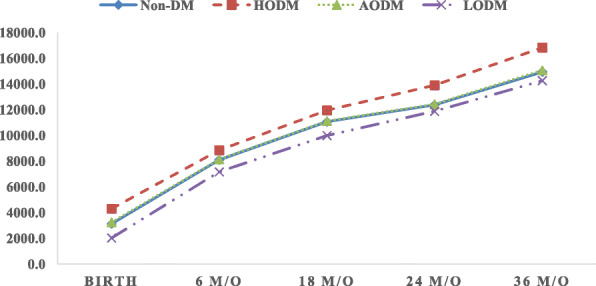
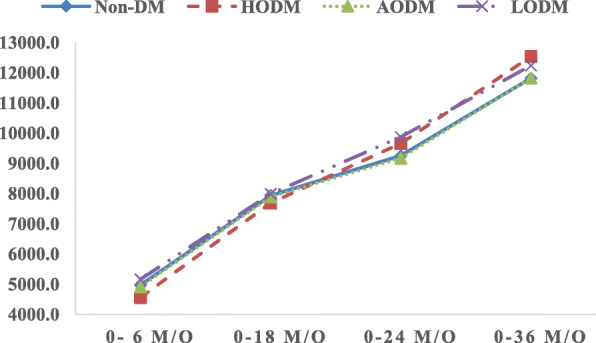
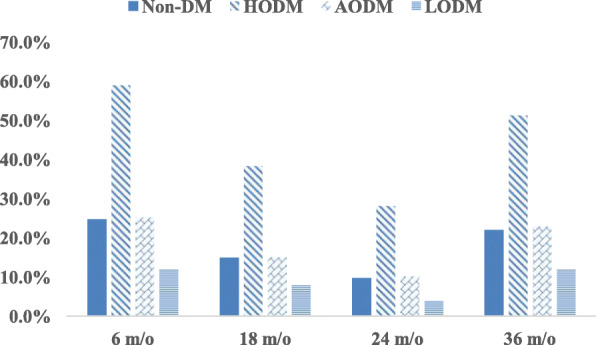
Background: The prevalence of diabetes mellitus (DM) during pregnancy and childhood obesity is increasing worldwide. Factors affecting the growth of children with overweight whose mothers had DM are complicated and inconclusive. Few longitudinal studies have focused on the growth of infants with macrosomia born to mothers with DM and the factors influencing their overweight. This study explored risk factors for childhood overweight/obesity (OWOB) among children of mothers with DM. Perinatal, maternal socio-demographic, infant care, and maternal body weight characteristics as well as child growth until age 3 years were analyzed using a longitudinal design. Methods: In total, 24,200 pairs of mothers and their children from the Taiwan Birth Cohort Study were included. Combined Taiwan Children Growth Curve report classifications were analyzed for infant growth at birth and at 6, 12, 18, 24, and 36 months old (m/o). A multiple logistic regression analysis with different model settings was used to assess factors affecting the growth of high birth weight children of mothers with diabetic mellitus (HODM). Results: Children in the HODM group had a higher average body weight than did those in the non-DM group at different age stages. Relative to the non-DM group, weight gain in the HODM group was slower before 18 m/o but faster from 18 to 36 m/o, particularly after 24 m/o. Maternal DM was a major risk factor for childhood OWOB (odds ratio [OR]: 3.25–3.95). After adjustment for related confounders, the OR was 2.19–3.17. Maternal overweight or obesity and higher gestational weight gain were greater risk factors for childhood OWOB at 3 years old after adjusted maternal DM and other selected confounders (OR: 1.45 and 1.23, respectively). Breastfeeding until 6 m/o was a protective factor against childhood OWOB (OR: 0.95). The HODM and non-DM groups did not differ significantly in perinatal, maternal socio-demographic, or infant care characteristics. Conclusions: Maternal DM is a major factor of childhood OWOB. Maternal body weight before and after pregnancy affects childhood OWOB, and this effect increases with the child’s age.
Overview
The claims and statistics of this paper haven’t been checked yet.
Run the check — free, no account needed. It reads the open-access text and checks the sources it cites.
Integrity signals
Registry
Cites
Statistics
Figures
Verification
Claims the paper makes
The claims and statistics of this paper haven’t been checked yet.
Run the check — free, no account needed. It reads the open-access text and checks the sources it cites.
Claims other papers make about this one
Each is checked against this paper’s own text: does it say what the citing paper says it does?
The source backs part of the claim, not all of it — or backs it for a different population, condition or comparison.
In the citing paper
“infants born to women with GDM are at greater risk of childhood obesity. 75”
From Overweight, obesity and excessive weight gain in pregnancy as risk factors for adverse pregnancy outcomes: A narrative review (2022) · cites this paper as [75]
Experimental — accuracy not yet measured
Self-check
Percentages, sums and reported differences re-computed from the paper’s own numbers.
The self-check needs the paper’s full text.
Citations
The citation lists haven’t been fetched yet
References 22 · Cited by 6
Research works printed but not linked: 20
- Huang YC, Fang LR, Huang JP, Xu SB, Zhu CH. Investigation of gestational diabetes in Taiwan. Taipei Med J. 2005;2:P132–7.
- Chou CY, Lin CL, Yang CK, Yang WC, Lee FK, Tsai MS. Pregnancy outcomes of Taiwanese women with gestational diabetes mellitus: a comparison of Carpenter-Coustan and National Diabetes Data Group criteria. J Women’s Health. 2010;19:935–9. · DOI · Paper page
- Aldana-Parra F, Vega GO, Fewtrell M. Associations between maternal BMI, breastfeeding practices and infant anthropometric status in Colombia; secondary analysis of ENSIN 2010. BMC Public Health. 2020;20:1–15. · DOI
- Burke V, Beilin LJ, Dunbar D. Family lifestyle and parental body mass index as predictors of body mass index in Australian children: a longitudinal study. Int J Obes. 2001;25:147–57. · DOI
- Cartagena D, McGrath JM, Masho SW. Differences in modifiable feeding factors by overweight status in Latino infants. Appl Nurs Res. 2016;30:210–5. · DOI
- Brown CL, Skinner AC, Yin HS, Rothman RL, Sanders LM, Delamater AM, et al. Parental perceptions of weight during the first year of life. Acad Pediatr. 2016;16:558–64. · DOI
- Kim SY, England JL, Sharma JA, Njoroge T. Gestational diabetes mellitus and risk of childhood overweight and obesity in offspring: a systematic review. Exp Diabetes Res. 2011;2011:1–9. · DOI · Paper page
- Svensson V, Jacobsson JA, Fredriksson R, Danielsson P, Sobko T, Schiöth HB, et al. Associations between severity of obesity in childhood and adolescence, obesity onset and parental BMI: a longitudinal cohort study. Int J Obes. 2011;35:46–52. · DOI
- Chesbrough KB, Ryan MA, Amoroso P, Boyko EJ, Gackstetter GD, Hooper TI, et al. The Millennium Cohort Study: a 21-year prospective cohort study of 140,000 military personnel. Mil Med. 2002;167:483–8. · DOI
- Landrigan PJ, Trasande L, Thorpe LE, Gwynn C, Lioy PJ, D’Alton ME, et al. The national children’s study: a 21-year prospective study of 100 000 American children. AAP. 2006;118:2173–86.
- Chen W, Chang M-H. New growth charts for Taiwanese children and adolescents based on World Health Organization standards and health-related physical fitness. Pediatr Neonatol. 2010;51:69–79. · DOI
- Nguyen CL, Pham NM, Binns CW, Duong DV, Lee AH. Prevalence of gestational diabetes mellitus in eastern and southeastern Asia: a systematic review and meta-analysis. J Diabetes Res. 2018;2018:1–10. · DOI
- Corrado F, Pintaudi B. Diagnosis of gestational diabetes mellitus: Italian perspectives on risk factor-based Screening. Nutr Diet Mater Diabet. 2017;9:87–97.
- Alfadhli EM, Osman EN, Basri TH, Mansuri NS, Youssef MH, Assaaedi SA, et al. Gestational diabetes among Saudi women: prevalence, risk factors and pregnancy outcomes. Ann Saudi Med. 2015;35:222–30. · DOI
- Ben-Haroush A, Yogev Y, Hod M. Epidemiology of gestational diabetes mellitus and its association with Type 2 diabetes. Diabet Med. 2004;21:103–13. · DOI · Paper page
- Zhang C, Ning Y. Effect of dietary and lifestyle factors on the risk of gestational diabetes: review of epidemiologic evidence. Am J Clin Nutr. 2011;94:1975S–9S. · DOI
- Lin PC, Hung CH, Chan TF, Lin KC, Hsu YY, Tzeng YL. The risk factors for gestational diabetes mellitus: a retrospective study. Midwifery. 2016;42:16–20. · DOI
- de Lauzon-Guillain B, Koudou YA, Botton J, Forhan A, Carles S, Pelloux V, et al. Association between genetic obesity susceptibility and mother-reported eating behaviour in children up to 5 years. Pediatr Obes. 2019;14:e12496. · DOI
- Reifsnider E, McCormick DP, Cullen KW, Todd M, Moramarco MW, Gallagher MR, et al. Randomized controlled trial to prevent infant overweight in a high-risk population. Acad Pediatr. 2018;18:324–33. · DOI
- Sun J, Wu L, Zhang Y, Li C, Wang Y, Mei W, et al. Association of breastfeeding duration, birth weight, and current weight status with the risk of elevated blood pressure in preschoolers. Eur J Clin Nutr. 2020;74:1325–33. · DOI
Metadata
- Authors
- Huang, Y.-D., Luo, Y.-R., Lee, M.-C., & Yeh, C.-J.
- Affiliations
- Ministry of Health and Welfare (TW)
- Chung Shan Medical University (TW)
- Chaoyang University of Technology (TW)
- Corresponding author
- Lee, Meng-Chih
- Yeh, Chih-Jung
- Venue
- BMC Pediatrics
- Published
- 2021-07-02
- Volume
- 21
- Issue
- 1
- Pages
- 298-298
- ISSN
- 1471-2431 (ISSN-L)
- PMC
- PMC8252317
- OpenAlex
- W3173681501
- Cited by
- 6
- References
- 22
- Citations by year
- 2025: 3 · 2022: 3
- FWCI
- 0.68
- Type
- journal article
- Language
- en
- Open access
- gold
- doi.org
- Locations
- BMC Pediatrics (publishedVersion, cc-by)
- PubMed Central (publishedVersion, cc-by)
- PubMed (publishedVersion)
- DOAJ (DOAJ: Directory of Open Access Journals) (submittedVersion, cc-by-sa)
- Funders
- Bureau of Health Promotion (DOH93-HP-1702)
- Topics
- Health Sciences › Medicine › Obstetrics and Gynecology › Gestational Diabetes Research and Management
- Health Sciences › Medicine › Pediatrics, Perinatology and Child Health › Birth, Development, and Health
- Health Sciences › Medicine › Public Health, Environmental and Occupational Health › Obesity, Physical Activity, Diet
- Keywords
- maternal diabetes, childhood overweight, childhood obesity, infant growth, macrosomia, gestational weight gain, maternal overweight, breastfeeding, risk factors, Taiwan Birth Cohort Study
- MeSH terms
- Birth Weight, Child, Child, Preschool, Female, Humans, Infant, Infant, Newborn, Mothers, Pregnancy, Risk Factors, Taiwan, Cohort Studies, Body Mass Index, Diabetes, Gestational, Overweight, Pediatric Obesity
About these checks
Registry, retraction, Cites and statistics results are computed, not judged, with one exception: a printed reference that no index lists is read once by a model before it counts as a citation error. Claims are extracted by a model and kept only when their quote appears verbatim in the text; each cited source is then checked, with a model’s help, for whether it says what the claim relies on. Those verdicts can be wrong — read the claim’s quote and the cited source before relying on one.
Statistics and arithmetic are recomputed, not judged.
Confidence bands are shown only for fields calibrated on our annotated test set. None is calibrated yet, so no band is shown.
What counts as a claim ›How we measure confidence ›How we check this ›
Are you an author, or do you see a problem with this page? Request a review
How to cite
Cite CoChat for the checks on this page, and the paper for its own findings.
- This page
- CoChat. (2026). Citation check: Factors affecting the growth of children till the age of three years with overweight whose mothers have diabetes mellitus: A population-based cohort study. https://app.cochat.ai/papers/10.1186/s12887-021-02768-z
- The paper
- Huang, Y.-D., Luo, Y.-R., Lee, M.-C., & Yeh, C.-J. (2021). Factors affecting the growth of children till the age of three years with overweight whose mothers have diabetes mellitus: A population-based cohort study. BMC Pediatrics. https://doi.org/10.1186/s12887-021-02768-z
