

Active contact and follow-up interventions to prevent repeat suicide attempts during high-risk periods among patients admitted to emergency departments for suicidal behavior: a systematic review and meta-analysis
Open accessThe DOI matches its Crossref record; 53 of the 53 references it cites were found in a registry or an index.
Abstract
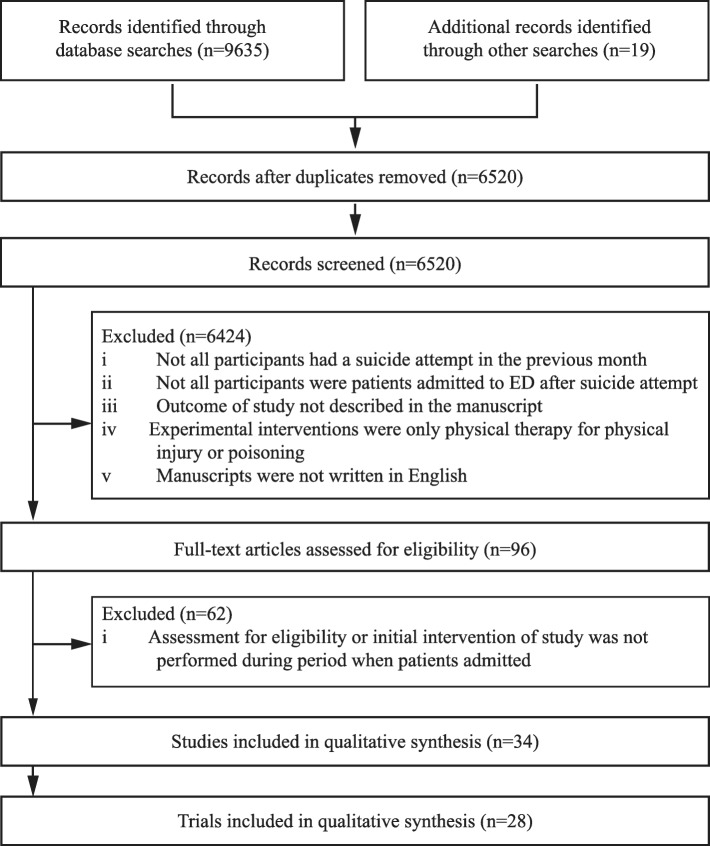
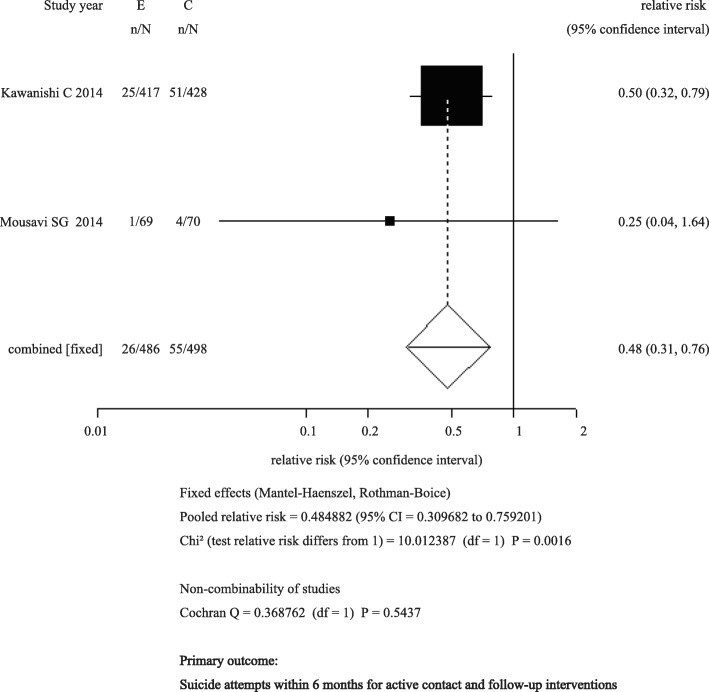
BACKGROUND: There is evidence that several intervention types, including psychotherapy, reduce repeat suicide attempts. However, these interventions are less applicable to the heterogeneous patients admitted to emergency departments (EDs). The risk of a repeat suicide attempt is especially high in the first 6 months after the initial attempt. Therefore, it is particularly important to develop effective ED interventions to prevent repeat suicide attempts during this 6-month period. METHODS: We systematically reviewed randomized controlled trials of ED-initiated interventions for suicidal patients admitted to EDs using the databases MEDLINE, PsychoINFO, CINAHL, and EMBASE up to January 2015 in accordance with an a priori published protocol (PROSPERO: CRD42013005463). Interventions were categorized into four types, including active contact and follow-up interventions (intensive care plus outreach, brief interventions and contact, letter/postcard, telephone, and composite of letter/postcard and telephone), and a meta-analysis was conducted to determine pooled relative risks (RRs) and 95% confidence intervals (CIs) of a repeat suicide attempt within 6 months. RESULTS: Of the 28 selected trials, 14 were active contact and follow-up interventions. Two of these trials (n = 984) reported results at 6 months (pooled RR = 0.48; 95% CI: 0.31 to 0.76). There were not enough trials of other interventions to perform meta-analysis. Some trials included in the meta-analysis were judged as showing risk of bias. CONCLUSION: Active contact and follow-up interventions are recommended for suicidal patients admitted to an ED to prevent repeat suicide attempts during the highest-risk period of 6 months. SYSTEMATIC REVIEW REGISTRATION: PROSPERO CRD42013005463 (27 August 2013).
Overview
The claims and statistics of this paper haven’t been checked yet.
Free: it reads the open-access text and checks the first 5 claims that cite a source we can check. Create a free account to check every claim.
Integrity signals
Registry
Cites
Statistics
Figures
Verification
Claims the paper makes
The claims and statistics of this paper haven’t been checked yet.
Free: it reads the open-access text and checks the first 5 claims that cite a source we can check. Create a free account to check every claim.
Claims other papers make about this one
Each is checked against this paper’s own text: does it say what the citing paper says it does?
The source backs part of the claim, not all of it — or backs it for a different population, condition or comparison.
In the citing paper
“early and frequent follow-up is associated with reduced suicide risk among adolescents with suicidal behavior [69].”
From Adolescent Suicide—Understanding Unique Risks and Opportunities for Trauma Centers to Recognize, Intervene, and Prevent a Leading Cause of Death (2022) · cites this paper as [69]
Experimental — accuracy not yet measured
Self-check
Percentages, sums and reported differences re-computed from the paper’s own numbers.
The self-check needs the paper’s full text.
Citations
Cites
Meta-analysis in clinical trials
DerSimonian, R., & Laird, N. (1986) · Controlled Clinical Trials · doi:10.1016/0197-2456(86)90046-2 · Cited by 39,552
Liberati, A., Altman, D. G., Tetzlaff, J., Mulrow, C., Gøtzsche, P. C., Ioannidis, J. P. A., Clarke, M., Devereaux, P. J., Kleijnen, J., & Moher, D. (2009) · PLoS Medicine · doi:10.1371/journal.pmed.1000100 · Cited by 28,164
Liberati, A., Altman, D. G., Tetzlaff, J., Mulrow, C., Gotzsche, P. C., Ioannidis, J. P. A., Clarke, M., Devereaux, P. J., Kleijnen, J., & Moher, D. (2009) · BMJ · doi:10.1136/bmj.b2700 · Cited by 17,648
Posner, K., Brown, G. K., Stanley, B., Brent, D. A., Yershova, K. V., Oquendo, M. A., Currier, G. W., Melvin, G. A., Greenhill, L., Shen, S., et al. (2011) · American Journal of Psychiatry · doi:10.1176/appi.ajp.2011.10111704 · Cited by 5,157
Self-harm and suicide in adolescents
Hawton, K., Saunders, K. E., & O'Connor, R. C. (2012) · The Lancet · doi:10.1016/s0140-6736(12)60322-5 · Cited by 2,306
Cognitive Therapy for the Prevention of Suicide Attempts: A Randomized Controlled Trial
Brown, G. K., Ten Have, T., Henriques, G. R., Xie, S. X., Hollander, J. E., & Beck, A. T. (2005) · JAMA · doi:10.1001/jama.294.5.563 · Cited by 1,045
Fleischmann, A. (2008) · Bulletin of the World Health Organization · doi:10.2471/blt.07.046995 · Cited by 470
Classification of suicidal behaviors: I. Quantifying intent and medical lethality
(1975) · American Journal of Psychiatry · doi:10.1176/ajp.132.3.285 · Cited by 460
Self-harm in England: a tale of three cities: Multicentre study of self-harm
Hawton, K., Bergen, H., Casey, D., Simkin, S., Palmer, B., Cooper, J., Kapur, N., Horrocks, J., House, A., Lilley, R., et al. (2007) · Social Psychiatry and Psychiatric Epidemiology · doi:10.1007/s00127-007-0199-7 · Cited by 419 · cited 1×
“In England, 220,000 patients per year are admitted to the hospital for self-harm behaviors [7].”
BackgroundGuthrie, E., Patton, G. C., Kapur, N., Mackway-Jones, K., Chew-Graham, C., Moorey, J., Mendel, E., Marino-Francis, F., Sanderson, S., Turpin, C., et al. (2001) · BMJ · doi:10.1136/bmj.323.7305.135 · Cited by 398
Cited by
OECD (2021) · OECD Health Policy Studies · doi:10.1787/4ed890f6-en · Cited by 407
Nock, M. K., Millner, A. J., Ross, E. L., Kennedy, C. J., Al-Suwaidi, M., Barak-Corren, Y., Castro, V. M., Castro-Ramirez, F., Lauricella, T., Murman, N., et al. (2022) · JAMA Network Open · doi:10.1001/jamanetworkopen.2021.44373 · Cited by 157
Psychosocial interventions for self-harm in adults
Witt, K. G., Hetrick, S. E., Rajaram, G., Hazell, P., Taylor Salisbury, T. L., Townsend, E., & Hawton, K. (2021) · Cochrane Database of Systematic Reviews · doi:10.1002/14651858.cd013668.pub2 · Cited by 124
Risk of suicide attempt repetition after an index attempt: A systematic review and meta-analysis
de la Torre-Luque, A., Pemau, A., Ayad-Ahmed, W., Borges, G., Fernandez-Sevillano, J., Garrido-Torres, N., Garrido-Sanchez, L., Garriga, M., Gonzalez-Ortega, I., Gonzalez-Pinto, A., et al. (2023) · General Hospital Psychiatry · doi:10.1016/j.genhosppsych.2023.01.007 · Cited by 89
Hink, A. B., Killings, X., Bhatt, A., Ridings, L. E., & Andrews, A. L. (2022) · Current Trauma Reports · doi:10.1007/s40719-022-00223-7 · Cited by 67
Understanding and managing suicide risk
Zortea, T. C., Cleare, S., Melson, A. J., Wetherall, K., & O’Connor, R. C. (2020) · British Medical Bulletin · doi:10.1093/bmb/ldaa013 · Cited by 58
“Evidence suggests that making a series of active contact and follow-up interventions is associated with reduced likelihood of suicidal behaviour and future hospital presentation for self-harm, particularly during the first six months after discharge from an emergency department after a suicide attempt (61,62).”
BackgroundAl‐Halabí, S., & Fonseca‐Pedrero, E. (2024) · Psicothema · doi:10.7334/psicothema2024.341 · Cited by 47
“…intervention that was evaluated several decades ago and refers to the usefulness of the routine of sending brief and non-demanding messages that express concern and emotional support during follow-up to those who have been discharged from clinical care (Comtois et al., 2019; Inagaki et al., 2019).”
BackgroundPérez, V., Elices, M., Vilagut, G., Vieta, E., Blanch, J., Laborda-Serrano, E., Prat, B., Colom, F., Palao, D. J., & Alonso, J. (2021) · European Neuropsychopharmacology · doi:10.1016/j.euroneuro.2021.11.006 · Cited by 41
The Catalonia Suicide Risk Code: A secondary prevention program for individuals at risk of suicide
Pérez, V., Elices, M., Prat, B., Vieta, E., Blanch, J., Alonso, J., Pifarré, J., Mortier, P., Cebrià, A. I., Campillo, M. T., et al. (2020) · Journal of Affective Disorders · doi:10.1016/j.jad.2020.03.009 · Cited by 47
Risk Factors Associated With Peripartum Suicide Attempts in Japan
Akaishi, T., Tarasawa, K., Fushimi, K., Hamada, H., Saito, M., Kobayashi, N., Kikuchi, S., Tomita, H., Ishii, T., Fujimori, K., et al. (2023) · JAMA Network Open · doi:10.1001/jamanetworkopen.2022.50661 · Cited by 29
Pérez, V., Elices, M., Toll, A., Bobes, J., López‐Solà, C., Díaz‐Marsá, M., Grande, I., López-Peña, P., Vega, B. R., Ruíz-Veguilla, M., et al. (2020) · Revista de Psiquiatría y Salud Mental · doi:10.1016/j.rpsm.2020.11.004 · Cited by 32
Brief Interventions for Self-injurious Thoughts and Behaviors in Young People: A Systematic Review
Dobias, M. L., Chen, S., Fox, K. R., & Schleider, J. L. (2023) · Clinical Child and Family Psychology Review · doi:10.1007/s10567-023-00424-9 · Cited by 25
Hu, F., Xu, J., Jia, Y., Ge, M., Zhang, W., Tang, W. H., Zhao, D., Hu, S., Du, W. D., Shen, W., et al. (2024) · Asian Journal of Psychiatry · doi:10.1016/j.ajp.2024.103913 · Cited by 29
Do Brief Preventive Interventions for Patients at Suicide Risk Work?
Melhem, N., & Brent, D. A. (2020) · JAMA Psychiatry · doi:10.1001/jamapsychiatry.2020.1287 · Cited by 21
Zarska, A., Barnicot, K., Lavelle, M., Dorey, T., & McCabe, R. (2022) · Archives of Suicide Research · doi:10.1080/13811118.2022.2071660 · Cited by 20
Interventions for attempted suicide
Menon, V., & Vijayakumar, L. (2022) · Current Opinion in Psychiatry · doi:10.1097/yco.0000000000000807 · Cited by 21
Djembi, L. F., Debien, C., Demarty, A.-L., Vaïva, G., & Messiah, A. (2021) · European Psychiatry · doi:10.1192/j.eurpsy.2021.2221 · Cited by 19
Means Restriction for Suicide Prevention: An Umbrella Review
Nevarez‐Flores, A. G., Pandey, V., Angelucci, A. P., Neil, A. L., McDERMOTT, B. M., & Castle, D. J. (2024) · Acta Psychiatrica Scandinavica · doi:10.1111/acps.13783 · Cited by 18
Shin, H. D., Price, S. L., & Aston, M. L. (2020) · Journal of Clinical Nursing · doi:10.1111/jocn.15502 · Cited by 20
Malakouti, S. K., Nojomi, M., Ghanbari, B., Rasouli, N., Khaleghparast, S., & Farahani, I. G. (2021) · Crisis · doi:10.1027/0227-5910/a000754 · Cited by 25
The Paradox of Suicide Prevention
Turner, K. A., Pisani, A. R., Svetičič, J., O’Connor, N., Woerwag‐Mehta, S., Burke, K., & Stapelberg, N. J. C. (2022) · International Journal of Environmental Research and Public Health · doi:10.3390/ijerph192214983 · Cited by 18
“It is noteworthy that the SPP elements for which the completion seems most dependent on the demand experienced by the service are the same ones for which exists most robust evidence-base of efficacy (safety planning intervention [63]; rapid follow-ups [64]; and fidelity to the ZSF [61]).”
BackgroundEffectiveness of assertive case management for patients with suicidal intent
Inui-Yukawa, M., Miyaoka, H., Yamamoto, K., Kamijo, Y., Takai, M., Yonemoto, N., Kawanishi, C., Otsuka, K., Tachikawa, H., & Hirayasu, Y. (2021) · Psychiatry Research · doi:10.1016/j.psychres.2021.114125 · Cited by 13
Self-citationVirk, F., Waine, J., & Berry, C. (2022) · BJPsych Open · doi:10.1192/bjo.2022.21 · Cited by 15
Chitavi, S. O., Patrianakos, J. L., Williams, S. C., Schmaltz, S. P., Ahmedani, B. K., Roaten, K., Boudreaux, E. D., & Brown, G. K. (2024) · The Joint Commission Journal on Quality and Patient Safety · doi:10.1016/j.jcjq.2024.02.007 · Cited by 13
DeCamp, M. W., & Levine, M. A. (2021) · Journal of General Internal Medicine · doi:10.1007/s11606-021-06852-z · Cited by 11
“Data in the general population suggest that active contact and follow-up with those who have attempted suicide are critical to preventing future attempts.(34) Opportunities for those who have attempted suicide to freely share their story (if they choose, and with whom they choose) can support the well-being of the ind…”
BackgroundShin, H. D., Cassidy, C. E., Weeks, L. E., Campbell, L. A., Drake, E. K., Wong, H., Donnelly, L., Dorey, R., Kang, H., & Curran, J. (2021) · JBI Evidence Synthesis · doi:10.11124/jbies-21-00149 · Cited by 11
Coutinho, A. P. D. O., Henriques, M. I. R. S., Rothes, I., Zortea, T. C., Santos, J. C., & Cuijpers, P. J. (2021) · Systematic Reviews · doi:10.1186/s13643-021-01609-5 · Cited by 11
“[46, 48] points out that the sample RCTs have a substantial degree of heterogeneity of effects and this fact demands caution when looking at the results and when making choices about clinical decisions In addition, addressing different types of interventions and the creation of subgroups by type of intervention leads…”
BackgroundSedghy, Z., Yousefi, N., & Navidian, A. (2020) · Journal of Education and Health Promotion · doi:10.4103/jehp.jehp_344_20 · Cited by 12
“illustrated that active communication and follow‐up interventions for suicidal patients admitted to the emergency department could prevent subsequent suicide attempts during the 6‐month, high‐risk, post‐discharge period.[35] Exploring the effectiveness of post‐discharge educational interventions, Exbrayat et al.”
BackgroundSon, J. M., Jeong, J., Ro, Y. S., Hong, W., Hong, K. J., Song, K. J., & Shin, S. D. (2020) · The American Journal of Emergency Medicine · doi:10.1016/j.ajem.2020.05.030 · Cited by 12
Suicide Aftercare Services Report
Shand, F., Woodward, A., McGill, K., Larsen, M. E., Torok, M. H., Petheridge, A., Rosebrock, H., Cotterill, T., & Hains, A. R. (2019) · doi:10.57022/qpxf6172 · Cited by 9
Ünsal, E., & İnan, F. Ş. (2024) · Archives of Psychiatric Nursing · doi:10.1016/j.apnu.2024.01.009 · Cited by 7
López-Goñi, J. J., & Goñi-Sarriés, A. (2021) · Psychiatry Research · doi:10.1016/j.psychres.2021.114029 · Cited by 7
Dillon, E. C., Huang, Q., Deng, S., Li, M., de Vera, E., Pesa, J. A., Nguyen, T. H., Kiger, A. J., Becker, D. F., & Azar, K. M. J. (2023) · Translational Behavioral Medicine · doi:10.1093/tbm/ibac117 · Cited by 9
Gardiner, F. W., Middleton, J., Perera, S., Gunner, M., Churilov, L. P., Coleman, M., & Poole, L. (2022) · The Lancet Regional Health - Western Pacific · doi:10.1016/j.lanwpc.2022.100385 · Cited by 5
Impact of posttraumatic stress disorder and comorbid psychiatric conditions on suicide reattempts
Demesmaeker, A., Creupelandt, C., Leroy, A., Vaïva, G., & D’Hondt, F. (2025) · European Journal of Psychotraumatology · doi:10.1080/20008066.2025.2461435 · Cited by 7
Long-term outcomes of patients admitted to an intensive care unit with intentional self-harm
Maiden, M. J., Trisno, R., Finnis, M., Norrish, C. M., Mulvey, A., Nasr-Esfahani, S., Orford, N. R., & Moylan, S. (2021) · Anaesthesia and Intensive Care · doi:10.1177/0310057x20978987 · Cited by 6
“Active contact and follow-up interventions for patients after self-harm have been shown to be effective in reducing the risk of repeat suicide attempts.(25,26) Our data support the importance of follow-up programmes after serious self-harm.”
BackgroundFeng, Y. R., Valuri, G. M., Morgan, V. A., Preen, D. B., O’Leary, C., Crampin, E. F., & Waterreus, A. J. (2023) · Australian & New Zealand Journal of Psychiatry · doi:10.1177/00048674231172116 · Cited by 7
“Rapid and active support and care after a suicide attempt is critically important to reducing the risk of a subsequent suicide attempt (Inagaki et al., 2019; Stanley et al., 2018).”
BackgroundDemesmaeker, A., Amad, A., Blekić, W., Notredame, C.-É., Selosse, T., Jardon, V., Vaïva, G., & D’Hondt, F. (2024) · Journal of Psychiatric Research · doi:10.1016/j.jpsychires.2024.11.031 · Cited by 4
Outcomes and Cost-Benefit of a National Suicide Reattempt Prevention Program
Gallien, Y., Broussouloux, S., Demesmaeker, A., Fouillet, A., Mertens, C., Chin, F., Cassourret, G., Caserio‐Schönemann, C., du Roscoät, E., Strat, Y. L., et al. (2025) · JAMA Network Open · doi:10.1001/jamanetworkopen.2025.25671 · Cited by 5
Gomes‐da‐Costa, S., Solé, E., Williams, E., Giménez, A., Garriga, M., Pacchiarotti, I., Vázquez, M., Cavero, M., Blanch, J., Pérez, V., et al. (2021) · Revista de Psiquiatría y Salud Mental · doi:10.1016/j.rpsm.2021.05.004 · Cited by 7
McGill, K., Whyte, I. M., Sawyer, L., Adams, D., Delamothe, K., Lewin, T. J., Robinson, J., KAY‐LAMBKIN, F. J., & Carter, G. L. (2022) · Suicide and Life-Threatening Behavior · doi:10.1111/sltb.12840 · Cited by 5
Edwards-Bailey, L., Cartwright, T., Smyth, N., & Mackenzie, J. (2022) · Counselling Psychology Quarterly · doi:10.1080/09515070.2022.2146054 · Cited by 10
“Previous research suggests that following a suicide attempt the risk of a repeated attempt is particularly high in the following six-month period (Inagaki, Kawashima, Yonemoto, & Yamada, 2019; Kapur et al., 2006).”
BackgroundIshii, T., Yonemoto, N., Otaka, Y., Okamura, K., Tsujii, N., Otsuka, K., Yoshimura, R., Kinoshita, T., Fujisawa, D., Tachikawa, H., et al. (2023) · Psychiatry and Clinical Neurosciences Reports · doi:10.1002/pcn5.106 · Cited by 5
Self-citationPadmanathan, P., Cohen, R., Gunnell, D., Biddle, L., Griffith, E., Breheny, K., Hickman, M., Munien, N., Patel, A., Crocker, E., et al. (2023) · Crisis · doi:10.1027/0227-5910/a000933 · Cited by 4
“…among people with substance use problems (Padmanathan et al., 2020), the wider literature on self-harm risk and interventions (Hawton et al., 2016; Inagaki et al., 2019; McCabe et al., 2018; Miller et al., 2017; O ’ Connor et al., 2019; Stanley et al., 2018), telephone interviews with individuals…”
Şahin, G., & İkican, T. Ç. (2024) · Journal of Psychosocial Nursing and Mental Health Services · doi:10.3928/02793695-20240813-02 · Cited by 5
Espandian, A., Flórez, G., Pensado, L. F. P., Tajes, M., Sáiz, P. A., Villa, R., & Bobes, J. (2021) · Adicciones · doi:10.20882/adicciones.1717 · Cited by 4
Mansfield, Y., Hamilton, S. J., Argus, J., Wyder, M., Macready, R., James, B., Stewart, C., & Meehan, T. (2021) · Crisis · doi:10.1027/0227-5910/a000803 · Cited by 4
Suicidal behavior in persons attended in out-of-hospital emergency services in Spain
Ramos-Martín, J., Sánchez-Lafuente, C. G., Martínez-García, A. I., Castillo-Jiménez, P., Parra, J. G., & Moreno‐Küstner, B. (2023) · Frontiers in Psychiatry · doi:10.3389/fpsyt.2023.1235583 · Cited by 4
Comendador, L., Jiménez‐Villamizar, M. P., Losilla, J.-M., Sanabria‐Mazo, J. P., Canedo, C. M., Cebrià, A. I., Sanz, A., & Palao, D. J. (2023) · BMJ Open · doi:10.1136/bmjopen-2023-075116 · Cited by 4
“12 17 34 Overall, there are studies with positive results in the reduction of suicide-related outcomes 23 26 29 30 and others that have found conflicting or inconclusive evidence, 25 35 36 suggesting the suitability of conducting a systematic review with meta-analysis of the current scientific…”
BackgroundShin, H. D., Cassidy, C. E., Weeks, L. E., Campbell, L. A., Rothfus, M. A., & Curran, J. (2021) · JBI Evidence Synthesis · doi:10.11124/jbies-20-00307 · Cited by 5
Zhou, E., DeCou, C. R., Stuber, J., Rowhani‐Rahbar, A., Kume, K., & Rivara, F. P. (2019) · Archives of Suicide Research · doi:10.1080/13811118.2019.1635932 · Cited by 4
Brief interventions for self-injurious thoughts and behaviors in young people: A systematic reviewPreprint
Dobias, M., Chen, S., Fox, K. R., & Schleider, J. L. (2020) · PsyArXiv (OSF Preprints) · doi:10.31234/osf.io/z26ch · Cited by 5
Homan, S., Marciniak, M. A., Michel, S., Bertram, A.-M., Rühlmann, C., Pethő, A., Kirchhofer, L., Biele, L., Segerer, R. K., Homan, P., et al. (2026) · EClinicalMedicine · doi:10.1016/j.eclinm.2026.103824 · Cited by 9
“Previous findings are mixed: while some align with our study, 10,19,28 others have found that high-risk groups, including ED patients or psychiatric inpatients, benefit particularly from active outreach.”
Lam, J. S. H., Abramovich, A., Victor, J. C., Zaheer, J., & Kurdyak, P. A. (2025) · Transgender Health · doi:10.1089/trgh.2024.0102 · Cited by 4
Miché, M., Strippoli, M. F., Preisig, M., & Lieb, R. (2024) · BMC Psychiatry · doi:10.1186/s12888-024-05647-w · Cited by 3
“The reduction of long-term SA risk requires the identification of individuals who are at increased SA risk, and who may benefit from interventions that aim to reduce SA risk [e.g., 4–7].”
BackgroundCorrelates of mental health service utilization among depressed individuals with suicidality
Alonzo, D. M., & Colon, M. V. (2020) · Social Work in Mental Health · doi:10.1080/15332985.2019.1700583 · Cited by 3
Østervang, C., Lassen, A. T., Stenager, E. N., Møller, C. L., Hummel, S., & Jensen, M. V. (2025) · International Journal of Mental Health Nursing · doi:10.1111/inm.70067 · Cited by 3
“Despite numerous attempts to help these complex patients (Zarska et al. 2023; Graverholt et al. 2011; Inagaki et al. 2019), recent studies (Sørensen et al. 2024; Ngune et al. 2021) have highlighted substantial problems in the health-care system where these patients are at high risk of being…”
Dillon, E. C., Deng, S., Li, M., Huang, Q., de Vera, E., Pesa, J. A., Nguyen, T. H., Kiger, A. J., Becker, D. F., & Azar, K. M. J. (2024) · Psychiatric Research and Clinical Practice · doi:10.1176/appi.prcp.20230068 · Cited by 5
“Effective interventions such as safety planning and psychotherapy exist (14, 15), but are not consistently available.”
BackgroundButjosa, A., Cruz, D., Richart, T., Terradas, M. R., CCAMH Group, & Lacasa, F. (2024) · Actas Españolas de Psiquiatría · doi:10.62641/aep.v52i2.1620 · Cited by 2
Seo, J. C., Lee, J.-G., Kang, S.-H., & Kwon, C. (2023) · European Journal of Integrative Medicine · doi:10.1016/j.eujim.2023.102276 · Cited by 2
Fulginiti, A., Doyle, M., Miller, S. M., Lee, S., & Pasquarella, F. J. (2024) · Crisis · doi:10.1027/0227-5910/a000970 · Cited by 1
Thomas, Y. T., Swann, A. C., Murtaza, S., Kosten, T. R., Murphy, N., Mathew, S. J., Verrico, C. D., Davis, J., & Moukaddam, N. J. (2025) · Journal of Affective Disorders · doi:10.1016/j.jad.2025.119977 · Cited by 2
Lam, J. S. H., Kurdyak, P. A., Sabbah, S. G., Abramovich, A., MacKinnon, K. R., Stark, R. K., Anderson, V. I. R., Butler, K. J. D., Lawford, C., Kenny, T., et al. (2025) · International Journal of Transgender Health · doi:10.1080/26895269.2025.2554293 · Cited by 1
Sano, T., Yonemoto, N., Narita, K., Nemoto, K., Ishibashi, R., Hirayasu, Y., & Kawanishi, C. (2025) · Psychiatry Research · doi:10.1016/j.psychres.2025.116865 · Cited by 3
Self-citationTeismann, T. (2021) · Psychotherapie: Praxis · doi:10.1007/978-3-662-62298-8_99 · Cited by 1
Suicide Attempt Aftercare in Geriatric Patients: A Pilot Project
Christl, J., Sonneborn, C., Verhülsdonk, S., & Supprian, T. (2022) · Issues in Mental Health Nursing · doi:10.1080/01612840.2022.2127039 · Cited by 1
“Growing research focuses on post suicide attempt interventions (Inagaki et al., 2019).”
BackgroundThe Impact of Allied Health Brief Therapy Clinic Interventions in Consumers in Suicidal Crisis
He, W., Mansfield, Y., & Meehan, T. (2023) · Community Mental Health Journal · doi:10.1007/s10597-023-01148-4 · Cited by 1
“Previous studies showed that effective aftercare could reduce suicide ideation, suicide attempts, health service utilization, negative emotional states, and increase their sense of well-being (Inagaki, et al., 2019; Shand, et al., 2019).”
BackgroundEmergency Care Follow-Up for Children and Adolescents With Suicide Attempts or Ideation
Hamel, C., Basharat, S., & Severn, M. (2023) · Canadian Journal of Health Technologies · doi:10.51731/cjht.2023.704 · Cited by 1
“• Small study effects (e�g�, publication bias) assessed • Sources of funding for the review was provided • Authors provided conflict of interest statements Inagaki et al. (2019)9 • A protocol was registered on the PROSPERO website • Four electronic databases were searched; supplemental searching…”
BackgroundBrief interventions and contacts after suicide attempt: A meta-analysis.Preprint
Homan, S., Ritzinger, A. T., Michel, S., Bertram, A.-M., Marciniak, M. A., Rühlmann, C., Pethő, A., Kirchhofer, L., Homan, P., Olbrich, S., et al. (2023) · PsyArXiv (OSF Preprints) · doi:10.31234/osf.io/s2dja · Cited by 2
Prevention of suicide following psychiatric hospitalization
Riblet, N. B. V., & Shiner, B. R. (2021) · doi:10.1093/med/9780198834441.003.0061 · Cited by 1
Comendador, L., Jiménez‐Villamizar, M. P., Sanabria‐Mazo, J. P., Canedo, C. M., Cebrià, A. I., Sanz, A., & Palao, D. J. (2022) · doi:10.31234/osf.io/f2dy8
Editorial: Brief interventions in suicide prevention across the continuum of care
Britton, P. C., Berrouiguet, S., Riblet, N. B. V., & Zhong, B. (2022) · Frontiers in Psychiatry · doi:10.3389/fpsyt.2022.976855 · Cited by 2
Suicide Prevention in Emergency Department Settings
Yonemoto, N. (2022) · Springer eBooks · doi:10.1007/978-3-030-41319-4_64-1
Self-citationSuicide Prevention in Emergency Department Settings
Yonemoto, N. (2022) · Springer eBooks · doi:10.1007/978-3-030-42003-1_64 · Cited by 1
Self-citationComendador, L., Jiménez‐Villamizar, M. P., Losilla, J.-M., Sanabria‐Mazo, J. P., Canedo, C. M., Sanz, A., Cebrià, A.-I., & Palao, D. J. (2024) · medRxiv · doi:10.1101/2024.05.21.24306868
Kumar, S., Negi, S., Tripathy, S., Beurs, D. P. D., Pandit, D., Wijnen, B. F. M., Vijayakumar, L., Shields‐Zeeman, L., & Pathare, S. (2025) · F1000Research · doi:10.12688/f1000research.159494.1
Rando, K., de Álava, L., Dogmanas, D., Rodríguez, M. R., Alegretti, M. A., Satdjian, J. L., & Moreira, A. (2025) · Psychiatry International · doi:10.3390/psychiatryint6010033
“Finally, the continuous evaluation of follow-up interventions will be essential to ensure their effectiveness in reducing repeated attempts and improving long-term outcomes.”
Saito, M., Shiratori, Y., Yaguchi, C., Yamada, N., Ogawa, T., Karashima, M., Mizuhiki, T., Hori, T., & Tachikawa, H. (2025) · Psychiatry and Clinical Neurosciences Reports · doi:10.1002/pcn5.70173
Comendador, L., Jiménez‐Villamizar, M. P., Losilla, J.-M., Sanabria‐Mazo, J. P., Canedo, C. M., Sanz, A., Cebrià, A. I., & Palao, D. J. (2025) · BMJ Open · doi:10.1136/bmjopen-2025-102094 · Cited by 1
Cho, D., Ko, K., Lee, J. S., Lee, B. O., & Park, S. (2025) · 신경정신의학 · doi:10.4306/jknpa.2025.64.4.331
Ishibashi, R., Yonemoto, N., Cho, Y., Sugiyama, N., Kishi, Y., Fujita, K., Morikawa, M., Tateno, M., Kawahara, Y., Otsuka, K., et al. (2025) · BMC Psychiatry · doi:10.1186/s12888-025-07554-0
Self-citationField survey on warnings to prevent drug abuse when selling over-the-counter drugs at drugstores
Nagashima, K., Nasu, H., & Sekine, Y. (2025) · Exploratory Research in Clinical and Social Pharmacy · doi:10.1016/j.rcsop.2025.100690
Shirzad, F., Fahim, F., Naserbakht, M., Hajebi, A., Shariat, S. V., Naseh, M. H., Zanjiran, S., Ahadi, P., & Khougar, A. (2025) · BMC Psychiatry · doi:10.1186/s12888-025-07687-2
“Similarly, in other countries, interventions such as “active contact and follow-up” have been shown to reduce the risk of repeated suicide attempts among patients hospitalized in emergency departments [47, 48].”
Louie, E., Carter, G. L., Culter, R. D., Haber, P., Roberts, D. M., Dawson, A., Buckley, N. A., Chitty, K. M., Cairns, R. F., Giannopoulos, V., et al. (2025) · Crisis · doi:10.1027/0227-5910/a001029 · Cited by 1
Özkıyım Davranışlarında Kısa Acil Girişimler ve Acil Psikoterapi Yaklaşımları
Batmaz, S. (2025) · ASA Dergisi · doi:10.71313/asa.1729111
VonDras, S., Ellison, K., Schleicher, H., & Sale, E. W. (2026) · Crisis · doi:10.1027/0227-5910/a001051
Neuroth, L. M., Brathwaite, D. M., Waller, A. E., & Harmon, K. (2026) · Annals of Emergency Medicine · doi:10.1016/j.annemergmed.2026.01.025
Suicide risk among emergency care patients: Exploring incidental risk detection during routine care
Boudreaux, E. D., Ardelean, A. J., Davis-Martin, R. E., Kelly, L. M., Betz, M. E., Arias, S. A., Boyle, K. L., Camargo, C. A., Caterino, J. M., Eastin, C. D., et al. (2026) · General Hospital Psychiatry · doi:10.1016/j.genhosppsych.2026.05.011
Implementing psychological care in emergency departments for suicide prevention
Luo, F., Wu, W.-Y., Wang, J., Fang, K.-J., Xing, H.-Y., & Yan, J. (2026) · World Journal of Psychiatry · doi:10.5498/wjp.116382
Sasai, F., Hongo, T., Yamamura, Y., Yumoto, T., & Yorifuji, T. (2026) · Journal of Epidemiology · doi:10.2188/jea.je20260116
Yrondi, A., Sauvaget, A., Stéphan, F., Bulteau, S., DOLIANITI, S., Daudet, C., El‐Hage, W., Amrani, H., Lele, N., Ionela, B. O. T. A., et al. (2026) · doi:10.2196/preprints.105519
Teismann, T. (2026) · Psychotherapie: Praxis · doi:10.1007/978-3-662-72268-8_109
Lucchese, S. P., Weiser, N., Witz, I., & Bellicoso, D. (2026) · Canadian Journal of Nursing Research · doi:10.1177/08445621261483294
Yrondi, A., Sauvaget, A., Stéphan, F., Bulteau, S., DOLIANITI, S., Daudet, C., El‐Hage, W., Amrani, H., Lele, N., Ionela, B. O. T. A., et al. (2026) · JMIR mhealth and uhealth · doi:10.2196/105519
The lived experiences of suicide attempt survivors: A systematic review of qualitative studies
Dhanya, N., Mamman Joseph, C., Davis, F., Anagha, K. T., & Joshua, A. S. (2026) · Death Studies · doi:10.1080/07481187.2026.2747277
Metadata
- Authors
- Inagaki, M., Kawashima, Y., Yonemoto, N., & Yamada, M.
- Affiliations
- Shimane University (JP)
- National Center of Neurology and Psychiatry (JP)
- Kyoto University (JP)
- Corresponding author
- Inagaki, Masatoshi
- Venue
- BMC Psychiatry
- Published
- 2019-01-25
- Volume
- 19
- Issue
- 1
- Pages
- 44-44
- ISSN
- 1471-244X (ISSN-L)
- PMC
- PMC6347824
- OpenAlex
- W2923085683
- Cited by
- 95
- References
- 53
- Citations by year
- 2026: 11 · 2025: 17 · 2024: 12 · 2023: 13 · 2022: 14 · 2021: 17 · 2020: 9 · 2019: 2
- FWCI
- 1.66
- Type
- journal article
- Language
- en
- Open access
- gold
- doi.org
- Licence
- cc-by
- creativecommons.org/licenses/by/4.0/ (tdm)
- creativecommons.org/licenses/by/4.0/ (vor)
- Locations
- BMC Psychiatry (publishedVersion, cc-by)
- Europe PMC (PubMed Central) (publishedVersion, cc-by)
- PubMed Central (publishedVersion, cc-by)
- PubMed (publishedVersion)
- DOAJ (DOAJ: Directory of Open Access Journals) (submittedVersion, cc-by-sa)
- Funders
- Japan Agency for Medical Research and Development (16dk0307050h0002, 17dk0307050h0003)
- Topics
- Social Sciences › Psychology › Clinical Psychology › Suicide and Self-Harm Studies
- Social Sciences › Psychology › Clinical Psychology › Psychiatric care and mental health services
- Health Sciences › Medicine › Emergency Medicine › Emergency and Acute Care Studies
- Keywords
- repeated suicide attempts, suicide prevention, emergency department interventions, suicide attempters, telephone-delivered intervention, brief intervention
- MeSH terms
- Emergency Service, Hospital, Female, Follow-Up Studies, Humans, Patient Admission, Psychotherapy, Risk Factors, Suicide, Attempted, Randomized Controlled Trials as Topic, Suicidal Ideation, Early Medical Intervention
About these checks
Registry, retraction, Cites and statistics results are computed, not judged, with one exception: a printed reference that no index lists is read once by a model before it counts as a citation error. Claims are extracted by a model and kept only when their quote appears verbatim in the text; each cited source is then checked, with a model’s help, for whether it says what the claim relies on. Those verdicts can be wrong — read the claim’s quote and the cited source before relying on one.
Statistics and arithmetic are recomputed, not judged.
Confidence bands are shown only for fields calibrated on our annotated test set. None is calibrated yet, so no band is shown.
What counts as a claim ›How we measure confidence ›How we check this ›
Are you an author, or do you see a problem with this page? Request a review
Data sources
Bibliographic data: Semantic Scholar, OpenAlex, Crossref.
Contains information from the Semantic Scholar Academic Graph Datasets, made available under the ODC Attribution License (ODC-BY 1.0).
Semantic Scholar’s data is described in: Kinney, R., et al. (2023). The Semantic Scholar Open Data Platform. arXiv:2301.10140.
