

Real-world depression, anxiety and safety outcomes of intramuscular ketamine treatment: a retrospective descriptive cohort study
Open accessThe DOI matches its Crossref record; 41 of the 41 references it cites were found in a registry or an index.
Abstract
Background: Ketamine has emerged as a promising pharmacotherapy for depression and other mental illnesses, and the intramuscular (IM) administration of ketamine is now offered at many North American outpatient psychiatric clinics. However, a characterization of the outpatient population receiving IM ketamine treatment and an evaluation of the real-world depression, anxiety, and safety outcomes of long-term psychiatric IM ketamine treatment has not been reported. This study aimed to evaluate the clinical characteristics, treatment patterns, clinical outcomes, and adverse events of patients receiving IM ketamine treatment. Methods: Patient data from the electronic health records of a private outpatient psychiatric clinic network in the United States were collected and analyzed retrospectively. Adults with any psychiatric diagnosis who received ketamine treatment only by IM administration from January 2018 to June 2021 were included. A total of 452 patients were included in the cohort. Results: Patients receiving IM ketamine treatment had a mean of 2.8 (SD 1.4) psychiatric diagnoses. 420 (93%) patients had a diagnosis of major depressive disorder, 243 (54%) patients had a diagnosis of generalized anxiety disorder, and 126 (28%) patients had a diagnosis of post-traumatic stress disorder. Patients received a median of 4 (range 1–48) IM ketamine treatments. Median depression scores (PHQ-9) improved 38% from 16.0 (IQR 11.3–21.8) at baseline to 10.0 (IQR 6.0–15.0) at last treatment (p < .001). Median anxiety scores (GAD-7) improved 50% from 14.0 (IQR 8.0–17.0) at baseline to 7.0 (IQR 4.3–11.8) at last treatment (p < .001). With maintenance ketamine treatments, average improvements in depression (PHQ-9) and anxiety (GAD-7) scores of at least 4.7 and 4.9 points were maintained for over 7 months. An adverse event occurred during 59 of 2532 treatments (2.3%). Conclusions: IM ketamine is being utilized to treat psychiatric outpatients with multiple mental illnesses not limited to depression. Average depression and anxiety levels significantly improve throughout IM ketamine treatment and do not regress to baseline during patients’ maintenance treatment phase. Prospective studies are recommended to confirm the long-term effectiveness and safety of IM ketamine.
Overview
The claims and statistics of this paper haven’t been checked yet.
Free: it reads the open-access text and checks the first 5 claims that cite a source we can check. Create a free account to check every claim.
Integrity signals
Registry
Cites
Statistics
Figures
Verification
Claims the paper makes
The claims and statistics of this paper haven’t been checked yet.
Free: it reads the open-access text and checks the first 5 claims that cite a source we can check. Create a free account to check every claim.
Claims other papers make about this one
Each is checked against this paper’s own text: does it say what the citing paper says it does?
The source backs part of the claim, not all of it — or backs it for a different population, condition or comparison.
In the citing paper
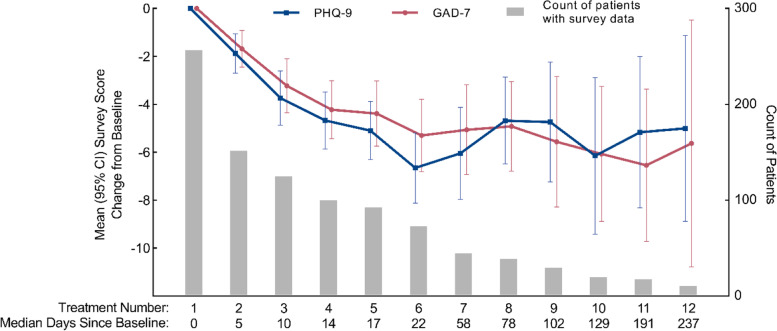
“these anti-anxiety effects were maintained for over seven months after treatment [96]”
From Ketamine in neuropsychiatric disorders: an update (2024) · cites this paper as [96]
Experimental — accuracy not yet measuredThe cited source says what the claim attributes to it.
In the citing paper
“repeated intramuscular administration of ketamine to 452 patients diagnosed with MDD, generalized anxiety disorder, or post-traumatic stress disorder (PTSD) reduced anxiety scores by 50% from baseline to last treatment”
From Ketamine in neuropsychiatric disorders: an update (2024) · cites this paper as [96]
Self-check
Percentages, sums and reported differences re-computed from the paper’s own numbers.
The self-check needs the paper’s full text.
Citations
Cites
The PHQ-9: Validity of a brief depression severity measure
Kroenke, K., Spitzer, R. L., & Williams, J. B. W. (2001) · Journal of General Internal Medicine · doi:10.1046/j.1525-1497.2001.016009606.x · Cited by 44,910
A Brief Measure for Assessing Generalized Anxiety Disorder: The GAD-7
Spitzer, R. L., Kroenke, K., Williams, J. B. W., & Löwe, B. (2006) · Archives of Internal Medicine · doi:10.1001/archinte.166.10.1092 · Cited by 31,765 · cited 2×
“The PHQ-9 and GAD-7 are valid and reliable measures to screen for MDD and GAD in clinical practice and research [33, 34].”
BackgroundMethodAntidepressant effects of ketamine in depressed patients
Berman, R. M., Cappiello, A., Anand, A., Oren, D. A., Heninger, G. R., Charney, D. S., & Krystal, J. H. (2000) · Biological Psychiatry · doi:10.1016/s0006-3223(99)00230-9 · Cited by 3,856 · cited 1×
“This contrasts with cohorts in prospective trials of ketamine therapy where patients with multiple psychiatric comorbidities are either excluded or are rare [2, 6, 41].”
ResultBunney, P. E., Zink, A. N., Holm, A. A., Billington, C. J., & Kotz, C. M. (2017) · Physiology & Behavior · doi:10.1016/j.physbeh.2017.03.040 · Cited by 2,104
Ketamine—its pharmacology and therapeutic uses
white, P. F., Way, W. L., & Trevor, A. J. (1982) · Anesthesiology · doi:10.1097/00000542-198202000-00007 · Cited by 1,474
Murrough, J. W., Perez, A. M., Pillemer, S., Stern, J., Parides, M. K., aan het Rot, M., Collins, K. A., Mathew, S. J., Charney, D. S., & Iosifescu, D. V. (2013) · Biological Psychiatry · doi:10.1016/j.biopsych.2012.06.022 · Cited by 786
Wilkinson, S. T., Ballard, E. D., Bloch, M. H., Mathew, S. J., Murrough, J. W., Feder, A., Sos, P., Wang, G., Zarate, C. A., & Sanacora, G. (2018) · American Journal of Psychiatry · doi:10.1176/appi.ajp.2017.17040472 · Cited by 696 · cited 1×
“, maintenance ketamine may not be required for all patients, and could depend on the initial indication for ketamine [4].”
BackgroundSafety and Efficacy of Repeated-Dose Intravenous Ketamine for Treatment-Resistant Depression
aan het Rot, M., Collins, K. A., Murrough, J. W., Perez, A. M., Reich, D. L., Charney, D. S., & Mathew, S. J. (2010) · Biological Psychiatry · doi:10.1016/j.biopsych.2009.08.038 · Cited by 690 · cited 1×
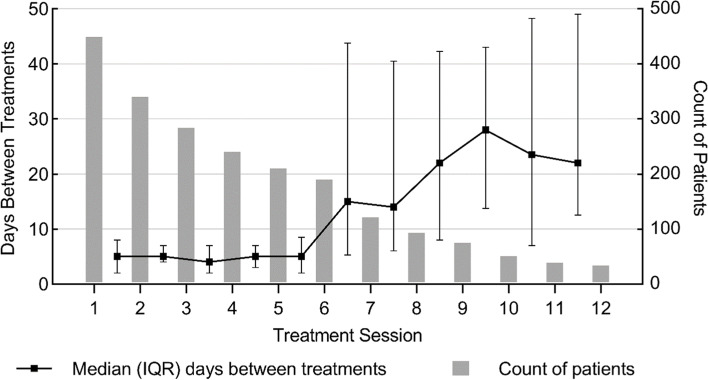
“Treatment patterns The treatment schedule of patients in this cohort was consistent with protocols from previous trials [20, 21, 42] Fig.”
ResultFeder, A., Parides, M. K., Murrough, J. W., Perez, A. M., Morgan, J. E., Saxena, S., Kirkwood, K., aan het Rot, M., Lapidus, K. A. B., Wan, L.-B., et al. (2014) · JAMA Psychiatry · doi:10.1001/jamapsychiatry.2014.62 · Cited by 613 · cited 3×
“Abbreviations ACEs: Adverse childhood experiences; AE: Adverse event; DSM-V: Diagnostic and Statistical Manual of Mental Disorders, 5th Edition; EHR: Electronic health records; GAD: Generalized anxiety disorder; GAD-7: Generalized Anxiety Disorder-7; IM: Intramuscular; IN: Intranasal; IQR: Interquartile range; IV: Int…”
BackgroundSide-effects associated with ketamine use in depression: a systematic review
Short, B., Fong, J., Galvez, V., Shelker, W., & Loo, C. K. (2018) · The Lancet Psychiatry · doi:10.1016/s2215-0366(17)30272-9 · Cited by 558 · cited 1×
“Prospective studies are warranted which evaluate the follow-up safety of IM ketamine months to years after patients have completed their series of ketamine treatments [50], given the potential widespread application of IM ketamine in community psychiatric and primary care clinics.”
BackgroundSingh, J. B., Fedgchin, M., Daly, E. J., De Boer, P., Cooper, K., Lim, P., Pinter, C., Murrough, J. W., Sanacora, G., Shelton, R. C., et al. (2016) · American Journal of Psychiatry · doi:10.1176/appi.ajp.2016.16010037 · Cited by 525
Phillips, J. L., Norris, S., Talbot, J., Birmingham, M., Hatchard, T., Ortiz, A., Owoeye, O., Batten, L. A., & Blier, P. (2019) · American Journal of Psychiatry · doi:10.1176/appi.ajp.2018.18070834 · Cited by 418 · cited 2×
“Furthermore, in a case series of 40 MDD patients who received six IM ketamine treatments over 3 weeks, patients showed reductions in depression (Patient Health Questionnaire, PHQ-9), anxiety (Generalized Anxiety Disorder-7, GAD7) and PTSD (PTSD Checklist for DSM-V) symptoms of 55, 51 and 51% respectively [24], which i…”
BackgroundResultSuicidal ideation reported on the PHQ9 and risk of suicidal behavior across age groups
Rossom, R. C., Coleman, K. J., Ahmedani, B. K., Beck, A., Johnson, E., Oliver, M., & Simon, G. E. (2017) · Journal of Affective Disorders · doi:10.1016/j.jad.2017.03.037 · Cited by 325 · cited 2×
“This could represent a substantial decrease in cohort-level suicide risk, as it has been shown that outpatients who report any suicidal ideation on the SI item of the PHQ-9 are 3-to-7 times more likely to die by suicide in the next 30 days [35].”
BackgroundMethodLoo, C. K., Gálvez, V., O'Keefe, E., Mitchell, P. B., Hadzi‐Pavlovic, D., Leyden, J., Harper, S., Somogyi, A. A., Lai, R., Weickert, C. S., et al. (2016) · Acta Psychiatrica Scandinavica · doi:10.1111/acps.12572 · Cited by 257
Ketamine psychotherapy for heroin addiction: immediate effects and two-year follow-up
Krupitsky, E., Burakov, A., Romanova, T., Dunaevsky, I., Strassman, R., & Grinenko, A. (2002) · Journal of Substance Abuse Treatment · doi:10.1016/s0740-5472(02)00275-1 · Cited by 246
Ketamine Safety and Tolerability in Clinical Trials for Treatment-Resistant Depression
Wan, L.-B., Levitch, C. F., Perez, A. M., Brallier, J. W., Iosifescu, D. V., Chang, L. C., Foulkes, A., Mathew, S. J., Charney, D. S., & Murrough, J. W. (2015) · The Journal of Clinical Psychiatry · doi:10.4088/jcp.13m08852 · Cited by 231 · cited 1×
“95% of IV ketamine infusions which were discontinued due to AEs as reported in a 2015 systematic review and meta-analysis [49].”
BackgroundShiroma, P. R., Johns, B., Kuskowski, M., Wels, J., Thuras, P., Albott, C. S., & Lim, K. O. (2014) · Journal of Affective Disorders · doi:10.1016/j.jad.2013.10.036 · Cited by 221 · cited 1×
“Treatment patterns The treatment schedule of patients in this cohort was consistent with protocols from previous trials [20, 21, 42] Fig.”
ResultDore, J., Turnipseed, B., Dwyer, S., Turnipseed, A., Andries, J., Ascani, G., Monnette, C., Huidekoper, A., Strauss, N., & Wolfson, P. (2019) · Journal of Psychoactive Drugs · doi:10.1080/02791072.2019.1587556 · Cited by 217 · cited 4×
“administration of antiemetic medication [18].”
BackgroundResultInfluentialWitt, K., Potts, J., Hubers, A., Grunebaum, M. F., Murrough, J. W., Loo, C., Cipriani, A., & Hawton, K. (2020) · Australian & New Zealand Journal of Psychiatry · doi:10.1177/0004867419883341 · Cited by 202 · cited 1×
“While our data is promising, future studies on the impact of real-world IM ketamine treatment on not only suicidal ideation, but also suicidal behaviour, is warranted [5].”
BackgroundSingle Versus Repeated Sessions of Ketamine-Assisted Psychotherapy for People with Heroin Dependence
Krupitsky, E. M., Burakov, A. M., Dunaevsky, I. V., Romanova, T. N., Slavina, T. Y., & Grinenko, A. Y. (2007) · Journal of Psychoactive Drugs · doi:10.1080/02791072.2007.10399860 · Cited by 183
Grunebaum, M. F., Ellis, S. P., Keilp, J. G., Moitra, V. K., Cooper, T. B., Marver, J. E., Burke, A. K., Milak, M. S., Sublette, M. E., Oquendo, M. A., et al. (2017) · Bipolar Disorders · doi:10.1111/bdi.12487 · Cited by 174 · cited 1×
“It has been shown to reduce anxiety symptoms in patients with generalized anxiety disorder (GAD) and/or social anxiety disorder (SAD) [6–8], and preliminary evidence shows that ketamine treatment may reduce symptoms of substance use disorders [9–12], post-traumatic stress disorder (PTSD) [13], bipolar depression [14],…”
BackgroundGlue, P., Medlicott, N. J., Harland, S., Neehoff, S., Anderson-Fahey, B., Le Nedelec, M., Gray, A., & McNaughton, N. (2017) · Journal of Psychopharmacology · doi:10.1177/0269881117705089 · Cited by 144 · cited 1×
“This contrasts with cohorts in prospective trials of ketamine therapy where patients with multiple psychiatric comorbidities are either excluded or are rare [2, 6, 41].”
ResultDakwar, E., Hart, C. L., Levin, F. R., Nunes, E. V., & Foltin, R. W. (2017) · Molecular Psychiatry · doi:10.1038/mp.2016.39 · Cited by 105
Glue, P., Neehoff, S. M., Medlicott, N. J., Gray, A., Kibby, G., & McNaughton, N. (2018) · Journal of Psychopharmacology · doi:10.1177/0269881118762073 · Cited by 100 · cited 1×
“Other open-label case series’ have reported modest efficacy of twice-weekly maintenance IV ketamine infusions for patients with treatmentresistant depression over 11 months [46, 47], and strong efficacy of weekly maintenance SC ketamine for treatment-refractory GAD or SAD patients over 3 months [48].”
BackgroundCOVERDALE, J. H., & TURBOTT, S. H. (2000) · The Journal of Nervous and Mental Disease · doi:10.1097/00005053-200007000-00008 · Cited by 98 · cited 1×
“At baseline, patients in this cohort presented with a substantial 47% prevalence of lifetime history of physical or sexual abuse, which is comparable to the 56% of psychiatric outpatients and 42% of nonpsychiatric outpatients with a history of abuse reported in 2000 [39], a point in time when abuse was more prevalent…”
ResultGlue, P., Neehoff, S., Sabadel, A., Broughton, L., Le Nedelec, M., Shadli, S., McNaughton, N., & Medlicott, N. J. (2020) · Journal of Psychopharmacology · doi:10.1177/0269881119874457 · Cited by 98
Rothberg, R. L., Azhari, N., Haug, N. A., & Dakwar, E. (2021) · Journal of Psychopharmacology · doi:10.1177/0269881120970879 · Cited by 97
Treatment of compulsive behaviour in eating disorders with intermittent ketamine infusions
Mills, I. (1998) · QJM · doi:10.1093/qjmed/91.7.493 · Cited by 87 · cited 1×
“It has been shown to reduce anxiety symptoms in patients with generalized anxiety disorder (GAD) and/or social anxiety disorder (SAD) [6–8], and preliminary evidence shows that ketamine treatment may reduce symptoms of substance use disorders [9–12], post-traumatic stress disorder (PTSD) [13], bipolar depression [14],…”
BackgroundAcute Antidepressant Effects of Intramuscular Versus Intravenous Ketamine
Chilukuri, H., Reddy, N. P., Pathapati, R. M., Manu, A. N., Jollu, S., & Shaik, A. B. (2014) · Indian Journal of Psychological Medicine · doi:10.4103/0253-7176.127258 · Cited by 86 · cited 4×
“This is because IM administration does not require the use and monitoring of an IV infusion pump [23, 25], and it is relatively less expensive than IV administration [23, 24].”
BackgroundMethodInfluentialDose- and Exposure-Response to Ketamine in Depression
Glue, P., Gulati, A., Nedelec, M. L., & Duffull, S. B. (2011) · Biological Psychiatry · doi:10.1016/j.biopsych.2010.11.031 · Cited by 84 · cited 1×
“This is because IM administration does not require the use and monitoring of an IV infusion pump [23, 25], and it is relatively less expensive than IV administration [23, 24].”
BackgroundRacial differences in attitudes toward innovative medical technology
Groeneveld, P. W., Sonnad, S. S., Lee, A. K., Asch, D. A., & Shea, J. (2006) · Journal of General Internal Medicine · doi:10.1111/j.1525-1497.2006.00453.x · Cited by 75 · cited 1×
“This disproportion could also be due to the relative hesitancy towards trying new prescription drugs amongst minority patients [38].”
BackgroundKheirabadi, D., Kheirabadi, G. R., Mirlohi, Z., Tarrahi, M. J., & Norbaksh, A. (2020) · Journal of Clinical Psychopharmacology · doi:10.1097/jcp.0000000000001289 · Cited by 65 · cited 1×
“This contrasts with cohorts in prospective trials of ketamine therapy where patients with multiple psychiatric comorbidities are either excluded or are rare [2, 6, 41].”
ResultThe Use of a Series of Ketamine Infusions in Two Patients With Treatment-Resistant Depression
Messer, M., Haller, I. V., Larson, P., Pattison-Crisostomo, J., & Gessert, C. E. (2010) · Journal of Neuropsychiatry · doi:10.1176/appi.neuropsych.22.4.442 · Cited by 57 · cited 1×
“and case reports [43] of ketamine therapy for treatmentresistant depression, where patients received an acute phase of up to 6 treatments within the span of 1 month, with some patients then receiving less frequent maintenance treatments during the subsequent months or years as determined on a case-by-case basis.”
BackgroundWhittaker, E., Dadabayev, A. R., Joshi, S. A., & Glue, P. (2021) · Therapeutic Advances in Psychopharmacology · doi:10.1177/20451253211056743 · Cited by 56
Sakurai, H., Jain, F., Foster, S., Pedrelli, P., Mischoulon, D., Fava, M., & Cusin, C. (2020) · Journal of Affective Disorders · doi:10.1016/j.jad.2020.07.089 · Cited by 45
Hawley, C. J., Gale, T. M., Smith, P. S. J., Jain, S., Farag, A., Kondan, R., Avent, C., & Graham, J. (2013) · Human Psychopharmacology: Clinical and Experimental · doi:10.1002/hup.2341 · Cited by 38
Maintenance Ketamine Therapy for Treatment-Resistant Depression
Archer, S., Chrenek, C., & Swainson, J. (2018) · Journal of Clinical Psychopharmacology · doi:10.1097/jcp.0000000000000894 · Cited by 34 · cited 1×
“Other open-label case series’ have reported modest efficacy of twice-weekly maintenance IV ketamine infusions for patients with treatmentresistant depression over 11 months [46, 47], and strong efficacy of weekly maintenance SC ketamine for treatment-refractory GAD or SAD patients over 3 months [48].”
BackgroundChild maltreatment research, policy, and practice for the next decade : workshop summary
Olson, S., Stroud, C., & Families (2012) · National Academies Press eBooks · Cited by 32
Mikellides, G., Michael, P., Psalta, L., Schuhmann, T., & Sack, A. T. (2022) · Frontiers in Psychiatry · doi:10.3389/fpsyt.2021.784830 · Cited by 23 · cited 1×
“Two real-world studies have shown that patients with MDD show significant improvements in depression and anxiety symptoms after a series of six to eight IM ketamine treatments [24, 32].”
BackgroundIntramuscular Ketamine to Treat Major Depressive Disorder: A Case Series of Forty Patients
Bonnett, C. J., Jain, R., Ross, C. N., Wallington, D. A., & Schock, T. R. (2021) · Journal of Psychiatry and Mental Health · doi:10.16966/2474-7769.145 · Cited by 9 · cited 4×
“This is because IM administration does not require the use and monitoring of an IV infusion pump [23, 25], and it is relatively less expensive than IV administration [23, 24].”
BackgroundResultInfluentialSocial Trends and Child Maltreatment Trends
Youth Board on Children, & Families (2012) · Cited by 3
Research works printed but not linked: 3
- FDA News Release FDA approves new nasal spray medication for treatment-resistant depression; available only at a certiied doctor’s office or clinic 2019 The US Food & Drug Administration
- Johnson & Johnson. Janssen Announces U.S. FDA approval of SPRAVATO® (esketamine) CIII nasal spray to treat depressive symptoms in adults with major depressive disorder with acute suicidal ideation or behavior 2020 Johnson & Johnson
- Public Health Indicator Based Information System (IBIS) Utah's Public Health Data Resource. Household Median Income by Race/Ethnicity 2021
Cited by
Ketamine in neuropsychiatric disorders: an update
Johnston, J. N., Kadriu, B., Kraus, C., Henter, I. D., & Zarate, C. A. (2024) · Neuropsychopharmacology · doi:10.1038/s41386-023-01632-1 · Cited by 108
“…intramuscular administration of ketamine to 452 patients diagnosed with MDD, generalized anxiety disorder, or post-traumatic stress disorder (PTSD) reduced anxiety scores by 50% from baseline to last treatment; these anti-anxiety effects were maintained for over seven months after treatment [96].”
BackgroundThe Psychedelic Future of Post-Traumatic Stress Disorder Treatment
Zaretsky, T. G., Jagodnik, K. M., Barsic, R., Antonio, J. H., Bonanno, P. A., MacLeod, C., Pierce, C., Carney, H., Morrison, M. T., Saylor, C., et al. (2024) · Current Neuropharmacology · doi:10.2174/1570159x22666231027111147 · Cited by 85
Glutamatergic Modulators for Major Depression from Theory to Clinical Use
McIntyre, R. S., & Jain, R. (2024) · CNS Drugs · doi:10.1007/s40263-024-01114-y · Cited by 69
“While there have been fewer studies investigating intramuscular, oral, or subcutaneous ketamine formulations, initial evidence is suggestive of efficacy and safety when used under close medical supervision [74–77].”
BackgroundHietamies, T. M., McInnes, L. A., Klise, A., Worley, M. J., Qian, J. J., Williams, L. M., Heifets, B. D., & Levine, S. P. (2023) · Journal of Affective Disorders · doi:10.1016/j.jad.2023.04.141 · Cited by 35
Beaglehole, B., Glue, P., Clarke, M., & Porter, R. (2023) · BJPsych Open · doi:10.1192/bjo.2023.577 · Cited by 14
“It is important that you discuss ketamine treatment with your family/ wha ̄ nau and your treating team before deciding if you want to proceed with ketamine treatment.”
Metadata
- Authors
- Ahuja, S., Brendle, M., Smart, L., Moore, C., Thielking, P., & Robison, R.
- Affiliations
- University of Utah (US)
- Corresponding author
- Ahuja, Sachin
- Robison, Reid
- Venue
- BMC Psychiatry
- Published
- 2022-10-03
- Volume
- 22
- Issue
- 1
- Pages
- 634-634
- ISSN
- 1471-244X (ISSN-L)
- PMC
- PMC9528178
- OpenAlex
- W4300963487
- Cited by
- 24
- References
- 41
- Citations by year
- 2026: 8 · 2025: 6 · 2024: 4 · 2023: 6
- FWCI
- 2.39
- Type
- journal article
- Language
- en
- Open access
- gold
- doi.org
- Licence
- cc-by
- creativecommons.org/licenses/by/4.0 (tdm)
- creativecommons.org/licenses/by/4.0 (vor)
- Locations
- BMC Psychiatry (publishedVersion, cc-by)
- PubMed Central (publishedVersion, cc-by)
- PubMed (publishedVersion)
- DOAJ (DOAJ: Directory of Open Access Journals) (submittedVersion, cc-by-sa)
- Topics
- Health Sciences › Medicine › Pharmacology (medical) › Treatment of Major Depression
- Health Sciences › Medicine › Psychiatry and Mental health › Electroconvulsive Therapy Studies
- Life Sciences › Neuroscience › Neurology › Transcranial Magnetic Stimulation Studies
- Keywords
- intramuscular ketamine, major depressive disorder, generalized anxiety disorder, post-traumatic stress disorder, treatment-resistant depression, adverse events, psychiatric outpatients, PHQ-9, GAD-7, long-term treatment outcomes, psychiatric comorbidity, outpatient psychiatric care, treatment patterns, treatment discontinuation
- MeSH terms
- Adult, Anxiety, Anxiety Disorders, Depression, Depressive Disorder, Major, Major Depressive Disorder, Humans, Ketamine, Prospective Studies, Psychiatric Status Rating Scales, Retrospective Studies, Cohort Studies
About these checks
Registry, retraction, Cites and statistics results are computed, not judged, with one exception: a printed reference that no index lists is read once by a model before it counts as a citation error. Claims are extracted by a model and kept only when their quote appears verbatim in the text; each cited source is then checked, with a model’s help, for whether it says what the claim relies on. Those verdicts can be wrong — read the claim’s quote and the cited source before relying on one.
Statistics and arithmetic are recomputed, not judged.
Confidence bands are shown only for fields calibrated on our annotated test set. None is calibrated yet, so no band is shown.
What counts as a claim ›How we measure confidence ›How we check this ›
Are you an author, or do you see a problem with this page? Request a review
Data sources
Bibliographic data: Semantic Scholar, OpenAlex, Crossref.
Contains information from the Semantic Scholar Academic Graph Datasets, made available under the ODC Attribution License (ODC-BY 1.0).
Semantic Scholar’s data is described in: Kinney, R., et al. (2023). The Semantic Scholar Open Data Platform. arXiv:2301.10140.
