

The prevalence and impact of childhood sexual abuse on HIV-risk behaviors among men who have sex with men (MSM) in India
Open accessThe DOI matches its Crossref record; 58 of the 58 references it cites were found in a registry or an index.
Abstract
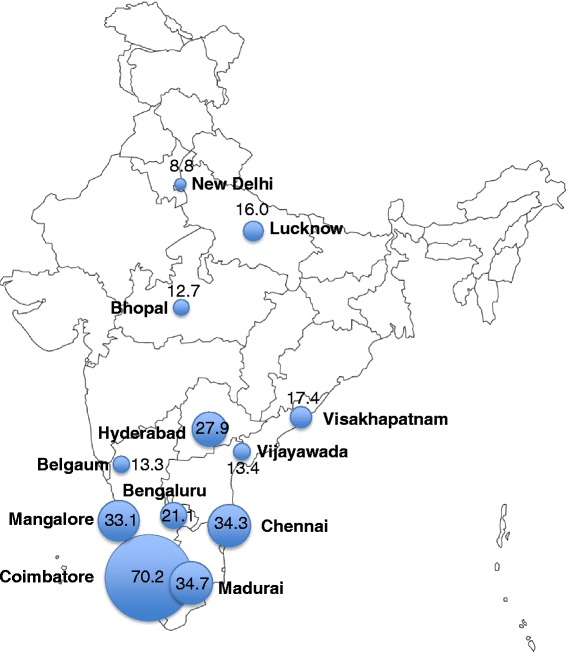
BACKGROUND: Childhood sexual abuse (CSA) is a significant global public health problem, which is associated with negative psychosocial outcomes and high-risk sexual behaviors in adults. Men who have sex with men (MSM) often report higher prevalence of CSA history than the general population, and CSA may play a key role in MSM's greater vulnerability to HIV. METHODS: This study examined the prevalence of CSA history and its impact on the number of recent HIV-related risk behaviors (unprotected anal intercourse, high number of male and female sexual partners, alcohol use, drug use, and sex work in prior 6 months) and lifetime risk behaviors and experiences (high number of lifetime male and female sexual partners, early sexual debut, injection drug use, sex work, and intimate partner violence) among 11,788 adult MSM recruited via respondent driven sampling across 12 sites in India, with additional insights from thematic analysis of qualitative research with 363 MSM from 15 sites. RESULTS: Nearly a quarter (22.4 %) of participants experienced CSA, with substantially higher prevalence of CSA in the South and among kothis (feminine sexual identity). Qualitative findings revealed that older, trusted men may target young and, especially, gender nonconforming boys, and perpetrators' social position facilitates nondisclosure. CSA may also initiate further same-sex encounters, including sex work. In multivariable analysis, MSM who experienced CSA had 21 % higher rate of recent (adjusted rate ratio [aRR = 1.21], 95 % confidence interval [CI]: 1.14-1.28), and 2.0 times higher lifetime (aRR = 2.04, 95 % CI: 1.75-2.38) HIV-related behaviors/experiences compared with those who did not. CONCLUSION: This large, mixed-methods study found high overall prevalence of CSA among MSM (22.4 %), with substantially higher prevalence among MSM residing in the South and among more feminine sexual identities. Qualitative findings highlighted boys' vulnerabilities to CSA, especially gender nonconformity, and CSA's role in further sexual encounters, including sex work. Additionally, CSA was associated with an elevated rate of recent, and an even higher rate of lifetime HIV-related risk factors. Our results suggest an acute need for the development of CSA prevention interventions and the integration of mental health services for MSM with histories of CSA as part of HIV-prevention efforts.
Overview
The claims and statistics of this paper haven’t been checked yet.
Free: it reads the open-access text and checks the first 5 claims that cite a source we can check. Create a free account to check every claim.
Integrity signals
Registry
Cites
Statistics
Figures
Verification
Claims the paper makes
The claims and statistics of this paper haven’t been checked yet.
Free: it reads the open-access text and checks the first 5 claims that cite a source we can check. Create a free account to check every claim.
Claims other papers make about this one
Each is checked against this paper’s own text: does it say what the citing paper says it does?
The source backs part of the claim, not all of it — or backs it for a different population, condition or comparison.
In the citing paper
“The prevalence of injecting drug use (0.1% to 3.4%) has been reported to be relatively low (Tomori et al. 2016).”
From The syndemic of violence victimisation, drug use, frequent alcohol use, and HIV transmission risk behaviour among men who have sex with men: Cross-sectional, population-based study in India (2019) · cites this paper as Tomori et al. 2016
Experimental — accuracy not yet measured
Self-check
Percentages, sums and reported differences re-computed from the paper’s own numbers.
The self-check needs the paper’s full text.
Citations
Cites
Basics of Qualitative Research
Ozanne, J. L., Strauss, A., & Corbin, J. (1992) · Journal of Marketing Research · doi:10.1177/002224379202900312 · Cited by 17,868
Basics of Qualitative Research
Ozanne, J. L., Strauss, A., & Corbin, J. (1992) · Journal of Marketing Research · doi:10.2307/3172751 · Cited by 17,850
SAUNDERS, J. B., AASLAND, O. G., BABOR, T. F., DE LA FUENTE, J. R., & GRANT, M. (1993) · Addiction · doi:10.1111/j.1360-0443.1993.tb02093.x · Cited by 13,597 · cited 1×
“Specifically, recent behaviors of interest were unprotected anal intercourse (UAI) (receptive or insertive), high number of male and female sexual partners, hazardous alcohol use or alcohol dependence (measured using the AUDIT instrument [54, 55]), injection drug use, non-injection drug use, and sex work.”
Method(1990) · Cited by 11,110
Research methods in anthropology: qualitative and quantitative approaches
(2002) · Choice Reviews Online · doi:10.5860/choice.39-4047 · Cited by 5,638
A Global Perspective on Child Sexual Abuse: Meta-Analysis of Prevalence Around the World
Stoltenborgh, M., van IJzendoorn, M. H., Euser, E. M., & Bakermans-Kranenburg, M. J. (2011) · Child Maltreatment · doi:10.1177/1077559511403920 · Cited by 2,010
Global epidemiology of HIV infection in men who have sex with men
Beyrer, C., Baral, S. D., van Griensven, F., Goodreau, S. M., Chariyalertsak, S., Wirtz, A. L., & Brookmeyer, R. (2012) · The Lancet · doi:10.1016/s0140-6736(12)60821-6 · Cited by 1,559
Qualitative analysis: What it is and how to begin
Sandelowski, M. (1995) · Research in Nursing & Health · doi:10.1002/nur.4770180411 · Cited by 1,163 · cited 1×
“Transcripts were read multiple times by the lead qualitative researcher (CT) [43], and emergent themes were identified following the principles of grounded theory using open coding and the constant comparison method [44, 45].”
MethodThe current prevalence of child sexual abuse worldwide: a systematic review and meta-analysis
Barth, J., Bermetz, L., Heim, E., Trelle, S., & Tonia, T. (2013) · International Journal of Public Health · doi:10.1007/s00038-012-0426-1 · Cited by 1,063
Applied Regression Analysis, Linear Models, and Related Methods
Gray, J. B. (1998) · Technometrics · doi:10.1080/00401706.1998.10485201 · Cited by 1,042
Probability based estimation theory for respondent driven sampling
Volz, E., & Heckathorn, D. D. (2008) · Journal of Official Statistics · Cited by 667
HIV Prevalence and Associated Risks in Young Men Who Have Sex With Men
Valleroy, L. A. (2000) · JAMA · doi:10.1001/jama.284.2.198 · Cited by 603
Self-citationO'Donnell, L., O'Donnell, C. R., & Stueve, A. (2001) · Family Planning Perspectives · doi:10.2307/3030194 · Cited by 384
Lessons learned from child sexual abuse research: prevalence, outcomes, and preventive strategies
Collin-Vézina, D., Daigneault, I., & Hébert, M. (2013) · Child and Adolescent Psychiatry and Mental Health · doi:10.1186/1753-2000-7-22 · Cited by 280
Mimiaga, M. J., Noonan, E., Donnell, D., Safren, S. A., Koenen, K. C., Gortmaker, S., O'Cleirigh, C., Chesney, M. A., Coates, T. J., Koblin, B. A., et al. (2009) · JAIDS Journal of Acquired Immune Deficiency Syndromes · doi:10.1097/qai.0b013e3181a24b38 · Cited by 257 · cited 1×
“cities recruited for an HIV intervention (EXPLORE study), nearly forty percent had a history of CSA [4].”
BackgroundBuller, A. M., Devries, K. M., Howard, L. M., & Bacchus, L. J. (2014) · PLoS Medicine · doi:10.1371/journal.pmed.1001609 · Cited by 234
An epidemiological overview of child sexual abuse
Singh, M., Parsekar, S., & Nair, S. (2014) · Journal of Family Medicine and Primary Care · doi:10.4103/2249-4863.148139 · Cited by 232
Asthana, S., & Oostvogels, R. (2001) · Social Science & Medicine · doi:10.1016/s0277-9536(00)00167-2 · Cited by 223
Study on child abuse : India, 2007
Kacker, L., Mohsin, N., Dixit, A., Varadan, S., Kumar, P., & Prayas (2007) · Institutional Repositories DataBase (IRDB) · Cited by 210
Alcohol Use and Risk of HIV infection among Men Who Have Sex with Men
Woolf, S. E., & Maisto, S. A. (2009) · AIDS and Behavior · doi:10.1007/s10461-007-9354-0 · Cited by 203
Mimiaga, M. J., O'Cleirigh, C., Biello, K. B., Robertson, A. M., Safren, S. A., Coates, T. J., Koblin, B. A., Chesney, M. A., Donnell, D. J., Stall, R. D., et al. (2015) · JAIDS Journal of Acquired Immune Deficiency Syndromes · doi:10.1097/qai.0000000000000475 · Cited by 201 · cited 1×
“Consequently, CSA has also been conceptualized as part of a syndemic of co-occurring psychosocial factors that enhance sexual minorities’ vulnerability to HIV [10].”
BackgroundVolk, R. J., Steinbauer, J. R., Cantor, S. B., & Holzer, C. E. (1997) · Addiction · doi:10.1046/j.1360-0443.1997.9221978.x · Cited by 200
Logie, C. H., Newman, P. A., Chakrapani, V., & Shunmugam, M. (2012) · Social Science & Medicine · doi:10.1016/j.socscimed.2012.01.008 · Cited by 189
Chakrapani, V., Newman, P. A., Shunmugam, M., McLuckie, A., & Melwin, F. (2007) · AIDS Education and Prevention · doi:10.1521/aeap.2007.19.4.346 · Cited by 175
Lloyd, S., & Operario, D. (2012) · AIDS Education and Prevention · doi:10.1521/aeap.2012.24.3.228 · Cited by 162 · cited 1×
“studies have found that MSM were more often victims of CSA compared to the general population [6, 7].”
BackgroundRichter, L., Komárek, A., Desmond, C., Celentano, D. D., Morin, S., Sweat, M. D., Chariyalertsak, S., Chingono, A., Gray, G., Mbwambo, J. K. K., et al. (2013) · AIDS and Behavior · doi:10.1007/s10461-013-0439-7 · Cited by 140
Self-citationCulture, Sexualities, and Identities: Men Who Have Sex with Men in India
Khan, S. (2001) · Journal of Homosexuality · doi:10.1300/j082v40n03_06 · Cited by 125
High HIV Prevalence and Risk Behaviors in Men Who Have Sex With Men in Chennai, India
Go, V. F., Srikrishnan, A. K., Sivaram, S., Murugavel, G. K., Galai, N., Johnson, S. C., Sripaipan, T., Solomon, S., & Celentano, D. D. (2004) · JAIDS Journal of Acquired Immune Deficiency Syndromes · doi:10.1097/00126334-200403010-00014 · Cited by 124
Self-citationChakrapani, V., Newman, P. A., Shunmugam, M., & Dubrow, R. (2011) · AIDS Care · doi:10.1080/09540121.2011.582076 · Cited by 120
‘Conceiving Kothis’: Men Who Have Sex with Men in India and the Cultural Subject of HIV Prevention
Boyce, P. (2007) · Medical Anthropology · doi:10.1080/01459740701285582 · Cited by 120
Sivasubramanian, M., Mimiaga, M. J., Mayer, K. H., Anand, V. R., Johnson, C. V., Prabhugate, P., & Safren, S. A. (2011) · Psychology, Health & Medicine · doi:10.1080/13548506.2011.554645 · Cited by 111
Boroughs, M. S., Valentine, S. E., Ironson, G. H., Shipherd, J. C., Safren, S. A., Taylor, S. W., Dale, S. K., Baker, J. S., Wilner, J. G., & O’Cleirigh, C. (2015) · Archives of Sexual Behavior · doi:10.1007/s10508-015-0546-9 · Cited by 98
Lorway, R. R., Reza‐Paul, S., & Pasha, A. (2009) · Medical Anthropology Quarterly · doi:10.1111/j.1548-1387.2009.01052.x · Cited by 95
Child Sexual Abuse in India: Current Issues and Research
Carson, D. K., Foster, J. M., & Tripathi, N. (2013) · Psychological Studies · doi:10.1007/s12646-013-0198-6 · Cited by 90
High HIV prevalence and incidence among MSM across 12 cities in India
Solomon, S. S., Mehta, S. H., Srikrishnan, A. K., Vasudevan, C. K., Mcfall, A. M., Balakrishnan, P., Anand, S., Nandagopal, P., Ogburn, E. L., Laeyendecker, O., et al. (2015) · AIDS · doi:10.1097/qad.0000000000000602 · Cited by 90 · cited 1×
“Detailed study procedures for the baseline assessment have been published elsewhere [40].”
MethodSelf-citationHomosexual activity among rural Indian men: implications for HIV interventions
Verma, R. K., & Collumbien, M. (2004) · AIDS · doi:10.1097/00002030-200409030-00014 · Cited by 89
Deb, S., & Walsh, K. (2012) · School Psychology International · doi:10.1177/0143034311425225 · Cited by 89
Mimiaga, M. J., Biello, K. B., Bazzi, A. R., Oldenburg, C. E., Rosenberger, J. G., O’Cleirigh, C. M., Novak, D. S., Mayer, K. H., & Safren, S. A. (2015) · Archives of Sexual Behavior · doi:10.1007/s10508-015-0488-2 · Cited by 87
Jie, W., Ciyong, L., Xueqing, D., Hui, W., & Lingyao, H. (2012) · PLoS ONE · doi:10.1371/journal.pone.0032312 · Cited by 85
Biello, K. B., Colby, D., Closson, E., & Mimiaga, M. J. (2014) · AIDS and Behavior · doi:10.1007/s10461-013-0632-8 · Cited by 81 · cited 1×
“Although comparatively less is known about CSA and other syndemic conditions among MSM from low and middle income countries (LMIC), there is growing evidence that CSA plays a crucial role in these syndemics as well [3, 5, 11].”
BackgroundHIV in Indian MSM: Reasons for a concentrated epidemic & strategies for prevention
Thomas, B., Kumar, S., Safren, S., Mimiaga, M., Swaminathan, S., & Mayer, K. (2011) · The Indian Journal of Medical Research · doi:10.4103/0971-5916.92637 · Cited by 80
Solomon, S. S., Mehta, S. H., Latimore, A., Srikrishnan, A. K., & Celentano, D. D. (2010) · Journal of the International AIDS Society · doi:10.1186/1758-2652-13-s2-s7 · Cited by 80
Self-citationThomas, B., Mimiaga, M. J., Menon, S., Chandrasekaran, V., Murugesan, P., Swaminathan, S., Mayer, K. H., & Safren, S. A. (2009) · AIDS Education and Prevention · doi:10.1521/aeap.2009.21.4.372 · Cited by 74
Safren, S. A., Thomas, B. E., Mimiaga, M. J., Chandrasekaran, V., Menon, S., Swaminathan, S., & Mayer, K. H. (2009) · Psychology, Health & Medicine · doi:10.1080/13548500903334754 · Cited by 74
Solomon, S. S., Srikrishnan, A. K., Sifakis, F., Mehta, S. H., Vasudevan, C. K., Balakrishnan, P., Mayer, K. H., Solomon, S., & Celentano, D. D. (2010) · AIDS and Behavior · doi:10.1007/s10461-010-9711-2 · Cited by 74
Self-citationRespondent driven sampling—where we are and where should we be going?: Table 1
White, R. G., Lansky, A., Goel, S., Wilson, D., Hladik, W., Hakim, A., & Frost, S. D. (2012) · Sexually Transmitted Infections · doi:10.1136/sextrans-2012-050703 · Cited by 71
Tomori, C., McFall, A. M., Srikrishnan, A. K., Mehta, S. H., Solomon, S. S., Anand, S., Vasudevan, C. K., Solomon, S., & Celentano, D. D. (2016) · AIDS and Behavior · doi:10.1007/s10461-015-1201-0 · Cited by 64
Self-citationAlcohol use and HIV sexual risk among MSM in Chennai, India
Mimiaga, M. J., Thomas, B., Mayer, K. H., Reisner, S. L., Menon, S., Swaminathan, S., Periyasamy, M., Johnson, C. V., & Safren, S. A. (2011) · International Journal of STD & AIDS · doi:10.1258/ijsa.2009.009059 · Cited by 57
Prevalence and Spectrum of Sexual Abuse Among Adolescents in Kerala, South India
Krishnakumar, P., Satheesan, K., Geeta, M. G., & Kumar, K. S. (2013) · The Indian Journal of Pediatrics · doi:10.1007/s12098-013-1260-z · Cited by 53
Psychosocial risk factors for HIV sexual risk among Indian men who have sex with men
Mimiaga, M. J., Biello, K. B., Sivasubramanian, M., Mayer, K. H., Anand, V. R., & Safren, S. A. (2013) · AIDS Care · doi:10.1080/09540121.2012.749340 · Cited by 52
Mimiaga, M. J., Closson, E. F., Thomas, B. E., Mayer, K. H., Betancourt, T. S., Menon, S., & Safren, S. A. (2014) · Archives of Sexual Behavior · doi:10.1007/s10508-014-0369-0 · Cited by 51
Hidalgo, M. A., Kuhns, L. M., Kwon, S., Mustanski, B. S., & Garofalo, R. (2015) · Child Abuse & Neglect · doi:10.1016/j.chiabu.2015.05.005 · Cited by 37
Heavy Drinking Trajectories Among Men Who Have Sex with Men: A Longitudinal, Group‐Based Analysis
Marshall, B. D. L., Shoveller, J., Kahler, C. W., Koblin, B. A., Mayer, K. H., Mimiaga, M. J., van den Berg, J. J., Zaller, N. D., & Operario, D. (2015) · Alcoholism Clinical and Experimental Research · doi:10.1111/acer.12631 · Cited by 36
Oldenburg, C. E., Perez‐Brumer, A., Biello, K. B., Landers, S., Rosenberger, J. G., Novak, D. S., Mayer, K. H., & Mimiaga, M. J. (2015) · American Journal of Public Health · doi:10.2105/ajph.2014.302402 · Cited by 33
Schafer, K. R., Gupta, S., & Dillingham, R. (2013) · Journal of the Association of Nurses in AIDS Care · doi:10.1016/j.jana.2012.08.008 · Cited by 32
Beyond Surveillance: A Role for Respondent-driven Sampling in Implementation Science
Solomon, S. S., Lucas, G. M., Celentano, D. D., Sifakis, F., & Mehta, S. H. (2013) · American Journal of Epidemiology · doi:10.1093/aje/kws432 · Cited by 29
Self-citationTomori, C., Srikrishnan, A. K., Ridgeway, K., Solomon, S. S., Mehta, S. H., Solomon, S., & Celentano, D. D. (2016) · Archives of Sexual Behavior · doi:10.1007/s10508-016-0775-6 · Cited by 29
Self-citationTraumatic Revictimization of Men Who Have Sex With Men Living With HIV/AIDS
Pantalone, D. W., Horvath, K. J., Hart, T. A., Valentine, S. E., & Kaysen, D. L. (2014) · Journal of Interpersonal Violence · doi:10.1177/0886260514540802 · Cited by 26
Cited by
Child sexual abuse in India: A systematic review
Choudhry, V., Dayal, R., Pillai, D., Kalokhe, A. S., Beier, K., & Patel, V. (2018) · PLOS ONE · doi:10.1371/journal.pone.0205086 · Cited by 180
Selengia, V., Nguyen, H. T. T., & Mushi, D. (2020) · Open Journal of Social Sciences · doi:10.4236/jss.2020.89010 · Cited by 91
The Relationship between Childhood Maltreatment and Risky Sexual Behaviors: A Meta-Analysis
Wang, Z.-Y., Hu, M., Yu, T., & Yang, J. (2019) · International Journal of Environmental Research and Public Health · doi:10.3390/ijerph16193666 · Cited by 72
Chakrapani, V., Newman, P. A., Shunmugam, M., Rawat, S. M., Mohan, B. R., Baruah, D., & Tepjan, S. (2023) · PLOS Global Public Health · doi:10.1371/journal.pgph.0001362 · Cited by 66
Tomori, C., McFall, A. M., Solomon, S. S., Srikrishnan, A. K., Anand, S., Balakrishnan, P., Mehta, S. H., & Celentano, D. D. (2018) · Social Science & Medicine · doi:10.1016/j.socscimed.2018.03.032 · Cited by 54
Self-citation
Metadata
- Authors
- Tomori, C., McFall, A. M., Srikrishnan, A. K., Mehta, S. H., Nimmagadda, N., Anand, S., Vasudevan, C. K., Solomon, S., Solomon, S. S., & Celentano, D. D.
- Affiliations
- Johns Hopkins University (US)
- YR Gaitonde Centre for AIDS Research and Education (IN)
- ORCID
- Venue
- BMC Public Health
- Published
- 2016-08-12
- Volume
- 16
- Issue
- 1
- Pages
- 784-784
- ISSN
- 1471-2458 (ISSN-L)
- PMC
- PMC4983056
- OpenAlex
- W2512992370
- Cited by
- 57
- References
- 57
- Citations by year
- 2026: 2 · 2025: 7 · 2024: 2 · 2023: 9 · 2022: 9 · 2021: 12 · 2020: 7 · 2019: 4 · 2018: 3 · 2017: 2
- FWCI
- 4.01
- Type
- journal article
- Language
- en
- Open access
- gold
- doi.org
- Licence
- cc-by
- creativecommons.org/licenses/by/4.0/ (tdm)
- creativecommons.org/licenses/by/4.0/ (vor)
- Locations
- BMC Public Health (publishedVersion, cc-by)
- Europe PMC (PubMed Central) (publishedVersion, cc-by)
- PubMed Central (publishedVersion, cc-by)
- PubMed (publishedVersion)
- Durham Research Online (Durham University) (acceptedVersion, other-oa)
- Durham Research Online (Durham University) (submittedVersion, cc-by)
- DOAJ (DOAJ: Directory of Open Access Journals) (submittedVersion, cc-by-sa)
- Funders
- National Institute of Mental Health (R01MH89266, R21MH101059)
- National Institutes of Health (T32AI102623)
- Johns Hopkins Center for AIDS Research (1P30AI094189)
- Topics
- Social Sciences › Psychology › Clinical Psychology › Child Abuse and Trauma
- Health Sciences › Medicine › Epidemiology › HIV, Drug Use, Sexual Risk
- Health Sciences › Medicine › Infectious Diseases › HIV/AIDS Research and Interventions
- Keywords
- child sexual abuse, men who have sex with men, HIV risk behavior, unprotected anal intercourse, multiple sexual partners, sex work, intimate partner violence, intravenous drug use, gender nonconformity, kothi, HIV prevention, India
- MeSH terms
- Intimate Partner Violence, Adolescent, Adult, Child, Child Abuse, Sexual, Gender Identity, Humans, India, Male, Sex Work, Surveys and Questionnaires, Risk-Taking, Sexual Behavior, Sexual Partners, HIV Infections, Prevalence, Multivariate Analysis, Homosexuality, Male, Substance-Related Disorders, Qualitative Research, Young Adult
About these checks
Registry, retraction, Cites and statistics results are computed, not judged, with one exception: a printed reference that no index lists is read once by a model before it counts as a citation error. Claims are extracted by a model and kept only when their quote appears verbatim in the text; each cited source is then checked, with a model’s help, for whether it says what the claim relies on. Those verdicts can be wrong — read the claim’s quote and the cited source before relying on one.
Statistics and arithmetic are recomputed, not judged.
Confidence bands are shown only for fields calibrated on our annotated test set. None is calibrated yet, so no band is shown.
What counts as a claim ›How we measure confidence ›How we check this ›
Are you an author, or do you see a problem with this page? Request a review
Data sources
Bibliographic data: Semantic Scholar, OpenAlex, Crossref.
Contains information from the Semantic Scholar Academic Graph Datasets, made available under the ODC Attribution License (ODC-BY 1.0).
Semantic Scholar’s data is described in: Kinney, R., et al. (2023). The Semantic Scholar Open Data Platform. arXiv:2301.10140.
