

Towards achieving the 90–90–90 HIV targets: results from the south African 2017 national HIV survey
Open accessThe DOI matches its Crossref record; 26 of the 26 references it cites were found in a registry or an index.
Abstract
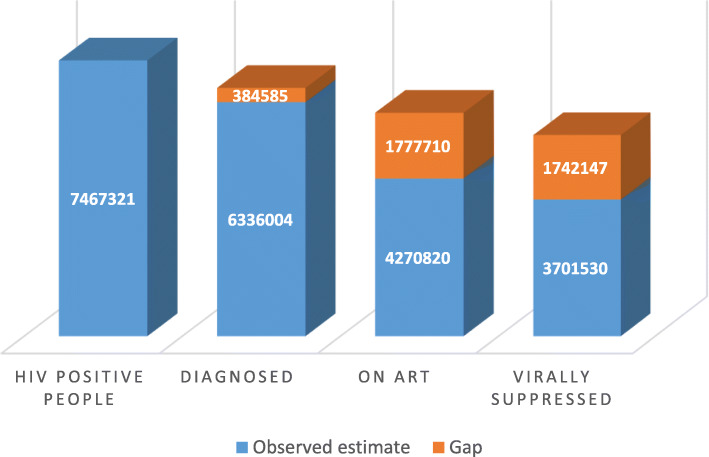
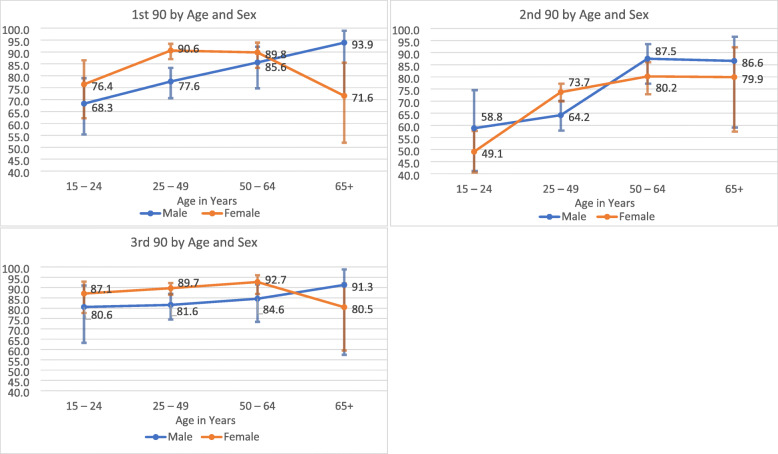
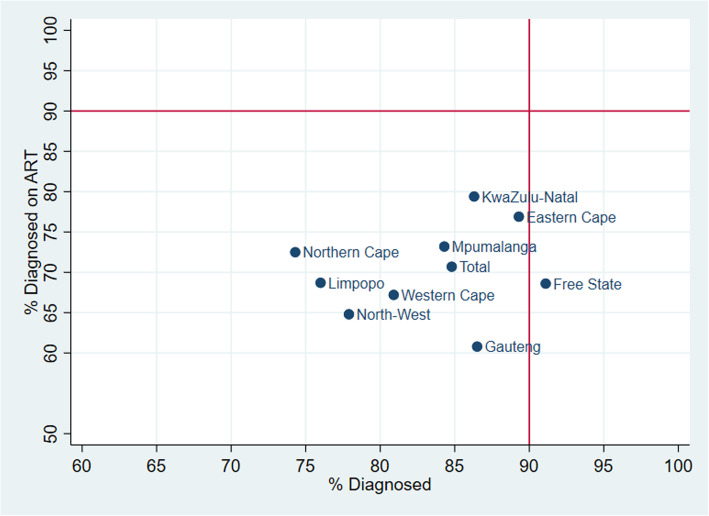
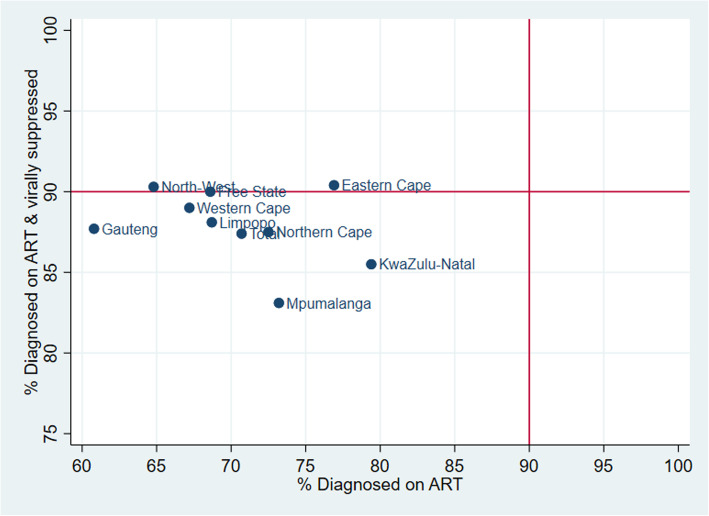
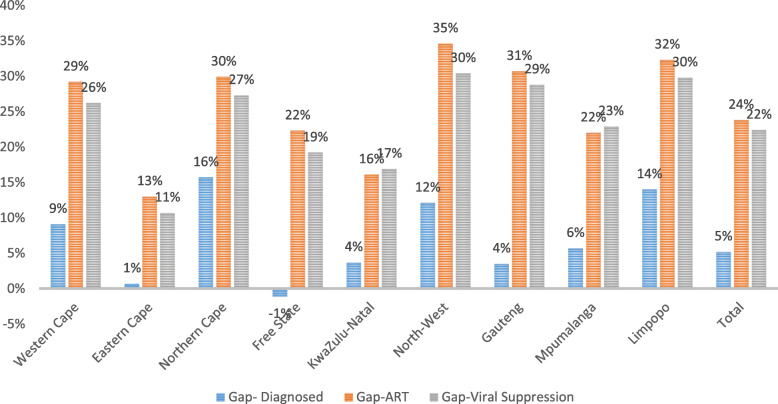
Background: Measuring progress towards the Joint United Nations Programme on HIV/AIDS (UNAIDS) 90–90–90 treatment targets is key to assessing progress towards turning the HIV epidemic tide. In 2017, the UNAIDS model estimated that 75% of people living with HIV (PLHIV) globally knew their HIV positive status, 79% of those who knew their status were on antiretroviral therapy (ART), and 81% of those who knew their HIV status and were on ART had a suppressed viral load. The fifth South African national HIV sero-behavioural survey collected nationally representative data that enabled the empirical estimation of these 90–90–90 targets for the country stratified by a variety of key factors. Methods: To evaluate progress towards achievement of the 90–90–90 targets for South Africa, data obtained from a national, representative, cross-sectional population-based multi-stage stratified cluster random survey conducted in 2017 were analysed. The Fifth South African National HIV Prevalence, Incidence, Behaviour and Communication Survey (SABSSM V), collected behavioural and biomarker data from individuals residing in households from 1000 randomly selected Small Area Layers (SALs), across all nine provinces of the country. Structured questionnaires were used to collect socio-demographic data, knowledge and perceptions about HIV, and related risk behaviours. Blood samples were collected to test for HIV infection, antiretroviral use, and viral suppression (defined as < 1000 copies/ml). Weighted proportions of study participants aged 15 years and older who tested HIV positive were computed for those who reported awareness of their status (1st 90), and among these, those who were currently on ART (2nd 90) and of these, those who were virally suppressed (3rd 90). Results: Among persons 15 years and older who were HIV positive, 84.8% were aware of their HIV positive status, of whom 70.7% were currently on ART, with 87.4% of these estimated to have suppressed viral load at the time of the survey. These estimates varied by sex, age, and geo-location type. Relatively higher percentages across all three indicators for women compared to men were observed: 88.7% versus 78.2% for those aware of their status, 72.3% versus 67.7% for on ART, and 89.8% versus 82.3% for viral suppression. Knowing one’s positive HIV status increased with age: 74.0, 85.8, and 88.1% for age groups 15–24 years old, 25–49 years old and 50–64 years old, although for those 65 years and older, 78.7% knew their HIV positive status. A similar pattern was observed for the 2nd 90, among those who knew their HIV positive status, 51.7% of 15 to 24 year olds, 70.5% of those aged 25–49 years old, 82.9% of those aged 50–64 years old and 82.4% of those aged 65 years or older were currently on ART. Viral suppression for the above mentioned aged groups, among those who were on ART was 85.2, 87.2, 89.5, and 84.6% respectively. The 90–90–90 indicators for urban areas were 87.7, 66.5, and 87.2%, for rural settings was 85.8, 79.8, and 88.4%, while in commercial farming communities it was 56.2, 67.6 and 81.4%. Conclusions: South Africa appears to be on track to achieve the first 90 indicator by 2020. However, it is behind on the second 90 indicator with ART coverage that was ~ 20-percentage points below the target among people who knew their HIV status, this indicates deficiencies around linkage to and retention on ART. Overall viral suppression among those on ART is approaching the target at 87.4%, but this must be interpreted in the context of low reported ART coverage as well as with variation by age and sex. Targeted diagnosis, awareness, and treatment programs for men, young people aged 15–24 years old, people who reside in farming communities, and in specific provinces are needed. More nuanced 90–90–90 estimates within provinces, specifically looking at more granular sub-national level (e.g. districts), are needed to identify gaps in specific regions and to inform provincial interventions.
Overview
The claims and statistics of this paper haven’t been checked yet.
Free: it reads the open-access text and checks the first 5 claims that cite a source we can check. Create a free account to check every claim.
Integrity signals
Registry
Cites
Statistics
Figures
Verification
Claims the paper makes
The claims and statistics of this paper haven’t been checked yet.
Free: it reads the open-access text and checks the first 5 claims that cite a source we can check. Create a free account to check every claim.
Claims other papers make about this one
Each is checked against this paper’s own text: does it say what the citing paper says it does?
The source backs part of the claim, not all of it — or backs it for a different population, condition or comparison.
In the citing paper
“only about 69% of South African adult women living with HIV (WLWH) are virally suppressed [1].”
From Associations Between Patterns of Alcohol Use and Viral Load Suppression Amongst Women Living with HIV in South Africa (2021) · cites this paper as [1]
Experimental — accuracy not yet measuredIn the citing paper
“South African women continue to be disproportionately affected by HIV—comprising about 60% of the estimated 7.9 million South Africans living with HIV [1].”
From Associations Between Patterns of Alcohol Use and Viral Load Suppression Amongst Women Living with HIV in South Africa (2021) · cites this paper as [1]
Self-check
Percentages, sums and reported differences re-computed from the paper’s own numbers.
The self-check needs the paper’s full text.
Citations
Cites
South African National HIV Prevalence, Incidence and Behaviour Survey, 2012
Shisana, O., Rehle, T. M., Simbayi, L. C., Zuma, K. K., Jooste, S. E., Zungu, N. P., Labadarios, D., & Onoya, D. (2014) · Cited by 1,645
Self-citationRodger, A. J., Cambiano, V., Bruun, T., Vernazza, P., Collins, S., van Lunzen, J., Corbelli, G. M., Estrada, V., Geretti, A. M., Beloukas, A., et al. (2016) · JAMA · doi:10.1001/jama.2016.5148 · Cited by 1,431
Samji, H., Cescon, A., Hogg, R. S., Modur, S. P., Althoff, K. N., Buchacz, K., Burchell, A. N., Cohen, M., Gebo, K. A., Gill, M. J., et al. (2013) · PLoS ONE · doi:10.1371/journal.pone.0081355 · Cited by 1,417
Tanser, F., Bärnighausen, T., Grapsa, E., Zaidi, J., & Newell, M.-L. (2013) · Science · doi:10.1126/science.1228160 · Cited by 796
Grinsztejn, B., Hosseinipour, M. C., Ribaudo, H. J., Swindells, S., Eron, J., Chen, Y. Q., Wang, L., Ou, S.-S., Anderson, M., McCauley, M., et al. (2014) · The Lancet Infectious Diseases · doi:10.1016/s1473-3099(13)70692-3 · Cited by 494
Govindasamy, D., Meghij, J., Negussi, E. K., Baggaley, R. C., Ford, N., & Kranzer, K. (2014) · Journal of the International AIDS Society · doi:10.7448/ias.17.1.19032 · Cited by 277
Progress towards the 2020 targets for HIV diagnosis and antiretroviral treatment in South Africa
Johnson, L. F., Dorrington, R. E., & Moolla, H. (2017) · Southern African Journal of HIV Medicine · doi:10.4102/sajhivmed.v18i1.694 · Cited by 189
Bazzoli, C., Jullien, V., Le Tiec, C., Rey, E., Mentré, F., & Taburet, A.-M. (2010) · Clinical Pharmacokinetics · doi:10.2165/11318110-000000000-00000 · Cited by 165 · cited 1×
“most ART drugs [1], would have tested ARV negative.”
BackgroundHIV testing and linkage to services for youth
Kurth, A., Lally, M., Choko, A. T., Inwani, I. W., & Fortenberry, J. D. (2015) · Journal of the International AIDS Society · doi:10.7448/ias.18.2.19433 · Cited by 134
Simbayi, L. C., Zuma, K. K., Zungu, N. P., Moyo, S., Marinda, E. T., Jooste, S., Mabaso, M., Ramlagan, S., North, A., van Zyl, J., et al. (2019) · Cited by 132
Self-citation
Research works printed but not linked: 6
- NDoH, S. A NDoH and WHO guidelines 2016
- NDoH, S. A Annual Report 2018
- PHIA A drop that counts 2019
- UNAIDS 90–90-90 an ambitious treatment target to end the AIDS epidemic 2014
- UNAIDS Ending AIDS Progress towards the 90–90-90 targets 2017
- WHO Guideline on when to start antiretroviral therapy and on pre-exposure prophylaxis for HIV 2015 26598776
Cited by
Achieving the 95 95 95 targets for all: A pathway to ending AIDS
Frescura, L., Godfrey-Faussett, P., Feizzadeh, A., El-Sadr, W., Syarif, O., Ghys, P. D., & on behalf of the 2025 testing treatment target Working Group (2022) · PLOS ONE · doi:10.1371/journal.pone.0272405 · Cited by 442
Bekker, L.-G., Beyrer, C., Mgodi, N., Lewin, S. R., Delany-Moretlwe, S., Taiwo, B., Masters, M. C., & Lazarus, J. V. (2023) · Nature Reviews Disease Primers · doi:10.1038/s41572-023-00452-3 · Cited by 241
Aging with HIV: Increased Risk of HIV Comorbidities in Older Adults
Roomaney, R. A., van Wyk, B. E., & Wyk, V. P. (2022) · International Journal of Environmental Research and Public Health · doi:10.3390/ijerph19042359 · Cited by 101
“It is envisaged that the number of PLWH on ART is likely to continue to grow as the country endeavors to meet ART coverage targets [5].”
BackgroundMen missing from the HIV care continuum in sub‐Saharan Africa: a meta‐analysis and meta‐synthesis
Nardell, M. F., Adeoti, O., Peters, C., Kakuhikire, B., Govathson, C., Long, L. C., Pascoe, S. J. S., Tsai, A. C., & Katz, I. T. (2022) · Journal of the International AIDS Society · doi:10.1002/jia2.25889 · Cited by 76
Eaton, J. W., Dwyer‐Lindgren, L., Gutreuter, S., O’Driscoll, M., Stevens, O., Bajaj, S., Ashton, R., Hill, A., Russell, E., Esra, R. T., et al. (2021) · Journal of the International AIDS Society · doi:10.1002/jia2.25788 · Cited by 57
“Recent household surveys have included biomarker tests for antiretroviral use, which may inform spatial patterns of treatment coverage [17,18].”
BackgroundMyers, B., Lombard, C., Joska, J. A., Abdullah, F., Naledi, T., Lund, C., Petersen Williams, P., Stein, D. J., & Sorsdahl, K. R. (2021) · AIDS and Behavior · doi:10.1007/s10461-021-03263-3 · Cited by 47
“Additional research is needed to examine whether findings from these studies can translate to South Africa where the prevalence of HIV is greater, the degree of epidemiological control is poorer, and where risk is generalized rather than concentrated among racial and sexual minorities [1, 4].”
BackgroundInfluentialBisnauth, M. A., Davies, N., Monareng, S., Buthelezi, F., Struthers, H. E., McIntyre, J. A., & Rees, K. (2021) · PLoS ONE · doi:10.1371/journal.pone.0256540 · Cited by 51
“Although South Africa is close to achieving the first 90 target of all PLHIV knowing their HIV status, the country is falling short on the second 90, with only 70% of those with known status on ART [22].”
BackgroundProgress towards 2020 global HIV impact and treatment targets
Mahy, M. I., Sabin, K. M., Feizzadeh, A., & Wanyeki, I. (2021) · Journal of the International AIDS Society · doi:10.1002/jia2.25779 · Cited by 47
“Countries adopted these targets into their national strategic plans [3,21,22] and donor organizations promoted these targets within their funding agreements [23,24].”
BackgroundFacente, S. N., Grebe, E., Maher, A. D., Fox, D., Scheer, S., Mahy, M. I., Dalal, S., Lowrance, D. W., & Marsh, K. (2022) · JMIR Public Health and Surveillance · doi:10.2196/34410 · Cited by 43
Okyere, J., Ayebeng, C., Owusu, B. A., & Dickson, K. S. (2022) · BMC Public Health · doi:10.1186/s12889-022-14091-y · Cited by 39
“South Africa has the largest number of people living with HIV globally with an estimated 8 million people are living with HIV (PLHIV) in 2017 [4, 5].”
BackgroundMagodoro, I. M., Okello, S., Dungeni, M., Castle, A. C., Mureyani, S., & Danaei, G. (2022) · International Journal of Infectious Diseases · doi:10.1016/j.ijid.2022.05.035 · Cited by 35
Chipanta, D., Amo-Agyei, S., Giovenco, D., Estill, J. A. M., & Keiser, O. (2022) · EClinicalMedicine · doi:10.1016/j.eclinm.2022.101652 · Cited by 41
Payne, C., Houle, B. C., Chinogurei, C., Riumalló‐Herl, C., Kabudula, C. W., Kobayashi, L. C., Salomon, J. A., & Manne‐Goehler, J. (2022) · The Lancet HIV · doi:10.1016/s2352-3018(22)00198-9 · Cited by 31
Farley, S. M., Wang, C., Bray, R. M., Low, A., Delgado, S., Hoos, D., Kakishozi, A. N., Harris, T. G., Nyirenda, R. K., Wadonda, N., et al. (2022) · Journal of the International AIDS Society · doi:10.1002/jia2.26005 · Cited by 30
Past and current status of adolescents living with HIV in South Africa, 2005–2017
Naidoo, I., Takatshana, S., Sewpaul, R., Jooste, S., Zhou, S., Maseko, G., Moyo, S., Zuma, K. K., Mabaso, M., & Zungu, N. P. (2022) · BMC Research Notes · doi:10.1186/s13104-022-06006-2 · Cited by 26
“The gaps in achieving the UNAIDS’ targets were calculated based on the 90%-81%-73% cascade [27].”
MethodSelf-citationBershteyn, A., Jamieson, L., Kim, H., Platais, I., Milali, M. P., Mudimu, E., Brink, D. T., Martin‐Hughes, R., Kelly, S. L., Phillips, A. N., et al. (2022) · The Lancet Global Health · doi:10.1016/s2214-109x(22)00310-2 · Cited by 32
“31 Accordingly, improved retention had a larger effect in South Africa than in Malawi, which, as of 2017, had surpassed the second 90 target.”
Steward, W. T., Agnew, E., de Kadt, J., Ratlhagana, M. J., Sumitani, J., Gilmore, H. J., Grignon, J. S., Shade, S. B., Tumbo, J. M., Barnhart, S., et al. (2021) · Journal of the International AIDS Society · doi:10.1002/jia2.25774 · Cited by 30
The effect of care interruptions on mortality in adults resuming antiretroviral therapy
Moolla, H., Davies, M., Davies, C. R., Euvrard, J., Prozesky, H. W., Fox, M. P., Orrell, C., von Groote, P., & Johnson, L. F. (2024) · AIDS · doi:10.1097/qad.0000000000003859 · Cited by 23
“…is that the proportion of ‘true interruptions’ (among gaps in care) is greater amongst male individuals than with the historical trend of male individuals having poorer health-seeking behaviour, ART adherence, and rates of viral suppression than female individuals in South Africa [19,20].”
BackgroundCohort profile: the South African National Health Laboratory Service (NHLS) National HIV Cohort
MacLeod, W., Bor, J. H., Candy, S., Maskew, M., Fox, M. P., Bulekova, K., Brennan, A. T., Potter, J. J., Nattey, C., Onoya, D., et al. (2022) · BMJ Open · doi:10.1136/bmjopen-2022-066671 · Cited by 21
Deynu, M., Agyemang, K., & Anokye, N. (2022) · International Journal of Environmental Research and Public Health · doi:10.3390/ijerph19084860 · Cited by 20
Moyo, S., Ismail, F., Mkhondo, N., der Walt, M. L. V., Dlamini, S. S., Mthiyane, T., Naidoo, I., Zuma, K. K., Tadolini, M., Law, I., et al. (2023) · PLoS ONE · doi:10.1371/journal.pone.0282125 · Cited by 24
“3% people living with HIV (PLWH) on ART in South Africa 2017 [36], the HIV programme plays a significant role in reaching PLWH who may have TB.”
BackgroundSelf-citationSexually transmitted infections in pregnant women from sub-Saharan Africa
Ngobese, B., & Abbai, N. S. (2021) · Southern African Journal of Infectious Diseases · doi:10.4102/sajid.v36i1.312 · Cited by 28
D’Ambruoso, L., Price, J. E., Cowan, E., Goosen, G., Fottrell, E. F., Herbst, K., van der Merwe, M., Sigudla, J., Davies, J. I., & Kahn, K. (2021) · Global Health Action · doi:10.1080/16549716.2021.2000091 · Cited by 17
“The country has a complex burden of communicable and non-communicable mortality, with injury and violence mortality double the global average [3,28,30].”
BackgroundBisnauth, M. A., Davies, N., Monareng, S., Struthers, H. E., McIntyre, J. A., & Rees, K. (2022) · Global Health Action · doi:10.1080/16549716.2021.2012019 · Cited by 19
“In Gauteng province, 87% were diagnosed with HIV, 61% were on ART and 88% were virally suppressed [3].”
BackgroundJooste, S., Mabaso, M., Taylor, M., North, A., Shean, Y., Simbayi, L. C., Reddy, T., Mwandingi, L., Schmidt, T., Nevhungoni, P., et al. (2021) · Southern African Journal of HIV Medicine · doi:10.4102/sajhivmed.v22i1.1273 · Cited by 17
Self-citationMabetha, D., Ojewola, T., van der Merwe, M., Mabika, R., Goosen, G., Sigudla, J., Hove, J., Witter, S., & D’Ambruoso, L. (2023) · International Journal for Equity in Health · doi:10.1186/s12939-023-01894-7 · Cited by 30
Soogun, A. O., Kharsany, A. B. M., Zewotir, T. T., North, D., & Ogunsakin, R. E. (2022) · BMC Medical Research Methodology · doi:10.1186/s12874-022-01625-6 · Cited by 20
“4% of these appraised to have suppressed viral load as at the end of 2019 [2].”
BackgroundInfluentialSengayi‐Muchengeti, M., Singh, E., Chen, W. C., Bradshaw, D., de Villiers, C. B., Newton, R., Waterboer, T., Mathew, C. G., & Sitas, F. (2022) · International Journal of Cancer · doi:10.1002/ijc.34236 · Cited by 18
“4% of these having a suppressed viral load.(10) This has been associated with widespread immune recovery, allowing PLHIV to live to older ages with a consequential increase in overall life expectancy in the country.”
BackgroundMajam, M., Segal, B., Fieggen, J., Smith, E., Hermans, L. E., Singh, L., Phatsoane, M., Arora, L., & Lalla‐Edward, S. T. (2023) · Informatics in Medicine Unlocked · doi:10.1016/j.imu.2023.101192 · Cited by 16
“Prioritising geographical locations and populations which are lagging is fundamental to achieving these targets [3].”
BackgroundSimelane, P. T., Simelane, M. S., & Amoateng, A. Y. (2022) · African Health Sciences · doi:10.4314/ahs.v22i3.49 · Cited by 22
MYERS, B. J., Browne, F. A., Carney, T., Kline, T., Bonner, C. P., & Wechsberg, W. M. (2021) · International Journal of Environmental Research and Public Health · doi:10.3390/ijerph182111403 · Cited by 22
“Risk of HIV acquisition is of particular concern for South Africa, with a quarter of the country’s estimated 270,000 incident HIV infections occurring among AGYW [21].”
BackgroundCOVID-19 hospital admissions and mortality among healthcare workers in South Africa, 2020–2021
Tlotleng, N., Cohen, C., Made, F., Kootbodien, T., Masha, M., Naicker, N., Blumberg, L. H., & Jassat, W. (2022) · IJID Regions · doi:10.1016/j.ijregi.2022.08.014 · Cited by 14
“In 2017, a national survey of HIV prevalence showed that about 14.6% of the South African population was living with HIV ( Marinda et al., 2020 ); additionally, 11–12% of HCWs in South Africa are infected with HIV ( Grobler et al., 2016 ).”
InfluentialFarahani, M., Farley, S. M., Smart, T. F., Ndagije, F., Maile, L., Longwe, H., Hoos, D., & El-Sadr, W. M. (2024) · The Lancet HIV · doi:10.1016/s2352-3018(24)00271-6 · Cited by 13
Lippman, S. A., de Kadt, J., Ratlhagana, M. J., Agnew, E., Gilmore, H. J., Sumitani, J., Grignon, J. S., Gutin, S. A., Shade, S. B., Gilvydis, J. M., et al. (2022) · AIDS · doi:10.1097/qad.0000000000003453 · Cited by 13
“that only 67% of men and 72% of women living with HIV who knew their status were on ART [8], a significant gap in ART coverage among PWH, especially among men [9].”
BackgroundZhou, S., Cluver, L. D., Knight, L., Edun, O., Sherman, G., & Toska, E. (2024) · JAIDS Journal of Acquired Immune Deficiency Syndromes · doi:10.1097/qai.0000000000003408 · Cited by 12
“11 Moreover, sub-optimal adherence to ART is high among ALHIV compared with adults, with adolescents estimated to be 50% less likely to maintain optimal adherence.”
BackgroundCOVID-19 and HIV viral load suppression in children and adolescents in Durban, South Africa
Mathamo, A., Naidoo, K., Dorward, J., Archary, T., Bottomley, C., & Archary, M. (2022) · Southern African Journal of HIV Medicine · doi:10.4102/sajhivmed.v23i1.1424 · Cited by 12
Letsela, L., Jana, M. P. E., Pursell, R., Kodisang, P., & Weiner, R. (2021) · BMC Public Health · doi:10.1186/s12889-021-12281-8 · Cited by 13
“Furthermore, sexual coercion associated with sexual debut has been an issue of concern, as highlighted in a study in KwaZulu-Natal by Maharaj & Munthree, which found that nearly 46% of all adolescent girls and young women (14-24 years) reported that their first sexual encounter had been coerced and that this group was…”
BackgroundMethodDzomba, A., Kim, H., Tomita, A. M., Vandormael, A. M., Govender, K., & Tanser, F. C. (2022) · BMC Public Health · doi:10.1186/s12889-022-13526-w · Cited by 10
“Despite being on track to achieve the first and last 95 in South Africa, only approximately 70% of PLHIV were receiving ART in 2020, with substantial variations by age and sex among those virally suppressed [29].”
BackgroundSong, J., Yang, G., Kamara, M. N., Sun, W., Guan, Q., Barrie, U., Jiba, D. F., Jalloh, A. T., Liu, M., Tamba, F. K., et al. (2023) · Virology Journal · doi:10.1186/s12985-023-02245-2 · Cited by 9
“A similar viral suppression rate of 87.4% was reported in a national survey in South Africa [17].”
BackgroundInfluentialDoan, T., Shin, W., & Mehta, N. K. (2022) · Demographic Research · doi:10.4054/demres.2022.46.18 · Cited by 9
“By 2019, an estimated 92% of PLWHA knew of their status, 70% received treatment, and 64% had suppressed viral loads (defined as having less than 200 viral copies per milliliter of blood, indicating reduced transmissibility) (UNAIDS 2020; Marinda et al. 2020).”
BackgroundNardell, M. F., Sindelo, S., Rousseau, E., Siko, N., Fuzile, P., Julies, R. F., Bassett, I. V., Mellins, C. A., Bekker, L., Butler, L., et al. (2023) · PLoS ONE · doi:10.1371/journal.pone.0280895 · Cited by 12
“Yet only 52% of young people with HIV ages 15–24 years are on antiretroviral therapy (ART), in comparison to 71% of adults with HIV ages 25–49 and 82% of adults with HIV ages 50+ [2].”
BackgroundKwena, Z., Amico, K. R., Masvawure, T. B., Ngure, K., Bukusi, E. A., Remien, R. H., Ochwal, P., Nguyen, N., & Mantell, J. E. (2023) · African Journal of AIDS Research · doi:10.2989/16085906.2023.2197879 · Cited by 9
“Delays in linkage to and poor retention in HIV care that persist among AGYW in Kenya (Koech et al., 2014; Marinda et al., 2020) may be driven by their biological, developmental, sociocultural and economic vulnerabilities (Mathur et al.”
BackgroundD’Ambruoso, L., Mabetha, D., Twine, R., van der Merwe, M., Hove, J., Goosen, G., Sigudla, J., & Witter, S. (2022) · PLOS Global Public Health · doi:10.1371/journal.pgph.0000323 · Cited by 12
The audacious goal to end AIDS by 2030: aspiration or reality?
Karim, Q. A., Mayer, K. H., Mohan, J., & del Río, C. (2024) · Journal of the International AIDS Society · doi:10.1002/jia2.26339 · Cited by 10
van den Berg, K., Murphy, E. L., Louw, V. J., Maartens, G., & Hughes, S. D. (2023) · Transfusion Medicine · doi:10.1111/tme.12957 · Cited by 10
Soogun, A. O., Kharsany, A. B. M., Zewotir, T. T., North, D., Ogunsakin, R. E., & Rakgoale, P. B. (2022) · Tropical Medicine and Infectious Disease · doi:10.3390/tropicalmed7090232 · Cited by 9
HIV Related Behaviors Among Male Partners of Adolescent Girls and Young Women in Rural South Africa
Bhushan, N. L., Shangase, N., Kimaru, L. J., Gómez-Olivé, F. X., Kahn, K., & Pettifor, A. E. (2022) · AIDS and Behavior · doi:10.1007/s10461-022-03882-4 · Cited by 11
Achieving the fast track 90-90-90 and 95-95-95 targets in sub-Saharan Africa: A rapid review
Nxumalo, C. T., Buthelezi, U. E., Chiya, W. H., Makgobole, M. U., Mpofana, N., Mgwaba, T., & Luvuno, Z. (2025) · Journal of Public Health in Africa · doi:10.4102/jphia.v16i1.691 · Cited by 7
“19 Additionally, targeted interventions designed for particular provinces and regions are required.”
InfluentialSocio-Behavioural Barriers to Viral Suppression in the Older Adult Population in Rural South Africa
Chinogurei, C., Manne‐Goehler, J., Kahn, K., Kabudula, C. W., Cornell, M., & Rohr, J. K. (2024) · AIDS and Behavior · doi:10.1007/s10461-024-04328-9 · Cited by 10
“Our study provides additional evidence of lower suppression rates for males than females [1, 14, 32, 33].”
Dzomba, A., Gómez-Olivé, F. X., Bashingwa, J. J. H., Sibanda, M., Njiro, B. J., Kahn, K., Ohene‐Kwofie, D., & Kabudula, C. W. (2025) · Frontiers in Public Health · doi:10.3389/fpubh.2025.1551847 · Cited by 6
Belus, J. M., Joska, J. A., Bronsteyn, Y., Rose, A. L., Andersen, L. S., Regenauer, K. S., MYERS, B. J., Hahn, J. A., Orrell, C., Safren, S. A., et al. (2022) · AIDS and Behavior · doi:10.1007/s10461-022-03765-8 · Cited by 8
“An integrated intervention tested in Cape Town to address ART non-adherence and reduce AOD use (Khanya) showed that the intervention, a peer-delivered behavioral intervention based on behavioral activation, problem-solving therapy, motivational interviewing and mindfulness techniques [11, 12] led to significant improv…”
MethodKalinjuma, A. V., Glass, T. R., Masanja, H., Weisser, M., Msengwa, A. S., Vanobberghen, F. M., & Otwombe, K. N. (2023) · BMJ Open · doi:10.1136/bmjopen-2022-071392 · Cited by 6
Leslie, H. H., Mooney, A. C., Gilmore, H. J., Agnew, E., Grignon, J. S., de Kadt, J., Shade, S. B., Ratlhagana, M. J., Sumitani, J., Barnhart, S., et al. (2022) · BMC Health Services Research · doi:10.1186/s12913-022-08962-8 · Cited by 7
Huerga, H., Farhat, J. B., Maman, D., Conan, N., Cutsem, G. V., Omwoyo, W., Garone, D., Gutierrez, R. O., Apollo, T., Okomo, G. O., et al. (2023) · PLOS Global Public Health · doi:10.1371/journal.pgph.0002398 · Cited by 6
Kubheka, S., Patel, R., Ramothwala, P., Moorhouse, M. A., Mohammed, P., Doblado-Maldonado, A., & Okoli, C. (2024) · Population Medicine · doi:10.18332/popmed/182917 · Cited by 6
Williams, L. D., van Heerden, A. C., Friedman, S. R., Chibi, B., Rodriguez, W. A., & Memela, P. (2024) · AIDS and Behavior · doi:10.1007/s10461-024-04379-y · Cited by 5
“This has contributed to a large gender disparity in undiagnosed cases of HIV in South Africa: up to 21.8% of male PLWH in South Africa are estimated to be still undiagnosed, compared to an estimated 11.3% of female PLWH [14].”
InfluentialThe Prevalence of Epstein-Barr Virus in Plasma Cell Neoplasms is Higher in HIV-Positive Individuals
Penzhorn, I. H., Schneider, J. W., & Sher-Locketz, C. (2022) · International Journal of Surgical Pathology · doi:10.1177/10668969221113490 · Cited by 5
“Ten patients were HIV-positive (16%), in line with the most recent estimate of a 14% HIV prevalence in South Africa.34 None of the tumors from patients with unknown HIV status that underwent HIV-1 p24 immunohistochemical testing showed positive staining.”
ResultHIV self-test reporting using mHealth platforms: A pilot study in Johannesburg, South Africa
Phatsoane Gaven, M., Quaife, M., Majam, M., Singh, L., Rhagnath, N., Wonderlik, T., & Gumede, S. B. (2023) · Frontiers in Reproductive Health · doi:10.3389/frph.2023.1073492 · Cited by 6
Johnstone, S., Erasmus, L., Thomas, J., Groome, M. J., du Plessis, N., Avenant, T., de Villiers, M., & Page, N. A. (2023) · PLOS Global Public Health · doi:10.1371/journal.pgph.0001718 · Cited by 7
“Mpumalanga (home province to the majority of the patients included in this analysis) is the only South African province in which the third-90 indicator value (the percentage of those on ART that are virally suppressed) is below 85% [42].”
BackgroundInfluentialNxumalo, C. T., Luvuno, Z., Chiya, W. H., Ngcobo, S. J., Naidoo, D., Zamudio‐Haas, S., & Harris, O. (2024) · JMIR Research Protocols · doi:10.2196/52250 · Cited by 4
Outcomes of a model for re-testing HIV-negative index contacts in Sedibeng, South Africa
Phiri, D. L., Rees, K., & Davies, N. (2023) · Southern African Journal of HIV Medicine · doi:10.4102/sajhivmed.v24i1.1482 · Cited by 4
Potsane, P. (2023) · African Journal of AIDS Research · doi:10.2989/16085906.2023.2197880 · Cited by 4
“An estimated 4.3 million PLHIV was enrolled in the ART programme, but only 3 million were virologically suppressed (Marinda et al., 2020).”
BackgroundResultInfluentialThe HIV Care Cascade for Older Adults in Rural South Africa: A Longitudinal Cohort Study (2014–2019)
Rohr, J. K., Manne‐Goehler, J., Gómez-Olivé, F. X., Kahn, K., & Bärnighausen, T. (2024) · JAIDS Journal of Acquired Immune Deficiency Syndromes · doi:10.1097/qai.0000000000003445 · Cited by 4
“15,20 – 16,18,20 Although often used as a tool to evaluate population treatment coverage, cross-sectional cascades face limitations in their interpretation.”
MethodHaw, N. J., Banegas, M., Lujintanon, S., Fairlie, L., Bwakura‐Dangarembizi, M., Agwu, A. L., Ng, D. K., & Lesko, C. R. (2025) · Journal of the International AIDS Society · doi:10.1002/jia2.26526 · Cited by 7
Mokhele, I., Sineke, T., Langa, J. M., & Onoya, D. (2021) · Medicine · doi:10.1097/md.0000000000025286 · Cited by 6
“population estimates for South Africa, which includes community based testing.([12]) Ill-health may also be a motivator for ART initiation in this cohort.”
BackgroundInfluentialLeslie, H. H., Kabudula, C. W., West, R. L., Dufour, M. K., Julien, A., Masilela, N., Tollman, S. M., Pettifor, A. E., Kahn, K., & Lippman, S. A. (2023) · AIDS and Behavior · doi:10.1007/s10461-023-04045-9 · Cited by 4
“However, not all surveys can include biomarkers, refusal rates for biomarker assessment is substantial (39% in the 2017 national survey [13]), and self-reported indicators of HIV testing lack a biomarker for comparison.”
BackgroundProvision of HIV prevention and care services to farmworkers in sub‐Saharan African countries
Mlangeni, N., Adetokunboh, O., Lembani, M., Malotle, M., Ngah, V., & Nyasulu, P. S. (2023) · Tropical Medicine & International Health · doi:10.1111/tmi.13922 · Cited by 5
“In South Africa, lower HIV treatment outcomes have been reported in certain geographic and population groups, including those who are highly mobile and those who live in commercial farms [33].”
BackgroundA Database of Randomized Trials on the HIV Care Cascade (CASCADE Database): Descriptive Study
Mbuagbaw, L. C. E., Jhuti, D., Zakaryan, G., El-Khechen, H. A., Rehman, N., Youssef, M., Garcia, M. C., Arora, V., Zani, B., Leenus, A., et al. (2022) · JMIR Data · doi:10.2196/36874 · Cited by 4
“With close to 40 years of HIV research and innovation, enormous strides have been made toward reaching these targets in many countries [2-4].”
Mthembu, M. H., Sibiya, S., Moodley, J., Mkhwanazi, N. P., & Naicker, T. (2025) · International Journal of Molecular Sciences · doi:10.3390/ijms26157451 · Cited by 4
“In the province of Kwa-Zulu Natal (KZN) of SA, 40.9% of antenatal attendees have HIV [3].”
InfluentialGounder, L., Tomita, A. M., Lessells, R. J., Moodley, S., Francois, K.-L., Khan, A., Pillay, M., Manyana, S., Govender, S., Govender, K., et al. (2024) · PLOS Global Public Health · doi:10.1371/journal.pgph.0003224 · Cited by 6
“…UNAIDS 95-95-95 strategy aims at ensuring that 95% of all people living with HIV (PLWH) are diagnosed, 95% of all PLWH diagnosed receive antiretroviral therapy (ART), and 95% of people on ART achieve sustained viral suppression, South Africa is still lagging behind in achieving these targets [1–4].”
BackgroundBazzett‐Matabele, L., Gupta, M., MacDuffie, E., George, J., Ball, J., Hazan, J., Narasimhamurthy, M., Maoto-Mokote, A. K. T., Seiphetlheng, A., Monare, B., et al. (2025) · JCO Global Oncology · doi:10.1200/go-24-00472 · Cited by 3
The HIV Testing Trends and Outcomes at a Johannesburg Trauma ICU unit: A Retrospective Cohort Study
Moeng, M. S. (2022) · Journal of Surgery · doi:10.29011/2575-9760.001666 · Cited by 3
“South Africa is still far from reaching these treatment goals [27].”
Gundo, R., Sepeng, N. V., Lavhelani, N. R., Moeta, M., Musie, M. R., Seretlo, R. J., & Mulaudzi, F. M. (2025) · Curationis · doi:10.4102/curationis.v48i1.2679 · Cited by 2
Tshaka, T. R., Faye, L. M., Apalata, T. R., & Mbulawa, Z. Z. A. (2025) · Diseases · doi:10.3390/diseases13090293 · Cited by 3
“Furthermore, the prevalence of syphilis is most pronounced in the 30–39 age group, where rates have been reported to be significant, indicating a need for enhanced screening and treatment protocols for STIs in this demographic [25].”
InfluentialArefaynie, M., Yalew, M., Kefale, B., Adane, B., & Damtie, Y. (2023) · HIV & AIDS Review · doi:10.5114/hivar.2023.125197 · Cited by 2
Small Area Estimation of HIV/AIDS Prevalence in South Africa using a Neural Method
Fundisi, E., Weir-Smith, G., Mokhele, T., & Motolwana, E. (2024) · The Open Public Health Journal · doi:10.2174/0118749445304594240425112633 · Cited by 3
Bakali, S., de Lange, Z., Jordaan, A., & Pieters, M. (2024) · PLoS ONE · doi:10.1371/journal.pone.0305826 · Cited by 2
Bondarchuk, C. P., Lemon, T., Medina‐Marino, A., Rousseau, E., Sindelo, S., Sibanda, P., Bekker, L., Butler, L., Earnshaw, V. A., & Katz, I. T. (2024) · AIDS and Behavior · doi:10.1007/s10461-024-04552-3 · Cited by 2
“Though South Africa runs the world’s largest antiretroviral therapy (ART) program, only 52% of AYA with HIV are on ART, and less than half of PLWH between the ages of 15 and 24 are virally suppressed [4–5].”
A multidisciplinary approach for people with HIV failing antiretroviral therapy in South Africa
Juta, P. M., van Vuuren, J. M. J., & Mbaya, K. J. (2024) · Southern African Journal of HIV Medicine · doi:10.4102/sajhivmed.v25i1.1579 · Cited by 3
Tlotleng, N., Jassat, W., Cohen, C., Made, F., Kootbodien, T., Masha, M., & Naicker, N. (2021) · Research Square · doi:10.21203/rs.3.rs-637985/v2 · Cited by 2
Mlangeni, N., Lembani, M., Adetokunboh, O., & Nyasulu, P. S. (2025) · Advances in Public Health · doi:10.1155/adph/7937775 · Cited by 1
“Although there is enormous progress toward ensuring the achievement of the UNAIDS 95-95-95 targets, such progress is uneven across populations between and within countries, both globally and in South Africa [2 – 4].”
Tiwari, V., Arya, A., & Sherin Raj, T. P. (2024) · Health and population. Perspectives and issues · doi:10.5005/hppi-11041-47307 · Cited by 1
Starke, S. J., He, Z., Hollamby, R., Moloantoa, T., Abraham, P., Manabe, Y. C., Hoffmann, C. J., Variava, E., & Martinson, N. A. (2025) · AIDS · doi:10.1097/qad.0000000000004336 · Cited by 1
Madela, E. I. Y., Gregson, C. L., Paruk, F., Burton, A. J., Patel, R., Wilson, H., Habana, F., Manyara, A. M., Mbanjwa, B., Gates, L., et al. (2026) · BMC Infectious Diseases · doi:10.1186/s12879-026-13273-y · Cited by 1
“Achievement of the 95-95-95 targets in this study (98-98-78) was better than previously reported for the 90-90-90 targets in SA in 2017 which were (85-71-88) in those aged 15 to 64 years [11, 39] and the 95-95-95 targets in March 2024 SANAC report which were (95-79-74) in the total population [12].”
Pretorius, M., Benade, E., Fabian, J., Lawrie, D., & Mayne, E. S. (2020) · Southern African Journal of HIV Medicine · doi:10.4102/sajhivmed.v21i1.1125 · Cited by 1
Edwards, J. K., Donastorg, Y., Zadrozny, S., Hileman, S., Gómez, H., Seamans, M. J., Herce, M. E., Ramírez, E., Barrington, C., & Weir, S. S. (2022) · Epidemiology · doi:10.1097/ede.0000000000001513 · Cited by 1
“Haiti 1,348 (14) 260 (10) 1,088 (15) 50 (11)”
Future Opportunities and Tools for Emerging Challenges for HIV/AIDS Control
Okware, S. (2022) · Infectious diseases · doi:10.5772/intechopen.100820 · Cited by 1
Jonas, K., Zani, B., Ramraj, T., Chirinda, W., Jama, N. A., Basera, W., Appollis, T. M., Pass, D., Govindasamy, D., Mukumbang, F. C., et al. (2022) · BMJ Open · doi:10.1136/bmjopen-2022-060778 · Cited by 1
Cowan, E., D’Ambruoso, L., Price, J. E., Fottrell, E. F., & Herbst, K. (2023) · F1000Research · doi:10.12688/f1000research.55377.1 · Cited by 2
“These deaths occur predominantly in low-and middle-income countries where there is a lack of complete and functioning civil registration and vital statistics (CRVS) systems 2 .”
BackgroundPeltzer, K., & Phaswana-Mafuya, N. R. (2023) · Journal of Psychology in Africa · doi:10.1080/14330237.2023.2182018 · Cited by 1
Sustainable Health in Low and Middle Income Countries; Focus on SDG Target 3.3, 3b, 3c and 3d
Mphande, F. A. (2023) · Sustainable development goals series · doi:10.1007/978-981-99-4254-1_1 · Cited by 6
Carney, T., MYERS, B. J., Browne, F. A., Kline, T., Bonner, C. P., Ndirangu, J., & Wechsberg, W. M. (2023) · International Journal of Mental Health and Addiction · doi:10.1007/s11469-023-01130-x · Cited by 1
“Despite recent decreases in HIV incidence in the country (Marinda et al., 2020), AGYW remain a key population at risk because of intersecting factors, including gender inequity, sexual risk behavior (condomless sex), and substance use (Carney et al., 2017; Myers et al., 2016).”
Williams, L. D., van Heerden, A. C., Ntinga, X., Nikolopoulos, G. K., Paraskevis, D. N., & Friedman, S. R. (2023) · International Journal of Environmental Research and Public Health · doi:10.3390/ijerph21010054 · Cited by 1
“In South Africa, national models estimate that 8–15% of HIV infections are undiagnosed [3–5], but with a large gender-based disparity: up to 21.8% of HIV infections among men are estimated to be undiagnosed, while only up to 11.3% of HIV infections among women are estimated to be undiagnosed [4].”
BackgroundInfluentialWilliams, L. D., van Heerden, A. C., Friedman, S. R., Chibi, B., Memela, P., Rodriguez, W. A., & Joseph, P. (2024) · AIDS · doi:10.1097/qad.0000000000003976 · Cited by 1
“An estimated 8–15% of people living with HIV in South Africa are undiagnosed [1–3], with a large gender disparity (up to 21.8% among men) [1].”
InfluentialLeslie, H. H., Sibanda, M., Kahn, K., Tollman, S. M., Masilela, N., Gómez-Olivé, F. X., Lippman, S. A., & Kabudula, C. W. (2024) · Journal of Global Health · doi:10.7189/jogh.14.05035 · Cited by 1
Fogel, J. M., Zewdie, K., Clarke, W. A., Piwowar‐Manning, E., Breaud, A. R., Moore, A. T., Kosloff, B. R., Shanaube, K., van Zyl, G. U., Scheepers, M., et al. (2022) · Open Forum Infectious Diseases · doi:10.1093/ofid/ofac576 · Cited by 2
“In this report, over 70% of the PWH in the Population Cohort had ARV drugs detected after 2 years of study implementation (68% in South Africa; 73% in Zambia; 73% in Arm A).”
ResultInfluentialTollefson, D., Dasgupta, S., Setswe, G., Reeves, S., Churchyard, G., Charalambous, S., & Duerr, A. C. (2023) · Journal of the International AIDS Society · doi:10.1002/jia2.26083 · Cited by 1
“South Africa, home to one-in-five people living with HIV globally [3], made significant progress towards these targets but must expand efforts to reach the more ambitious 95-95-95 targets set for 2030 [4, 5].”
BackgroundDzomba, A., Kim, H., Tomita, A. M., Vandormael, A. M., Govender, K., & Tanser, F. C. (2022) · Research Square · doi:10.21203/rs.3.rs-1152226/v1 · Cited by 1
Munedzimwe, F., Milazzo, K. E., Charalambous, S., Grund, J. M., Chaane, T., & Chetty-Makkan, C. M. (2023) · Research Square · doi:10.21203/rs.3.rs-2669264/v1 · Cited by 1
Tlotleng, N., Jassat, W., Cohen, C., Made, F., Kootbodien, T., Masha, M., & Naicker, N. (2021) · Research Square · doi:10.21203/rs.3.rs-637985/v1
Metadata
- Authors
- Marinda, E., Simbayi, L., Zuma, K., Zungu, N., Moyo, S., Kondlo, L., Jooste, S., Nadol, P., Igumbor, E., Dietrich, C., & Briggs-Hagen, M.
- Affiliations
- Human Sciences Research Council (ZA)
- Centers for Disease Control and Prevention (US)
- Corresponding author
- Marinda, Edmore
- ORCID
- Venue
- BMC Public Health
- Published
- 2020-09-09
- Volume
- 20
- Issue
- 1
- Pages
- 1375-1375
- ISSN
- 1471-2458 (ISSN-L)
- PMC
- PMC7487872
- OpenAlex
- W3084024140
- Semantic Scholar
- 9e171227eaba023bf1a88fa4230eeab908ef3861
- Cited by
- 131
- References
- 26
- Citations by year
- 2026: 6 · 2025: 13 · 2024: 29 · 2023: 26 · 2022: 39 · 2021: 17 · 2020: 1
- FWCI
- 2.72
- Type
- journal article
- Language
- en
- Open access
- gold
- doi.org
- Licence
- cc-by
- creativecommons.org/licenses/by/4.0 (tdm)
- creativecommons.org/licenses/by/4.0 (vor)
- Locations
- BMC Public Health (publishedVersion, cc-by)
- PubMed Central (publishedVersion, cc-by)
- PubMed (publishedVersion)
- DOAJ (DOAJ: Directory of Open Access Journals) (submittedVersion, cc-by-sa)
- UWC Research Repository (University of the Western Cape) (submittedVersion)
- Funders
- Centers for Disease Control and Prevention (NU2GGH001629)
- Department of Science and Innovation
- South African National AIDS Council
- Global Fund to Fight AIDS, Tuberculosis and Malaria
- UNICEF
- The Centre for Communication Impact, Soul City, and loveLife
- Topics
- Health Sciences › Medicine › Infectious Diseases › HIV/AIDS Research and Interventions
- Social Sciences › Economics, Econometrics and Finance › Economics and Econometrics › HIV/AIDS Impact and Responses
- Health Sciences › Medicine › Epidemiology › HIV, Drug Use, Sexual Risk
- Keywords
- 90-90-90 targets, antiretroviral therapy coverage, viral suppression, HIV status awareness, people living with HIV, South Africa, HIV prevalence
- MeSH terms
- Achievement, Acquired Immunodeficiency Syndrome, Adolescent, Adult, Aged, Aged, 80 and over, Awareness, Cross-Sectional Studies, Female, Goals, Humans, Male, Middle Aged, Surveys and Questionnaires, Rural Population, South Africa, United Nations, HIV Infections, Incidence, Prevalence, Viral Load, Anti-Retroviral Agents, Young Adult, Epidemics
About these checks
Registry, retraction, Cites and statistics results are computed, not judged, with one exception: a printed reference that no index lists is read once by a model before it counts as a citation error. Claims are extracted by a model and kept only when their quote appears verbatim in the text; each cited source is then checked, with a model’s help, for whether it says what the claim relies on. Those verdicts can be wrong — read the claim’s quote and the cited source before relying on one.
Statistics and arithmetic are recomputed, not judged.
Confidence bands are shown only for fields calibrated on our annotated test set. None is calibrated yet, so no band is shown.
What counts as a claim ›How we measure confidence ›How we check this ›
Are you an author, or do you see a problem with this page? Request a review
Data sources
Bibliographic data: Semantic Scholar, OpenAlex, Crossref.
Contains information from the Semantic Scholar Academic Graph Datasets, made available under the ODC Attribution License (ODC-BY 1.0).
Semantic Scholar’s data is described in: Kinney, R., et al. (2023). The Semantic Scholar Open Data Platform. arXiv:2301.10140.
