

The DOI matches its Crossref record.
Psychoactive substance abuse among commercial bus drivers in Umuahia, Abia State, South-Eastern Nigeria: an uncontrolled “epidemic” with attendant road traffic crashes
Open accessPublished version of a preprint
Abstract
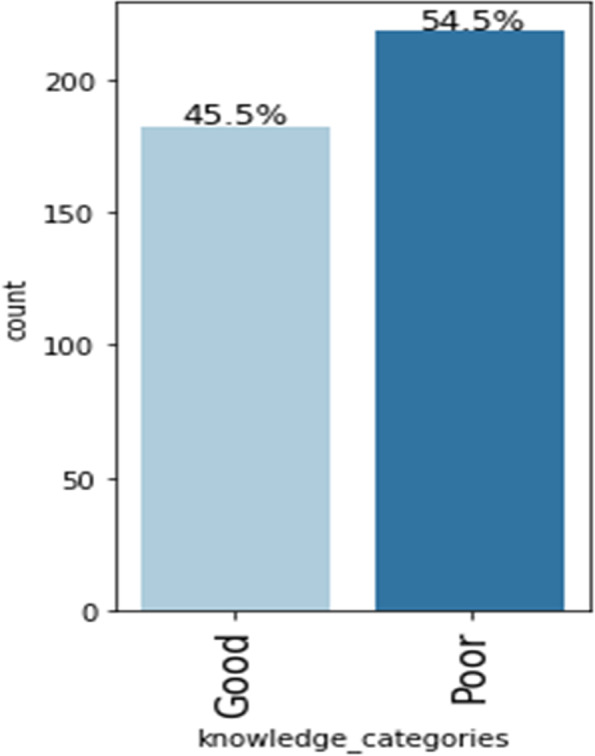
Background information: The unprecedented depletion of the productive workforce has been majorly attributed to road traffic crashes (RTCs). The attendant consequences of this depletion have been found to constitute a serious global public health challenge, with the use of psychoactive substances among drivers implicated in every three of five motor vehicle accidents. Hence, this study assessed the pattern and explored the determinants of substance abuse among commercial bus drivers in Umuahia, Abia State. Methods: A descriptive cross-sectional design was used for the study. Four hundred commercial bus drivers were recruited from selected motor parks in Abia-state, using a multistage sampling technique from October to December 2020. A pretested, interviewer-administered questionnaire was administered to obtain socio-demographics and information on substance abuse. Data were analyzed using IBM SPSS version 25; bivariate analysis was done using Chi-square. The level of significance was at 5%. Results: The mean age of the respondents was 40.03 ± 10.50 years. The proportion of respondents who had ever abused a psychoactive substance was 74.6%. The most commonly abused substances among drivers include alcohol (51%), cigarettes (27%), and alcoholic herbal mixtures (16%). The study participants had poor knowledge (54.5%) and poor perception (63.2%) about psychoactive substance abuse. Among the factors found to be significantly associated with substance abuse among respondents were ethnicity ( p = 0.002), religion ( p = 0.009) and monthly income ( p = 0.013) of the respondents, poor knowledge ( p < 0.001) and poor perception ( p < 0.001). However, this study found religion ( p = 0.031; OR = 5.469; CI = 1.170 to 25.555), knowledge ( p < 0.001; OR = 4.21; CI = 2.201 to 8.287) and perception ( p < 0.001; OR = 9.828; CI = 15.572 to 65.052) as factors that were associated with the higher likelihood of psychoactive substance abuse. Conclusion: Religion, poor knowledge and perception were associated with the higher likelihood of psychoactive substance abuse among commercial bus drivers. Targeting commercial bus drivers for educational interventions and using religious leaders as conveyor belts may reduce the use of psychoactive substances among them.
Overview
The claims and statistics of this paper haven’t been checked yet.
Run the check — free, no account needed. It reads the open-access text and checks the sources it cites.
Integrity signals
Registry
Cites
Statistics
Figures
Verification
Claims the paper makes
The claims and statistics of this paper haven’t been checked yet.
Run the check — free, no account needed. It reads the open-access text and checks the sources it cites.
Claims other papers make about this one
Each is checked against this paper’s own text: does it say what the citing paper says it does?
The source backs part of the claim, not all of it — or backs it for a different population, condition or comparison.
In the citing paper
“Commercial drivers increasingly use psychoactive substances, raising the risk of road crashes and occupational injuries.”
From Road safety threats and occupational health risk associated with psychoactive substance use and dependence risk among commercial drivers: WHO ASSIST evidence from Ghana (2026) · cites this paper as [5]
Experimental — accuracy not yet measuredThe source backs part of the claim, not all of it — or backs it for a different population, condition or comparison.
In the citing paper
“In Sub-Saharan Africa, psychoactive substance use among commercial drivers is a significant public health concern in Sub-Saharan Africa [5, 19];”
From Road safety threats and occupational health risk associated with psychoactive substance use and dependence risk among commercial drivers: WHO ASSIST evidence from Ghana (2026) · cites this paper as [5]
Experimental — accuracy not yet measuredThe cited source says what the claim attributes to it.
In the citing paper
“However, if left unaddressed, psychoactive substance use among commercial drivers will continue to undermine road safety efforts and contribute significantly to preventable injuries and fatalities [5, 15].”
The cited source says what the claim attributes to it.
In the citing paper
“Empirical studies from countries such as Nigeria and Ethiopia have reported prevalence rates of psychoactive substance use among commercial drivers exceeding 70% [5, 15].”
Self-check
Percentages, sums and reported differences re-computed from the paper’s own numbers.
The self-check needs the paper’s full text.
Citations
Cites
No references could be resolved yet.
Research works printed but not linked: 27
- Yosef T, Getachew D, Bogale B, Wondimu W, Shifera N, Negesse Y, et al. Psychoactive substance use and its Associated factors among Truck Drivers in Ethiopia. Biomed Res Int. 2021;2021:1–7. · DOI · Paper page
- Egwuatu TF, Iroanya OO, Adekoya KO. Prevalence of psychoactive substance use among nigerian male commercial vehicle drivers selected from the three major ethnic groups in Nigeria. Biol Med Nat Prod Chem. 2020;9(1):47–55.
- Oridota SE, Mary AU, Ashindoitiang FA, Olatona TO, Olajide, Olanrewaju N, Akanmu OOS. Substance and alcohol utilization among commercial drivers and its interrelationship with road traffic accident. J Med Res Pr. 2013;2(January):65–8.
- Yunusa U, Bello U, Idris M, Haddad M, Adamu D. Determinants of substance abuse among commercial bus drivers in Kano Metropolis, Kano State, Nigeria. Am J Nurs Sci. 2017;6(2):125. · DOI · Paper page
- Kehinde OS, Adegoke AE. Taking alcohol by deception: an analysis of ethanol concentration of ‘paraga’ an alcoholic herbal mixture in Nigeria. BMC Res Notes. 2012;5. https://doi.org/10.1186/1756-0500-5-127. · DOI
- Iroanya OO, Uguru-Okorie C, Egwuatu TF, Bello A. Prevalence of substance abuse amongst commercial vehicle drivers in Bariga and Gbagada motor parks of Lagos State, Nigeria. Niger J Pharm Appl Sci Res. 2018;7(2):89–93.
- Abiona TC, Aloba OO, Fatoye FO. Pattern of alcohol consumption among commercial road transport workers in a semi-urban community in South Western Nigeria. East Afr Med J. 2006;83(9):494–9.
- Olaniyi DT. Substance abuse and criminal behaviours among commercial vehicle drivers in Lagos state. Forensic Res Criminol Int J. 2020;8(1):42–50. · DOI
- Cochran W. Sampling techniques. 3rd ed. New York: John Wiley & Sons; 1977.
- Adam AM. Sample size determination in Survey Research. J Sci Res Reports. 2020;26(5):90–7. · DOI
- Dada MU, Adeoti AO, Elebiyo T, Kumolalo BF`, Ajiboye AS. Pattern of psychoactive substances use among Long-Distance Truck Drivers in Nigeria. Asian J Med Heal. 2021;19(1):18–25. · DOI
- Kagashe GAB, Seleman K. Knowledge, attitude and practice of commercial drivers in Dar es Salaam with regard to medicines that impair driving. Trop J Pharm Res. 2009;8(4):297–302. · DOI
- Adekoya BJ, Adekoya AO, Adepoju FG, Owoeye JFA. Driving under influence among long distance commercial drivers in Ilorin. Nigeria Int. 2011;2(4):870–3.
- Kassa A, Taddesse F, Yilma A. Prevalence and factors determining psychoactive substance (PAS) use among Hawassa University (HU) undergraduate students, Hawassa Ethiopia. BMC Public Health. 2014;14(1):1–7. · DOI
- Burdock G, Carabine L, Crincoli CM. Safety assessment of kola nut extract as a food ingredient. Food Chem Toxicol. 2009;47(8):1725–32. · DOI
- Aniebue P, Okonkwo K. Prevalence of Psychoactive Drug Use by Taxi Drivers in Nigeria. J Coll Med. 2008;13(1):48–52.
- David A, Toyin A. Rationale and implications of psychoactive substances use among Commercial Road Transport Workers in Lokoja, Nigeria. Mediterr J Soc Sci. 2018;8(5–1):143–57.
- Okpataku C. Sociodemographic correlates of substance use among long distance commercial vehicle drivers. J Med Trop. 2016;18(1):6. · DOI
- Asiamah G, Mock C, Blantari J. Understanding the knowledge and attitudes of commercial drivers in Ghana regarding alcohol impaired driving. Inj Prev. 2002;8:53–7. · DOI
- Makanjuola A, Aina O, Onigbogi L. Alcohol and other psychoactive substance use among tanker drivers in Lagos, Nigeria. Eur Sci J. 2014;10(15):545–59.
- Mir MU, Khan I, Ahmed B, Razzak JA. Alcohol and marijuana use while driving - an unexpected crash risk in pakistani commercial drivers: a cross-sectional survey. BMC Public Health. 2012;12(1):145. · DOI
- Ajayi AI, Owolabi EO, Olajire OO. Alcohol use among nigerian university students: prevalence, correlates and frequency of use. BMC Public Health. 2019;19(1):1–11. · DOI
- Grim BJ, Grim ME, Belief. Behavior, and belonging: how faith is indispensable in preventing and recovering from substance abuse. Springer US. 2019. https://doi.org/10.1007/s10943-019-00876-w. · DOI
- Girotto E, de Andrade SM, Mesas AE, González AD, Guidoni CM. Working conditions and illicit psychoactive substance use among truck drivers in Brazil. BMJ Journals. 2015;72(11):764.
- Okpataku C. Substance Use among Long Distance Commercial Vehicle Drivers : Onset and the influence of education. MJP Online Early; 2015. · DOI
- Bello S, Ndifon W, Ikpeme B, Fatiregun A, Oyo-Ita A. Social determinants of alcohol use among drivers in Calabar. Niger Med J. 2011;52(4):244. · DOI
- Okpataku C. Substance Use among Long Distance Commercial Vehicle Drivers : Onset and the influence of education. MJP Online Early. 2015;2(2):1–10.
Cited by
Bebangnidong, J., Norvivor, F. A., Umar, A., Bautsi, D. A., & Gmayinaam, V. U. (2026) · BMC Public Health · doi:10.1186/s12889-026-26972-7
“However, if left unaddressed, psychoactive substance use among commercial drivers will continue to undermine road safety efforts and contribute significantly to preventable injuries and fatalities [5, 15].”
Influential
Metadata
- Authors
- Akande, R. O., Akande, J. O., Babatunde, O. A., Ajayi, A. O., Ajayi, A. A., Ige, R. O., Saliu, A. S., Akande, A., & Olatunji, M. B.
- Affiliations
- Ladoke Akintola University of Technology (NG)
- Osun State University (NG)
- Ladoke Akintola University of Technology Teaching Hospital (NG)
- University of Ibadan (NG)
- Corresponding author
- Babatunde, Olaniyan Akintunde
- ORCID
- Venue
- BMC Public Health
- Published
- 2023-02-06
- Volume
- 23
- Issue
- 1
- Pages
- 250-250
- ISSN
- 1471-2458 (ISSN-L)
- PMC
- PMC9901138
- OpenAlex
- W4319298429
- Cited by
- 19
- References
- 0
- Citations by year
- 2026: 8 · 2025: 3 · 2024: 6 · 2023: 2
- FWCI
- 3.78
- Type
- journal article
- Language
- en
- Open access
- gold
- doi.org
- Locations
- BMC Public Health (publishedVersion, cc-by)
- Research Square (acceptedVersion, cc-by)
- PubMed Central (publishedVersion, cc-by)
- PubMed (publishedVersion)
- DOAJ (DOAJ: Directory of Open Access Journals) (submittedVersion, cc-by-sa)
- Topics
- Health Sciences › Medicine › Epidemiology › Substance Abuse Treatment and Outcomes
- Physical Sciences › Engineering › Safety, Risk, Reliability and Quality › Traffic and Road Safety
- Life Sciences › Pharmacology, Toxicology and Pharmaceutics › Toxicology › Forensic Toxicology and Drug Analysis
- Keywords
- psychoactive substance abuse, road traffic crashes, alcohol consumption, cigarette smoking, occupational health
- MeSH terms
- Accidents, Traffic, Adult, Automobile Driving, Cross-Sectional Studies, Humans, Middle Aged, Nigeria, Psychotropic Drugs, Substance-Related Disorders
About these checks
Registry, retraction, Cites and statistics results are computed, not judged, with one exception: a printed reference that no index lists is read once by a model before it counts as a citation error. Claims are extracted by a model and kept only when their quote appears verbatim in the text; each cited source is then checked, with a model’s help, for whether it says what the claim relies on. Those verdicts can be wrong — read the claim’s quote and the cited source before relying on one.
Statistics and arithmetic are recomputed, not judged.
Confidence bands are shown only for fields calibrated on our annotated test set. None is calibrated yet, so no band is shown.
What counts as a claim ›How we measure confidence ›How we check this ›
Are you an author, or do you see a problem with this page? Request a review
How to cite
Cite CoChat for the checks on this page, and the paper for its own findings.
- This page
- CoChat. (2026). Citation check: Psychoactive substance abuse among commercial bus drivers in Umuahia, Abia State, South-Eastern Nigeria: an uncontrolled “epidemic” with attendant road traffic crashes. https://app.cochat.ai/papers/10.1186/s12889-023-15039-6
- The paper
- Akande, R. O., Akande, J. O., Babatunde, O. A., Ajayi, A. O., Ajayi, A. A., Ige, R. O., Saliu, A. S., Akande, A., & Olatunji, M. B. (2023). Psychoactive substance abuse among commercial bus drivers in Umuahia, Abia State, South-Eastern Nigeria: an uncontrolled “epidemic” with attendant road traffic crashes. BMC Public Health. https://doi.org/10.1186/s12889-023-15039-6
Data sources
Bibliographic data: Semantic Scholar, OpenAlex, Crossref.
Contains information from the Semantic Scholar Academic Graph Datasets, made available under the ODC Attribution License (ODC-BY 1.0).
Semantic Scholar’s data is described in: Kinney, R., et al. (2023). The Semantic Scholar Open Data Platform. arXiv:2301.10140.
