

The relationship between the incidence of couvade syndrome and prenatal paternal attachment in prospective fathers and the affecting factors.
Open accessThe DOI matches its Crossref record; 30 of the 30 references it cites were found in a registry or an index; 3 of the 24 sources its claims cite were checked for support.
Abstract
Couvade Syndrome (sympathetic pregnancy) is an involuntary disorder in which the prospective father experiences unexplainable physiological and/or psychological symptoms in the transition period to parenthood. This study aimed to determine the relationship between the incidence of couvade syndrome and prenatal paternal attachment in prospective fathers living in Turkey and the influencing factors.
Overview
CoChat Summary
## TL;DR
This cross-sectional web-based study of 486 prospective fathers in Turkey found that couvade syndrome symptoms were very common and that prenatal paternal attachment was high on average. Fathers’ attachment scores were significantly associated with several sociodemographic factors and with multiple couvade-related physical and psychological symptoms.
## Key findings
- 89.3% of participants experienced at least three pregnancy-related complaints during their spouse’s pregnancy.
- The most common symptoms among prospective fathers were changes in sleep pattern (59.8%), weight gain (59.1%), increased stress (56.7%), and nausea (50.6%); the mean PPAS score was 43.98 ± 17.07.
- Prenatal paternal attachment differed significantly by several characteristics, including fathers’ age, spouses’ age, fathers’ education, income, employment, spouses’ education and employment, number of pregnancies, number of live births, and planned pregnancy status.
- Couvade syndrome was associated with education, income, employment, spouse’s education/employment, parity/live births, infant’s gender, planned pregnancy status, and pregnancy period; logistic regression reported, for example, that university-educated participants were 22.576 and 8.760 times less inclined to experience couvade syndrome than those with elementary or high school education, respectively.
## Methods
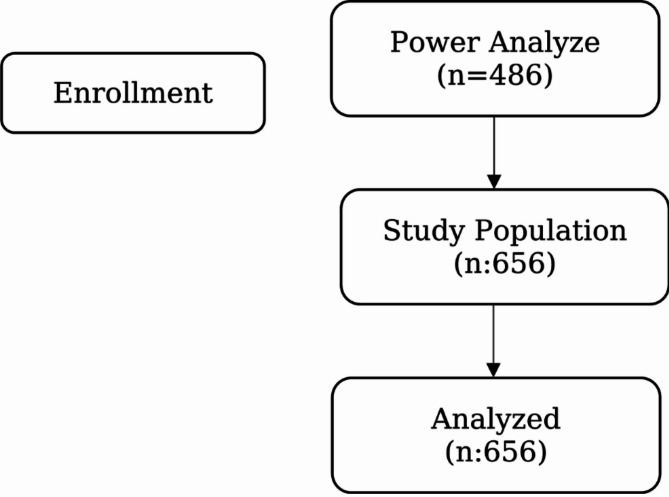
- Design/sample: Cross-sectional exploratory study of 486 prospective fathers in Turkey, recruited by simple random method through web-based questionnaires distributed on social media/communication platforms between May and August 2023.
- Measures: Participants completed a Participant Identification Form and the Prenatal Paternal Attachment Scale (PPAS); couvade syndrome was assessed from symptoms via a study-specific form created from the literature.
- Analysis: Descriptive statistics, Mann-Whitney U, Kruskal-Wallis, t-tests, and logistic regression were used; significance threshold was p < 0.05.
## Limitations
- The authors state that because the sample came from fathers who could use web applications in Turkey, the results cannot be generalized to the general population due to traditional, social, cultural, and economic differences.
- The text makes evident that the study is cross-sectional, so it cannot establish causality between couvade syndrome and prenatal paternal attachment (evident from the design).
- The paper also notes there were no standardized survey tools in Türkiye to assess couvade syndrome and affecting factors, so symptoms were evaluated with an author-created, non-standardized form (evident from the methods).
Model-written summary. Check it against the paper before relying on it.
Integrity signals
Registry
Cites
Statistics
Figures
Verification
Claims the paper makes
2 Valid · 1 Not valid · 11 Not checked · 26 Own results and interpretations
A result the paper reports from its own data — it cites no other source for it, so there is none to check. The quote shows it is in the paper.
In the paper
“In the study, a statistically significant difference was found between prenatal paternal attachment levels and weight gain, loss of appetite, sensitivity to smells, changes in sleep patterns, financial worries, increased stress, and experiencing food craving (p < 0.001).”
- Also stated in: § Results · plain
“In the study, a statistically significant difference was found between prenatal paternal attachment levels and weight gain, loss of appetite, sensitivity to smells, changes in sleep patterns, financial worries, increased stress, and experiencing food craving (p < 0.001).”
§ The relationship between the incidence of couvade syndrome and prenatal paternal attachment in prospective fathers and the affecting factors > Abstract > Results
plainstates an association- Asserted: passes — The authors put it forward as true.
- Checkable: passes — It can be checked against evidence.
- Load-bearing: passes — The paper’s conclusions depend on it.
- Based: passes — The paper gives a reason why it holds.
- Also stated in: § Results · plain
A result the paper reports from its own data — it cites no other source for it, so there is none to check. The quote shows it is in the paper.
In the paper
“In addition, it was determined that the probability of experiencing Couvade syndrome decreased in the participants whose spouses gave more live births (p < 0.001).”
§ The relationship between the incidence of couvade syndrome and prenatal paternal attachment in prospective fathers and the affecting factors > Results
plainstates an association- Asserted: passes — The authors put it forward as true.
- Checkable: passes — It can be checked against evidence.
- Load-bearing: passes — The paper’s conclusions depend on it.
- Based: passes — The paper gives a reason why it holds.
A result the paper reports from its own data — it cites no other source for it, so there is none to check. The quote shows it is in the paper.
In the paper
“The probability of experiencing Couvade syndrome was higher in the participants with unplanned pregnancy compared to those with planned pregnancy.”
§ The relationship between the incidence of couvade syndrome and prenatal paternal attachment in prospective fathers and the affecting factors > Results
plainstates an association- Asserted: passes — The authors put it forward as true.
- Checkable: passes — It can be checked against evidence.
- Load-bearing: passes — The paper’s conclusions depend on it.
- Based: passes — The paper gives a reason why it holds.
A result the paper reports from its own data — it cites no other source for it, so there is none to check. The quote shows it is in the paper.
In the paper
“In addition, experiencing Couvade syndrome according to their spouses’ pregnancy periods is also among the important predictors (p < 0.01).”
§ The relationship between the incidence of couvade syndrome and prenatal paternal attachment in prospective fathers and the affecting factors > Abstract > Results
plainstates an association- Asserted: passes — The authors put it forward as true.
- Checkable: passes — It can be checked against evidence.
- Load-bearing: passes — The paper’s conclusions depend on it.
- Based: passes — The paper gives a reason why it holds.
A result the paper reports from its own data — it cites no other source for it, so there is none to check. The quote shows it is in the paper.
In the paper
“In addition, it was determined that there was no statistically significant difference between the infant’s gender and prenatal paternal attachment levels, which was found to be consistent with the literature as well [29, 32, 34, 35].”
§ The relationship between the incidence of couvade syndrome and prenatal paternal attachment in prospective fathers and the affecting factors > Discussion
plain- Asserted: passes — The authors put it forward as true.
- Checkable: passes — It can be checked against evidence.
- Load-bearing: unclear — It is unclear whether the paper’s conclusions depend on it.
- Based: passes — The paper gives a reason why it holds.
18 more claims
Create a free account to see all 40 claims and every source verdict.
- It may state two separate claims as one. 10
- Probably not a substantial claim. 10
Citations
Cites
The assessment of antenatal emotional attachment: Development of a questionnaire instrument
Condon, J. T. (1993) · British Journal of Medical Psychology · doi:10.1111/j.2044-8341.1993.tb01739.x · Cited by 596 · cited 3×
“Turkish validity and reliability study of the scale was conducted by Benli and Aksoy (2021) [5, 23].”
Introduction to research methods in education.
Nyagah, G., Akala, H. M., & Kalai, J. M. (2014) · Cited by 315
Birth of a Father: Fathering in the First 1,000 Days
Bakermans-Kranenburg, M. J., Lotz, A., Alyousefi-van Dijk, K., & van IJzendoorn, M. (2019) · Child Development Perspectives · doi:10.1111/cdep.12347 · Cited by 167 · cited 1×
“It has been reported that it is more likely for young fathers, those with unplanned pregnancies, those who are not ready for the fatherhood role, those with high levels of stress, and those with low educational level to experience Couvade syndrome [5, 6].”
Castillo, J., Welch, G., & Sarver, C. (2011) · Maternal and Child Health Journal · doi:10.1007/s10995-010-0684-6 · Cited by 145 · cited 2×
“It has been stated that educational level, income status, number of children, employment status, and planned pregnancy status are among the factors that are effective in the establishment of paternal-fetal attachment and fulfilling the fatherhood role [30–33].”
Riazi, A. M., & Farsani, M. A. (2023) · Language Teaching · doi:10.1017/s0261444823000332 · Cited by 113 · cited 1×
“This method involves a researcher selecting potential respondents based solely on the convenience of their access to them [21].”
[Revista Brasileira de Enfermagem].
Mancia, J. R. (2002) · PubMed · Cited by 58
The Impact of Fatherhood on Men’s Health and Development
Kotelchuck, M. (2021) · Contributions to management science · doi:10.1007/978-3-030-75645-1_4 · Cited by 52 · cited 1×
“…fact, the main barriers to the inclusion of males in pregnancy preparation process can be listed as traditional approach to fatherhood role, lack of pattern [16], males’ little information about their roles and responsibilities, and lack of knowledge about the needs of the pregnant woman [17, 18].”
International Conference on Population and Development, Cairo 5-13 September 1994 -- IAC presence.
Haile Selassie, A. (1995) · PubMed · Cited by 44
Okafor, I. P., Chukwudi, C. L., Igwilo, U. U., & Ogunnowo, B. E. (2022) · PLoS ONE · doi:10.1371/journal.pone.0276059 · Cited by 42 · cited 1×
“Paternal-fetal attachment forms the basis of fatherhood identity and is a type of the deep love and interest felt by the father towards the unborn child [12].”
Fathers’ experiences of fetal attachment: A qualitative study
Lagarto, A., & Duaso, M. J. (2021) · Infant Mental Health Journal · doi:10.1002/imhj.21965 · Cited by 35 · cited 2×
“Sociodemographic and obstetric data included age, education level, income status, working status, age of wife, education level of wife, and working status of wife [1, 8, 18, 20].”
Paternal-Infant Attachment and Determination of Factors Affecting Attachment
DÜDÜKCÜ, F. T., & Aslan, F. (2020) · Archives of Health Science and Research · doi:10.5152/archealthscires.2020.558773 · Cited by 25 · cited 1×
“In addition, it was determined that there was no statistically significant difference between the infant’s gender and prenatal paternal attachment levels, which was found to be consistent with the literature as well [29, 32, 34, 35].”
Paternal Leave Entitlement and Workplace Culture: A Key Challenge to Paternal Mental Health
Ndzi, E. G., & Holmes, A. (2023) · International Journal of Environmental Research and Public Health · doi:10.3390/ijerph20085454 · Cited by 24 · cited 1×
“In another study conducted in Turkey, 15.8% of the prospective fathers were determined to experience sympathetic pregnancy symptoms [11].”
InfluentialElementos da paternidade envolvida no período gestacional: revisão de escopo
Alvarenga, W. D. A., Sousa, M. D. C. S. C., de Sales, J. K. L., Neris, R. R., deMontigny, F., & Nascimento, L. C. (2024) · Revista Brasileira de Enfermagem · doi:10.1590/0034-7167-2023-0029 · Cited by 19 · cited 3×
“…in sleep patterns, anxiety about earning a living, increased stress, nausea, vomiting, abdominal pain, back pain, leg pain, leg cramps, cravings, frequent urination or urinary incontinence due to couvade syndrome, and in which trimester of pregnancy their husbands had problems [1, 8, 19, 20].”
Evgin, D., & Özdil, K. (2022) · Turkiye Klinikleri Journal of Nursing Sciences · doi:10.5336/nurses.2021-86698 · Cited by 19 · cited 2×
“…effect of fathers’ support for the breastfeeding process on mothers’ breastfeeding self-efficacy and father-infant bonding, it was determined that there was a relationship between fathers’ Father-Infant Bonding and the father’s educational status, family type and the number of children he had [41].”
Couvade syndrome in expectant Thai fathers
Khanobdee, C., Sukratanachaiyakul, V., & Gay, J. T. (1993) · International Journal of Nursing Studies · doi:10.1016/0020-7489(93)90062-y · Cited by 16 · cited 2×
“…with the participation of 172 prospective fathers, it was reported that they experienced loss of appetite, increased appetite, toothache, constipation, weight gain, nausea, and vomiting as well as feelings of sadness and happiness, poor concentration, and anxiety as psychological symptoms [28].”
Related factors to paternal adaptation: A cross-sectional study for first-time fathers
Simbar, M., Eskandari, N., Vedadhir, A., Baghestani, A., & Momenyan, S. (2019) · Iranian Journal of Nursing and Midwifery Research · doi:10.4103/ijnmr.ijnmr_144_17 · Cited by 16
Assessment of factors and father-infant attachment levels among Turkish's fathers of preterm infants
Gül, U., & Kobya Bulut, H. (2022) · Journal of Pediatric Nursing · doi:10.1016/j.pedn.2021.12.027 · Cited by 14 · cited 2×
“In the study by Gül and Bulut (2022) examining the factors and father-infant attachment levels in Turkish fathers of premature babies, the mean PPAS score of the fathers was found to be 62.97 ± 8.94 and at a low level [36].”
InfluentialPaternal depression and attachment levels of first‐time fathers in Turkey
Ertekin Pinar, S., & Ozbek, H. (2022) · Perspectives in Psychiatric Care · doi:10.1111/ppc.12905 · Cited by 13 · cited 3×
“There are limited studies on the incidence of Couvade syndrome, and it has been stated that in the pregnancy period of their spouses, most males experience at least one of the symptoms of the syndrome defined [26].”
InfluentialThe barriers and facilitators of Iranian men's involvement in perinatal care: a qualitative study
Hajian, S., Mehran, N., Simbar, M., & Majd, H. A. (2022) · Reproductive Health · doi:10.1186/s12978-022-01350-9 · Cited by 13 · cited 1×
“…and Development Conference (1994) that male participation in pregnancy should be encouraged including their fatherhood roles [14], in some cultures, there is a belief that reproductive problems are specific to women, and that male participation is not necessary to cope with this problem [15].”
Couvade Syndrome Among Jordanian Expectant Fathers.
Mrayan, L., Abujilban, S., Abuidhail, J., Bani Yassein, M., & Al-Modallal, H. (2019) · American journal of men's health · doi:10.1177/1557988318810243 · Cited by 12 · cited 2×
“Couvade Syndrome (sympathetic pregnancy) is an invol-untary disorder in which the prospective father experiences unexplainable physiological and/or psychological symptoms in the transition period to parenthood [1, 2].”
Couvade Syndrome - Custom, Behavior or Disease?
Piechowski-Jozwiak, B., & Bogousslavsky, J. (2018) · Frontiers of Neurology and Neuroscience · doi:10.1159/000475686 · Cited by 11 · cited 4×
“…in sleep patterns, anxiety about earning a living, increased stress, nausea, vomiting, abdominal pain, back pain, leg pain, leg cramps, cravings, frequent urination or urinary incontinence due to couvade syndrome, and in which trimester of pregnancy their husbands had problems [1, 8, 19, 20].”
InfluentialThe ‘Paternal body’: Reviewing the corporeal impact of new fatherhood on employed men
Gatrell, C. (2025) · International Journal of Management Reviews · doi:10.1111/ijmr.12377 · Cited by 11 · cited 2×
“The incidence of Couvade syndrome in the literature has a wide range and varies between 11% and 97% [7].”
InfluentialCouvade syndrome: more than a toothache
Chase, T., Fusick, A., & Pauli, J. M. (2021) · Journal of Psychosomatic Obstetrics & Gynecology · doi:10.1080/0167482x.2019.1693539 · Cited by 10 · cited 1×
“Although it has been well-documented that all races and socioeconomic classes are affected by Couvade syndrome, it was found to be more prevalent among ethnic minorities, African-Americans, unmarried males, and those with unplanned pregnancies [4].”
Couvade syndrome among 1 st time expectant fathers
Ganapathy, T. (2014) · Muller Journal of Medical Sciences and Research · doi:10.4103/0975-9727.128944 · Cited by 9 · cited 1×
“In a study conducted, it was reported that most males experienced a minimum of 3 symptoms and a maximum of 29 symptoms in the pregnancy period of their spouses, and that 22.8% of the prospective fathers did not experience or notice these symptoms [27].”
InfluentialFather-Baby Attachment Levels and Influencing Factors
Bulut, H. K., Çalık, K. Y., & Yildiz, N. K. (2023) · Ordu Üniversitesi Hemşirelik Çalışmaları Dergisi · doi:10.38108/ouhcd.1152376 · Cited by 9 · cited 1×
“In the study by Bulut et al. (2023) examining the father-baby attachment level and affecting factors, it was determined that the PPAS mean score was 75.22 ± 7.55 [38].”
InfluentialEffect of Attachment Training on Paternal-fetal Attachment
Nosraty, A., Mirzakhani, K., Golmakani, N., et al. (2019) · DOAJ (DOAJ: Directory of Open Access Journals) · doi:10.22038/jmrh.2019.19194.1199 · Cited by 8
Dikmen‐Yildiz, P. (2024) · Journal of Reproductive and Infant Psychology · doi:10.1080/02646838.2024.2382214 · Cited by 7 · cited 1×
“In the study by Dikmen-Yıldız (2025) examining father-to-infant attachment and its associated factors during the COVID-19 pandemic, the mean PPAS score of fathers was found to be 76.92 ± 13.59 and at a low level [37].”
InfluentialPsychosomatic symptoms of the Couvade syndrome in Finnish and Polish expectant fathers
Markowska, U. S., Zyg, M., & Kiełbratowska, B. (2018) · Ginekologia Polska · doi:10.5603/gp.a2018.0007 · Cited by 6 · cited 1×
“Couvade syndrome symptoms generally occur in prospective fathers whose partner is pregnant in the first and third trimester of pregnancy [3].”
Czerwiak, K. Z., Cyrkler, M., Drabik, A., & Soroka, E. (2024) · Medical Science Monitor · doi:10.12659/msm.945482 · Cited by 6 · cited 1×
“In literature, these somatic symptoms seen in prospective fathers which are claimed to be based on unknown physical reasons and are mostly seen in the pregnancy period of their spouses are called Couvade syndrome [25].”
Anxiety in Fathers and Father-Infant Attachment
Kurtuluş, G., Yolcu, B., & Başkaya, Y. H. (2025) · Journal of Midwifery and Health Sciences · doi:10.62425/esbder.1432123 · Cited by 2
Research works printed but not linked: 10
- Kılavuz M, Genç R, Uzun Ö, Çakıcı K, Yücel R, Bilgin İ, Çetin E. The frequency of couvade syndrome symptoms. KTO Karatay Univ J Health Sci. 2022;3(2):42–51.
- İbrice T. Determination of stress, depression and anxiety states of expectant fathers whose wives will give birth, Hasan Kalyoncu University, Institute of Health Sciences, Nursing Program, Master’s Thesis, Gaziantep, 2019.
- Özkan H, Aksoy AN. Do expectant fathers experience sympathetic pregnancy? HealthMED. 2011;5(3):643–7.
- World Health Organization. Programming for male involvement in reproductive health: report of the meeting of WHO regional advisers in reproductive health WH. Geneva: World Health Organization; 2002.
- Döner Şİ, Baş ZT, Duran B, Er M, Karakoç H. Fatherhood role acquisition in turkey: fathers’ attitudes and behaviors. J Curr Nurs Res. 2021;1(2):59–67.
- Brennan A. Couvade syndrome in Australian men: A National survey. Our National couvade survey–Full report Article. London: Kingston University, St. George’s & University of London; 2010. pp. 10–8.
- Küğcümen G, Şahin NH. Psychosocial adaptation to parenthood and postpartum depression. Turk Clin Obstetrics-Gynecology Gynecol Nursing-Special Top. 2018;4(2):88–94.
- Aydin R, Boz B, Ucar O, Dolek F. Attachment levels of fathers and examining the factors affecting. Int J Caring Sci. 2020;13(2):1440–8.
- Evcili F, Yurtsal ZB, Cesur B, Kaya N. The effect of painful procedures applied to the newborn on Parent-Infant attachment. Gumushane Univ J Health Sci. 2017;6(1):65–71.
- İbiloğlu AO, Atli A. Couvade syndrome: a rare case report. Psychiatry Clin Psychopharmacol. 2018;28:193–193.
Cited by
Fathers in the shadow of pregnancy: a qualitative study on couvade syndrome in expectant fathers
Ceylan, S., Gönenç, İ. M., Özdemir, H., & Çiftci, Ş. (2026) · Journal of Psychosomatic Obstetrics & Gynecology · doi:10.1080/0167482x.2026.2689383 · Cited by 1
Sritawan, P., Sansiriphun, N., Deeluea, J., Chaloumsuk, N., & Krikitrat, P. (2026) · Belitung Nursing Journal · doi:10.33546/bnj.4372
“They had only a moderate level of positive prenatal paternal attachment ( Kucukkaya & Isık, 2025 ), with reduced infant bonding and poor long-term child development (Alex, 2024).”
The clinical correlates of couvade syndrome: a case report in a patient with functional tics
Cavanna, A. E., Annoni, G. M., D’Amore, R., Pasturenzi, S. N., Arienti, G., Riva, A., Nacinovich, R., & Seri, S. (2026) · Future Neurology · doi:10.1080/14796708.2026.2717315
Metadata
- Authors
- Küçükkaya, B., & Işık, H. K.
- Affiliations
- Bartin University (TR)
- Atatürk University (TR)
- Corresponding author
- Işık, Hafsa Kübra
- Venue
- BMC public health
- Published
- 2025-07-10
- Volume
- 25
- Issue
- 1
- Pages
- 2424-2424
- ISSN
- 1471-2458 (ISSN-L)
- PMC
- PMC12243285
- OpenAlex
- W4412150728
- Cited by
- 3
- References
- 28
- Citations by year
- 2026: 3
- FWCI
- 2.71
- Type
- journal article
- Language
- en
- Open access
- gold
- doi.org
- Licence
- cc-by-nc-nd
- creativecommons.org/licenses/by-nc-nd/4.0 (tdm)
- creativecommons.org/licenses/by-nc-nd/4.0 (vor)
- Locations
- BMC Public Health (publishedVersion, cc-by-nc-nd)
- PubMed Central (publishedVersion, cc-by-nc-nd)
- PubMed (publishedVersion)
- Ataturk University - AVESIS (submittedVersion)
- DOAJ (DOAJ: Directory of Open Access Journals) (submittedVersion, cc-by-sa)
- Topics
- Health Sciences › Medicine › Public Health, Environmental and Occupational Health › Maternal Mental Health During Pregnancy and Postpartum
- Social Sciences › Psychology › Social Psychology › Attachment and Relationship Dynamics
- Social Sciences › Demography › Family Dynamics and Relationships
- Keywords
- couvade syndrome, paternal attachment, pregnancy-related symptoms, weight gain, sleep changes, stress, food cravings, parity, planned pregnancy
- MeSH terms
- Adult, Cross-Sectional Studies, Fathers, Female, Humans, Male, Object Attachment, Pregnancy, Pregnancy Complications, Prospective Studies, Surveys and Questionnaires, Syndrome, Turkey, Incidence
About these checks
Registry, retraction, Cites and statistics results are computed, not judged, with one exception: a printed reference that no index lists is read once by a model before it counts as a citation error. Claims are extracted by a model and kept only when their quote appears verbatim in the text; each cited source is then checked, with a model’s help, for whether it says what the claim relies on. Those verdicts can be wrong — read the claim’s quote and the cited source before relying on one.
The claim verdicts this report counts are experimental: their accuracy is not yet measured.
A language model drew the claims from the paper on 2026-09-30, under version 3 of the claim definition (model deepseek-v4.1-flash, prompt extract-v3).
A second model labelled each claim on 2026-09-30 (model jev-1.13-20260917, definition revision gold-guideline-v0.2).
Statistics and arithmetic are recomputed, not judged.
Confidence bands are shown only for fields calibrated on our annotated test set. None is calibrated yet, so no band is shown.
What counts as a claim ›How we measure confidence ›How we check this ›
Are you an author, or do you see a problem with this page? Request a review
Data sources
Bibliographic data: Semantic Scholar, OpenAlex, Crossref.
Contains information from the Semantic Scholar Academic Graph Datasets, made available under the ODC Attribution License (ODC-BY 1.0).
Semantic Scholar’s data is described in: Kinney, R., et al. (2023). The Semantic Scholar Open Data Platform. arXiv:2301.10140.
