

Atraumatic restorative treatment compared to the Hall Technique for occluso-proximal carious lesions in primary molars; 36-month follow-up of a randomised control trial in a school setting
Open accessPublished version of a preprint
The DOI matches its Crossref record; 46 of the 46 references it cites were found in a registry or an index.
Abstract
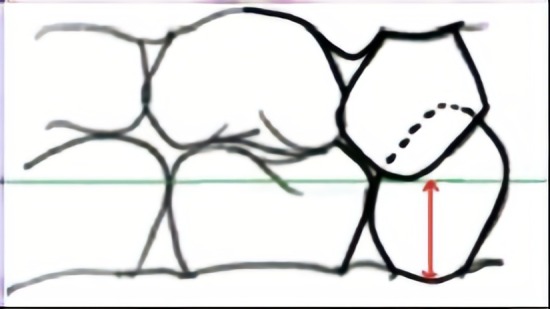
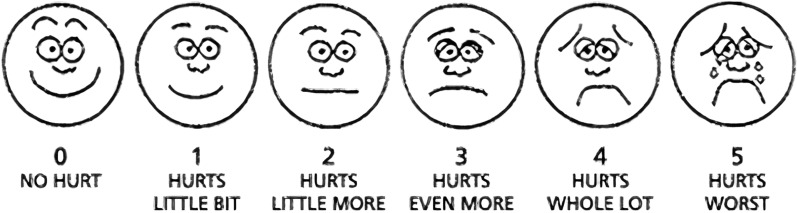
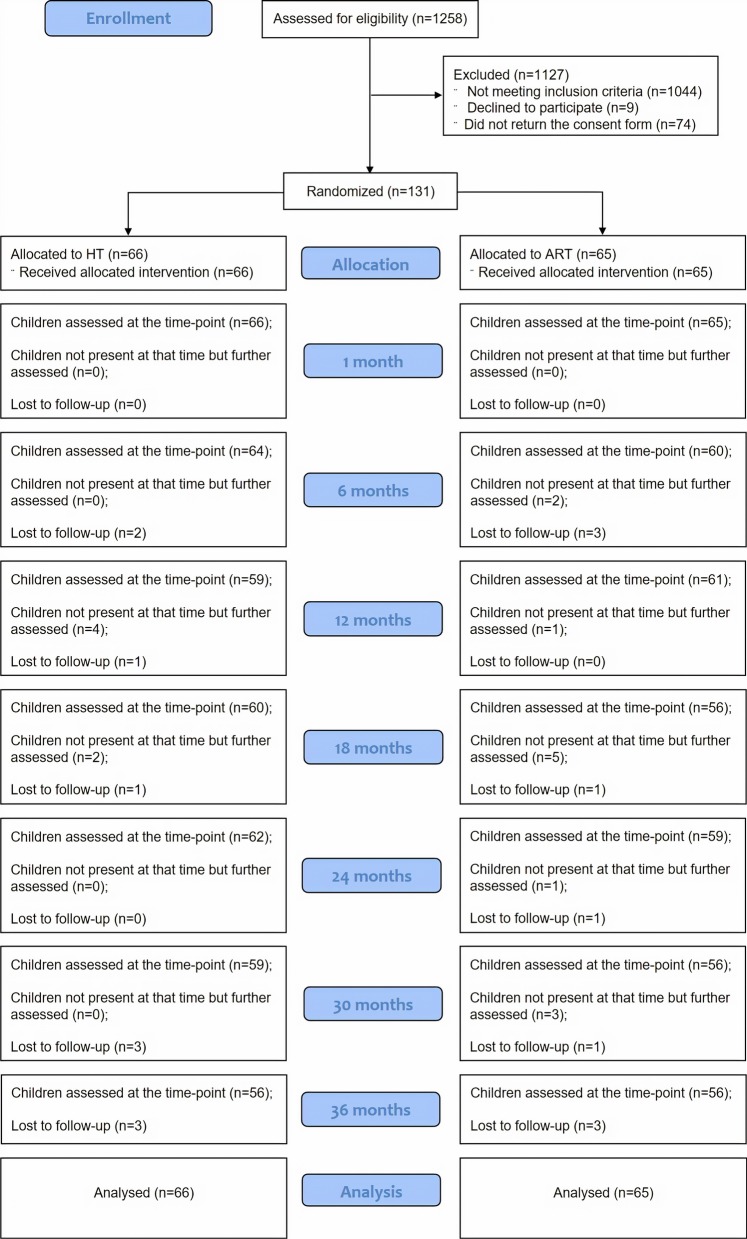
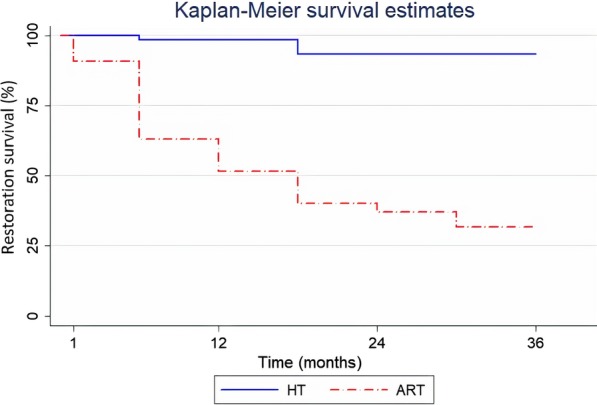
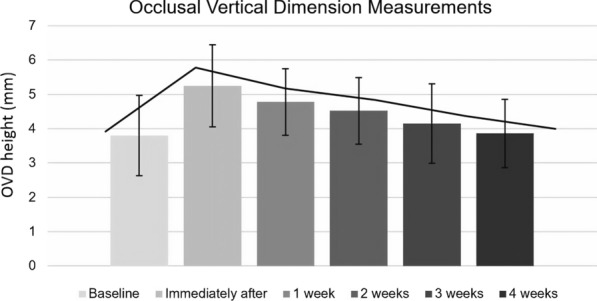
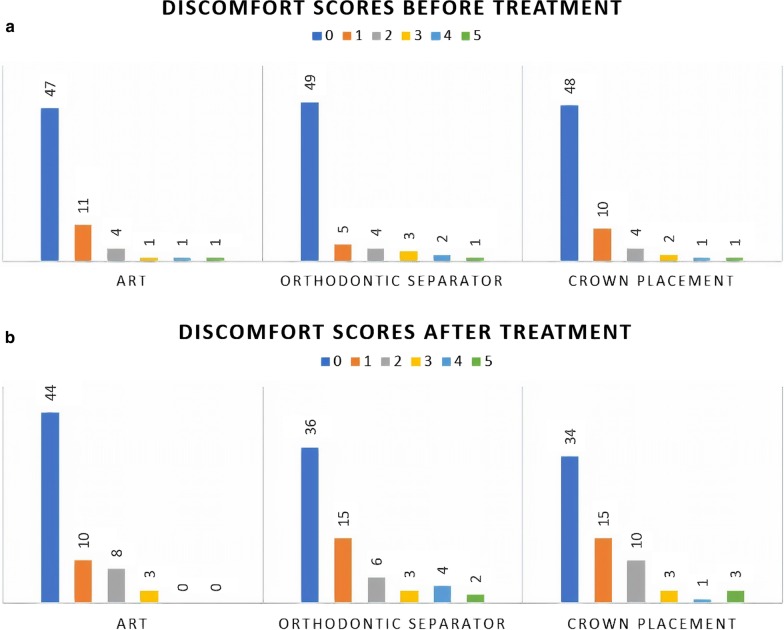
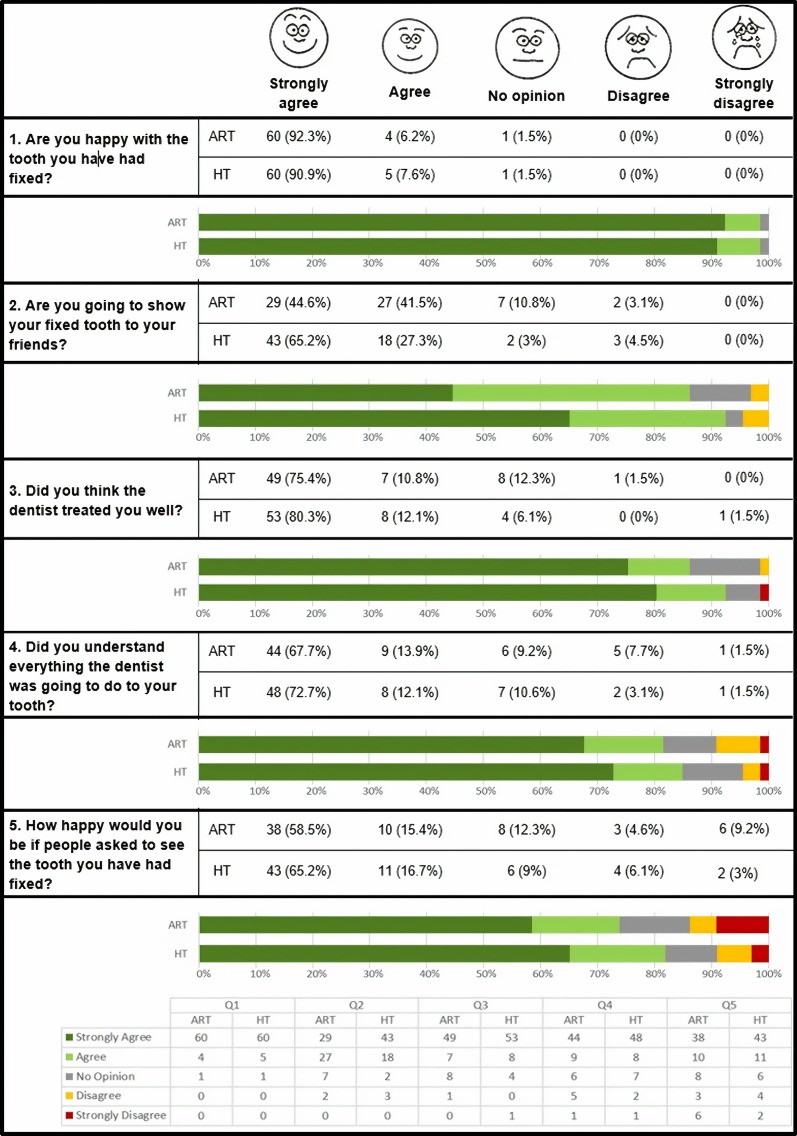
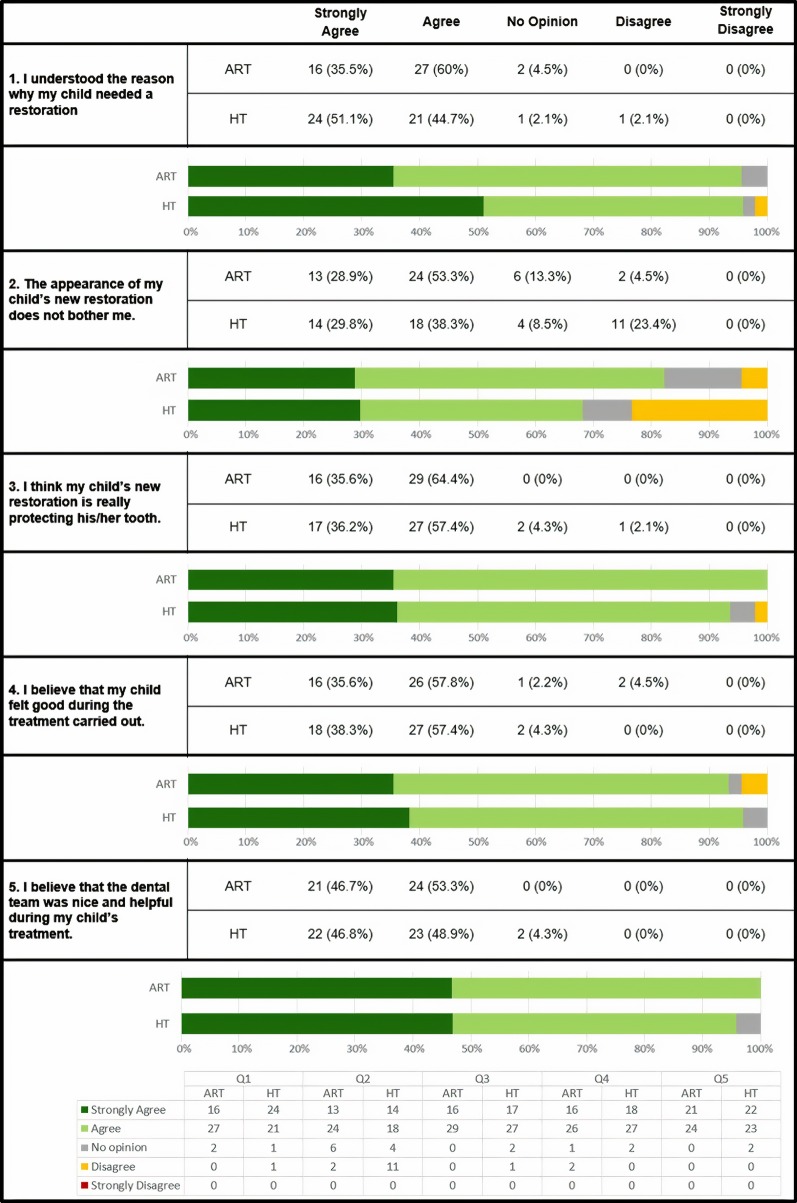
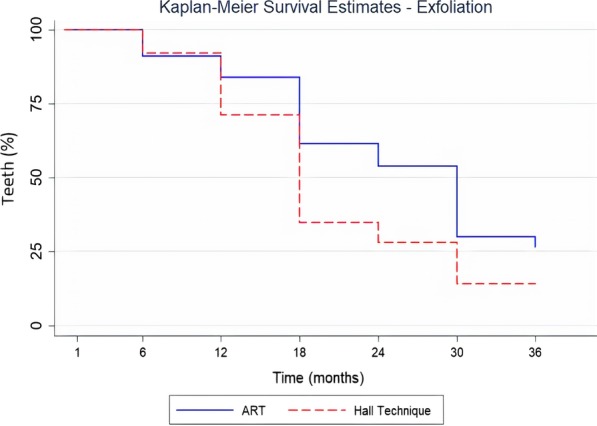
Background: Atraumatic Restorative Treatment (ART) and the Hall Technique (HT) are both minimally invasive, non-aerosol generating procedures (non-AGPs). They seem to have never been directly compared, nor has the HT been studied in a non-clinical setting. This study compared the HT and ART restorations placed in a school setting after 36 months. Methods: Children (5–10 yo) who had a primary molar with a dentinal occluso-proximal, cavitated carious lesion were allocated to the ART (selective removal) or HT arms. Primary outcome: restoration survival over 36-months (using Kaplan–Meier survival analysis, log rank test, and Cox regression). Secondary outcomes: (1) occlusal vertical dimension (OVD) (1, 2, 3, 4 weeks) and (2) child self-reported discomfort; (3) treatment acceptability (immediately following interventions); (4) Child Oral Health Related Quality of Life (OHRQoL), before treatment and after 6 months and (5) a post hoc analysis of time to tooth exfoliation (1, 6, 12, 18, 24, 30, 36 months). Results: One-hundred and thirty-one children (ART = 65; HT = 66) were included (mean age = 8.1 ± 1.2). At 36 months, 112 (85.5%) children were followed-up. Primary outcome: restoration survival rates ART = 32.7% (SE = 0.08; 95% CI 0.17–0.47); HT = 93.4% (0.05; 0.72–0.99), p < 0.001; Secondary outcomes: (1) OVD returned to pre-treatment state within 4 weeks; (2) treatment discomfort was higher for the HT ( p = 0.018); (3) over 70% of children and parents showed a high acceptability for treatments, with crown aesthetics being a concern for around 23% of parents; (4) Child OHRQoL improved after 6 months; and (5) teeth treated with the HT exfoliated earlier than those in the ART group ( p = 0.007). Conclusions: Both ART and the HT were acceptable to child participants and their parents and all parents thought both restorations protected their child’s tooth. However, the crown appearance concerned almost a quarter of parents in the HT arm. Children experienced less discomfort in the ART group. Although both treatments can be performed in a non-clinical setting and have the advantage of being non-aerosol generating procedures (non-AGPs), the HT had almost three times higher survival rates (93.4%) for restoring primary molar occluso-proximal cavities compared to ART (32.7%). Trial registration: This trial was registered in ClinicalTrials.gov (NCT02569047), 5th October 2015. https://clinicaltrials.gov/ct2/show/study/NCT02569047?cond=Hall+Technique+Atraumatic+Rest orative+Treatment&draw=2&rank=2.
Overview
The claims and statistics of this paper haven’t been checked yet.
Free: it reads the open-access text and checks the first 5 claims that cite a source we can check. Create a free account to check every claim.
Integrity signals
Registry
Cites
Statistics
Figures
Verification
Claims the paper makes
The claims and statistics of this paper haven’t been checked yet.
Free: it reads the open-access text and checks the first 5 claims that cite a source we can check. Create a free account to check every claim.
Claims other papers make about this one
Each is checked against this paper’s own text: does it say what the citing paper says it does?
The source backs part of the claim, not all of it — or backs it for a different population, condition or comparison.
In the citing paper
“Overall, HT resulted in increase in OVD immediately post-treatment in almost all children when compared to conventional PMCs/restorations.”
From Hall technique for primary teeth: A systematic review and meta-analysis (2022) · cites this paper as [17]
Experimental — accuracy not yet measuredThe source backs part of the claim, not all of it — or backs it for a different population, condition or comparison.
In the citing paper
“When compared to direct restorations, HT was 80 % more likely to succeed; while similar success was found when compared to conventional preformed metal crowns.”
From Hall technique for primary teeth: A systematic review and meta-analysis (2022) · cites this paper as [17]
Experimental — accuracy not yet measuredThe source backs part of the claim, not all of it — or backs it for a different population, condition or comparison.
In the citing paper
“Due to these differences in the unit of randomisation and the unit of analysis reported, only five studies were included in meta-analyses, the three studies with unit of randomization at tooth level with one included tooth per subject [17], [18], [20] and the two spilt mouth studies with only two teeth per subject [19], [21].”
From Hall technique for primary teeth: A systematic review and meta-analysis (2022) · cites this paper as [17]
Experimental — accuracy not yet measuredThe cited source says what the claim attributes to it.
In the citing paper
“Overall, HT was found to show higher discomfort scores when compared to ART for the stages of orthodontic separator placement and crown cementation [17].”
From Hall technique for primary teeth: A systematic review and meta-analysis (2022) · cites this paper as [17]
The cited source says what the claim attributes to it.
In the citing paper
“However, parents preferred the appearance of ART over PMCs [17]”
From Hall technique for primary teeth: A systematic review and meta-analysis (2022) · cites this paper as [17]
6 more claims about this paper
Create a free account to see every claim other papers make about this one.
Self-check
Percentages, sums and reported differences re-computed from the paper’s own numbers.
The self-check needs the paper’s full text.
Citations
Cites
Pain in children: comparison of assessment scales.
Dl, W., & Cm, B. (1988) · PubMed · Cited by 1,775
KLINGBERG, G., & BROBERG, A. G. (2007) · International Journal of Paediatric Dentistry · doi:10.1111/j.1365-263x.2007.00872.x · Cited by 755
Managing Carious Lesions: Consensus Recommendations on Carious Tissue Removal
Schwendicke, F., Frencken, J. E., Bjørndal, L., Maltz, M., Manton, D. J., Ricketts, D., Van Landuyt, K., Banerjee, A., Campus, G., Doméjean, S., et al. (2016) · Advances in Dental Research · doi:10.1177/0022034516639271 · Cited by 731
Self-citationPain in children: comparison of assessment scales.
Wong, D. L., & Baker, C. M. (1988) · PubMed · Cited by 724
Minimal intervention dentistry for managing dental caries – a review
Frencken, J. E., Peters, M. C., Manton, D. J., Leal, S. C., Gordan, V. V., & Eden, E. (2012) · International Dental Journal · doi:10.1111/idj.12007 · Cited by 531
Atraumatic Restorative Treatment (ART): Rationale, Technique, and Development
Frencken, J. E., Pilot, T., Songpaisan, Y., & Phantumvanit, P. (1996) · Journal of Public Health Dentistry · doi:10.1111/j.1752-7325.1996.tb02423.x · Cited by 439
Innes, N. P., Evans, D. J., & Stirrups, D. R. (2007) · BMC Oral Health · doi:10.1186/1472-6831-7-18 · Cited by 292
Self-citationParental perceptions and acceptance of silver diamine fluoride staining
Crystal, Y. O., Janal, M. N., Hamilton, D. S., & Niederman, R. (2017) · The Journal of the American Dental Association · doi:10.1016/j.adaj.2017.03.013 · Cited by 243
Sealing Caries in Primary Molars: Randomized Control Trial, 5-year Results
Innes, N. P. T., Evans, D. J. P., & Stirrups, D. R. (2011) · Journal of Dental Research · doi:10.1177/0022034511422064 · Cited by 225
Self-citationSurvival of atraumatic restorative treatment (ART) sealants and restorations: a meta-analysis
de Amorim, R. G., Leal, S. C., & Frencken, J. E. (2012) · Clinical Oral Investigations · doi:10.1007/s00784-011-0513-3 · Cited by 213
Characterization and Genetic Analyses of New Genes Coding for NOD2 Interacting Proteins
Thiébaut, R., Esmiol, S., Lecine, P., Mahfouz, B., Hermant, A., Nicoletti, C., Parnis, S., Perroy, J., Borg, J.-P., Pascoe, L., et al. (2016) · PLOS ONE · doi:10.1371/journal.pone.0165420 · Cited by 212
Validity and reliability of the Child Perceptions Questionnaires applied in Brazilian children
Barbosa, T. S., Tureli, M. C. M., & Gavião, M. B. D. (2009) · BMC Oral Health · doi:10.1186/1472-6831-9-13 · Cited by 190
Effectiveness of Single-surface ART Restorations in the Permanent Dentition: A Meta-analysis
Frencken, J. E., van ’t Hof, M. A., van Amerongen, W. E., & Holmgren, C. J. (2004) · Journal of Dental Research · doi:10.1177/154405910408300207 · Cited by 181
Atraumatic restorative treatment and minimal intervention dentistry
Frencken, J. E. (2017) · British Dental Journal · doi:10.1038/sj.bdj.2017.664 · Cited by 167
Schriks, M. C. M., & Van Amerongen, W. E. (2003) · Community Dentistry and Oral Epidemiology · doi:10.1034/j.1600-0528.2003.00021.x · Cited by 164
Innes, N. P. T., Stirrups, D. R., Evans, D. J. P., Hall, N., & Leggate, M. (2006) · British Dental Journal · doi:10.1038/sj.bdj.4813466 · Cited by 158
Self-citationDental Fear and Anxiety in Children and Adolescents: Qualitative Study Using YouTube
Gao, X., Hamzah, S., Yiu, C. K. Y., McGrath, C., & King, N. M. (2013) · Journal of Medical Internet Research · doi:10.2196/jmir.2290 · Cited by 153
Frencken, J. E., Makoni, F., Sithole, W. D., & Hackenitz, E. (1998) · Caries Research · doi:10.1159/000016441 · Cited by 152
de Amorim, R. G., Frencken, J. E., Raggio, D. P., Chen, X.-T., Hu, X., & Leal, S. C. (2018) · Clinical Oral Investigations · doi:10.1007/s00784-018-2625-5 · Cited by 149
Self-citationCaries Management Strategies for Primary Molars: 1-Yr Randomized Control Trial Results
Santamaria, R. M., Innes, N. P. T., Machiulskiene, V., Evans, D. J. P., & Splieth, C. H. (2014) · Journal of Dental Research · doi:10.1177/0022034514550717 · Cited by 137
Self-citationBaniHani, A., Deery, C., Toumba, J. K., Munyombwe, T., & Duggal, M. S. (2017) · International Journal of Paediatric Dentistry · doi:10.1111/ipd.12350 · Cited by 129
Cunnion, D. T., Spiro, A., Jones, J. A., Rich, S. E., Papageorgiou, C. P., Tate, A., Casamassimo, P. S., Hayes, C., & Garcia, R. I. (2010) · PubMed · Cited by 126
Effects of child characteristics and dental history on dental fear: cross-sectional study
Alshoraim, M. A., El‐Housseiny, A. A., Farsi, N., Felemban, O. M., Alamoudi, N., & Alandejani, A. A. (2018) · BMC Oral Health · doi:10.1186/s12903-018-0496-4 · Cited by 126
Acceptability of different caries management methods for primary molars in a RCT
Santamaria, R. M., Innes, N. P. T., Machiulskiene, V., Evans, D. J. P., Alkilzy, M., & Splieth, C. H. (2015) · International Journal of Paediatric Dentistry · doi:10.1111/ipd.12097 · Cited by 112
Self-citationSantamaría, R. M., Innes, N. P. T., Machiulskiene, V., Schmoeckel, J., Alkilzy, M., & Splieth, C. H. (2017) · Caries Research · doi:10.1159/000477855 · Cited by 109
Self-citationChild and parental acceptance of preformed metal crowns
Bell, S., Morgan, A. G., Marshman, Z., & RODD, H. D. (2010) · European Archives of Paediatric Dentistry · doi:10.1007/bf03262750 · Cited by 108
Tedesco, T. K., Calvo, A. F. B., Lenzi, T. L., Hesse, D., Guglielmi, C. A. B., Camargo, L. B., Gimenez, T., Braga, M. M., & Raggio, D. P. (2017) · International Journal of Paediatric Dentistry · doi:10.1111/ipd.12252 · Cited by 98
Self-citationHesse, D., de Araujo, M. P., Olegário, I. C., Innes, N., Raggio, D. P., & Bonifácio, C. C. (2016) · Trials · doi:10.1186/s13063-016-1270-z · Cited by 85
Self-citationPain related to different ways of minimal intervention in the treatment of small caries lesions.
Rahimtoola, S., van Amerongen, W. E., Maher, R., & Groen, H. J. (2000) · PubMed · Cited by 81
van Bochove, J. A., & van Amerongen, W. E. (2006) · European Archives of Paediatric Dentistry · doi:10.1007/bf03320809 · Cited by 75
van der Zee, V., & van Amerongen, W. E. (2010) · European Archives of Paediatric Dentistry · doi:10.1007/bf03262751 · Cited by 73
Tedesco, T. K., Gimenez, T., Floriano, I., Montagner, A. F., Camargo, L. B., Calvo, A. F. B., Morimoto, S., & Raggio, D. P. (2018) · PLOS ONE · doi:10.1371/journal.pone.0206296 · Cited by 68
Self-citationRuengrungsom, C., Palamara, J. E. A., & Burrow, M. F. (2018) · Journal of Dentistry · doi:10.1016/j.jdent.2018.07.008 · Cited by 66
Innes, N., Evans, D., & Stirrups, D. R. (2008) · BDJ · doi:10.1038/sj.bdj.2008.701 · Cited by 64
Self-citationMaciel, R. R., Salvador, D. M., Barreto, K. A., Redivivo, R. M. M. P., Maciel, C., da Franca›, C., van Amerongen, E., & Colares, V. (2017) · European Archives of Paediatric Dentistry · doi:10.1007/s40368-016-0262-8 · Cited by 59
Elamin, F., Abdelazeem, N., Salah, I., Mirghani, Y., & Wong, F. (2019) · PLOS ONE · doi:10.1371/journal.pone.0217740 · Cited by 57
Ladewig, N. D. M., Tedesco, T. K., Gimenez, T., Braga, M. M., & Raggio, D. P. (2018) · PLoS ONE · doi:10.1371/journal.pone.0208437 · Cited by 52
Self-citationTraditional Operative Treatment Options
Ricketts, D. N. J., & Pitts, N. B. (2009) · Monographs in oral science · doi:10.1159/000224221 · Cited by 46
de Paula, J. S., Tôrres, L., Ambrosano, G. M. B., & Mialhe, F. L. (2012) · Indian Journal of Dental Research · doi:10.4103/0970-9290.111249 · Cited by 45
Olegário, I. C., FURLAN, A. L. D. B. P., Araújo, M. P., Ladewig, N. D. M., Bonifácio, C. C., Imparato, J. C. P., & Raggio, D. P. (2016) · Journal of Dentistry · doi:10.1016/j.jdent.2016.12.006 · Cited by 44
Self-citationKemoli, A., van Amerongen, W. E., & Opinya, G. N. (2009) · European Archives of Paediatric Dentistry · doi:10.1007/bf03262687 · Cited by 39 · cited 1×
“Investigations into the association between ART restoration failure and operators’ level of experience have shown contradictory findings [33, 39-42].”
Resultde Menezes Abreu, D. M., Leal, S. C., & Frencken, J. (2009) · Journal of Clinical Pediatric Dentistry · doi:10.17796/jcpd.34.2.9k67p786l7126263 · Cited by 38 · cited 2×
“Patient-centred outcomes have been of growing interest, especially in paediatric dentistry [59, 14-17, 27, 28].”
BackgroundBerardinelli, P., Valbonetti, L., Muttini, A., Martelli, A., Peli, R. E., Zizzari, V. L., Nardinocchi, D., Vulpiani, M. P., Tetè, S., Barboni, B., et al. (2012) · Clinical Oral Investigations · doi:10.1007/s00784-012-0857-3 · Cited by 37
Farag, A., & Frencken, J. E. (2008) · Medical Principles and Practice · doi:10.1159/000163042 · Cited by 34
Bonifácio, C. C., Hesse, D., Bönecker, M., van Loveren, C., van Amerongen, W., & Raggio, D. P. (2013) · Medicina oral, patología oral y cirugía bucal · doi:10.4317/medoral.18497 · Cited by 27
Self-citationThe Hall Technique and exfoliation of primary teeth: a retrospective cohort study
Araújo, M. P., Uribe, S. E., Robertson, M., Mendes, F. M., Raggio, D. P., & Innes, N. (2020) · BDJ · doi:10.1038/s41415-020-1251-1 · Cited by 18
Self-citation
Research works printed but not linked: 2
- American Association of Pediatric Dentistry. Pediatric Restorative Dentistry: reference manual. Pediatr Dent 2018–2019; 40(6):330–42. https://www.aapd.org/globalassets/media/policies_guidelines/bp_restorativedent.pdf?v=new. Accessed 15th Nov 2019.
- Scottish Dental Effectiveness Programme (SDCEP). Prevention and management of dental caries in children: dental clinical guidance 2nd edition. 2018; https://www.sdcep.org.uk/wp-content/uploads/2018/05/SDCEP-Prevention-and- Management-of-Dental-Caries-in-Children-2nd-Edition.pdf. Accessed 15th Nov 2019.
Cited by
Expert consensus on early childhood caries management
Zou, J., Du, Q., Ge, L., Wang, J., Wang, X., Li, Y., Song, G., Zhao, W., Chen, X., Jiang, B., et al. (2022) · International Journal of Oral Science · doi:10.1038/s41368-022-00186-0 · Cited by 172
Interventions for treating cavitated or dentine carious lesions
Schwendicke, F., Walsh, T., Lamont, T., Al‐Yaseen, W., Bjørndal, L., Clarkson, J., Fontana, M., Gomez-Rossi, J., Göstemeyer, G., Levey, C., et al. (2021) · Cochrane Database of Systematic Reviews · doi:10.1002/14651858.cd013039.pub2 · Cited by 186
Self-citationEvidence-based clinical practice guideline on restorative treatments for caries lesions
Dhar, V. K., Pilcher, L., Fontana, M., González‐Cabezas, C., Keels, M. A., Mascarenhas, A. K., Nascimento, M. M., Platt, J. A., Sabino, G. J., Slayton, R. L., et al. (2023) · The Journal of the American Dental Association · doi:10.1016/j.adaj.2023.04.011 · Cited by 99
Hall technique for primary teeth: A systematic review and meta-analysis
Hu, S., BaniHani, A., Nevitt, S., Maden, M., Santamaria, R. M., & Albadri, S. (2022) · Japanese Dental Science Review · doi:10.1016/j.jdsr.2022.09.003 · Cited by 31
Direct materials for restoring caries lesions
Pilcher, L., Pahlke, S. C., Urquhart, O., O’Brien, K. K., Dhar, V. K., Fontana, M., González‐Cabezas, C., Keels, M. A., Mascarenhas, A. K., Nascimento, M. M., et al. (2023) · The Journal of the American Dental Association · doi:10.1016/j.adaj.2022.09.012 · Cited by 34
Metadata
- Authors
- Araujo, M. P., Innes, N. P., Bonifácio, C. C., Hesse, D., Olegário, I. C., Mendes, F. M., & Raggio, D. P.
- Affiliations
- University of Dundee (GB)
- Academic Center for Dentistry Amsterdam (NL)
- Trinity College Dublin (IE)
- Universidade de São Paulo (BR)
- Corresponding author
- Innes, Nicola Patricia
- ORCID
- Venue
- BMC Oral Health
- Published
- 2020-11-11
- Volume
- 20
- Issue
- 1
- Pages
- 318-318
- ISSN
- 1472-6831 (ISSN-L)
- PMC
- PMC7656501
- OpenAlex
- W3102561271
- Cited by
- 61
- References
- 46
- Citations by year
- 2026: 6 · 2025: 16 · 2024: 5 · 2023: 20 · 2022: 8 · 2021: 6
- FWCI
- 8.97
- Type
- journal article
- Language
- en
- Open access
- gold
- doi.org
- Licence
- cc-by
- creativecommons.org/licenses/by/4.0/ (tdm)
- creativecommons.org/licenses/by/4.0/ (vor)
- Locations
- BMC Oral Health (publishedVersion, cc-by)
- Research Square (acceptedVersion, cc-by)
- PubMed Central (publishedVersion, cc-by)
- PubMed (publishedVersion)
- VU Research Portal (publishedVersion, other-oa)
- Discovery Research Portal (University of Dundee) (acceptedVersion, cc-by)
- ORCA Online Research @Cardiff (Cardiff University) (acceptedVersion)
- DOAJ (DOAJ: Directory of Open Access Journals) (submittedVersion, cc-by-sa)
- Trinity's Access to Research Output (TARA) (Trinity College Dublin) (submittedVersion, cc-by-nc-sa)
- Data Archiving and Networked Services (DANS) (submittedVersion, other-oa)
- Funders
- Universidade de São Paulo
- Fundação de Amparo à Pesquisa do Estado de São Paulo (2015/18098-2)
- University of Dundee
- Topics
- Health Sciences › Dentistry › General Dentistry › Dental materials and restorations
- Health Sciences › Dentistry › Oral Surgery › Endodontics and Root Canal Treatments
- Health Sciences › Dentistry › General Dentistry › Dental Health and Care Utilization
- Keywords
- atraumatic restorative treatment, Hall technique, primary molars, minimally invasive dentistry, restoration longevity, vertical dimension of occlusion, treatment acceptability, oral health-related quality of life, tooth exfoliation, school dental care, children, selective removal, treatment discomfort
- MeSH terms
- Child, Dental Caries, Dental Restoration, Permanent, Esthetics, Dental, Follow-Up Studies, Humans, Molar, Quality of Life, Schools, Tooth, Deciduous, Dental Atraumatic Restorative Treatment
About these checks
Registry, retraction, Cites and statistics results are computed, not judged, with one exception: a printed reference that no index lists is read once by a model before it counts as a citation error. Claims are extracted by a model and kept only when their quote appears verbatim in the text; each cited source is then checked, with a model’s help, for whether it says what the claim relies on. Those verdicts can be wrong — read the claim’s quote and the cited source before relying on one.
Statistics and arithmetic are recomputed, not judged.
Confidence bands are shown only for fields calibrated on our annotated test set. None is calibrated yet, so no band is shown.
What counts as a claim ›How we measure confidence ›How we check this ›
Are you an author, or do you see a problem with this page? Request a review
Data sources
Bibliographic data: Semantic Scholar, OpenAlex, Crossref.
Contains information from the Semantic Scholar Academic Graph Datasets, made available under the ODC Attribution License (ODC-BY 1.0).
Semantic Scholar’s data is described in: Kinney, R., et al. (2023). The Semantic Scholar Open Data Platform. arXiv:2301.10140.
