

Adhesion and whitening efficacy of P11-4 self-assembling peptide and HAP suspension after using NaOCl as a pre-treatment agent
Open accessThe DOI matches its Crossref record; 47 of the 47 references it cites were found in a registry or an index.
Abstract
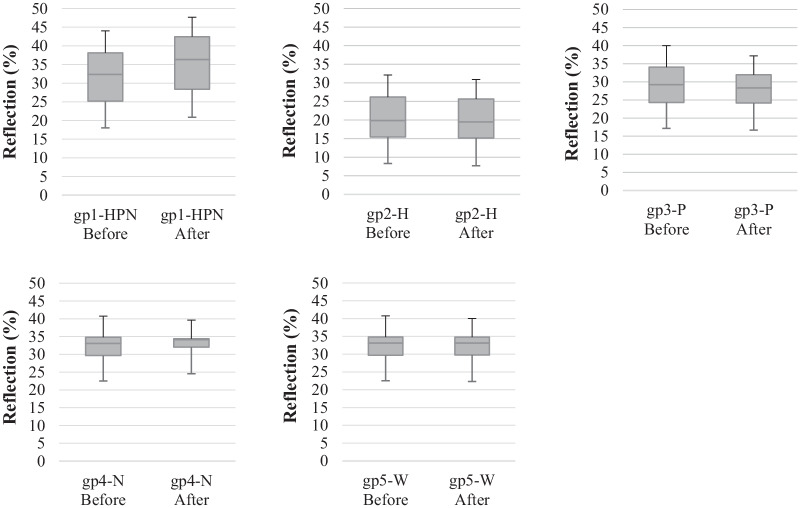
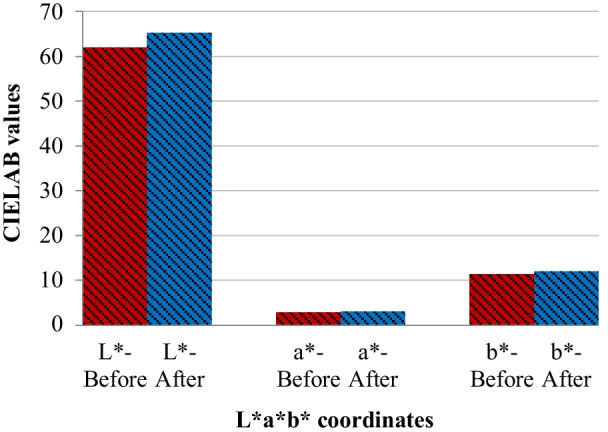
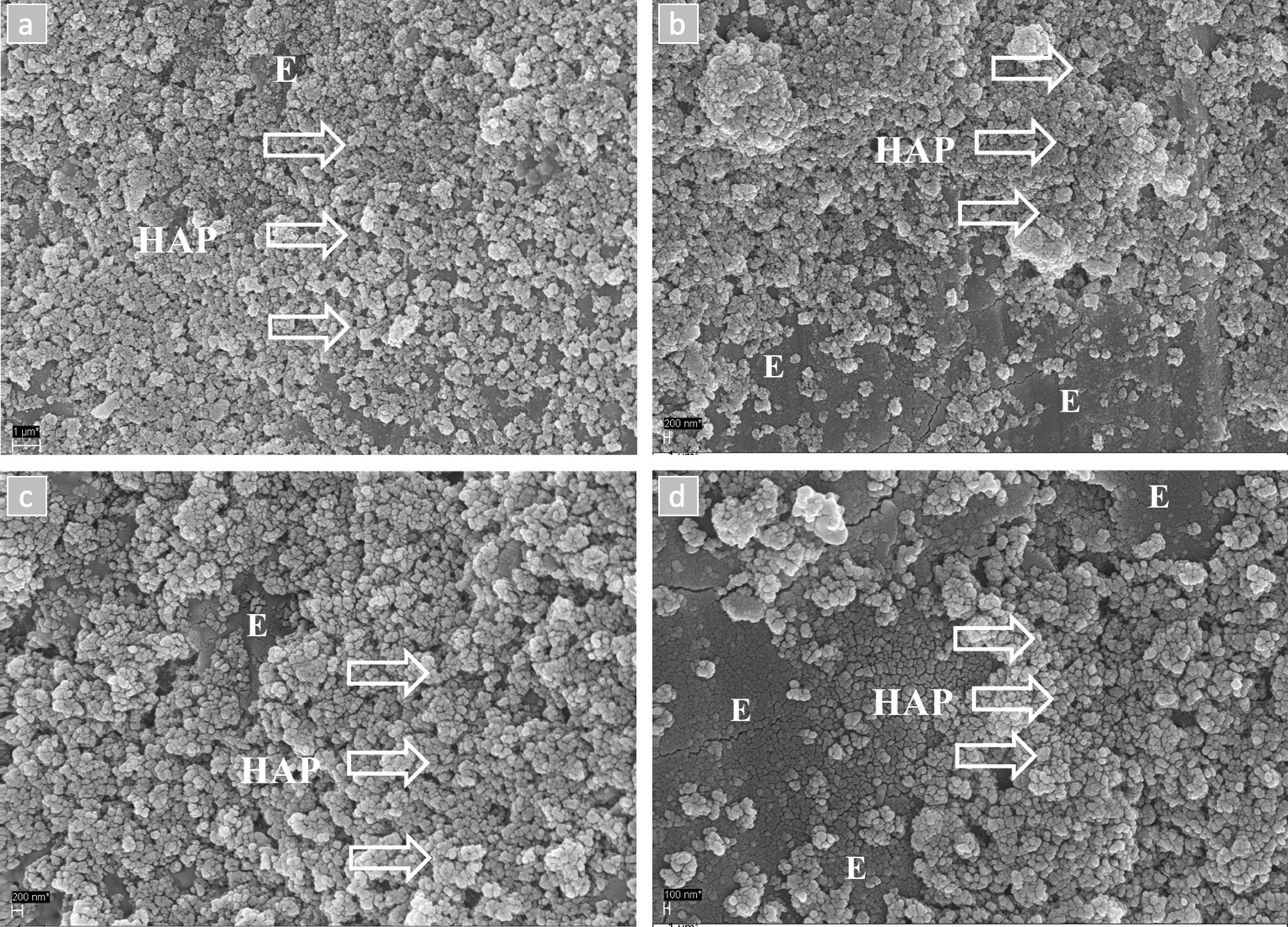
Background: This study evaluated the adhesion and whitening efficacy of a mixture of hydroxyapatite and P11-4 self-assembling peptide (HAP-peptide) on bovine enamel after pre-treatment with low-concentrated sodium hypochlorite (NaOCl). Methods: Fifty-two caries-free bovine incisors were selected. 50 teeth were randomly allocated to five groups (n = 10). The first group was treated with a mixture of 6.25 wt% HAP and 5 ml P11-4 peptide, using NaOCl 3% as pre-treatment. Second, third and fourth groups were treated with 6.25 wt% HAP, 5 ml P11-4 peptide, and NaOCl 3%, respectively. In the fifth group, only water was applied (control group). The color of samples was measured using a spectrophotometer (USB4000-VIS-NIR-ES, Ostfildern, Germany). To evaluate color changes, ΔE values were statistically analyzed. Finally, adherence of HAP particles on two enamel surfaces with and without pre-treatment with NaOCl was analyzed with SEM. Results: It was observed that the ΔE of the HAP-peptide suspension after pre-treatment with NaOCl was significantly stronger than the control group. In contrast, the overall color changes of separate applications of HAP, peptide, and NaOCl did not differ notably from the control group. SEM observations confirmed that pre-treatment with NaOCl resulted in a more pronounced coverage of HAP on the enamel surface. Conclusions: Pre-treatment with a low-concentrated NaOCl enhanced the adherence of the HAP layer on the enamel surface, resulting in a stronger whitening effect. Trial registration: The peptide-HAP suspension is effective in improving tooth whiteness.
Overview
The claims and statistics of this paper haven’t been checked yet.
Free: it reads the open-access text and checks the first 5 claims that cite a source we can check. Create a free account to check every claim.
Integrity signals
Registry
Cites
Statistics
Figures
Verification
Claims the paper makes
The claims and statistics of this paper haven’t been checked yet.
Free: it reads the open-access text and checks the first 5 claims that cite a source we can check. Create a free account to check every claim.
Claims other papers make about this one
Each is checked against this paper’s own text: does it say what the citing paper says it does?
The source backs part of the claim, not all of it — or backs it for a different population, condition or comparison.
In the citing paper
“With repeated daily use, and the interaction of HAP with saliva, HAP toothpaste eventually provides an opaque, white HAP deposit which partially, or completely, covers the enamel surface, as shown by the SEM results of Fabritius-Vilpoux et al. 2021 [64] and according to a study in this review [37].”
From Tooth Whitening with Hydroxyapatite: A Systematic Review (2023) · cites this paper as [37]
Experimental — accuracy not yet measured
Self-check
Percentages, sums and reported differences re-computed from the paper’s own numbers.
The self-check needs the paper’s full text.
Citations
Cites
Molecular Self-Assembly into One-Dimensional Nanostructures
Palmer, L. C., & Stupp, S. I. (2008) · Accounts of Chemical Research · doi:10.1021/ar8000926 · Cited by 756
Complications during root canal irrigation – literature review and case reports
Hülsmann, M., & Hahn, W. (2000) · International Endodontic Journal · doi:10.1046/j.1365-2591.2000.00303.x · Cited by 628 · cited 2×
“Since a lowconcentrated NaOCl with reasonably short exposure time has acceptable biological compatibility, it is widely used as an irrigation solution in root canal treatments [24, 25].”
BackgroundAggeli, A., Bell, M., Carrick, L. M., Fishwick, C. W. G., Harding, R., Mawer, P. J., Radford, S. E., Strong, A. E., & Boden, N. (2003) · Journal of the American Chemical Society · doi:10.1021/ja021047i · Cited by 491 · cited 1×
“When pH decreases, the peptide switches from a low viscosity state to a gel state [16, 17].”
BackgroundSodium hypochlorite in endodontics: an update review
Mohammadi, Z. (2008) · International Dental Journal · doi:10.1111/j.1875-595x.2008.tb00354.x · Cited by 479 · cited 1×
“Since a lowconcentrated NaOCl with reasonably short exposure time has acceptable biological compatibility, it is widely used as an irrigation solution in root canal treatments [24, 25].”
BackgroundDevelopment of a customized whiteness index for dentistry based on CIELAB color space
Gómez, M. D. M. P., Ghinea, R. I., Rivas, M. J., Yebra, A. M. R., Ionescu, A. M., Paravina, R. D., & Herrera, L. J. (2016) · Dental Materials · doi:10.1016/j.dental.2015.12.008 · Cited by 447 · cited 1×
“[27], was used in the first group (gp1-HPN).”
MethodSelf-assembling Peptide Scaffolds Promote Enamel Remineralization
Kirkham, J., Firth, A., Vernals, D., Boden, N., Robinson, C., Shore, R. C., Brookes, S. J., & Aggeli, A. (2007) · Journal of Dental Research · doi:10.1177/154405910708600507 · Cited by 378 · cited 2×
“The lateral chains of bioactive peptide scaffold can attract calcium ions [13].”
BackgroundBovine teeth as substitute for human teeth in dental research: a review of literature
Yassen, G. H., Platt, J. A., & Hara, A. T. (2011) · Journal of Oral Science · doi:10.2334/josnusd.53.273 · Cited by 375 · cited 1×
“It is also noteworthy that extracted bovine incisors are more accessible than human ones [42].”
BackgroundRegression of Post-orthodontic Lesions by a Remineralizing Cream
Bailey, D. L., Adams, G. G., Tsao, C. E., Hyslop, A., Escobar, K., Manton, D. J., Reynolds, E. C., & Morgan, M. V. (2009) · Journal of Dental Research · doi:10.1177/0022034509347168 · Cited by 254 · cited 1×
“This was driven by the fact that remineralization of a more porous enamel surface is much easier [36].”
BackgroundBrunton, P. A., Davies, R. P. W., Burke, J. L., Smith, A., Aggeli, A., Brookes, S. J., & Kirkham, J. (2013) · British Dental Journal · doi:10.1038/sj.bdj.2013.741 · Cited by 242 · cited 1×
“In several studies that dealt with P11-4 to treat initial caries lesions, an acid was applied to open the micropores before the application of the peptide [34, 35].”
BackgroundZehnder, M., Kosicki, D., Luder, H., Sener, B., & Waltimo, T. (2002) · Oral Surgery, Oral Medicine, Oral Pathology, Oral Radiology, and Endodontology · doi:10.1067/moe.2002.128961 · Cited by 217
A Contemporary Review of White Spot Lesions in Orthodontics
Heymann, G. C., & Grauer, D. (2013) · Journal of Esthetic and Restorative Dentistry · doi:10.1111/jerd.12013 · Cited by 205 · cited 1×
“Since white spot lesions are a common adverse effect of fixed orthodontic appliances, this mixture can be beneficial for orthodontics patients [44].”
BackgroundReview of potential health risks associated with nanoscopic calcium phosphate
Epple, M. (2018) · Acta Biomaterialia · doi:10.1016/j.actbio.2018.07.036 · Cited by 189 · cited 2×
“In fact, the potential health risk is very limited, especially at low exposure levels [2].”
BackgroundSelf-assembling Peptide P 11 -4 and Fluoride for Regenerating Enamel
Alkilzy, M., Tarabaih, A., Santamaría, R. M., & Splieth, C. H. (2017) · Journal of Dental Research · doi:10.1177/0022034517730531 · Cited by 167 · cited 1×
“While no major adverse side-effects have been reported so far for P11-4, there might be some concerns about the potential health risks associated with longterm oral exposure to Calcium phosphate nanoparticles [45].”
BackgroundRecent Advances in Color and Whiteness Evaluations in Dentistry
Gómez, M. D. M. P., Pecho, Ó. E., Ghinea, R. I., Pulgar, R., & Bona, Á. D. (2018) · Current Dentistry · doi:10.2174/2542579x01666180719125137 · Cited by 110 · cited 1×
“[30], WID has a high correlation with visual perception.”
BackgroundRecombinant self-assembling peptides as biomaterials for tissue engineering
Kyle, S., Aggeli, A., Ingham, E., & McPherson, M. J. (2010) · Biomaterials · doi:10.1016/j.biomaterials.2010.08.051 · Cited by 105
Flaitz, C. M., & Hicks, M. J. (1996) · PubMed · Cited by 103
Effect of a Nano‐Hydroxyapatite Paste on Bleaching‐Related Tooth Sensitivity
BROWNING, W. D., CHO, S. D., & DESCHEPPER, E. J. (2012) · Journal of Esthetic and Restorative Dentistry · doi:10.1111/j.1708-8240.2011.00437.x · Cited by 93 · cited 1×
“Adding HAP-containing suspension to peroxide-based bleaching agents may reduce the respective adverse effects of the bleaching agents [20, 48, 49].”
BackgroundComparative analysis of human and bovine teeth: radiographic density
Tanaka, J. L. O., Filho, E. M., Salgado, J. A. P., Salgado, M. A. C., de Moraes, L. C., de Moraes, M. E. L., & Castilho, J. C. D. M. (2008) · Brazilian Oral Research · doi:10.1590/s1806-83242008000400011 · Cited by 92
Surface and subsurface erosion of primary enamel by acid beverages over time
Torres, C. P., Chinelatti, M. A., Gomes‐Silva, J. M., Rizoli, F. A., Oliveira, M. A. H. D. M., Palma‐Dibb, R. G., & Borsatto, M. C. (2010) · Brazilian Dental Journal · doi:10.1590/s0103-64402010000400009 · Cited by 92 · cited 1×
“This layer is less permeable to treatment agents and acidic solutions than the underlying enamel [43].”
BackgroundEffects of in-office bleaching agent combined with different desensitizing agents on enamel
Kütük, Z. B., Ergin, E., Çakır, F. Y., & Gürgan, S. (2018) · Journal of Applied Oral Science · doi:10.1590/1678-7757-2018-0233 · Cited by 92 · cited 1×
“However, the application of HAP during or after the bleaching process does not interfere with the bleaching effect [50].”
BackgroundTooth-Bleaching: A Review of the Efficacy and Adverse Effects of Various Tooth Whitening Products.
Majeed, A., Farooq, I. S., Grobler, & Rj, R. (2015) · PubMed · Cited by 91
Synthetic Hydroxyapatite as a Biomimetic Oral Care Agent.
Enax, J., & Epple, M. (2018) · PubMed · doi:10.3290/j.ohpd.a39690 · Cited by 76 · cited 1×
“cavities and removing dental plaque [3, 4].”
Calcium Distribution in Human and Bovine Surface Enamel
Davidson, C. L., Boom, G., & Arends, J. (2009) · Caries Research · doi:10.1159/000259858 · Cited by 73
Jablonski‐Momeni, A., & Heinzel‐Gutenbrunner, M. (2014) · Journal of Orofacial Orthopedics / Fortschritte der Kieferorthopädie · doi:10.1007/s00056-014-0211-2 · Cited by 68
Polishing and whitening properties of toothpaste containing hydroxyapatite
Niwa, M., Sato, T., Li, W., Aoki, H., Aoki, H., & Daisaku, T. (2001) · Journal of Materials Science: Materials in Medicine · doi:10.1023/a:1008927502523 · Cited by 65 · cited 1×
“In essence, the adhesion of HAP particles on the tooth surface can cause diffuse reflection, making the tooth appear brighter [7].”
BackgroundThe Enamel Microstructures of Bovine Mandibular Incisors
Wang, C., Li, Y., Wang, X., Zhang, L., Tiantang, & Fu, B. (2012) · The Anatomical Record · doi:10.1002/ar.22543 · Cited by 61 · cited 1×
“Then, small blocks (5 mm × 5 mm × 1 mm) were prepared from the labial enamel surface from comparable regions (middle one-third) of each tooth [28].”
MethodJablonski‐Momeni, A., Korbmacher-Steiner, H. M., Heinzel‐Gutenbrunner, M., Jablonski, B., Jaquet, W., & Bottenberg, P. (2019) · Scientific Reports · doi:10.1038/s41598-018-36536-4 · Cited by 57 · cited 1×
“This peptide is mainly used in the treatment of white spot lesions, prevention of initial caries lesions, and conducting remineralization through increasing mineral gain and inhibiting mineral loss [10, 11].”
BackgroundHiller, K.-A., Buchalla, W., Grillmeier, I., Neubauer, C., & Schmalz, G. (2018) · Scientific Reports · doi:10.1038/s41598-018-22764-1 · Cited by 55 · cited 1×
“cavities and removing dental plaque [3, 4].”
Jablonski‐Momeni, A., Nothelfer, R., Morawietz, M., Kiesow, A., & Korbmacher-Steiner, H. M. (2020) · Scientific Reports · doi:10.1038/s41598-020-72185-2 · Cited by 54 · cited 1×
“This peptide is mainly used in the treatment of white spot lesions, prevention of initial caries lesions, and conducting remineralization through increasing mineral gain and inhibiting mineral loss [10, 11].”
BackgroundEffect of different irrigant solutions on microhardness and smear layer removal of root canal dentin
Kandil, H. E., Labib, A. H., & Alhadainy, H. A. H. (2014) · Tanta Dental Journal · doi:10.1016/j.tdj.2014.03.001 · Cited by 50 · cited 1×
“Furthermore, it neutralizes amino acids and transforms them into salt and water [23].”
BackgroundShellis, R. P., Addy, M., & Rees, G. D. (2004) · Journal of Dentistry · doi:10.1016/j.jdent.2004.09.006 · Cited by 48 · cited 1×
“Each ingredient was added and mixed to 100 ml of water at 95 °C and left to cool down at room temperature for 20 min before using [26].”
MethodEffect of self‐assembling peptide P11‐4 on enamel erosion: AFM and SEM studies
Ceci, M., Mirando, M., Beltrami, R., Chiesa, M., Colombo, M., & Poggio, C. (2015) · Scanning · doi:10.1002/sca.21276 · Cited by 47
Efficacy of tooth whitening with different calcium phosphate‐based formulations
Jin, J., Xu, X., Lai, G., & Kunzelmann, K. (2013) · European Journal of Oral Sciences · doi:10.1111/eos.12063 · Cited by 43 · cited 2×
“Adding HAP-containing suspension to peroxide-based bleaching agents may reduce the respective adverse effects of the bleaching agents [20, 48, 49].”
BackgroundSelf-citationAttrition-corrosion of human dental enamel: A review
Wu, Y., Arsecularatne, J. A., & Hoffman, M. (2017) · Biosurface and Biotribology · doi:10.1016/j.bsbt.2017.12.001 · Cited by 40 · cited 2×
“In natural enamel, HAP crystallites are glued by proteins into prisms [12].”
BackgroundWhitening effect and morphological evaluation of hydroxyapatite materials.
Dabanoğlu, A., Wood, C., García-Godoy, F., & Kunzelmann, K. (2009) · PubMed · Cited by 39
Self-citationSoares, C. J., Barbosa, L. M., Santana, F. R., Soares, P. B. F., da Mota, A. S., & da Silva, G. R. (2010) · Brazilian Dental Journal · doi:10.1590/s0103-64402010000300011 · Cited by 31
Effects of experimental xylitol varnishes and solutions on bovine enamel erosion in vitro
Souza, J. G., Rochel, I. D., Pereira, A. F. F., Silva, T. C., Ríos, D., Machado, M. A. D. A. M., Buzalaf, M. A. R., & Magalhães, A. C. (2010) · Journal of Oral Science · doi:10.2334/josnusd.52.553 · Cited by 30
In Vitro Whitening Effect of a Hydroxyapatite-Based Oral Care Gel
Sarembe, S., Enax, J., Morawietz, M., Kiesow, A., & Meyer, F. (2020) · European Journal of Dentistry · doi:10.1055/s-0040-1714759 · Cited by 29 · cited 1×
“[5, 6]) showed that HAP as a white biomaterial can also be used in tooth whitening.”
BackgroundPoletto, D., Poletto, A. C., Cavalaro, A., Machado, R., Cosme‐Silva, L., Garbelini, C. C. D., & Hoeppner, M. G. (2017) · Restorative Dentistry & Endodontics · doi:10.5395/rde.2017.42.4.324 · Cited by 25
Adhesion and whitening effects of P11-4 self-assembling peptide and HAP suspension on bovine enamel
Hojabri, N., Kaisarly, D., & Kunzelmann, K. (2020) · Clinical Oral Investigations · doi:10.1007/s00784-020-03654-1 · Cited by 23 · cited 3×
“Therefore, as also discussed in [19], P11-4-HAP is a safe and painless tooth whitening agent, which can be used as a mouthwash or a dental foam on a daily basis without the dentist’s supervision.”
BackgroundMethodSelf-citationSelf-Assembling Peptides as an Emerging Platform for the Treatment of Metabolic Syndrome
Díaz, L., Ruiz‐Pacheco, J. A., Elsawy, M. A., Reyes-Martínez, J. E., & Enríquez-Rodríguez, A. I. (2020) · International Journal of Nanomedicine · doi:10.2147/ijn.s278189 · Cited by 23 · cited 1×
“Peptide self-assembly is a relatively new approach for creating synthetic super molecular architectures [12], which occurs via spontaneous and reversible noncovalent interactions between peptide chains [8, 9].”
BackgroundInadvertent Apical Extrusion of Sodium Hypochlorite with Evaluation by Dental Volumetric Tomography
Can, E. D. B., Kazandağ, M. K., & Kaptan, R. F. (2015) · Case Reports in Dentistry · doi:10.1155/2015/247547 · Cited by 22
Memarpour, M., Razmjouei, F., Rafiee, A., & Vossoughi, M. (2021) · Microscopy Research and Technique · doi:10.1002/jemt.23937 · Cited by 19 · cited 1×
“The application of P11-4 improves the enamel microhardness [47].”
MethodBleaching of fluorosis stains using sodium hypochlorite
Penumatsa, N. V., & Sharanesha, R. B. (2015) · Journal of Pharmacy And Bioallied Sciences · doi:10.4103/0975-7406.163552 · Cited by 16 · cited 1×
“For instance, NaOCl 5% should be continuously applied for at least 25 min to have a detectable bleaching effect [29].”
BackgroundAnti-erosive effect of a self-assembling peptide gel
Attin, T., Becker, K., Wiedemeier, D. B., Schmidlin, P. R., & Wegehaupt, F. J. (2017) · SWISS DENTAL JOURNAL SSO – Science and Clinical Topics · doi:10.61872/sdj-2017-10-329 · Cited by 12
Peitsch, T., Matthes, M., Brandenburg, V. M., & Epple, M. (2010) · Analytical Methods · doi:10.1039/b9ay00325h · Cited by 9 · cited 1×
“However, in case during tooth brushing these particles are accidentally swallowed, the highly acidic pH of the stomach helps dissolve them completely [46].”
BackgroundORAL MUCOSA DAMAGE BECAUSE OF HYPOCHLORITE ACCIDENT – A CASE REPORT AND LITERATURE REVIEW
Deliverska, E. (2016) · Journal of IMAB - Annual Proceeding (Scientific Papers) · doi:10.5272/jimab.2016223.1269 · Cited by 7 · cited 1×
“It is worth highlighting that using NaOCl may cause some adverse side effects such as mucosa ulceration, damages to the eye and skin, as well as allergic reactions [25, 31, 32].”
Background
Research works printed but not linked: 1
- Basheer R, Mohamed RF, Kamel F, Mosallam R. Effect of nano-hydroxyapa- tite bleaching on human enamel surface. Int Arch Med. 2020;7:1-13.
Cited by
Tooth Whitening with Hydroxyapatite: A Systematic Review
Limeback, H., Meyer, F., & Enax, J. (2023) · Dentistry Journal · doi:10.3390/dj11020050 · Cited by 26
“Study (Country) [Reference] Condition Tested Materi- als/Products Experimental Conditions and Results Quoted Conclusion of the Publication % RoB Scores * Strength of the Finding of HAP Whitening Effect Park et al. 2006 (South Korea) [48] in vitro Four types of toothpaste slurries including 40% calcium carbonate, 15% d…”
BackgroundInfluentialAşık, A., & Önçağ, Ö. (2024) · Clinical Oral Investigations · doi:10.1007/s00784-024-05901-1 · Cited by 7
Zheng, D., Li, C. L., Wang, T., Zhao, Q., Liu, Q., Zou, R., & Wang, Y. (2026) · BMC Oral Health · doi:10.1186/s12903-026-08218-5
“In adhesive dentistry, NaOCl has primarily been investigated as a pretreatment step in self-etch adhesive systems [15], where its ability to remove organic components may enhance the efficacy of relatively mild acidic monomers [16].”
Metadata
- Authors
- Hojabri, N., & Kunzelmann, K.-H.
- Affiliations
- Ludwig-Maximilians-Universität München (DE)
- LMU Klinikum (DE)
- Corresponding author
- Kunzelmann, Karl-Heinz
- Venue
- BMC Oral Health
- Published
- 2022-03-04
- Volume
- 22
- Issue
- 1
- Pages
- 59-59
- ISSN
- 1472-6831 (ISSN-L)
- PMC
- PMC8895591
- OpenAlex
- W4214856644
- Cited by
- 2
- References
- 47
- Citations by year
- 2026: 1 · 2023: 1
- FWCI
- 0.24
- Type
- journal article
- Language
- en
- Open access
- gold
- doi.org
- Licence
- cc-by
- creativecommons.org/licenses/by/4.0 (tdm)
- creativecommons.org/licenses/by/4.0 (vor)
- Locations
- BMC Oral Health (publishedVersion, cc-by)
- PubMed Central (publishedVersion, cc-by)
- PubMed (publishedVersion)
- DOAJ (DOAJ: Directory of Open Access Journals) (submittedVersion, cc-by-sa)
- Open access LMU (Ludwid Maxmilian's Universitat Munchen) (submittedVersion)
- Open access LMU (Ludwid Maxmilian's Universitat Munchen) (submittedVersion, cc-by)
- Funders
- Universitätsklinik München
- Topics
- Health Sciences › Dentistry › General Dentistry › Dental Erosion and Treatment
- Health Sciences › Dentistry › General Dentistry › Dental materials and restorations
- Health Sciences › Dentistry › Periodontics › Periodontal Regeneration and Treatments
- Keywords
- tooth bleaching, hydroxyapatite, enamel bonding, tooth discoloration, bovine enamel, enamel remineralization
- MeSH terms
- Animals, Cattle, Dental Caries, Dental Enamel, Humans, Peptides, Tooth, Tooth Bleaching
About these checks
Registry, retraction, Cites and statistics results are computed, not judged, with one exception: a printed reference that no index lists is read once by a model before it counts as a citation error. Claims are extracted by a model and kept only when their quote appears verbatim in the text; each cited source is then checked, with a model’s help, for whether it says what the claim relies on. Those verdicts can be wrong — read the claim’s quote and the cited source before relying on one.
Statistics and arithmetic are recomputed, not judged.
Confidence bands are shown only for fields calibrated on our annotated test set. None is calibrated yet, so no band is shown.
What counts as a claim ›How we measure confidence ›How we check this ›
Are you an author, or do you see a problem with this page? Request a review
Data sources
Bibliographic data: Semantic Scholar, OpenAlex, Crossref.
Contains information from the Semantic Scholar Academic Graph Datasets, made available under the ODC Attribution License (ODC-BY 1.0).
Semantic Scholar’s data is described in: Kinney, R., et al. (2023). The Semantic Scholar Open Data Platform. arXiv:2301.10140.
