

Healthcare providers' perspectives on the Canadian Caries Risk Assessment Tool implementation in Indigenous pediatric primary care: a qualitative study
Open accessPublished version of a preprint
The DOI matches its Crossref record; 39 of the 39 references it cites were found in a registry or an index.
Abstract
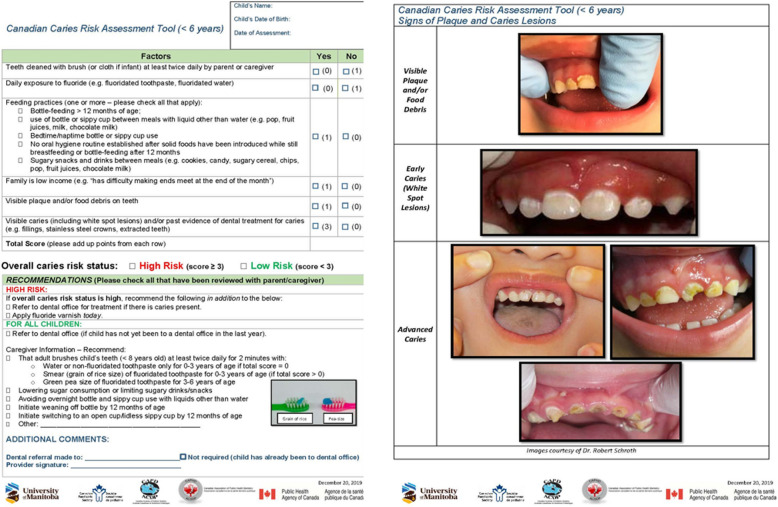
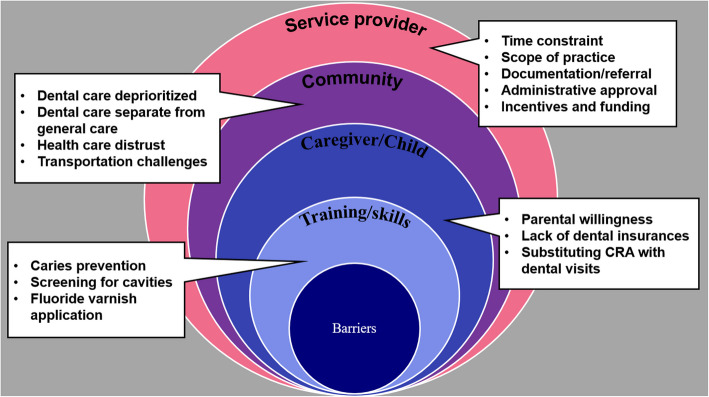
Background: Early childhood caries remains a significant public health concern among Indigenous children in Canada. Integrating caries risk assessment (CRA) into primary care settings could improve early detection and intervention. Objectives: This qualitative study explored the barriers to implementing and integrating the Canadian CRA tool into the primary care of First Nations and Métis children in Manitoba, based on the perspectives of non-dental primary care providers (NDPCPs). Methods: Fifty NDPCPs providing care to Indigenous children under six years of age were purposefully selected from ten Indigenous communities in Manitoba, including Winnipeg, Selkirk, St. Laurent, Swan River, Pine Creek, Camperville, and Pine Falls. The study employed an exploratory design, with data collected through eight focus groups and twelve in-depth key informant interviews conducted between April 2023 and September 2024. All interviews were audio-recorded, transcribed verbatim, and analyzed using inductive thematic analysis with NVivo software. Results: Participants included pediatricians, family physicians, public health nurses, nurse practitioners, physician assistants, dietitians, and child development workers, with an average age of 41 years (range: 24–61) and 13 years of practice experience (range: 1–40). Thematic analysis identified four major barriers to integrating the CRA tool: (1) Service provider level – time constraint, scope of practice, documentation/referral pathways, and funding; (2) Community level – oral care not priority, separation of dental and general health, lack of transportation, and healthcare distrust; (3) Caregiver and child level – lack of dental insurance, parental willingness, substituting CRA for dental visit; and (4) Provider training and skills – lack of training on fluoride varnish application and dental screening. Despite these challenges, participants expressed a positive attitude toward receiving training on early childhood caries prevention, fluoride application, and the use of the Canadian CRA tool. Conclusion: This study highlights that NDPCPs in Manitoba recognize the Canadian CRA tool as a valuable resource for improving access to early preventive dental care for First Nations and Métis children. The identified barriers provide critical insights for dental, medical, and allied healthcare providers, offering a foundation for developing strategies, guidelines, and policies to enhance preventive oral health services for Indigenous children in Manitoba.
Overview
The claims and statistics of this paper haven’t been checked yet.
Free: it reads the open-access text and checks the first 5 claims that cite a source we can check. Create a free account to check every claim.
Integrity signals
Registry
Cites
Statistics
Figures
Verification
Claims the paper makes
The claims and statistics of this paper haven’t been checked yet.
Free: it reads the open-access text and checks the first 5 claims that cite a source we can check. Create a free account to check every claim.
Claims other papers make about this one
Each is checked against this paper’s own text: does it say what the citing paper says it does?
The source backs part of the claim, not all of it — or backs it for a different population, condition or comparison.
In the citing paper
“A screening tool with modest specificity does not establish safe delegation of management without adequate infrastructure and accountability for completing definitive care [22,25,26,27,29].”
From Equity or Two-Tier Care? Guardrails for Silver Diamine Fluoride and Delegated Early Childhood Caries Pathways (2026) · cites this paper as [27]
Experimental — accuracy not yet measuredThe cited source says what the claim attributes to it.
In the citing paper
“Qualitative work in Indigenous pediatric primary care identifies structural barriers and a communication risk: families may interpret preventive actions as equivalent to “dental care,” potentially delaying definitive dental visits when pathways are not explicit [27].”
From Equity or Two-Tier Care? Guardrails for Silver Diamine Fluoride and Delegated Early Childhood Caries Pathways (2026) · cites this paper as [27]
Self-check
Percentages, sums and reported differences re-computed from the paper’s own numbers.
The self-check needs the paper’s full text.
Citations
Cites
Sample sizes for saturation in qualitative research: A systematic review of empirical tests
Hennink, M., & Kaiser, B. N. (2022) · Social Science & Medicine · doi:10.1016/j.socscimed.2021.114523 · Cited by 6,311 · cited 1×
“Code frequency counts were used to assess and confirm saturation [18].”
Global Burden of Untreated Caries: A Systematic Review and Metaregression
Kassebaum, N. J., Bernabé, E., Dahiya, M., Bhandari, B., Murray, C. J. L., & Marcenes, W. (2015) · Journal of Dental Research · doi:10.1177/0022034515573272 · Cited by 1,679
Disparities in Access to Oral Health Care
Northridge, M. E., Kumar, A., & Kaur, R. (2020) · Annual Review of Public Health · doi:10.1146/annurev-publhealth-040119-094318 · Cited by 544 · cited 1×
“This aligns with literature showing that food insecurity, housing instability, and poverty can reduce engagement with preventive dental care [28, 29].”
Clinical Applications and Outcomes of Using Indicators of Risk in Caries Management
Zero, D., Fontana, M., & Lennon, Á. M. (2001) · Journal of Dental Education · doi:10.1002/j.0022-0337.2001.65.10.tb03461.x · Cited by 205 · cited 1×
“It involves identifying and analyzing factors associated with the development of dental caries and developing patient-centered preventive and therapeutic care to reduce the risk of caries [2, 7].”
Barriers and facilitators in the integration of oral health into primary care: a scoping review
Harnagea, H., Couturier, Y., Shrivastava, R., Girard, F., Lamothe, L., Bedos, C. P., & Emami, E. (2017) · BMJ Open · doi:10.1136/bmjopen-2017-016078 · Cited by 179 · cited 2×
“These findings align with prior studies that identified similar challenges, including staff short-ages, inadequate infrastructure, and a lack of administrative support [13, 14, 19, 20].”
Expert consensus on early childhood caries management
Zou, J., Du, Q., Ge, L., Wang, J., Wang, X., Li, Y., Song, G., Zhao, W., Chen, X., Jiang, B., et al. (2022) · International Journal of Oral Science · doi:10.1038/s41368-022-00186-0 · Cited by 172
Integration of oral health into primary health care: A systematic review
Prasad, M., Manjunath, C., Murthy, A., Sampath, A., Jaiswal, S., & Mohapatra, A. (2019) · Journal of Family Medicine and Primary Care · doi:10.4103/jfmpc.jfmpc_286_19 · Cited by 170 · cited 1×
“Research shows that interprofessional collaboration, particularly co-location of dental and primary care services can lead to improved oral health outcomes [35].”
Kennedy, A. P., Sehgal, A., Szabo, J., McGowan, K., Lindstrom, G., Roach, P., Crowshoe, L. L., & Barnabe, C. C. M. (2022) · Health Education Journal · doi:10.1177/00178969221088921 · Cited by 110 · cited 2×
“Participants emphasized the importance of culturally safe approaches, those that honor Indigenous values, knowledge, and autonomy as essential to rebuilding trust [36, 37].”
US Preventive Services Task Force, Davidson, K. W., Barry, M. J., Mangione, C. M., Cabana, M. D., Caughey, A. B., Davis, E. M., Donahue, K. E., Doubeni, C. A., Kubik, M., et al. (2021) · JAMA · doi:10.1001/jama.2021.20007 · Cited by 109
A Systematic Review of Parents’ Knowledge of Children’s Oral Health
Kaushik, M., & Sood, S. (2023) · Cureus · doi:10.7759/cureus.41485 · Cited by 73 · cited 1×
“Literature on oral health interventions suggests that effective patient education is key to preventing such misunderstandings [41].”
Oral Health Education for Pediatric Nurse Practitioner Students
Golinveaux, J., Gerbert, B., Cheng, J., Duderstadt, K. G., Alkon, A., Mullen, S. A., Lin, B., Miller, A. J., & Zhan, L. (2013) · Journal of Dental Education · doi:10.1002/j.0022-0337.2013.77.5.tb05506.x · Cited by 54
Oral Health Prevention and Toddler Well-Child Care: Routine Integration in a Safety Net System
Dooley, D., Moultrie, N. M., Heckman, B., Gansky, S. A., Potter, M. B., & Walsh, M. M. (2016) · PEDIATRICS · doi:10.1542/peds.2014-3532 · Cited by 51 · cited 1×
“Engaging champions—such as public health nurses, dental hygienists, and clinic managers—can drive adoption through staff training, ongoing education, and work-flow integration [24, 26, 44].”
Shrivastava, R., Couturier, Y., Girard, F., Papineau, L., & Emami, E. (2020) · International Journal for Equity in Health · doi:10.1186/s12939-020-01195-3 · Cited by 50
Lienhart, G., Masson, E., Farge, P., Schott, A., Thivichon‐Prince, B., & Chanelière, M. (2023) · BMC Oral Health · doi:10.1186/s12903-023-03458-1 · Cited by 48
Early Childhood Caries in Indigenous Communities
Holve, S., Braun, P. A., Irvine, J. D., Nadeau, K. J., Schroth, R. J., Bell, S. L., Calac, D. J., Empey, A., Nadeau, K. J., Oski, J. A., et al. (2021) · PEDIATRICS · doi:10.1542/peds.2021-051481 · Cited by 43 · cited 2×
“In Canada, Indigenous children (First Nations, Inuit, and Métis) experience disproportionately higher rates of ECC compared to their non-Indigenous peers [3, 4].”
Self-citationVALUE-BASED ORAL HEALTH CARE: IMPLEMENTATION LESSONS FROM FOUR CASE STUDIES
Jivraj, A., Barrow, J. R., & Listl, S. (2021) · Journal of Evidence Based Dental Practice · doi:10.1016/j.jebdp.2021.101662 · Cited by 34
Achan, G. K., Schroth, R. J., DeMaré, D., Sturym, M., Edwards, J. M., Sanguins, J., Campbell, R., Chartrand, F., Bertone, M. F., & MOFFATT, M. E. K. (2021) · International Journal for Equity in Health · doi:10.1186/s12939-021-01476-5 · Cited by 32 · cited 1×
“Effective CRA implementation should be paired with broader supports such as food security programs and dental financial assistance to address families’ immediate needs alongside oral health education [30–32].”
Self-citationSchroth, R. J., Rothney, J., Sturym, M., Dabiri, D., Dabiri, D., Dong, C. C., Grant, C. G., Kennedy, T., & Sihra, R. (2021) · International Journal of Paediatric Dentistry · doi:10.1111/ipd.12776 · Cited by 31 · cited 2×
“A semi-structured interview guide was developed by the study team based on literature reviews and insights from previous investigations [8, 11, 16].”
Self-citationPoirier, B., Haag, D. G., Soares, G. H., & Jamieson, L. (2023) · Australian and New Zealand Journal of Public Health · doi:10.1016/j.anzjph.2023.100079 · Cited by 30 · cited 1×
“Given the qualitative nature of the study, it was essential to emphasize the researchers’ identity, subjectivity, marginality, and perspectives as part of reflexivity and transparency in the research process [15].”
Barriers to utilization of dental services for children among low-income families in Alberta.
Amin, M. S., Perez, A. J., & Nyachhyon, P. (2014) · PubMed · Cited by 29
Self-citationAkera, P., Kennedy, S., Obwolo, M. J., Schutte, A. E., Lingam, R., & RICHMOND, R. L. (2022) · BMC Oral Health · doi:10.1186/s12903-022-02239-6 · Cited by 29 · cited 1×
“Prior research supports that perceived judgment from health-care providers can lead to defensiveness and decreased engagement [34, 36, 38, 39].”
Promoting Oral Health in Childhood: A Quality Improvement Project
Okah, A. Y., Williams, K., Talib, N. J., & Mann, K. J. (2018) · PEDIATRICS · doi:10.1542/peds.2017-2396 · Cited by 23 · cited 3×
“Evidence suggests that embedding oral health tools into EMRs can enhance documentation, increase screening rates, and improve follow-up care for high-risk children [24].”
Achan, G. K., Schroth, R. J., Sanguins, J., Campbell, R., DeMaré, D., Sturym, M., Edwards, J., Bertone, M. F., Dufour, L., Hai‐Santiago, K., et al. (2021) · Health Promotion and Chronic Disease Prevention in Canada · doi:10.24095/hpcdp.41.1.02 · Cited by 22 · cited 2×
“Prior research supports that perceived judgment from health-care providers can lead to defensiveness and decreased engagement [34, 36, 38, 39].”
Self-citationHussain, A. (2022) · International Journal of Dentistry · doi:10.1155/2022/7511213 · Cited by 15 · cited 3×
“In contrast, Indigenous communities in Manitoba face unique systemic barriers, including limited access to dental services, historical mistrust in healthcare systems, and different healthcare priorities [23].”
Schroth, R. J., de Jesus, V. C., Menon, A., Olatosi, O. O., Lee, V. H. K., Yerex, K., Hai‐Santiago, K., & DeMaré, D. (2024) · Frontiers in Oral Health · doi:10.3389/froh.2023.1328491 · Cited by 14 · cited 1×
“Strengthening and expanding public programs such as the interim Canada Dental Benefit and the Canadian Dental Care Plan alongside targeted outreach to connect families with available resources, could significantly improve referral follow-through [32, 40].”
Self-citationPoirier, B., Soares, G., Sethi, S., Hedges, J., & Jamieson, L. (2023) · Journal of Health Care for the Poor and Underserved · doi:10.1353/hpu.2023.0025 · Cited by 13
Achan, G. K., Schroth, R. J., DeMaré, D., Sturym, M., Sanguins, J., Chartrand, F., Campbell, R., Edwards, J., Lavoie, J. G., & MOFFATT, M. E. K. (2021) · AlterNative An International Journal of Indigenous Peoples · doi:10.1177/11771801211016873 · Cited by 12
Self-citationAlkhtib, A. O., Ali, K., Sajnani, A. K., & Anweigi, L. M. (2023) · BMC Oral Health · doi:10.1186/s12903-023-03633-4 · Cited by 12 · cited 1×
“These findings align with prior studies that identified similar challenges, including staff short-ages, inadequate infrastructure, and a lack of administrative support [13, 14, 19, 20].”
ElSalhy, M., Gill, M., Isaac, D. M., Littlechild, R., Baydala, L. T., & Amin, M. S. (2019) · International Journal of Circumpolar Health · doi:10.1080/22423982.2019.1573162 · Cited by 11 · cited 2×
“These findings align with prior studies that identified similar challenges, including staff short-ages, inadequate infrastructure, and a lack of administrative support [13, 14, 19, 20].”
Self-citationSchroth, R. J., McNally, M., & Harrison, R. L. (2015) · PubMed · Cited by 10
Self-citationMcKinnon, M.-A., Odoh, O., Taylor, P., Charlie, D., Morry, J., Mathu‐Muju, K. R., & Donnelly, L. (2022) · PubMed Central · Cited by 9
Gomez, F. R., Kinsler, J. J., Love‐Bibbero, L., Garell, C. L., Wang, Y., & Pike, N. A. (2023) · Journal of Dental Education · doi:10.1002/jdd.13199 · Cited by 9 · cited 1×
“Such training has been shown to increase provider confidence and uptake of preventive services [43].”
Schroth, R. J., Kyoon-Achan, G., Levesque, J., Sturym, M., DeMaré, D., Mittermuller, B.-A., Lee, J., & Lee, V. H. K. (2023) · Frontiers in Oral Health · doi:10.3389/froh.2023.1074621 · Cited by 7 · cited 3×
“This speaks to the potential of NDPCPs to play a meaningful role in early childhood oral care [11, 42].”
Self-citationGoubran, S., de Jesus, V. C., Menon, A., Olatosi, O. O., & Schroth, R. J. (2024) · Frontiers in Oral Health · doi:10.3389/froh.2024.1481423 · Cited by 7
Self-citationTowards equitable dental care in Canada: Lessons from the inception of Medicare
Cheung, A., & Singhal, S. (2023) · The International Journal of Health Planning and Management · doi:10.1002/hpm.3680 · Cited by 6
Johnson, S. C., & French, G. M. (2020) · PubMed · Cited by 5
Factors associated with the use of oral health care services among Canadian children and youth
Canada, S. (2024) · PubMed · doi:10.25318/82-003-x202400400002-eng · Cited by 5 · cited 1×
“Transportation barriers were also cited, reflecting wider challenges in rural and Indigenous communities where distance and cost impede healthcare access [23, 33].”
Love, L., Ramos‐Gomez, F., Kinsler, J. J., Cabrera‐Mino, C., Garell, C. L., & Pike, N. A. (2024) · Healthcare · doi:10.3390/healthcare12181807 · Cited by 3 · cited 1×
“This speaks to the potential of NDPCPs to play a meaningful role in early childhood oral care [11, 42].”
Sheth, D. N. (2021) · Mspace (University of Manitoba) · Cited by 2
Research works printed but not linked: 2
- 9. ADOLESCENCE IECMC: Recommendations for preventive pediatric health care. Pediatrics 2008, 2007:2901.
- 17. Creswell JW PC: Qualitative inquiry and research design: choosing among five approaches.: Thousan Oaks (CA): SAGE Publications; 2016.
Cited by
Baghdadi, Z. D. (2026) · Children · doi:10.3390/children13030386 · Cited by 5
Identifying training needs of healthcare providers to implement caries risk assessment
Olatosi, O. O., Schroth, R. J., DeMaré, D., Manigque, M., Mittermuller, B.-A., Edwards, J., Yerex, K., Wong, P. D., Lavoie, J., Sanguins, J., et al. (2025) · Frontiers in Oral Health · doi:10.3389/froh.2025.1641307 · Cited by 1
Self-citationRecommendations for Integrating Caries Risk Assessment into Primary Care for Indigenous Children
Olatosi, O. O., Schroth, R. J., DeMaré, D., Mittermuller, B.-A., Manigque, M., Edwards, J., Amin, M. S., Nicolae, A., Lavoie, J. G., Sanguins, J., et al. (2025) · JDR Clinical & Translational Research · doi:10.1177/23800844251372545 · Cited by 3
“Building on prior research that identified key barriers to CRA implementation in Indigenous primary care (Olatosi et al. 2025), the present study shifts the focus toward provider-recommended strategies for effectively implementing and integrating the Canadian CRA tool into the primary care of First…”
Self-citationOlatosi, O. O., Schroth, R. J., Virtanen, J. I., Youssef, C., Askin, N., Olatosi, M., Sanguins, J., Chelikani, P., & Josee, L. (2025) · medRxiv · doi:10.1101/2025.09.25.25336679
Self-citation
Metadata
- Authors
- Olatosi, O. O., Schroth, R. J., DeMaré, D., Mittermuller, B.-A., Manigque, M., Edwards, J., Amin, M. S., Nicolae, A., Lavoie, J., Sanguins, J., Chelikani, P., Wong, P. D., Lamoureux, J., Bertone, M., Yerex, K., Campbell, R., & The Working Together for early childhood oral health study team
- Affiliations
- Children's Hospital Research Institute of Manitoba (CA)
- University of Manitoba (CA)
- Shared Health (CA)
- University of Alberta (CA)
- Toronto Public Health (CA)
- University of Toronto (CA)
- Corresponding author
- Olatosi, Olubukola O.
- ORCID
- Venue
- BMC Oral Health
- Published
- 2025-05-10
- Volume
- 25
- Issue
- 1
- Pages
- 708-708
- ISSN
- 1472-6831 (ISSN-L)
- PMC
- PMC12066036
- OpenAlex
- W4410253133
- Cited by
- 3
- References
- 39
- Citations by year
- 2025: 3
- FWCI
- 2.79
- Type
- journal article
- Language
- en
- Open access
- gold
- doi.org
- Licence
- cc-by
- creativecommons.org/licenses/by/4.0 (tdm)
- creativecommons.org/licenses/by/4.0 (vor)
- Locations
- BMC Oral Health (publishedVersion, cc-by)
- Research Square (acceptedVersion, cc-by)
- PubMed Central (publishedVersion, cc-by)
- PubMed (publishedVersion)
- DOAJ (DOAJ: Directory of Open Access Journals) (submittedVersion, cc-by-sa)
- Mspace (University of Manitoba) (submittedVersion)
- Funders
- Research Manitoba
- Canadian Institutes of Health Research (202003PJT-437507-PJT-173377)
- Topics
- Health Sciences › Dentistry › General Dentistry › Dental Health and Care Utilization
- Social Sciences › Health › Indigenous Health, Education, and Rights
- Health Sciences › Health Professions › General Health Professions › Health Policy Implementation Science
- Keywords
- early childhood caries, caries risk assessment, indigenous children, First Nations, Métis, pediatric primary care, implementation barriers, fluoride varnish, dental screening, preventive dentistry, health professions education, health care access, Manitoba
- MeSH terms
- Indigenous Canadians, Adult, Attitude of Health Personnel, Canada, Child, Child, Preschool, Dental Caries, Female, Health Personnel, Health Services, Indigenous, Humans, Infant, Male, Manitoba, Middle Aged, Primary Health Care, Focus Groups, Risk Assessment, Qualitative Research, Young Adult
About these checks
Registry, retraction, Cites and statistics results are computed, not judged, with one exception: a printed reference that no index lists is read once by a model before it counts as a citation error. Claims are extracted by a model and kept only when their quote appears verbatim in the text; each cited source is then checked, with a model’s help, for whether it says what the claim relies on. Those verdicts can be wrong — read the claim’s quote and the cited source before relying on one.
Statistics and arithmetic are recomputed, not judged.
Confidence bands are shown only for fields calibrated on our annotated test set. None is calibrated yet, so no band is shown.
What counts as a claim ›How we measure confidence ›How we check this ›
Are you an author, or do you see a problem with this page? Request a review
Data sources
Bibliographic data: Semantic Scholar, OpenAlex, Crossref.
Contains information from the Semantic Scholar Academic Graph Datasets, made available under the ODC Attribution License (ODC-BY 1.0).
Semantic Scholar’s data is described in: Kinney, R., et al. (2023). The Semantic Scholar Open Data Platform. arXiv:2301.10140.
