

Computational Barthel Index: an automated tool for assessing and predicting activities of daily living among nursing home patients
Open accessPublished version of a preprint
The DOI matches its Crossref record; 50 of the 50 references it cites were found in a registry or an index.
Abstract
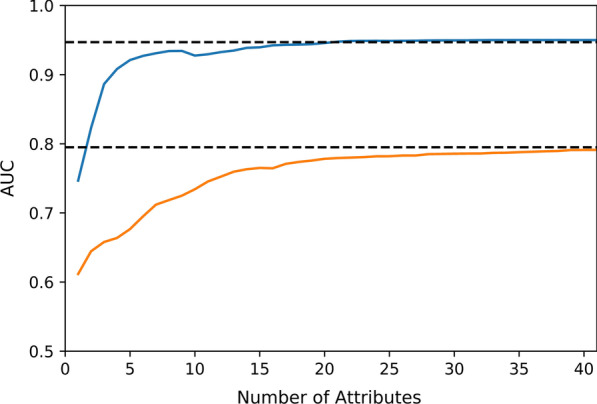
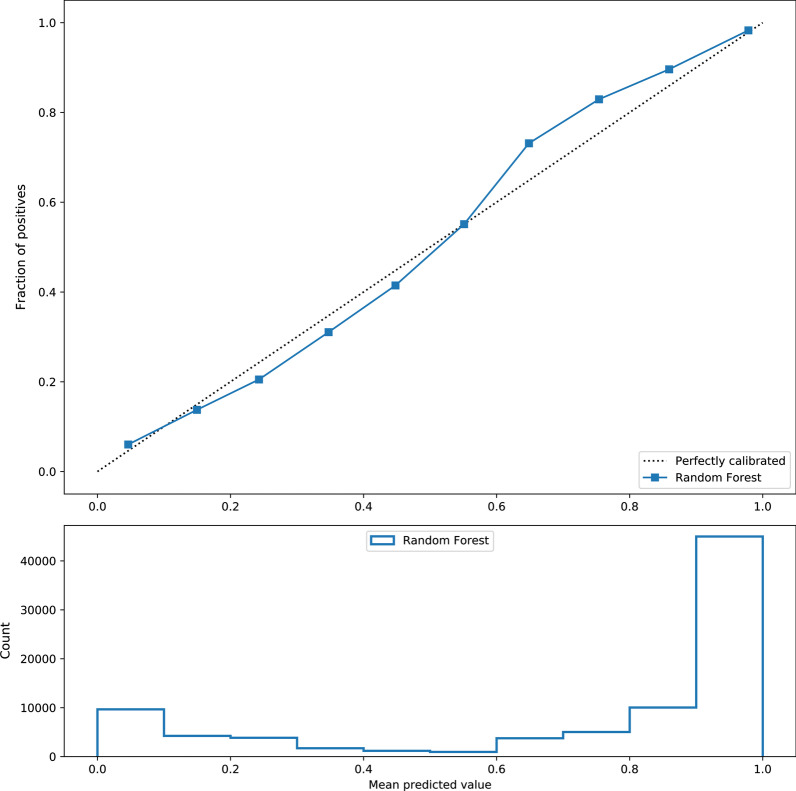
BACKGROUND: Assessment of functional ability, including activities of daily living (ADLs), is a manual process completed by skilled health professionals. In the presented research, an automated decision support tool, the Computational Barthel Index Tool (CBIT), was constructed that can automatically assess and predict probabilities of current and future ADLs based on patients' medical history. METHODS: The data used to construct the tool include the demographic information, inpatient and outpatient diagnosis codes, and reported disabilities of 181,213 residents of the Department of Veterans Affairs' (VA) Community Living Centers. Supervised machine learning methods were applied to construct the CBIT. Temporal information about times from the first and the most recent occurrence of diagnoses was encoded. Ten-fold cross-validation was used to tune hyperparameters, and independent test sets were used to evaluate models using AUC, accuracy, recall and precision. Random forest achieved the best model quality. Models were calibrated using isotonic regression. RESULTS: The unabridged version of CBIT uses 578 patient characteristics and achieved average AUC of 0.94 (0.93-0.95), accuracy of 0.90 (0.89-0.91), precision of 0.91 (0.89-0.92), and recall of 0.90 (0.84-0.95) when re-evaluating patients. CBIT is also capable of predicting ADLs up to one year ahead, with accuracy decreasing over time, giving average AUC of 0.77 (0.73-0.79), accuracy of 0.73 (0.69-0.80), precision of 0.74 (0.66-0.81), and recall of 0.69 (0.34-0.96). A simplified version of CBIT with 50 top patient characteristics reached performance that does not significantly differ from full CBIT. CONCLUSION: Discharge planners, disability application reviewers and clinicians evaluating comparative effectiveness of treatments can use CBIT to assess and predict information on functional status of patients.
Overview
The claims and statistics of this paper haven’t been checked yet.
Free: it reads the open-access text and checks the first 5 claims that cite a source we can check. Create a free account to check every claim.
Integrity signals
Registry
Cites
Statistics
Figures

Verification
Claims the paper makes
The claims and statistics of this paper haven’t been checked yet.
Free: it reads the open-access text and checks the first 5 claims that cite a source we can check. Create a free account to check every claim.
Claims other papers make about this one
Each is checked against this paper’s own text: does it say what the citing paper says it does?
The source backs part of the claim, not all of it — or backs it for a different population, condition or comparison.
In the citing paper
“There is also increasing interest in expanding the role of artificial intelligence (AI) in nursing homes to process information collected by a full range of technologies, including CCTV cameras, virtual assistants, and electronic health records, and to develop predictive algorithms and automated decision-making systems about care”
From Algorithmic harms and digital ageism in the use of surveillance technologies in nursing homes (2022) · cites this paper as Wojtusiak et al., 2021
Experimental — accuracy not yet measured
Self-check
Percentages, sums and reported differences re-computed from the paper’s own numbers.
The self-check needs the paper’s full text.
Citations
Cites
Breiman, L. (2001) · Machine Learning · doi:10.1023/a:1010933404324 · Cited by 133,538
Scikit-learn: Machine Learning in Python
Pedregosa, F., Varoquaux, G., Gramfort, A., Michel, V., Thirion, B., Grisel, O., Blondel, M., Müller, A., Nothman, J., Louppe, G., et al. (2012) · arXiv · doi:10.48550/arxiv.1201.0490 · Cited by 71,016
Breiman, L. (1996) · Machine Learning · doi:10.1007/bf00058655 · Cited by 16,325
(1965) · PubMed · Cited by 14,925
Functional evaluation : Barthel index
Mahonery, F. I. (1965) · Medical Entomology and Zoology · Cited by 12,762
The Barthel ADL Index: A reliability study
Collin, C., Wade, D. T., Davies, S., & Horne, V. (1988) · International Disability Studies · doi:10.3109/09638288809164103 · Cited by 2,734
Improving the sensitivity of the Barthel Index for stroke rehabilitation
Shah, S., Vanclay, F., & Cooper, B. (1989) · Journal of Clinical Epidemiology · doi:10.1016/0895-4356(89)90065-6 · Cited by 2,527
Understanding the Treatment Preferences of Seriously Ill Patients
Fried, T. R., Bradley, E. H., Towle, V. R., & Allore, H. (2002) · New England Journal of Medicine · doi:10.1056/nejmsa012528 · Cited by 1,522
IEEE Transactions on Biomedical Engineering
(2025) · IEEE Transactions on Biomedical Engineering · doi:10.1109/tbme.10 · Cited by 1,400
Journal of the American Geriatrics Society
(1976) · Journal of the American Geriatrics Society · doi:10.1111/j.1532-5415.1976.tb03307.x · Cited by 1,313
eD octor: machine learning and the future of medicine
Handelman, G. S., Kok, H. K., Chandra, R. V., Razavi, A. H., Lee, M. J., & Asadi, H. (2018) · Journal of Internal Medicine · doi:10.1111/joim.12822 · Cited by 956
Hawes, C., Morris, J. N., Phillips, C. D., Mor, V., Fries, B. E., & Nonemaker, S. (1995) · The Gerontologist · doi:10.1093/geront/35.2.172 · Cited by 735
Early Prediction of Outcome of Activities of Daily Living After Stroke: A Systematic Review
Veerbeek, J. M., Kwakkel, G., van Wegen, E. E. H., Ket, J. C. F., & Heymans, M. W. (2011) · Stroke · doi:10.1161/strokeaha.110.604090 · Cited by 537
IEEE Journal of Biomedical and Health Informatics
(2021) · IEEE Journal of Biomedical and Health Informatics · doi:10.1109/jbhi.2021.3126038 · Cited by 525
Hoogerduijn, J. G., Schuurmans, M. J., Duijnstee, M. S., De Rooij, S. E., & Grypdonck, M. F. (2007) · Journal of Clinical Nursing · doi:10.1111/j.1365-2702.2006.01579.x · Cited by 318
A review of state-of-the-art techniques for abnormal human activity recognition
Dhiman, C., & Vishwakarma, D. K. (2019) · Engineering Applications of Artificial Intelligence · doi:10.1016/j.engappai.2018.08.014 · Cited by 265
A review and categorization of techniques on device-free human activity recognition
Hussain, Z., Sheng, Q. Z., & Zhang, W. E. (2020) · Journal of Network and Computer Applications · doi:10.1016/j.jnca.2020.102738 · Cited by 241
Dying with Cancer: Patients' Function, Symptoms, and Care Preferences as Death Approaches
McCarthy, E. P., Phillips, R. S., Zhong, Z., Drews, R. E., & Lynn, J. (2000) · Journal of the American Geriatrics Society · doi:10.1111/j.1532-5415.2000.tb03120.x · Cited by 233
Activity Recognition Using Wearable Sensors for Elder Care
Hong, Y.-J., Kim, I.-J., Ahn, S. C., & Kim, H.-G. (2008) · 2008 Second International Conference on Future Generation Communication and Networking · doi:10.1109/fgcn.2008.165 · Cited by 138 · cited 1×
“Assessing ADLs selected by 91 wearable sensors is a reasonable approach as it allows for continuous monitoring rather than a snapshot of activities 92 evaluated by a healthcare provider [21, 22, 23, 24, 25, 26].”
BackgroundA-Wristocracy: Deep learning on wrist-worn sensing for recognition of user complex activities
Vepakomma, P., De, D., Das, S. K., & Bhansali, S. (2015) · 2015 IEEE 12th International Conference on Wearable and Implantable Body Sensor Networks (BSN) · doi:10.1109/bsn.2015.7299406 · Cited by 136
IoT supported smart home for the elderly
SOKULLU, R. İ., Akkaş, M. A., & Demir, E. (2020) · Internet of Things · doi:10.1016/j.iot.2020.100239 · Cited by 114
Predictive Modeling for Frailty Conditions in Elderly People: Machine Learning Approaches
Tarekegn, A. N., Ricceri, F., Costa, G., Ferracin, E., & Giacobini, M. (2020) · JMIR Medical Informatics · doi:10.2196/16678 · Cited by 105
Stenholm, S., Westerlund, H., Salo, P., Hyde, M., Pentti, J., Head, J., Kivimäki, M., & Vahtera, J. (2014) · Journal of Epidemiology and Community Health · doi:10.1136/jech-2013-203555 · Cited by 93
Gobbens, R. J. J., & van Assen, M. A. L. M. (2014) · Current Gerontology and Geriatrics Research · doi:10.1155/2014/358137 · Cited by 91
Advances in transcatheter mitral and tricuspid therapies
Overtchouk, P., Piazza, N., Granada, J. F., Soliman, O. I. I., Prendergast, B., & Modine, T. (2020) · BMC Cardiovascular Disorders · doi:10.1186/s12872-019-01312-3 · Cited by 83
Jonkman, N. H., Colpo, M., Klenk, J., Todd, C. J., Hoekstra, T., Panta, V. D., Rapp, K., van Schoor, N. M., Bandinelli, S., Heymans, M. W., et al. (2019) · BMC Geriatrics · doi:10.1186/s12877-019-1192-1 · Cited by 64
Ghayvat, H., Mukhopadhyay, S., Shenjie, B., Chouhan, A., & Chen, W. (2018) · 2018 IEEE International Instrumentation and Measurement Technology Conference (I2MTC) · doi:10.1109/i2mtc.2018.8409885 · Cited by 62
Technology-Enabled Assessment of Functional Health
Cook, D. J., Schmitter-Edgecombe, M., Jonsson, L., & Morant, A. V. (2019) · IEEE Reviews in Biomedical Engineering · doi:10.1109/rbme.2018.2851500 · Cited by 54
Akbari, A., & Jafari, R. (2020) · IEEE Transactions on Biomedical Engineering · doi:10.1109/tbme.2019.2963816 · Cited by 50
Classification of Daily Activities for the Elderly Using Wearable Sensors
Liu, J., Sohn, J.-H., & Kim, S. (2017) · Journal of Healthcare Engineering · doi:10.1155/2017/8934816 · Cited by 45 · cited 1×
“Assessing ADLs selected by 91 wearable sensors is a reasonable approach as it allows for continuous monitoring rather than a snapshot of activities 92 evaluated by a healthcare provider [21, 22, 23, 24, 25, 26].”
BackgroundMaking Sense of Random Forest Probabilities: a Kernel PerspectivePreprint
Olson, M. A., & Wyner, A. J. (2018) · arXiv (Cornell University) · doi:10.48550/arxiv.1812.05792 · Cited by 41 · cited 1×
“These scores are calculated as a proportion of trees voting for a given outcome [40].”
BackgroundValue of the Barthel scale in prognostic prediction for patients with cerebral infarction
Li, Q., Zhao, X.-J., Wang, Y., Wang, D., Zhang, J., Liu, T., Peng, Y., Fan, H., & Zheng, F.-X. (2020) · BMC Cardiovascular Disorders · doi:10.1186/s12872-019-01306-1 · Cited by 40 · cited 1×
“progression and mortality [11,12], while the focus of this study is on predicting ADLs.”
BackgroundDelta Features From Ambient Sensor Data are Good Predictors of Change in Functional Health
Robben, S., Englebienne, G., & Kröse, B. (2016) · IEEE Journal of Biomedical and Health Informatics · doi:10.1109/jbhi.2016.2593980 · Cited by 31
Dy, S. M., Pfoh, E. R., Salive, M. E., & Boyd, C. M. (2013) · Journal of the American Geriatrics Society · doi:10.1111/jgs.12555 · Cited by 30
Predicting Functional Decline and Recovery for Residents in Veterans Affairs Nursing Homes
Wojtusiak, J., Levy, C. R., Williams, A. E., & Alemi, F. (2015) · The Gerontologist · doi:10.1093/geront/gnv065 · Cited by 30
Rank Pooling Approach for Wearable Sensor-Based ADLs Recognition
Nisar, M. A., Shirahama, K., Li, F., Huang, X., & Grzegorzek, M. (2020) · Sensors · doi:10.3390/s20123463 · Cited by 28
Sequence of Functional Loss and Recovery in Nursing Homes
Levy, C. R., Zargoush, M., Williams, A. E., Williams, A. R., Giang, P. H., Wojtusiak, J., Kheirbek, R., & Alemi, F. (2015) · The Gerontologist · doi:10.1093/geront/gnv099 · Cited by 27 · cited 2×
“Affairs (VA) with the purpose of assessing the cost and effectiveness of the Medical Foster Home program compared to 123 traditional Community Living Centers (nursing homes) [8, 9, 35].”
BackgroundMethodTanaka, R., Umehara, T., Fujimura, T., & Ozawa, J. (2016) · Archives of Physical Medicine and Rehabilitation · doi:10.1016/j.apmr.2016.07.016 · Cited by 26
Levy, C. R., Alemi, F., Williams, A. E., Williams, A. R., Wojtusiak, J., Sutton, B. S., Giang, P. H., Pracht, E. E., & Argyros, L. (2015) · The Gerontologist · doi:10.1093/geront/gnv092 · Cited by 25 · cited 1×
“Affairs (VA) with the purpose of assessing the cost and effectiveness of the Medical Foster Home program compared to 123 traditional Community Living Centers (nursing homes) [8, 9, 35].”
MethodInferring Micro-Activities Using Wearable Sensing for ADL Recognition of Home-Care Patients
Sridharan, M. J., Bigham, J., Campbell, P. M., Phillips, C. I., & Bodanese, E. (2019) · IEEE Journal of Biomedical and Health Informatics · doi:10.1109/jbhi.2019.2918718 · Cited by 23
Early prediction of outcome of activities of daily living after stroke: a systematic review
Veerbeek, J. M., Kwakkel, G., van Wegen, E. E. H., Ket, J. C. F., & Heijmans, M. W. (2011) · Digital Academic REpository of VU University Amsterdam (Vrije Universiteit Amsterdam) · Cited by 23
Min, H., Mobahi, H., Irvin, K., Avramovic, S., & Wojtusiak, J. (2017) · Journal of Biomedical Semantics · doi:10.1186/s13326-017-0149-6 · Cited by 22
Permanent left bundle branch area pacing utilizing intracardiac echocardiogram
Feng, X., Zhang, P., Liu, B., Zhao, Y. D., Lu, Q., & Li, Y. (2020) · BMC Cardiovascular Disorders · doi:10.1186/s12872-020-01649-0 · Cited by 18
Predicting 1-year disability and mortality of injured older adults
Jeffery, A. D., Dietrich, M. S., & Maxwell, C. A. (2018) · Archives of Gerontology and Geriatrics · doi:10.1016/j.archger.2018.01.003 · Cited by 16
Frank, B., Schlote, A., Hasenbein, U., & Wallesch, C. (2006) · Disability and Rehabilitation · doi:10.1080/09638280600633597 · Cited by 14
Editorial Preface: Special issue on IoT for eHealth, elderly and aging
Chatterjee, P., Armentano, R. L., Palombi, L., & Kun, L. G. (2019) · Internet of Things · doi:10.1016/j.iot.2019.100115 · Cited by 13
Sasaki, W., Fujiwara, M., Fujimoto, M., Suwa, H., Arakawa, Y., & Yasumoto, K. (2019) · IEEE International Conference on Pervasive Computing and Communications Workshops (PerCom Workshops) · doi:10.1109/percomw.2019.8730662 · Cited by 9 · cited 1×
“These works rely on the use of specific sensors installed in smarthome 94 environment that monitor movement [27, 28], as well as use of specific home devices [29, 30, 31].”
MethodHong, H. G., An, H. S., Sarzynski, E. M., & Oberst, K. (2019) · Medical Care Research and Review · doi:10.1177/1077558719886735 · Cited by 5 · cited 1×
“progression and mortality [11,12], while the focus of this study is on predicting ADLs.”
BackgroundPoli, A., Scalise, L., Spinsante, S., & Strazza, A. (2020) · IEEE International Symposium on Medical Measurements and Applications (MeMeA) · doi:10.1109/memea49120.2020.9137265 · Cited by 4 · cited 1×
“Such data can aid assessment, particularly for ADLs that measure patient movement [46, 47, 48].”
BackgroundSingle Activity Recognition System: A Review
Banu, P. K. N., & Kavitha, R. (2020) · Springer eBooks · doi:10.1007/978-3-030-37468-6_13 · Cited by 3
Cited by
Artificial Intelligence -based technologies in nursing: A scoping literature review of the evidence
von Gerich, H., Moen, H., Block, L. J., Chu, C. H., DeForest, H., Hobensack, M., Michalowski, M., Mitchell, J., Nibber, R., Olalia, M. A., et al. (2022) · International Journal of Nursing Studies · doi:10.1016/j.ijnurstu.2021.104153 · Cited by 360
“…and Dass, 2021 , Sullivan et al., 2019 , Tang et al., 2019 , Tateno et al., 2020 , Topaz et al., 2016 , Wang et al., 2021 , Wang et al., 2018 , Wojtusiak et al., 2021 , Wong et al., 2018 , Yokota et al., 2017 , Yu et al., 2020 , Zamzmi et al., 2019 49.5 Improve accuracy or efficiency of AI…”
InfluentialClassification of COVID-19 electrocardiograms by using hexaxial feature mapping and deep learning
Ozdemir, M. A., Ozdemir, G., & Guren, O. (2021) · BMC Medical Informatics and Decision Making · doi:10.1186/s12911-021-01521-x · Cited by 81
Algorithmic harms and digital ageism in the use of surveillance technologies in nursing homes
Berridge, C., & Grigorovich, A. (2022) · Frontiers in Sociology · doi:10.3389/fsoc.2022.957246 · Cited by 47
“Understaffing and lack of human resources in this sector drive interest in the development of predictive algorithms for automated decision support with regard to risk of falls or functional decline (Wojtusiak et al., 2021; von Gerich et al., 2022).”
BackgroundMobile Triage Applications: A Systematic Review in Literature and Play Store
Montano, I. H., Díez, I. D. L. T., López‐Izquierdo, R., Villamor, M. Á. C., & Rodríguez, F. M. (2021) · Journal of Medical Systems · doi:10.1007/s10916-021-01763-2 · Cited by 24
Santilli, G., Mangone, M., Agostini, F., Paoloni, M., Bernetti, A., Diko, A., Tognolo, L., Coraci, D., Vigevano, F., Vetrano, M., et al. (2024) · Journal of Functional Morphology and Kinesiology · doi:10.3390/jfmk9040176 · Cited by 28
“The ∆ mBI at discharge was coded as a binary variable, with 1 indicating improvement and 0 indicating maintenance or worsening [57,58].”
Method
Metadata
- Authors
- Wojtusiak, J., Asadzadehzanjani, N., Levy, C., Alemi, F., & Williams, A. E.
- Affiliations
- George Mason University (US)
- United States Department of Veterans Affairs (US)
- Bay Pines VA Healthcare System (US)
- Corresponding author
- Wojtusiak, Janusz
- Venue
- BMC Medical Informatics and Decision Making
- Published
- 2021-01-09
- Volume
- 21
- Issue
- 1
- Pages
- 17-17
- ISSN
- 1472-6947 (ISSN-L)
- PMC
- PMC7796534
- OpenAlex
- W3108663163
- Cited by
- 26
- References
- 50
- Citations by year
- 2026: 5 · 2025: 3 · 2024: 5 · 2023: 3 · 2022: 4 · 2021: 6
- FWCI
- 3.92
- Type
- journal article
- Language
- en
- Open access
- gold
- doi.org
- Licence
- cc-by
- creativecommons.org/licenses/by/4.0/ (tdm)
- creativecommons.org/licenses/by/4.0/ (vor)
- Locations
- BMC Medical Informatics and Decision Making (publishedVersion, cc-by)
- Research Square (acceptedVersion, cc-by)
- PubMed Central (publishedVersion, cc-by)
- PubMed (publishedVersion)
- DOAJ (DOAJ: Directory of Open Access Journals) (submittedVersion, cc-by-sa)
- Funders
- U.S. Department of Veterans Affairs (3620160)
- Topics
- Health Sciences › Health Professions › Health Information Management › Artificial Intelligence in Healthcare
- Health Sciences › Medicine › Geriatrics and Gerontology › Geriatric Care and Nursing Homes
- Physical Sciences › Computer Science › Artificial Intelligence › Machine Learning in Healthcare
- Keywords
- Barthel Index, activities of daily living, functional status assessment, nursing home residents, automated decision support, veterans, community living centers, diagnosis codes, random forest, discharge planning
- MeSH terms
- Activities of Daily Living, Persons with Disabilities, Humans, Nursing Homes, Patient Discharge, Skilled Nursing Facilities
About these checks
Registry, retraction, Cites and statistics results are computed, not judged, with one exception: a printed reference that no index lists is read once by a model before it counts as a citation error. Claims are extracted by a model and kept only when their quote appears verbatim in the text; each cited source is then checked, with a model’s help, for whether it says what the claim relies on. Those verdicts can be wrong — read the claim’s quote and the cited source before relying on one.
Statistics and arithmetic are recomputed, not judged.
Confidence bands are shown only for fields calibrated on our annotated test set. None is calibrated yet, so no band is shown.
What counts as a claim ›How we measure confidence ›How we check this ›
Are you an author, or do you see a problem with this page? Request a review
Data sources
Bibliographic data: Semantic Scholar, OpenAlex, Crossref.
Contains information from the Semantic Scholar Academic Graph Datasets, made available under the ODC Attribution License (ODC-BY 1.0).
Semantic Scholar’s data is described in: Kinney, R., et al. (2023). The Semantic Scholar Open Data Platform. arXiv:2301.10140.
