

Spatial patterns of maternal and neonatal continuum of care use and its correlations with women’s empowerment
Open accessThe DOI matches its Crossref record; 37 of the 40 references it cites were found in a registry or an index.
Abstract
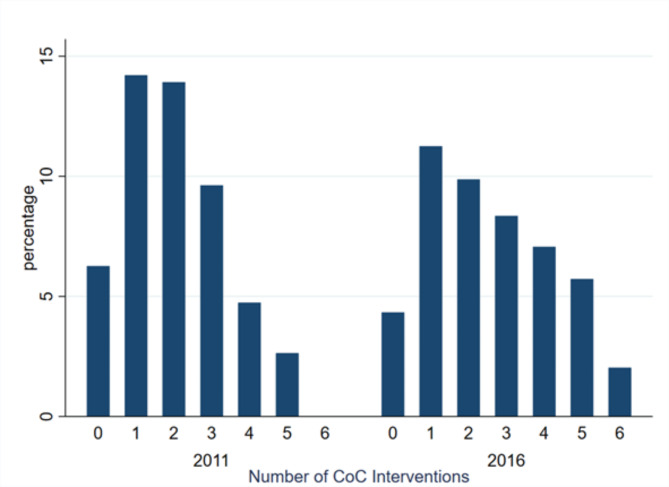
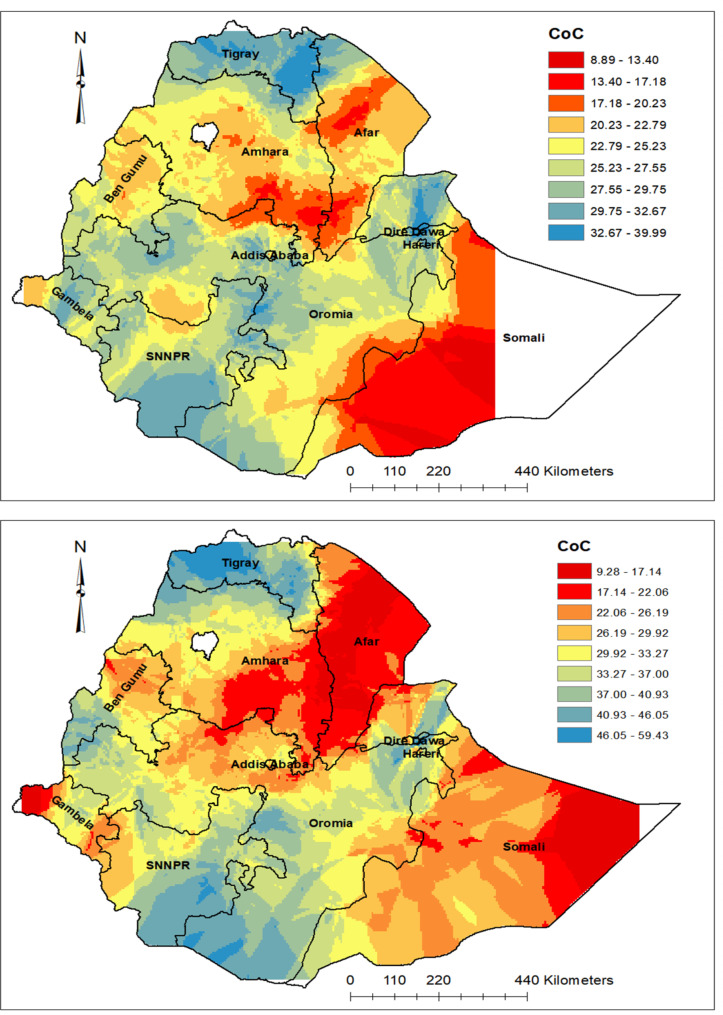
BACKGROUND: The continuum of care (CoC) in maternal health refers to the continuity of individual reproductive health care across the antenatal, intrapartum, and postnatal periods. The CoC is an indicator of the quality of maternal and newborn health outcomes and women's empowerment is crucial to improving maternal and neonatal health service access and utilisation. OBJECTIVE: To examine the spatial patterns of continuum of care use for maternal and neonatal health services and its correlation with women's empowerment. METHODS: We analysed data from the Ethiopian Demographic and Health Surveys (EDHS) of 2011 and 2016. All women aged 15-49 who had live births in the preceding five years of the DHS surveys were included in the analysis. We measured the continuum of care using the modified co-coverage index (CoCI), which consisted of six indicators. Women's empowerment was assessed using a validated survey-based Women's Empowerment (SWPER) index. We used the Getis-Ord-Gi* spatial analysis tool to portray locations with clusters of CoC service use and spatial correlations between CoC use and women empowerment. RESULTS: None of the newborn-mother pairs in the 2011 survey received the entire continuum of care and only 2.5% of newborn-mother pairs received the full range of continuum of care services in the 2016 survey. In 2016, 6.9% of mother-newborn pairs received the basic CoC services (four or more antenatal care [ANC] visits, skilled birth attendance [SBA], and postnatal care [PNC]), and no mother-newborn pair received all three services at the same time in 2011. The Amhara, Afar, and Somali regional states had the least CoC service use in both surveys. There was a positive spatial correlation between CoC use and women's empowerment domains. CONCLUSION: Our analysis showed that the use of four or more ANC visits, SBS, newborn PNC, Bacillus Calmette-Guérin (BCG) vaccine uptake, and tetanus toxoid protection at birth were low in Ethiopia. Women empowerment domains were found to have a positive spatial correlation with CoC services use. To improve and preserve continuity of care, it is critical to leverage every maternal health facility encounter to encourage sustained service usage at each step of the continuum. Government policies should prioritise women's empowerment and raise public awareness of maternity services.
Overview
The claims and statistics of this paper haven’t been checked yet.
Free: it reads the open-access text and checks the first 5 claims that cite a source we can check. Create a free account to check every claim.
Integrity signals
Registry
Cites
Statistics
Figures
Verification
Claims the paper makes
The claims and statistics of this paper haven’t been checked yet.
Free: it reads the open-access text and checks the first 5 claims that cite a source we can check. Create a free account to check every claim.
Self-check
Percentages, sums and reported differences re-computed from the paper’s own numbers.
The self-check needs the paper’s full text.
Citations
Cites
Ethiopia demographic and health survey, 2000
Central Statistical Agency, & Ethiopia (2017) · Cited by 3,873
The Interpretation of Statistical Maps
Moran, P. A. P. (1948) · Journal of the Royal Statistical Society Series B: Statistical Methodology · doi:10.1111/j.2517-6161.1948.tb00012.x · Cited by 2,882 · cited 1×
“Global Moran’s I statistics [34] and Getis-Ord Gi* statistics were Women with a live birth in the five years preceding the survey receiving two or more injections during the pregnancy for the most recent live birth Skilled birth attendance Births in the five years preceding the survey that were…”
MethodEvidence-based, cost-effective interventions: How many newborn babies can we save?
Darmstadt, G. L., Bhutta, Z. A., Cousens, S., Adam, T., Walker, N., & de Bernis, L. (2005) · The Lancet · doi:10.1016/s0140-6736(05)71088-6 · Cited by 1,541 · cited 1×
“The continuity of maternal and child health intervention packages is receiving increased attention as a strategy to improve overall service delivery and maternal and neonatal health outcomes [60].”
BackgroundKassebaum, N. J., Barber, R. M., Bhutta, Z. A., Dandona, L., Gething, P. W., Hay, S. I., Kinfu, Y., Larson, H. J., Liang, X., Lim, S. S., et al. (2016) · The Lancet · doi:10.1016/s0140-6736(16)31470-2 · Cited by 1,162
Continuum of care for maternal, newborn, and child health: from slogan to service delivery
Kerber, K. J., de Graft-Johnson, J. E., Bhutta, Z. A., Okong, P., Starrs, A., & Lawn, J. E. (2007) · The Lancet · doi:10.1016/s0140-6736(07)61578-5 · Cited by 1,008 · cited 1×
“The continuum of care (CoC) concept for maternal and neonatal health has been regarded as a key principle and framework to support policies and initiatives to save women’s and newborns’ lives and promote overall health [59].”
BackgroundHandbook of Applied Spatial Analysis: Software Tools, Methods and Applications
(2010) · Springer eBooks · doi:10.1007/978-3-642-03647-7 · Cited by 980
Ahmed, S., Creanga, A. A., Gillespie, D. G., & Tsui, A. O. (2010) · PLoS ONE · doi:10.1371/journal.pone.0011190 · Cited by 622 · cited 2×
“Maternal healthcare utilisation has been connected to gender power dynamics in low-and middle-income countries [16]; and women’s empowerment has been widely considered as an important concept in international development goals [17, 18].”
BackgroundKamel Boulos, M. N., Resch, B., Crowley, D. N., Breslin, J. G., Sohn, G., Burtner, R., Pike, W. A., Jezierski, E., & Chuang, K.-Y. (2011) · International Journal of Health Geographics · doi:10.1186/1476-072x-10-67 · Cited by 496
Tarekegn, S. M., Lieberman, L. S., & Giedraitis, V. (2014) · BMC Pregnancy and Childbirth · doi:10.1186/1471-2393-14-161 · Cited by 395 · cited 2×
“Access to basic obstetric and neonatal care services [8], as well as the utilisation of maternal health services [9], varies significantly among administrative areas in the country.”
BackgroundEwerling, F., Lynch, J. W., Victora, C. G., van Eerdewijk, A., Tyszler, M., & Barros, A. J. D. (2017) · The Lancet Global Health · doi:10.1016/s2214-109x(17)30292-9 · Cited by 366 · cited 1×
“[33], which has three domains: (1) decision-making power, (2) attitudes towards violence, and (3) social independence.”
BackgroundVictora, C. G., Fenn, B., Bryce, J., & Kirkwood, B. R. (2005) · The Lancet · doi:10.1016/s0140-6736(05)67599-x · Cited by 202 · cited 2×
“The CCI is the weighted average coverage of services calculated at a group level CoCI indicator is a simple count of how many services are received at an individual level out of a set of services [15].”
BackgroundWang, W., & Hong, R. (2015) · BMC Pregnancy and Childbirth · doi:10.1186/s12884-015-0497-0 · Cited by 171 · cited 1×
“We defined the continuum of care for mother and newborn care during pregnancy, child-birth, and the postnatal period, which has been used in previous literature [31, 32], and we used the co-coverage index for spatial analysis as per the recommendation elsewhere [14].”
MethodEwerling, F., Raj, A., Victora, C. G., Hellwig, F., Coll, C. V., & Barros, A. J. (2020) · Journal of Global Health · doi:10.7189/jogh.10.020434 · Cited by 164 · cited 2×
“First, the variables were recoded as shown in the supplementary file (see Table S1 ), and standardisation was carried out based on the SWPER guideline [20].”
MethodIqbal, S., Maqsood, S., Zakar, R., Zakar, M. Z., & Fischer, F. (2017) · BMC Health Services Research · doi:10.1186/s12913-017-2111-9 · Cited by 163 · cited 1×
“We defined the continuum of care for mother and newborn care during pregnancy, child-birth, and the postnatal period, which has been used in previous literature [31, 32], and we used the co-coverage index for spatial analysis as per the recommendation elsewhere [14].”
MethodKikuchi, K., Ansah, E., Okawa, S., Enuameh, Y., Yasuoka, J., Nanishi, K., Shibanuma, A., Gyapong, M., Owusu‐Agyei, S., Oduro, A. R., et al. (2015) · PLoS ONE · doi:10.1371/journal.pone.0139288 · Cited by 159 · cited 1×
“Each stage in the continuum should be a positive experience to ensure that women and their babies reach their full potential for health and well-being [12, 13].”
BackgroundWassihun, B., & Zeleke, S. (2018) · BMC Pregnancy and Childbirth · doi:10.1186/s12884-018-1909-8 · Cited by 151 · cited 1×
“Findings showed that disrespect, neglect, lack of supportiveness and abuse during facility delivery in Ethi-opia are not uncommon [50].”
BackgroundYeji, F., Shibanuma, A., Oduro, A., Debpuur, C., Kikuchi, K., Owusu-Agei, S., Gyapong, M., Okawa, S., Ansah, E., Asare, G. Q., et al. (2015) · PLOS ONE · doi:10.1371/journal.pone.0142849 · Cited by 137 · cited 1×
“The second dimension indicates the place that spans home, community, and health care [10, 11].”
BackgroundMohan, D., LeFevre, A. E., George, A., Mpembeni, R., Bazant, E., Rusibamayila, N., Killewo, J., Winch, P. J., & Baqui, A. H. (2017) · Health Policy and Planning · doi:10.1093/heapol/czx005 · Cited by 122 · cited 1×
“Each stage in the continuum should be a positive experience to ensure that women and their babies reach their full potential for health and well-being [12, 13].”
BackgroundThe influence of women's empowerment on maternal health care utilization: Evidence from Albania
Sado, L., Braimllari, A., & Hotchkiss, D. R. (2014) · Social Science & Medicine · doi:10.1016/j.socscimed.2014.05.047 · Cited by 115 · cited 2×
“Studies in low-and middle-income countries have shown that women’s empowerment can play an important role in maternal health services use [21–24].”
BackgroundYadav, A. K., Sahni, B., & Jena, P. K. (2020) · Journal of Public Affairs · doi:10.1002/pa.2259 · Cited by 84
Measuring the spatial balance of a sample: A new measure based on Moran’s I index
Tillé, Y., Dickson, M. M., Espa, G., & Giuliani, D. (2018) · Spatial Statistics · doi:10.1016/j.spasta.2018.02.001 · Cited by 83 · cited 1×
“Global Moran’s I is a scale that ranges from − 1 to + 1, where a value of + 1 indicates the entire distribution showed similarity [35, 36], and spatial clustering was detected.”
BackgroundComparison of Spatial Interpolation Techniques Using Visualization and Quantitative Assessment
Wu, Y.-H., & Hung, M.-C. (2016) · InTech eBooks · doi:10.5772/65996 · Cited by 80 · cited 1×
“Spatial interpolation [38] was applied to obtain a value of the continuum of care at locations where data had not been recorded.”
MethodEvidence to inform the future for maternal and newborn health
Lawn, J. E., Blencowe, H. K., Kinney, M. V., Bianchi-Jassir, F., & Graham, W. J. (2016) · Best Practice & Research Clinical Obstetrics & Gynaecology · doi:10.1016/j.bpobgyn.2016.07.004 · Cited by 79 · cited 2×
“The CoC is one of the health service strategic frameworks and indicators of maternal, newborn, child and adolescent health [1, 10].”
BackgroundSummary indices for monitoring universal coverage in maternal and child health care
Wehrmeister, F., Restrepo-Mendez, M.-C., Franca, G., Victora, C., & Barros, A. (2016) · Bulletin of the World Health Organization · doi:10.2471/blt.16.173138 · Cited by 73 · cited 2×
“We defined the continuum of care for mother and newborn care during pregnancy, child-birth, and the postnatal period, which has been used in previous literature [31, 32], and we used the co-coverage index for spatial analysis as per the recommendation elsewhere [14].”
MethodMuluneh, A. G., Kassa, G. M., Asrade, G., & Merid, M. W. (2020) · PLoS ONE · doi:10.1371/journal.pone.0234741 · Cited by 69 · cited 2×
“These findings highlight a significant public health challenge in the country [7].”
BackgroundAlem, A. Z., Shitu, K., & Alamneh, T. S. (2022) · BMC Pregnancy and Childbirth · doi:10.1186/s12884-022-04757-1 · Cited by 57 · cited 3×
“…lower than study findings from an analysis of DHS data in Sub-Saharan African countries, where 54.5% of pregnant women had four or more antenatal care visits, and a study from lower-middle-income Southeast Asian countries, where 76.6% of pregnant women had four or more antenatal care visits [25].”
BackgroundResultInfluentialKawaguchi, L., Fouad, N. A. A. M., Chiang, C., Elshair, I. H. H., Abdou, N. M., Banna, S., & Aoyama, A. (2014) · PubMed Central · doi:10.18999/nagjms.76.1-2.161 · Cited by 50
The influence of women empowerment on maternal and childcare use in Nigeria
Ahuru, R. R. (2019) · International Journal of Healthcare Management · doi:10.1080/20479700.2019.1688505 · Cited by 45 · cited 1×
“Plenty of studies investigated the factors affecting maternal CoC service use by examining individual level data [6, 7, 9, 23, 25].”
BackgroundTiruneh, G. T., Demissie, M., Worku, A., & Berhane, Y. (2022) · PLoS ONE · doi:10.1371/journal.pone.0264612 · Cited by 37 · cited 1×
“Despite the initiatives to achieve universal health coverage (UHC) by the Ethiopian government, maternal and neonatal health services utilisation is quite low [3, 4].”
BackgroundEarly Detection for Dengue Using Local Indicator of Spatial Association (LISA) Analysis
Amaya, M. E. P., Puerta-Yepes, M. E., Lizarralde-Bejarano, D. P., & Arboleda-Sánchez, S. (2016) · Diseases · doi:10.3390/diseases4020016 · Cited by 31 · cited 1×
“Global Moran’s I is a scale that ranges from − 1 to + 1, where a value of + 1 indicates the entire distribution showed similarity [35, 36], and spatial clustering was detected.”
BackgroundEmpowerment dimensions and their relationship with continuum care for maternal health in Bangladesh
Rahman, R., Rahman, M., & Haque, S. E. (2021) · Scientific Reports · doi:10.1038/s41598-021-98181-8 · Cited by 31 · cited 1×
“Study findings from Pakistan [57] and Bangladesh [58] supported these findings showing the positive impact of women’s empowerment towards maternal health services use.”
ResultFerede, A., Dawson, A. J., & Hayen, A. D. (2023) · PLoS ONE · doi:10.1371/journal.pone.0280629 · Cited by 31
Self-citationVizheh, M., Rapport, F., Braithwaite, J., & Zurynski, Y. A. (2023) · International Journal of Environmental Research and Public Health · doi:10.3390/ijerph20053966 · Cited by 22 · cited 1×
“Furthermore, empowered women are more likely to advocate for the health needs of their children, ensuring timely immunizations and check-ups [56].”
BackgroundAlenoghena, I., Isah, E., & Isara, A. (2015) · Nigerian Postgraduate Medical Journal · doi:10.4103/1117-1936.163361 · Cited by 16 · cited 1×
“Maternal healthcare utilisation has been connected to gender power dynamics in low-and middle-income countries [16]; and women’s empowerment has been widely considered as an important concept in international development goals [17, 18].”
BackgroundContinuum of maternal and newborn health in Sierra Leone: a 2019 national survey
Sserwanja, Q., Mutisya, L. M., Nuwabaine, L., Kamara, K., Mutebi, R. K., & Musaba, M. W. (2022) · Archives of Public Health · doi:10.1186/s13690-022-00946-8 · Cited by 15 · cited 1×
“This is lower than what was found in Sierra Leone, where 17.9% of mothers use these three CoC services in 2019 [48].”
ResultInfluentialKibret, G. D., Demant, D., & Hayen, A. D. (2022) · BMJ Open · doi:10.1136/bmjopen-2021-058648 · Cited by 13 · cited 1×
“Access to basic obstetric and neonatal care services [8], as well as the utilisation of maternal health services [9], varies significantly among administrative areas in the country.”
BackgroundSelf-citationAndriani, H., Rahmawati, N. D., Fauzia, S., & Kosasih, R. I. (2022) · Asia Pacific Journal of Public Health · doi:10.1177/10105395221088615 · Cited by 10 · cited 1×
“This is also lower than the coverage in sub-Saharan countries where 25% of the mothers completed at least three CoC services (ANC4 + , SBA and PNC) [25], and a study from lower-middle-income countries in Southeast Asia where 43.4%of mother-newborn pairs used at least three CoC services [49].”
BackgroundInfluential
Research works printed but not linked: 8
- Tarekegn SM, Lieberman LS, Giedraitis V. Determinants of maternal health service utilization in Ethiopia: analysis of the 2011 Ethiopian demographic and Health Survey. BMC Pregnancy Childbirth. 2014;14(1):161. 24886529 10.1186/1471-2393-14-161 PMC4022978 · DOI · Paper page
- World Health Organization. The World Health Report 2005-make every mother and child count. In. Geneva. Swizerland: WHO; 2005.
- Kishor S, Gupta K. Gender equality and women′ s empowerment in India. National Family Health Survey (NFHS-3) India, 2005-06. In. Mumbai. India: International Institute of Population Sciences; 2009.
- Cromley EK, McLafferty S. GIS and public health. Guilford Press; 2012.
- Central Statistical Agency (CSA) [Ethiopia] and ICF. Ethiopia Demographic and Health Survey 2012. In. Addis Ababa, Ethiopia, and Rockville. Maryland, USA: CSA and ICF; 2012.
- Krivoruchko K. Empirical bayesian kriging. ArcUser Fall. 2012;6(10):1145.
- Fotheringham AS, Brunsdon C, Charlton M. Geographically weighted regression: the analysis of spatially varying relationships. Wiley; 2003.
- Ministry of Health Ethiopia. Health Sector Transformation Plan (HSTP-I). In. Addis Ababa. Ethiopia: Federal Ministry of Health (FMOH); 2015.
Cited by
Gudsoorkar, P., Dudhbhate, A., Klabak, J., Klabak, S., & Nolan, R. (2025) · Frontiers in Oral Health · doi:10.3389/froh.2025.1644013 · Cited by 1
“Inconsistent data and persistent systemic barriers, such as workforce shortages, fragmented services, and financial or geographic constraints, continue to impede access to even basic preventative care (14, 15).”
Sherif, A. K. E., Saleh, D. M., & Youssef, O. A. (2021) · Journal of Current Research in Oral Surgery · doi:10.51847/xvhtvvfmni
Kapiye, G. D., Bayu, H., Megersa, G., Bekele, O. A., & Keno, B. F. (2026) · Research Square · doi:10.21203/rs.3.rs-10730726/v1
Metadata
- Authors
- Kibret, G. D., Demant, D., Dawson, A., & Hayen, A.
- Affiliations
- University of Technology Sydney (AU)
- Corresponding author
- Kibret, Getiye Dejenu
- Venue
- BMC Health Services Research
- Published
- 2024-09-03
- Volume
- 24
- Issue
- 1
- Pages
- 1018-1018
- ISSN
- 1472-6963 (ISSN-L)
- PMC
- PMC11373502
- OpenAlex
- W4402168323
- Cited by
- 3
- References
- 40
- Citations by year
- 2026: 1 · 2025: 1
- FWCI
- 1.35
- Type
- journal article
- Language
- en
- Open access
- gold
- doi.org
- Licence
- cc-by-nc-nd
- creativecommons.org/licenses/by-nc-nd/4.0 (tdm)
- creativecommons.org/licenses/by-nc-nd/4.0 (vor)
- Locations
- BMC Health Services Research (publishedVersion, cc-by-nc-nd)
- PubMed Central (publishedVersion, cc-by-nc-nd)
- PubMed (publishedVersion)
- OPUS - Open Publications of UTS Scholars (University of Technology Sydney) (submittedVersion, cc-by-nc-nd)
- DOAJ (DOAJ: Directory of Open Access Journals) (submittedVersion)
- Funders
- Australian Government
- University of Technology Sydney
- Topics
- Health Sciences › Medicine › Pediatrics, Perinatology and Child Health › Global Maternal and Child Health
- Health Sciences › Medicine › Pediatrics, Perinatology and Child Health › Maternal and Neonatal Healthcare
- Health Sciences › Medicine › Public Health, Environmental and Occupational Health › Reproductive Health and Contraception
- Keywords
- continuum of care, obstetric care, neonatal health services, women's empowerment, spatial patterns, spatial clustering, prenatal care, skilled birth attendance, postpartum care, Ethiopia, regional disparities
- MeSH terms
- Empowerment, Adolescent, Adult, Continuity of Patient Care, Ethiopia, Female, Health Services Accessibility, Humans, Infant, Newborn, Maternal Health Services, Middle Aged, Pregnancy, Young Adult, Spatial Analysis
About these checks
Registry, retraction, Cites and statistics results are computed, not judged, with one exception: a printed reference that no index lists is read once by a model before it counts as a citation error. Claims are extracted by a model and kept only when their quote appears verbatim in the text; each cited source is then checked, with a model’s help, for whether it says what the claim relies on. Those verdicts can be wrong — read the claim’s quote and the cited source before relying on one.
Statistics and arithmetic are recomputed, not judged.
Confidence bands are shown only for fields calibrated on our annotated test set. None is calibrated yet, so no band is shown.
What counts as a claim ›How we measure confidence ›How we check this ›
Are you an author, or do you see a problem with this page? Request a review
Data sources
Bibliographic data: Semantic Scholar, OpenAlex, Crossref.
Contains information from the Semantic Scholar Academic Graph Datasets, made available under the ODC Attribution License (ODC-BY 1.0).
Semantic Scholar’s data is described in: Kinney, R., et al. (2023). The Semantic Scholar Open Data Platform. arXiv:2301.10140.
