

A pilot study of multi-antigen stimulated cell therapy-I plus camrelizumab and apatinib in patients with advanced bone and soft-tissue sarcomas
Open accessThe DOI matches its Crossref record; 23 of the 23 references it cites were found in a registry or an index.
Abstract
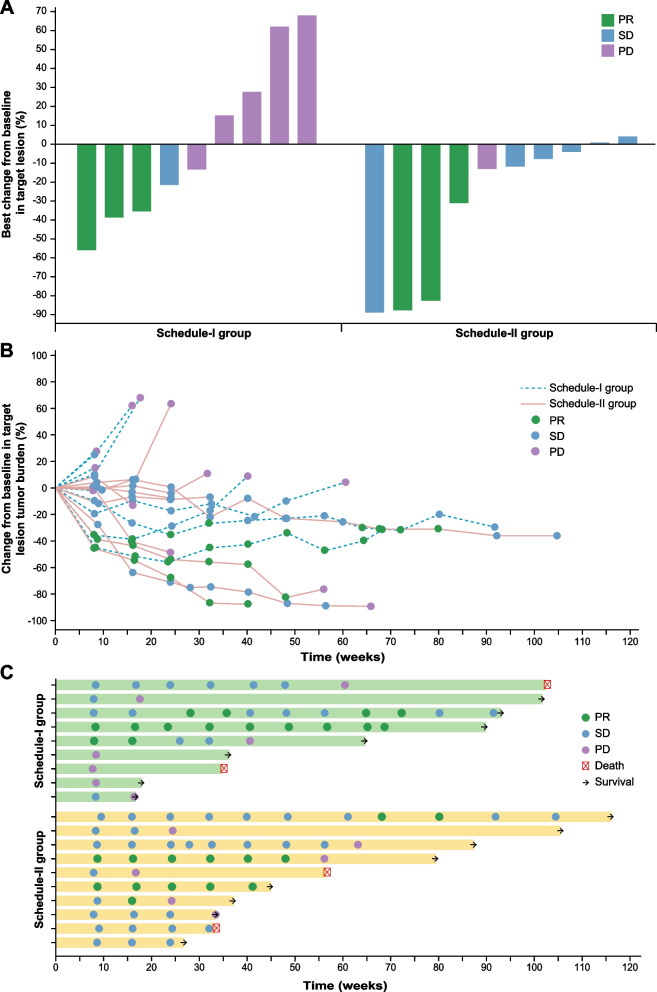
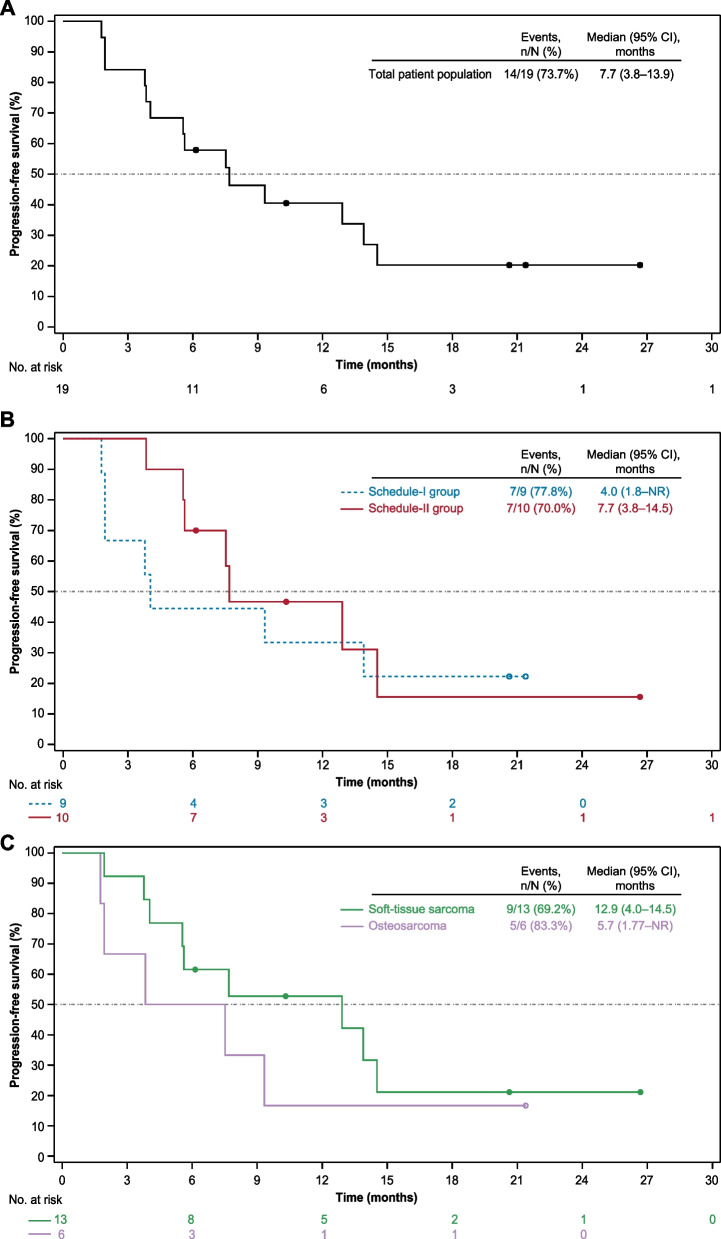
Background: Cell-based immunotherapy shows the therapeutic potential in sarcomas, in addition to angiogenesis-targeted tyrosine kinase inhibitor (TKI) and immune checkpoint inhibitor (ICI). Multi-antigen stimulated cell therapy-I (MASCT-I) technology is a sequential immune cell therapy for cancer, which composes of multiple antigen-loaded dendritic cell (DC) vaccines followed by the adoptive transfer of anti-tumor effector T-cells. Methods: In this phase 1 study, we assessed MASCT-I plus camrelizumab (an ICI against PD-1) and apatinib (a highly selective TKI targeting VEGFR2) in patients with unresectable recurrent or metastatic bone and soft-tissue sarcoma after at least one line of prior systemic therapy. One MASCT-I course consisted of 3 DC subcutaneous injections, followed by 3 active T cell infusions administered 18–27 days after each DC injection. In schedule-I group, 3 DC injections were administered with a 28-day interval in all courses; in schedule-II group, 3 DC injections were administered with a 7-day interval in the first course and with a 28-day interval thereafter. All patients received intravenous camrelizumab 200 mg every 3 weeks and oral apatinib 250 mg daily. Results: From October 30, 2019, to August 12, 2021, 19 patients were enrolled and randomly assigned to schedule-I group (n = 9) and schedule-II group (n = 10). Of the 19 patients, 11 (57.9%) experienced grade 3 or 4 treatment-related adverse events. No treatment-related deaths occurred. Patients in schedule-II group showed similar objective response rate (ORR) with those in schedule-I group (30.0% versus 33.3%) but had higher disease control rate (DCR; 90.0% versus 44.4%) and longer median progression-free survival (PFS; 7.7 versus 4.0 months). For the 13 patients with soft-tissue sarcomas, the ORR was 30.8%, DCR was 76.9%, and median PFS was 12.9 months; for the 6 patients with osteosarcomas, the ORR was 33.3%, the DCR was 50.0%, and median PFS was 5.7 months. Conclusions: Overall, MASCT-I plus camrelizumab and apatinib was safe and showed encouraging efficacy in advanced bone and soft-tissue sarcoma, and schedule-II administration method was recommended. Trial registration: ClinicalTrials.gov, NCT04074564.
Overview
The claims and statistics of this paper haven’t been checked yet.
Free: it reads the open-access text and checks the first 5 claims that cite a source we can check. Create a free account to check every claim.
Integrity signals
Registry
Cites
Statistics
Figures
Verification
Claims the paper makes
The claims and statistics of this paper haven’t been checked yet.
Free: it reads the open-access text and checks the first 5 claims that cite a source we can check. Create a free account to check every claim.
Claims other papers make about this one
Each is checked against this paper’s own text: does it say what the citing paper says it does?
The cited source says what the claim attributes to it.
In the citing paper
“11 (57.9%) experienced grade ≥ 3 treatmentrelated adverse events.”
From Advances on immunotherapy for osteosarcoma (2024) · cites this paper as [158]
The cited source says what the claim attributes to it.
In the citing paper
“No treatment-related deaths occurred [158].”
From Advances on immunotherapy for osteosarcoma (2024) · cites this paper as [158]
The cited source says what the claim attributes to it.
In the citing paper
“The most common treatment-related adverse event was decreased neutrophil count.”
From Advances on immunotherapy for osteosarcoma (2024) · cites this paper as [158]
The cited source says what the claim attributes to it.
In the citing paper
“For the 6 patients with osteosarcoma, the ORR was 33.3%, the disease control response (DCR) was 50.0%, and median PFS was 5.7 months.”
From Advances on immunotherapy for osteosarcoma (2024) · cites this paper as [158]
Self-check
Percentages, sums and reported differences re-computed from the paper’s own numbers.
The self-check needs the paper’s full text.
Citations
Cites
van der Graaf, W. T., Blay, J.-Y., Chawla, S. P., Kim, D.-W., Bui-Nguyen, B., Casali, P. G., Schöffski, P., Aglietta, M., Staddon, A. P., Beppu, Y., et al. (2012) · The Lancet · doi:10.1016/s0140-6736(12)60651-5 · Cited by 2,102 · cited 2×
“After failure of chemotherapy, angiogenesis-targeted tyrosine kinase inhibitors (TKIs) are active in patients with bone and soft-tissue sarcomas but with a moderate objective response rate (ORR) [2–6].”
BackgroundInfluentialTawbi, H. A., Burgess, M., Bolejack, V., Van Tine, B. A., Schuetze, S. M., Hu, J., D'Angelo, S., Attia, S., Riedel, R. F., Priebat, D. A., et al. (2017) · The Lancet Oncology · doi:10.1016/s1470-2045(17)30624-1 · Cited by 1,452 · cited 2×
“But ICI monotherapy only showed promising anti-tumor activity in certain histologic types of soft-tissue sarcomas, with an ORR of 23% in undifferentiated pleomorphic sarcoma and 10% in dedifferentiated liposarcoma, whereas only 5% of patients with bone sarcomas achieved an objective response [7, 8].”
BackgroundInfluentialSoft Tissue Sarcoma, Version 2.2018, NCCN Clinical Practice Guidelines in Oncology
von Mehren, M., Randall, R. L., Benjamin, R. S., Boles, S., Bui, M. M., Ganjoo, K. N., George, S., Gonzalez, R. J., Heslin, M. J., Kane, J. M., et al. (2018) · Journal of the National Comprehensive Cancer Network · doi:10.6004/jnccn.2018.0025 · Cited by 736
Shrimali, R. K., Yu, Z., Theoret, M. R., Chinnasamy, D., Restifo, N. P., & Rosenberg, S. A. (2010) · Cancer Research · doi:10.1158/0008-5472.can-10-0153 · Cited by 677
Oyama, T., Ran, S., Ishida, T., Nadaf, S., Kerr, L. D., Carbone, D. P., & Gabrilovich, D. I. (1998) · PubMed · Cited by 530
Oyama, T., Ran, S., Ishida, T., Nadaf, S., Kerr, L., Carbone, D. P., & Gabrilovich, D. I. (1998) · The Journal of Immunology · doi:10.4049/jimmunol.160.3.1224 · Cited by 481
Wilky, B. A., Trucco, M. M., Subhawong, T. K., Florou, V., Park, W., Kwon, D., Wieder, E. D., Kolonias, D., Rosenberg, A. E., Kerr, D. A., et al. (2019) · The Lancet Oncology · doi:10.1016/s1470-2045(19)30153-6 · Cited by 392 · cited 1×
“…superior to the historical data of angiogenesis-targeted TKIs including apatinib, pazopanib, and anlotinib (ORR, 15.8% or less; median PFS, 5.6 months or less), those of ICI pembroli-zumab (18%; 18 weeks), and those of TKI axitinib plus ICI pembrolizumab (25.0%; 4.7 months) [2, 8, 12, 17, 18].”
BackgroundInfluentialChi, Y., Fang, Z., Hong, X., Yao, Y., Sun, P., Wang, G., Du, F., Sun, Y., Wu, Q., Qu, G., et al. (2018) · Clinical Cancer Research · doi:10.1158/1078-0432.ccr-17-3766 · Cited by 334 · cited 1×
“…superior to the historical data of angiogenesis-targeted TKIs including apatinib, pazopanib, and anlotinib (ORR, 15.8% or less; median PFS, 5.6 months or less), those of ICI pembroli-zumab (18%; 18 weeks), and those of TKI axitinib plus ICI pembrolizumab (25.0%; 4.7 months) [2, 8, 12, 17, 18].”
BackgroundInfluentialSelf-citationDuffaud, F., Mir, O., Boudou-Rouquette, P., Piperno-Neumann, S., Penel, N., Bompas, E., Delcambre, C., Kalbacher, E., Italiano, A., Collard, O., et al. (2019) · The Lancet Oncology · doi:10.1016/s1470-2045(18)30742-3 · Cited by 331 · cited 2×
“…osteosarcomas in this study, promising anti-tumor activity was observed with an ORR of 33.3%, compared with 13.6% or less following treatment with TKIs regorafenib and cabozantinib and 20.9% following camrelizumab plus apatinib [4, 6, 13, 14], while no obvious improvement was found in terms of PFS.”
BackgroundResultInfluentialItaliano, A., Mir, O., Mathoulin-Pelissier, S., Penel, N., Piperno-Neumann, S., Bompas, E., Chevreau, C., Duffaud, F., Entz-Werlé, N., Saada, E., et al. (2020) · The Lancet Oncology · doi:10.1016/s1470-2045(19)30825-3 · Cited by 326 · cited 1×
“…osteosarcomas in this study, promising anti-tumor activity was observed with an ORR of 33.3%, compared with 13.6% or less following treatment with TKIs regorafenib and cabozantinib and 20.9% following camrelizumab plus apatinib [4, 6, 13, 14], while no obvious improvement was found in terms of PFS.”
ResultInfluentialZhao, S., Ren, S., Jiang, T., Zhu, B., Li, X., Zhao, C., Jia, Y., Shi, J., Zhang, L., Liu, X., et al. (2019) · Cancer Immunology Research · doi:10.1158/2326-6066.cir-17-0640 · Cited by 320 · cited 1×
“In addition, blockage of VEGF pathway could enhance immune responses within the tumor microenvironment by alleviating hypoxia, decreasing regulatory T cells (Tregs) and myeloid-derived suppression cells, enhancing DCs maturation, and increasing infiltration of CD8 + T cells [19–22].”
BackgroundSelf-citationMir, O., Brodowicz, T., Italiano, A., Wallet, J., Blay, J.-Y., Bertucci, F., Chevreau, C., Piperno-Neumann, S., Bompas, E., Salas, S., et al. (2016) · The Lancet Oncology · doi:10.1016/s1470-2045(16)30507-1 · Cited by 280
Randomized Double-Blind Phase II Study of Regorafenib in Patients With Metastatic Osteosarcoma
Davis, L. E., Bolejack, V., Ryan, C. W., Ganjoo, K. N., Loggers, E. T., Chawla, S., Agulnik, M., Livingston, M. B., Reed, D., Keedy, V., et al. (2019) · Journal of Clinical Oncology · doi:10.1200/jco.18.02374 · Cited by 268
Xie, L., Xu, J., Sun, X., Guo, W., Gu, J., Liu, K., Zheng, B., Ren, T., Huang, Y., Tang, X., et al. (2020) · Journal for ImmunoTherapy of Cancer · doi:10.1136/jitc-2020-000798 · Cited by 145 · cited 2×
“…osteosarcomas in this study, promising anti-tumor activity was observed with an ORR of 33.3%, compared with 13.6% or less following treatment with TKIs regorafenib and cabozantinib and 20.9% following camrelizumab plus apatinib [4, 6, 13, 14], while no obvious improvement was found in terms of PFS.”
MethodResultInfluentialSelf-citationBurgess, M. A., Bolejack, V., Schuetze, S., Van Tine, B. A., Attia, S., Riedel, R. F., Hu, J. S., Davis, L. E., Okuno, S. H., Priebat, D. A., et al. (2019) · Journal of Clinical Oncology · doi:10.1200/jco.2019.37.15_suppl.11015 · Cited by 140 · cited 1×
“But ICI monotherapy only showed promising anti-tumor activity in certain histologic types of soft-tissue sarcomas, with an ORR of 23% in undifferentiated pleomorphic sarcoma and 10% in dedifferentiated liposarcoma, whereas only 5% of patients with bone sarcomas achieved an objective response [7, 8].”
BackgroundXie, L., Xu, J., Sun, X., Tang, X., Yan, T., Yang, R., & Guo, W. (2019) · The Oncologist · doi:10.1634/theoncologist.2018-0542 · Cited by 128
Peng, S., Chen, S., Hu, W., Mei, J., Zeng, X., Su, T., Wang, W., Chen, Z., Xiao, H., Zhou, Q., et al. (2022) · Cancer Immunology Research · doi:10.1158/2326-6066.cir-21-0931 · Cited by 82 · cited 1×
“MASCT-I cells were manufactured by HRYZ Biotech Co. in a Good Manufacturing Practice grade facility according to the manufacturing protocol as previously described with some modifications [15, 16].”
MethodSelf-citationThe effect of anti-angiogenic drugs on regulatory T cells in the tumor microenvironment
Hu, C., & Jiang, X. (2017) · Biomedicine & Pharmacotherapy · doi:10.1016/j.biopha.2017.01.051 · Cited by 27
Liang, L., Wen, Y., Hu, R., Wang, L., Xia, Y., Hu, C., Qiao, Y., Geng, X.-W., Chen, T., Fei, J., et al. (2019) · Cancer Immunology Immunotherapy · doi:10.1007/s00262-019-02375-z · Cited by 25 · cited 1×
“…showed that MASCT-I alone or in combination with apatinib (a highly selective TKI targeting vascular endothelial growth factor receptor 2 [VEGFR2]) exhibited clinical benefit and manageable safety profile in patients with advanced solid tumors refractory or intol-erant to standard therapy [9, 10].”
BackgroundHan, Y., Wu, Y., Yang, C., Huang, J., Guo, Y., Liu, L., Chen, P., Wu, D., Liu, J., Li, J., et al. (2017) · Journal of Translational Medicine · doi:10.1186/s12967-017-1165-0 · Cited by 23 · cited 1×
“MASCT-I cells were manufactured by HRYZ Biotech Co. in a Good Manufacturing Practice grade facility according to the manufacturing protocol as previously described with some modifications [15, 16].”
MethodSelf-citationYu, W., Zhang, H., Chen, J., Zhang, X. Y., Chen, Y., Qu, G., Huang, G., Zhou, Y., Ye, T., Fan, Z., et al. (2022) · Annals of Translational Medicine · doi:10.21037/atm-22-4229 · Cited by 10 · cited 2×
“Considering the complement activity of camrelizumab with apatinib [12–14] and immune-acti-vating function of MASCT-I, we conducted this phase 1 study to assess the safety and preliminary efficacy of a multimodal treatment, MASCT-I with camrelizumab plus apatinib in patients with advanced bone and…”
BackgroundMethodInfluentialSelf-citationHe, Y., Guo, Y., Chen, J., Hu, X., Li, X., Kong, Y., Zhang, X., Zhou, X., Liu, L., & Hou, J. (2018) · Journal of Cancer · doi:10.7150/jca.23725 · Cited by 7 · cited 1×
“…showed that MASCT-I alone or in combination with apatinib (a highly selective TKI targeting vascular endothelial growth factor receptor 2 [VEGFR2]) exhibited clinical benefit and manageable safety profile in patients with advanced solid tumors refractory or intol-erant to standard therapy [9, 10].”
BackgroundSelf-citationBu, Z., Jia, Z., Ji, K., Ji, X., Zhang, J., Wu, X., Kong, Y., Zhu, A., Li, X., & Ji, J. (2021) · Journal of Clinical Oncology · doi:10.1200/jco.2021.39.3_suppl.200 · Cited by 4 · cited 1×
“The combination of MASCT-I and camrelizumab (a monoclonal antibody against programmed cell death-1 [PD-1]) was found to be safe and demonstrated promising efficacy in patients with advanced gastric cancer or gastroesophageal junction cancer [11].”
BackgroundSelf-citation
Cited by
Advances on immunotherapy for osteosarcoma
Yu, S., & Yao, X. (2024) · Molecular Cancer · doi:10.1186/s12943-024-02105-9 · Cited by 270
“No treatment-related deaths occurred [158].”
Tailoring traditional Chinese medicine in cancer therapy
Li, S., Chen, X., Shi, H., Yi, M., Xiong, B., & Li, T. (2025) · Molecular Cancer · doi:10.1186/s12943-024-02213-6 · Cited by 163
“Throughout the current large number of anti-tumor therapy research, targeted therapy and immunotherapy always cooperate to resist tumors [92–94].”
Current trends in sensitizing immune checkpoint inhibitors for cancer treatment
Wei, J., Li, W., Zhang, P., Guo, F., & Liu, M. (2024) · Molecular Cancer · doi:10.1186/s12943-024-02179-5 · Cited by 160
Zhra, M., Akhund, S. A., & Mohammad, K. S. (2025) · Pharmaceuticals · doi:10.3390/ph18040520 · Cited by 47
“This pilot study demonstrated that the combination therapy was safe and showed promising efficacy, particularly in osteosarcoma patients, where the objective response rate (ORR) reached 33.3% and the median progression-free survival (PFS) was 5.7 months [244].”
InfluentialTrial watch: anticancer vaccination with dendritic cells
Borges, F., Laureano, R. S., Vanmeerbeek, I., Sprooten, J., Demeulenaere, O., Govaerts, J., Kinget, L., Saraswat, S., Beuselinck, B., Vleeschouwer, S. D., et al. (2024) · OncoImmunology · doi:10.1080/2162402x.2024.2412876 · Cited by 39
Metadata
- Authors
- Zhou, Y., Li, M., Zhang, B., Yang, C., Wang, Y., Zheng, S., Tang, L., Zhou, C., Qian, G., Huang, Y., Yu, W., Li, H., Wang, Y., He, A., Shen, Z., Zhang, J., Li, X., Yang, Q., Hu, H., & Yao, Y.
- Affiliations
- Shanghai Jiao Tong University (CN)
- Affiliated Hospital of Jiangxi University of Traditional Chinese Medicine (CN)
- Second Military Medical University (CN)
- Corresponding author
- Yang, Cheng
- Zhang, Jianjun
- Yang, Qingcheng
- Hu, Haiyan
- Yao, Yang
- ORCID
- Venue
- BMC Medicine
- Published
- 2023-11-29
- Volume
- 21
- Issue
- 1
- Pages
- 470-470
- ISSN
- 1741-7015 (ISSN-L)
- PMC
- PMC10687909
- OpenAlex
- W4389137925
- Cited by
- 22
- References
- 23
- Citations by year
- 2026: 2 · 2025: 13 · 2024: 7
- FWCI
- 4.05
- Type
- journal article
- Language
- en
- Open access
- gold
- doi.org
- Licence
- cc-by
- creativecommons.org/licenses/by/4.0 (tdm)
- creativecommons.org/licenses/by/4.0 (vor)
- Locations
- BMC Medicine (publishedVersion, cc-by)
- PubMed Central (publishedVersion, cc-by)
- PubMed (publishedVersion)
- DOAJ (DOAJ: Directory of Open Access Journals) (submittedVersion, cc-by-sa)
- Funders
- HRYZ Biotech Co
- National Natural Science Foundation of China (82072967, 82102866)
- Shanghai Pujiang Program (21PJD051)
- Science Foundation of Shanghai Sixth People's Hospital (ynqn202114)
- Topics
- Health Sciences › Medicine › Oncology › Sarcoma Diagnosis and Treatment
- Life Sciences › Immunology and Microbiology › Immunology › Immunotherapy and Immune Responses
- Health Sciences › Medicine › Oncology › Cancer Immunotherapy and Biomarkers
- Keywords
- camrelizumab, apatinib, dendritic cell vaccine, adoptive T cell therapy, bone sarcoma, soft tissue sarcoma, osteosarcoma, PD-1 inhibitors, VEGFR-2 inhibitors, treatment schedule, objective response rate, progression-free survival
- MeSH terms
- Antineoplastic Combined Chemotherapy Protocols, Humans, Pilot Projects, Pyridines, Sarcoma, Protein Kinase Inhibitors, Antibodies, Monoclonal, Humanized
About these checks
Registry, retraction, Cites and statistics results are computed, not judged, with one exception: a printed reference that no index lists is read once by a model before it counts as a citation error. Claims are extracted by a model and kept only when their quote appears verbatim in the text; each cited source is then checked, with a model’s help, for whether it says what the claim relies on. Those verdicts can be wrong — read the claim’s quote and the cited source before relying on one.
Statistics and arithmetic are recomputed, not judged.
Confidence bands are shown only for fields calibrated on our annotated test set. None is calibrated yet, so no band is shown.
What counts as a claim ›How we measure confidence ›How we check this ›
Are you an author, or do you see a problem with this page? Request a review
Data sources
Bibliographic data: Semantic Scholar, OpenAlex, Crossref.
Contains information from the Semantic Scholar Academic Graph Datasets, made available under the ODC Attribution License (ODC-BY 1.0).
Semantic Scholar’s data is described in: Kinney, R., et al. (2023). The Semantic Scholar Open Data Platform. arXiv:2301.10140.
