

Effects of a synthetic feline facial pheromone analogue (F3, Feliway®) on stress and cardiovascular parameters during clinical examination in cats: a prospective crossover study
Open accessThe DOI matches its Crossref record; 37 of the 37 references it cites were found in a registry or an index; none of the 21 sources its claims cite is checked for support yet.
Abstract
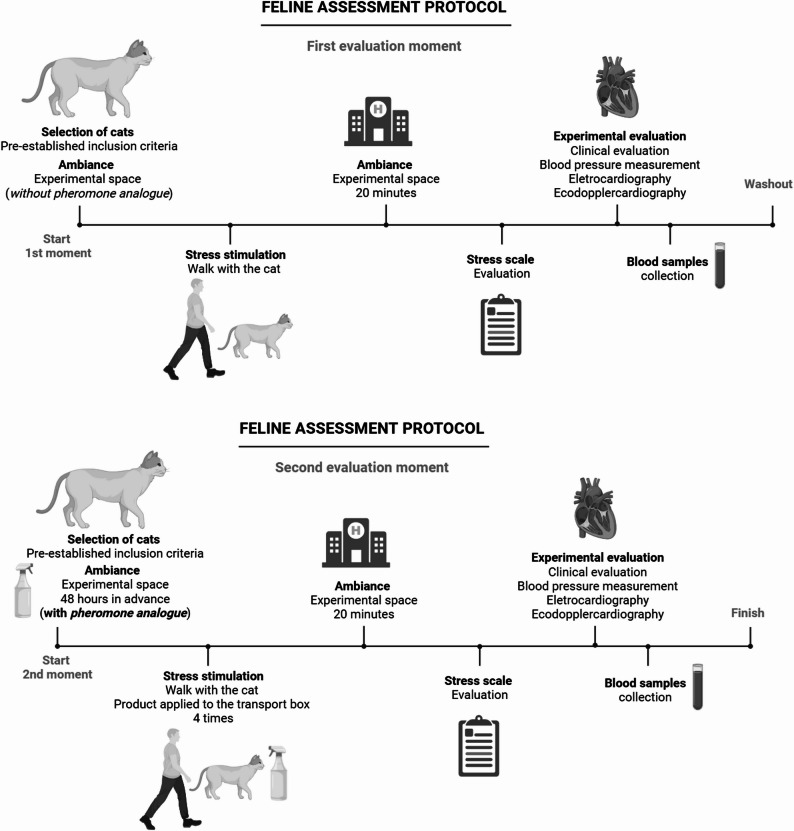
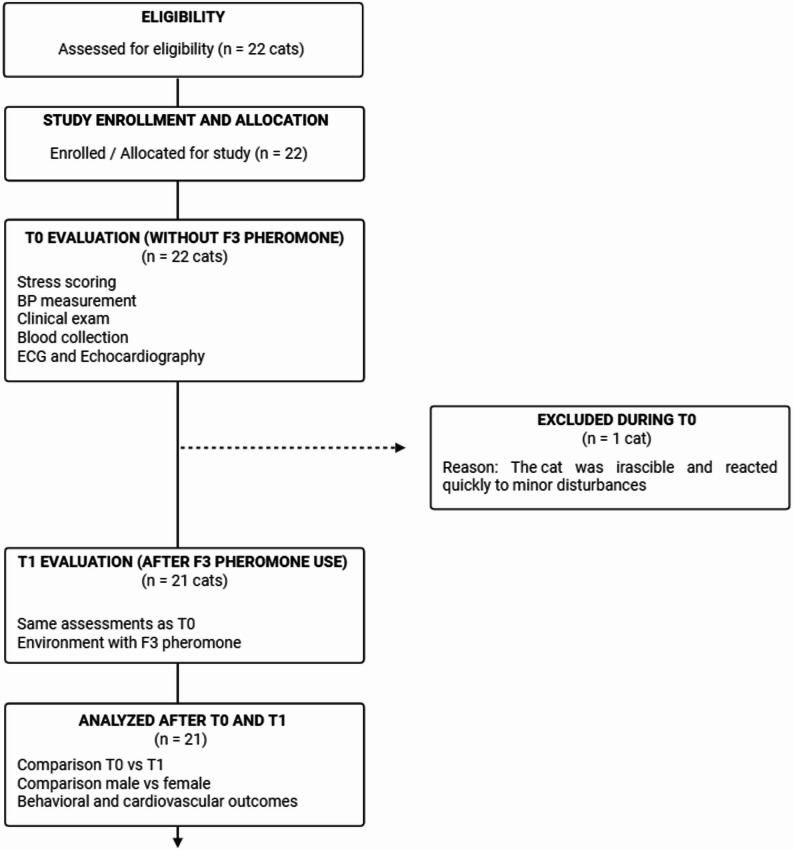
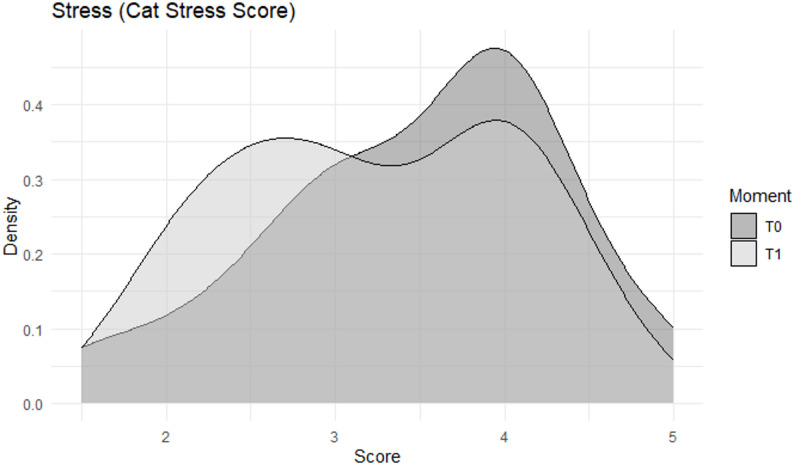
Background: Veterinary examinations in cats are essential for clinical assessment; however, stress often interferes with handling and data reliability. This study evaluated the cardiovascular and behavioral effects of a synthetic feline facial pheromone (F3) during cardiovascular examinations. A prospective repeated-measurements study was performed with 21 healthy mixed-breed cats over one year of age, non-aggressive and free of comorbidities. Each cat was assessed without pheromone exposure (T0) and after exposure (T1) using diffuser and spray formulations. Cats were transported in carriers and allowed a 20-minute acclimation period under controlled environmental conditions. Stress was assessed by two observers, followed by blood pressure measurement and cardiovascular evaluation. The second assessment occurred within 20 days, with the room prepared 48 h in advance with the pheromone analogue to minimize potential sequence or carry-over effects. Procedures were standardized and conducted by the same team. Statistical analyses compared time points and sexes and correlations between stress and cardiovascular variables with significance at p < 0.05. Results: All animals were clinically healthy, mean age of 5.73 ± 1.98 years, body weight of 5.41 ± 1.44 kg, and a majority being female. No significant differences were observed between temperature, heart rate (HR), respiratory rate, or arterial pressures ( p > 0.05). The mean stress score decreased by 0.24 units at T1 ( p < 0.05). Among electrocardiographic parameters, only maximum HR differed significantly between T0 and T1 ( p < 0.05); all other parameters showed no significant differences. Significant differences were observed for ejection fraction (EF%), fractional shortening (FS%), A-wave velocity, and mitral annular plane systolic excursion (MAPSE) ( p < 0.05). The number of animals with fused waves decreased and females showed a trend toward stress reduction, but without significance ( p > 0.05). The S-wave amplitude, left ventricular internal diameter in systole (LVIDs), and EF% decreased only in males ( p < 0.05). Both sexes showed differences in SF% and MAPSE ( p < 0.05). No significant associations were found between stress and cardiovascular variables ( p > 0.05). Conclusions: The synthetic analogue pheromone shows potential stress-related effects, may provide short-term cardiovascular benefits, no adverse effects, and may support cardiovascular assessments in healthy cats.
Overview
CoChat Summary
## TL;DR
In this prospective repeated-measures study of 21 healthy cats, exposure to synthetic feline facial pheromone analogue F3 (Feliway®) was associated with a small decrease in behavioral stress scores and a few minor changes in some cardiovascular measurements. The authors report no observable short-term adverse cardiovascular effects, but emphasize that the study is preliminary and underpowered.
## Key findings
- Among the 21 cats that completed both evaluations, the mean stress score decreased by 0.24 units at T1 compared with T0 (p < 0.05).
- The electrocardiogram-derived maximum heart rate decreased by 23.6 bpm at T1, a 9.02% reduction (261.9 bpm vs. 238.3 bpm; p < 0.05).
- In echocardiography, ejection fraction (EF%) and fractional shortening (FS%) decreased at T1 by about 6% and 7%, respectively (p < 0.05); MAPSE also decreased by 0.18 cm (p < 0.05).
- E/A wave fusion was seen in 47.6% of cats at T0 and 28.6% at T1, but this difference was not significant (p = 0.3428).
## Methods
- Design: Prospective repeated-measures before-after study with two time points: T0 without F3 and T1 after F3 exposure; the paper notes it followed a sequential before–after design, not a randomized crossover trial.
- Sample/data: 22 apparently healthy cats were enrolled between August and October 2023; 21 completed the study (11 females, 10 males), all neutered, aged 3–9 years, weighing 3.10–8.30 kg.
- Analysis: Cats underwent stress scoring, blood pressure measurement, ECG, echocardiography, and laboratory testing; paired tests were used for T0 vs T1 comparisons, with sex-stratified analyses, Cohen’s kappa for observer agreement, and Bonferroni correction for multiple comparisons.
## Limitations
- The paper states several limitations: no randomization, no placebo control, no observer blinding, and no comparison between diffuser and spray formulations.
- The authors note post hoc power was approximately 60% for detecting moderate effects, and some analyses had reduced sample sizes (for example, only 12 cats for laboratory analyses and 11 cats for some diastolic echocardiographic variables), raising risk of type II error.
- Evident from the text: the sequential T0→T1 design means habituation/learning effects and repeated exposure to the same setting could have influenced results; also, no physiological stress biomarkers (e.g., cortisol, HRV, lactate) were measured, so stress inference relies on behavior alone.
Model-written summary. Check it against the paper before relying on it.
Integrity signals
Registry
Cites
Statistics
Figures
Verification
Claims the paper makes
0 Valid · 0 Not valid · 10 Not checked · 90 Own results and interpretations
A result the paper reports from its own data — it cites no other source for it, so there is none to check. The quote shows it is in the paper.
In the paper
“No adverse effects were observed in this sample; however, the small cohort and lack of placebo control limit conclusions regarding cardiovascular safety and efficacy.”
plain- Asserted: passes — The authors put it forward as true.
- Checkable: passes — It can be checked against evidence.
- Load-bearing: passes — The paper’s conclusions depend on it.
- Based: passes — The paper gives a reason why it holds.
A result the paper reports from its own data — it cites no other source for it, so there is none to check. The quote shows it is in the paper.
In the paper
“No significant differences between males and females were found for IVSd, IVSs, LVFWd, LVFWs, LVIDd, Ao and LA diameters, LA/Ao ratio, pulmonary and aortic flow and gradients, mitral E/A flow ratio, lateral E′ wave, and IVRT ( p > 0.05).”
plain- Asserted: passes — The authors put it forward as true.
- Checkable: passes — It can be checked against evidence.
- Load-bearing: unclear — It is unclear whether the paper’s conclusions depend on it.
- Based: passes — The paper gives a reason why it holds.
A result the paper reports from its own data — it cites no other source for it, so there is none to check. The quote shows it is in the paper.
In the paper
“Although baseline comparisons between cats with and without fused waves did not reveal marked differences, the smaller sample size for these variables may have reduced statistical precision and increased the risk of type II error.”
plain- Asserted: passes — The authors put it forward as true.
- Checkable: passes — It can be checked against evidence.
- Load-bearing: unclear — It is unclear whether the paper’s conclusions depend on it.
- Based: passes — The paper gives a reason why it holds.
A result the paper reports from its own data — it cites no other source for it, so there is none to check. The quote shows it is in the paper.
In the paper
“SAP values obtained by both methods were compared, but no significant differences were found ( p > 0.05).”
plainn = 12- Asserted: passes — The authors put it forward as true.
- Checkable: passes — It can be checked against evidence.
- Load-bearing: unclear — It is unclear whether the paper’s conclusions depend on it.
- Based: passes — The paper gives a reason why it holds.
A result the paper reports from its own data — it cites no other source for it, so there is none to check. The quote shows it is in the paper.
In the paper
“However, when comparing sexes, no significant differences were observed between males and females ( p > 0.05).”
plain- Asserted: passes — The authors put it forward as true.
- Checkable: passes — It can be checked against evidence.
- Load-bearing: unclear — It is unclear whether the paper’s conclusions depend on it.
- Based: passes — The paper gives a reason why it holds.
30 more claims
Create a free account to see all 100 claims and to verify the 21 references still open.
- It may state two separate claims as one. 49
- Probably not a substantial claim. 30
- The quote only partly states this claim. 1
Self-check
Percentages, sums and reported differences re-computed from the paper’s own numbers.
Each contradiction between two passages listed here was confirmed by an independent check.
Rated minor: it would not touch a result — a value no result rests on, a p-value that stays on the same side of the significance level, or a conflict that is clerical, resolved elsewhere in the paper, or outside its own findings.
In the paper
“no significant HR differences were observed between T0 and T1 in this study.”
“Maximum HR by electrocardiogram decreased significantly at T1 compared to T0 by 23.6 bpm, corresponding to a 9.02% reduction (T0: 261.9 bpm vs. T1: 238.3 bpm; p < 0.05).”
Citations
Cites
Tamanho da amostra em estudos clínicos e experimentais
Miot, H. A. (2011) · Jornal Vascular Brasileiro · doi:10.1590/s1677-54492011000400001 · Cited by 360 · cited 1×
“A priori sample size calculation was performed according to Miot [20] using the formula n = (Zα/2 × δ / E)², where n is the number of animals, Zα/2 is the critical value for 95% confidence (1.96), δ is the standard deviation of the variable of interest, and E is the maximum allowable error.”
InfluentialKessler, M. R., & Turner, D. C. (1997) · Animal Welfare · doi:10.1017/s0962728600019837 · Cited by 230 · cited 1×
“Stress was assessed using the validated Cat Stress Score of Kessler & Turner, 1997 [22] at T0 and T1 by two trained observers.”
van Haaften, K. A., Forsythe, L. R. E., Stelow, E. A., & Bain, M. J. (2017) · Journal of the American Veterinary Medical Association · doi:10.2460/javma.251.10.1175 · Cited by 205 · cited 2×
“In addition to cat-friendly handling and restraint strategies based on CatFriendly practices [2, 5], and with the aim of using chemical/pharmacological restraint only as a last resort, substances that promote sensations of safety and comfort can be useful and cost-effective tools [7–12].”
Evaluation of a nine-point body condition scoring system in physically inactive pet cats
Bjornvad, C. R., Nielsen, D. H., Armstrong, P. J., McEvoy, F., Hoelmkjaer, K. M., Jensen, K. S., Pedersen, G. F., & Kristensen, A. T. (2011) · American Journal of Veterinary Research · doi:10.2460/ajvr.72.4.433 · Cited by 191 · cited 1×
“The variables analyzed included mucous membrane color, capillary refill time, heart (HR) and respiratory rates (RR) by auscultation, hydration status, body and muscle condition scores [23, 24], rectal temperature, lymph nodes, arterial pulse, and the corresponding physiological systems.”
ISFM Consensus Guidelines on the Diagnosis and Management of Hypertension in Cats
Taylor, S. S., Sparkes, A., Briscoe, K., Carter, J., Sala, S. C., Jepson, R. E., Reynolds, B., & Scansen, B. A. (2017) · Journal of Feline Medicine and Surgery · doi:10.1177/1098612x17693500 · Cited by 161 · cited 1×
“Reference values were based on the guidelines of the International Society of Feline Medicine Consensus [25].”
2022 AAFP/ISFM Cat Friendly Veterinary Interaction Guidelines: Approach and Handling Techniques
Rodan, I., Dowgray, N. J., Carney, H. C., Carozza, E. M., Ellis, S. L. H., Heath, S., Niel, L., Denis, K. S., & Taylor, S. S. (2022) · Journal of Feline Medicine and Surgery · doi:10.1177/1098612x221128760 · Cited by 148 · cited 4×
“Stress and fear during veterinary visits or examinations are major sources of discomfort for both cats and their owners [4, 5].”
InfluentialPankratz, K. E., Ferris, K. K., Griffith, E. H., & Sherman, B. L. (2018) · Journal of Feline Medicine and Surgery · doi:10.1177/1098612x17719399 · Cited by 117 · cited 1×
“Studies evaluating gabapentin and trazodone in cats report reduced stress and improved compliance during clinical procedures, which may support the interpretation that reductions in stress can influence cardiovascular parameters; however, their effects appear to be variable [7, 8, 10].”
Pereira, J. S., Fragoso, S., Beck, A., Lavigne, S., Varejão, A. S. P., & Pereira, G. G. (2016) · Journal of Feline Medicine and Surgery · doi:10.1177/1098612x15599420 · Cited by 110 · cited 2×
“Similar effects of stress reduction through the use of the synthetic feline facial pheromone – F3 have been reported by Pereira et al. [15], who described that cats exposed to the product exhibited lower stress scores and were more easily handled, suggesting its use in veterinary assessments, while…”
Periodontal disease in cats: Back to basics – with an eye on the future
Perry, R., & Tutt, C. L. C. (2014) · Journal of Feline Medicine and Surgery · doi:10.1177/1098612x14560099 · Cited by 108
Jacobs, G. J., & KNIGHT, D. H. (1985) · American Journal of Veterinary Research · doi:10.2460/ajvr.1985.46.08.1705 · Cited by 100
Strong associations of nine-point body condition scoring with survival and lifespan in cats
Teng, K. T., McGreevy, P. D., Toribio, J.-A. L. M. L., Raubenheimer, D., Kendall, K., & Dhand, N. K. (2018) · Journal of Feline Medicine and Surgery · doi:10.1177/1098612x17752198 · Cited by 91 · cited 1×
“The variables analyzed included mucous membrane color, capillary refill time, heart (HR) and respiratory rates (RR) by auscultation, hydration status, body and muscle condition scores [23, 24], rectal temperature, lymph nodes, arterial pulse, and the corresponding physiological systems.”
DePorter, T. L., Bledsoe, D. L., Beck, A., & Ollivier, E. (2018) · Journal of Feline Medicine and Surgery · doi:10.1177/1098612x18774437 · Cited by 64 · cited 1×
“Other studies have reported various additional benefits, including control of scratching behavior, assistance during transport, reduction of urine marking, mitigation of inter-cat aggression, and improved coexistence with other species [13, 17, 32–34].”
Perception of stress in cats by German cat owners and influencing factors regarding veterinary care
Karn-Buehler, J., & Kühne, F. (2021) · Journal of Feline Medicine and Surgery · doi:10.1177/1098612x211041307 · Cited by 50 · cited 3×
“Major obstacles include patient restraint, correct positioning, long examination times, stress in the animal or owner, and previous negative experiences [1–4].”
Lamminen, T., Korpivaara, M., Aspegrén, J., Palestrini, C., & Overall, K. L. (2023) · Animals · doi:10.3390/ani13030371 · Cited by 50
Periodontal disease in cats under primary veterinary care in the UK: frequency and risk factors
O'Neill, D. G., Blenkarn, A., Brodbelt, D. C., Church, D. B., & Freeman, A. (2023) · Journal of Feline Medicine and Surgery · doi:10.1177/1098612x231158154 · Cited by 46 · cited 1×
“Notably, 76.2% of the cats exhibited dental tartar and mild periodontal changes (e.g., gingival erythema), with no significant sex differences, which may be associated with factors such as diets and inadequate oral hygiene [28–30].”
InfluentialHappy cats: stress in cats and their carers associated with outpatient visits to the clinic
Caney, S., Robinson, N. J., Gunn-Moore, D. A., & Dean, R. S. (2022) · Journal of Feline Medicine and Surgery · doi:10.1177/1098612x221121907 · Cited by 45 · cited 3×
“In addition to cat-friendly handling and restraint strategies based on CatFriendly practices [2, 5], and with the aim of using chemical/pharmacological restraint only as a last resort, substances that promote sensations of safety and comfort can be useful and cost-effective tools [7–12].”
Dealing With Stress in Cats: What Is New About the Olfactory Strategy?
Zhang, L., Bian, Z., Liu, Q., & Deng, B. (2022) · Frontiers in Veterinary Science · doi:10.3389/fvets.2022.928943 · Cited by 41 · cited 1×
“These pheromones are associated with well-being and facilitate adaptation to people, other animals, and objects in the environment [14].”
Johard, E., Tidholm, A., Ljungvall, I., Häggström, J. U., & Höglund, K. (2017) · Journal of Feline Medicine and Surgery · doi:10.1177/1098612x17720327 · Cited by 37 · cited 2×
“Reduction in FS% following the use of sedative drugs has been reported with lower values observed post-sedation [36, 37].”
Wang, Y.-H., Sun, L., Li, S., et al. (2023) · European Heart Journal - Cardiovascular Imaging · doi:10.1093/ehjci/jead187 · Cited by 26 · cited 1×
“While previous research has shown that HR can influence MAPSE values [41], no significant HR differences were observed between T0 and T1 in this study.”
Shu, H., & Gu, X. (2021) · Journal of Feline Medicine and Surgery · doi:10.1177/1098612x211041305 · Cited by 24 · cited 1×
“Other studies have reported various additional benefits, including control of scratching behavior, assistance during transport, reduction of urine marking, mitigation of inter-cat aggression, and improved coexistence with other species [13, 17, 32–34].”
Veronezi, T. M., Lopes, D. J., Zardo, I. L., Ferronatto, J. V. B., Trojan, M. M., Franck, K. R., de Azevedo, A. F., Spiering, A. G., Nunes, L. N., Fadel, L., et al. (2022) · Journal of Feline Medicine and Surgery · doi:10.1177/1098612x221131270 · Cited by 24 · cited 6×
“It generally occurs under high HR conditions and can sometimes be managed, for example, with gabapentin [10].”
InfluentialCirin, L., Crișan, S., Luca, C. T., et al. (2024) · Journal of Clinical Medicine · doi:10.3390/jcm13175265 · Cited by 24 · cited 1×
“MAPSE is an important marker of systolic function, reflecting mitral annular displacement [40].”
Cats vs. Dogs: The Efficacy of Feliway FriendsTM and AdaptilTM Products in Multispecies Homes
Prior, M. R., & Mills, D. S. (2020) · Frontiers in Veterinary Science · doi:10.3389/fvets.2020.00399 · Cited by 21
Effects of oral trazodone on echocardiographic and hemodynamic variables in healthy cats
Fries, R., Kadotani, S., Vitt, J., & Schaeffer, D. (2018) · Journal of feline medicine and surgery · doi:10.1177/1098612x18814565 · Cited by 19 · cited 1×
“Based on LVIDd (left ventricular end-diastolic dimension) reported by Fries et al. [21] as 15.3 ± 1.1 and considering a maximum error of 3% of the mean, the required sample size was calculated and rounded to 22 cats.”
InfluentialEffects of Waiting Room and Feline Facial Pheromone Experience on Blood Pressure in Cats
Vertloo, L. R. V., Carnevale, J. M., Parsons, R. L., Rosburg, M., & Millman, S. T. (2021) · Frontiers in Veterinary Science · doi:10.3389/fvets.2021.640751 · Cited by 18 · cited 1×
“However, some studies found no effect on blood pressure measured at the tail [16] or limited behavioral effects in veterinary settings, often due to small sample sizes [19].”
The Choice of Diet Affects the Oral Health of the Domestic Cat
Mata, F. (2015) · Animals · doi:10.3390/ani5010101 · Cited by 17
Pereira, J. S., Demirbaş, Y. S., Meppiel, L., Endersby, S., Pereira, G. G., & Jaeger, X. D. (2023) · PLoS ONE · doi:10.1371/journal.pone.0292188 · Cited by 17 · cited 3×
“Analogues of feline facial pheromones, such as F3, derived from feline facial secretions [13], can help cats remain calm and secure during outings and visits to unfamiliar environments.”
Sugimoto, K., Fujii, Y., Ogura, Y., Sunahara, H., & Aoki, T. (2016) · Journal of Feline Medicine and Surgery · doi:10.1177/1098612x16661374 · Cited by 16 · cited 2×
“A study demonstrated that increases in HR can induce temporary elevations in FS%, which are directly proportional when a positive correlation is present [35].”
Tools for the Approach of Fear, Anxiety, and Stress in the Domestic Feline: An Update
Barrios, F., Ruiz, P., & Damián, J. P. (2025) · Veterinary Medicine International · doi:10.1155/vmi/9109397 · Cited by 13 · cited 1×
“Major obstacles include patient restraint, correct positioning, long examination times, stress in the animal or owner, and previous negative experiences [1–4].”
Quimby, J. M., Jones, S. E., Saffire, A., et al. (2024) · Journal of Feline Medicine and Surgery · doi:10.1177/1098612x241240326 · Cited by 11 · cited 1×
“While echocardiographic changes are generally minimal, some effects such as reduced arterial blood pressure or improved diastolic assessment may occur depending on the parameter evaluated [3, 10].”
Castro, M. L., Câmara, B. M. C., Barreto, M. S. O., Wenceslau, R. R., Silva, A. K. E., Fagundes, N., Silva, R. A., Pimenta, E. L. M., & Beier, S. L. (2022) · Anesthesiology Research and Practice · doi:10.1155/2022/9613721 · Cited by 9 · cited 1×
“Some studies have not demonstrated changes in EF% following the administration of gabapentin [10] or tra-zodone [36], although cardiovascular effects have been described with certain anesthetic combinations [38].”
Self-citationThe prevalence of reasons for tooth extraction in cats
Kim, C., Kwon, D., Lee, K., Kim, S. E., & Jo, H. M. (2025) · Frontiers in Veterinary Science · doi:10.3389/fvets.2025.1626701 · Cited by 5 · cited 1×
“These conditions predispose to bacterial plaque accumulation and gingival inflammation, and in some cases may ultimately lead to tooth extraction [31].”
Miranda-Cortés, A. E., Prado-Ochoa, M. G., Díaz‐Torres, R., Pérez-Sánchez, A. P., Río-García, J. C. D., Mota‐Rojas, D., & Hernández-Ávalos, I. (2025) · Animals · doi:10.3390/ani15162346 · Cited by 5 · cited 1×
“In addition to cat-friendly handling and restraint strategies based on CatFriendly practices [2, 5], and with the aim of using chemical/pharmacological restraint only as a last resort, substances that promote sensations of safety and comfort can be useful and cost-effective tools [7–12].”
Endersby, S., Billy, C., & Jaeger, X. D. (2024) · Frontiers in Veterinary Science · doi:10.3389/fvets.2024.1468634 · Cited by 2 · cited 1×
“Other studies have reported various additional benefits, including control of scratching behavior, assistance during transport, reduction of urine marking, mitigation of inter-cat aggression, and improved coexistence with other species [13, 17, 32–34].”
Effect of oral administration of trazodone on physiological and echocardiographic variables in cats
Wu, Y., Tian, J., Liu, Z., Luo, L., Yang, Z. Z., & Li, M. (2025) · Journal of Feline Medicine and Surgery · doi:10.1177/1098612x251314355 · Cited by 2 · cited 3×
“Reduction in FS% following the use of sedative drugs has been reported with lower values observed post-sedation [36, 37].”
Home blood pressure measurement in companion animals: underestimated or unknown?
de Sousa, F. G., Queiroz, F. S. F., & Beier, S. L. (2025) · Veterinary Research Communications · doi:10.1007/s11259-025-10812-x · Cited by 2 · cited 2×
“Transportation, handling, physical restraint, and exposure to an unfamiliar environment may induce sympathetic activation and transient stress-related tachycardia in this species [6, 9].”
Self-citationLuana, O. B., Mônica, L. M., Natascha, A. M. D. S., Leandro, Z. C., Gouvêa, F. N., Caio, S. P., Hévila, D. B. D. C., Paula, B. C., Natani, S. R., & Sofia, B.-C. (2025) · Journal of Applied Animal Welfare Science · doi:10.1080/10888705.2025.2539158 · Cited by 1
Research works printed but not linked: 3
- Erickson A, Harbin K, Macpherson J, Rundle K, Overall KL. A review of pre-appointment medications to reduce fear and anxiety in dogs and cats at veterinary visits. Can Vet J. 2021;62:952–60.
- Torres-Bernal F, Martínez-Burnes J, Hernández-Avalos I, Olmos-Hernández A, Domínguez-Oiiva A, Reyes-Sotelo B, et al. Infrared Thermography and Physiological Variables as Methods for Recognizing Fear in Domestic Cats (Felis catus) Using Three Pharmacological Models: Cannabidiol, Gabapentin, and Synthetic Facial Pheromones. Vet Sci. 2025;12:523. https://doi.org/10.3390/vetsci. · doi:10.3390/vetsci
- Santilli R, Moise NS, Pariaut R, Perego M. Eletrocardiografia de Cães e Gatos: Diagnóstico de Arritmias, 2nd edition. São Paulo: Edra; 20:376
Metadata
- Authors
- de Sousa, F. G., Ferreira, N. S., de Oliveira, C. F., dos Reis, S. A., Canta, G. N., Queiroz, F. S. F., do Carmo Teixeira, R., de Oliveira, C. S. F., Mattoso, C. R. S., & Beier, S. L.
- Affiliations
- Universidade Federal de Minas Gerais (BR)
- Venue
- BMC Veterinary Research
- Published
- 2026-05-26
- Volume
- 22
- Issue
- 1
- ISSN
- 1746-6148 (ISSN-L)
- PMC
- PMC13471606
- OpenAlex
- W7162298598
- Cited by
- 0
- References
- 37
- FWCI
- 0.00
- Type
- journal article
- Language
- en
- Open access
- gold
- doi.org
- Licence
- cc-by
- creativecommons.org/licenses/by/4.0 (tdm)
- creativecommons.org/licenses/by/4.0 (vor, 79 d)
- Locations
- BMC Veterinary Research (publishedVersion, cc-by)
- PubMed (publishedVersion)
- PubMed Central (publishedVersion, cc-by)
- DOAJ (DOAJ: Directory of Open Access Journals) (submittedVersion)
- Funders
- Coordenação de Aperfeiçoamento de Pessoal de Nível Superior
- Fundação de Amparo à Pesquisa do Estado de Minas Gerais
- Topics
- Life Sciences › Agricultural and Biological Sciences › Animal Science and Zoology › Animal Behavior and Welfare Studies
- Health Sciences › Veterinary › Small Animals › Veterinary Pharmacology and Anesthesia
- Health Sciences › Veterinary › Small Animals › Veterinary Medicine and Surgery
- Keywords
- veterinary clinical examination, cardiovascular parameters, heart rate, blood pressure, electrocardiogram, ejection fraction, fractional shortening, mitral annular plane systolic excursion, sex differences, stress reduction, cats, animal welfare
- MeSH terms
- Animals, Blood Pressure, Cats, Female, Heart Rate, Male, Pheromones, Prospective Studies, Stress, Physiological, Cross-Over Studies
About these checks
Registry, retraction, Cites and statistics results are computed, not judged, with one exception: a printed reference that no index lists is read once by a model before it counts as a citation error. Claims are extracted by a model and kept only when their quote appears verbatim in the text; each cited source is then checked, with a model’s help, for whether it says what the claim relies on. Those verdicts can be wrong — read the claim’s quote and the cited source before relying on one.
A language model drew the claims from the paper on 2026-10-11, under version 3 of the claim definition (model deepseek-v4.1-flash, prompt extract-v3).
A second model labelled each claim on 2026-10-11 (model jev-1.13-20260917, definition revision gold-guideline-v0.2).
Statistics and arithmetic are recomputed, not judged.
Confidence bands are shown only for fields calibrated on our annotated test set. None is calibrated yet, so no band is shown.
What counts as a claim ›How we measure confidence ›How we check this ›
Are you an author, or do you see a problem with this page? Request a review
Data sources
Bibliographic data: Semantic Scholar, OpenAlex, Crossref.
Contains information from the Semantic Scholar Academic Graph Datasets, made available under the ODC Attribution License (ODC-BY 1.0).
Semantic Scholar’s data is described in: Kinney, R., et al. (2023). The Semantic Scholar Open Data Platform. arXiv:2301.10140.
