

Characterization of genetic and phenotypic heterogeneity of obstructive sleep apnea using electronic health records
Open accessPublished version of a preprint
The DOI matches its Crossref record; 104 of the 104 references it cites were found in a registry or an index.
Abstract
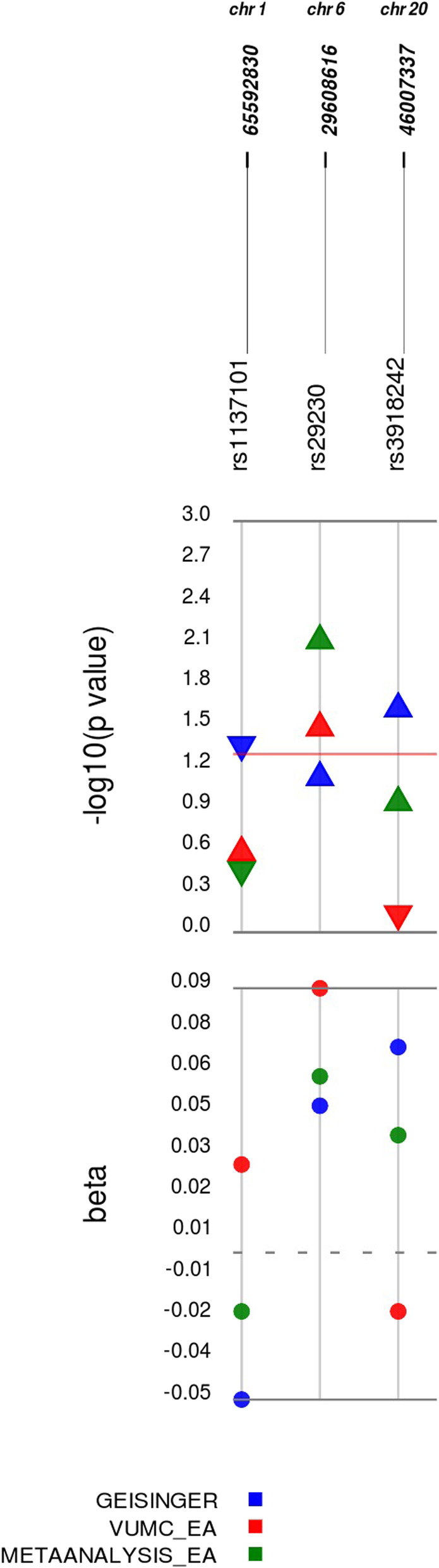
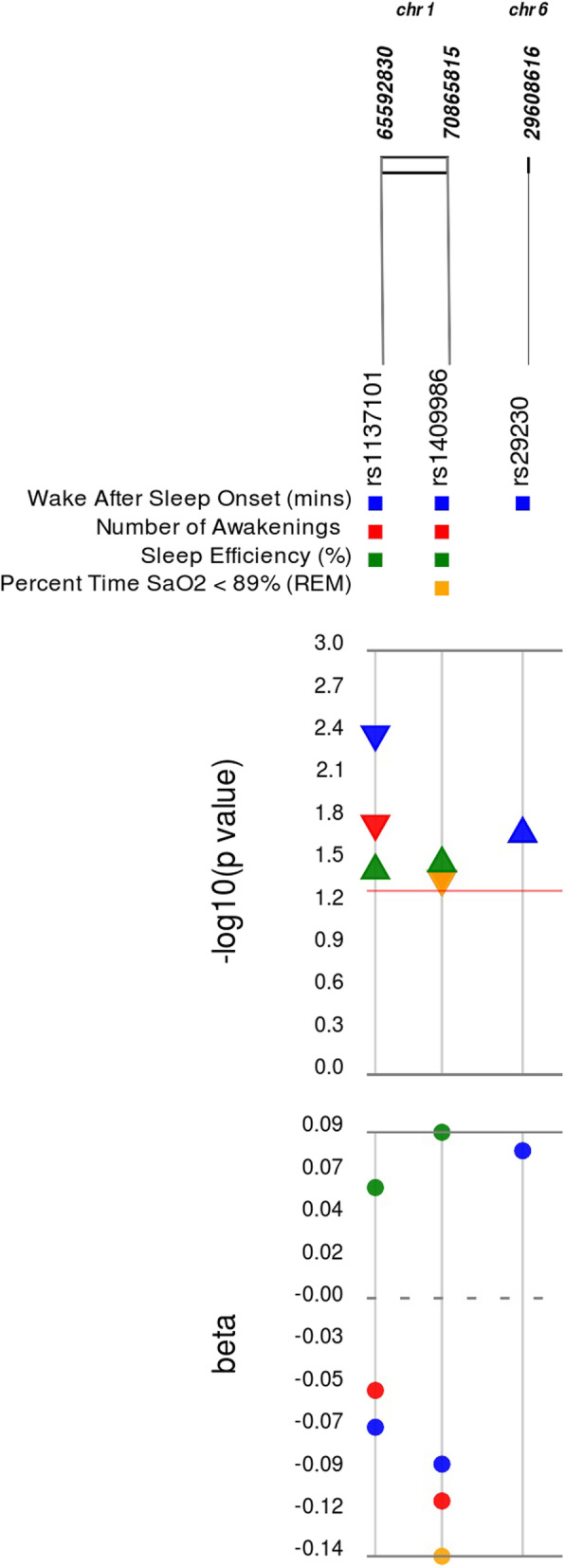
Background: Obstructive sleep apnea (OSA) is defined by frequent episodes of reduced or complete cessation of airflow during sleep and is linked to negative health outcomes. Understanding the genetic factors influencing expression of OSA may lead to new treatment strategies. Electronic health records (EHRs) can be leveraged to both validate previously reported OSA-associated genomic variation and detect novel relationships between these variants and comorbidities. Methods: We identified candidate single nucleotide polymorphisms (SNPs) via systematic literature review of existing research. Using datasets available at Geisinger ( n = 39,407) and Vanderbilt University Medical Center ( n = 24,084), we evaluated associations between 40 previously implicated SNPs and OSA diagnosis, defined using clinical codes. We also evaluated associations between these SNPs and OSA severity measures obtained from sleep reports at Geisinger ( n = 6571). Finally, we used a phenome-wide association study approach to help reveal pleiotropic genetic effects between OSA candidate SNPs and other clinical codes and laboratory values available in the EHR. Results: Most previously reported OSA candidate SNPs showed minimal to no evidence for associations with OSA diagnosis or severity in the EHR-derived datasets. Three SNPs in LEPR , MMP-9 , and GABBR1 validated for an association with OSA diagnosis in European Americans; the SNP in GABBR1 was associated following meta-analysis of results from both clinical populations. The GABBR1 and LEPR SNPs, and one additional SNP, were associated with OSA severity measures in European Americans from Geisinger. Three additional candidate OSA SNPs were not associated with OSA-related traits but instead with hyperlipidemia and autoimmune diseases of the thyroid. Conclusions: To our knowledge, this is one of the largest candidate gene studies and one of the first phenome-wide association studies of OSA genomic variation. Results validate genetic associates with OSA in the LEPR, MMP-9 and GABBR1 genes, but suggest that the majority of previously identified genetic associations with OSA may be false positives. Phenome-wide analyses provide evidence of mediated pleiotropy. Future well-powered genome-wide association analyses of OSA risk and severity across populations with diverse ancestral backgrounds are needed. The comprehensive nature of the analyses represents a platform for informing future work focused on understanding how genetic data can be useful to informing treatment of OSA and related comorbidities.
Overview
The claims and statistics of this paper haven’t been checked yet.
Free: it reads the open-access text and checks the first 5 claims that cite a source we can check. Create a free account to check every claim.
Integrity signals
Registry
Cites
Statistics
Figures
Verification
Claims the paper makes
The claims and statistics of this paper haven’t been checked yet.
Free: it reads the open-access text and checks the first 5 claims that cite a source we can check. Create a free account to check every claim.
Claims other papers make about this one
Each is checked against this paper’s own text: does it say what the citing paper says it does?
The source backs part of the claim, not all of it — or backs it for a different population, condition or comparison.
In the citing paper
“For most of the previously described gene variants, there was no evidence of association with OSA diagnosis or with quantitative traits from the sleep study with findings from community-based cohorts which underwent standardized sleep apnea phenotyping.”
From International Consensus Statement on Obstructive Sleep Apnea (2023) · cites this paper as [272]
Experimental — accuracy not yet measured
Self-check
Percentages, sums and reported differences re-computed from the paper’s own numbers.
The self-check needs the paper’s full text.
Citations
Cites
A global reference for human genetic variation
The 1000 Genomes Project Consortium, authors, C., Auton, A., Abecasis, G. R., Steering committee, Altshuler, D. M., Durbin, R. M., Abecasis, G. R., Bentley, D. R., Chakravarti, A., et al. (2015) · Nature · doi:10.1038/nature15393 · Cited by 18,247
A New Method for Measuring Daytime Sleepiness: The Epworth Sleepiness Scale
Johns, M. W. (1991) · Sleep · doi:10.1093/sleep/14.6.540 · Cited by 17,364
METAL: fast and efficient meta-analysis of genomewide association scans
Willer, C. J., Li, Y., & Abecasis, G. R. (2010) · Bioinformatics · doi:10.1093/bioinformatics/btq340 · Cited by 5,205
Marin, J. M., Carrizo, S. J., Vicente, E., & Agusti, A. G. (2005) · The Lancet · doi:10.1016/s0140-6736(05)71141-7 · Cited by 4,678
Increased Prevalence of Sleep-Disordered Breathing in Adults
Peppard, P. E., Young, T., Barnet, J. H., Palta, M., Hagen, E. W., & Hla, K. M. (2013) · American Journal of Epidemiology · doi:10.1093/aje/kws342 · Cited by 4,618
Benjafield, A. V., Ayas, N. T., Eastwood, P. R., Heinzer, R., Ip, M. S. M., Morrell, M. J., Nunez, C. M., Patel, S. R., Penzel, T., Pépin, J.-L., et al. (2019) · The Lancet Respiratory Medicine · doi:10.1016/s2213-2600(19)30198-5 · Cited by 4,326 · cited 1×
“episodes of reduced (hypopnea) or complete (apnea) cessation of airflow that occur due to upper airway obstruction during sleep, and is among the most common sleep disorders in the world [1].”
BackgroundSleep-disordered Breathing and Cardiovascular Disease
SHAHAR, E., WHITNEY, C. W., REDLINE, S., LEE, E. T., NEWMAN, A. B., JAVIER NIETO, F., O'CONNOR, G. T., BOLAND, L. L., SCHWARTZ, J. E., & SAMET, J. M. (2001) · American Journal of Respiratory and Critical Care Medicine · doi:10.1164/ajrccm.163.1.2001008 · Cited by 2,901
A reference panel of 64,976 haplotypes for genotype imputation
the Haplotype Reference Consortium (2016) · Nature Genetics · doi:10.1038/ng.3643 · Cited by 2,836
The epidemiology of adult obstructive sleep apnea
Punjabi, N. M. (2008) · Proceedings of the American Thoracic Society · doi:10.1513/pats.200709-155mg · Cited by 2,361
Gottlieb, D. J., Yenokyan, G., Newman, A. B., O'Connor, G. T., Punjabi, N. M., Quan, S. F., Redline, S., Resnick, H. E., Tong, E. K., Diener-West, M., et al. (2010) · Circulation · doi:10.1161/circulationaha.109.901801 · Cited by 1,551
Research works printed but not linked: 1
- 43. Silva L, Lopes J, Ramalheira J, Cunha D, Carvalho C, Bettencourt A, et al. Obstructive sleep apnoea syndrome and HLA in the north of Portugal. Rev Neurol. 2015;61(7):301-7 EPUB 2015/09/29.
Cited by
International Consensus Statement on Obstructive Sleep Apnea
Chang, J. L., Goldberg, A. N., Alt, J. A., Mohammed, A., Ashbrook, L., Auckley, D., Ayappa, I., Bakhtiar, H., Barrera, J. E., Bartley, B. L., et al. (2023) · International Forum of Allergy & Rhinology · doi:10.1002/alr.23079 · Cited by 350
Self-citationUsing Phecodes for Research with the Electronic Health Record: From PheWAS to PheRS
Bastarache, L. (2021) · Annual Review of Biomedical Data Science · doi:10.1146/annurev-biodatasci-122320-112352 · Cited by 213
Strausz, S., Ruotsalainen, S., Ollila, H. M., Karjalainen, J., Kiiskinen, T., Reeve, M., Kurki, M., Mars, N., Havulinna, A. S., Luonsi, E., et al. (2021) · European Respiratory Journal · doi:10.1183/13993003.03091-2020 · Cited by 194
Xu, H., Liu, F., Li, Z., Li, X., Liu, Y., Li, N., Zhang, X., Gao, Z., Zhang, X., Liu, Y., et al. (2022) · American Journal of Respiratory and Critical Care Medicine · doi:10.1164/rccm.202109-2044oc · Cited by 55
Sofer, T., Kurniansyah, N., Murray, M., Ho, Y.-L. A., Abner, E., Esko, T., Metspalu, A., Milani, L. A., Esko, T., Mägi, R., et al. (2023) · EBioMedicine · doi:10.1016/j.ebiom.2023.104536 · Cited by 54
Zhang, Y., Elgart, M., Kurniansyah, N., Spitzer, B., Wang, H., Kim, D., Shah, N. A., Daviglus, M. L., Zee, P. C., Cai, J., et al. (2022) · EBioMedicine · doi:10.1016/j.ebiom.2022.104288 · Cited by 38
Mazzotti, D. R., Haendel, M. A., McMurry, J. A., Smith, C. J., Buysse, D. J., Roenneberg, T., Penzel, T., Purcell, S., Redline, S. S., Zhang, Y., et al. (2022) · SLEEP · doi:10.1093/sleep/zsac002 · Cited by 28
Self-citationQin, H., Fietze, I., Mazzotti, D. R., Steenbergen, N., Kraemer, J. F., Glos, M., Wessel, N., Song, L.-J., Penzel, T., & Zhang, X. (2023) · Journal of Sleep Research · doi:10.1111/jsr.14020 · Cited by 17
Self-citationVrankova, Z. M., Křivánek, J., Daněk, Z., Zelinka, J., Brýšová, A., Hollá, L. I., Hartsfield, J. K., & Linhartová, P. B. (2023) · Frontiers in Pediatrics · doi:10.3389/fped.2023.1117493 · Cited by 11
Meng, L., Gui, J., Han, Z., Yang, X., Wang, L., Xie, L., & Jiang, L. (2025) · International Journal of Biological Macromolecules · doi:10.1016/j.ijbiomac.2025.139841 · Cited by 9
Golshah, A., Imani, M. M., Sadeghi, M., Chalkhooshg, M. K., Brühl, A. B., Bahmani, L. S., & Brand, S. (2023) · Life · doi:10.3390/life13010149 · Cited by 8
Adami, L. N. G., Moysés‐Oliveira, M., Souza-Cunha, L. A., Vasco, M. B., Tufik, S. B., & Andersen, M. L. (2023) · International Journal of Impotence Research · doi:10.1038/s41443-023-00795-1 · Cited by 6
Vladlenov, D., Тащук, В. К., Amelina, T. M., Іванчук, П. Р., Al, S. M. V. O., Hinhuliak, O., Бортний, М., Serhiyenko, V. A., Сегін, В., Гоцко, М., et al. (2024) · Іnternational Science Group eBooks · doi:10.46299/isg.2024.mono.med.2 · Cited by 5
Kuhn, J., Schiphorst, L., Wulterkens, B. M., Asin, J., Duis, N., Overeem, S., van Gilst, M. M., & Fonseca, P. M. (2024) · Clocks & Sleep · doi:10.3390/clockssleep6040050 · Cited by 5
Baizer, L., Bures, R. M., Nadkarni, G. N., Reyes-Guzman, C. M., Ladwa, S. A., Cade, B. E., Westover, M. B., Durmer, J. S., de Zambotti, M., Desai, M., et al. (2025) · SLEEP · doi:10.1093/sleep/zsaf035 · Cited by 5
Self-citationOvercoming the underdiagnosis of obstructive sleep apnea to empower genetic association analyses
Sofer, T. (2022) · SLEEP · doi:10.1093/sleep/zsac312 · Cited by 5
ERS International Congress 2022: highlights from the Sleep Disordered Breathing Assembly
Bradicich, M., Siciliano, M., Schiavi, E., Amante, E., Cantero, C., Elbehairy, A. F., Portacci, A., Fanaridis, M., Testelmans, D., Randerath, W. J., et al. (2023) · ERJ Open Research · doi:10.1183/23120541.00582-2022 · Cited by 5
Mohit, M., Sharma, I., Sharma, V., Kumar, S., Rastogi, G., Dutt, P., Shrivastava, A., Rai, N., & Chand, P. (2022) · PubMed Central · Cited by 5
Li, S., Tian, X., Song, J., Wu, C., Wang, W., & Tang, Z. (2025) · Journal of Oral Rehabilitation · doi:10.1111/joor.14013 · Cited by 4
Rethinking CPAP adherence with artificial intelligence
Hanif, U., Vitrac, J., de Oliveira, P. M. R., Jennum, P., Gozal, D., Mignot, E. J.-M., & Elbaz, M. (2026) · SLEEP · doi:10.1093/sleep/zsag097 · Cited by 4
Obstructive Sleep Apnea Syndrome
National Cancer Institute (2020) · Definitions · doi:10.32388/w41ikg · Cited by 4
Protection and Prevention Approaches in Occupational Health and Safety
Gül, H. (2024) · IntechOpen eBooks · doi:10.5772/intechopen.111124 · Cited by 3
Tao, Y., Qin, Y., Chen, S., Xu, T., Lin, J., Su, D., Yu, W., & Chen, X. (2023) · Frontiers in Neurology · doi:10.3389/fneur.2023.1264177 · Cited by 3
Metabolic syndrome, dyssomnia, and melatonin
Сергієнко, В. О., Sehin, V. B., Hotsko, M. E., Serhiyenko, L. M., & Serhiyenko, O. (2024) · INTERNATIONAL JOURNAL OF ENDOCRINOLOGY (Ukraine) · doi:10.22141/2224-0721.20.2.2024.1375 · Cited by 3
Genetics of obstructive sleep apnea
Wang, H., & Redline, S. S. (2021) · Elsevier eBooks · doi:10.1016/b978-0-12-822963-7.00202-4 · Cited by 3
Yakovlev, A. V., Chernyshev, R. S., Sakhonchik, K. S., Шилов, С. Н., Grakova, E. V., Kopeva, K. V., Teplyakov, A. T., Андреевич, Е. И., Kessler, M. S., Yakovleva, N. F., et al. (2022) · CARDIOVASCULAR THERAPY AND PREVENTION · doi:10.15829/1728-8800-2022-3276 · Cited by 2
Occupational Sleep Medicine: The Sleep-Related Breathing Disorders in High-Risk Occupations
Popević, M. B. (2024) · IntechOpen eBooks · doi:10.5772/intechopen.1007579 · Cited by 2
Johnson, K. G., Johnson, D. C., & Derose, S. F. (2021) · Journal of Clinical Sleep Medicine · doi:10.5664/jcsm.9850 · Cited by 2
Update on the genetic basis of obstructive sleep apnoea – hype or hope?
Riha, R. L. (2023) · Current Opinion in Pulmonary Medicine · doi:10.1097/mcp.0000000000001011 · Cited by 1
Evolving Approaches to Identifying Genetic Risk Variants for Sleep Disorders
Pack, A. I. (2022) · Translational medicine research · doi:10.1007/978-94-024-2168-2_1
Self-citationApproaches to Studying Human Genetics
Veatch, O. J. (2024) · Springer eBooks · doi:10.1007/978-3-031-62723-1_8
Self-citationEl registro de CO2 transcutáneo contribuye a la subclasificación del síndrome de apneas del sueño.
Ksiazenicki, M., Musetti, A., Artola, F., Escuder, F., Chiappella, L., González, G., Arcos, J. P., Marina, G. S., Morales, L., & Frattini, R. (2025) · Anales de la Facultad de Medicina · doi:10.25184/anfamed2025v12n2a6
Oliveira, L. J. R., Guimarães, M. D. L. R., Marco, L. A. D., Guimarães, N. S., & Bastos‐Rodrigues, L. (2026) · Sleep Science · doi:10.1055/s-0046-1825528
Metadata
- Authors
- Veatch, O. J., Bauer, C. R., Keenan, B. T., Josyula, N. S., Mazzotti, D. R., Bagai, K., Malow, B. A., Robishaw, J. D., Pack, A. I., & Pendergrass, S. A.
- Affiliations
- University of Kansas Medical Center (US)
- CRIAL - Centre de Recherche Interuniversitaire sur l'Amérique Latine (FR)
- University of Pennsylvania (US)
- Vanderbilt University Medical Center (US)
- Florida Atlantic University (US)
- Corresponding author
- Veatch, Olivia J.
- Pendergrass, Sarah A.
- ORCID
- Venue
- BMC Medical Genomics
- Published
- 2020-07-25
- Volume
- 13
- Issue
- 1
- Pages
- 105-105
- ISSN
- 1755-8794 (ISSN-L)
- PMC
- PMC7382070
- OpenAlex
- W3044089391
- Semantic Scholar
- 6b69bfb21933adcf428458a0ac87615d61c31009
- Cited by
- 29
- References
- 104
- Citations by year
- 2026: 2 · 2025: 3 · 2024: 4 · 2023: 8 · 2022: 8 · 2021: 3 · 2020: 1
- FWCI
- 3.01
- Type
- journal article
- Language
- en
- Open access
- gold
- doi.org
- Licence
- cc-by
- creativecommons.org/licenses/by/4.0 (tdm)
- creativecommons.org/licenses/by/4.0 (vor)
- Locations
- BMC Medical Genomics (publishedVersion, cc-by)
- bioRxiv (Cold Spring Harbor Laboratory) (acceptedVersion)
- PubMed Central (publishedVersion, cc-by)
- PubMed (publishedVersion)
- DOAJ (DOAJ: Directory of Open Access Journals) (submittedVersion, cc-by-sa)
- Funders
- National Heart, Lung, and Blood Institute (R01HL134015, P01HL094307)
- U.S. National Library of Medicine (K01LM012870)
- American Academy of Sleep Medicine (194-SR-18)
- U.S. Department of Health and Human Services (4100070267)
- Topics
- Health Sciences › Medicine › Physiology (medical) › Obstructive Sleep Apnea Research
- Life Sciences › Biochemistry, Genetics and Molecular Biology › Genetics › Genetic Associations and Epidemiology
- Social Sciences › Psychology › Experimental and Cognitive Psychology › Sleep and related disorders
- Keywords
- obstructive sleep apnea, genetic susceptibility, single nucleotide polymorphisms, OSA severity, phenome-wide association study, pleiotropy, leptin receptor, MMP-9, GABBR1, hyperlipidemia, autoimmune thyroid disease, candidate gene validation, electronic health records
- MeSH terms
- Ethnicity, Female, Genotype, Humans, Male, Middle Aged, Phenotype, Case-Control Studies, Genetic Predisposition to Disease, Sleep Apnea, Obstructive, Polymorphism, Single Nucleotide, Genome-Wide Association Study, Electronic Health Records
About these checks
Registry, retraction, Cites and statistics results are computed, not judged, with one exception: a printed reference that no index lists is read once by a model before it counts as a citation error. Claims are extracted by a model and kept only when their quote appears verbatim in the text; each cited source is then checked, with a model’s help, for whether it says what the claim relies on. Those verdicts can be wrong — read the claim’s quote and the cited source before relying on one.
Statistics and arithmetic are recomputed, not judged.
Confidence bands are shown only for fields calibrated on our annotated test set. None is calibrated yet, so no band is shown.
What counts as a claim ›How we measure confidence ›How we check this ›
Are you an author, or do you see a problem with this page? Request a review
Data sources
Bibliographic data: Semantic Scholar, OpenAlex, Crossref.
Contains information from the Semantic Scholar Academic Graph Datasets, made available under the ODC Attribution License (ODC-BY 1.0).
Semantic Scholar’s data is described in: Kinney, R., et al. (2023). The Semantic Scholar Open Data Platform. arXiv:2301.10140.
