

DBCSMOTE: a clustering-based oversampling technique for data-imbalanced warfarin dose prediction
Open accessThe DOI matches its Crossref record; 33 of the 33 references it cites were found in a registry or an index.
Abstract
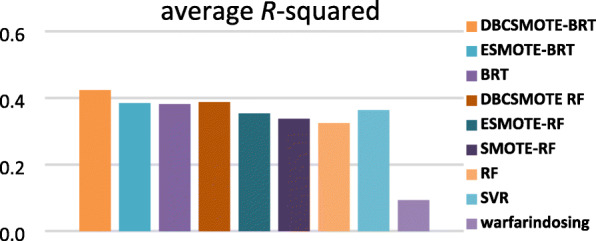
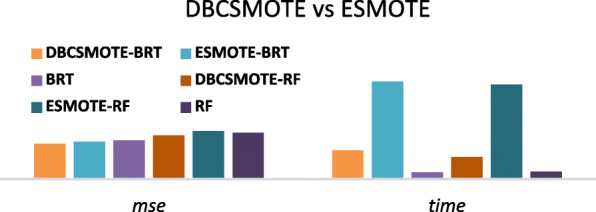
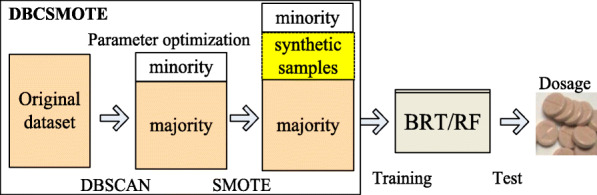
Background: Vitamin K antagonist (warfarin) is the most classical and widely used oral anticoagulant with assuring anticoagulant effect, wide clinical indications and low price. Warfarin dosage requirements of different patients vary largely. For warfarin daily dosage prediction, the data imbalance in dataset leads to inaccurate prediction on the patients of rare genotype, who usually have large stable dosage requirement. To balance the dataset of patients treated with warfarin and improve the predictive accuracy, an appropriate partition of majority and minority groups, together with an oversampling method, is required. Method: To solve the data-imbalance problem mentioned above, we developed a clustering-based oversampling technique denoted as DBCSMOTE, which combines density-based spatial clustering of application with noise (DBCSCAN) and synthetic minority oversampling technique (SMOTE). DBCSMOTE automatically finds the minority groups by acquiring the association between samples in terms of the clinical features/genotypes and the warfarin dosage, and creates an extended dataset by adding the new synthetic samples of majority and minority groups. Meanwhile, two ensemble models, boosted regression tree (BRT) and random forest (RF), which are built on the extended dataset generateed by DBCSMOTE, accomplish the task of warfarin daily dosage prediction. Results: DBCSMOTE and the comparison methods were tested on the datasets derived from our Hospital and International Warfarin Pharmacogenetics Consortium (IWPC). As the results, DBCSMOTE-BRT obtained the highest R -squared ( R 2 ) of 0.424 and the smallest mean squared error (mse) of 1.08. In terms of the percentage of patients whose predicted dose of warfarin is within 20% of the actual stable therapeutic dose (20%- p ), DBCSMOTE-BRT can achieve the largest value of 47.8% among predictive models. The more important thing is that DBCSMOTE saved about 68% computational time to achieve the same or better performance than the Evolutionary SMOTE, which was the best oversampling method in warfarin dose prediction by far. Meanwhile, in warfarin dose prediction, it is discovered that DBCSMOTE is more effective in integrating BRT than RF for warfarin dose prediction. Conclusion: Our finding is that the genotypes, CYP2C9 and VKORC1, no doubt contribute to the predictive accuracy. It was also discovered left atrium diameter, glutamic pyruvic transaminase and serum creatinine included in the model actually improved the predictive accuracy; When congestive heart failure, diabetes mellitus and valve replacement were absent in DBCSMOTE-BRT/RF, the predictive accuracy of DBCSMOTE-BRT/RF decreased. The oversampling ratio and number of minority clusters have a large impact on the effect of oversampling. According to our test, the predictive accuracy was high when the number of minority clusters was 6 ~ 8. The oversampling ratio for small minority clusters should be large (> 1.2) and for large minority clusters should be small (< 0.2). If the dataset becomes larger, the DBCSMOTE would be re-optimized and its BRT/RF model should be re-trained. DBCSMOTE-BRT/RF outperformed the current commonly-used tool called Warfarindosing. As compared to Evolutionary SMOTE-BRT and RF models, DBCSMOTE-BRT and RF models take only a small computational time to achieve the same or higher performance in many cases. In terms of predictive accuracy, RF is not as good as BRT. However, RF still has a powerful ability in generating a highly accurate model as the dataset increases; the software “WarfarinSeer v2.0” is a test version, which packed DBCSMOTE-BRT/RF. It could be a convenient tool for clinical application in warfarin treatment.
Overview
The claims and statistics of this paper haven’t been checked yet.
Free: it reads the open-access text and checks the first 5 claims that cite a source we can check. Create a free account to check every claim.
Integrity signals
Registry
Cites
Statistics
Figures






Verification
Claims the paper makes
The claims and statistics of this paper haven’t been checked yet.
Free: it reads the open-access text and checks the first 5 claims that cite a source we can check. Create a free account to check every claim.
Self-check
Percentages, sums and reported differences re-computed from the paper’s own numbers.
The self-check needs the paper’s full text.
Citations
Cites
Greedy function approximation: A gradient boosting machine
Friedman, J. H. (2001) · The Annals of Statistics · doi:10.1214/aos/1013203451 · Cited by 30,731
2016 ESC Guidelines for the management of atrial fibrillation developed in collaboration with EACTS
Kirchhof, P., Benussi, S., Kotecha, D., Ahlsson, A., Atar, D., Casadei, B., Castella, M., Diener, H.-C., Heidbuchel, H., Hendriks, J., et al. (2016) · Europace · doi:10.1093/europace/euw295 · Cited by 6,439
Valgimigli, M., Bueno, H., Byrne, R. A., Collet, J.-P., Costa, F., Jeppsson, A., Jüni, P., Kastrati, A., Kolh, P., Mauri, L., et al. (2018) · European Heart Journal · doi:10.1093/eurheartj/ehx419 · Cited by 2,987
Dietterich, T. G. (2000) · Machine Learning · doi:10.1023/a:1007607513941 · Cited by 2,941 · cited 1×
“Random forest (RF) integrated with an oversam-pling method has been applied in this area [18].”
Method2016 ESC Guidelines for the Management of Atrial Fibrillation Developed in Collaboration With EACTS
Kirchhof, P., Benussi, S., Kotecha, D., Ahlsson, A., Atar, D., Casadei, B., Castellá, M., Diener, H.-C., Heidbuchel, H., Hendriks, J., et al. (2017) · Revista Española de Cardiología (English Edition) · doi:10.1016/j.rec.2016.11.033 · Cited by 1,801
Estimation of the Warfarin Dose with Clinical and Pharmacogenetic Data
(2009) · New England Journal of Medicine · doi:10.1056/nejmoa0809329 · Cited by 1,577 · cited 1×
“As reported in Ref [20], the genotype contributes to 43% dose variability.”
Background2016 ESC Guidelines for the management of atrial fibrillation developed in collaboration with EACTS
Kirchhof, P., Benussi, S., Kotecha, D., Ahlsson, A., Atar, D., Casadei, B., Castella, M., Diener, H.-C., Heidbuchel, H., Hendriks, J., et al. (2016) · European Journal of Cardio-Thoracic Surgery · doi:10.1093/ejcts/ezw313 · Cited by 1,403
Johnson, J., Caudle, K., Gong, L., Whirl‐Carrillo, M., Stein, C., Scott, S., Lee, M., Gage, B., Kimmel, S., Perera, M., et al. (2017) · Clinical Pharmacology & Therapeutics · doi:10.1002/cpt.668 · Cited by 716
Guidelines on oral anticoagulation with warfarin – fourth edition
Keeling, D., Baglin, T., Tait, C., Watson, H., Perry, D., Baglin, C., Kitchen, S., Makris, M., & British Committee for Standards in Haematology (2011) · British Journal of Haematology · doi:10.1111/j.1365-2141.2011.08753.x · Cited by 586 · cited 1×
“[29], left atrium (LA) diameter > 50 mm was a patient-”
BackgroundValgimigli, M., Bueno, H., Byrne, R. A., Collet, J.-P., Costa, F., Jeppsson, A., Jüni, P., Kastrati, A., Kolh, P., Mauri, L., et al. (2018) · European Journal of Cardio-Thoracic Surgery · doi:10.1093/ejcts/ezx334 · Cited by 409
Research works printed but not linked: 1
- Byrne SCP, Barry A, Graham I, et.al, Using Neural Nets for Decision Support in Prescription and Outcome Prediction in Anticoagulation Drug Therapy, The Fifth Workshop on Intelligent Data Analysis in Medicine and Pharmacology (IDAMAP-2000) Workshop Notes of the 14th European Conference on Artificial Intelligence (ECAI-2000). 2000; 576:582.
Cited by
Machine Learning: An Overview and Applications in Pharmacogenetics
Cilluffo, G., Fasola, S., Ferrante, G., Malizia, V., Montalbano, L., & Grutta, S. L. (2021) · Genes · doi:10.3390/genes12101511 · Cited by 40
“Both models (RT and RF) achieve the same or higher performance in many cases [36].”
Vicnesh, J., Chen, S., Oh, S. L., Acharya, U. R., & Chowbay, B. (2023) · Computers in Biology and Medicine · doi:10.1016/j.compbiomed.2023.106548 · Cited by 19
Abnormal Samples Oversampling for Anomaly Detection Based on Uniform Scale Strategy and Closed Area
Shangguan, A., Xie, G., Mu, L., Fei, R., & Hei, X. (2021) · IEEE Transactions on Knowledge and Data Engineering · doi:10.1109/tkde.2021.3130595 · Cited by 17
“The density-based spatial clustering of application with noise (DBCSCAN) method and the SMOTE are combined to generate new samples in [28].”
MethodZhang, Y., Xie, C., Xue, L., Tao, Y., Yue, G., & Jiang, B. (2021) · IEEE Journal of Biomedical and Health Informatics · doi:10.1109/jbhi.2021.3092170 · Cited by 18
Self-citationMultiple adaptive over-sampling for imbalanced data evidential classification
Zhang, Z., Tian, H., & Jin, J.-S. (2024) · Engineering Applications of Artificial Intelligence · doi:10.1016/j.engappai.2024.108532 · Cited by 12
Metadata
- Authors
- Tao, Y., Zhang, Y., & Jiang, B.
- Affiliations
- Soochow University (CN)
- First Affiliated Hospital of Soochow University (CN)
- Corresponding author
- Zhang, Yuzhen
- Venue
- BMC Medical Genomics
- Published
- 2020-10
- Volume
- 13
- Issue
- S10
- Pages
- 152-152
- ISSN
- 1755-8794 (ISSN-L)
- PMC
- PMC7579987
- OpenAlex
- W3093905432
- Cited by
- 20
- References
- 32
- Citations by year
- 2026: 4 · 2025: 4 · 2024: 4 · 2023: 2 · 2022: 2 · 2021: 4
- FWCI
- 0.79
- Type
- journal article
- Language
- en
- Open access
- gold
- doi.org
- Licence
- cc-by
- creativecommons.org/licenses/by/4.0 (tdm)
- creativecommons.org/licenses/by/4.0 (vor, 21 d)
- Locations
- BMC Medical Genomics (publishedVersion, cc-by)
- PubMed Central (publishedVersion, cc-by)
- PubMed (publishedVersion)
- DOAJ (DOAJ: Directory of Open Access Journals) (submittedVersion, cc-by-sa)
- Funders
- National Natural Science Foundation of China (61872259, 81700298)
- China Postdoctoral Science Foundation
- Soochow University
- Jiangsu Planned Projects for Postdoctoral Research Funds
- Topics
- Physical Sciences › Computer Science › Artificial Intelligence › Imbalanced Data Classification Techniques
- Life Sciences › Pharmacology, Toxicology and Pharmaceutics › Pharmacology › Pharmacogenetics and Drug Metabolism
- Health Sciences › Health Professions › Health Information Management › Artificial Intelligence in Healthcare
- Keywords
- warfarin dose prediction, class imbalance, oversampling, SMOTE, anticoagulation, CYP2C9, VKORC1, genotypes, boosted regression trees, random forest, therapeutic dose, clinical features, left atrial diameter, alanine aminotransferase, serum creatinine, congestive heart failure
- MeSH terms
- Algorithms, Anticoagulants, Female, Humans, Male, Models, Biological, Pharmacogenetics, Polymorphism, Genetic, Warfarin, Cluster Analysis, Computational Biology, Drug Dosage Calculations, Vitamin K Epoxide Reductases, Cytochrome P-450 CYP2C9
About these checks
Registry, retraction, Cites and statistics results are computed, not judged, with one exception: a printed reference that no index lists is read once by a model before it counts as a citation error. Claims are extracted by a model and kept only when their quote appears verbatim in the text; each cited source is then checked, with a model’s help, for whether it says what the claim relies on. Those verdicts can be wrong — read the claim’s quote and the cited source before relying on one.
Statistics and arithmetic are recomputed, not judged.
Confidence bands are shown only for fields calibrated on our annotated test set. None is calibrated yet, so no band is shown.
What counts as a claim ›How we measure confidence ›How we check this ›
Are you an author, or do you see a problem with this page? Request a review
How to cite
Cite CoChat for the checks on this page, and the paper for its own findings.
- This page
- CoChat. (2026). Citation check: DBCSMOTE: a clustering-based oversampling technique for data-imbalanced warfarin dose prediction. https://app.cochat.ai/papers/10.1186/s12920-020-00781-2
- The paper
- Tao, Y., Zhang, Y., & Jiang, B. (2020). DBCSMOTE: a clustering-based oversampling technique for data-imbalanced warfarin dose prediction. BMC Medical Genomics. https://doi.org/10.1186/s12920-020-00781-2
Data sources
Bibliographic data: Semantic Scholar, OpenAlex, Crossref.
Contains information from the Semantic Scholar Academic Graph Datasets, made available under the ODC Attribution License (ODC-BY 1.0).
Semantic Scholar’s data is described in: Kinney, R., et al. (2023). The Semantic Scholar Open Data Platform. arXiv:2301.10140.
