

Patient adherence to prescribed artemisinin-based combination therapy in Garissa County, Kenya, after three years of health care in a conflict setting
Open accessThe DOI matches its Crossref record; 27 of the 27 references it cites were found in a registry or an index.
Abstract
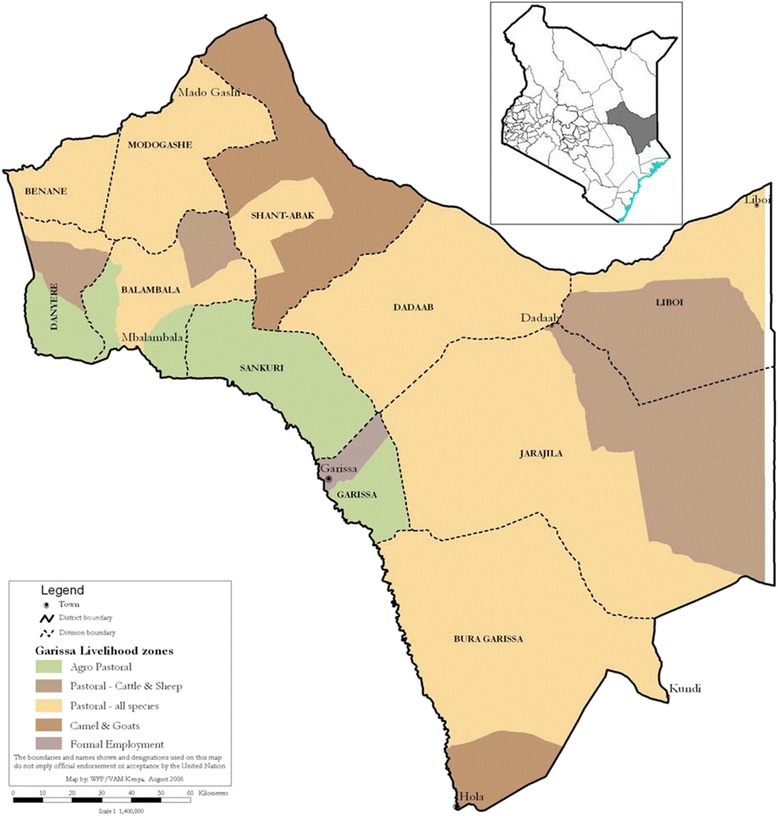
BACKGROUND: Current day malaria cases and deaths are indicative of a lack of access to both methods of prevention, diagnosis, and treatment; an important determinant of treatment efficacy is adherence. This study is a follow up to the baseline study of adherence to artemether-lumefantrine (AL) carried out in Garissa District in 2010. The study presented evaluates any changes in adherence levels which may have occurred in the area during this period and after nearly three years of sustained use of ACT across the public health sector. METHODS: The study was carried out in Garissa County in the North Eastern Province of Kenya and included patients fitting the suspected malaria case definition and having been prescribed AL, regardless of confirmatory diagnosis. A questionnaire assessed the intake of AL via both self-reporting by the participant and observation of blister packs by the interviewer. On separate occasions exit interviews with patients and observations of prescribers were also carried out. RESULTS: Of the 218 participants enrolled, 195 were successfully followed up. 60% of participants were found to be adherent to the three-day AL regimen, this is 4.7% lower than the proportion of participants adherent in 2010; the result of a two-sided z-test was not significant (p = 0.23). The odds of the patient being adherent to AL increased by 65% with each additional correct statement regarding how to take AL that a patient could recall (between zero and four statements), this was the only variable significantly associated with patient adherence (p = 0.01). CONCLUSION: Sustaining the ACT adherence rates at the 2010 levels, through 2.5 years of insecurity in the study area is an achievement and suggests that if security can be improved barriers to improving health service quality and patient adherence to AL would be removed. This study, by looking specifically at anti-malarial adherence over a prolonged period and in a setting of severe conflict, provides a valuable and rare insight in to the challenges and barriers to ACT adherence in such settings.
Overview
The claims and statistics of this paper haven’t been checked yet.
Free: it reads the open-access text and checks the first 5 claims that cite a source we can check. Create a free account to check every claim.
Integrity signals
Registry
Cites
Statistics
Figures
Verification
Claims the paper makes
The claims and statistics of this paper haven’t been checked yet.
Free: it reads the open-access text and checks the first 5 claims that cite a source we can check. Create a free account to check every claim.
Claims other papers make about this one
Each is checked against this paper’s own text: does it say what the citing paper says it does?
The source backs part of the claim, not all of it — or backs it for a different population, condition or comparison.
In the citing paper
“The complexity of the AL dosing regimen, including the number of tablets, twice daily dosing, the requirement to give the second dose 8 h after the first, and to administer with fatty food [43], has been shown to negatively impact treatment adherence [44, 45].”
From Adherence to treatment with artemether–lumefantrine or amodiaquine–artesunate for uncomplicated malaria in children in Sierra Leone: a randomized trial (2018) · cites this paper as [44]
Experimental — accuracy not yet measured
Self-check
Percentages, sums and reported differences re-computed from the paper’s own numbers.
The self-check needs the paper’s full text.
Citations
Cites
Andrews, K. G., Fergus, C. A., Aregawi, M. W., Cibulskis, R. E., & Zamani, G. (2014) · Cited by 571
The Origins of Antimalarial-Drug Resistance
Packard, R. M. (2014) · New England Journal of Medicine · doi:10.1056/nejmp1403340 · Cited by 221
Changing home treatment of childhood fevers by training shop keepers in rural Kenya
Marsh, V. M., Mutemi, W. M., Muturi, J., Haaland, A., Watkins, W. M., Otieno, G., & Marsh, K. (1999) · Tropical Medicine & International Health · doi:10.1046/j.1365-3156.1999.00403.x · Cited by 204 · cited 1×
“A BCC intervention in Kenya, which involved the training of drug vendors to treat childhood fevers with chloroquine and provided agespecific dosing charts saw adherence to the correct agespecific dose increase from 4% to 75% and correct duration from 23% to 47% [39].”
BackgroundThe de novo selection of drug–resistant malaria parasites
White, N. J., & Pongtavornpinyo, W. (2003) · Proceedings of the Royal Society of London. Series B: Biological Sciences · doi:10.1098/rspb.2002.2241 · Cited by 158 · cited 1×
“The consequences of poor patient adherence are serious; cure rates for patients are likely to be lower, and repeat exposure to sub-lethal drug dosages risks the development of parasite resistance to the active agents in the drug formulations [11,12].”
BackgroundFOGG, C., BAJUNIRWE, F., PIOLA, P., BIRARO, S., CHECCHI, F., KIGULI, J., NAMIIRO, P., MUSABE, J., KYOMUGISHA, A., & GUTHMANN, J.-P. (2004) · The American Journal of Tropical Medicine and Hygiene · doi:10.4269/ajtmh.2004.71.525 · Cited by 139 · cited 1×
“Using self-reporting, pill counts, and blood drug levels to investigate the adherence of patients to a six dose regimen of AL in Uganda found 90% of patients to be probably adherent [29].”
BackgroundBruxvoort, K., Goodman, C., Kachur, S. P., & Schellenberg, D. (2014) · PLoS ONE · doi:10.1371/journal.pone.0084555 · Cited by 135 · cited 2×
“The last method is “biological assay” which uses the detection of sufficient levels of the drug in biological samples to confirm adherence [10].”
BackgroundMethodMwangangi, J. M., Muturi, E. J., Muriu, S. M., Nzovu, J., Midega, J. T., & Mbogo, C. (2013) · Parasites & Vectors · doi:10.1186/1756-3305-6-114 · Cited by 135
Koram, K. A., Abuaku, B. K., Duah-Quashie, N. O., & Quashie, N. B. (2005) · Acta Tropica · doi:10.1016/j.actatropica.2005.06.018 · Cited by 131 · cited 1×
“The efficacy of ACT is very high, however, this is assuming a patient is adherent to the complete course of treatment [4-7].”
BackgroundHow do patients use antimalarial drugs? A review of the evidence
Yeung, S., & White, N. J. (2005) · Tropical Medicine & International Health · doi:10.1111/j.1365-3156.2004.01364.x · Cited by 124 · cited 1×
“From improving adherence to short-term treatments, such as anti-malarials, to treatments for chronic conditions, such as hypertension, various methods have been investigated including changing dosing schedules (for example, from two tablets a day to one), reminder pill packaging, individual counselling, home visits by…”
BackgroundDepoortere, E., Guthmann, J., Sipilanyambe, N., Nkandu, E., Fermon, F., Balkan, S., & Legros, D. (2004) · Tropical Medicine & International Health · doi:10.1046/j.1365-3156.2003.01157.x · Cited by 94 · cited 1×
“4% were probably non-adherent [30].”
Distribution of the main malaria vectors in Kenya
Okara, R. M., Sinka, M. E., Minakawa, N., Mbogo, C. M., Hay, S. I., & Snow, R. W. (2010) · Malaria Journal · doi:10.1186/1475-2875-9-69 · Cited by 79
Adherence to Treatment With Artemether-Lumefantrine for Uncomplicated Malaria in Rural Malawi
Mace, K. E., Mwandama, D., Jafali, J., Luka, M., Filler, S. J., Sande, J., Ali, D., Kachur, S. P., Mathanga, D. P., & Skarbinski, J. (2011) · Clinical Infectious Diseases · doi:10.1093/cid/cir498 · Cited by 73 · cited 1×
“Whilst this method is vulnerable to misreporting by patients and skewing of results in ways that biological assays are not, it has been used in similar adherence studies to obtain realistic and valuable results [17,31,32].”
ResultLutomiah, J., Bast, J. D., Clark, J., Richardson, J. H., Yalwala, S., Oullo, D., Mutisya, J., Mulwa, F., Musila, L. A., Khamadi, S. A., et al. (2013) · Journal of Vector Ecology · doi:10.1111/j.1948-7134.2013.12019.x · Cited by 71 · cited 1×
“arabiensis [22-24].”
Kabanywanyi, A. M., Mwita, A., Sumari, D., Mandike, R., Mugittu, K., & Abdulla, S. (2007) · Malaria Journal · doi:10.1186/1475-2875-6-146 · Cited by 66 · cited 1×
“The efficacy of ACT is very high, however, this is assuming a patient is adherent to the complete course of treatment [4-7].”
BackgroundKenya (2010): 2010 Malaria Indicator Survey
Ogada, E. A. (2011) · Harvard Dataverse · doi:10.7910/dvn/mnccdg · Cited by 63
Girvin, B., McDermott, B. J., & Johnston, G. D. (1999) · Journal of Hypertension · doi:10.1097/00004872-199917110-00017 · Cited by 61 · cited 1×
“From improving adherence to short-term treatments, such as anti-malarials, to treatments for chronic conditions, such as hypertension, various methods have been investigated including changing dosing schedules (for example, from two tablets a day to one), reminder pill packaging, individual counselling, home visits by…”
BackgroundLawford, H., Zurovac, D., O'Reilly, L., Hoibak, S., Cowley, A., Munga, S., Vulule, J., Juma, E., Snow, R. W., & Allan, R. (2011) · Malaria Journal · doi:10.1186/1475-2875-10-281 · Cited by 59
Self-citationAgyepong, I. A., Ansah, E., Gyapong, M., Adjei, S., Barnish, G., & EVANS, D. B. (2002) · Social Science & Medicine · doi:10.1016/s0277-9536(01)00366-5 · Cited by 57 · cited 1×
“A study in Ghana found that increased provision of information to clients by providers in primary health care facilities resulted in increased levels of adherence; improvements were most marked in the clinic that was found to be worst performing at the beginning of the study [38].”
BackgroundLemma, H., Löfgren, C., & San Sebastian, M. (2011) · Malaria Journal · doi:10.1186/1475-2875-10-349 · Cited by 54
Onyango, E. O., Ayodo, G., Watsierah, C. A., Were, T., Okumu, W., Anyona, S. B., Raballah, E., Okoth, J. M., Gumo, S., Orinda, G. O., et al. (2012) · BMC Infectious Diseases · doi:10.1186/1471-2334-12-143 · Cited by 48 · cited 1×
“Regardless of how defined, adherence is determined and affected by numerous and intertwining factors including age of the caretaker and patient, education level of the caretaker and patient, perceptions of the disease, acceptance and knowledge of the treatment, cost of treatment, complexity of the treatment schedule,…”
BackgroundDiggle, E., Asgary, R. G., Gore‐Langton, G. R., Erupe, N. I., Mungai, J., Harrison, R. E., Abagira, A., Eves, K., Grigoryan, Z., Soti, D., et al. (2014) · Malaria Journal · doi:10.1186/1475-2875-13-502 · Cited by 48
Self-citationCohen, J. L., Yavuz, E., Morris, A., Arkedis, J., & Sabot, O. (2012) · Malaria Journal · doi:10.1186/1475-2875-11-83 · Cited by 45
Keoluangkhot, V., Green, M. D., Nyadong, L., Fernández, F. M., Mayxay, M., & Newton, P. N. (2008) · The American Journal of Tropical Medicine and Hygiene · doi:10.4269/ajtmh.2008.78.552 · Cited by 45 · cited 1×
“The consequences of poor patient adherence are serious; cure rates for patients are likely to be lower, and repeat exposure to sub-lethal drug dosages risks the development of parasite resistance to the active agents in the drug formulations [11,12].”
BackgroundSouares, A., Lalou, R., Sene, I., Sow, D., & Hesran, J. L. (2009) · Malaria Journal · doi:10.1186/1475-2875-8-118 · Cited by 34 · cited 1×
“Regardless of how defined, adherence is determined and affected by numerous and intertwining factors including age of the caretaker and patient, education level of the caretaker and patient, perceptions of the disease, acceptance and knowledge of the treatment, cost of treatment, complexity of the treatment schedule,…”
BackgroundOgolla, J. O., Ayaya, S., & Otieno, C. A. (2013) · PubMed Central · Cited by 21
Ojurongbe, O. D., Lawal, O. A., Abiodun, O. O., Okeniyi, J., Oyeniyi, A. J., & Oyelami, O. A. (2013) · The Journal of Infection in Developing Countries · doi:10.3855/jidc.3058 · Cited by 20 · cited 1×
“The efficacy of ACT is very high, however, this is assuming a patient is adherent to the complete course of treatment [4-7].”
BackgroundFazel, A., Jafari, A. J., Khami, M. R., Sedighpour, L., Kharrazifard, M., Nassibi, M., Yazdani, R., & Soroush, M. (2013) · PubMed Central · Cited by 16
Research works printed but not linked: 3
- WHO World malaria report 2014 2014 Geneva World Health Organization
- WHO Global report on antimalarial efficacy and drug resistance: 2000–2010 2010 Geneva World Health Organization
- WHO World malaria report 2012 2012 Geneva World Health Organization
Cited by
Yakasai, A. M., Hamza, M., Dalhat, M. M., Bello, M. M., Gadanya, M. A., Yaqub, Z. M., Ibrahim, D. A., & Hassan-Hanga, F. (2015) · Journal of Tropical Medicine · doi:10.1155/2015/189232 · Cited by 52
“2015 [43] Kenya 195 Low AL Self-report and blister pack Study area affected by conflict leading to poor health delivery services Siddiqui et al.”
BackgroundLeading indicators of mosquito-borne disease elimination
O’Regan, S. M., Lillie, J. W., & Drake, J. M. (2015) · Theoretical Ecology · doi:10.1007/s12080-015-0285-5 · Cited by 37
Banek, K., Webb, E. L., Smith, S. J., Chandramohan, D., & Staedke, S. G. (2018) · Malaria Journal · doi:10.1186/s12936-018-2370-x · Cited by 25
“The complexity of the AL dosing regimen, including the number of tablets, twice daily dosing, the requirement to give the second dose 8 h after the first, and to administer with fatty food [43], has been shown to negatively impact treatment adherence [44, 45].”
BackgroundAfaya, A., Salia, S. M., Adatara, P., Afaya, R. A., Suglo, S., & Japiong, M. (2018) · Journal of Tropical Medicine · doi:10.1155/2018/7465254 · Cited by 18
Bawate, C., Callender-Carter, S. T., Guyah, B., & Ouma, C. (2024) · Malaria Journal · doi:10.1186/s12936-023-04824-8 · Cited by 16
“The current study finding contradicts other studies which found a statistical association between education and patient adherence to ACT [14, 30, 45].”
Result
Metadata
- Authors
- Gore-Langton, G. R., Alenwi, N., Mungai, J., Erupe, N. I., Eves, K., Kimwana, F. N., Soti, D., Akhwale, W., Hassan, F. A., Juma, E., & Allan, R.
- Affiliations
- The MENTOR Initiative (GB)
- Ministry of Health (KE)
- ORCID
- Juma, Elizabeth
- Venue
- Malaria Journal
- Published
- 2015-03-24
- Volume
- 14
- Issue
- 1
- Pages
- 125-125
- ISSN
- 1475-2875 (ISSN-L)
- PMC
- PMC4405916
- OpenAlex
- W2019668483
- Cited by
- 18
- References
- 27
- Citations by year
- 2025: 3 · 2024: 3 · 2021: 1 · 2020: 1 · 2019: 1 · 2018: 2 · 2017: 1 · 2016: 2 · 2015: 4
- FWCI
- 3.22
- Type
- journal article
- Language
- en
- Open access
- gold
- doi.org
- Locations
- Malaria Journal (publishedVersion, cc-by)
- PubMed Central (publishedVersion, cc-by)
- PubMed (publishedVersion)
- LSHTM Research Online (London School of Hygiene and Tropical Medicine) (acceptedVersion)
- Funders
- Comic Relief
- Department for International Development, UK Government
- Department for International Development
- Topics
- Health Sciences › Medicine › Public Health, Environmental and Occupational Health › Malaria Research and Control
- Health Sciences › Medicine › Family Practice › Medication Adherence and Compliance
- Health Sciences › Medicine › Infectious Diseases › HIV/AIDS Research and Interventions
- Keywords
- artemether-lumefantrine, artemisinin-based combination therapy, medication adherence, malaria treatment, armed conflict, insecurity, health care access, Garissa County
- MeSH terms
- Artemether, Lumefantrine Drug Combination, Adolescent, Adult, Aged, Aged, 80 and over, Antimalarials, Drug Combinations, Ethanolamines, Female, Fluorenes, Follow-Up Studies, Humans, Kenya, Malaria, Male, Middle Aged, Patient Compliance, Surveys and Questionnaires, Artemisinins, Young Adult
About these checks
Registry, retraction, Cites and statistics results are computed, not judged, with one exception: a printed reference that no index lists is read once by a model before it counts as a citation error. Claims are extracted by a model and kept only when their quote appears verbatim in the text; each cited source is then checked, with a model’s help, for whether it says what the claim relies on. Those verdicts can be wrong — read the claim’s quote and the cited source before relying on one.
Statistics and arithmetic are recomputed, not judged.
Confidence bands are shown only for fields calibrated on our annotated test set. None is calibrated yet, so no band is shown.
What counts as a claim ›How we measure confidence ›How we check this ›
Are you an author, or do you see a problem with this page? Request a review
Data sources
Bibliographic data: Semantic Scholar, OpenAlex, Crossref.
Contains information from the Semantic Scholar Academic Graph Datasets, made available under the ODC Attribution License (ODC-BY 1.0).
Semantic Scholar’s data is described in: Kinney, R., et al. (2023). The Semantic Scholar Open Data Platform. arXiv:2301.10140.
