

Status of insecticide resistance in high-risk malaria provinces in Afghanistan
Open accessThe DOI matches its Crossref record; 21 of the 21 references it cites were found in a registry or an index.
Abstract
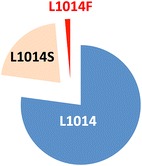
BACKGROUND: Insecticide resistance seriously threatens the efficacy of vector control interventions in malaria endemic countries. In Afghanistan, the status of insecticide resistance is largely unknown while distribution of long-lasting insecticidal nets has intensified in recent years. The main objective of this study was thus to measure the level of resistance to four classes of insecticides in provinces with medium to high risk of malaria transmission. METHODS: Adult female mosquitoes were reared from larvae successively collected in the provinces of Nangarhar, Kunar, Badakhshan, Ghazni and Laghman from August to October 2014. WHO insecticide susceptibility tests were performed with DDT (4 %), malathion (5 %), bendiocarb (0.1 %), permethrin (0.75 %) and deltamethrin (0.05 %). In addition, the presence of kdr mutations was investigated in deltamethrin resistant and susceptible Anopheles stephensi mosquitoes collected in the eastern provinces of Nangarhar and Kunar. RESULTS: Analyses of mortality rates revealed emerging resistance against all four classes of insecticides in the provinces located east and south of the Hindu Kush mountain range. Resistance is observed in both An. stephensi and Anopheles culicifacies, the two dominant malaria vectors in these provinces. Anopheles superpictus in the northern province of Badakhshan shows a different pattern of susceptibility with suspected resistance observed only for deltamethrin and bendiocarb. Genotype analysis of knock down resistance (kdr) mutations at the voltage-gated channel gene from An. stephensi mosquitoes shows the presence of the known resistant alleles L1014S and L1014F. However, a significant fraction of deltamethrin-resistant mosquitoes were homozygous for the 1014L wild type allele indicating that other mechanisms must be considered to account for the observed pyrethroid resistance. CONCLUSIONS: This study confirms the importance of monitoring insecticide resistance for the development of an integrated vector management in Afghanistan. The validation of the kdr genotyping PCR assay applied to An. stephensi collected in Afghanistan paves the way for further studies into the mechanisms of insecticide resistance of malaria vectors in this region.
Overview
The claims and statistics of this paper haven’t been checked yet.
Free: it reads the open-access text and checks the first 5 claims that cite a source we can check. Create a free account to check every claim.
Integrity signals
Registry
Cites
Statistics
Figures
Verification
Claims the paper makes
The claims and statistics of this paper haven’t been checked yet.
Free: it reads the open-access text and checks the first 5 claims that cite a source we can check. Create a free account to check every claim.
Claims other papers make about this one
Each is checked against this paper’s own text: does it say what the citing paper says it does?
The source backs part of the claim, not all of it — or backs it for a different population, condition or comparison.
In the citing paper
“Several mechanisms including metabolic and insecticide target site insensitivity are involved in insecticide resistance in An. stephensi from different countries, each of which has its own operational significance in vector control [26–28, 31, 33–36, 38, 39, 42, 47, 48].”
From Evolution of insecticide resistance and its mechanisms in Anopheles stephensi in the WHO Eastern Mediterranean Region (2020) · cites this paper as [26]
Experimental — accuracy not yet measuredThe source backs part of the claim, not all of it — or backs it for a different population, condition or comparison.
In the citing paper
“There are two types of kdr alleles in Anopheles mosquitoes, i.e., kdr west [33, 39, 103] and kdr east [26, 104].”
From Evolution of insecticide resistance and its mechanisms in Anopheles stephensi in the WHO Eastern Mediterranean Region (2020) · cites this paper as [26]
Experimental — accuracy not yet measuredThe source backs part of the claim, not all of it — or backs it for a different population, condition or comparison.
In the citing paper
“Although there are data supporting the susceptibility of the species to bendiocarb and permethrin in some provinces, resistance or resistance to be confirmed has been detected in An. stephensi to aforementioned insecticides in most provinces of Afghanistan in the follow-up studies performed in 2014, 2016 and 2017 [26–28, 79].”
From Evolution of insecticide resistance and its mechanisms in Anopheles stephensi in the WHO Eastern Mediterranean Region (2020) · cites this paper as [26]
Experimental — accuracy not yet measuredThe cited source says what the claim attributes to it.
In the citing paper
“Years later, several other studies detected kdr west and east mutations in An. stephensi in India [31, 38, 39, 48, 106] and Afghanistan [26–28].”
From Evolution of insecticide resistance and its mechanisms in Anopheles stephensi in the WHO Eastern Mediterranean Region (2020) · cites this paper as [26]
The cited source says what the claim attributes to it.
In the citing paper
“Resistance to several insecticides of all major classes has been reported in Anopheles stephensi in other countries of the WHO Eastern Mediterranean Region (EMR), including Saudi Arabia [21, 22], Iraq [23, 24], Afghanistan [25–28], and Pakistan [29, 30].”
From Evolution of insecticide resistance and its mechanisms in Anopheles stephensi in the WHO Eastern Mediterranean Region (2020) · cites this paper as [26]
Self-check
Percentages, sums and reported differences re-computed from the paper’s own numbers.
The self-check needs the paper’s full text.
Citations
Cites
A Method of Computing the Effectiveness of an Insecticide
Abbott, W. S. (1925) · Journal of Economic Entomology · doi:10.1093/jee/18.2.265a · Cited by 16,134 · cited 1×
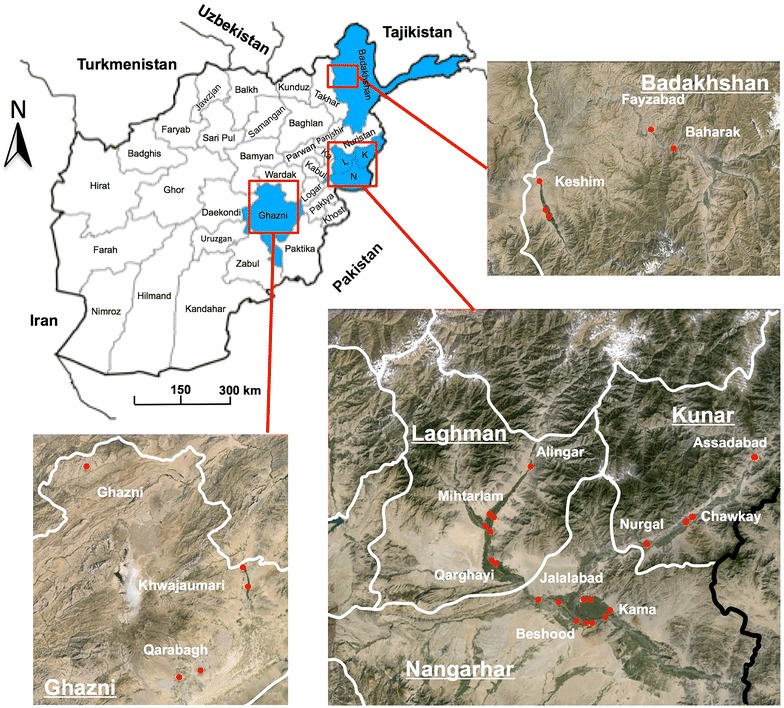
“Average mortality was calculated for each insecticide and corrected using Abbot’s formula [19] if the observed mortalities in the control Table 1 Habitat description and localization of sample collection sites”
MethodWeltgesundheitsorganisation (2005) · Cited by 3,799
The effect of malaria control on Plasmodium falciparum in Africa between 2000 and 2015
Bhatt, S., Weiss, D. J., Cameron, E., Bisanzio, D., Mappin, B., Dalrymple, U., Battle, K. E., Moyes, C. L., Henry, A., Eckhoff, P. A., et al. (2015) · Nature · doi:10.1038/nature15535 · Cited by 3,225
Sinka, M. E., Bangs, M. J., Manguin, S., Coetzee, M., Mbogo, C. M., Hemingway, J., Patil, A. P., Temperley, W. H., Gething, P. W., Kabaria, C. W., et al. (2010) · Parasites & Vectors · doi:10.1186/1756-3305-3-117 · Cited by 761 · cited 1×
“superpictus seems to be now mostly restricted to freshwater breeding sites in valleys of the Hindu Kush mountain range [7].”
BackgroundAnopheles mosquitoes - New insights into malaria vectors
(2013) · InTech eBooks · doi:10.5772/3392 · Cited by 421
Costs and cost-effectiveness of malaria control interventions - a systematic review
White, M. T., Conteh, L., Cibulskis, R., & Ghani, A. C. (2011) · Malaria Journal · doi:10.1186/1475-2875-10-337 · Cited by 310 · cited 1×
“Vector control interventions are cost effective and essential measures to control malaria [8, 9].”
BackgroundRanson, H., Abdallah, H., Badolo, A., Guelbeogo, W. M., Kerah-Hinzoumbé, C., Yangalbé-Kalnoné, E., Sagnon, N., Simard, F., & Coetzee, M. (2009) · Malaria Journal · doi:10.1186/1475-2875-8-299 · Cited by 284
Self-citationMnzava, A. P., Knox, T. B., Temu, E. A., Trett, A., Fornadel, C., Hemingway, J., & Renshaw, M. (2015) · Malaria Journal · doi:10.1186/s12936-015-0693-4 · Cited by 216 · cited 1×
“Conclusions This study showed that insecticide resistance is now emerging within malaria vectors in Afghanistan and highlights the importance of establishing an insecticide resistance management plan [26].”
BackgroundEnayati, A. A., Vatandoost, H., Ladonni, H., Townson, H., & Hemingway, J. (2003) · Medical and Veterinary Entomology · doi:10.1046/j.1365-2915.2003.00418.x · Cited by 161 · cited 2×
“stephensi in Dubai [15], although such monitoring is less developed than in the sub-Saharan or East African region (see the current status of insecticide resistance worldwide on the IR mapper interactive tool [16]).”
BackgroundKnox, T. B., Juma, E. O., Ochomo, E. O., Pates Jamet, H., Ndungo, L., Chege, P., Bayoh, N. M., N’Guessan, R., Christian, R. N., Hunt, R. H., et al. (2014) · Parasites & Vectors · doi:10.1186/1756-3305-7-76 · Cited by 146 · cited 1×
“stephensi in Dubai [15], although such monitoring is less developed than in the sub-Saharan or East African region (see the current status of insecticide resistance worldwide on the IR mapper interactive tool [16]).”
Background
Research works printed but not linked: 2
- WHO Global plan for insecticide resistance management in malaria vectors (GPIRM) 2012 Geneva World Health Organization
- WHO Test procedures for insecticide resistance monitoring in malaria vector mosquitoes 2013 Geneva World Health Organization
Cited by
Insecticide Resistance in Malaria Vectors: An Update at a Global Scale
Riveron, J. M., Tchouakui, M., Mugenzi, L. M. J., Menze, B. D., Chiang, M.-C., & Wondji, C. S. (2018) · InTech eBooks · doi:10.5772/intechopen.78375 · Cited by 154
Insecticide resistance in Anopheles stephensi in Somali Region, eastern Ethiopia
Yared, S., Gebressielasie, A., Damodaran, L., Bonnell, V., Lopez, K., Janies, D., & Carter, T. E. (2020) · Malaria Journal · doi:10.1186/s12936-020-03252-2 · Cited by 111
Enayati, A., Hanafi-Bojd, A. A., Sedaghat, M. M., Zaim, M., & Hemingway, J. (2020) · Malaria Journal · doi:10.1186/s12936-020-03335-0 · Cited by 62
Invasive Anopheles stephensi in Africa: insights from Asia
Taylor, R., Messenger, L. A., Abeku, T. A., Clarke, S. E., Yadav, R. S., & Lines, J. (2024) · Trends in Parasitology · doi:10.1016/j.pt.2024.06.008 · Cited by 79
Safi, N. H. Z., Ahmadi, A. A., Nahzat, S., Ziapour, S. P., Nikookar, S. H., Fazeli-Dinan, M., Enayati, A., & Hemingway, J. (2017) · Malaria Journal · doi:10.1186/s12936-017-1744-9 · Cited by 45
“The finding that many of the bioassays survivors did not possess the kdr mutation suggests that other resistance mechanisms are present in these populations [21].”
BackgroundInfluentialSelf-citationHanafi-Bojd, A., Abbasi, M., Yaghoobi-Ershadi, M., Vatandoost, H., Oshaghi, M., Hazratian, T., Sedaghat, M., Fekri, S., Safari, R., Mojahedi, A., et al. (2019) · Asian Pacific Journal of Tropical Medicine · doi:10.4103/1995-7645.250344 · Cited by 32
“stephensi was resistant against all tested insecticides in Afghanistan[34].”
BackgroundInfluentialSafi, N. H. Z., Ahmadi, A. A., Nahzat, S., Warusavithana, S., Safi, N., Valadan, R., Shemshadian, A., Sharifi, M., Enayati, A., & Hemingway, J. (2019) · Malaria Journal · doi:10.1186/s12936-019-2884-x · Cited by 29
Self-citationAbbasi, E., Daliri, S., Mohseni, S., Zamani, A. A., Alivand, N., & Moemenbellah‐Fard, M. D. (2025) · Asian Pacific Journal of Tropical Medicine · doi:10.4103/apjtm.apjtm_26_24 · Cited by 29
Susanna, D., & Pratiwi, D. (2021) · F1000Research · doi:10.12688/f1000research.46883.1 · Cited by 26
Zare, M., Soleimani-Ahmadi, M., Davoodi, S. H., & Sanei-Dehkordi, A. (2016) · Parasites & Vectors · doi:10.1186/s13071-016-1851-4 · Cited by 20
“Moreover, susceptibility tests in neighbouring countries including Afghanistan, Pakistan, Iraq, Oman, United Arab Emirates, and Saudi Arabia have shown resistance of An. stephensi to DDT [21].”
ResultInfluentialMalaria Research for Tailored Control and Elimination Strategies in the Greater Mekong Subregion
Sattabongkot, J., Cui, L., Bantuchai, S., Chotirat, S., Kaewkungwal, J., Khamsiriwatchara, A., Kiattibutr, K., Kyaw, M. P., Lawpoolsri, S., Linn, N. Y. Y., et al. (2022) · American Journal of Tropical Medicine and Hygiene · doi:10.4269/ajtmh.21-1268 · Cited by 17
Dehghan, H., Oshaghi, M. A., Moosa‐Kazemi, S. H., Yakhchali, B., Vatandoost, H., Maleki‐Ravasan, N., Rassi, Y., Mohammadzadeh, H., Abai, M. R., & Mohtarami, F. (2017) · PubMed Central · Cited by 21
Samake, J. N., Yared, S., Getachew, D., Mumba, P. P., Dengela, D., Yohannes, G., Chibsa, S., Choi, S. H., Spear, J., Irish, S. R., et al. (2022) · Infection Genetics and Evolution · doi:10.1016/j.meegid.2022.105235 · Cited by 19
“Kdr phylogenetic analysis included both the kdr exon and adjacent downstream intron segments of the vgsc gene from the Ethiopian samples as well as from available sequences from India, Iran, and Sri Lanka of the same vgsc gene region retrieved from Genbank.”
InfluentialComposition of Anopheles Species Collected from Selected Malarious Areas of Afghanistan and Iran.
Hoosh-Deghati, H., Djadid, N. D., Moin-Vaziri, V., Atta, H., Raz, A. A., Seyyedtabaei, S. J., Maleki‐Ravasan, N., Alipour, H., Zakeri, S., & Azargashb, E. (2017) · PubMed Central · Cited by 14
Epidemiology and Control of Plasmodium vivax in Afghanistan
Leslie, T. J., Nahzat, S. M., & Sediqi, W. (2016) · American Journal of Tropical Medicine and Hygiene · doi:10.4269/ajtmh.16-0172 · Cited by 14
“The survey observed reduced susceptibility to all three classes of insecticides in Afghanistan, originating mainly in the eastern region (Nangarhar).(8)”
BackgroundSelf-citationSaberi, N., Raeisi, A., Gorouhi, M. A., Vatandoost, H., Mashayekhi, M., Nikpour, F., Bozorgomid, F., Foroushani, A. R., & Hanafi‐Bojd, A. A. (2021) · Journal of Medical Entomology · doi:10.1093/jme/tjab214 · Cited by 8
The origin, history, and resistance architecture of an invasive urban malaria mosquito in Africa
Dennis, T. P. W., Sulieman, J. E., Nouredayem, M., Ashine, T., Ebstie, Y. A., Eyasu, A., Simma, E. A., Zemene, E., Negash, N., Yigeremu, A., et al. (2026) · Science · doi:10.1126/science.adx6925 · Cited by 14
Self-citationInsecticide Resistance Status of Malaria Vectors in a Malarious Area, Southeast of Iran
Nejati, J., Moosa‐Kazemi, S. H., Oshaghi, M. A., Badzohre, A., Pirmohammadi, M., Saeidi, Z., Naseri-Karimi, N., Parkhideh, S. Z., & Vatandoost, H. (2022) · Journal of arthropod-borne diseases · doi:10.18502/jad.v15i3.9815 · Cited by 6
The origin, invasion history and resistance architecture of Anopheles stephensi in AfricaPreprint
Dennis, T. P. W., Sulieman, J. E., Abdin, M. S., Ashine, T., Ebstie, Y. A., Eyasu, A., Simma, E. A., Zemene, E., Negash, N., Kochora, A., et al. (2025) · bioRxiv (Cold Spring Harbor Laboratory) · doi:10.1101/2025.03.24.644828 · Cited by 4
Self-citationMoin, S. (2021) · JOURNAL OF COMMUNICABLE DISEASES · doi:10.24321/0019.5138.202151 · Cited by 4
“20 and in Kunar, Laghman, and Nangarhar provinces of Afghanistan exhibit resistance in An.”
BackgroundBarasa, S., Aemro, M., Abebe, W., Daka, D., Addisu, B., Tamene, E., Woldesenbet, D., & Zeleke, A. J. (2025) · Scientific Reports · doi:10.1038/s41598-025-96370-3 · Cited by 2
“Suspected resistance to deltamethrin is reported from Madagascar and Badakhshan 58,59 .”
Sanei-Dehkordi, A., Paksa, A., Gorouhi, M. A., Soleimani-Ahmadi, M., Jaberhashemi, S. A., & Abadi, Y. S. (2024) · Malaria Journal · doi:10.1186/s12936-024-05042-6 · Cited by 4
“Moreover, resistance to DDT in An. stephensi has been reported in neighboring countries of Iran, such as Pakistan, Saudi Arabia, Iraq, Oman, United Arab Emirates, and Afghanistan [12, 13, 15].”
BackgroundHajibeygi, R., Hejripour, Z., Taghavi, N., Shahali, H., Zarei, S., Nouri, M., Mirahmadi, H., Tabatabaei, S. M., Solgi, R., & Darvishi, M. (2023) · Journal of Vector Borne Diseases · doi:10.4103/0972-9062.383648 · Cited by 2
Badzohre, A., Oshaghi, M. A., Enayati, A., Moosa‐Kazemi, S. H., Nikookar, S. H., Talebzadeh, F., Naseri-Karimi, N., Hanafi‐Bojd, A. A., & Vatandoost, H. (2024) · Journal of arthropod-borne diseases · doi:10.18502/jad.v17i3.14987 · Cited by 2
“Resistance of this species to other insecticides including DDT in Iran (9, 18), Malathion, Deltamethrin and Permethrin in Afghanistan (30–32) has been reported and a similar study has shown resistance to bendiocarb in Somali http://jad.tums.ac.ir Published Online: Sep 30, 2023 region (4).”
BackgroundSofizadeh, A., Abai, M. R., Vatandoost, H., Raeisi, A., & Sistanizadeh-Aghdam, M. (2021) · Journal of arthropod-borne diseases · doi:10.18502/jad.v15i2.7486
Barasa, S., Zeleke, A. J., Aemero, M., Woldesenbet, D., & Abebe, W. (2023) · Research Square · doi:10.21203/rs.3.rs-3630218/v1
Munywoki, D. N., MWANGANGI, J. M., Moise, I. K., Kokwaro, E. D., Odero, J. O., & Muturi, E. J. (2025) · Medical and Veterinary Entomology · doi:10.1111/mve.70042 · Cited by 2
Metadata
- Authors
- Ahmad, M., Buhler, C., Pignatelli, P., Ranson, H., Nahzat, S. M., Naseem, M., Sabawoon, M. F., Siddiqi, A. M., & Vink, M.
- Affiliations
- HealthNet TPO (NL)
- Liverpool School of Tropical Medicine (GB)
- Ministry of Public Health (AF)
- Corresponding author
- Vink, Martijn
- Venue
- Malaria Journal
- Published
- 2016-02-18
- Volume
- 15
- Issue
- 1
- Pages
- 98-98
- ISSN
- 1475-2875 (ISSN-L)
- PMC
- PMC4758152
- OpenAlex
- W2286463335
- Cited by
- 27
- References
- 21
- Citations by year
- 2026: 1 · 2025: 4 · 2024: 3 · 2023: 2 · 2022: 3 · 2021: 4 · 2020: 2 · 2019: 2 · 2018: 1 · 2017: 3 · 2016: 2
- FWCI
- 2.64
- Type
- journal article
- Language
- en
- Open access
- gold
- doi.org
- Licence
- cc-by
- Locations
- Malaria Journal (publishedVersion, cc-by)
- PubMed Central (publishedVersion, cc-by)
- PubMed (publishedVersion)
- LSTM Online Archive (Liverpool School of Tropical Medicine) (acceptedVersion)
- Funders
- Global Fund to Fight AIDS, Tuberculosis and Malaria (AFG 809-G09M)
- Topics
- Health Sciences › Medicine › Public Health, Environmental and Occupational Health › Malaria Research and Control
- Life Sciences › Biochemistry, Genetics and Molecular Biology › Molecular Biology › Insect Resistance and Genetics
- Health Sciences › Medicine › Public Health, Environmental and Occupational Health › Dengue and Mosquito Control Research
- Keywords
- insecticide resistance, malaria vectors, Anopheles stephensi, Anopheles culicifacies, Anopheles superpictus, pyrethroid resistance, deltamethrin, kdr mutation, DDT, malathion, bendiocarb, permethrin, long-lasting insecticidal nets, integrated vector management, resistance monitoring, Afghanistan
- MeSH terms
- Afghanistan, Animals, Anopheles, Female, Insecticide Resistance, Insecticides, Malaria, Male, Mosquito Control
About these checks
Registry, retraction, Cites and statistics results are computed, not judged, with one exception: a printed reference that no index lists is read once by a model before it counts as a citation error. Claims are extracted by a model and kept only when their quote appears verbatim in the text; each cited source is then checked, with a model’s help, for whether it says what the claim relies on. Those verdicts can be wrong — read the claim’s quote and the cited source before relying on one.
Statistics and arithmetic are recomputed, not judged.
Confidence bands are shown only for fields calibrated on our annotated test set. None is calibrated yet, so no band is shown.
What counts as a claim ›How we measure confidence ›How we check this ›
Are you an author, or do you see a problem with this page? Request a review
Data sources
Bibliographic data: Semantic Scholar, OpenAlex, Crossref.
Contains information from the Semantic Scholar Academic Graph Datasets, made available under the ODC Attribution License (ODC-BY 1.0).
Semantic Scholar’s data is described in: Kinney, R., et al. (2023). The Semantic Scholar Open Data Platform. arXiv:2301.10140.
