

Adherence to treatment with artemether–lumefantrine or amodiaquine–artesunate for uncomplicated malaria in children in Sierra Leone: a randomized trial
Open accessThe DOI matches its Crossref record; 62 of the 62 references it cites were found in a registry or an index; 31 of the 57 sources its claims cite were checked for support.
Abstract
BACKGROUND: Prompt, effective treatment of confirmed malaria cases with artemisinin-based combination therapy (ACT) is a cornerstone of malaria control. Maximizing adherence to ACT medicines is key to ensuring treatment effectiveness. METHODS: This open-label, randomized trial evaluated caregiver adherence to co-formulated artemether-lumefantrine (AL) and fixed-dose amodiaquine-artesunate (AQAS) in Sierra Leone. Children aged 6-59 months diagnosed with malaria were recruited from two public clinics, randomized to receive AL or AQAS, and visited at home the day after completing treatment. Analyses were stratified by site, due to differences in participant characteristics and outcomes. RESULTS: Of the 784 randomized children, 680 (85.6%) were included in the final per-protocol analysis (340 AL, 340 AQAS). Definite adherence (self-reported adherence plus empty package) was higher for AL than AQAS at both sites (Site 1: 79.4% AL vs 63.4% AQAS, odds ratio [OR] 2.16, compared to probable adherence plus probable or definite non-adherence, 95% confidence interval [CI] 1.34-3.49; p = 0.001; Site 2: 52.1% AL vs 37.5% AQAS, OR 1.53, 95% CI 1.00-2.33, p = 0.049). However, self-reported adherence (ignoring drug package inspection) was higher for both regimens at both sites and there was no strong evidence of variation by treatment (Site 1: 96.6% AL vs 95.9% AQAS, OR 1.19, 95% CI 0.39-3.63, p = 0.753; Site 2: 91.5% AL vs 96.4% AQAS, OR 0.40, 95% CI 0.15-1.07, p = 0.067). In Site 2, correct treatment (correct dose + timing + duration) was lower for AL than AQAS (75.8% vs 88.1%, OR 0.42, 95% CI 0.23-0.76, p = 0.004). In both sites, more caregivers in the AQAS arm reported adverse events (Site 1: 3.4% AL vs 15.7% AQAS, p < 0.001; Site 2: 15.2% AL vs 24.4% AQAS, p = 0.039). CONCLUSIONS: Self-reported adherence was high for both AL and AQAS, but varied by site. These results suggest that each regimen has potential disadvantages that might affect adherence; AL was less likely to be taken correctly at one site, but was better tolerated than AQAS at both sites. Measuring adherence to anti-malarials remains challenging, but important. Future research should focus on comparative studies of new drug regimens, and improving the methodology of measuring adherence. TRIAL REGISTRATION: Clinicaltrials.gov, NCT01967472. Retrospectively registered 18 October 2013, https://clinicaltrials.gov/ct2/show/NCT01967472.
Overview
CoChat Summary
## TL;DR
This open-label randomized trial in Sierra Leone compared caregiver adherence to co-formulated artemether–lumefantrine (AL) versus fixed-dose amodiaquine–artesunate (AQAS) in children aged 6–59 months. Self-reported adherence was high for both regimens, but package-based adherence and correct treatment varied by site, with AL better on definite adherence and AQAS better on correct treatment at one site.
## Key findings
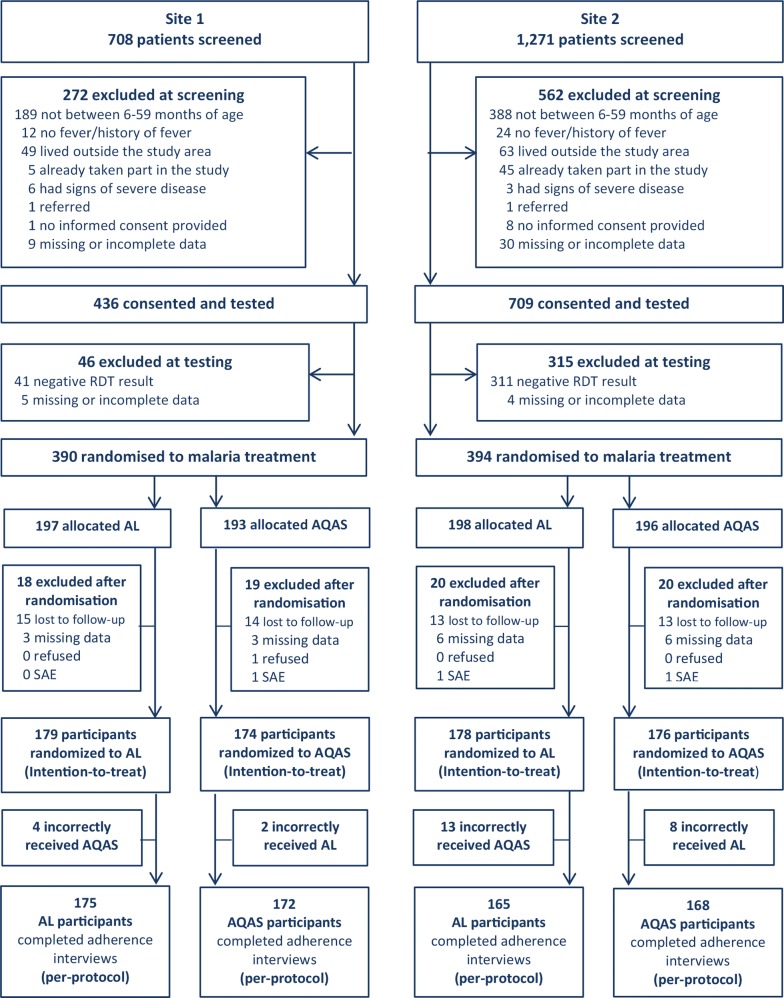
- Of 784 randomized children, 680 (85.6%) were included in the final per-protocol analysis: 340 in the AL group and 340 in the AQAS group.
- Definite adherence was higher for AL than AQAS at both sites:
- Site 1: 79.4% AL vs 63.4% AQAS, OR 2.16, 95% CI 1.34–3.49, p = 0.001
- Site 2: 52.1% AL vs 37.5% AQAS, OR 1.53, 95% CI 1.00–2.33, p = 0.049
- Self-reported adherence was >90% for both regimens and showed no strong evidence of treatment differences:
- Site 1: 96.6% AL vs 95.9% AQAS, p = 0.753
- Site 2: 91.5% AL vs 96.4% AQAS, p = 0.067
- In Site 2, correct treatment was lower for AL than AQAS: 75.8% vs 88.1%, OR 0.42, 95% CI 0.23–0.76, p = 0.004. More caregivers in the AQAS arm reported adverse events at both sites (Site 1: 3.4% vs 15.7%; Site 2: 15.2% vs 24.4%).
## Methods
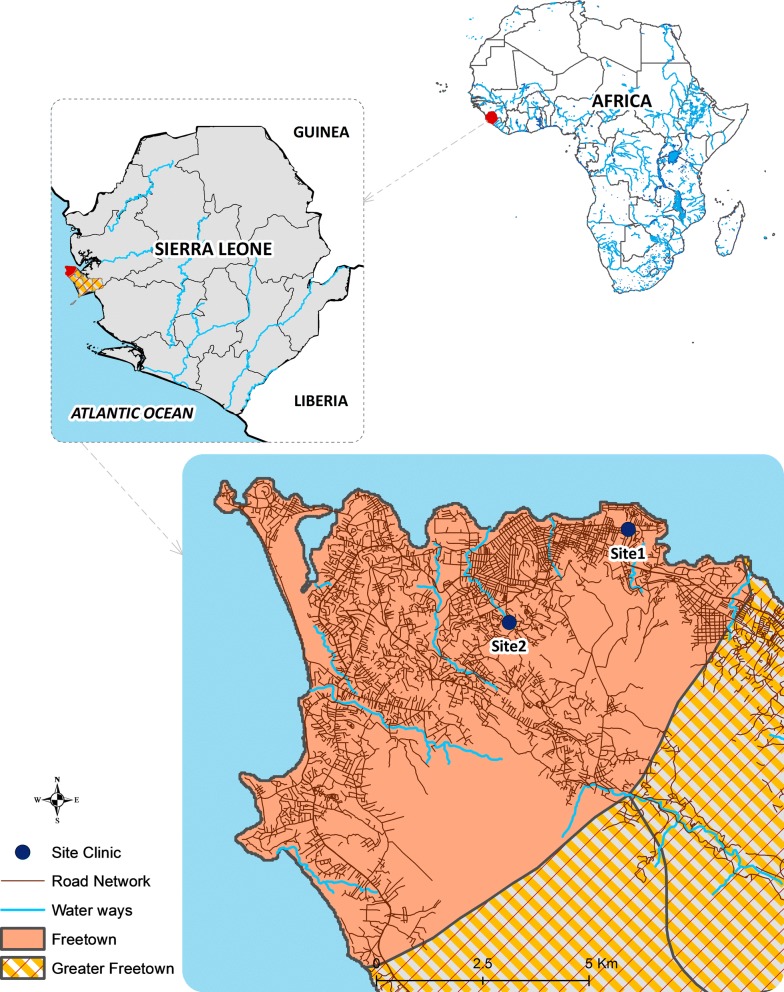
- Open-label, randomized trial conducted at two government-run outpatient facilities in Freetown, Sierra Leone, among children aged 6–59 months with positive malaria RDTs.
- Children were randomized to AL or AQAS and visited at home the day after treatment completion; 784 were randomized, and analyses were stratified by site.
- Primary adherence outcomes were based on self-report plus package inspection, recoded into self-reported adherence and package-based adherence; analyses used per-protocol as the main approach and compared results with intention-to-treat.
## Limitations
- The paper states that adherence measures were limited by bias: self-report is subject to social desirability bias, and package inspection depends on whether packaging is retained.
- The authors state that participant, caregiver, and household characteristics differed substantially between the two sites, so results were stratified by site; they note this variability may influence adherence.
- The paper states that exclusions after randomization and incorrect treatment allocation were unexpectedly frequent, especially at Site 2, though sensitivity analyses found ITT and per-protocol results were almost identical.
- Evident from the text: the study was open-label and participants/providers were not blinded, and home visits could have altered behavior, both of which may have inflated adherence estimates.
Model-written summary. Check it against the paper before relying on it.
Integrity signals
Registry
Cites
Statistics
Figures
Verification
Claims the paper makes
12 Valid · 1 Not valid · 9 Not checked · 62 Own results and interpretations
Every source the paper cites for this claim was checked and supports it.
In the paper
“Furthermore, evidence of the impact of co-formulation on adherence to ACT remains limited [3].”
§ Adherence to treatment with artemether–lumefantrine or amodiaquine–artesunate for uncomplicated malaria in children in Sierra Leone: a randomized trial > Background
What the sources say
- Supportedcites [3] Banek K Lalani M Staedke SG Chandramohan D Adherence to artemisinin-based combination therapy for the treatment of malaria: a systematic review of the evidence Malar J. 2014 13 7 10.1186/1475-2875-13-7 24386988 PMC3893456 source
The Discussion’s limitations section says only seven studies compared adherence between ACT formulations, leaving critical information lacking. The Results also report no adherence data for the co-formulated versions of ASMQ or DHA-PQ. These passages support the claim that evidence about co-formulation’s impact on adherence remains limited. (LLM, conf=0.91)
plain- Asserted: passes — The authors put it forward as true.
- Checkable: passes — It can be checked against evidence.
- Load-bearing: passes — The paper’s conclusions depend on it.
- Based: passes — The paper gives a reason why it holds.
- Supported
The sources with a verdict support this claim; the rest weren’t checked yet, have no full text we could read, or their verdicts aren’t rated yet.
In the paper
“Moreover, although this study did occur under ‘normal conditions’, the fact that providers and caregivers were observed, may have altered their behaviour as a result of participating in the study (participation bias), and influenced adherence outcomes [29, 69].”
§ Adherence to treatment with artemether–lumefantrine or amodiaquine–artesunate for uncomplicated malaria in children in Sierra Leone: a randomized trial > Discussion
What the sources say
- Supportedcites [29] Bruxvoort K Goodman C Kachur SP Schellenberg D How patients take malaria treatment: a systematic review of the literature on adherence to antimalarial drugs PLoS ONE 2014 9 e84555 10.1371/journal.pone.0084555 24465418 PMC3896377 source
The Discussion (page unavailable) says that patients’ awareness of being studied may change medication-taking behaviour and that observing consultations may change dispensers’ advice and patients’ attentiveness and adherence. The Results (Adherence results; page unavailable) likewise indicate that observed consultations may be associated with higher adherence. The paper discusses patients rather than caregivers specifically, but supports the participation-bias mechanism cited here. (LLM, conf=0.90)
- Not checked — no full text of the sourcecites [69] Leonard K Masatu MC Outpatient process quality evaluation and the Hawthorne effect Soc Sci Med 2006 63 2330 2340 10.1016/j.socscimed.2006.06.003 16887245 source
hedgedstates a possible cause- Asserted: passes — The authors put it forward as true.
- Checkable: passes — It can be checked against evidence.
- Load-bearing: unclear — It is unclear whether the paper’s conclusions depend on it.
- Based: passes — The paper gives a reason why it holds.
- Supported
The sources with a verdict support this claim; the rest weren’t checked yet, have no full text we could read, or their verdicts aren’t rated yet.
In the paper
“Effectiveness trials and cross-sectional studies have been shown to report higher adherence levels than prospective observational studies; however, even results from such studies vary [3, 30].”
§ Adherence to treatment with artemether–lumefantrine or amodiaquine–artesunate for uncomplicated malaria in children in Sierra Leone: a randomized trial > Discussion
What the sources say
- Supportedcites [3] Banek K Lalani M Staedke SG Chandramohan D Adherence to artemisinin-based combination therapy for the treatment of malaria: a systematic review of the evidence Malar J. 2014 13 7 10.1186/1475-2875-13-7 24386988 PMC3893456 source
The Discussion’s “Study designs” section says cross-sectional surveys and effectiveness studies reported higher adherence levels in its comparison of study designs, while noting that study design may account for the difference. The Results’ “Adherence to ACT” section also documents variation in reported adherence rates. Page numbers are not provided in our copy. (LLM, conf=0.93)
- Not checked — no full text of the sourcecites [30] Yeung S White NJ How do patients use antimalarial drugs? A review of the evidence Trop Med Int Health. 2005 10 121 138 10.1111/j.1365-3156.2004.01364.x 15679555 source
plainstates an association- Asserted: passes — The authors put it forward as true.
- Checkable: passes — It can be checked against evidence.
- Load-bearing: unclear — It is unclear whether the paper’s conclusions depend on it.
- Based: passes — The paper gives a reason why it holds.
- Supported
The cited sources support only part of this claim — read each source’s verdict below.
In the paper
“The complexity of the AL dosing regimen, including the number of tablets, twice daily dosing, the requirement to give the second dose 8 h after the first, and to administer with fatty food [43], has been shown to negatively impact treatment adherence [44, 45].”
§ Adherence to treatment with artemether–lumefantrine or amodiaquine–artesunate for uncomplicated malaria in children in Sierra Leone: a randomized trial > Discussion
What the sources say
- Not checked yetcites [43] Novartis Coartem monograph. vol 2005 4 Basel Novartis Pharma AG
- Partly supportedcites [44] Gore-Langton GR Alenwi N Mungai J Erupe NI Eves K Kimwana FN Patient adherence to prescribed artemisinin-based combination therapy in Garissa County, Kenya, after three years of health care in a conflict setting Malar J. 2015 14 125 10.1186/s12936-015-0645-z 25888895 PMC4405916 sourceExperimental — accuracy not yet measured
The Background describes AL’s comparatively complicated dosing regimen and lists treatment-schedule complexity among factors affecting adherence, but does not establish that complexity reduces adherence. In Results > Patient adherence, the only significant predictor in the multivariate model was patients’ recall of correct dosing instructions, not regimen complexity. The copy provides no page numbers for these passages. (LLM, conf=0.85)
- Partly supportedcites [45] Lin JT Juliano JJ Wongsrichanalai C Drug-resistant malaria: the era of ACT Curr Infect Dis Rep. 2010 12 165 173 10.1007/s11908-010-0099-y 21308525 PMC3058555 sourceExperimental — accuracy not yet measured
The Artemether-Lumefantrine section (page not provided) identifies twice-daily dosing and the need for a fat-containing meal as obstacles to optimal outcomes. It does not say that AL’s dosing complexity has been shown to reduce treatment adherence; it also reports high cure rates with unsupervised dosing. (LLM, conf=0.82)
plainstates a cause- Asserted: passes — The authors put it forward as true.
- Checkable: passes — It can be checked against evidence.
- Load-bearing: unclear — It is unclear whether the paper’s conclusions depend on it.
- Based: passes — The paper gives a reason why it holds.
A result the paper reports from its own data — it cites no other source for it, so there is none to check. The quote shows it is in the paper.
In the paper
“This variability in findings reflects differences in the retention of the drug package by caregivers, which was significantly higher at Site 1 than at Site 2 (263 [75.8%] vs 185 [52.6%], respectively, p < 0.001; Additional file 1).”
§ Adherence to treatment with artemether–lumefantrine or amodiaquine–artesunate for uncomplicated malaria in children in Sierra Leone: a randomized trial > Results > Adherence
plain- Asserted: passes — The authors put it forward as true.
- Checkable: passes — It can be checked against evidence.
- Load-bearing: passes — The paper’s conclusions depend on it.
- Based: passes — The paper gives a reason why it holds.
26 more claims
Create a free account to see all 84 claims and to verify the 4 references still open.
- It may state two separate claims as one. 31
- Probably not a substantial claim. 29
Citations
Cites
Osterberg, L., & Blaschke, T. (2005) · New England Journal of Medicine · doi:10.1056/nejmra050100 · Cited by 7,974 · cited 1×
“Although package inspections and pill counts serve as a gold standard for measuring adherence to treatment of other diseases [54, 65] the heterogeneity of this outcome measure in malaria studies limits comparison of adherence to regimens across studies.”
BackgroundKirk, J., MacDonald, A., Lavender, P., Dean, J., & Rubin, G. (2017) · Biomedicine Hub · doi:10.1159/000480347 · Cited by 3,887
Constructing socio-economic status indices: how to use principal components analysis
Vyas, S., & Kumaranayake, L. (2006) · Health Policy and Planning · doi:10.1093/heapol/czl029 · Cited by 3,280 · cited 1×
“The wealth index was created using principle component analysis (PCA) [31].”
MethodFarmer, K. C. (1999) · Clinical Therapeutics · doi:10.1016/s0149-2918(99)80026-5 · Cited by 889 · cited 2×
“Although package inspections and pill counts serve as a gold standard for measuring adherence to treatment of other diseases [54, 65] the heterogeneity of this outcome measure in malaria studies limits comparison of adherence to regimens across studies.”
BackgroundOutpatient process quality evaluation and the Hawthorne Effect
Leonard, K., & Masatu, M. C. (2006) · Social Science & Medicine · doi:10.1016/j.socscimed.2006.06.003 · Cited by 278 · cited 1×
“Moreover, although this study did occur under ‘normal conditions’, the fact that providers and caregivers were observed, may have altered their behaviour as a result of participating in the study (participation bias), and influenced adherence outcomes [29, 69].”
ResultEffects of the West Africa Ebola Virus Disease on Health-Care Utilization – A Systematic Review
Brolin Ribacke, K. J., Saulnier, D. D., Eriksson, A., & von Schreeb, J. (2016) · Frontiers in Public Health · doi:10.3389/fpubh.2016.00222 · Cited by 257
Do fixed-dose combination pills or unit-of-use packaging improve adherence? A systematic review.
CONNOR, J. L., Rafter, N., & Rodgers, A. (2004) · Europe PMC (PubMed Central) · Cited by 197
Walker, P. G. T., White, M. T., Griffin, J. T., Reynolds, A., Ferguson, N. M., & Ghani, A. C. (2015) · The Lancet Infectious Diseases · doi:10.1016/s1473-3099(15)70124-6 · Cited by 167
Mubi, M., Janson, A., Warsame, M., Mårtensson, A., Källander, K., Petzold, M. G., Ngasala, B., Maganga, G., Gustafsson, L. L., Massele, A., et al. (2011) · PLoS ONE · doi:10.1371/journal.pone.0019753 · Cited by 155
FOGG, C., BAJUNIRWE, F., PIOLA, P., BIRARO, S., CHECCHI, F., KIGULI, J., NAMIIRO, P., MUSABE, J., KYOMUGISHA, A., & GUTHMANN, J.-P. (2004) · The American Journal of Tropical Medicine and Hygiene · doi:10.4269/ajtmh.2004.71.525 · Cited by 139 · cited 1×
“A variety of approaches have been used to incorporate package inspection in the classification of adherence outcome [36, 59, 60].”
MethodBruxvoort, K., Goodman, C., Kachur, S. P., & Schellenberg, D. (2014) · PLoS ONE · doi:10.1371/journal.pone.0084555 · Cited by 135 · cited 5×
“Moreover, although this study did occur under ‘normal conditions’, the fact that providers and caregivers were observed, may have altered their behaviour as a result of participating in the study (participation bias), and influenced adherence outcomes [29, 69].”
BackgroundMethodResultInfluentialBanek, K., Lalani, M., Staedke, S. G., & Chandramohan, D. (2014) · Malaria Journal · doi:10.1186/1475-2875-13-7 · Cited by 125 · cited 9×
“Furthermore, evidence of the impact of co-formulation on adherence to ACT remains limited [3].”
BackgroundMethodResultInfluentialSelf-citationHow do patients use antimalarial drugs? A review of the evidence
Yeung, S., & White, N. J. (2005) · Tropical Medicine & International Health · doi:10.1111/j.1365-3156.2004.01364.x · Cited by 124 · cited 3×
“Effectiveness trials and cross-sectional studies have been shown to report higher adherence levels than prospective observational studies; however, even results from such studies vary [3, 30].”
MethodResultDrug-Resistant Malaria: The Era of ACT
Lin, J. T., Juliano, J. J., & Wongsrichanalai, C. (2010) · Current Infectious Disease Reports · doi:10.1007/s11908-010-0099-y · Cited by 121 · cited 1×
“The complexity of the AL dosing regimen, including the number of tablets, twice daily dosing, the requirement to give the second dose 8 h after the first, and to administer with fatty food [43], has been shown to negatively impact treatment adherence [44, 45].”
BackgroundAnsah, E. K., Gyapong, J. O., Agyepong, I. A., & Evans, D. B. (2001) · Tropical Medicine & International Health · doi:10.1046/j.1365-3156.2001.00740.x · Cited by 113
A Research Agenda for Malaria Eradication: Health Systems and Operational Research
The malERA Consultative Group on Health Systems and Operational Research (2011) · PLoS Medicine · doi:10.1371/journal.pmed.1000397 · Cited by 111
Improving on a Coin Toss To Predict Patient Adherence to Medications
Turner, B. J., & Hecht, F. M. (2001) · Annals of Internal Medicine · doi:10.7326/0003-4819-134-10-200105150-00015 · Cited by 97 · cited 1×
“Package inspection and pill counts, while more ‘objective’ measures [54, 55], are dependent on the availability of packaging.”
BackgroundAchan, J., Tibenderana, J. K., Kyabayinze, D., Wabwire Mangen, F., Kamya, M. R., Dorsey, G., D'Alessandro, U., Rosenthal, P. J., & Talisuna, A. O. (2009) · BMJ · doi:10.1136/bmj.b2763 · Cited by 96 · cited 1×
“Instead, examining the quality of treatment, including whether the correct number of tablets were given at the correct frequency for the correct number of days, may provide a more accurate picture of treatment adherence [35, 37, 59, 63, 66].”
BackgroundImpact of prepackaging antimalarial drugs on cost to patients and compliance with treatment.
Yeboah‐Antwi, K., Gyapong, J. O., Asare, I. K., Barnish, G., Evans, D., & Adjei, S. (2001) · Europe PMC (PubMed Central) · Cited by 92
Cf, H. (1954) · The Lancet · doi:10.1016/s0140-6736(54)92225-4 · Cited by 90
Bell, D. J., Wootton, D., Mukaka, M., Montgomery, J., Kayange, N., Chimpeni, P., Hughes, D. A., Molyneux, M. E., Ward, S. A., Winstanley, P. A., et al. (2009) · Malaria Journal · doi:10.1186/1475-2875-8-204 · Cited by 76
Raifman, J. R. G., Lanthorn, H. E., Rokicki, S., & Fink, G. (2014) · PLoS ONE · doi:10.1371/journal.pone.0109032 · Cited by 75 · cited 3×
“may not be the most accurate measurement of ACT adherence [36].”
BackgroundMethodAdherence to Treatment With Artemether-Lumefantrine for Uncomplicated Malaria in Rural Malawi
Mace, K. E., Mwandama, D., Jafali, J., Luka, M., Filler, S. J., Sande, J., Ali, D., Kachur, S. P., Mathanga, D. P., & Skarbinski, J. (2011) · Clinical Infectious Diseases · doi:10.1093/cid/cir498 · Cited by 73 · cited 1×
“In other studies, package inspection has been included in the methods, but either excluded from the analysis [62], or not utilized altogether.”
MethodDélamou, A., Delvaux, T., Ayadi, A. M. E., Béavogui, A. H., Okumura, J., Damme, W. V., & Brouwere, V. D. (2017) · BMJ Global Health · doi:10.1136/bmjgh-2016-000202 · Cited by 72
Beer, N., Ali, A. S., Rotllant, G., Abass, A. K., Omari, R. S., Al‐mafazy, A. H., Björkman, A., & Källander, K. (2009) · Tropical Medicine & International Health · doi:10.1111/j.1365-3156.2009.02289.x · Cited by 64 · cited 1×
“In Sierra Leone, adherence to co-packaged AQ + AS was only 48% [20], while in Zanzibar and Ghana adherence to AQ + AS was much higher (77 and 93%, respectively) [39, 40].”
BackgroundAbdulla, S., & Sagara, I. (2009) · Malaria Journal · doi:10.1186/1475-2875-8-s1-s7 · Cited by 63 · cited 1×
“Pharmaceutical companies have focused on producing child-friendly ACT formulations, including smaller tablets, dispersible tablets, and improved weight-for-age dosing recommendations [10, 12, 51, 52].”
BackgroundFaucher, J., Aubouy, A., Adeothy, A., Cottrell, G., Doritchamou, J., Gourmel, B., Houzé, P., Kossou, H., Amedome, H., Massougbodji, A., et al. (2009) · The Journal of Infectious Diseases · doi:10.1086/599378 · Cited by 61 · cited 4×
“7% of AQAS packages) [24], in contrast to this study, in which more AL packages were retained.”
BackgroundResultInfluentialBompart, F., Kiechel, J.-R., Sebbag, R., & Pecoul, B. (2011) · Malaria Journal · doi:10.1186/1475-2875-10-143 · Cited by 58
Lemma, H., Löfgren, C., & San Sebastian, M. (2011) · Malaria Journal · doi:10.1186/1475-2875-10-349 · Cited by 54 · cited 2×
“Likewise, in Ethiopia, difficulties with package retention over many days were reported, suggesting that presence of packaging may not be indicative of true adherence [50].”
BackgroundMethodRahman, M. M., Dondorp, A. M., Day, N. P. J., Lindegardh, N., Imwong, M., Faiz, M. A., Bangali, A. M., Kamal, A. T. M. M., Karim, J., Kaewkungwal, J., et al. (2008) · Transactions of the Royal Society of Tropical Medicine and Hygiene · doi:10.1016/j.trstmh.2008.05.022 · Cited by 54
Cohen, J. L., Yavuz, E., Morris, A., Arkedis, J., & Sabot, O. (2012) · Malaria Journal · doi:10.1186/1475-2875-11-83 · Cited by 45 · cited 1×
“Specifically, variations in the age of participating children, level of caregiver education, household religion and socioeconomic position were found, all of which may influence treatment adherence [3, 29, 67, 68].”
BackgroundGerstl, S., Dunkley, S., Mukhtar, A., Baker, S., & Maikere, J. (2010) · Transactions of the Royal Society of Tropical Medicine and Hygiene · doi:10.1016/j.trstmh.2009.12.008 · Cited by 41 · cited 3×
“In Sierra Leone, adherence to co-packaged AQ + AS was only 48% [20], while in Zanzibar and Ghana adherence to AQ + AS was much higher (77 and 93%, respectively) [39, 40].”
BackgroundBruxvoort, K., Festo, C., Cairns, M., Kalolella, A., Mayaya, F., Kachur, S. P., Schellenberg, D., & Goodman, C. (2015) · PLOS ONE · doi:10.1371/journal.pone.0134275 · Cited by 37 · cited 3×
“Recently studies measuring anti-malarial adherence have presented per-dose adherence measurements [36, 59, 61], this approach is useful as it can illustrate at which point patients stop taking their medications.”
BackgroundMethodCohen, J. L., & Saran, I. (2018) · Journal of Development Economics · doi:10.1016/j.jdeveco.2018.04.008 · Cited by 36 · cited 1×
“Prior research suggests that novel drug packages, that aim to educate or market a drug regimen, may be more attractive or appealing, and thus may be more likely to be retained [56, 57], thus impacting on measures of adherence that incorporate data from package examinations, or may impact adherence directly [58].”
BackgroundChecchi, F., Roddy, P., Kamara, S., et al. (2005) · Tropical Medicine & International Health · doi:10.1111/j.1365-3156.2004.01367.x · Cited by 35 · cited 1×
“In 2004, co-packaged amodiaquine plus artesunate (AQ + AS) was adopted as the first-line recommended treatment of malaria, primarily due to affordability and availability, with artemether–lumefantrine (AL) as an alternative if AQ + AS was not available, or was ineffective [19].”
MethodTalisuna, A. O., Oburu, A., Githinji, S., Malinga, J., Amboko, B., Bejon, P., Jones, C. O. H., Snow, R. W., & Zurovac, D. (2017) · Malaria Journal · doi:10.1186/s12936-017-1702-6 · Cited by 35 · cited 2×
“Under trial conditions, blister packages have been retained and inspected with results successfully incorporated into the outcome measurement [61].”
BackgroundMethodAbdulla, S., Amuri, B., Kabanywanyi, A. M., Ubben, D., Reynolds, C., Pascoe, S., Fitoussi, S., Yeh, C.-M., Nuortti, M., Séchaud, R., et al. (2010) · Malaria Journal · doi:10.1186/1475-2875-9-253 · Cited by 34 · cited 1×
“Pharmaceutical companies have focused on producing child-friendly ACT formulations, including smaller tablets, dispersible tablets, and improved weight-for-age dosing recommendations [10, 12, 51, 52].”
BackgroundKolaczinski, J. H., Ojok, N., Opwonya, J., Meek, S., & Collins, A. (2006) · Malaria Journal · doi:10.1186/1475-2875-5-40 · Cited by 33
Asante, K. P., Owusu, R., Dosoo, D., Awini, E., Adjei, G., Amenga Etego, S., Chandramohan, D., & Owusu-Agyei, S. (2009) · Journal of Tropical Medicine · doi:10.1155/2009/529583 · Cited by 31 · cited 1×
“In Sierra Leone, adherence to co-packaged AQ + AS was only 48% [20], while in Zanzibar and Ghana adherence to AQ + AS was much higher (77 and 93%, respectively) [39, 40].”
BackgroundSelf-citationIntervention to Promote Patients' Adherence to Antimalarial Medication: A Systematic Review
Fuangchan, A., Dhippayom, T., & Kongkaew, C. (2014) · The American Society of Tropical Medicine and Hygiene · doi:10.4269/ajtmh.12-0598 · Cited by 27 · cited 1×
“Prior research suggests that novel drug packages, that aim to educate or market a drug regimen, may be more attractive or appealing, and thus may be more likely to be retained [56, 57], thus impacting on measures of adherence that incorporate data from package examinations, or may impact adherence directly [58].”
BackgroundBruxvoort, K., Festo, C., Kalolella, A., Cairns, M., Lyaruu, P., Kenani, M., Kachur, S. P., Goodman, C., & Schellenberg, D. (2014) · The American Society of Tropical Medicine and Hygiene · doi:10.4269/ajtmh.14-0126 · Cited by 27 · cited 2×
“For example, although the packaging was part of the outcome definition, the proportion of packaging available was not reported in a number of studies [35, 41, 42].”
BackgroundCairns, M., Cisse, B., Sokhna, C., Cames, C., Simondon, K., Ba, E. H., Trape, J.-F., Gaye, O., Greenwood, B. M., & Milligan, P. J. M. (2010) · Antimicrobial Agents and Chemotherapy · doi:10.1128/aac.01161-09 · Cited by 26 · cited 1×
“In contrast, while AQAS has been optimized to be dosed only once daily [46–48], its bitter taste and greater likelihood of adverse events make it more difficult to administer to children [49, 50], and may reduce adherence as found in this study.”
MethodUnit-dose packaged drugs for treating malaria
Orton, L. C., & Barnish, G. (2005) · Cochrane Database of Systematic Reviews · doi:10.1002/14651858.cd004614.pub2 · Cited by 25 · cited 1×
“Strategies to improve adherence, including co-packaging anti-malarial drugs into blister packs [5, 6], and co-formulating the partner drugs of ACT into a single tablet, have been applied successfully [7, 8].”
Dunyo, S., Sirugo, G., Sesay, S., Bisseye, C., Njie, F., Adiamoh, M., Nwakanma, D., Diatta, M., Janha, R., Sisay Joof, F., et al. (2011) · PLoS ONE · doi:10.1371/journal.pone.0017371 · Cited by 25
Lacaze, C., Kauss, T., Kiechel, J.-R., Caminiti, A., Fawaz, F., Terrassin, L., Cuart, S., Grislain, L., Navaratnam, V., Ghezzoul, B., et al. (2011) · Malaria Journal · doi:10.1186/1475-2875-10-142 · Cited by 24
Ratsimbasoa, A., Ravony, H., Vonimpaisomihanta, J.-A., Raherinjafy, R., Jahevitra, M., Rapelanoro, R., Rakotomanga, J. D. D. M., Malvy, D., Millet, P., & Ménard, D. (2012) · The American Society of Tropical Medicine and Hygiene · doi:10.4269/ajtmh.2012.11-0047 · Cited by 22
Fixed artesunate–amodiaquine combined pre-formulation study for the treatment of malaria
Kauss, T., Fawaz, F., Guyot, M., Lagueny, A.-M., Dos Santos, I., Bonini, F., Olliaro, P., Caminiti, A., & Millet, P. (2010) · International Journal of Pharmaceutics · doi:10.1016/j.ijpharm.2010.05.038 · Cited by 20 · cited 1×
“Although co-formulation may improve the accuracy of prescription and ease of administration of ACT [9], it may not solve all treatment challenges, including complex dosing, bitter taste, and side effects [10–13].”
BackgroundGore-Langton, G. R., Alenwi, N., Mungai, J., Erupe, N. I., Eves, K., Kimwana, F. N., Soti, D., Akhwale, W., Hassan, F. A., Juma, E., et al. (2015) · Malaria Journal · doi:10.1186/s12936-015-0645-z · Cited by 18 · cited 2×
“The complexity of the AL dosing regimen, including the number of tablets, twice daily dosing, the requirement to give the second dose 8 h after the first, and to administer with fatty food [43], has been shown to negatively impact treatment adherence [44, 45].”
BackgroundBruxvoort, K., Kalolella, A., Cairns, M., Festo, C., Kenani, M., Lyaruu, P., Kachur, S. P., Schellenberg, D., & Goodman, C. (2015) · Malaria Journal · doi:10.1186/s12936-015-0602-x · Cited by 16 · cited 2×
“In others, the package information although collected, was not utilized and only self-reported (probable) adherence rates were reported [44, 63, 64].”
BackgroundSiddiqui, M. R., Willis, A., Bil, K., Singh, J., Mukomena Sompwe, E., & Ariti, C. (2015) · F1000Research · doi:10.12688/f1000research.6122.1 · Cited by 13
Methodological reasons for not gaining prior informed consent are sometimes justified
Dawson, A. (2004) · BMJ · doi:10.1136/bmj.38112.692211.f7 · Cited by 13
Liu, J. X., & Modrek, S. (2016) · Health Policy and Planning · doi:10.1093/heapol/czw076 · Cited by 13
Gerstl, S., Namagana, A., Palacios, L., Mweshi, F., Aprile, S., & Lima, A. (2015) · Malaria Journal · doi:10.1186/s12936-015-0933-7 · Cited by 11 · cited 2×
“Two recent studies from The Democratic Republic of Congo reported adherence to fixeddose AQAS to be 75 and 62% [41, 42], and in a study in Madagascar, adherence to AQAS was even higher (90%) [28].”
BackgroundResultHamel, M. J., & Slutsker, L. (2015) · The Lancet Infectious Diseases · doi:10.1016/s1473-3099(15)70167-2 · Cited by 11
Talisuna, A. O. (2014) · Journal of Clinical Trials · doi:10.4172/2167-0870.1000217 · Cited by 10
Saran, I., Yavuz, E., Kasozi, H., & Cohen, J. L. (2016) · American Journal of Tropical Medicine and Hygiene · doi:10.4269/ajtmh.15-0420 · Cited by 9 · cited 1×
“In others, the package information although collected, was not utilized and only self-reported (probable) adherence rates were reported [44, 63, 64].”
BackgroundMoses, F., Tamang, D., Denisiuk, O., Dumbuya, U., Hann, K., & Zachariah, R. (2017) · Public Health Action · doi:10.5588/pha.16.0085 · Cited by 7
Socioeconomic Determinants of Antimalarial Drug Use Behaviours: A Systematic Review
Anyanwu, P. E., & Fulton, J. (2016) · Journal of Community & Public Health Nursing · doi:10.4172/2471-9846.1000123 · Cited by 7 · cited 1×
“Specifically, variations in the age of participating children, level of caregiver education, household religion and socioeconomic position were found, all of which may influence treatment adherence [3, 29, 67, 68].”
BackgroundAlternative form of artemether-lumefantrine for infants
Teklehaimanot, A., & Teklehaimanot, H. D. (2008) · The Lancet · doi:10.1016/s0140-6736(08)61493-2 · Cited by 6 · cited 1×
“Pharmaceutical companies have focused on producing child-friendly ACT formulations, including smaller tablets, dispersible tablets, and improved weight-for-age dosing recommendations [10, 12, 51, 52].”
BackgroundThe Unmet Needs of Paediatric Therapeutics in Poor Countries
Bassat, Q. (2015) · Journal of Tropical Pediatrics · doi:10.1093/tropej/fmv081 · Cited by 4 · cited 1×
“As new anti-malarial drugs are developed and evaluated for effectiveness, it will be important to assess child-friendly regimens that are palatable and easy to administer, in order maximize treatment adherence and outcomes in those affected most by malaria [53].”
BackgroundTadesse, A. N., & Eshetu, E. M. (2014) · Journal of Scientific and Innovative Research · doi:10.31254/jsir.2014.3117 · Cited by 4 · cited 1×
“Pharmaceutical companies have focused on producing child-friendly ACT formulations, including smaller tablets, dispersible tablets, and improved weight-for-age dosing recommendations [10, 12, 51, 52].”
Background(2014) · doi:10.1257/rct.490-1.0
Research works printed but not linked: 8
- WHO T3: test, treat, track initiative 2012 Geneva World Health Organization
- WHO Guidelines for the treatment of malaria 2015 3 Geneva World Health Organization 26020088
- National Malaria Control Programme (NMCP) Guidelines for case management of malaria 2015 Freetown Government of Sierra Leone Ministry of Health and Sanitation
- WHO Guidelines for the treatment of malaria 2010 2 Geneva World Health Organization 25473692
- Sierra Leone Ministry of Health and Sanitation Guidelines for case management of malaria in Sierra Leone 2010 3 Freetown Sierra Leone Ministry of Health and Sanitation
- WHO World Malaria Report 2016 2017 Geneva World Health Organization
- Novartis Coartem monograph. vol 2005 4 Basel Novartis Pharma AG
- Drugs for Neglected Diseases Initiative (DNDi). Press Pack for ASAQ. 2007.
Cited by
Strategies to Improve Antimicrobial Utilization with a Special Focus on Developing Countries
Godman, B., Egwuenu, A., Haque, M., Malande, O. O., Schellack, N., Kumar, S., Saleem, Z., Sneddon, J., Hoxha, I., Islam, S., et al. (2021) · Life · doi:10.3390/life11060528 · Cited by 237
Godman, B., McCabe, H., Leong, T. D. D., Mueller, D., Martin, A. P., Hoxha, I., Mwita, J. C., Rwegerera, G. M., Massele, A. Y., Costa, J. D. O., et al. (2020) · Expert Review of Pharmacoeconomics & Outcomes Research · doi:10.1080/14737167.2020.1734456 · Cited by 111
“may enhance its overall utility in routine clinical care [272].”
BackgroundInfluentialYeka, A., Manego, R. Z., Ouoba, S., Tiono, A. B., Kaguthi, G., Bonzela, J., Duong, T. T., Nahum, A., Bouyou-Akotet, M. K., Ogutu, B. R., et al. (2021) · Malaria Journal · doi:10.1186/s12936-021-03749-4 · Cited by 62
Zupko, R., Nguyen, T. D., Ngabonziza, J. C. S., Kabera, M., Li, H., Tran, T. N.-A., Tran, K. T., Uwimana, A., & Boni, M. F. (2023) · Nature Medicine · doi:10.1038/s41591-023-02551-w · Cited by 47
“…in practice, 100% compliance is unlikely and adherence rates may be complicated by under-dosing, over-dosing and formulation design (that is, fixed-dose combination versus copackaged blister packs), resulting in real-world compliance rates between 65% and 90% for a 3-d course of treatment 33,34 .”
BackgroundGarg, S., Gurung, P., Dewangan, M., & Nanda, P. (2020) · Malaria Journal · doi:10.1186/s12936-020-03285-7 · Cited by 22
Metadata
- Authors
- Banek, K., Webb, E. L., Smith, S. J., Chandramohan, D., & Staedke, S. G.
- Affiliations
- London School of Hygiene & Tropical Medicine (GB)
- Ministry of Health and Sanitation (SL)
- Corresponding author
- Banek, Kristin
- Venue
- Malaria Journal
- Published
- 2018-06-04
- Volume
- 17
- Issue
- 1
- Pages
- 222-222
- ISSN
- 1475-2875 (ISSN-L)
- PMC
- PMC5987409
- OpenAlex
- W2806362238
- Semantic Scholar
- bb2e84a607aaff4560e4818525dae2a865974964
- Cited by
- 25
- References
- 62
- Citations by year
- 2026: 2 · 2023: 3 · 2022: 3 · 2021: 12 · 2020: 3 · 2019: 2
- FWCI
- 3.97
- Type
- journal article
- Language
- en
- Open access
- gold
- doi.org
- Licence
- cc-by
- creativecommons.org/licenses/by/4.0 (tdm)
- creativecommons.org/licenses/by/4.0 (vor)
- Locations
- Malaria Journal (publishedVersion, cc-by)
- Europe PMC (PubMed Central) (publishedVersion, cc-by)
- PubMed Central (publishedVersion, cc-by)
- PubMed (publishedVersion)
- LSHTM Research Online (London School of Hygiene and Tropical Medicine) (acceptedVersion)
- DOAJ (DOAJ: Directory of Open Access Journals) (submittedVersion, cc-by-sa)
- Funders
- American Association of University Women
- Medical Research Council (MR/K012126/1)
- Topics
- Health Sciences › Medicine › Public Health, Environmental and Occupational Health › Malaria Research and Control
- Health Sciences › Medicine › Family Practice › Medication Adherence and Compliance
- Health Sciences › Medicine › Infectious Diseases › HIV/AIDS Research and Interventions
- Keywords
- medication adherence, artemether-lumefantrine, uncomplicated malaria, pediatric malaria, artemisinin-based combination therapy, fixed-dose combination, self-reported adherence, caregiver adherence, Sierra Leone
- MeSH terms
- Artemether, Lumefantrine Drug Combination, Amodiaquine, Antimalarials, Child, Child, Preschool, Drug Combinations, Female, Humans, Infant, Malaria, Male, Patient Compliance, Retrospective Studies, Sierra Leone, Artemisinins
About these checks
Registry, retraction, Cites and statistics results are computed, not judged, with one exception: a printed reference that no index lists is read once by a model before it counts as a citation error. Claims are extracted by a model and kept only when their quote appears verbatim in the text; each cited source is then checked, with a model’s help, for whether it says what the claim relies on. Those verdicts can be wrong — read the claim’s quote and the cited source before relying on one.
The claim verdicts this report counts are experimental: their accuracy is not yet measured.
A language model drew the claims from the paper on 2026-10-10, under version 3 of the claim definition (model deepseek-v4.1-flash, prompt extract-v3).
A second model labelled each claim on 2026-10-10 (model jev-1.13-20260917, definition revision gold-guideline-v0.2).
Cited sources are checked with a language model’s help (gpt-6-sol).
Statistics and arithmetic are recomputed, not judged.
Confidence bands are shown only for fields calibrated on our annotated test set. None is calibrated yet, so no band is shown.
What counts as a claim ›How we measure confidence ›How we check this ›
Are you an author, or do you see a problem with this page? Request a review
Data sources
Bibliographic data: Semantic Scholar, OpenAlex, Crossref.
Contains information from the Semantic Scholar Academic Graph Datasets, made available under the ODC Attribution License (ODC-BY 1.0).
Semantic Scholar’s data is described in: Kinney, R., et al. (2023). The Semantic Scholar Open Data Platform. arXiv:2301.10140.
