

Low and heterogeneous prevalence of glucose-6-phosphate dehydrogenase deficiency in different settings in Ethiopia using phenotyping and genotyping approaches
Open accessThe DOI matches its Crossref record; 61 of the 61 references it cites were found in a registry or an index; none of the 70 sources its claims cite is checked for support yet.
Abstract
BACKGROUND: 8-Aminoquinolines such as primaquine clear mature Plasmodium falciparum gametocytes that are responsible for transmission from human to mosquitoes and bring radical cure in Plasmodium vivax by clearing dormant liver stages. Deployment of primaquine is thus of relevance for malaria elimination efforts but challenged by the widespread prevalence of glucose-6-phosphate dehydrogenase deficiency (G6PDd) in endemic countries since primaquine in G6PDd individuals may lead to acute haemolysis. In this study, the prevalence of G6PDd was investigated in different settings in Ethiopia using phenotyping and genotyping approaches. METHODS: Community and school based cross-sectional surveys were conducted from October to December 2016 in four administrative regions (Gambela, Benishangul Gumuz, Oromia, and Amhara) in Ethiopia. Finger prick blood samples were collected for G6PD enzyme activity using the CareStart™ G6PD screening test and genotyping of 36 selected single nucleotide polymorphisms (SNPs) located in the G6PD gene and its flanking regions. RESULTS: Overall, the prevalence of phenotypic G6PDd was 1.4% (22/1609). For the first time in the Ethiopian population, the African variant (A-) was detected in 3.5% (7/199) of the limited set of genotyped samples, which were all phenotypically normal. Interestingly, all of these individuals had a variation at the rs2515904 locus. Strong geographical variation was observed for both phenotypic and genotypic G6PDd; three-quarters of the phenotypically G6PDd individuals were detected in Gambela. CONCLUSION: A very low prevalence of G6PDd was detected in the present study populations. The presence of the A- variant alongside other G6PD mutants and the patchy distribution of G6PDd indicate that larger studies specifically designed to unravel the distribution of G6PDd at small geographical scale may be needed to tailor malaria elimination efforts in Ethiopia to the local context.
Overview
CoChat Summary
TL;DR
In cross-sectional surveys across four Ethiopian regions, phenotypic G6PD deficiency was very low overall (1.4%, 22/1609) but geographically heterogeneous, with three-quarters of deficient individuals detected in Gambela. Genotyping detected the African A− variant for the first time in an Ethiopian population (3.5%, 7/199), all in phenotypically normal individuals, supporting tailored rather than blanket primaquine deployment.
Key findings
- Overall phenotypic G6PD deficiency by CareStart™ was 1.4% (22/1609; 95% CI 1.0–2.1); participants had a median age of 14 years (IQR 10–30), and 46.3% (745/1609) were female.
- Marked geographic variation was observed: 16/22 phenotypically deficient individuals were from Gambela, where Abobo had 6.6% (95% CI 3.5–11.0) and Lare had 1.5% (95% CI 0.3–4.4); other sites had lower or zero prevalence.
- Among 199 genotyped samples, the African A− variant was detected in 3.5% (7/199); all A− carriers were phenotypically normal and all had variation at rs2515904. A376G was detected in 34 individuals (17.1%, 95% CI 12.1–23.0), G202A in 7 (3.5%, 95% CI 1.4–7.1), and all G202A carriers also carried A376G.
- Most phenotypically deficient individuals had no SNPs detected in the G6PD gene, and the A− variant did not explain the observed phenotypic deficiency.
Methods
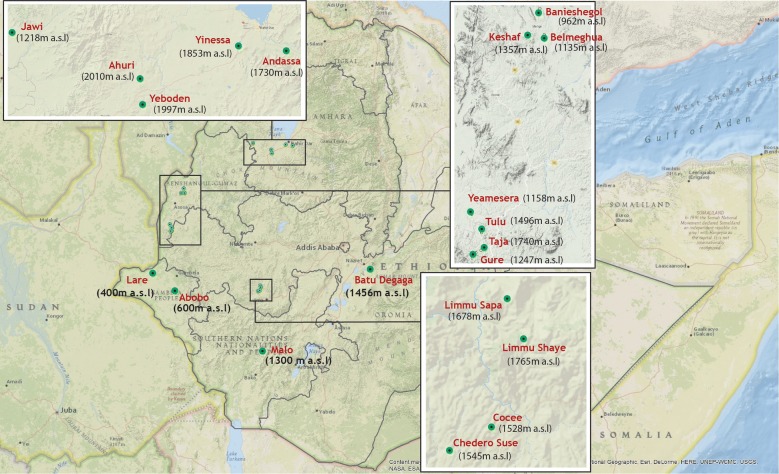
- Community- and school-based cross-sectional surveys were conducted from October to December 2016 in nine Woredas across Gambela, Benishangul Gumuz, Oromia, and Amhara Regional States; finger-prick blood samples were collected.
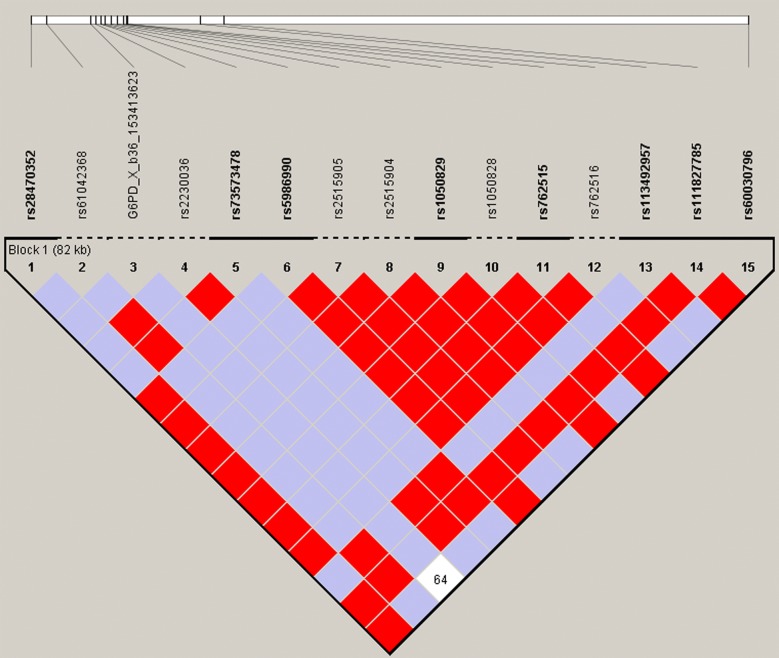
- Phenotyping used the CareStart™ G6PD screening test; dried blood spots were used for DNA extraction, and 36 SNPs in the G6PD gene and flanking regions were genotyped by KASP™ in 22 phenotypically deficient and 211 randomly selected phenotypically normal samples. After quality control, analyses focused on 15 SNPs, and A− prevalence is reported for 199 genotyped samples.
- Data were managed in RedCap and analyzed with STATA 13, GraphPad Prism 5.0, and Haploview 4.2 for linkage disequilibrium and haplotype analysis; 95% confidence intervals were presented, and no sample size calculations were performed prior to data collection.
Limitations
- The authors state that genotyping included selected G6PD-deficient and G6PD-normal individuals, so the lack of an unbiased population makes it challenging to derive meaningful allele frequencies; they also state that the sample size was too small to estimate phenotypic G6PD deficiency and mutation frequencies, or their associations with RDT performance, with precision.
- The authors state that the very small genotyping sample size could have contributed to the observed geographic clustering, and that no sample size calculations were performed before data collection.
- The authors note that qualitative point-of-care tests such as CareStart™ may fail to accurately identify individuals with intermediate deficiency (30–80% normal enzymatic activity, mainly heterozygous females), and that linkage disequilibrium/haplotype analysis could not be stratified by gender, ethnicity, or study setting due to the small number of genotyped samples.
Model-written summary. Check it against the paper before relying on it.
Integrity signals
Registry
Cites
Statistics
Figures
Verification
Claims the paper makes
0 Valid · 0 Not valid · 44 Not checked · 56 Own results and interpretations
A result the paper reports from its own data — it cites no other source for it, so there is none to check. The quote shows it is in the paper.
In the paper
“All individuals with the A− variant (male hemizygotes and female heterozygotes) were found carrying a variation at the rs2515904 locus (4.6%, 95% CI 2.1–8.5).”
§ Low and heterogeneous prevalence of glucose-6-phosphate dehydrogenase deficiency in different settings in Ethiopia using phenotyping and genotyping approaches > Results
plain- Asserted: passes — The authors put it forward as true.
- Checkable: passes — It can be checked against evidence.
- Load-bearing: unclear — It is unclear whether the paper’s conclusions depend on it.
- Based: passes — The paper gives a reason why it holds.
A result the paper reports from its own data — it cites no other source for it, so there is none to check. The quote shows it is in the paper.
In the paper
“Taken together, all individuals that carried the G202A variant also carried the A376G mutations and the A− African variant could not explain the phenotypic variation observed in the present study.”
§ Low and heterogeneous prevalence of glucose-6-phosphate dehydrogenase deficiency in different settings in Ethiopia using phenotyping and genotyping approaches > Results
plainstates an association- Asserted: passes — The authors put it forward as true.
- Checkable: passes — It can be checked against evidence.
- Load-bearing: passes — The paper’s conclusions depend on it.
- Based: passes — The paper gives a reason why it holds.
A result the paper reports from its own data — it cites no other source for it, so there is none to check. The quote shows it is in the paper.
In the paper
“Uniquely, all individuals with the A− variant were found carrying a variation at the rs2515904 locus that was previously found in perfect LD with the A− variant and was reported protective against clinical malaria [40–42].”
§ Low and heterogeneous prevalence of glucose-6-phosphate dehydrogenase deficiency in different settings in Ethiopia using phenotyping and genotyping approaches > Discussion
plainstates an association- Asserted: passes — The authors put it forward as true.
- Checkable: passes — It can be checked against evidence.
- Load-bearing: unclear — It is unclear whether the paper’s conclusions depend on it.
- Based: passes — The paper gives a reason why it holds.
A result the paper reports from its own data — it cites no other source for it, so there is none to check. The quote shows it is in the paper.
In the paper
“None of the phenotypically deficient individuals were found to have the A− variant.”
§ Low and heterogeneous prevalence of glucose-6-phosphate dehydrogenase deficiency in different settings in Ethiopia using phenotyping and genotyping approaches > Discussion
plain- Asserted: passes — The authors put it forward as true.
- Checkable: passes — It can be checked against evidence.
- Load-bearing: unclear — It is unclear whether the paper’s conclusions depend on it.
- Based: passes — The paper gives a reason why it holds.
A result the paper reports from its own data — it cites no other source for it, so there is none to check. The quote shows it is in the paper.
In the paper
“All G202A hemizygous males were hemizygous for the A376G mutation and of the G202A heterozygous females 2 were homozygous and 1 was heterozygous for the A376G mutation.”
§ Low and heterogeneous prevalence of glucose-6-phosphate dehydrogenase deficiency in different settings in Ethiopia using phenotyping and genotyping approaches > Results
plainstates an association- Asserted: passes — The authors put it forward as true.
- Checkable: passes — It can be checked against evidence.
- Load-bearing: passes — The paper’s conclusions depend on it.
- Based: passes — The paper gives a reason why it holds.
41 more claims
Create a free account to see all 100 claims and to verify the 70 references still open.
- It may state two separate claims as one. 30
- Probably not a substantial claim. 44
Self-check
Percentages, sums and reported differences re-computed from the paper’s own numbers.
Each contradiction between two passages listed here was confirmed by an independent check.
Rated major: it would touch a result — a value a result rests on, reported and recomputed p-values on opposite sides of the significance level, two passages that conflict with no sign which is right, or a cited work retracted before this paper was published.
In the paper
§ Low and heterogeneous prevalence of glucose-6-phosphate dehydrogenase deficiency in different settings in Ethiopia using phenotyping and genotyping approaches > Discussion
“Of the genotyped samples 3.5% (7/199) were A− variants (4 hemizygous males and 3 homozygous females)”
§ Low and heterogeneous prevalence of glucose-6-phosphate dehydrogenase deficiency in different settings in Ethiopia using phenotyping and genotyping approaches > Results
“The G202A mutation was detected in 7 (3.5%, 95% CI 1.4–7.1) individuals of whom 4 (3.6%, 95% CI 1.0–9.0) were hemizygous males and the remaining (3.4%, 95% CI 0.7–9.6) were heterozygous females.”
Rated minor: it would not touch a result — a value no result rests on, a p-value that stays on the same side of the significance level, or a conflict that is clerical, resolved elsewhere in the paper, or outside its own findings.
In the paper
§ Low and heterogeneous prevalence of glucose-6-phosphate dehydrogenase deficiency in different settings in Ethiopia using phenotyping and genotyping approaches > Methods > Study sites and population
“School based surveys were conducted in Amhara Regional State in Jawi (Jawi general primary school), North Achefer (Ahuri primary school), and Bahir Dar Zuria (Andassa primary school) Woredas, Fig. 1.”
§ Low and heterogeneous prevalence of glucose-6-phosphate dehydrogenase deficiency in different settings in Ethiopia using phenotyping and genotyping approaches > Methods > Study sites and population
“School surveys were conducted in South Achefer (Yinessa and Yeboden Kebeles), Bahir Dar Zuria (Andassa Kebele), and Jawi Woredas in Amhara Regional State.”
Rated minor: it would not touch a result — a value no result rests on, a p-value that stays on the same side of the significance level, or a conflict that is clerical, resolved elsewhere in the paper, or outside its own findings.
In the paper
“| Benishangul Gumuz | 10.4 | Meng | 11 (6–30) | 46.3 (93/201) | 1.9 (2/108) | 0 (0/93) | 18.2 (2/11) | 33.3 (2/6) | 16.7 (1/6) | 0 (0/11) | 17.7 (1/6) | 0 (0/6) |”
§ Low and heterogeneous prevalence of glucose-6-phosphate dehydrogenase deficiency in different settings in Ethiopia using phenotyping and genotyping approaches > Results
Reported 17.7 · recomputed 16.666667
Rated minor: it would not touch a result — a value no result rests on, a p-value that stays on the same side of the significance level, or a conflict that is clerical, resolved elsewhere in the paper, or outside its own findings.
In the paper
“| rs1050829 | 153,763,492 | 8.3 (10/121) | 7.9 (7/89) | 20.2 (18/89) | 6.7 (14/210) | 10.0 (21/210) | A:G | Missense variant |”
§ Low and heterogeneous prevalence of glucose-6-phosphate dehydrogenase deficiency in different settings in Ethiopia using phenotyping and genotyping approaches > Results
Reported 14 · recomputed 17
Rated minor: it would not touch a result — a value no result rests on, a p-value that stays on the same side of the significance level, or a conflict that is clerical, resolved elsewhere in the paper, or outside its own findings.
In the paper
“| rs28470352 | 153,753,490 | 8.3 (10/121) | 5.8 (5/87) | 20.7 (18/87) | 5.8 (12/208) | 10.1 (21/208) | T:A | Intergenic variant |”
§ Low and heterogeneous prevalence of glucose-6-phosphate dehydrogenase deficiency in different settings in Ethiopia using phenotyping and genotyping approaches > Results
Reported 12 · recomputed 15
Citations
Cites
Harris, P. A., Taylor, R., Thielke, R., Payne, J., Gonzalez, N., & Conde, J. G. (2009) · Journal of Biomedical Informatics · doi:10.1016/j.jbi.2008.08.010 · Cited by 51,384
Haploview: analysis and visualization of LD and haplotype maps
Barrett, J. C., Fry, B., Maller, J., & Daly, M. J. (2005) · Bioinformatics · doi:10.1093/bioinformatics/bth457 · Cited by 14,525
Bousema, T., & Drakeley, C. (2011) · Clinical Microbiology Reviews · doi:10.1128/cmr.00051-10 · Cited by 746
Self-citationGlucose‐6‐phosphate dehydrogenase, NADPH, and cell survival
Stanton, R. C. (2012) · IUBMB Life · doi:10.1002/iub.1017 · Cited by 701
A Research Agenda to Underpin Malaria Eradication
Alonso, P. L., Brown, G., Arevalo-Herrera, M., Binka, F., Chitnis, C., Collins, F., Doumbo, O. K., Greenwood, B., Hall, B. F., Levine, M. M., et al. (2011) · PLoS Medicine · doi:10.1371/journal.pmed.1000406 · Cited by 667
History of the discovery of the malaria parasites and their vectors
Cox, F. E. (2010) · Parasites & Vectors · doi:10.1186/1756-3305-3-5 · Cited by 589
Howes, R. E., Piel, F. B., Patil, A. P., Nyangiri, O. A., Gething, P. W., Dewi, M., Hogg, M. M., Battle, K. E., Padilla, C. D., Baird, J. K., et al. (2012) · PLoS Medicine · doi:10.1371/journal.pmed.1001339 · Cited by 562
Beutler, E., Yeh, M., & Fairbanks, V. F. (1962) · Proceedings of the National Academy of Sciences · doi:10.1073/pnas.48.1.9 · Cited by 503
Glucose-6-Phosphate Dehydrogenase Deficiency
Desforges, J. F., & Beutler, E. (1991) · New England Journal of Medicine · doi:10.1056/nejm199101173240306 · Cited by 430
Glucose-6-Phosphate Dehydrogenase Deficiency
Luzzatto, L., Nannelli, C., & Notaro, R. (2016) · Hematology/Oncology Clinics of North America · doi:10.1016/j.hoc.2015.11.006 · Cited by 400
Antimalarial drug discovery — approaches and progress towards new medicines
Flannery, E. L., Chatterjee, A. K., & Winzeler, E. A. (2013) · Nature Reviews Microbiology · doi:10.1038/nrmicro3138 · Cited by 313
Primaquine: the risks and the benefits
Ashley, E. A., Recht, J., & White, N. J. (2014) · Malaria Journal · doi:10.1186/1475-2875-13-418 · Cited by 252
Tadesse, F. G., Slater, H. C., Chali, W., Teelen, K., Lanke, K., Belachew, M., Menberu, T., Shumie, G., Shitaye, G., Okell, L. C., et al. (2018) · Clinical Infectious Diseases · doi:10.1093/cid/cix1123 · Cited by 198
Self-citationPositively Selected G6PD -Mahidol Mutation Reduces Plasmodium vivax Density in Southeast Asians
Louicharoen, C., Patin, E., Paul, R., Nuchprayoon, I., Witoonpanich, B., Peerapittayamongkol, C., Casademont, I., Sura, T., Laird, N. M., Singhasivanon, P., et al. (2009) · Science · doi:10.1126/science.1178849 · Cited by 171
Glucose-6-Phosphate Dehydrogenase Deficiency in Red Blood Cells of East Africans
ALLISON, A. C. (1960) · Nature · doi:10.1038/186531a0 · Cited by 165
Domingo, G. J., Satyagraha, A. W., Anvikar, A., Baird, K., Bancone, G., Bansil, P., Carter, N., Cheng, Q., Culpepper, J., Eziefula, C., et al. (2013) · Malaria Journal · doi:10.1186/1475-2875-12-391 · Cited by 160
In vivo lability of glucose-6-phosphate dehydrogenase in GdA- and Gdmediterranean deficiency
Piomelli, S., Corash, L. M., Davenport, D. D., Miraglia, J., & Amorosi, E. L. (1968) · Journal of Clinical Investigation · doi:10.1172/jci105786 · Cited by 139
Spatial distribution of G6PD deficiency variants across malaria-endemic regions
Howes, R. E., Dewi, M., Piel, F. B., Monteiro, W. M., Battle, K. E., Messina, J. P., Sakuntabhai, A., Satyagraha, A. W., Williams, T. N., Baird, J. K., et al. (2013) · Malaria Journal · doi:10.1186/1475-2875-12-418 · Cited by 135
Ali, M. K., & Venkat Narayan, K. M. (2009) · Global Health Action · doi:10.3402/gha.v2i0.2035 · Cited by 125
Deribew, A., Dejene, T., Kebede, B., Tessema, G. A., Melaku, Y. A., Misganaw, A., Gebre, T., Hailu, A., Biadgilign, S., Amberbir, A., et al. (2017) · Malaria Journal · doi:10.1186/s12936-017-1919-4 · Cited by 119
Glucose‐6‐phosphate dehydrogenase laboratory assay: How, when, and why?
Minucci, A., Giardina, B., Zuppi, C., & Capoluongo, E. (2009) · IUBMB Life · doi:10.1002/iub.137 · Cited by 114
Clarke, G. M., Rockett, K. A., Kivinen, K., Hubbart, C., Jeffreys, A. E., Rowlands, K., Jallow, M., Conway, D. J., Bojang, K., Pinder, M., et al. (2017) · eLife · doi:10.7554/elife.15085 · Cited by 101
Self-citationPrimaquine-induced haemolysis in females heterozygous for G6PD deficiency
Chu, C. S., Bancone, G., Nosten, F., White, N. J., & Luzzatto, L. (2018) · Malaria Journal · doi:10.1186/s12936-018-2248-y · Cited by 100
Tadesse, F. G., van den Hoogen, L. L., Lanke, K. H. W., Schildkraut, J. A., Tetteh, K. K. A., Aseffa, A., Mamo, H., Sauerwein, R. W., Felger, I., DRAKELEY, C. J., et al. (2017) · Malaria Journal · doi:10.1186/s12936-017-1749-4 · Cited by 97
Self-citationThe use of schools for malaria surveillance and programme evaluation in Africa
Brooker, S., Kolaczinski, J. H., Gitonga, C. W., Noor, A. M., & Snow, R. W. (2009) · Malaria Journal · doi:10.1186/1475-2875-8-231 · Cited by 78
Thriemer, K., Ley, B., Bobogare, A., Dysoley, L., Alam, M. S., Pasaribu, A. P., Sattabongkot, J., Jambert, E., Domingo, G. J., Commons, R., et al. (2017) · Malaria Journal · doi:10.1186/s12936-017-1784-1 · Cited by 76
Gonçalves, B. P., Tiono, A. B., Ouédraogo, A., Guelbéogo, W. M., Bradley, J., Nebie, I., Siaka, D., Lanke, K., Eziefula, A. C., Diarra, A., et al. (2016) · BMC Medicine · doi:10.1186/s12916-016-0581-y · Cited by 68
Self-citationManjurano, A., Sepulveda, N., Nadjm, B., Mtove, G., Wangai, H., Maxwell, C., Olomi, R., Reyburn, H., Riley, E. M., Drakeley, C. J., et al. (2015) · PLOS Genetics · doi:10.1371/journal.pgen.1004960 · Cited by 65
Self-citationCarter, N., Pamba, A., Duparc, S., & Waitumbi, J. N. (2011) · Malaria Journal · doi:10.1186/1475-2875-10-241 · Cited by 65
Tadesse, F. G., Pett, H., Baidjoe, A., Lanke, K., Grignard, L., Sutherland, C., Hall, T., Drakeley, C., Bousema, T., & Mamo, H. (2015) · Malaria Journal · doi:10.1186/s12936-015-0821-1 · Cited by 59
Self-citationRoca-Feltrer, A., Khim, N., Kim, S., Chy, S., Canier, L., Kerleguer, A., Tor, P., Chuor, C. M., Kheng, S., Siv, S., et al. (2014) · PLoS ONE · doi:10.1371/journal.pone.0116143 · Cited by 58
Huijben, S., & Paaijmans, K. P. (2018) · Evolutionary Applications · doi:10.1111/eva.12530 · Cited by 53
Methods for the field evaluation of quantitative G6PD diagnostics: a review
Ley, B., Bancone, G., von Seidlein, L., Thriemer, K., Richards, J. S., Domingo, G. J., & Price, R. N. (2017) · Malaria Journal · doi:10.1186/s12936-017-2017-3 · Cited by 52
Prevalence of glucose-6-phosphate dehydrogenase deficiency in India: An updated meta-analysis
Kumar, P., Yadav, U., & Rai, V. (2016) · Egyptian Journal of Medical Human Genetics · doi:10.1016/j.ejmhg.2016.01.004 · Cited by 51
Wakuma Abaya, S., Mandere, N., & Ewald, G. (2009) · Global Health Action · doi:10.3402/gha.v2i0.2019 · Cited by 50
Rationale for short course primaquine in Africa to interrupt malaria transmission
Eziefula, A. C., Gosling, R., Hwang, J., Hsiang, M. S., Bousema, T., von Seidlein, L., & Drakeley, C. (2012) · Malaria Journal · doi:10.1186/1475-2875-11-360 · Cited by 46
Self-citationDiverse point mutations result in glucose-6-phosphate dehydrogenase (G6PD) polymorphism in Taiwan
Tang, T., Huang, C., Huang, M., Tam, K., Yeh, C., & Tang, C. (1992) · Blood · doi:10.1182/blood.v79.8.2135.2135 · Cited by 43
Woube, M. (1997) · PubMed · Cited by 41
G6PD deficiency alleles in a malaria-endemic region in the Western Brazilian Amazon
Dombrowski, J. G., de Souza, R. M., Curry, J. L., Hinton, L., Silva, N. R. M., Grignard, L., Gonçalves, L. A., Gomes, A. R., Epiphânio, S., DRAKELEY, C. J., et al. (2017) · Malaria Journal · doi:10.1186/s12936-017-1889-6 · Cited by 39
Self-citationPrevention and treatment of vivax malaria
Baird, J. K., Schwartz, E., & Hoffman, S. L. (2007) · Current Infectious Disease Reports · doi:10.1007/s11908-007-0021-4 · Cited by 36
Baird, J. K., Dewi, M., Subekti, D., Elyazar, I., & Satyagraha, A. W. (2015) · Translational Research · doi:10.1016/j.trsl.2014.09.009 · Cited by 31
Getahun, B., & Nkosi, Z. Z. (2017) · PLoS ONE · doi:10.1371/journal.pone.0181205 · Cited by 30
Malaria transmission in Gambela, Illubabor Province.
Krafsur, E. S. (1971) · PubMed · Cited by 30
Krafsur, E. S., & Armstrong, J. C. (1978) · Transactions of the Royal Society of Tropical Medicine and Hygiene · doi:10.1016/0035-9203(78)90125-6 · Cited by 30
Genetic determinants of glucose-6-phosphate dehydrogenase activity in Kenya
Shah, S. S., Macharia, A., Makale, J., Uyoga, S., Kivinen, K., Craik, R., Hubbart, C., Wellems, T. E., Rockett, K. A., Kwiatkowski, D. P., et al. (2014) · BMC Medical Genetics · doi:10.1186/s12881-014-0093-6 · Cited by 26
Monteiro, W. M., Moura-Neto, J. P., Recht, J., Bassat, Q., & Lacerda, M. V. G. (2016) · Clinical Infectious Diseases · doi:10.1093/cid/ciw039 · Cited by 25
Valencia, S. H., Ocampo, I. D., Arce-Plata, M. I., Recht, J., & Arévalo-Herrera, M. (2016) · Malaria Journal · doi:10.1186/s12936-016-1343-1 · Cited by 22
Estimating the parasitaemia of Plasmodium falciparum: experience from a national EQA scheme
Manser, M., Olufsen, C., Andrews, N. J., & Chiodini, P. L. (2013) · Malaria Journal · doi:10.1186/1475-2875-12-428 · Cited by 22
Lichtman, M. A., Spivak, J. L., Boxer, L. A., Shattil, S. J., & HENDERSON, E. (2000) · Elsevier eBooks · doi:10.1016/b978-012448510-5.50135-7 · Cited by 22
Tsegaye, A., Golassa, L., Mamo, H., & Erko, B. (2014) · Malaria Journal · doi:10.1186/1475-2875-13-438 · Cited by 21
Self-citationOuattara, A. K., Bisseye, C., Bazie, B. V. J. T. E., Diarra, B., Compaore, T. R., Djigma, F., Pietra, V., Moret, R., & Simpore, J. (2014) · Asian Pacific Journal of Tropical Biomedicine · doi:10.12980/apjtb.4.2014apjtb-2014-0100 · Cited by 21
Weppelmann, T. A., von Fricken, M. E., Wilfong, T. D., Aguenza, E., Philippe, T. T., & Okech, B. A. (2017) · The American Journal of Tropical Medicine and Hygiene · doi:10.4269/ajtmh.16-0714 · Cited by 19
Glucose-6-phosphate dehydrogenase deficiency in people living in malaria endemic districts of Nepal
Ghimire, P., Singh, N., Ortega, L., Rijal, K. R., Adhikari, B., Thakur, G. D., & Marasini, B. (2017) · Malaria Journal · doi:10.1186/s12936-017-1864-2 · Cited by 16
Sepúlveda, N., Manjurano, A., Campino, S. G., Lemnge, M., Lusingu, J., Olomi, R., Rockett, K. A., Hubbart, C., Jeffreys, A., Rowlands, K., et al. (2017) · The Journal of Infectious Diseases · doi:10.1093/infdis/jix250 · Cited by 15
Self-citationCarter, T. E., Mekonnen, S. K., Lopez, K., Bonnell, V., Damodaran, L., Aseffa, A., & Janies, D. A. (2018) · The American Journal of Tropical Medicine and Hygiene · doi:10.4269/ajtmh.17-0557 · Cited by 14
Self-citationG6PD gene variants and its association with malaria in a Sri Lankan population
Dewasurendra, R., Rockett, K. A., Fernando, S. D., Carter, R., Kwiatkowski, D. P., & Karunaweera, N. D. (2015) · Malaria Journal · doi:10.1186/s12936-015-0603-9 · Cited by 14
Primaquine or other 8-aminoquinoline for reducing Plasmodium falciparum transmission
Graves, P. M., Gelband, H., & Garner, P. (2015) · Cochrane Database of Systematic Reviews · doi:10.1002/14651858.cd008152.pub4 · Cited by 14
Iancovici-Kidon, M., Sthoeger, D., Abrahamov, A., Volach, B., Beutler, E., Gelbart, T., & Barak, Y. (2000) · Blood Cells, Molecules, and Diseases · doi:10.1006/bcmd.2000.0334 · Cited by 10
The blood groups and haemoglobins of the Kunama and Baria of Eritrea, Ethiopia
Mourant, A. E., Kopeć, A. C., Ikin, E. W., Lehmann, H., Bowen-Simpkins, P., Fergusson, I. L. C., Hellier, M. D., Jones, R. D., & Roberts, I. A. M. (1974) · Annals of Human Biology · doi:10.1080/03014467400000421 · Cited by 7
Molecular Characterization of Glucose-6-Phosphate Dehydrogenase Deficiency among Jordanians
Al-Sweedan, S. A., & Awwad, N. (2012) · Acta Haematologica · doi:10.1159/000339505 · Cited by 6
(2014) · PubMed
Cited by
Gari, T., & Lindtjørn, B. (2018) · Malaria Journal · doi:10.1186/s12936-018-2607-8 · Cited by 63
Lo, E., Zhong, D., Raya, B., Pestana, K., Koepfli, C., Lee, M.-C., Yewhalaw, D., & Yan, G. (2019) · Malaria Journal · doi:10.1186/s12936-019-2981-x · Cited by 23
Suo, W., Shi, X., Xu, S., Li, X., & Yang, L. (2020) · PLoS ONE · doi:10.1371/journal.pone.0230445 · Cited by 27
Tessema, S. K., Belachew, M., Koepfli, C., Lanke, K., Huwe, T., Chali, W., Shumie, G., Mekuria, E. F., Drakeley, C., Gadisa, E., et al. (2020) · Scientific Reports · doi:10.1038/s41598-020-77031-z · Cited by 16
Self-citationShenkutie, T. T., Nega, D., Hailu, A., Kepple, D., Witherspoon, L., Lo, E. Y. Y., Negash, M. T., Adamu, A., Gebremichael, S. G., Gidey, B., et al. (2022) · Malaria Journal · doi:10.1186/s12936-022-04269-5 · Cited by 19
Metadata
- Authors
- Shitaye, G., Gadisa, E., Grignard, L., Shumie, G., Chali, W., Menberu, T., Belachew, M., Tegegn, G., Challi, S., Curry, J., Mahey, L., Hailu, T., Mamo, H., Menon, M., Balcha, T., Aseffa, A., Drakeley, C., Bousema, T., & Tadesse, F. G.
- Affiliations
- Bahir Dar University (ET)
- Armauer Hansen Research Institute (ET)
- London School of Hygiene & Tropical Medicine (GB)
- Wolkite University (ET)
- LGC (GB)
- Addis Ababa University (ET)
- Radboud University Medical Center (NL)
- Corresponding author
- Tadesse, Fitsum G.
- ORCID
- Venue
- Malaria Journal
- Published
- 2018-08-02
- Volume
- 17
- Issue
- 1
- Pages
- 281-281
- ISSN
- 1475-2875 (ISSN-L)
- PMC
- PMC6071387
- OpenAlex
- W2887531180
- Cited by
- 20
- References
- 61
- Citations by year
- 2026: 4 · 2025: 1 · 2024: 1 · 2022: 7 · 2021: 2 · 2020: 3 · 2019: 1 · 2018: 1
- FWCI
- 1.64
- Type
- journal article
- Language
- en
- Open access
- gold
- doi.org
- Licence
- cc-by
- creativecommons.org/licenses/by/4.0/ (tdm)
- creativecommons.org/licenses/by/4.0/ (vor)
- Locations
- Malaria Journal (publishedVersion, cc-by)
- Europe PMC (PubMed Central) (publishedVersion, cc-by)
- PubMed Central (publishedVersion, cc-by)
- PubMed (publishedVersion)
- LSHTM Research Online (London School of Hygiene and Tropical Medicine) (acceptedVersion)
- DOAJ (DOAJ: Directory of Open Access Journals) (submittedVersion, cc-by-sa)
- Radboud Repository (Radboud University) (submittedVersion)
- Funders
- Netherlands Organization for Scientific Research (016.158.306)
- European Research Council (ERC-2014-StG 639776)
- Bill & Melinda Gates foundation (OP P1173572)
- Netherlands Organization for International Cooperation in Higher Education (NFP-PhD.14/150)
- Topics
- Health Sciences › Medicine › Pediatrics, Perinatology and Child Health › Neonatal Health and Biochemistry
- Health Sciences › Medicine › Public Health, Environmental and Occupational Health › Malaria Research and Control
- Health Sciences › Medicine › Genetics (clinical) › Hemoglobinopathies and Related Disorders
- Keywords
- glucose-6-phosphate dehydrogenase deficiency, G6PD prevalence, primaquine, malaria elimination, regional variation, Ethiopia
- MeSH terms
- Adolescent, Adult, Child, Cross-Sectional Studies, Ethiopia, Female, Genotype, Glucosephosphate Dehydrogenase Deficiency, Humans, Male, Phenotype, Prevalence, Polymorphism, Single Nucleotide, Young Adult
About these checks
Registry, retraction, Cites and statistics results are computed, not judged, with one exception: a printed reference that no index lists is read once by a model before it counts as a citation error. Claims are extracted by a model and kept only when their quote appears verbatim in the text; each cited source is then checked, with a model’s help, for whether it says what the claim relies on. Those verdicts can be wrong — read the claim’s quote and the cited source before relying on one.
A language model drew the claims from the paper on 2026-11-21, under version 3 of the claim definition (model deepseek-v4.1-flash, prompt extract-v3).
A second model labelled each claim on 2026-11-21 (model jev-1.13-20260917, definition revision gold-guideline-v0.2).
Statistics and arithmetic are recomputed, not judged.
Confidence bands are shown only for fields calibrated on our annotated test set. None is calibrated yet, so no band is shown.
What counts as a claim ›How we measure confidence ›How we check this ›
Are you an author, or do you see a problem with this page? Request a review
Data sources
Bibliographic data: Semantic Scholar, OpenAlex, Crossref.
Contains information from the Semantic Scholar Academic Graph Datasets, made available under the ODC Attribution License (ODC-BY 1.0).
Semantic Scholar’s data is described in: Kinney, R., et al. (2023). The Semantic Scholar Open Data Platform. arXiv:2301.10140.
