

The DOI matches its Crossref record; 2 of the 2 references it cites were found in a registry or an index.
Molecular characterization of Plasmodium falciparum DNA-3-methyladenine glycosylase
Open accessPublished version of a preprint
Abstract
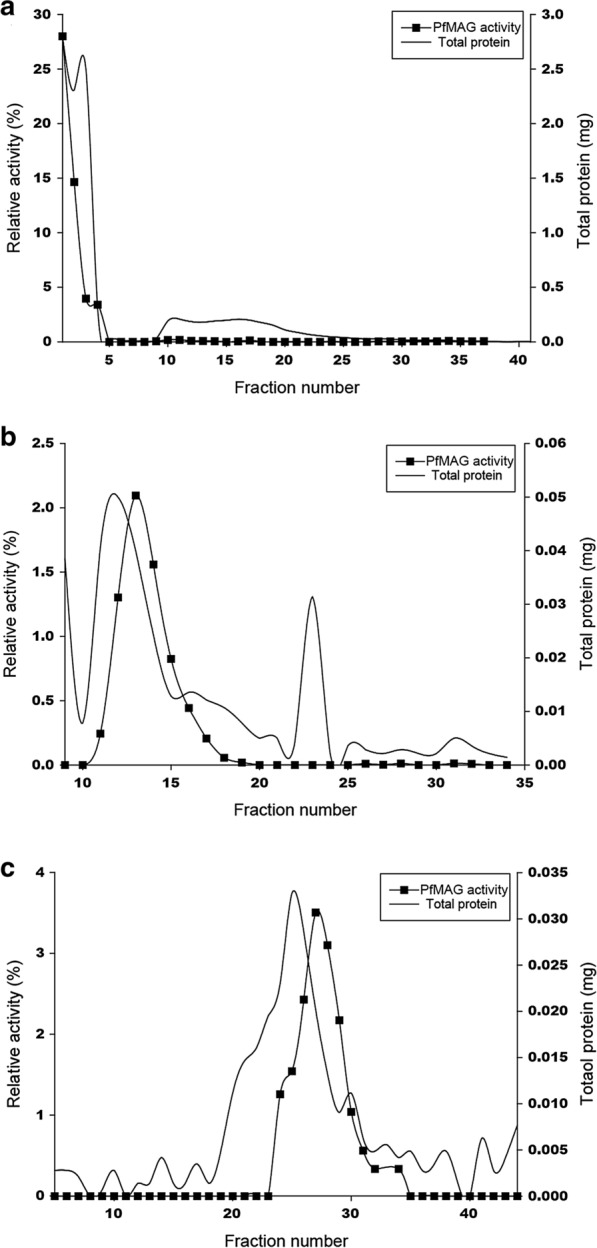
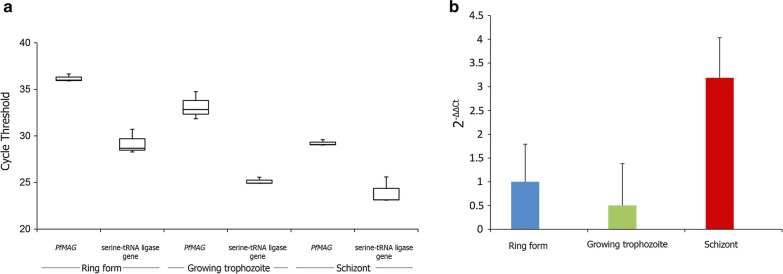
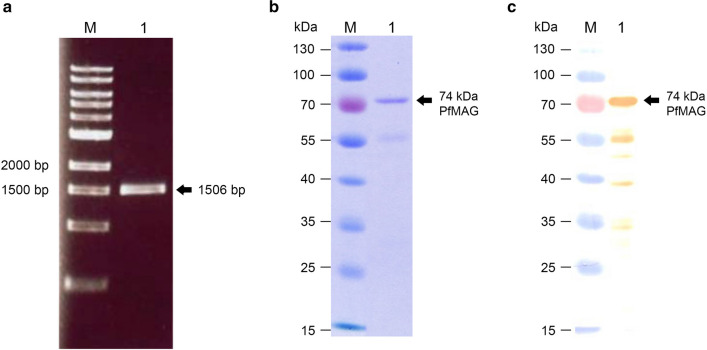
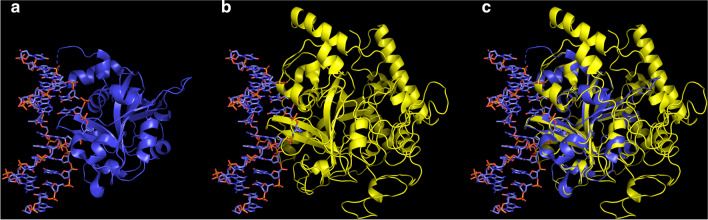
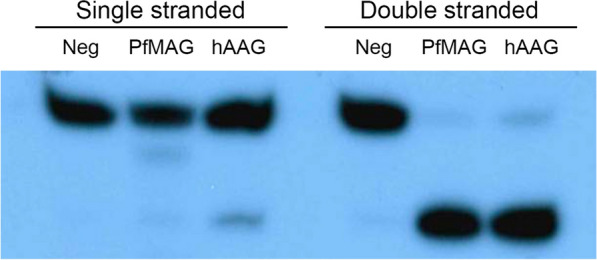
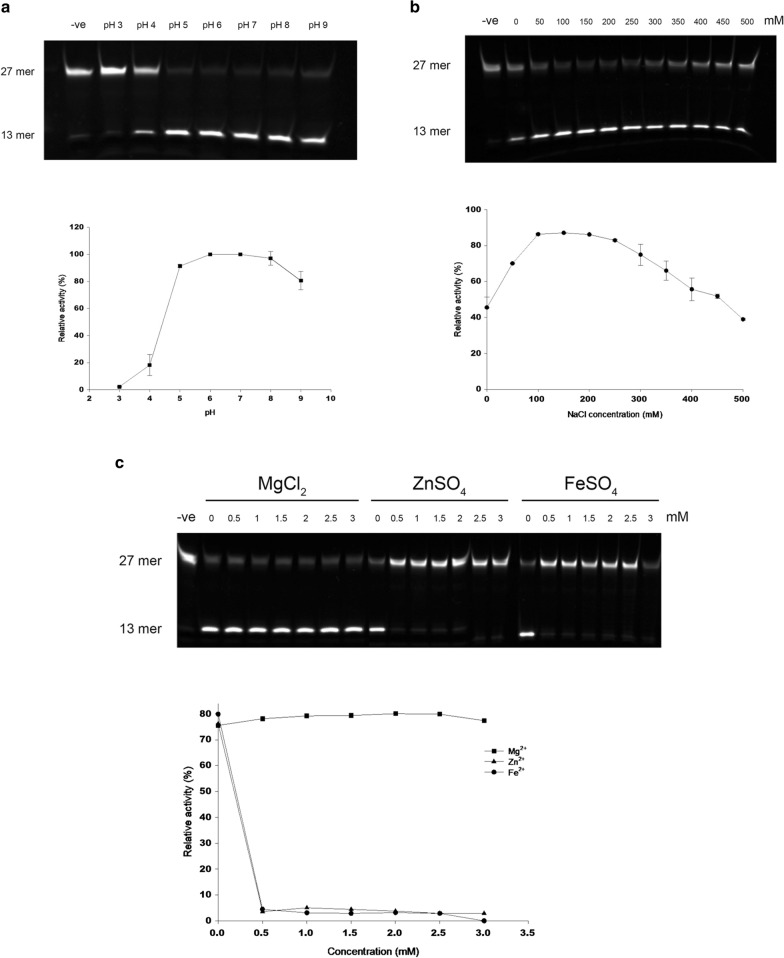
Background: The emergence of artemisinin-resistant malaria parasites highlights the need for novel drugs and their targets. Alkylation of purine bases can hinder DNA replication and if unresolved would eventually result in cell death. DNA-3-methyladenine glycosylase (MAG) is responsible for the repair of those alkylated bases. Plasmodium falciparum ( Pf ) MAG was characterized for its potential for development as an anti-malarial candidate. Methods: Native Pf MAG from crude extract of chloroquine- and pyrimethamine-resistant P . falciparum K1 strain was partially purified using three chromatographic procedures. From bio-informatics analysis, primers were designed for amplification, insertion into pBAD202/D-TOPO and heterologous expression in Escherichia coli of recombinant Pf MAG. Functional and biochemical properties of the recombinant enzyme were characterized. Results: Pf MAG activity was most prominent in parasite schizont stages, with a specific activity of 147 U/mg (partially purified) protein. K1 PfMAG contained an insertion of AAT (coding for asparagine) compared to 3D7 strain and 16% similarity to the human enzyme. Recombinant Pf MAG (74 kDa) was twice as large as the human enzyme, preferred double-stranded DNA substrate, and demonstrated glycosylase activity over a pH range of 4–9, optimal salt concentration of 100–200 mM NaCl but reduced activity at 250 mM NaCl, no requirement for divalent cations, which were inhibitory in a dose-dependent manner. Conclusion: Pf MAG activity increased with parasite development being highest in the schizont stages. K1 PfMAG contained an indel AAT (asparagine) not present in 3D7 strain and the recombinant enzyme was twice as large as the human enzyme. Recombinant Pf MAG had a wide range of optimal pH activity, and was inhibited at high (250 mM) NaCl concentration as well as by divalent cations. The properties of Pf MAG provide basic data that should be of assistance in developing anti-malarials against this potential parasite target.
Overview
The claims and statistics of this paper haven’t been checked yet.
Run the check — free, no account needed. It reads the open-access text and checks the sources it cites.
Integrity signals
Registry
Cites
Statistics
Figures
Verification
Claims the paper makes
The claims and statistics of this paper haven’t been checked yet.
Run the check — free, no account needed. It reads the open-access text and checks the sources it cites.
Self-check
Percentages, sums and reported differences re-computed from the paper’s own numbers.
The self-check needs the paper’s full text.
Citations
Cites
Global quantification of mammalian gene expression control
Schwanhäusser, B., Busse, D., Li, N., Dittmar, G., Schuchhardt, J., Wolf, J., Chen, W., & Selbach, M. (2011) · Nature · doi:10.1038/nature10098 · Cited by 6,566
A Phase 3 Trial of RTS,S/AS01 Malaria Vaccine in African Infants
The RTS, S. C. T. P. (2012) · New England Journal of Medicine · doi:10.1056/nejmoa1208394 · Cited by 752
Research works printed but not linked: 53
- Sachs J, Malaney P. The economic and social burden of malaria. Nature. 2002;415:680–5. · DOI · Paper page
- Noedl H, Se Y, Schaecher K, Smith BL, Socheat D, Fukuda MM, et al. Evidence of artemisinin-resistant malaria in western Cambodia. N Engl J Med. 2008;359:2619–20. · DOI
- Dondorp AM, Nosten F, Yi P, Das D, Phyo AP, Tarning J, et al. Artemisinin resistance in Plasmodium falciparum malaria. N Engl J Med. 2009;361:455–67. · DOI · Paper page
- Suksangpleng T, Leartsakulpanich U, Moonsom S, Siribal S, Boonyuen U, Wright GE, et al. Molecular characterization of Plasmodium falciparum uracil-DNA glycosylase and its potential as a new anti-malarial drug target. Malar J. 2014;13:149. · DOI
- Vasuvat J, Montree A, Moonsom S, Leartsakulpanich U, Petmitr S, Focher F, et al. Biochemical and functional characterization of Plasmodium falciparum DNA polymerase δ. Malar J. 2016;15:116. · DOI
- Limudomporn P, Moonsom S, Leartsakulpanich U, Suntornthiticharoen P, Petmitr S, Weinfeld M, et al. Characterization of Plasmodium falciparum ATP-dependent DNA helicase RuvB3. Malar J. 2016;15:526. · DOI
- Haltiwanger BM, Matsumoto Y, Nicolas E, Dianov GL, Bohr VA, Taraschi TF. DNA base excision repair in human malaria parasites is predominantly by a long-patch pathway. Biochemistry. 2000;39:763–72. · DOI
- Lau AY, Schärer OD, Samson L, Verdine GL, Ellenberger T. Crystal structure of a human alkylbase-DNA repair enzyme complexed to DNA: mechanisms for nucleotide flipping and base excision. Cell. 1998;95:249–58. · DOI
- Dosanjh MK, Chenna A, Kim E, Fraenkel-Conrat H, Samson L, Singer B. All four known cyclic adducts formed in DNA by the vinyl chloride metabolite chloroacetaldehyde are released by a human DNA glycosylase. Proc Natl Acad Sci USA. 1994;91:1024–8. · DOI
- Saparbaev M, Kleibl K, Laval J. Escherichia coli, Saccharomyces cerevisiae, rat and human 3-methyladenine DNA glycosylases repair 1, N6-ethenoadenine when present in DNA. Nucleic Acids Res. 1995;23:3750–5. · DOI
- Santerre A, Britt AB. Cloning of a 3-methyladenine-DNA glycosylase from Arabidopsis thaliana. Proc Natl Acad Sci USA. 1994;91:2240–4. · DOI
- Wyatt MD, Allan JM, Lau AY, Ellenberger TE, Samson LD. 3-methyladenine DNA glycosylases: structure, function, and biological importance. Bioassays. 1999;21:668–76. · DOI
- Engelward BP, Dreslin A, Christensen J, Huszar D, Kurahara C, Samson L. Repair-deficient 3-methyladenine DNA glycosylase homozygous mutant mouse cells have increased sensitivity to alkylation-induced chromosome damage and cell killing. EMBO J. 1996;15:945–52. · DOI
- Paik J, Duncan T, Lindahl T, Sedgwick B. Sensitization of human carcinoma cells to alkylating agents by small interfering RNA suppression of 3-alkyladenine-DNA glycosylase. Cancer Res. 2005;65:10472–7. · DOI
- Racine JF, Zhu Y, Mamet-Bratley MD. Mechanism of toxicity of 3-methyladenine for bacteriophage T7. Mutat Res. 1993;294:285–98. · DOI
- Tolentino JH, Burke TJ, Mukhopadhyay S, McGregor WG, Basu AK. Inhibition of DNA replication fork progression and mutagenic potential of 1, N6-ethenoadenine and 8-oxoguanine in human cell extracts. Nucleic Acids Res. 2008;36:1300–8. · DOI
- Boiteux S, Laval J. Imidazole open ring 7-methylguanine: an inhibitor of DNA synthesis. Biochem Biophys Res Commun. 1983;110:552–8. · DOI
- Pollack Y, Katzen AL, Spira DT, Golenser J. The genome of Plasmodium falciparum. I: DNA base composition. Nucleic Acids Res. 1982;10:539–46. · DOI
- Pollack Y, Kogan N, Golenser J. Plasmodium falciparum: evidence for a DNAmethylation pattern. Exp Parasitol. 1991;72:339–44. · DOI
- Choi SW, Keyes MK, Horrocks P. LC/ESI-MS demonstrates the absence of 5-methyl-2′-deoxycytosine in Plasmodium falciparum genomic DNA. Mol Biochem Parasitol. 2006;150:350–2. · DOI
- Hammam E, Ananda G, Sinha A, Scheidig-Benatar C, Bohec M, Preiser PR, et al. Discovery of a new predominant cytosine DNA modification that is linked to gene expression in malaria parasites. Nucleic Acids Res. 2020;48:184–99. · DOI
- Ponts N, Fu L, Harris EY, Zhang J, Chung DW, Cervantes MC, et al. Genome-wide mapping of DNA methylation in the human malaria parasite Plasmodium falciparum. Cell Host Microbe. 2013;14:696–706. · DOI
- Yanow SK, Purcell LA, Lee M, Spithill TW. Genomics-based drug design targets the AT-rich malaria parasite: implications for antiparasite chemotherapy. Pharmacogenomics. 2007;8:1267–72. · DOI
- Thaithong S, Beale GH, Chutmongkonkul M. Susceptibility of Plasmodium falciparum to five drugs: an in vitro study of isolates mainly from Thailand. Trans R Soc Trop Med Hyg. 1983;77:228–31. · DOI
- Trager W, Jensen JB. Human malaria parasites in continuous culture. Science. 1976;193:673–5. · DOI
- Lambros C, Vanderberg JP. Synchronization of Plasmodium falciparum erythrocytic stages in culture. J Parasitol. 1979;65:418–20. · DOI
- Chavalitshewinkoon P, Wilairat P. A simple technique for large scale in vitro culture of Plasmodium falciparum. Southeast Asian J Trop Med Public Health. 1991;22:544–7.
- Baker J, Gatton ML, Peters J, Ho MF, McCarthy JS, Cheng Q. Transcription and expression of Plasmodium falciparum histidine-rich proteins in different stages and strains: implications for rapid diagnostic tests. PLoS ONE. 2011;6:e22593. · DOI
- Livak KJ, Schmittgen TD. Analysis of relative gene expression data using real-time quantitative PCR and the 2-∆∆Ct method. Methods. 2001;25:402–8. · DOI · Paper page
- Zhang Y. I-TASSER server for protein 3D structure prediction. BMC Bioinform. 2008;9:40. · DOI · Paper page
- Roy A, Kucukural A, Zhang Y. I-TASSER: a unified platform for automated protein structure and function prediction. Nat Protoc. 2010;5:725–38. · DOI
- Yang J, Yan R, Roy A, Xu D, Poisson J, Zhang Y. The I-TASSER Suite: protein structure and function prediction. Nat Methods. 2015;12:7–8. · DOI · Paper page
- Rydberg B, Lindahl T. Nonenzymatic methylation of DNA by the intracellular methyl group donor S-adenosyl-l-methionine is a potentially mutagenic reaction. EMBO J. 1982;1:211–6. · DOI
- Asaeda A, Ide H, Asagoshi K, Matsuyama S, Tano K, Murakami A, et al. Substrate specificity of human methylpurine DNA N-glycosylase. Biochemistry. 2000;39:1959–65. · DOI
- Singer B, Antoccia A, Basu AK, Dosanjh MK, Fraenkel-Conrat H, Gallagher PE, et al. Both purified human 1, N6-ethenoadenine-binding protein and purified human 3-methyladenine-DNA glycosylase act on 1, N6-ethenoadenine and 3-methyladenine. Proc Natl Acad Sci USA. 1992;89:9386–90. · DOI
- Lee CYI, Delaney JC, Kartalou M, Lingaraju GM, Maor-Shoshani A, Essigmann JM, et al. Recognition and processing of a new repertoire of DNA substrates by human 3-methyladenine DNA glycosylase (AAG). Biochemistry. 2009;48:1850–61. · DOI
- Alseth I, Osman F, Korvald H, Tsaneva I, Whitby MC, Seeberg E, et al. Biochemical characterization and DNA repair pathway interactions of Mag1-mediated base excision repair in Schizosaccharomyces pombe. Nucleic Acids Res. 2005;33:1123–31. · DOI
- Lau AY, Wyatt MD, Glassner BJ, Samson LD, Ellenberger T. Molecular basis for discriminating between normal and damaged bases by the human alkyladenine glycosylase, AAG. Proc Natl Acad Sci USA. 2000;97:13573–8. · DOI
- Foth BJ, Zhang N, Mok S, Preiser PR, Bozdech Z. Quantitative protein expression profiling reveals extensive post-transcriptional regulation and post-translational modifications in schizont-stage malaria parasites. Genome Biol. 2008;9:R177. · DOI
- Le Roch KG, Johnson JR, Florens L, Zhou Y, Santrosyan A, Grainger M, et al. Global analysis of transcript and protein levels across the Plasmodium falciparum life cycle. Genome Res. 2004;14:2308–18. · DOI
- Shi L, Kent R, Bence N, Britt AB. Developmental expression of a DNA repair gene in Arabidopsis. Mutat Res. 1997;384:145–56. · DOI
- Song S, Xing G, Yuan L, Wang J, Wang S, Yin Y, et al. N-methylpurine DNA glycosylase inhibits p53 mediated cell cycle arrest and coordinates with p53 to determine sensitivity to alkylating agents. Cell Res. 2012;22:1285–303. · DOI
- Samson L, Derfler B, Boosalis M, Call K. Genetics Cloning and characterization of a 3-methyladenine DNA glycosylase cDNA from human cells whose gene maps to chromosome 16. Proc Natl Acad Sci USA. 1991;88:9127–31. · DOI
- Bjelland S, Seeberg E. Different efficiencies of the Tag and AlkA DNA glycosylases from Escherichia coli in the removal of 3-methyladenine from single-stranded DNA. FEBS Lett. 1996;397:127–9. · DOI
- Eftedal I, Guddal PH, Slupphaug G, Volden G, Krokan HE. Consensus sequences for good and poor removal of uracil from double stranded DNA by uracil-DNA glycosylase. Nucleic Acids Res. 1993;21:2095–101. · DOI
- Haushalter KA, Todd Stukenberg MW, Kirschner MW, Verdine GL. Identification of a new uracilDNA glycosylase family by expression cloning using synthetic inhibitors. Curr Biol. 1999;9:174–85. · DOI
- O’Connor Timothy R. Purification and characterization of human 3-methyladenine-DNA glycosylase. Nucleic Acids Res. 1993;21:5561–9. · DOI
- Memisoglu A, Samson L. Cloning and characterization of a cDNA encoding a-methyladenine DNA glycosylase from the fission yeast Schizosaccharomyces pombe. Gene. 1996;177:229–35. · DOI
- Warren JC, Cheatum SG. Effect of neutral salts on enzyme activity and structure. Biochemistry. 1966;5:1702–7. · DOI
- Park C, Raines RT. Quantitative analysis of the effect of salt concentration on enzymatic catalysis. J Am Chem Soc. 2001;123:11472–9. · DOI
- Izumi T, Wiederhold LR, Roy G, Roy R, Jaiswal A, Bhakat KK, et al. Mammalian DNA base excision repair proteins: their interactions and role in repair of oxidative DNA damage. Toxicology. 2003;15:43–65. · DOI
- Adhikari S, Toretsky JA, Yuan L, Roy R. Magnesium, essential for base excision repair enzymes, inhibits substrate binding of N-methylpurine-DNA glycosylase. J Biol Chem. 2006;281:29525–32. · DOI
- Wang P, Guliaev AB, Hang B. Metal inhibition of human N-methylpurine-DNA glycosylase activity in base excision repair. Toxicol Lett. 2006;166:237–47. · DOI
Metadata
- Authors
- Pinthong, N., Limudomporn, P., Vasuvat, J., Adisakwattana, P., Rattaprasert, P., & Chavalitshewinkoon-Petmitr, P.
- Affiliations
- Mahidol University (TH)
- Kasetsart University (TH)
- Corresponding author
- Chavalitshewinkoon-Petmitr, Porntip
- Venue
- Malaria Journal
- Published
- 2020-08-06
- Volume
- 19
- Issue
- 1
- Pages
- 284-284
- ISSN
- 1475-2875 (ISSN-L)
- PMC
- PMC7409487
- OpenAlex
- W3047367396
- Cited by
- 2
- References
- 2
- Citations by year
- 2026: 1 · 2024: 1
- FWCI
- 0.00
- Type
- journal article
- Language
- en
- Open access
- gold
- doi.org
- Locations
- Malaria Journal (publishedVersion, cc-by)
- Research Square (acceptedVersion, cc-by)
- PubMed Central (publishedVersion, cc-by)
- PubMed (publishedVersion)
- DOAJ (DOAJ: Directory of Open Access Journals) (submittedVersion, cc-by-sa)
- Funders
- Mahidol University (MU.2558-2559)
- Topics
- Health Sciences › Medicine › Public Health, Environmental and Occupational Health › Malaria Research and Control
- Life Sciences › Biochemistry, Genetics and Molecular Biology › Molecular Biology › DNA Repair Mechanisms
- Life Sciences › Biochemistry, Genetics and Molecular Biology › Molecular Biology › Biochemical and Molecular Research
- Keywords
- Plasmodium falciparum, base excision repair, artemisinin resistance, antimalarial drug targets, recombinant enzyme characterization, schizont stage, K1 strain, 3D7 strain, insertion/deletion polymorphism, divalent cation inhibition, pH optimum
- MeSH terms
- Plasmodium falciparum, Protozoan Proteins, DNA Glycosylases
About these checks
Registry, retraction, Cites and statistics results are computed, not judged, with one exception: a printed reference that no index lists is read once by a model before it counts as a citation error. Claims are extracted by a model and kept only when their quote appears verbatim in the text; each cited source is then checked, with a model’s help, for whether it says what the claim relies on. Those verdicts can be wrong — read the claim’s quote and the cited source before relying on one.
Statistics and arithmetic are recomputed, not judged.
Confidence bands are shown only for fields calibrated on our annotated test set. None is calibrated yet, so no band is shown.
What counts as a claim ›How we measure confidence ›How we check this ›
Are you an author, or do you see a problem with this page? Request a review
