

Effect of the DGAT1 inhibitor pradigastat on triglyceride and apoB48 levels in patients with familial chylomicronemia syndrome
Open accessThe DOI matches its Crossref record; 18 of the 18 references it cites were found in a registry or an index.
Abstract
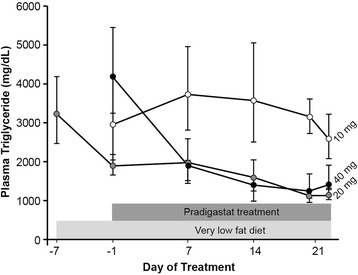
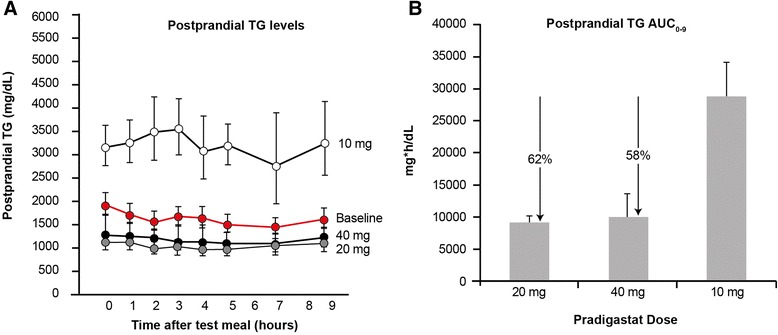
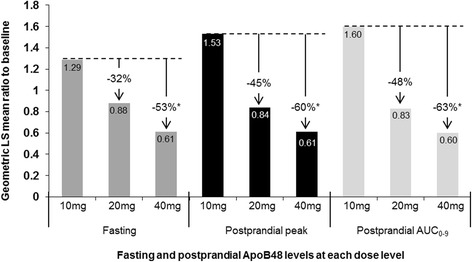
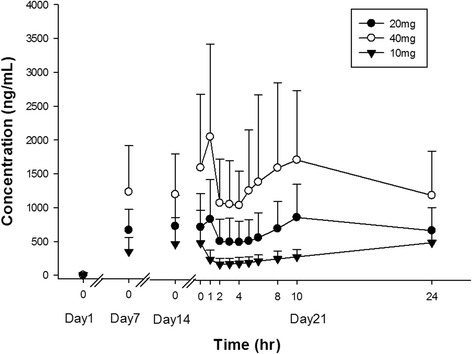
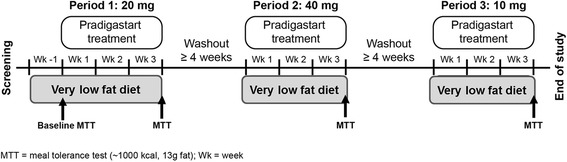
BACKGROUND: Familial chylomicronemia syndrome (FCS) is a rare lipid disease caused by complete lipoprotein lipase (LPL) deficiency resulting in fasting chylomicronemia and severe hypertriglyceridemia. Inhibition of diacylglycerol acyltransferase 1 (DGAT1), which mediates chylomicron triglyceride (TG) synthesis, is an attractive strategy to reduce TG levels in FCS. In this study we assessed the safety, tolerability and TG-lowering efficacy of the DGAT1 inhibitor pradigastat in patients with FCS. METHODS: Six FCS patients were enrolled in an open-label clinical study. Following a 1-week very low fat diet run-in period patients underwent baseline lipid assessments, including a low fat meal tolerance test. Patients then underwent three consecutive 21 day treatment periods (pradigastat at 20, 40 & 10 mg, respectively). Treatment periods were separated by washout periods of ≥4 weeks. Fasting TG levels were assessed weekly through the treatment periods. Postprandial TGs, ApoB48 and lipoprotein lipid content were also monitored. RESULTS: Following once daily oral dosing, steady-state exposure was reached by Day 14. There was an approximately dose proportional increase in pradigastat exposure at studied doses. Pradigastat was associated with a 41% (20 mg) and 70% (40 mg) reduction in fasting triglyceride over 21 days of treatment. The reduction in fasting TG was almost entirely accounted for by a reduction in chylomicron TG. Pradigastat treatment also led to substantial reductions in postprandial TG as well as apo48 (both fasting and postprandial). Pradigastat was safe and well tolerated, with only mild, transient gastrointestinal adverse events. CONCLUSION: The novel DGAT1 inhibitor pradigastat substantially reduces plasma TG levels in FCS patients, and may be a promising new treatment for this orphan disease. TRIAL REGISTRATION: ClinicalTrials.gov identifier NCT01146522 .
Overview
The claims and statistics of this paper haven’t been checked yet.
Free: it reads the open-access text and checks the first 5 claims that cite a source we can check. Create a free account to check every claim.
Integrity signals
Registry
Cites
Statistics
Figures
Verification
Claims the paper makes
The claims and statistics of this paper haven’t been checked yet.
Free: it reads the open-access text and checks the first 5 claims that cite a source we can check. Create a free account to check every claim.
Claims other papers make about this one
Each is checked against this paper’s own text: does it say what the citing paper says it does?
The source backs part of the claim, not all of it — or backs it for a different population, condition or comparison.
In the citing paper
“In six FCS patients, pradigastat reduced fasting TG by 70%.89”
From Clinical review on triglycerides (2020) · cites this paper as [89]
Experimental — accuracy not yet measuredIn the citing paper
“The prevalence of HeFH in the population is estimated to be 1/ 200-250, 361 translating to a total number of cases between 14 and 34 million worldwide [362,363].”
From 2019 ESC/EAS guidelines for the management of dyslipidaemias: lipid modification to reduce cardiovascular risk (2019) · cites this paper as [362]
Self-check
Percentages, sums and reported differences re-computed from the paper’s own numbers.
The self-check needs the paper’s full text.
Citations
Cites
Gaudet, D., Méthot, J., Déry, S., Brisson, D., Essiembre, C., Tremblay, G., Tremblay, K., de Wal, J., Twisk, J., van den Bulk, N., et al. (2013) · Gene Therapy · doi:10.1038/gt.2012.43 · Cited by 404 · cited 2×
“LPL gene replacement therapy has recently been approved in Europe, although its use is currently restricted to the most severely affected patients with FCS due to an LPL gene defect and recurrent pancreatitis [8,9].”
Self-citationMutations in LPL, APOC2, APOA5, GPIHBP1 and LMF1 in patients with severe hypertriglyceridaemia
Surendran, R. P., Visser, M. E., Heemelaar, S., Wang, J., Peter, J., Defesche, J. C., Kuivenhoven, J. A., Hosseini, M., Péterfy, M., Kastelein, J. J. P., et al. (2012) · Journal of Internal Medicine · doi:10.1111/j.1365-2796.2012.02516.x · Cited by 249 · cited 1×
“chylomicronemia), and severe hypertriglyceridemia [2,3].”
DGAT1 Is Not Essential for Intestinal Triacylglycerol Absorption or Chylomicron Synthesis
Buhman, K. K., Smith, S. J., Stone, S. J., Repa, J. J., Wong, J. S., Knapp, F. F., Burri, B. J., Hamilton, R. L., Abumrad, N. A., & Farese, R. V. (2002) · Journal of Biological Chemistry · doi:10.1074/jbc.m202013200 · Cited by 242 · cited 2×
“DGAT1-deficient mice are protected from the typical post-meal spike in plasma TG levels, and have significantly decreased post meal levels of CMs [11].”
(2001) · Medical Entomology and Zoology · Cited by 227
Gene therapy for lipoprotein lipase deficiency
Gaudet, D., Méthot, J., & Kastelein, J. (2012) · Current Opinion in Lipidology · doi:10.1097/mol.0b013e3283555a7e · Cited by 178 · cited 1×
“LPL gene replacement therapy has recently been approved in Europe, although its use is currently restricted to the most severely affected patients with FCS due to an LPL gene defect and recurrent pancreatitis [8,9].”
Self-citationCarpentier, A. C., Frisch, F., Labbé, S. M., Gagnon, R., de Wal, J., Greentree, S., Petry, H., Twisk, J., Brisson, D., & Gaudet, D. (2012) · The Journal of Clinical Endocrinology & Metabolism · doi:10.1210/jc.2011-3002 · Cited by 165 · cited 1×
“Recently adeno-associated virus type I LPL gene therapy was approved in Europe for the treatment of FCS in a subset of patients with recurrent pancreatitis [9,16].”
Self-citationGenetic bases of hypertriglyceridemic phenotypes
Johansen, C. T., & Hegele, R. A. (2011) · Current Opinion in Lipidology · doi:10.1097/mol.0b013e3283471972 · Cited by 127 · cited 1×
“chylomicronemia), and severe hypertriglyceridemia [2,3].”
Acylation of Acylglycerols by Acyl Coenzyme A:Diacylglycerol Acyltransferase 1 (DGAT1)
Cheng, D., Iqbal, J., Devenny, J. J., Chu, C.-H., Chen, L., Dong, J., Seethala, R., Keim, W. J., Azzara, A. V., Lawrence, R. M., et al. (2008) · Journal of Biological Chemistry · doi:10.1074/jbc.m800494200 · Cited by 85 · cited 1×
“Diacylglycerol acyltransferase-1 (DGAT1) catalyzes the final step in TG synthesis and is highly expressed in the small intestine enterocytes, where it plays a key role in absorption of dietary fat [10].”
Chylomicronemia Syndrome in Diabetes Mellitus
Chait, A., Robertson, H. T., & Brunzell, J. D. (1981) · Diabetes Care · doi:10.2337/diacare.4.3.343 · Cited by 83 · cited 1×
“Discussion Plasma TG levels are difficult to control in FCS patients, and as a result these patients are at high risk of developing recurrent pancreatitis [1,15].”
Denison, H., Nilsson, C., Kujacic, M., Löfgren, L., Karlsson, C., Knutsson, M., & Eriksson, J. W. (2013) · Diabetes, Obesity and Metabolism · doi:10.1111/dom.12002 · Cited by 68 · cited 1×
“The very low fat diet recommended for FCS patients appears to improve the tolerability profile of DGAT1 inhibitors compared to other studies with higher dietary fat content [17].”
Research works printed but not linked: 1
- Brunzell JD. Familial lipoprotein lipase deficiency In: Pagon RA, Adam MP, Bird TD, Dolan CR, Fong CT, Stephens K, editors. Source: GeneReviews™ [Internet]. Seattle (WA): University of Washington, Seattle; 1993–2013.1999 Oct 12 [updated 2011 Dec 15]. 1993 20301485
Cited by
Mach, F., Baigent, C., Catapano, A. L., Koskinas, K. C., Casula, M., Badimon, L., Chapman, M. J., De Backer, G. G., Delgado, V., Ference, B. A., et al. (2020) · European Heart Journal · doi:10.1093/eurheartj/ehz455 · Cited by 8,961
Mach, F., Baigent, C., Catapano, A. L., Koskinas, K. C., Casula, M., Badimon, L., Chapman, M. J., De Backer, G. G., Delgado, V., Ference, B. A., et al. (2019) · Atherosclerosis · doi:10.1016/j.atherosclerosis.2019.08.014 · Cited by 4,854
“The risk of pancreatitis is clinically significant if TGs are >10 mmol/L (880 mg/dL), particularly when occurring in association with familial chylomicronaemia, and actions to prevent acute pancreatitis are mandatory.(381,382) Notably, HTG is the cause of 10% of all cases with pancreatitis, and patients can develop pa…”
Inflammation and atherosclerosis: signaling pathways and therapeutic intervention
Kong, P., Cui, Z.-Y., Huang, X.-F., Zhang, D.-D., Guo, R.-J., & Han, M. (2022) · Signal Transduction and Targeted Therapy · doi:10.1038/s41392-022-00955-7 · Cited by 1,183
“In phase I/II trials, six familial chylomicronaemia syndrome patients showed a dosedependent reduction in TG of 41–70% over 21 days of treatment with only mild transient gastrointestinal adverse events in patients receiving dose-ranging pradigastat.(302) A trial from 106 participants with overweight or obesity receivi…”
BackgroundNonalcoholic fatty liver disease as a nexus of metabolic and hepatic diseases
Samuel, V. T., & Shulman, G. I. (2018) · Cell Metabolism · doi:10.1016/j.cmet.2017.08.002 · Cited by 745
“Thoughmany subjects experience some gastrointestinal side effects, these were mild and tolerable (Meyers et al., 2015).”
Clinical review on triglycerides
Laufs, U., Parhofer, K. G., Ginsberg, H. N., & Hegele, R. A. (2020) · European Heart Journal · doi:10.1093/eurheartj/ehz785 · Cited by 544
“In six FCS patients, pradigastat reduced fasting TG by 70%.(89) In obese patients with milder dyslipidaemia, pradigastat improved TG and other metabolic traits.”
BackgroundSoppert, J., Lehrke, M., Marx, N., Jankowski, J., & Noels, H. (2020) · Advanced Drug Delivery Reviews · doi:10.1016/j.addr.2020.07.019 · Cited by 407
Advancing human genetics research and drug discovery through exome sequencing of the UK Biobank
Szustakowski, J. D., Balasubramanian, S., Kvikstad, E., Khalid, S., Bronson, P. G., Sasson, A., Wong, E., Liu, D., Wade Davis, J., Haefliger, C., et al. (2021) · Nature Genetics · doi:10.1038/s41588-021-00885-0 · Cited by 401
“Thoughtfully designed projects that maximize the In summary, we have identified the following key features of an effective precompetitive industry collaboration: (1) build a large dataset with rich phenotypic characterization, noting that participant recontact is highly valued for answering new questions that emerge f…”
BackgroundHypertriglyceridaemia and risk of coronary artery disease
Reiner, Ž. (2017) · Nature Reviews Cardiology · doi:10.1038/nrcardio.2017.31 · Cited by 387
Triglyceride Synthesis by DGAT1 Protects Adipocytes from Lipid-Induced ER Stress during Lipolysis
Chitraju, C., Mejhert, N., Haas, J. T., Diaz-Ramirez, L. G., Grueter, C. A., Imbriglio, J. E., Pinto, S., Koliwad, S. K., Walther, T. C., & Farese, R. V. (2017) · Cell Metabolism · doi:10.1016/j.cmet.2017.07.012 · Cited by 364
“Similarly, DGAT1 inhibition caused dose-related diarrhea in clinical studies of humans (Denison et al., 2014;Meyers et al., 2015).”
Lipid management in patients with chronic kidney disease
Ferro, C. J., Mark, P. B., Kanbay, M., Sarafidis, P., Heine, G. H., Rossignol, P., Massy, Z. A., Mallamaci, F., Valdivielso, J. M., Malyszko, J., et al. (2018) · Nature Reviews Nephrology · doi:10.1038/s41581-018-0072-9 · Cited by 273
Hypertriglyceridemic pancreatitis: Epidemiology, pathophysiology and clinical management
de Pretis, N., Amodio, A., & Frulloni, L. (2018) · United European Gastroenterology Journal · doi:10.1177/2050640618755002 · Cited by 265
“Similarly, an open-label clinical study in patients with LPL deficiency reported a 41% and 70% reduction in triglycerides in patients treated with pradigastat 20mg and pradigastat 40mg, respectively.(50) Also, an open-label trial determining the safety and efficacy of alipogene tiparvovec reported a statistically sign…”
BackgroundLipid-Lowering Agents: Targets Beyond PCSK9
Hegele, R. A., & Tsimikas, S. (2019) · Circulation Research · doi:10.1161/circresaha.118.313171 · Cited by 171
“given to 6 patients with FCS, fasting TG was reduced in by ≤70%, with no major safety concerns.(95) In an early-phase”
MethodMorgan, A. E., Mooney, K. M., Wilkinson, S. J., Pickles, N. A., & Mc Auley, M. T. (2016) · Ageing Research Reviews · doi:10.1016/j.arr.2016.03.008 · Cited by 134
D'Aquila, T., Hung, Y.-H., Carreiro, A., & Buhman, K. K. (2016) · Biochimica et Biophysica Acta (BBA) - Molecular and Cell Biology of Lipids · doi:10.1016/j.bbalip.2016.04.012 · Cited by 133
“Recently, however, the DGAT1 inhibitor pradigistat has been shown to effectively reduce plasma TAG concentrations in both overweight/obese individuals and patients with familial chylomicronemia syndrome, and has been well tolerated [67, 68].”
BackgroundMedicinal chemistry strategies toward host targeting antiviral agents
Ji, X., & Li, Z. (2020) · Medicinal Research Reviews · doi:10.1002/med.21664 · Cited by 133
“Since compound 62 is in clinical development for the treatment of dyslipidemia, and it has demonstrated convinced efficacy and safety profiles.(137) Therefore, it was directly tested in patients with genotype 1 or 3 HCV infections for safety and efficacy.”
MethodIntestinal Failure and Aberrant Lipid Metabolism in Patients With DGAT1 Deficiency
van Rijn, J. M., Ardy, R. C., Kuloğlu, Z., Härter, B., van Haaften-Visser, D. Y., van der Doef, H. P. J., van Hoesel, M., Kansu, A., van Vugt, A. H. M., Thian, M., et al. (2018) · Gastroenterology · doi:10.1053/j.gastro.2018.03.040 · Cited by 122
Chen, G., Harwood, J. L., Lemieux, M. J., Stone, S. J., & Weselake, R. J. (2022) · Progress in Lipid Research · doi:10.1016/j.plipres.2022.101181 · Cited by 128
DGAT2 Inhibition Alters Aspects of Triglyceride Metabolism in Rodents but Not in Non-human Primates
McLaren, D. G., Han, S., Murphy, B. A., Wilsie, L., Stout, S. J., Zhou, H., Roddy, T. P., Gorski, J. N., Metzger, D. E., Shin, M. K., et al. (2018) · Cell Metabolism · doi:10.1016/j.cmet.2018.04.004 · Cited by 86
Hung, Y.-H., Carreiro, A. L., & Buhman, K. K. (2017) · Biochimica et Biophysica Acta (BBA) - Molecular and Cell Biology of Lipids · doi:10.1016/j.bbalip.2017.02.014 · Cited by 82
“More recently, however, the DGAT1 inhibitor pradigastat has been well tolerated in overweight/obese individuals and patients with familial chylomicronemia syndrome [70, 71], suggesting these inhibitors may still be beneficial for some patients.”
Esan, O., & Wierzbicki, A. S. (2020) · Drug Design, Development and Therapy · doi:10.2147/dddt.s224771 · Cited by 80
Recent advances in triacylglycerol mobilization by the gut
Xiao, C., Stahel, P., Carreiro, A. L., Buhman, K. K., & Lewis, G. F. (2018) · Trends in Endocrinology & Metabolism · doi:10.1016/j.tem.2017.12.001 · Cited by 77
Stahel, P., Xiao, C., Hegele, R. A., & Lewis, G. F. (2018) · Canadian Journal of Cardiology · doi:10.1016/j.cjca.2017.12.007 · Cited by 75
Current and future trends in the lipid lowering therapy
Okopień, B., Bułdak, Ł., & Bołdys, A. (2016) · Pharmacological Reports · doi:10.1016/j.pharep.2016.03.016 · Cited by 72
“Pradigastat effectively reduced TG level up to 70% and may be useful in chylomicronemia [87].”
BackgroundWhen fat meets the gut—focus on intestinal lipid handling in metabolic health and disease
Wit, M., Viera, J. T., Strohmeyer, A., Klingenspor, M., Hankir, M. K., & Sumara, G. (2022) · EMBO Molecular Medicine · doi:10.15252/emmm.202114742 · Cited by 73
Kolovou, G. D., Watts, G. F., Mikhailidis, D. P., Pérez-Martínez, P., Mora, S., Bilianou, H., Panotopoulos, G., Katsiki, N., Ooi, T. C., Lopez-Miranda, J., et al. (2019) · Current Vascular Pharmacology · doi:10.2174/1570161117666190507110519 · Cited by 61
Deng, B., Kong, W., Shen, X., Han, C. Q., Zhao, Z., Chen, S., Zhou, C., & Bae-Jump, V. L. (2024) · Journal of Translational Medicine · doi:10.1186/s12967-024-05084-z · Cited by 78
Current Understanding on the Role of Lipids in Macrophages and Associated Diseases
Florance, I., & Seenivasan, R. (2022) · International Journal of Molecular Sciences · doi:10.3390/ijms24010589 · Cited by 54
Amin, N. B., Saxena, A. R., Somayaji, V., & Dullea, R. (2023) · Clinical Therapeutics · doi:10.1016/j.clinthera.2022.12.008 · Cited by 48
Chaudhry, R., Viljoen, A., & Wierzbicki, A. S. (2018) · Expert Review of Clinical Pharmacology · doi:10.1080/17512433.2018.1480368 · Cited by 46
Novel therapeutics in hypertriglyceridemia
Gryn, S. E., & Hegele, R. A. (2015) · Current Opinion in Lipidology · doi:10.1097/mol.0000000000000231 · Cited by 44
Current Diagnosis and Management of Primary Chylomicronemia
Okazaki, H., Gotoda, T., Ogura, M., Ishibashi, S., Inagaki, K., Daida, H., Hayashi, T., Hori, M., Masuda, D., Matsuki, K., et al. (2021) · Journal of Atherosclerosis and Thrombosis · doi:10.5551/jat.rv17054 · Cited by 48
Bashir, B., Ho, J. H., Downie, P., Hamilton, P., Ferns, G. A., Datta, D. B. N., Cegla, J., Wierzbicki, A. S., Dawson, C., Jenkinson, F., et al. (2023) · Metabolites · doi:10.3390/metabo13050621 · Cited by 52
Jácome-Sosa, M., Parks, E. J., Bruno, R. S., Tasali, E., Lewis, G. F., Schneeman, B. O., & Rains, T. M. (2016) · Advances in Nutrition · doi:10.3945/an.115.010397 · Cited by 53
“Indeed, enterocyte regulation of dietary lipid entry was the focus of recent scientific efforts in drug development to treat hyperlipidemia and obesity (44, 45).”
BackgroundLipid Metabolism and Emerging Targets for Lipid-Lowering Therapy
Gaudet, D., Drouin‐Chartier, J., & Couture, P. (2017) · Canadian Journal of Cardiology · doi:10.1016/j.cjca.2016.12.019 · Cited by 46
Self-citationEfficacy and Safety of Volanesorsen (ISIS 304801): the Evidence from Phase 2 and 3 Clinical Trials
Fogacci, F., Norata, G. D., Toth, P. P., Arca, M., & Cicero, A. F. G. (2020) · Current Atherosclerosis Reports · doi:10.1007/s11883-020-00836-w · Cited by 42
Pharmacological treatment of MASLD: contemporary treatment and future perspectives
Drygalski, K. (2025) · International Journal of Molecular Sciences · doi:10.3390/ijms26136518 · Cited by 39
Role of the Gut in Diabetic Dyslipidemia
Stahel, P., Xiao, C., Nahmias, A., & Lewis, G. F. (2020) · Frontiers in Endocrinology · doi:10.3389/fendo.2020.00116 · Cited by 37
“In hamsters, the small molecule intestinespecific MTP inhibitor JTT-130 suppressed CM-TG following oil gavage without suppressing hepatic TG secretion.”
BackgroundInfluentialSafety and efficacy of therapies for chylomicronemia
Shamsudeen, I., & Hegele, R. A. (2022) · Expert Review of Clinical Pharmacology · doi:10.1080/17512433.2022.2094768 · Cited by 37
Lim, Y., Yoo, S., Lee, S. A., Chin, S. O., Heo, D., Moon, J. C., Moon, S., Boo, K., Kim, S. T., Seo, H. M., et al. (2015) · Endocrinology and Metabolism · doi:10.3803/enm.2015.30.2.208 · Cited by 41
Paragh, G., Németh, Á., Harangi, M., Banach, M., & Fülöp, P. (2022) · Lipids in Health and Disease · doi:10.1186/s12944-022-01631-z · Cited by 38
“Another study showed an 80% apoC3 and 70% triglyceridelowering effect in monogenic chylomicronemia with LPL deficiency [103].”
BackgroundA novel role for DGATs in cancer
Hernandez‐Corbacho, M. J., & Obeid, L. M. (2018) · Advances in Biological Regulation · doi:10.1016/j.jbior.2018.12.001 · Cited by 28
Lomitapide for the treatment of hypertriglyceridemia
Berberich, A. J., & Hegele, R. A. (2016) · Expert Opinion on Investigational Drugs · doi:10.1080/13543784.2016.1254187 · Cited by 31
“This is especially true for individuals with familial chylomicronemia syndrome (FCS, formerly designated as Fredrickson/WHO hyperlipidemia type 1), which is predominantly caused by biallelic loss-of-function mutations in the gene encoding lipoprotein lipase (LPL) or one of its cofactors (APOC2, LMF1, GPIHBP1, APOA5, o…”
BackgroundInfluentialHaghbin, H., Gangwani, M. K., Ravi, S. J. K., Perisetti, A., Aziz, M., Goyal, H., Nawras, A., & Sodeman, T. (2020) · Annals of Gastroenterology · doi:10.20524/aog.2020.0550 · Cited by 35
van Rijn, J. M., van Hoesel, M., de Heus, C., van Vugt, A. H. M., Klumperman, J., Nieuwenhuis, E. E. S., Houwen, R. H. J., & Middendorp, S. (2019) · Journal of Lipid Research · doi:10.1194/jlr.m094201 · Cited by 27
“These findings correspond with human clinical trials studying DGAT1 inhibition, which caused severe diarrhea in a dose-dependent manner (34, 35), similar to the diarrhea, vomiting, and intestinal failure that has been described as a result of DGAT1 deficiency (10, 15, 26, 36, 37).”
ResultSachdev, V., Leopold, C., Bauer, R., Patankar, J. V., Iqbal, J., Obrowsky, S., Boverhof, R., Doktorova, M., Scheicher, B., Goeritzer, M., et al. (2016) · Biochimica et Biophysica Acta (BBA) - Molecular and Cell Biology of Lipids · doi:10.1016/j.bbalip.2016.06.014 · Cited by 28
“The utility of DGAT1 inhibitors has recently been strengthened by studies in patients suffering from familial chylomicronemia [13].”
Chylomicronemia Syndrome: Very Severe Hypertriglyceridemia and Acute Pancreatitis
Wierzbicki, A. S. (2018) · Endocrine and Metabolic Medical Emergencies · doi:10.1002/9781119374800.ch44 · Cited by 28
Kolovou, G. D., Watts, G. F., Mikhailidis, D. P., Pérez‐Martínez, P., Mora, S., Bilianou, H. I., Panotopoulos, G., Katsiki, N., Ooi, T. C., López‐Miranda, J., et al. (2019) · Current Vascular Pharmacology · doi:10.2174/1570161117666190503123911 · Cited by 23
New approaches to address dyslipidemia
Parhofer, K. G. (2017) · Current Opinion in Lipidology · doi:10.1097/mol.0000000000000456 · Cited by 20
Triglyceride-Rich Lipoproteins and Novel Targets for Anti-atherosclerotic Therapy
Reiner, Ž. (2018) · Korean Circulation Journal · doi:10.4070/kcj.2018.0343 · Cited by 21
Novel therapies for severe dyslipidemia originating from human genetics
Gaudet, D. (2016) · Current Opinion in Lipidology · doi:10.1097/mol.0000000000000281 · Cited by 18
Self-citationHypertriglyceridemic pancreatitis
de Pretis, N., Marchi, G. D., & Frulloni, L. (2020) · Minerva Gastroenterologica e Dietologica · doi:10.23736/s1121-421x.19.02641-2 · Cited by 18
An overview of persistent chylomicronemia: much more than meets the eye
Larouche, M., Watts, G. F., Ballantyne, C. M., & Gaudet, D. (2025) · Current Opinion in Endocrinology Diabetes and Obesity · doi:10.1097/med.0000000000000903 · Cited by 17
“…most often reserved to describe the autosomal recessive form of persistent chylomicronemia that is caused by a combination of pathogenic variants. are, however, other causes of persistent chylomicronemia, currently considered multifactorial and grouped under the abbreviation MCS, just like…”
Self-citationPolyfluorinated scaffolds in drug discovery
Pertusati, F., Serpi, M., & Pileggi, E. (2018) · Elsevier eBooks · doi:10.1016/b978-0-12-812733-9.00003-9 · Cited by 20
Absorption of Dietary Fat and Its Metabolism in Enterocytes
Carreiro, A. L., & Buhman, K. K. (2018) · Elsevier eBooks · doi:10.1016/b978-0-12-811297-7.00003-2 · Cited by 27
KEECH, A. C., & Jenkins, A. J. (2017) · Current Opinion in Lipidology · doi:10.1097/mol.0000000000000465 · Cited by 14
Gane, E. J., Stedman, C. A. M., Dole, K., Chen, J., Meyers, C. D., Wiedmann, B., Zhang, J. C., Raman, P., & Colvin, R. A. (2016) · ACS Infectious Diseases · doi:10.1021/acsinfecdis.6b00138 · Cited by 14
Self-citationFlorentin, M., Kostapanos, M. S., Anagnostis, P. G., & Liamis, G. L. (2019) · Expert Opinion on Pharmacotherapy · doi:10.1080/14656566.2019.1691523 · Cited by 16
“Pradigastat has generally been well-tolerated, with only mild gastrointestinal side effects, which improved after reducing dietary fat [128,129].”
BackgroundIdentifying suspected familial chylomicronemia syndrome
Rengarajan, R., McCullough, P. A., Chowdhury, A., & Tecson, K. M. (2018) · Baylor University Medical Center Proceedings · doi:10.1080/08998280.2018.1463784 · Cited by 14
“Inhibition of diacylglycerol O–acyltransferase 1, which mediates triglyceride synthesis, has also been examined (pradigastat in trial).(20) Similarly, volanesorsen, an antisense RNA compound, is in a phase 3 trial.”
BackgroundStraat, M. E., Martínez‐Téllez, B., Nahon, K. J., Janssen, L. G. M., Verhoeven, A., van der Zee, L., Mulder, M. T., Kooijman, S., Boon, M. R., van Lennep, J. E. R., et al. (2022) · Journal of clinical lipidology · doi:10.1016/j.jacl.2022.04.004 · Cited by 12
Aljouda, L., Nagy, L. L., & Schulze, A. (2023) · Nutrients · doi:10.3390/nu15163535 · Cited by 14
“Other past and present treatment options include LPL gene therapies (alipogene tiparvovec), which involve introducing functional copies of the LPL gene using adenoassociated viral vector 1 [1], diacylglycerol acyltransferase 1 inhibition [3], inhibitors of the microsomal TG transfer protein [4], angiopoietin-like prot…”
BackgroundAssessment of pharmacokinetic drug‐drug interaction between pradigastat and atazanavir or probenecid
Mendonza, A. E., Hanna, I. H., Meyers, D., Koo, P., Neelakantham, S., Zhu, B. Y., Majumdar, T., Rebello, S. S., Sunkara, G., & Chen, J. (2015) · The Journal of Clinical Pharmacology · doi:10.1002/jcph.595 · Cited by 11
“Pradigastat treatment was a sociated with mild, short-live GI AEs, most commonly diarrhea, which is sistent with previous stu ies.(2,20)”
BackgroundSelf-citationVujić, N., Korbelius, M., Sachdev, V., Rainer, S., Zimmer, A., Huber, A., Radović, B., & Kratky, D. (2020) · Atherosclerosis · doi:10.1016/j.atherosclerosis.2020.07.030 · Cited by 11
“Is DGAT1 a potential target to treat metabolic disorders, including cardiovascular disease? Despite promising data in mouse models, gastrointestinal side effects in patients treated with DGAT1 inhibitors [36,37] and case reports of DGAT1 mutations associated with congenital diarrhea, an inability to thrive, and even l…”
BackgroundRecent Advances in the Management of Dyslipidemia: A Systematic Review
Feng, H. J. X., Yousaf, A., Moon, J., Ramiz, A., Krishma, U., & Pemminati, S. (2025) · Cureus · doi:10.7759/cureus.81034 · Cited by 22
“These findings reflect the dose-dependent impacts of pradigastat on diminishing chylomicron TG substance and apoB48 levels [38].”
Successful Strategies for Mitigation of a Preclinical Signal for Phototoxicity in a DGAT1 Inhibitor
Harrison, T. J., Bauer, D., Berdichevsky, A., Chen, X., Duvadie, R., Hoogheem, B., Hatsis, P., Liu, Q., Mao, J., Miduturu, V., et al. (2019) · ACS Medicinal Chemistry Letters · doi:10.1021/acsmedchemlett.9b00117 · Cited by 12
Contemporary and Novel Therapeutic Options for Hypertriglyceridemia
Bell, D. A., & Watts, G. F. (2015) · Clinical Therapeutics · doi:10.1016/j.clinthera.2015.08.001 · Cited by 11
New oral agents for treating dyslipidemia
Gryn, S. E., & Hegele, R. A. (2016) · Current Opinion in Lipidology · doi:10.1097/mol.0000000000000354 · Cited by 10
Lipoprotein Lipase Deficiency in an Infant With Chylomicronemia, Hepatomegaly, and Lipemia Retinalis
Vidanapathirana, D. M., Rodrigo, T., Waidyanatha, S., Jasinge, E. A., Hooper, A. J., & Burnett, J. R. (2017) · Global Pediatric Health · doi:10.1177/2333794x17715839 · Cited by 9
“Promising treatment approaches currently under investigation include an orally administered diacylglycerol O-acyltransferase 1 (DGAT1) inhibitor (pradigastat), which catalyzes the final step in triglyceride synthesis and decrease chylomicrontriglyceride secretion, and evinacumab, a monoclonal antibody to angiopoietin-…”
BackgroundRecent advances and emerging therapies in management of dyslipidemias
Pulipati, V. P., & Davidson, M. H. (2020) · Trends in Cardiovascular Medicine · doi:10.1016/j.tcm.2020.08.007 · Cited by 9
Clinical, biochemical and molecular analysis of two infants with familial chylomicronemia syndrome
Zhang, Y., Zhou, J., Zheng, W., Lan, Z., Huang, Z., Yang, Q., Liu, C., Gao, R., & Zhang, Y. (2016) · Lipids in Health and Disease · doi:10.1186/s12944-016-0254-z · Cited by 10
Gene targeting for chylomicronemia syndrome: The brave new world
Fogacci, F., & Cicero, A. F. G. (2017) · Atherosclerosis · doi:10.1016/j.atherosclerosis.2017.12.017 · Cited by 9
Hypertriglyceridemic pancreatitis: epidemiology, pathophysiology and clinical management
de Pretis, N., Amodio, A., & Frulloni, L. (2019) · Herald of Pancreatic Club · doi:10.33149/vkp.2019.01.02 · Cited by 8
A New Insight on Atherosclerosis Mechanism and Lipid-Lowering Drugs
Li, P., & Jiang, W. (2025) · Reviews in Cardiovascular Medicine · doi:10.31083/rcm25321 · Cited by 8
“In previous Phase I and II clinical trials, 6 patients with familial chylomicronemia syndrome exhibited a dose-dependent reduction in triglyceride levels of 41% to 70% over a 21-day treatment period [107].”
Çelik, M. Y., Canda, E. E., Yazıcı, H., Erdem, F., Yanbolu, A. Y., Altınok, Y. A., Parıltay, E., Akın, H., Uçar, S. K., & Çöker, M. (2024) · Nutrition Metabolism and Cardiovascular Diseases · doi:10.1016/j.numecd.2024.02.006 · Cited by 7
Managing of dyslipidaemia characterized by accumulation of triglyceride-rich lipoproteins
Visser, J., van Zwol, W., & Kuivenhoven, J. A. (2022) · Current Atherosclerosis Reports · doi:10.1007/s11883-022-00979-y · Cited by 7
Hypertriglyceridemia, a causal risk factor for atherosclerosis, and its laboratory assessment
Wieczorek, E., Ćwiklińska, A., & Jankowski, M. (2022) · Clinical Chemistry and Laboratory Medicine (CCLM) · doi:10.1515/cclm-2022-0189 · Cited by 8
Khalifeh, M., Santos, R. D., Oskuee, R. K., Badiee, A., Aghaee‐Bakhtiari, S. H., & Sahebkar, A. (2022) · Progress in Lipid Research · doi:10.1016/j.plipres.2022.101197 · Cited by 7
Pradigastat disposition in humans:in vivoandin vitroinvestigations
Upthagrove, A. L., Chen, J., Meyers, C. D., Kulmatycki, K. M., Bretz, A., Wang, L., Peng, L., Palamar, S., Lin, M., Majumdar, T., et al. (2016) · Xenobiotica · doi:10.1080/00498254.2016.1263405 · Cited by 6
“Keywords Acyl glucuronide, AME, DGAT1 inhibitor, familial chylomicronemia syndrome, FCS, pharmacokinetics, pradigastat, UGT History Received 28 October 2016 Revised 16 November 2016 Accepted 17 November 2016”
BackgroundMethodSelf-citationBalasubramanian, S., Aggarwal, P., & Sharma, S. (2021) · StatPearls · Cited by 9
The Essence of Lipoproteins in Cardiovascular Health and Diseases Treated by Photodynamic Therapy
Wańczura, P. M., Aebisher, D., Iwański, M. A., Myśliwiec, A., Dynarowicz, K., & Bartusik‐Aebisher, D. (2024) · Biomedicines · doi:10.3390/biomedicines12050961 · Cited by 5
Novel approaches to lipid-lowering therapy
Brozin, D., & Raal, F. J. (2018) · South African Medical Journal · doi:10.7196/samj.2017.v108i4.13234 · Cited by 5
Targeting Triglycerides: The Rise of Apolipoprotein C3 and Angiopoietin-Like Protein 3 Inhibitors
Mansoor, T., Nambi, V., Parikh, S. S., Misra, A., Ismayl, M., Sullivan, C., Sperling, L. S., Virani, S. S., Rifai, M. A., Koshy, S. K. G., et al. (2025) · American Journal of Cardiovascular Drugs · doi:10.1007/s40256-025-00748-7 · Cited by 5
“In an open-label clinical trial in six patients with FCS, pradigastat resulted in up to a 70% reduction in fasting TG over 21 d of treatment, with mild gastrointestinal side effects [67].”
Hernandez‐Corbacho, M. J., & Canals, D. (2023) · Molecular Pharmacology · doi:10.1124/molpharm.123.000763 · Cited by 5
“…(LCQ-908, Novartis AG), DGAT1 inhibitor (Bauer et al., 2016), went to phase 2 clinical trial, demonstrating to be well-tolerated in patients and to be able to decrease TAGs at a daily dose of 20mg (Meyers et al., 2015), and proposed to treat familial chylomicronemia syndrome (Meyers et al., 2015).”
BackgroundInvestigational therapies for hypercholesterolemia
TOMKIN, G. H., & Owens, D. (2017) · Expert Opinion on Investigational Drugs · doi:10.1080/13543784.2017.1315407 · Cited by 6
“that this may be a promising new treatment for this orphan disease [19] (Figure 1).”
BackgroundLipoprotein Lipase Deficiency: Diet is the Key!
Patil, K., & Gupta, N. (2021) · The Indian Journal of Pediatrics · doi:10.1007/s12098-020-03640-1 · Cited by 4
“Pradigastat, an orally administered diacylglycerol O-acyltransferase 1 (DGAT1) inhibitor that catalyzes the final step in triglyceride synthesis is another treatment modality [7].”
BackgroundNuevos tratamientos en la hipertrigliceridemia y en la hiperquilomicronemia
García-Díaz, J. D. D. (2020) · Medicina Clínica · doi:10.1016/j.medcli.2019.11.003 · Cited by 3
Tratamiento de la quilomicronemia
Hermoso, A. N., & Valdivielso, P. (2021) · Clínica e Investigación en Arteriosclerosis · doi:10.1016/j.arteri.2021.01.004 · Cited by 4
Effect of Pradigastat, a Diacylglycerol Acyltransferase 1 Inhibitor, on the QTcF Interval in Humans
Meyers, C. D., Noè, A., Salunke, A., Movva, A., Kulmatycki, K. M., Neelakantham, S., Crissey, A., Majumdar, T., & Chen, J. (2016) · Clinical Pharmacology in Drug Development · doi:10.1002/cpdd.278 · Cited by 3
Self-citationCholesterol measurement and current guidelines
Soška, V. (2022) · Vnitřní lékařství · doi:10.36290/vnl.2022.007 · Cited by 4
“Velmi vzácně může jít o geneticky dané onemocnění (6).”
Targeting dormant cancer cells: ferroptosis as a precision therapeutic strategy
Hao, S., Guo, Y., Huang, Q., Gan, L., Chen, C., Li, Q., Di, C., & Si, J. (2026) · Cellular & Molecular Biology Letters · doi:10.1186/s11658-026-00895-y · Cited by 3
“PF-04620110, AZD7687, and pradigastat are highly selective DGAT1 inhibitors that have entered clinical development for metabolic diseases [181–183].”
Chemical Genetic Approaches for the Investigation of Neutral Lipid Metabolism
Doler, C., Schweiger, M., Zimmermann, R., & Breinbauer, R. (2016) · ChemBioChem · doi:10.1002/cbic.201500501 · Cited by 1
Gaudet, D. (2023) · Elsevier eBooks · doi:10.1016/b978-0-323-88286-6.00035-2 · Cited by 2
Self-citationChylomicrons: When you can't direct the wind, adjust the sail
Alothman, L., & Genest, J. J. (2019) · Atherosclerosis · doi:10.1016/j.atherosclerosis.2019.01.015 · Cited by 2
Statins: The Backbone of Treatment of Dyslipidemia
Yadav, S., Mishra, S., & Agarwala, R. (2021) · American Journal of Internal Medicine · doi:10.11648/j.ajim.20210902.13 · Cited by 2
“[13, 14] Restriction of calories and fat content (10-15% recommended) in the diet, and alcohol abstinence are obligatory.”
BackgroundAtherosclerosis and inflammation: therapeutic targets and ways of correction
Клименко, А. А., Andriyashkina, D. Y., & Ogarkova, K. I. (2024) · The Clinician · doi:10.17650/1818-8338-2024-18-1-k696 · Cited by 2
Gautam, A., Zhong, L., Ogire, E., Bodoirat, S., Riedmiller, I., Sander, W. J., Boson, B., Gandhi, A., Burlaud‐Gaillard, J., Amirache, F., et al. (2026) · Emerging Microbes & Infections · doi:10.1080/22221751.2026.2645855 · Cited by 2
Investigated treatments for lipoprotein lipase deficiency and related metabolic disorders
Lee, J.-H., & Hegele, R. A. (2017) · Expert Opinion on Orphan Drugs · doi:10.1080/21678707.2017.1311784 · Cited by 1
“A limited open-label study of six patients with familial chylomicronemia syndrome showed that in this patient population, plasma triglycerides can be reduced by up to 70% [106].”
BackgroundUnlocking the Potential of Receptor-Based Approaches in Diabetes Treatment
Patwekar, M., Patwekar, F., Kumar, J. P., Prasad, P. D., Malik, N., Badarinath, A. V., Parupathi, P. R., Reddy, K. T. K., Elumalai, S., & Samad, Z. A. A. (2025) · BIO Integration · doi:10.15212/bioi-2024-0047 · Cited by 3
“Triglycerides are created when diacylglycerol is esterified with a third fatty acid, through DGAT1 [57, 58].”
Advances in Hypercholesterolemia
Pirillo, A., Norata, G. D., & Catapano, A. L. (2016) · Elsevier eBooks · doi:10.1016/b978-0-12-409547-2.12435-7 · Cited by 3
Camila Jure, B., Lucy Sapiain, P., & Susana González, F. (2020) · Revista médica de Chile · doi:10.4067/s0034-98872020000901362 · Cited by 1
Novel therapeutics in hypertriglyceridaemia and chylomicronaemia
García-Díaz, J. D. D. (2020) · Medicina Clínica (English Edition) · doi:10.1016/j.medcle.2019.11.004
Metadata
- Authors
- Meyers, C. D., Tremblay, K., Amer, A., Chen, J., Jiang, L., & Gaudet, D.
- Affiliations
- Université de Montréal (CA)
- Corresponding author
- Meyers, Charles Daniel
- Venue
- Lipids in Health and Disease
- Published
- 2015-02-18
- Volume
- 14
- Issue
- 1
- Pages
- 8-8
- ISSN
- 1476-511X (ISSN-L)
- PMC
- PMC4337059
- OpenAlex
- W2130127759
- Cited by
- 110
- References
- 18
- Citations by year
- 2026: 7 · 2025: 7 · 2024: 6 · 2023: 6 · 2022: 11 · 2021: 7 · 2020: 12 · 2019: 11 · 2018: 13 · 2017: 12 · 2016: 13 · 2015: 5
- FWCI
- 10.41
- Type
- journal article
- Language
- en
- Open access
- gold
- doi.org
- Locations
- Lipids in Health and Disease (publishedVersion, cc-by)
- Europe PMC (PubMed Central) (publishedVersion, cc-by)
- PubMed Central (publishedVersion, cc-by)
- PubMed (publishedVersion)
- Funders
- Heart and Stroke Foundation of Canada
- Clinical Trial Center, China Medical University Hospital
- Université de Montréal
- Novartis Pharma
- Topics
- Health Sciences › Medicine › Cardiology and Cardiovascular Medicine › Lipid metabolism and disorders
- Health Sciences › Medicine › Cardiology and Cardiovascular Medicine › Lipoproteins and Cardiovascular Health
- Health Sciences › Medicine › Surgery › Lymphatic Disorders and Treatments
- Keywords
- DGAT1 inhibitors, familial chylomicronemia syndrome, lipoprotein lipase deficiency, hypertriglyceridemia, triglyceride-lowering therapy, apoB-48, postprandial triglycerides, drug safety and tolerability, rare diseases
- MeSH terms
- Acetates, Adult, Aged, Aminopyridines, Female, Humans, Hyperlipoproteinemia Type I, Male, Middle Aged, Triglycerides, Diacylglycerol O-Acyltransferase, Apolipoprotein B-48
About these checks
Registry, retraction, Cites and statistics results are computed, not judged, with one exception: a printed reference that no index lists is read once by a model before it counts as a citation error. Claims are extracted by a model and kept only when their quote appears verbatim in the text; each cited source is then checked, with a model’s help, for whether it says what the claim relies on. Those verdicts can be wrong — read the claim’s quote and the cited source before relying on one.
Statistics and arithmetic are recomputed, not judged.
Confidence bands are shown only for fields calibrated on our annotated test set. None is calibrated yet, so no band is shown.
What counts as a claim ›How we measure confidence ›How we check this ›
Are you an author, or do you see a problem with this page? Request a review
Data sources
Bibliographic data: Semantic Scholar, OpenAlex, Crossref.
Contains information from the Semantic Scholar Academic Graph Datasets, made available under the ODC Attribution License (ODC-BY 1.0).
Semantic Scholar’s data is described in: Kinney, R., et al. (2023). The Semantic Scholar Open Data Platform. arXiv:2301.10140.
