

Efficacy of combination therapy with ezetimibe and statins versus a double dose of statin monotherapy in participants with hypercholesterolemia: a meta-analysis of literature
Open accessThe DOI matches its Crossref record; 28 of the 28 references it cites were found in a registry or an index.
Abstract
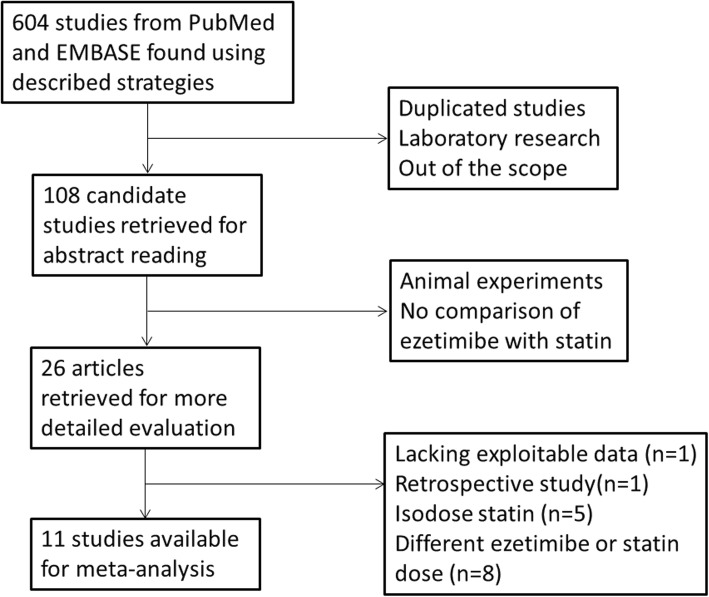
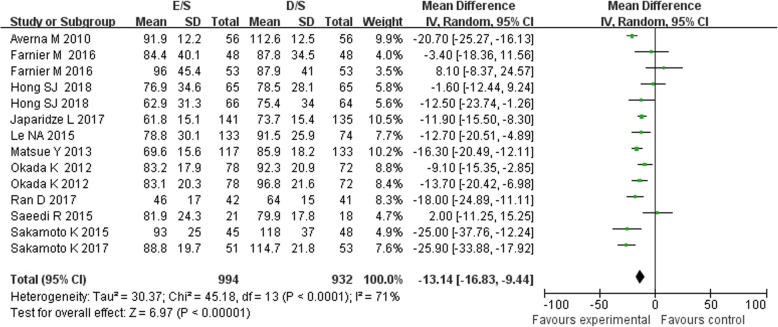
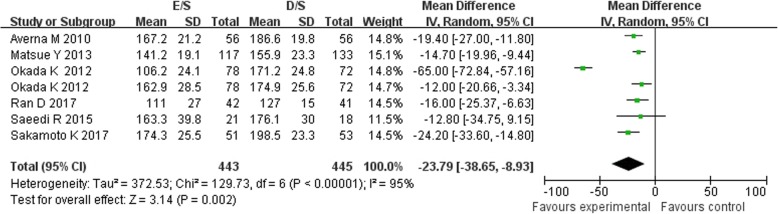
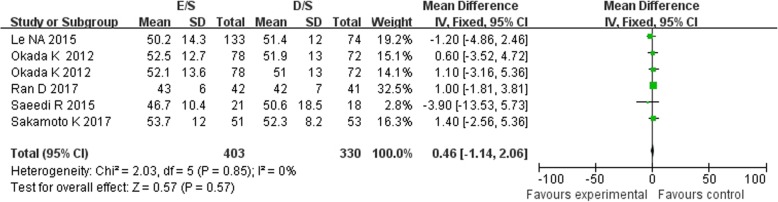
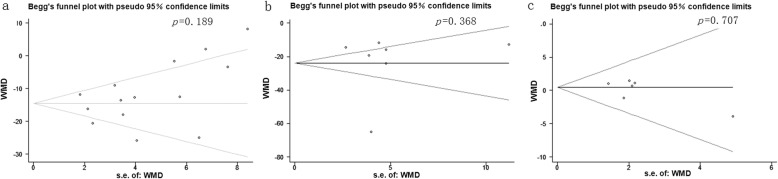
Background: The aim of this study was to compare and summarize the lipid-altering effects of combination therapy with ezetimibe and statins (E/S) and a double dose of statin (D/S) monotherapy on patients with hypercholesterolemia. Methods: We conducted search on 2 medical databases, PubMed and EMBASE to identify all relevant studies. A meta-analysis was performed to clarify the efficacy in the two groups. Only double-blind Randomized controlled study (RCTs) of efficacy evaluation in the two groups with ezetimibe and statins and a double dose of statin in participants with hypercholesterolemia that examined low-density lipoprotein cholesterol (LDL-C), total cholesterol (TC) and high-density lipoprotein (HDL) were included. Two reviewers extracted data from all primary studies independently. The primary data were the level of LDL-C, TC and HDL-C concentrations at the end point and are expressed as mean and standard deviation (SD). Results: A total of 11 double-blind, active or placebo-controlled studies with 1926 hypercholesterolemia adults randomized to ezetimibe 10 mg added to ongoing statins (N = 994) or statin titration (doubling) (N = 932) were pooled for the global meta-analysis. The effect size between treatment groups within individual studies was assessed by weighted mean difference (MD) using a random- or fixed-effect model. The result showed that the participants in E/S group get obvious lower LDL-C [MD = -13.14 mg/dL, 95%CI (−16.83, -9.44), p = 0.00001] and TC concentration [MD = -23.79 mg/dL, 95%CI (−38.65, -8.93), p = 0.002] from baseline to follow-up, comparing to the D/S group. Besides, no significant between-group differences were observed for concentrations of HDL-C [MD = 0.46 mg/dL, 95%CI (− 1.14, 2.06), p = 0.57]. According to subgroup analysis, the combination of ezetimibe and atorvastatin (10 mg) [MD = -16.98 mg/dL, p < 0 .0001] or simvastatin (20 mg) [MD = -17.35 mg/dL, p < 0 .0001] showed stronger ability of reducing LDL-C than combination of ezetimibe and rosuvastatin (10 mg) [MD = -9.29 mg/dL, p = 0.05]. The efficacy of short-term (endpoint time between 6 to 16 week) and long-term (52 week) treatment in the LDL-C between two groups did not show significant differences. Besides, only participants from Asia treated with combination therapy were associated with a significant lower LDL-C concentration [MD = -14.7 mg/dL, p < 0 .0001]. Conclusions: The addition of ezetimibe to statin appears to be more effective on reducing LDL-C and TC concentrations than doubling the statin dose. Moreover, the ability to reduce cholesterol levels of combinations therapy with ezetimibe and different statins or to participants from different geographic location may vary, based on this meta-analysis, while more samples are needed to verify.
Overview
The claims and statistics of this paper haven’t been checked yet.
Free: it reads the open-access text and checks the first 5 claims that cite a source we can check. Create a free account to check every claim.
Integrity signals
Registry
Cites
Statistics
Figures
Verification
Claims the paper makes
The claims and statistics of this paper haven’t been checked yet.
Free: it reads the open-access text and checks the first 5 claims that cite a source we can check. Create a free account to check every claim.
Claims other papers make about this one
Each is checked against this paper’s own text: does it say what the citing paper says it does?
The source backs part of the claim, not all of it — or backs it for a different population, condition or comparison.
In the citing paper
“Ezetimibe’s safety and efficacy has been confirmed in multiple meta-analyses [61, 66–70].”
From Established and Emerging Lipid-Lowering Drugs for Primary and Secondary Cardiovascular Prevention (2023) · cites this paper as [69]
Experimental — accuracy not yet measured
Self-check
Percentages, sums and reported differences re-computed from the paper’s own numbers.
The self-check needs the paper’s full text.
Citations
Cites
Measuring inconsistency in meta-analyses
Higgins, J. P. T., Thompson, S. G., Deeks, J. J., & Altman, D. G. (2003) · BMJ · doi:10.1136/bmj.327.7414.557 · Cited by 63,139
Meta-analysis in clinical trials
DerSimonian, R., & Laird, N. (1986) · Controlled Clinical Trials · doi:10.1016/0197-2456(86)90046-2 · Cited by 39,552
Operating characteristics of a rank correlation test for publication bias
Begg, C. B., & Mazumdar, M. (1994) · Biometrics · doi:10.2307/2533446 · Cited by 16,955
Prevention of Coronary Heart Disease with Pravastatin in Men with Hypercholesterolemia
Shepherd, J., Cobbe, S. M., Ford, I., Isles, C. G., Lorimer, A. R., Macfarlane, P. W., McKillop, J. H., & Packard, C. J. (1995) · New England Journal of Medicine · doi:10.1056/nejm199511163332001 · Cited by 7,449
Intensive versus Moderate Lipid Lowering with Statins after Acute Coronary Syndromes
Cannon, C. P., Braunwald, E., McCabe, C. H., Rader, D. J., Rouleau, J. L., Belder, R., Joyal, S. V., Hill, K. A., Pfeffer, M. A., & Skene, A. M. (2004) · New England Journal of Medicine · doi:10.1056/nejmoa040583 · Cited by 4,938
Schwartz, G. G. (2001) · JAMA · doi:10.1001/jama.285.13.1711 · Cited by 2,499
Statins for the primary prevention of cardiovascular disease
Taylor, F., Huffman, M. D., Macedo, A. F., Moore, T. H., Burke, M., Davey Smith, G., Ward, K., Ebrahim, S., & Gay, H. C. (2013) · Cochrane Database of Systematic Reviews · doi:10.1002/14651858.cd004816.pub5 · Cited by 1,934
Prescribing Personalized Nutrition for Cardiovascular Health: Are We Ready?
Juma, S., Imrhan, V., Vijayagopal, P., & Prasad, C. (2014) · Lifestyle Genomics · doi:10.1159/000370213 · Cited by 1,891
Prepared by: British Cardiac Society, B. H. S. (2005) · Heart · doi:10.1136/hrt.2005.079988 · Cited by 1,216
The Role of Ethnicity in Variability in Response to Drugs: Focus on Clinical Pharmacology Studies
Yasuda, S., Zhang, L., & Huang, S.-M. (2008) · Clinical Pharmacology & Therapeutics · doi:10.1038/clpt.2008.141 · Cited by 393
Cited by
Metabolism of tissue macrophages in homeostasis and pathology
Wculek, S. K., Dunphy, G., Heras-Murillo, I., Mastrangelo, A., & Sancho, D. (2022) · Cellular & Molecular Immunology · doi:10.1038/s41423-021-00791-9 · Cited by 501
Plasma Free Fatty Acid Concentration as a Modifiable Risk Factor for Metabolic Disease
Henderson, G. C. (2021) · Nutrients · doi:10.3390/nu13082590 · Cited by 152
Ashrafian, F., Raftar, S. K. A., Lari, A., Shahryari, A., Abdollahiyan, S., Moradi, H. R., Masoumi, M., Davari, M., Khatami, S., Omrani, M. D., et al. (2021) · Microbial Cell Factories · doi:10.1186/s12934-021-01709-w · Cited by 151
Established and Emerging Lipid-Lowering Drugs for Primary and Secondary Cardiovascular Prevention
Michaeli, D. T., Michaeli, J. C., Albers, S., Boch, T., & Michaeli, T. (2023) · American Journal of Cardiovascular Drugs · doi:10.1007/s40256-023-00594-5 · Cited by 109
Pranata, R., Huang, I., Irvan, I., Lim, M. A., & Vania, R. (2021) · Endocrine · doi:10.1007/s12020-021-02780-4 · Cited by 81
Kim, J., Shin, S.-J., Kim, Y.-S., & Kang, H. (2021) · Cardiovascular Diabetology · doi:10.1186/s12933-021-01377-5 · Cited by 68
Serum liver enzymes and diabetes from the Rafsanjan cohort study
Karimabad, M. N., Khalili, P., Ayoobi, F., Nadimi, A. E., Vecchia, C. L., & Jamali, Z. (2022) · BMC Endocrine Disorders · doi:10.1186/s12902-022-01042-2 · Cited by 58
Statin-Regulated Efferocytosis in Physiological and Pathological Conditions
Tajbakhsh, A., Hayat, S. M. G., Askari, H., Savardashtaki, A., Pirro, M., Johnston, T. P., & Sahebkar, A. (2022) · Pharmacology & Therapeutics · doi:10.1016/j.pharmthera.2022.108282 · Cited by 63
Zhang, W., Yi, J., Liu, D., Wang, Y., Jamilian, P., Găman, M., Prabahar, K., & Fan, J. (2022) · Experimental Gerontology · doi:10.1016/j.exger.2022.111709 · Cited by 55
Self-citationNew possible pharmacological targets for statins and ezetimibe
Niedzielski, M., Broncel, M., Gorzelak‐Pabiś, P., & Woźniak, E. (2020) · Biomedicine & Pharmacotherapy · doi:10.1016/j.biopha.2020.110388 · Cited by 55
Ray, K. K., Haq, I., Bilitou, A., Aguíar, C., Arca, M., Connolly, D. L., Eriksson, M., Ferrières, J., Hildebrandt, P. R., Laufs, U., et al. (2021) · Atherosclerosis Plus · doi:10.1016/j.athplu.2021.08.003 · Cited by 50
“However, the new lower LDL-C goals recommended by the 2019 ESC/EAS guidelines may not always be achievable with statin monotherapy, whereas the use of add-on therapy is associated with larger reductions in LDL-C [11,12] and a higher proportion of patients achieving their LDL-C goals [5].”
BackgroundTalic, S., Marquina, C., Ofori‐Asenso, R., Petrova, M., Liew, D., Owen, A. J., Lybrand, S., Thomson, D., Ilomäki, J., Zomer, E., et al. (2021) · Cardiovascular Drugs and Therapy · doi:10.1007/s10557-021-07199-7 · Cited by 36
Sumon, M. S. I., Islam, M. S. B., Rahman, M. S., Hossain, M. S. A., Khandakar, A. A., Hasan, A., Murugappan, M., & Chowdhury, M. E. H. (2025) · Health Information Science and Systems · doi:10.1007/s13755-025-00361-7 · Cited by 43
Jabeen, K., Rehman, K., & Akash, M. S. H. (2021) · Journal of Biochemical and Molecular Toxicology · doi:10.1002/jbt.22953 · Cited by 38
Lee, J., Egolum, U. O., Parihar, H. S., Cooley, M., & Ling, H. (2021) · Cardiology Research · doi:10.14740/cr1224 · Cited by 31
“Recently, Yu et al [8] conducted a metaanalysis comparing the efficacy of combination therapy with ezetimibe and statins versus a double dose of statin monotherapy.”
BackgroundSabir, U., Irfan, H. M., Alamgeer, Umer, I., Niazi, Z. R., & Asjad, H. M. M. (2022) · Naunyn-Schmiedeberg s Archives of Pharmacology · doi:10.1007/s00210-022-02234-2 · Cited by 30
Therapeutic applications of gut microbes in cardiometabolic diseases: current state and perspectives
Yuan, L., Li, Y., Chen, M., Xue, L., Wang, J., Ding, Y., Gu, Q., Zhang, J., Zhao, H., Xie, X., et al. (2024) · Applied Microbiology and Biotechnology · doi:10.1007/s00253-024-13007-7 · Cited by 31
Ji, L., Cai, X., Bai, Y., & Li, T. (2021) · International Journal of General Medicine · doi:10.2147/ijgm.s319759 · Cited by 29
Pavía-López, A. A., Alcocer-Gamba, M. A., Ruiz-Gastélum, E. D., Mayorga-Butrón, J. L., Mehta, R., Díaz-Aragón, F. A., Aldrete-Velasco, J. A., López-Juárez, N., Cruz-Bautista, I., Chávez-Mendoza, A., et al. (2022) · Archivos de cardiología de México · doi:10.24875/acm.m22000081 · Cited by 60
LncRNA MALAT1 and Ischemic Stroke: Pathogenesis and Opportunities
Khoshnam, S. E., Moalemnia, A., Anbiyaee, O., Farzaneh, M., & Ghaderi, S. (2023) · Molecular Neurobiology · doi:10.1007/s12035-023-03853-3 · Cited by 27
Anti-inflammatory therapy with low-dose IL-2 in acute coronary syndromes: a randomized phase 2 trial
Sriranjan, R., Zhao, T. X., Hoole, S. P., Bond, S. J., Tarkin, J. M., Brubert, J., Hubsch, A., Helmy, J., Bumanlag-Amis, E., Jalaludeen, N., et al. (2026) · Nature Medicine · doi:10.1038/s41591-025-04090-y · Cited by 26
Role of lncRNAs in the Development of Ischemic Stroke and Their Therapeutic Potential
Vasudeva, K., Dutta, A., & Munshi, A. (2021) · Molecular Neurobiology · doi:10.1007/s12035-021-02359-0 · Cited by 27
Ezetimibe and diabetes mellitus:a new strategy for lowering cholesterol
Serhiyenko, V. A., & Serhiyenko, A. A. (2022) · INTERNATIONAL JOURNAL OF ENDOCRINOLOGY (Ukraine) · doi:10.22141/2224-0721.18.5.2022.1190 · Cited by 26
Kargasheh, F. B., Ansaripour, S., Borumandnia, N., Moradi, N., Zandieh, Z., Maleki, M., Mokhtar, S., Karimi, A., Fatemi, F., Kheirollahi, A., et al. (2021) · PLoS ONE · doi:10.1371/journal.pone.0255920 · Cited by 29
Rezaee, M., Kamrani, F., Imannezhad, M., Shahri, H. H., Saihood, W. K., Rezvani, A., Far, P. M., Mahaki, H., Esmaily, H., Moohebati, M., et al. (2025) · BMC Cardiovascular Disorders · doi:10.1186/s12872-025-04500-6 · Cited by 28
Impact of Dietary Lipids on the Reverse Cholesterol Transport: What We Learned from Animal Studies
Papotti, B., Escolá‐Gil, J. C., Julve, J., Potì, F., & Zanotti, I. (2021) · Nutrients · doi:10.3390/nu13082643 · Cited by 27
Jun, J. E., Jeong, I., Ahn, K. J., Chung, H. Y., & Hwang, Y. (2024) · European Journal of Preventive Cardiology · doi:10.1093/eurjpc/zwae081 · Cited by 21
Statin intolerance: an updated, narrative review mainly focusing on muscle adverse effects
Li, J., Liu, H.-H., Wu, N., Yeo, K. K., Tan, K. C. B., Ako, J., Krittayaphong, R., Tan, R., Aylward, P. E., Baek, S. H., et al. (2020) · Expert Opinion on Drug Metabolism & Toxicology · doi:10.1080/17425255.2020.1802426 · Cited by 22
Taheri, E., Pourhoseingholi, M. A., Moslem, A., Hassani, A. H., Jarrahi, S. A. M., Aghdaei, H. A., Zali, M. R., & Hatami, B. (2022) · Journal of Diabetes & Metabolic Disorders · doi:10.1007/s40200-021-00941-w · Cited by 22
Barrios, V., & Escobar, C. (2021) · Expert Review of Clinical Pharmacology · doi:10.1080/17512433.2021.1925539 · Cited by 21
“cardiovascular complications [81,85], although further investigation, especially randomized control trials with large samples,”
BackgroundLee, S., Kim, W., Hong, T. J., Ahn, Y., Kim, M. H., Hong, S. J., Kim, B. S., Kim, S. Y., Chae, I., Kim, B. J., et al. (2021) · Clinical Therapeutics · doi:10.1016/j.clinthera.2021.07.016 · Cited by 27
Talic, S., Marquina, C., Ofori‐Asenso, R., Liew, D., Owen, A. J., Petrova, M., Lybrand, S., Thomson, D., Ilomäki, J., Ademi, Z., et al. (2021) · Current Problems in Cardiology · doi:10.1016/j.cpcardiol.2021.100880 · Cited by 19
Duan, Y., Chang, X., Ding, X., An, Y., Wang, G., & Liu, J. (2022) · BMC Cardiovascular Disorders · doi:10.1186/s12872-022-02810-7 · Cited by 18
Seo, S. H., Lee, D. H., Lee, Y. S., Cho, K. J., Park, H. J., Lee, H. W., Kim, B. K., Park, J. Y., Kim, D. Y., Ahn, S. H., et al. (2022) · Gastroenterology report · doi:10.1093/gastro/goac037 · Cited by 20
Llewellyn, A., Simmonds, M. C., Marshall, D. C., Harden, M., Woods, B. S., Humphries, S. E., Ramaswami, U., Priestley-Barnham, L., Fisher, M., Tata, L. J., et al. (2024) · Atherosclerosis · doi:10.1016/j.atherosclerosis.2024.118598 · Cited by 19
“This meta-analysis showed broadly comparable levels of LDL-C reductions and variations across LLT types and doses compared with adults [24,45].”
Qian, J., Li, Z., Zhang, X., Chen, J., Ding, C., Yang, P., Liu, Y., Shi, M., Ren, X., & Ge, J. (2022) · Clinical Therapeutics · doi:10.1016/j.clinthera.2022.08.013 · Cited by 16
Kang, Y., Park, J. M., & Lee, S. (2023) · Yonsei Medical Journal · doi:10.3349/ymj.2023.0285 · Cited by 15
Bilal, M., Sial, M. U., Cao, L., & Huang, Q. (2022) · International Journal of Molecular Sciences · doi:10.3390/ijms23105790 · Cited by 17
Abboud, M., Anouti, F. A., Papandreou, D., Rizk, R., Mahboub, N., & Haidar, S. A. (2021) · Systematic Reviews · doi:10.1186/s13643-021-01584-x · Cited by 13
“OH vitamin D total assay Vitamin D status group: Deficient: < 50 nmol/L; Nondeficient: ≥ 50 nmol/L SBP and DBP: median of 3 measurements, after 5-min rest, using the right arm and in the seated position MAP: 1/3 SBP + 2/3 DBP Overweight status; Age; Sex; Height; Seasonality; Personal smoking status; Second-hand smoke…”
BackgroundInfluentialPark, D. Y., Lee, D.-C., & Kim, Y. S. (2022) · Metabolic Syndrome and Related Disorders · doi:10.1089/met.2022.0027 · Cited by 13
Han, J., Kim, Y., Kang, H. J., Seo, J., Choi, H., Kim, M., Kee, G., Park, S., Ko, S., Jung, H., et al. (2025) · Scientific Reports · doi:10.1038/s41598-025-88693-y · Cited by 15
Finelli, C. (2023) · Gastrointestinal Disorders · doi:10.3390/gidisord5020020 · Cited by 13
Hajimohammadi, S., Rameshrad, M., & Karimi, G. (2024) · Inflammopharmacology · doi:10.1007/s10787-024-01506-y · Cited by 12
Sawant, S., & Wang, N. (2023) · European Journal of Preventive Cardiology · doi:10.1093/eurjpc/zwad030 · Cited by 12
Du, L., Hong, F., Luo, P., Wang, Z., Zeng, Q., Guan, H., Liu, H., Yuan, Z., Xu, D., Nie, F., et al. (2022) · BMC Public Health · doi:10.1186/s12889-022-13266-x · Cited by 11
Oh, M., Kim, H. J., Shin, E. W., Sung, C., Kim, D., Moon, D. H., Lee, J. S., Lee, P. H., Lee, S., & Lee, C. W. (2021) · Medicine · doi:10.1097/md.0000000000025114 · Cited by 11
“Therefore, to minimize side effects, combination therapy with low-intensity statins and ezetimibe is often used as an alternative to moderate- or high-intensity statins.([14,15]) Although these approaches have shown a similar reduction in LDL-C levels, a limited number of studies have compared their effects on atheros…”
BackgroundCholesterol-lowering drugs: Focus on Ezetimibe: Cholesterol-lowering drugs: Focus on ezetimibe
Bays, H. E. (2022) · European Atherosclerosis Journal · doi:10.56095/eaj.v1i1.8 · Cited by 9
Martín-Fernández, M., González-González, M. A., Pedrosa-Naudín, M. A., Fernández‐Lázaro, D., Alvarez, E., & Gutiérrez‐Abejón, E. (2025) · Pharmaceuticals · doi:10.3390/ph18050634 · Cited by 9
“In addition, the efficacy of adding ezetimibe or PCKSK9 inhibitors to statin therapy in reducing LDL-C levels has been widely demonstrated [24,25].”
Yaribeygi, H., Maleki, M., Butler, A. E., Jamialahmadi, T., Gumpricht, E., & Sahebkar, A. (2023) · Current Medicinal Chemistry · doi:10.2174/0929867331666230707094644 · Cited by 12
Lee, S., Hong, S. J., Sung, J., Kim, K., Kim, S. H., Cho, J. M., Chun, S. W., Lee, S. R., Kim, C. S., Kim, T. N., et al. (2023) · Medicine · doi:10.1097/md.0000000000036122 · Cited by 11
Sadeghi, F., Amanat, S., Bakhtiari, M., Asadimehr, H., Okhovat, M. A., Hosseinzadeh, M., Mazloomi, S. M., Gholamalizadeh, M., & Doaei, S. (2021) · Journal of Diabetes & Metabolic Disorders · doi:10.1007/s40200-021-00916-x · Cited by 9
Umoren, E. B., Asiwe, J. N., Okon, I. A., Amangieka, A. L., Nyenke, C. U., Nnamudi, A. C., Modo, E. U., Bassey, A., Nwikue, G., & Etim, O. E. (2023) · Biomarkers · doi:10.1080/1354750x.2023.2166588 · Cited by 9
Cai, R., Chang, C., Zhong, X., & Su, Q. (2023) · Cardiovascular Innovations and Applications · doi:10.15212/cvia.2023.0004 · Cited by 11
Kim, M. C., Ahn, Y., Kim, M. H., Kim, S., Hong, T. J., Rhee, M., Kim, S., Hong, S. J., Kim, H., Kim, W., et al. (2023) · American Journal of Cardiovascular Drugs · doi:10.1007/s40256-023-00590-9 · Cited by 8
Validation of low-density lipoprotein cholesterol equations in pediatric population
Zararsız, G. E., Bolat, S., Cephe, A., Koçhan, N., Yerlitaş, S. İ., Doğan, H. O., & Zararsız, G. (2023) · PeerJ · doi:10.7717/peerj.14544 · Cited by 7
“Presently, there has been limited testing of these formulas resulting in a gap in the literature for estimating LDL-C levels in children and adolescents ( Garoufi et al., 2017 ; Roper et al., 2017 ; Cicero et al., 2021 ; Molavi et al., 2020 ).”
Ardekani, A. M., Nava, Z. H., Zaman, B. A., Vahdat, S., Lame-Jouybari, A.-H., & Mivefroshan, A. (2023) · BMC Research Notes · doi:10.1186/s13104-023-06472-2 · Cited by 7
Jannati, N., Mohammadi-Faez, R., Mahmoodi, M. R., & Azadbakht, L. (2024) · BMC Pediatrics · doi:10.1186/s12887-024-04739-6 · Cited by 7
Musazadeh, V., Mahmoudinezhad, M., Pam, P., Brazandeh, S., Faramarzi, F., Mohammadpour, Y., Faghfouri, A. H., & Gheibi, S. (2025) · Nutrition & Metabolism · doi:10.1186/s12986-025-00952-x · Cited by 7
Potential of Phage Display Antibody Technology for Cardiovascular Disease Immunotherapy
Yeoh, S. G., Sum, J.-S., Lai, J. Y., Isa, W. Y. H. W., & Lim, T. S. (2021) · Journal of Cardiovascular Translational Research · doi:10.1007/s12265-021-10169-x · Cited by 8
Ibrahim, A. A., Shadi, H. W. E., Elamin, A. A. Y., & Draz, H. E. (2023) · Egyptian Rheumatology and Rehabilitation · doi:10.1186/s43166-023-00175-z · Cited by 7
Are We Using Ezetimibe As Much As We Should?
Manolis, A. S., Manolis, T. A., Mikhailidis, D. P., & Manolis, A. S. (2024) · Biomarker Insights · doi:10.1177/11772719241257410 · Cited by 9
Kaur, S., Garg, N., Rubal, R., & Dhiman, M. (2022) · Environmental Science and Pollution Research · doi:10.1007/s11356-022-20850-6 · Cited by 7
Rasaei, N., Fallah, M., Nemati, M., Gholami, F., Ghaffarian-Ensaf, R., & Mirzaei, K. (2023) · Scientific Reports · doi:10.1038/s41598-023-38988-9 · Cited by 7
Schreiner, T. G., Ignat, B. E., Grosu, C., Costache, A. D., Leon, M. M., & Mitu, F. (2024) · Medicina · doi:10.3390/medicina60040561 · Cited by 7
“Ezetimibe is one of the first alternatives to statins; however, it has less efficacy as it can lower LDL-C levels by only approximately 20% [82].”
BackgroundPinto, L. C. S., Mello, A. P. D. Q., Izar, M. C. D. O., Damasceno, N. R. T., Neto, A. M. F., França, C. N., Caixeta, A. M., Bianco, H. T., Póvoa, R., Moreira, F. T., et al. (2021) · Lipids in Health and Disease · doi:10.1186/s12944-021-01559-w · Cited by 8
Accelerated increase in ferritin levels during menopausal transition as a marker of metabolic health
Kim, M.-J., Chang, Y., Cho, Y., Kwon, M., Joh, H., Lim, G., Kwon, R., Ahn, J., Park, J., Kim, K. H., et al. (2025) · Scientific Reports · doi:10.1038/s41598-025-14295-3 · Cited by 5
Firouzabadi, F. D., Mirzababaei, A., Shiraseb, F., Tangestani, H., & Mirzaei, K. (2023) · BMC Endocrine Disorders · doi:10.1186/s12902-023-01429-9 · Cited by 5
The prognostic significance of insulin resistance in COVID-19: a review
Mehraeen, E., Abbaspour, F., Banach, M., SeyedAlinaghi, S., Zarebidoki, A., & Zadeh, S. S. T. (2024) · Journal of Diabetes & Metabolic Disorders · doi:10.1007/s40200-024-01385-8 · Cited by 5
Dadzie, S. K., Tabowei, G., Kaur, M., Ahmed, S., Thakur, A., Khreis, K., Bai, M., & Amin, A. (2024) · Cureus · doi:10.7759/cureus.61526 · Cited by 7
“The statin and ezetimibe combination group experienced a higher LDL-C reduction compared to the double-dose statin monotherapy group, according to a prior meta-analysis that included 11 clinical studies [18].”
ResultHafezi, S. G., Ghasemabadi, A., Soleimani, N., Allahyari, M., Moradi, M., Mansoori, A., Ahari, R. K., Ghamsary, M. G., Ferns, G., Esmaily, H., et al. (2025) · Population Health Metrics · doi:10.1186/s12963-025-00410-z · Cited by 4
Microbial oil, alone or paired with β-glucans, can control hypercholesterolemia in a zebrafish model
Gora, A. H., Rehman, S., Dias, J. P., Fernandes, J. M. O., Olsvik, P. A., Sørensen, M., & Kiron, V. (2023) · Biochimica et Biophysica Acta (BBA) - Molecular and Cell Biology of Lipids · doi:10.1016/j.bbalip.2023.159383 · Cited by 5
Arca, M., Pirillo, A., Gambacurta, R., Becker, C., Diamand, F., Ray, K. K., & Catapano, A. L. (2024) · European Atherosclerosis Journal · doi:10.56095/eaj.v3i3.76 · Cited by 4
“Adding ezetimibe to statin therapy is more effective in lowering LDL-C than doubling the statin dose [23, 24].”
A predictive model to assess the risk of developing hyperlipidemia in patients with type 2 diabetes
Ye, R., Huang, X., Yang, H., Pan, W., Wang, P., Men, J., Huang, D., & Wu, S. (2025) · PLoS ONE · doi:10.1371/journal.pone.0315781 · Cited by 4
“Furthermore, in T2D patients with hypercholesterolemia, PCSK9 levels may not be affected by ezetimibe or its combination with statins [32].”
Species Differences in Ezetimibe Glucuronidation
Emmanuel, S., Asare, E., Du, T., Xie, H., Liang, D., & Gao, S. (2024) · Metabolites · doi:10.3390/metabo14110569 · Cited by 3
“The FDA has authorized using ezetimibe and atorvastatin together to lower LDL-C in individuals with primary or mixed hyperlipidemia [2].”
Keyvanpour, S., Daneshvar, M., Mirshahi, A., Mokhtari, M., & Ebrahimi, E. (2025) · Discover Medicine · doi:10.1007/s44337-025-00198-9 · Cited by 3
Cholesterol-modifying strategies for Alzheimer disease: promise or fallacy?
Azarfar, K., Decourt, B., Camacho, B. S., Lawrence, J. J., Omondi, T. R., & Sabbagh, M. N. (2025) · Expert Review of Neurotherapeutics · doi:10.1080/14737175.2025.2483928 · Cited by 3
“Moreover, studies involving combination therapies have shown that rosuvastatin plus eze-timibe (Roszet), simvastatin plus ezetimibe (Vytorin), and ator-vastatin plus ezetimibe (Lypqozet) have additive effects that increase their clinical efficacy [84,85].”
Choe, J., Lee, S. H., Ahn, J., Lee, H., Oh, J., Choi, J., Lee, H., Cha, K., & Park, J. S. (2023) · Journal of Clinical Medicine · doi:10.3390/jcm12186099 · Cited by 3
“The efficacy data from a metaanalysis of randomized controlled trials (RCTs) suggest that combination therapy with a moderate-intensity statin and ezetimibe produces a greater reduction in LDL-C levels than that with high-intensity statin monotherapy [12].”
BackgroundTaherkhani, M., Khanifar, Z., Taherkhani, A., Hajishah, H., & Tavasol, A. (2024) · BMC Cardiovascular Disorders · doi:10.1186/s12872-024-04142-0 · Cited by 3
von Xylander, N. S. H., Hédouin, L., Smith, T., & Allison, N. (2025) · Marine Biology · doi:10.1007/s00227-025-04622-7 · Cited by 3
Recent Advancements in Omega Fatty Acids to Treat Neurodegeneration
Omgy, N., Anjana, B., Anusree, V., Annmary, K. K., & Lakshmi, S. (2022) · Springer eBooks · doi:10.1007/978-981-16-6703-9_8 · Cited by 3
Basit, K. A., Fat, L. N., & Gregg, E. W. (2023) · Journal of Public Health · doi:10.1007/s10389-023-02143-5 · Cited by 3
Goyal, A., Tariq, M. D., Jain, H., Shrestha, A. B., Fatima, L., Riyaz, R., Yadav, H. R., Safi, D., Yasinzai, A. Q. K., Khan, R., et al. (2024) · Cardiovascular Endocrinology & Metabolism · doi:10.1097/xce.0000000000000315 · Cited by 4
“Their efficacy in reducing cholesterol levels and providing protection against coronary heart disease has been well-established in previous studies [6].”
ResultBarakat, M. M., Thiab, S. H., Abdulrazzaq, S. B., Al-Jamal, M., AlHariri, F., Ammari, R. B., Mansour, S., Khatib, S. E., Hallit, S. R., Hosseini, B., et al. (2024) · Journal of Pharmaceutical Policy and Practice · doi:10.1080/20523211.2024.2410199 · Cited by 2
Non-targeted lipidomics reveals the distinct metabolic mechanisms of n ZnO and Zn ions in fish liver
Ma, S., & Wang, W. (2025) · Environmental Science Nano · doi:10.1039/d5en00160a · Cited by 2
Association of Lipid and Blood Glucose Profiles with MASLD Among Young Adults
Xiao, W., Sun, X., Lv, H., Liu, X., & Zhu, J. (2025) · Diabetes Metabolic Syndrome and Obesity · doi:10.2147/dmso.s547717 · Cited by 2
Kindie, Y., Fetene, G., Worede, A., Zenaw, A., & Yechale, M. (2025) · BMC Endocrine Disorders · doi:10.1186/s12902-025-02137-2 · Cited by 2
Jung, Y. H., Yun, I., Park, E., & Jang, S. (2023) · BMC Cancer · doi:10.1186/s12885-023-11384-2 · Cited by 1
Alwahsh, M., Alejel, R., Hamadneh, L., Aleidi, S. M., Marchan, R., Hasan, A., Jasim, S., Saqallah, F. G., Al-Kouz, S., Hussein, B., et al. (2025) · Metabolomics · doi:10.1007/s11306-025-02318-z · Cited by 2
Jin, J., Shan, L., Wang, M., Liu, L., Xu, T., Li, D., Chen, Z., Liu, X., Zhang, W., & Li, Y. (2023) · International Heart Journal · doi:10.1536/ihj.23-125 · Cited by 1
Namazi, N., Anjom-Shoae, J., Darbandi, M., Rezaeian, S., & Pasdar, Y. (2025) · Journal of Diabetes & Metabolic Disorders · doi:10.1007/s40200-025-01571-2 · Cited by 1
Kardiovaskuläre Hochrisikopatienten: Hilfe bei der LDL-C-Zielwerterreichung
Makhmudova, U., Schulze, P. C., Vogt, A., & Weingärtner, O. (2021) · CardioVasc · doi:10.1007/s15027-021-3603-4 · Cited by 1
Jin, J., Wang, M., Wang, M., Liu, L., Xv, T., Li, D., Chen, Z., Zhang, W., 邱福宇, & Li, Y. (2022) · Journal of the American College of Cardiology · doi:10.1016/s0735-1097(22)02096-4
Titus, E. F., Gyebi, G. A., Samuel, A. E., Isaac, E. P., Ayeni, G., Pepple, N. M., Junaidu, Y., Samson, O., Akogwu, O. A., & Obaje, G. (2024) · Current Chemical Biology · doi:10.2174/0122127968319253241024050426 · Cited by 2
Cantika, A. D., Ekayanti, I., & Sudikno, S. (2025) · BIO Web of Conferences · doi:10.1051/bioconf/202515302028
Tian, H., Zhang, W., Chen, Y., Zhao, R. C., Zhou, J., & Li, Z. (2025) · Small Methods · doi:10.1002/smtd.202500297
Mansoori, A., Behkamal, B., Darroudi, S., Nateghi, N., Soflaei, S. S., Shahri, B., Alimi, H., Esmaily, H., Ferns, G. A., Ghayour‐Mobarhan, M., et al. (2025) · Artery Research · doi:10.1007/s44200-025-00089-5
Abboud, M., Anouti, F. A., Papandreou, D., Rizk, R., Mahboub, N., & Haidar, S. (2021) · Figshare · doi:10.6084/m9.figshare.14091357
Cost-Effectiveness of Lipid-Lowering Therapies for Cardiovascular Prevention
Michaeli, D. T. (2024) · heiDOK (Heidelberg University) · doi:10.11588/heidok.00035637
Abboud, M., Anouti, F. A., Papandreou, D., Rizk, R., Mahboub, N., & Haidar, S. (2021) · Figshare · doi:10.6084/m9.figshare.14091354
Metadata
- Authors
- Yu, M., Liang, C., Kong, Q., Wang, Y., & Li, M.
- Affiliations
- The Affiliated Yongchuan Hospital of Chongqing Medical University (CN)
- Army Medical University (CN)
- Corresponding author
- Wang, Yihan
- Venue
- Lipids in Health and Disease
- Published
- 2020-01-04
- Volume
- 19
- Issue
- 1
- Pages
- 1-1
- ISSN
- 1476-511X (ISSN-L)
- PMC
- PMC6942418
- OpenAlex
- W3001476701
- Semantic Scholar
- fa53a67b8aafd761a6b260cfad1560c92deca2c7
- Cited by
- 107
- References
- 28
- Citations by year
- 2026: 6 · 2025: 19 · 2024: 15 · 2023: 21 · 2022: 18 · 2021: 25 · 2020: 3
- FWCI
- 3.80
- Type
- journal article
- Language
- en
- Open access
- gold
- doi.org
- Licence
- cc-by
- creativecommons.org/licenses/by/4.0/ (tdm)
- creativecommons.org/licenses/by/4.0/ (vor)
- Locations
- Lipids in Health and Disease (publishedVersion, cc-by)
- PubMed Central (publishedVersion, cc-by)
- PubMed (publishedVersion)
- DOAJ (DOAJ: Directory of Open Access Journals) (submittedVersion)
- Topics
- Health Sciences › Medicine › Cardiology and Cardiovascular Medicine › Lipoproteins and Cardiovascular Health
- Life Sciences › Biochemistry, Genetics and Molecular Biology › Biochemistry › Cholesterol and Lipid Metabolism
- Life Sciences › Biochemistry, Genetics and Molecular Biology › Cancer Research › Cancer, Lipids, and Metabolism
- Keywords
- ezetimibe, statins, hypercholesterolemia, combination lipid-lowering therapy, LDL cholesterol, total cholesterol, HDL cholesterol, atorvastatin, simvastatin, rosuvastatin, lipid-lowering efficacy
- MeSH terms
- Ezetimibe, Aged, Cholesterol, Drug Combinations, Female, Humans, Hypercholesterolemia, Cholesterol, HDL, Cholesterol, LDL, Male, Middle Aged, Randomized Controlled Trials as Topic, Hydroxymethylglutaryl-CoA Reductase Inhibitors
About these checks
Registry, retraction, Cites and statistics results are computed, not judged, with one exception: a printed reference that no index lists is read once by a model before it counts as a citation error. Claims are extracted by a model and kept only when their quote appears verbatim in the text; each cited source is then checked, with a model’s help, for whether it says what the claim relies on. Those verdicts can be wrong — read the claim’s quote and the cited source before relying on one.
Statistics and arithmetic are recomputed, not judged.
Confidence bands are shown only for fields calibrated on our annotated test set. None is calibrated yet, so no band is shown.
What counts as a claim ›How we measure confidence ›How we check this ›
Are you an author, or do you see a problem with this page? Request a review
Data sources
Bibliographic data: Semantic Scholar, OpenAlex, Crossref.
Contains information from the Semantic Scholar Academic Graph Datasets, made available under the ODC Attribution License (ODC-BY 1.0).
Semantic Scholar’s data is described in: Kinney, R., et al. (2023). The Semantic Scholar Open Data Platform. arXiv:2301.10140.
