

Compared with the monocyte to high-density lipoprotein ratio (MHR) and the neutrophil to lymphocyte ratio (NLR), the neutrophil to high-density lipoprotein ratio (NHR) is more valuable for assessing the inflammatory process in Parkinson’s disease.
Open accessPublished version of a preprint
The DOI matches its Crossref record; 51 of the 51 references it cites were found in a registry or an index.
Abstract
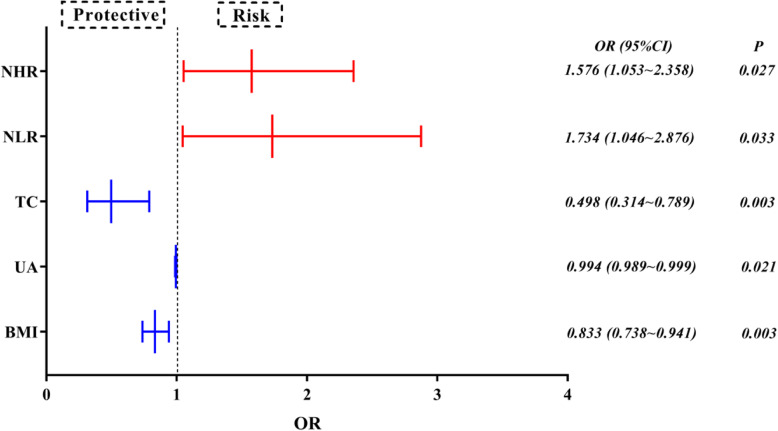
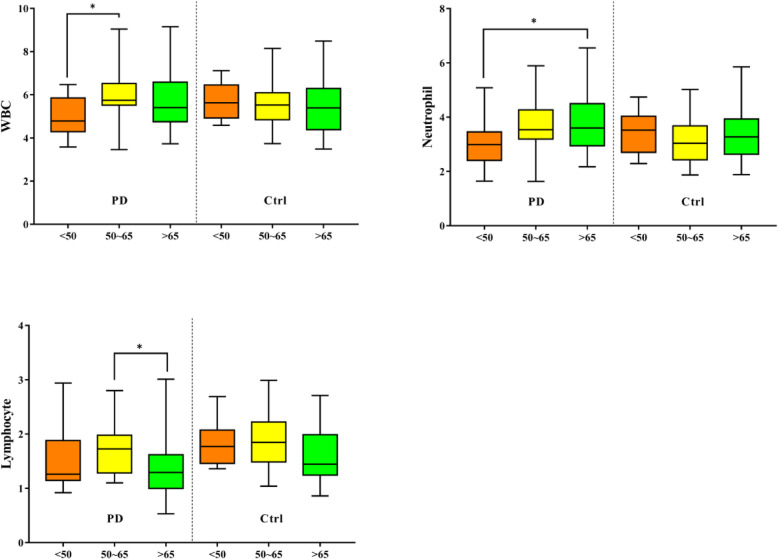
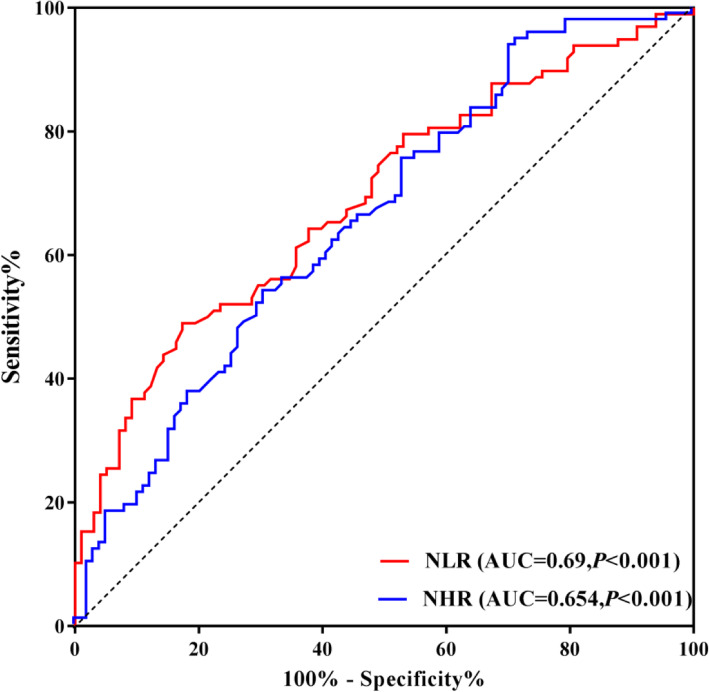
Background: The inflammatory response plays essential roles in the pathological process and prognosis of Parkinson’s disease (PD). This research investigated the predictive value of the neutrophil to high-density lipoprotein ratio (NHR), neutrophil to lymphocyte ratio (NLR), and monocyte to high-density lipoprotein ratio (MHR) for PD. Methods: Patients with PD ( n = 98) were divided into three groups according to disease duration: < 6 years ( n = 55), 6–10 years ( n = 29) and > 10 years ( n = 14). Based on the classification system of Hoehn and Yahr, grades 1 ~ 2.5 were considered early-stage PD ( n = 44), and grades 3 ~ 5 were considered advanced-stage PD ( n = 54). In addition, healthy subjects ( n = 98) matched to the above PD patients in the same period were selected as the control group. Differences in the NHR, NLR, MHR and other indicators among the groups were evaluated. Results: Smoking, drinking, the neutrophil count and the NHR and NLR were remarkably greater and hypertension, index of body mass, the lymphocyte count, and the levels of cholesterol in total, triglycerides, lipoprotein cholesterol with low density and uric acid were sharply lower in the PD group compared with in the control group. Analysis of multifactor logistic regression indicated that the NHR (odds ratio (adjusted OR) = 1.576, 95% CI: 1.053 ~ 2.358, P = 0.027) and NLR (adjusted OR = 1.734, 95% CI: 1.046 ~ 2.876, P = 0.033) were factors of risk for PD, while the MHR was not significantly correlated with PD. The areas under the receiver operating characteristic (ROC) curve (AUCs) for the prediction of PD by the NHR and NLR were 0.654 (95% CI: 0.583 ~ 0.721, P = 0.0001) and 0.69 (95% CI: 0.62 ~ 0.754, P < 0.0001), respectively, and the optimal cutoff values were 1.848 × 10 9 /mmol and 2.62 × 10 9 /mmol. Spearman’s correlation analysis indicated that the NHR was correlated with the disease duration significantly negatively and that the MHR was positively correlated with disease severity. Conclusions: In summary, the NHR not only has strong predictive value for PD but is also closely related to disease duration. The NHR may be a better prediction for the long-period clinical results in PD patients than the MHR and NLR. Trial registration: Clinical medical reserach center project of Qinghai Province (2017-SF-L1).
Overview
The claims and statistics of this paper haven’t been checked yet.
Free: it reads the open-access text and checks the first 5 claims that cite a source we can check. Create a free account to check every claim.
Integrity signals
Registry
Cites
Statistics
Figures
Verification
Claims the paper makes
The claims and statistics of this paper haven’t been checked yet.
Free: it reads the open-access text and checks the first 5 claims that cite a source we can check. Create a free account to check every claim.
Claims other papers make about this one
Each is checked against this paper’s own text: does it say what the citing paper says it does?
The source backs part of the claim, not all of it — or backs it for a different population, condition or comparison.
In the citing paper
“The SII, SIRI, MHR, NHR, LHR, and PHR are considered cost-effective and simple laboratory parameters indicating systemic inflammation in many diseases (18, 19, 21–23, 26, 27, 30–34).”
From Investigation of systemic immune-inflammation index, neutrophil/high-density lipoprotein ratio, lymphocyte/high-density lipoprotein ratio, and monocyte/high-density lipoprotein ratio as indicators of inflammation in patients with schizophrenia and bipolar disorder (2022) · cites this paper as [27]
Experimental — accuracy not yet measuredThe source backs part of the claim, not all of it — or backs it for a different population, condition or comparison.
In the citing paper
“In view of the role of neutrophils, monocytes, lymphocytes, platelets, and HDL in inflammation, the neutrophil/HDL ratio (NHR), lymphocyte/HDL ratio (LHR), monocyte/HDL ratio (MHR), and platelet/HDL ratio (PHR) have been recently investigated as new markers for inflammation, and they were suggested as potential markers of systemic inflammation and oxidative stress in many inflammatory diseases (26”
From Investigation of systemic immune-inflammation index, neutrophil/high-density lipoprotein ratio, lymphocyte/high-density lipoprotein ratio, and monocyte/high-density lipoprotein ratio as indicators of inflammation in patients with schizophrenia and bipolar disorder (2022) · cites this paper as [27]
Experimental — accuracy not yet measuredThe source backs part of the claim, not all of it — or backs it for a different population, condition or comparison.
In the citing paper
“They were found to be closely associated with the presence and prognosis of some physical health disorders, including cardiovascular disease, cancer, Parkinson’s disease, ischemic stroke, and erectile dysfunction (24, 27, 28, 31, 32).”
From Investigation of systemic immune-inflammation index, neutrophil/high-density lipoprotein ratio, lymphocyte/high-density lipoprotein ratio, and monocyte/high-density lipoprotein ratio as indicators of inflammation in patients with schizophrenia and bipolar disorder (2022) · cites this paper as [27]
Experimental — accuracy not yet measured
Self-check
Percentages, sums and reported differences re-computed from the paper’s own numbers.
The self-check needs the paper’s full text.
Citations
Cites
1 retracted
Iba, M., Kim, C., Sallin, M., Kwon, S., Verma, A., Overk, C., Rissman, R. A., Sen, R., Sen, J. M., & Masliah, E. (2020) · Journal of Neuroinflammation · doi:10.1186/s12974-020-01888-0 · Cited by 120 · cited 1×
“actions with glial cells further enhance inflammatory activity [5, 29].”
BackgroundRetractedMach, F., Baigent, C., Catapano, A. L., Koskinas, K. C., Casula, M., Badimon, L., Chapman, M. J., De Backer, G. G., Delgado, V., Ference, B. A., et al. (2020) · European Heart Journal · doi:10.1093/eurheartj/ehz455 · Cited by 8,961
Feigin, V. L., Nichols, E., Alam, T., Bannick, M. S., Beghi, E., Blake, N., Culpepper, W. J., Dorsey, E. R., Elbaz, A., Ellenbogen, R. G., et al. (2019) · The Lancet Neurology · doi:10.1016/s1474-4422(18)30499-x · Cited by 5,644
Mach, F., Baigent, C., Catapano, A. L., Koskinas, K. C., Casula, M., Badimon, L., Chapman, M. J., De Backer, G. G., Delgado, V., Ference, B. A., et al. (2019) · Atherosclerosis · doi:10.1016/j.atherosclerosis.2019.08.014 · Cited by 4,854
Diagnosis and Treatment of Parkinson Disease: A Review
Armstrong, M. J., & Okun, M. S. (2020) · JAMA · doi:10.1001/jama.2019.22360 · Cited by 2,924
Simpson, D. S. A., & Oliver, P. L. (2020) · Antioxidants · doi:10.3390/antiox9080743 · Cited by 1,044 · cited 1×
“Furthermore, microglia contribute to the secretion of reactive oxygen species (ROS) causing oxidative stress as well as persistent inflammatory responses [23].”
BackgroundInflammation in Parkinson’s Disease: Mechanisms and Therapeutic Implications
Pajares, M., I. Rojo, A., Manda, G., Boscá, L., & Cuadrado, A. (2020) · Cells · doi:10.3390/cells9071687 · Cited by 779 · cited 3×
“MGs secrete high levels of proinflammatory mediators, which damage neurons, further activate MGs, and promote the inflammatory response [5].”
BackgroundBlood–brain barrier dysfunction in parkinsonian midbrain in vivo
Kortekaas, R., Leenders, K. L., van Oostrom, J. C. H., Vaalburg, W., Bart, J., Willemsen, A. T. M., & Hendrikse, N. H. (2005) · Annals of Neurology · doi:10.1002/ana.20369 · Cited by 733 · cited 2×
“However, since the blood-brain barrier in PD patients is destroyed [7], peripheral inflammation spreads and leads to central inflammation.”
BackgroundResultNeutrophils: New insights and open questions
Ley, K., Hoffman, H. M., Kubes, P., Cassatella, M. A., Zychlinsky, A., Hedrick, C. C., & Catz, S. D. (2018) · Science Immunology · doi:10.1126/sciimmunol.aat4579 · Cited by 534 · cited 1×
“Previous studies have shown that neutrophils have a strong ability to pass through blood vessel walls and epithelial cell layers; they recruit, activate, and regulate the transport of different leukocyte populations in tissues, and they promote the body’s inflammatory response through the regulation of chemokines [24,…”
BackgroundEFNS/MDS‐ES recommendations for the diagnosis of Parkinson's disease
Berardelli, A., Wenning, G. K., Antonini, A., Berg, D., Bloem, B. R., Bonifati, V., Brooks, D., Burn, D. J., Colosimo, C., Fanciulli, A., et al. (2013) · European Journal of Neurology · doi:10.1111/ene.12022 · Cited by 489
Anti-inflammatory drugs and risk of Parkinson disease: A meta-analysis
Gagne, J. J., & Power, M. C. (2010) · Neurology · doi:10.1212/wnl.0b013e3181d5a4a3 · Cited by 322
Neutrophil-derived chemokines on the road to immunity
Tecchio, C., & Cassatella, M. A. (2016) · Seminars in Immunology · doi:10.1016/j.smim.2016.04.003 · Cited by 261 · cited 1×
“Previous studies have shown that neutrophils have a strong ability to pass through blood vessel walls and epithelial cell layers; they recruit, activate, and regulate the transport of different leukocyte populations in tissues, and they promote the body’s inflammatory response through the regulation of chemokines [24,…”
BackgroundThe Role of Lipids Interacting with α-Synuclein in the Pathogenesis of Parkinson’s Disease
Galvagnion, C. (2017) · Journal of Parkinson's Disease · doi:10.3233/jpd-171103 · Cited by 258 · cited 2×
“An elevated plasma a-syn level is considered an effective biomarker for the diagnosis, differentiation and progression of PD and acts an essential role in the inflammatory activation process of PD in coordination with microglia [6, 15].”
BackgroundThe Role of Lipids in Parkinson’s Disease
Xicoy, H., Wieringa, B., & Martens, G. J. M. (2019) · Cells · doi:10.3390/cells8010027 · Cited by 250
Murphy, A. J., Woollard, K. J., Suhartoyo, A., Stirzaker, R. A., Shaw, J., Sviridov, D., & Chin-Dusting, J. P. F. (2011) · Arteriosclerosis, Thrombosis, and Vascular Biology · doi:10.1161/atvbaha.111.226258 · Cited by 244 · cited 1×
“HDL-C can inhibit not only the expression of neutrophil activators (PMA and fMLP) but also neutrophil activation, adhesion, diffusion and migration [26].”
BackgroundHDL and cognition in neurodegenerative disorders
Hottman, D. A., Chernick, D., Cheng, S., Wang, Z., & Li, L. (2014) · Neurobiology of Disease · doi:10.1016/j.nbd.2014.07.015 · Cited by 182 · cited 2×
“Recent studies have demonstrated that high ApoA1 levels can effectively delay dopaminergic neurodegeneration in PD patients, thus reducing disease severity [43].”
BackgroundMicroglia and lipids: how metabolism controls brain innate immunity
Chausse, B., Kakimoto, P. A., & Kann, O. (2021) · Seminars in Cell & Developmental Biology · doi:10.1016/j.semcdb.2020.08.001 · Cited by 181 · cited 2×
“However, dyslipidaemia can cause impaired metabolism, migration and phagocytosis in microglial cells, resulting in the excessive secretion of oxidation products and activation of the inflammatory activation, which is relevant closely towards the loss of PD neurons and the characteristics of movement disorders, leading…”
BackgroundAkıl, E., Bulut, A., Kaplan, İ., Özdemir, H. H., Arslan, D., & Aluçlu, M. U. (2014) · Neurological Sciences · doi:10.1007/s10072-014-1976-1 · Cited by 163
Increased Immune Activation by Pathologic α‐Synuclein in Parkinson's Disease
Grozdanov, V., Bousset, L., Hoffmeister, M., Bliederhaeuser, C., Meier, C., Madiona, K., Pieri, L., Kiechle, M., McLean, P. J., Kassubek, J., et al. (2019) · Annals of Neurology · doi:10.1002/ana.25557 · Cited by 161 · cited 3×
“An elevated plasma a-syn level is considered an effective biomarker for the diagnosis, differentiation and progression of PD and acts an essential role in the inflammatory activation process of PD in coordination with microglia [6, 15].”
BackgroundLongitudinal CSF biomarkers in patients with early Parkinson disease and healthy controls
Mollenhauer, B., Caspell-Garcia, C. J., Coffey, C. S., Taylor, P., Shaw, L. M., Trojanowski, J. Q., Singleton, A., Frasier, M., Marek, K., Galasko, D., et al. (2017) · Neurology · doi:10.1212/wnl.0000000000004609 · Cited by 153
Kline, E. M., Houser, M. C., Herrick, M. K., Seibler, P., Klein, C., West, A., & Tansey, M. G. (2021) · Movement Disorders · doi:10.1002/mds.28411 · Cited by 130 · cited 1×
“The levels of neutrophils, monocytes, and lymphocytes, which are white blood cells (WBCs) found in circulating blood, increase when there is peripheral inflammation and participate in the development of clinical symptoms in PD patients [2, 8, 9].”
BackgroundWang, L., Song, Q., Wang, C., Wu, S., Deng, L., Li, Y., Zheng, L., & Liu, M. (2019) · Journal of the Neurological Sciences · doi:10.1016/j.jns.2019.116445 · Cited by 125
Self-citationHuang, J.-B., Chen, Y.-S., Ji, H.-Y., Xie, W.-M., Jiang, J., Ran, L.-S., Zhang, C.-T., & Quan, X.-Q. (2020) · Lipids in Health and Disease · doi:10.1186/s12944-020-01238-2 · Cited by 123 · cited 1×
“Previous studies have demonstrated that the interaction between an increased neutrophil count and a decreased HDL-C level leads to an increased NHR and an rised risk of accurate myocardial infarction in the elderly population [46].”
BackgroundThe correlation of lymphocyte subsets, natural killer cell, and Parkinson’s disease: a meta-analysis
Jiang, S., Gao, H., Luo, Q., Wang, P., & Yang, X. (2017) · Neurological Sciences · doi:10.1007/s10072-017-2988-4 · Cited by 113 · cited 1×
“The outcomes of this research indicated that the lymphocyte count in peripheral blood was significantly lower in the PD patients compared with in the control group, which might be relevant towards the lymphocytes being recruited to the brain parenchyma due to blood-brain barrier dysfunction, leading to an imbalance in…”
ResultCigarette smoking in Parkinson's disease: Influence on disease progression
Alves, G. W., Kurz, M. W., Lie, S. A., & Larsen, J. O. (2004) · Movement Disorders · doi:10.1002/mds.20117 · Cited by 104 · cited 1×
“may lead to a reduced risk of cardiovascular disease [40].”
BackgroundNoori, A., Mezlini, A. M., Hyman, B. T., Serrano-Pozo, A., & Das, S. (2021) · Neurobiology of Disease · doi:10.1016/j.nbd.2020.105225 · Cited by 98
Fang, F., Zhan, Y., Hammar, N., Shen, X., Wirdefeldt, K., Walldius, G., & Mariosa, D. (2019) · Circulation Research · doi:10.1161/circresaha.119.314929 · Cited by 90 · cited 3×
“In addition, dyslipidaemia is considered an early change in motor symptoms in PD patients [32].”
BackgroundAlterations in Blood Monocyte Functions in Parkinson's Disease
Nissen, S. K., Shrivastava, K., Schulte, C., Otzen, D. E., Goldeck, D., Berg, D., Møller, H. J., Maetzler, W., & Romero‐Ramos, M. (2019) · Movement Disorders · doi:10.1002/mds.27815 · Cited by 89 · cited 1×
“The levels of neutrophils, monocytes, and lymphocytes, which are white blood cells (WBCs) found in circulating blood, increase when there is peripheral inflammation and participate in the development of clinical symptoms in PD patients [2, 8, 9].”
BackgroundSwanson, C. R., Berlyand, Y., Xie, S. X., Alcalay, R. N., Chahine, L. M., & Chen‐Plotkin, A. S. (2015) · Movement Disorders · doi:10.1002/mds.26290 · Cited by 86 · cited 1×
“In existed researches, the PD patients had significantly decreased [35, 36] or unchanged [8, 37, 38] plasma HDL-C levels compared with Table 5 Correlation analyses of the NHR and MHR with disease duration and PD stage”
ResultA New Inflammatory Marker: Elevated Monocyte to HDL Cholesterol Ratio Associated with Smoking
Yılmaz, M., & Kayançiçek, H. (2018) · Journal of Clinical Medicine · doi:10.3390/jcm7040076 · Cited by 84
Apoptosis of peripheral blood lymphocytes in Parkinson patients
Calopa, M., Bas, J., Callén, A., & Mestre, M. (2010) · Neurobiology of Disease · doi:10.1016/j.nbd.2009.12.017 · Cited by 81 · cited 1×
“Although a decline concerning the number of CD4+ T-cell subsets in PD patients indicates increased systemic involvement [47], a significant increase in lymphocyte Liu et al.”
BackgroundLin, C., Chiu, S.-I., Chen, T., Jang, J. R., & Chiu, M. (2020) · International Journal of Molecular Sciences · doi:10.3390/ijms21186914 · Cited by 70 · cited 2×
“In addition, other groups have developed a bloodbased classifier that includes Aβ40, total Tau, and a-syn levels to monitor the progression of PD, and α-synuclein levels were shown to have high specificity and accuracy in this effort [14].”
BackgroundResultThe serum lipid profile of Parkinson's disease patients: a study from China
Guo, X., Song, W., Chen, K., Chen, X., Zheng, Z., Cao, B., Huang, R., Zhao, B., Wu, Y., & Shang, H.-F. (2015) · International Journal of Neuroscience · doi:10.3109/00207454.2014.979288 · Cited by 68 · cited 1×
“In existed researches, the PD patients had significantly decreased [35, 36] or unchanged [8, 37, 38] plasma HDL-C levels compared with Table 5 Correlation analyses of the NHR and MHR with disease duration and PD stage”
ResultMoghaddam, H. S., Sherbaf, F. G., Zadeh, M. M., Ashraf‐Ganjouei, A., & Aarabi, M. H. (2018) · Frontiers in Neurology · doi:10.3389/fneur.2018.00234 · Cited by 64
Comparison of neutrophil–lymphocyte ratio (NLR) in Parkinson’s disease subtypes
Uçar, C. A., Çokal, B. G., Ünal, H. A., İnan, L. E., & Yoldaş, T. K. (2016) · Neurological Sciences · doi:10.1007/s10072-016-2758-8 · Cited by 61
Yang, W., Chang, Z., Que, R., Weng, G., Deng, B., Wang, T., Huang, Z., Xie, F., Wei, X., Yang, Q., et al. (2020) · Frontiers in Aging Neuroscience · doi:10.3389/fnagi.2020.00053 · Cited by 58 · cited 2×
“Studies have found that the decline in the plasma HDL-C level is highly relevant to the high prevalence as well as severity of PD [11, 12].”
BackgroundAssociation of inflammatory factors and aging in Parkinson's disease
Jin, H., Gu, H., Mao, C., Chen, J., & Liu, C. (2020) · Neuroscience Letters · doi:10.1016/j.neulet.2020.135259 · Cited by 57 · cited 1×
“In existed researches, the PD patients had significantly decreased [35, 36] or unchanged [8, 37, 38] plasma HDL-C levels compared with Table 5 Correlation analyses of the NHR and MHR with disease duration and PD stage”
ResultJoers, V., Masilamoni, G., Kempf, D., Weiss, A. R., Rotterman, T. M., Murray, B., Yalcin-Cakmakli, G., Voll, R. J., Goodman, M. M., Howell, L., et al. (2020) · Neurobiology of Disease · doi:10.1016/j.nbd.2020.105027 · Cited by 56
Chiesa, S. T., Charakida, M., McLoughlin, E., Nguyen, H. C., Georgiopoulos, G., Motran, L., Elia, Y., Marcovecchio, M. L., Dunger, D. B., Dalton, R. N., et al. (2019) · European Heart Journal · doi:10.1093/eurheartj/ehz114 · Cited by 54 · cited 1×
“The antioxidant effects as well as anti-inflammatory of high-density lipoprotein cholesterol (HDL-C) are well known, and reduced risks of HDL-C are relevant to systemic inflammation and endothelial cell dysfunction, thus participating in the progression of PD [4, 10].”
BackgroundHigh neutrophil to lymphocyte ratios predict intracranial atherosclerosis in a healthy population
Nam, K., Kwon, H., Jeong, H., Park, J., Kim, S. H., & Jeong, S. (2018) · Atherosclerosis · doi:10.1016/j.atherosclerosis.2017.12.035 · Cited by 54
Katipoğlu, Z., Mirza, E., Oltulu, R., & Katipoğlu, B. (2019) · Ocular Immunology and Inflammation · doi:10.1080/09273948.2019.1611876 · Cited by 53
Chen, G., Yang, N., Ren, J., He, Y., Huang, H., Hu, X., Shen, J., Yang, C., Zeng, T. S., Hu, J., et al. (2020) · Neurotoxicity Research · doi:10.1007/s12640-020-00274-1 · Cited by 45 · cited 1×
“In an analysis of the NHR and prognosis given intravenous thrombolysis within acute ischaemic stroke patients [17], the NHR increased with the increasing severity of nerve injury, and 25% of the patients with high NHRs developed severe neurological impairment.”
MethodYi, S.-W., Park, S.-J., Yi, J.-J., Ohrr, H., & Kim, H. (2021) · International Journal of Epidemiology · doi:10.1093/ije/dyaa243 · Cited by 45 · cited 1×
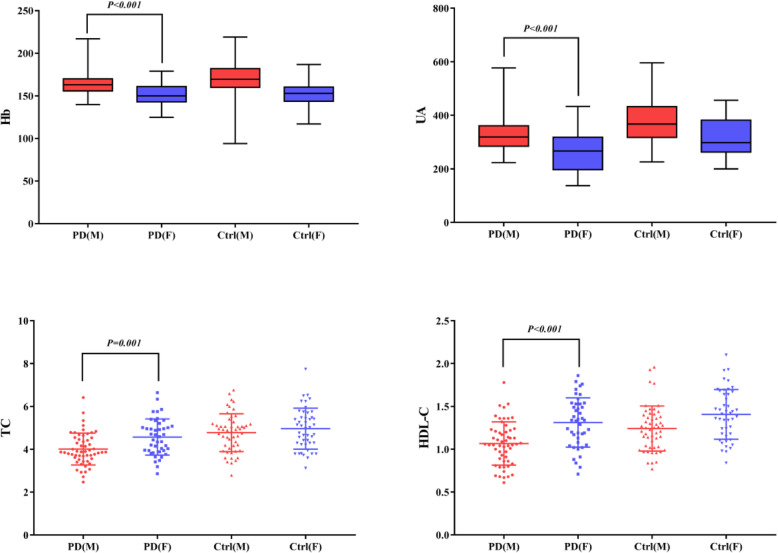
“This is consistent with previous findings that personalles with greater degrees of HDL-C were likely to be female, younger, and have higher TC levels [11, 44].”
ResultDifferential leukocyte count is associated with clinical phenotype in Parkinson's disease
Umehara, T., Oka, H., Nakahara, A., Matsuno, H., & Murakami, H. (2020) · Journal of the Neurological Sciences · doi:10.1016/j.jns.2019.116638 · Cited by 43 · cited 3×
“The levels of neutrophils, monocytes, and lymphocytes, which are white blood cells (WBCs) found in circulating blood, increase when there is peripheral inflammation and participate in the development of clinical symptoms in PD patients [2, 8, 9].”
BackgroundResultPark, J., Lee, C.-W., Nam, M. J., Kim, H., Kwon, D.-Y., Yoo, J. W., Lee, K. N., Han, K., Jung, J., Park, Y. G., et al. (2021) · Neurology · doi:10.1212/wnl.0000000000011553 · Cited by 41
Sympathetic modulation by levodopa reduces vascular risk factors in Parkinson disease
Scigliano, G., Ronchetti, G., Girotti, F., & Musicco, M. (2008) · Parkinsonism & Related Disorders · doi:10.1016/j.parkreldis.2008.04.036 · Cited by 39 · cited 1×
“disease progresses, it is often necessary to reduce the dose of levodopa to avoid motor complications [41].”
BackgroundYu, C.-C., Chen, H.-L., Chen, M.-H., Lu, C.-H., Tsai, N.-W., Huang, C.-C., Chang, Y.-Y., Li, S.-H., Chen, Y.-S., Chiang, P.-L., et al. (2020) · Oxidative Medicine and Cellular Longevity · doi:10.1155/2020/2591248 · Cited by 37 · cited 2×
“The antioxidant effects as well as anti-inflammatory of high-density lipoprotein cholesterol (HDL-C) are well known, and reduced risks of HDL-C are relevant to systemic inflammation and endothelial cell dysfunction, thus participating in the progression of PD [4, 10].”
BackgroundCardiometabolic factors and disease duration in patients with Parkinson’s disease
Cassani, E., Cereda, E., Barichella, M., Madio, C., Cancello, R., Caccialanza, R., Zini, M., Cilia, R., & Pezzoli, G. (2013) · Nutrition · doi:10.1016/j.nut.2013.04.013 · Cited by 30
Ren, X., Hinchie, A., Swomley, A., Powell, D. K., & Butterfield, D. A. (2019) · Free Radical Biology and Medicine · doi:10.1016/j.freeradbiomed.2019.08.008 · Cited by 29 · cited 1×
“In addition, ageing can cause mitochondrial dysfunction and loss of dopaminergic substantia nigra neurons leading to oxidative damage [31].”
BackgroundMetabolic syndrome does not influence the phenotype of LRRK2 and GBA related Parkinson’s disease
Thaler, A., Shenhar‐Tsarfaty, S., Shaked, Y., Gurevich, T., Omer, N., Bar‐Shira, A., Gana‐Weisz, M., Goldstein, O., Kestenbaum, M., Cedarbaum, J. M., et al. (2020) · Scientific Reports · doi:10.1038/s41598-020-66319-9 · Cited by 24 · cited 1×
“In existed researches, the PD patients had significantly decreased [35, 36] or unchanged [8, 37, 38] plasma HDL-C levels compared with Table 5 Correlation analyses of the NHR and MHR with disease duration and PD stage”
ResultParkinson's disease and the risk of cerebrovascular pathology
Morley, J. F., & Duda, J. E. (2012) · Movement Disorders · doi:10.1002/mds.25179 · Cited by 9 · cited 1×
“(3) Other reports have shown that PD patients experience a cardiometabolic protective effect [42].”
Background
Cited by
Song, Y., Zhao, Y., Shu, Y., Zhang, L., Cheng, W., Wang, L., Shu, M., Xue, B., Wang, R., Feng, Z., et al. (2023) · Frontiers in Endocrinology · doi:10.3389/fendo.2023.1100453 · Cited by 141
“Diabetes duration (years) 4 (1-10) 10 (5-18) <0.”
BackgroundWei, Y., Wang, T., Li, G., Feng, J., Deng, L., Xu, H., Yin, L., Ma, J., Chen, D., & Chen, J. (2022) · Frontiers in Psychiatry · doi:10.3389/fpsyt.2022.941728 · Cited by 99
Wang, P., Guo, X., Zhou, Y., Li, Z., Yu, S., Sun, Y., & Hua, Y. (2022) · Frontiers in Endocrinology · doi:10.3389/fendo.2022.944991 · Cited by 91
Álvarez, M. M., Cano-Herrera, G., Martínez, M. F. O., Gonzales-Portillo, J. V., Monroy, G. R., Pérez, R. M., Torres-Ríos, J. A., van Tienhoven, X. A., Bernot, E. M. G., Salazar, F. E., et al. (2024) · International Journal of Molecular Sciences · doi:10.3390/ijms25137183 · Cited by 88
“The NHR is negatively related to disease duration [37].”
BackgroundNeutrophil to lymphocyte ratio in parkinson’s disease: a systematic review and meta-analysis
Hosseini, S., Shafiabadi, N., Khanzadeh, M., Ghaedi, A., Ghorbanzadeh, R., Azarhomayoun, A., Bazrgar, A., Pezeshki, J., Bazrafshan, H., & Khanzadeh, S. (2023) · BMC Neurology · doi:10.1186/s12883-023-03380-7 · Cited by 58
“We tried to extract dichotomous data like OR from included studies and conduct a new meta-analysis and then, perform TAS; however, except to one study [33], no study had reported OR, so further studies reporting TSA results are needed.”
Method
Metadata
- Authors
- Liu, Z., Fan, Q., Wu, S., Wan, Y., & Lei, Y.
- Affiliations
- Qinghai University (CN)
- Qinghai Provincial Peoples Hospital (CN)
- Corresponding author
- Fan, Qingli
- Wu, Shizheng
- Venue
- Lipids in Health and Disease
- Published
- 2021-04-19
- Volume
- 20
- Issue
- 1
- Pages
- 35-35
- ISSN
- 1476-511X (ISSN-L)
- PMC
- PMC8054377
- OpenAlex
- W3154700704
- Cited by
- 112
- References
- 51
- Citations by year
- 2026: 24 · 2025: 30 · 2024: 23 · 2023: 23 · 2022: 10 · 2021: 2
- FWCI
- 5.27
- Type
- journal article
- Language
- en
- Open access
- gold
- doi.org
- Licence
- cc-by
- creativecommons.org/licenses/by/4.0/ (tdm)
- creativecommons.org/licenses/by/4.0/ (vor)
- Locations
- Lipids in Health and Disease (publishedVersion, cc-by)
- Research Square (acceptedVersion, cc-by)
- PubMed Central (publishedVersion, cc-by)
- PubMed (publishedVersion)
- DOAJ (DOAJ: Directory of Open Access Journals) (submittedVersion, cc-by-sa)
- Funders
- Clinical medical reserach center project of Qinghai Province (2017-SF-L1)
- Topics
- Health Sciences › Medicine › Oncology › Inflammatory Biomarkers in Disease Prognosis
- Health Sciences › Medicine › Clinical Neurology › Parkinson's Disease Mechanisms and Treatments
- Life Sciences › Neuroscience › Neurology › Neuroinflammation and Neurodegeneration Mechanisms
- Keywords
- Parkinson's disease, neutrophil-to-lymphocyte ratio, monocyte to high-density lipoprotein ratio, inflammatory markers, disease risk prediction, disease duration, Hoehn and Yahr stage, risk factors, inflammation, high-density lipoprotein, neutrophils, lymphocytes, triglycerides, uric acid
- MeSH terms
- Adult, Age Factors, Aged, Aged, 80 and over, Female, Humans, Inflammation, Lipoproteins, HDL, Lymphocytes, Male, Middle Aged, Monocytes, Neutrophils, Parkinson Disease, Risk Factors, ROC Curve, Sex Factors, Multivariate Analysis, Logistic Models, Case-Control Studies, Statistics, Nonparametric
About these checks
Registry, retraction, Cites and statistics results are computed, not judged, with one exception: a printed reference that no index lists is read once by a model before it counts as a citation error. Claims are extracted by a model and kept only when their quote appears verbatim in the text; each cited source is then checked, with a model’s help, for whether it says what the claim relies on. Those verdicts can be wrong — read the claim’s quote and the cited source before relying on one.
Statistics and arithmetic are recomputed, not judged.
Confidence bands are shown only for fields calibrated on our annotated test set. None is calibrated yet, so no band is shown.
What counts as a claim ›How we measure confidence ›How we check this ›
Are you an author, or do you see a problem with this page? Request a review
Data sources
Bibliographic data: Semantic Scholar, OpenAlex, Crossref.
Contains information from the Semantic Scholar Academic Graph Datasets, made available under the ODC Attribution License (ODC-BY 1.0).
Semantic Scholar’s data is described in: Kinney, R., et al. (2023). The Semantic Scholar Open Data Platform. arXiv:2301.10140.
