

Why the FUSS (Fentanyl Urine Screen Study)? A cross-sectional survey to characterize an emerging threat to people who use drugs in British Columbia, Canada
Open accessThe DOI matches its Crossref record; 13 of the 13 references it cites were found in a registry or an index.
Abstract
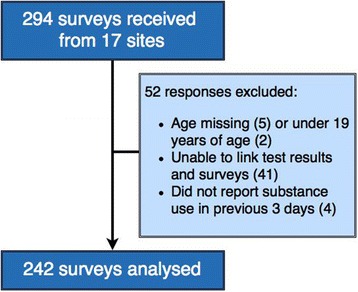
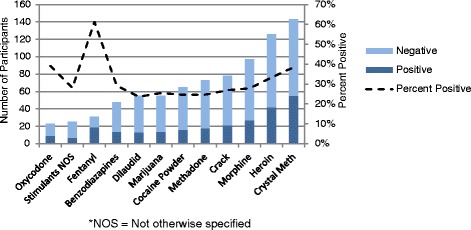
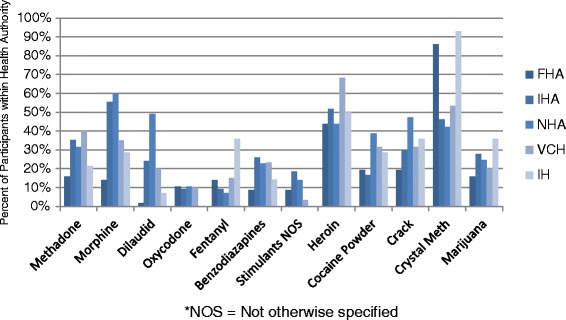
BACKGROUND: Fentanyl-detected illicit drug overdose deaths in British Columbia (BC) recently increased dramatically from 13 deaths in 2012 to 90 deaths in 2014, signaling an emerging public health concern. Illicit fentanyl is sold as pills or powders, often mixed with other substances like heroin or oxycodone; reports from coroners suggested that fentanyl was frequently taken unknowingly by people who use drugs. This study aimed to assess the prevalence and characteristics of fentanyl use among clients accessing harm reduction (HR) services in BC. METHODS: Participants attending HR services at 17 sites across BC were invited to complete an anonymous questionnaire describing drugs they have used within the last 3 days and provide a urine sample to test for fentanyl. Data from eligible participants were analyzed using descriptive, bivariate, and multivariate statistical methods. RESULTS: Surveys from 17 HR sites were received, resulting in analysis of responses from 242 eligible participants. Most participants used multiple substances (median = 3), with crystal meth (59%) and heroin (52%) use most frequently reported. Seventy participants (29%) tested positive for fentanyl, 73% of whom did not report using fentanyl. Controlling for age, gender, and health authority, reported use of fentanyl (odds ratio (OR) = 6.13, 95% confidence interval (CI) = [2.52, 15.78], p < 0.001) and crystal methamphetamine (OR = 3.82, 95% CI = [1.79, 8.63], p < 0.001) use were significantly associated with fentanyl detection. CONCLUSIONS: The proportion of those testing positive who did not report knowingly using fentanyl represents a considerable public health concern. The risk of overdose among this vulnerable population highlights the need for targeted HR strategies, such as increased accessibility to naloxone, overdose education, and urine screens.
Overview
The claims and statistics of this paper haven’t been checked yet.
Free: it reads the open-access text and checks the first 5 claims that cite a source we can check. Create a free account to check every claim.
Integrity signals
Registry
Cites
Statistics
Figures
Verification
Claims the paper makes
The claims and statistics of this paper haven’t been checked yet.
Free: it reads the open-access text and checks the first 5 claims that cite a source we can check. Create a free account to check every claim.
Claims other papers make about this one
Each is checked against this paper’s own text: does it say what the citing paper says it does?
The source backs part of the claim, not all of it — or backs it for a different population, condition or comparison.
In the citing paper
“Reports increasingly indicate that fentanyl contamination is occurring in the illicit stimulant market”
From “I probably got a minute”: Perceptions of fentanyl test strip use among people who use stimulants (2021) · cites this paper as Amlani et al., 2015
Experimental — accuracy not yet measured
Self-check
Percentages, sums and reported differences re-computed from the paper’s own numbers.
The self-check needs the paper’s full text.
Citations
Cites
Community-Based Opioid Overdose Prevention Programs Providing Naloxone —United States, 2010
(2012) · JAMA · doi:10.1001/jama.307.13.1358 · Cited by 257
Community-based opioid overdose prevention programs providing naloxone - United States, 2010.
(2012) · PubMed · Cited by 183
Fentanyl: A Review for Clinical and Analytical Toxicologists
Poklis, A. (1995) · Journal of Toxicology Clinical Toxicology · doi:10.3109/15563659509013752 · Cited by 153
Martin, T. L., Woodall, K. L., & McLellan, B. A. (2006) · Journal of Analytical Toxicology · doi:10.1093/jat/30.8.603 · Cited by 133
A quantitative and qualitative evaluation of the British Columbia Take Home Naloxone program
Banjo, O., Tzemis, D., Al-Qutub, D., Amlani, A., Kesselring, S., & Buxton, J. A. (2014) · CMAJ Open · doi:10.9778/cmajo.20140008 · Cited by 118
Self-citationPharmacokinetics of fentanyl in man and the rabbit
Hess, R., Stiebler, G., & Herz, A. (1972) · European Journal of Clinical Pharmacology · doi:10.1007/bf00561135 · Cited by 90
An Analysis of the Duration of Fentanyl and Its Metabolites in Urine and Saliva
Silverstein, J. H., Rieders, M. F., McMullin, M. M., Schulman, S. P., & Zahl, K. (1993) · Anesthesia & Analgesia · doi:10.1213/00000539-199303000-00030 · Cited by 89
Acetyl fentanyl overdose fatalities--Rhode Island, March-May 2013.
Ogilvie, L., Stanley, C., Lewis, L. S., et al. (2013) · PubMed Central · Cited by 66
Nonpharmaceutical Fentanyl-Related Deaths—Multiple States, April 2005–March 2007
(2008) · JAMA · doi:10.1001/jama.300.13.1512 · Cited by 53
A drug use survey among clients of harm reduction sites across British Columbia, Canada, 2012
Kuo, M. E., Shamsian, A., Tzemis, D., & Buxton, J. A. (2014) · Harm Reduction Journal · doi:10.1186/1477-7517-11-13 · Cited by 41
Self-citation
Research works printed but not linked: 3
- Canadian Centre on Substance Abuse. CCENDU bulletin: deaths involving fentanyl in Canada, 2009–2014. Ottawa, ON; 2015.
- Sorge J Buxton JA Amlani A Ishiguro S Substance use trends in BC: a survey of harm reduction clients—overall results for British Columbia 2014 2015
- British Columbia Center for Disease Control Communicating drug alerts (CDA)—tips for informing people who use drugs about adverse drug events 2014
Cited by
Misuse of Novel Synthetic Opioids: A Deadly New Trend
Prekupec, M. P., Mansky, P. A., & Baumann, M. H. (2017) · Journal of Addiction Medicine · doi:10.1097/adm.0000000000000324 · Cited by 283
Fairbairn, N., Coffin, P. O., & Walley, A. Y. (2017) · International Journal of Drug Policy · doi:10.1016/j.drugpo.2017.06.005 · Cited by 274
The rising crisis of illicit fentanyl use, overdose, and potential therapeutic strategies
Han, Y., Yan, W., Zheng, Y., Khan, M. Z., Yuan, K., & Lu, L. (2019) · Translational Psychiatry · doi:10.1038/s41398-019-0625-0 · Cited by 239
Carroll, J. J., Marshall, B. D. L., Rich, J. D., & Green, T. C. (2017) · International Journal of Drug Policy · doi:10.1016/j.drugpo.2017.05.023 · Cited by 227
“…America, which found supply-side forces to be responsible for waves of fentanyl-related overdose in New Jersey, US (Hempstead & Yildirim, 2014) and that nearly three out of four illicit opioid users exposed to fentanyl in Vancouver, Canada, were unaware of their own exposure (Amlani et al., 2015).”
Green, T. C., Park, J. N., Gilbert, M., McKenzie, M., Struth, E., Lucas, R., Clarke, W., & Sherman, S. G. (2020) · International Journal of Drug Policy · doi:10.1016/j.drugpo.2020.102661 · Cited by 211
Metadata
- Authors
- Amlani, A., McKee, G., Khamis, N., Raghukumar, G., Tsang, E., & Buxton, J. A.
- Affiliations
- BC Centre for Disease Control (CA)
- University of British Columbia (CA)
- Corresponding author
- Amlani, Ashraf
- Venue
- Harm Reduction Journal
- Published
- 2015-11-14
- Volume
- 12
- Issue
- 1
- Pages
- 54-54
- ISSN
- 1477-7517 (ISSN-L)
- PMC
- PMC4650899
- OpenAlex
- W2175899874
- Cited by
- 134
- References
- 13
- Citations by year
- 2026: 4 · 2025: 2 · 2024: 5 · 2023: 5 · 2022: 12 · 2021: 24 · 2020: 20 · 2019: 21 · 2018: 22 · 2017: 12 · 2016: 7
- FWCI
- 10.71
- Type
- journal article
- Language
- en
- Open access
- gold
- doi.org
- Licence
- cc-by
- Locations
- Harm Reduction Journal (publishedVersion, cc-by)
- PubMed Central (publishedVersion, cc-by)
- PubMed (publishedVersion)
- cIRcle (University of British Columbia) (submittedVersion, cc-by)
- Open Collections
- Funders
- British Columbia Centre for Disease Control
- Topics
- Health Sciences › Medicine › Epidemiology › HIV, Drug Use, Sexual Risk
- Health Sciences › Medicine › Public Health, Environmental and Occupational Health › Opioid Use Disorder Treatment
- Life Sciences › Pharmacology, Toxicology and Pharmaceutics › Toxicology › Forensic Toxicology and Drug Analysis
- Keywords
- illicit fentanyl, drug users, harm reduction services, urine drug testing, polydrug use, crystal methamphetamine, heroin, naloxone, overdose education, British Columbia
- MeSH terms
- Adult, British Columbia, Cross-Sectional Studies, Female, Fentanyl, Humans, Male, Middle Aged, Narcotics, Surveys and Questionnaires, Substance Abuse Detection, Prevalence, Substance-Related Disorders, Young Adult
About these checks
Registry, retraction, Cites and statistics results are computed, not judged, with one exception: a printed reference that no index lists is read once by a model before it counts as a citation error. Claims are extracted by a model and kept only when their quote appears verbatim in the text; each cited source is then checked, with a model’s help, for whether it says what the claim relies on. Those verdicts can be wrong — read the claim’s quote and the cited source before relying on one.
Statistics and arithmetic are recomputed, not judged.
Confidence bands are shown only for fields calibrated on our annotated test set. None is calibrated yet, so no band is shown.
What counts as a claim ›How we measure confidence ›How we check this ›
Are you an author, or do you see a problem with this page? Request a review
How to cite
Cite CoChat for the checks on this page, and the paper for its own findings.
- This page
- CoChat. (2026). Citation check: Why the FUSS (Fentanyl Urine Screen Study)? A cross-sectional survey to characterize an emerging threat to people who use drugs in British Columbia, Canada. https://app.cochat.ai/papers/10.1186/s12954-015-0088-4
- The paper
- Amlani, A., McKee, G., Khamis, N., Raghukumar, G., Tsang, E., & Buxton, J. A. (2015). Why the FUSS (Fentanyl Urine Screen Study)? A cross-sectional survey to characterize an emerging threat to people who use drugs in British Columbia, Canada. Harm Reduction Journal. https://doi.org/10.1186/s12954-015-0088-4
Data sources
Bibliographic data: Semantic Scholar, OpenAlex, Crossref.
Contains information from the Semantic Scholar Academic Graph Datasets, made available under the ODC Attribution License (ODC-BY 1.0).
Semantic Scholar’s data is described in: Kinney, R., et al. (2023). The Semantic Scholar Open Data Platform. arXiv:2301.10140.
