

Dose-response relationship between physical activity and mortality in adults with noncommunicable diseases: a systematic review and meta-analysis of prospective observational studies
Open accessPublished version of a preprint
The DOI matches its Crossref record; 73 of the 73 references it cites were found in a registry or an index.
Abstract
Background: This study aims to investigate the relationship between post-diagnosis physical activity and mortality in patients with selected noncommunicable diseases, including breast cancer, lung cancer, type 2 diabetes, ischemic heart disease, stroke, chronic obstructive pulmonary disease (COPD), osteoarthritis, low back pain and major depressive disorder. Methods: A systematic search was conducted of PubMed, Scopus and the Web of Science from their inception to August 2018. Additionally, the search was updated in August 2019. Eligibility criteria included prospective observational studies examining the relationship between at least three physical activity categories (e.g. low, moderate, high) and all-cause mortality as the primary outcome. Results: In total, 28 studies were included in the meta-analysis: 12 for breast cancer, 6 for type 2 diabetes, 8 for ischemic heart disease and 2 for COPD. The linear meta-analysis revealed that each 10 metabolic equivalent task hours increase of physical activity per week was associated with a 22% lower mortality rate in breast cancer patients (Summary Hazard Ratio [HR], 0.78; 95% CI: 0.71, 0.86; I 2 : 90.1%), 12% in ischemic heart disease patients (HR, 0.88; 95% CI: 0.83, 0.93; I 2 : 86.5%), 30% in COPD patients (HR, 0.70; 95% CI: 0.45, 1.09; I 2 : 94%) and 4% in type 2 diabetes patients (HR, 0.96; 95% CI: 0.93, 0.99; I 2 : 71.8%). There was indication of a non-linear association with mortality risk reductions even for low levels of activity, as well as a flattening of the curve at higher levels of activity. The certainty of evidence was low for breast cancer, type 2 diabetes and ischemic heart disease but only very low for COPD. Conclusion: Higher levels of post-diagnosis physical activity are associated with lower mortality rates in breast cancer, type 2 diabetes, ischemic heart disease and COPD patients, with indication of a no-threshold and non-linear dose–response pattern.
Overview
The claims and statistics of this paper haven’t been checked yet.
Free: it reads the open-access text and checks the first 5 claims that cite a source we can check. Create a free account to check every claim.
Integrity signals
Registry
Cites
Statistics
Figures
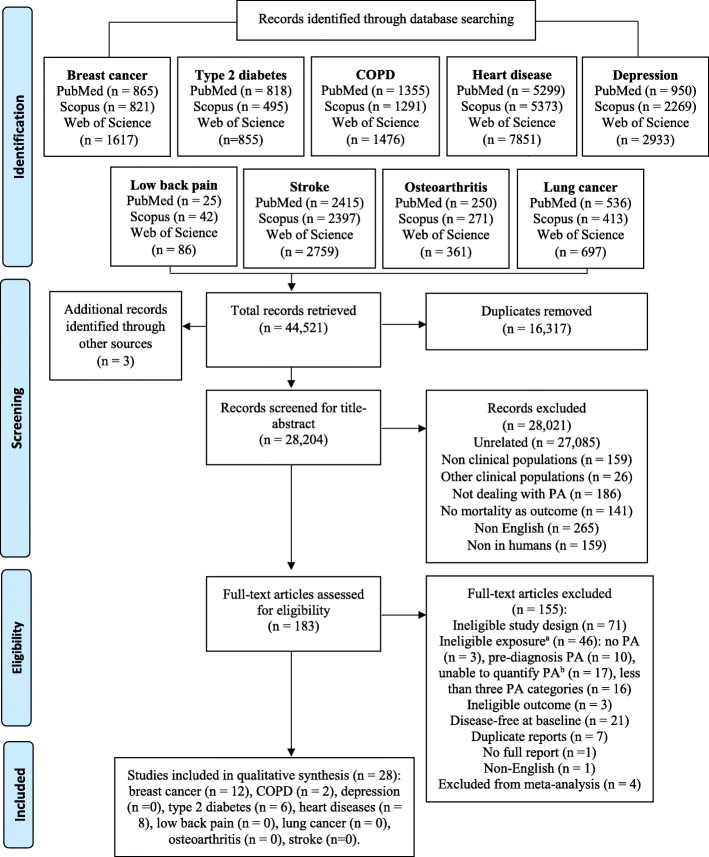
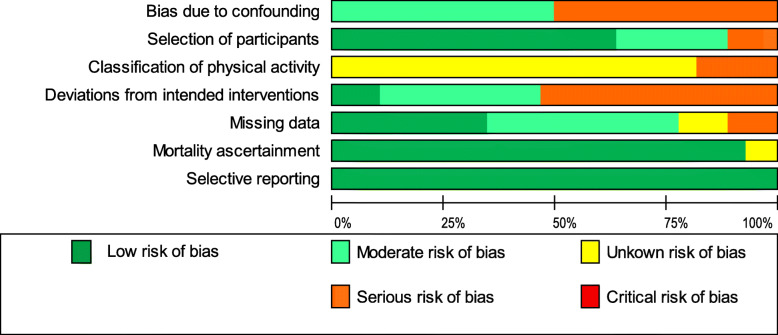
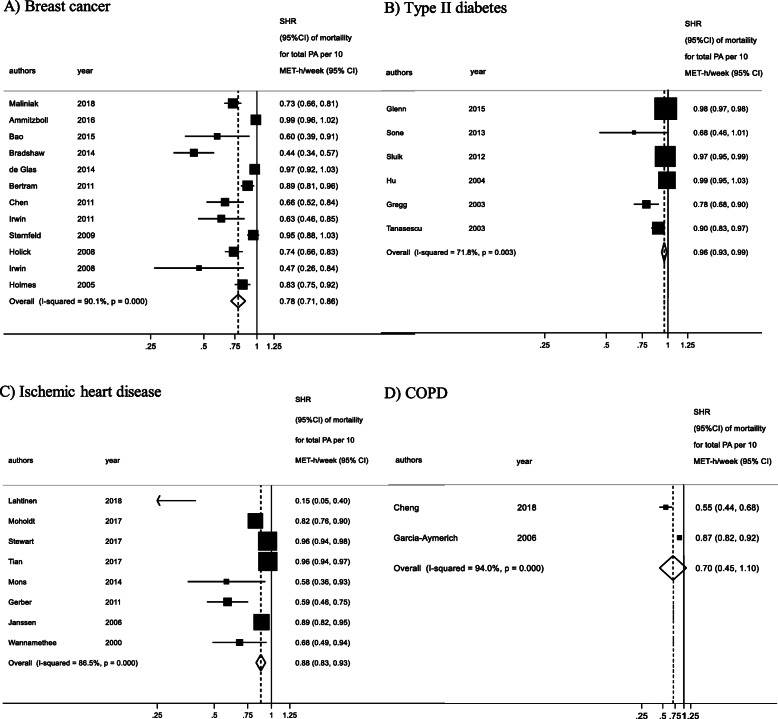
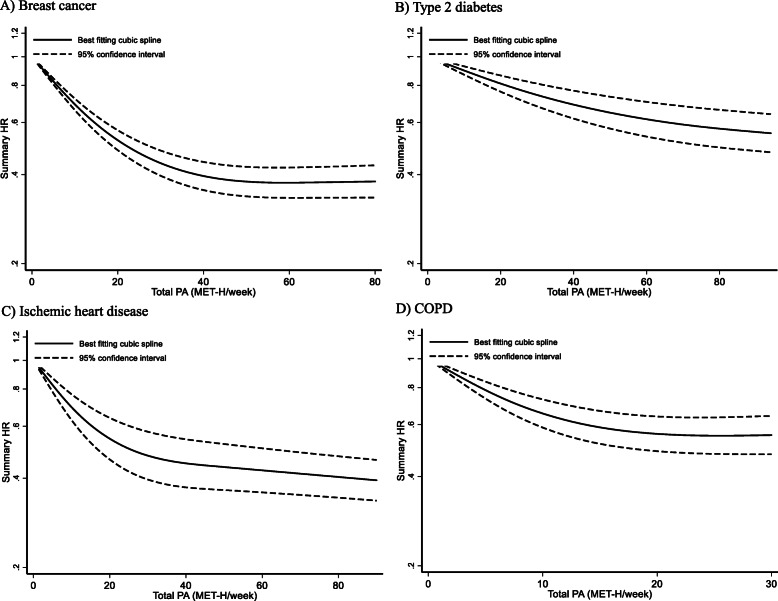
Verification
Claims the paper makes
The claims and statistics of this paper haven’t been checked yet.
Free: it reads the open-access text and checks the first 5 claims that cite a source we can check. Create a free account to check every claim.
Claims other papers make about this one
Each is checked against this paper’s own text: does it say what the citing paper says it does?
The cited source says what the claim attributes to it.
In the citing paper
“Indeed, observational evidence shows that PA levels lower than recommended threshold are already associated with reduced mortality [65,628,668], and benefits exhibit a curvilinear dose-dependency [628,668].”
From Global consensus on optimal exercise recommendations for enhancing healthy longevity in older adults (ICFSR) (2025) · cites this paper as [668]
The cited source says what the claim attributes to it.
In the citing paper
“Moreover, we found that every 600 MET-min/week increase of accelerometer-measured PA was associated with 11% lower risk of all-cause mortality in patients with T2D, much larger than 4% as reported by a meta-analysis of six prospective cohort studies (N = 32,221)22.”
From Accelerometer-derived physical activity and mortality in individuals with type 2 diabetes (2024) · cites this paper as [22]
Self-check
Percentages, sums and reported differences re-computed from the paper’s own numbers.
The self-check needs the paper’s full text.
Citations
Cites
Bias in meta-analysis detected by a simple, graphical test
Egger, M., Smith, G. D., Schneider, M., & Minder, C. (1997) · BMJ · doi:10.1136/bmj.315.7109.629 · Cited by 56,722
Liberati, A., Altman, D. G., Tetzlaff, J., Mulrow, C., Gøtzsche, P. C., Ioannidis, J. P. A., Clarke, M., Devereaux, P. J., Kleijnen, J., & Moher, D. (2009) · PLoS Medicine · doi:10.1371/journal.pmed.1000100 · Cited by 28,164
ROBINS-I: a tool for assessing risk of bias in non-randomised studies of interventions
Sterne, J. A., Hernán, M. A., Reeves, B. C., Savović, J., Berkman, N. D., Viswanathan, M., Henry, D., Altman, D. G., Ansari, M. T., Boutron, I., et al. (2016) · BMJ · doi:10.1136/bmj.i4919 · Cited by 20,329 · cited 1×
“Risk of bias in individual studies The Cochrane tool for assessing the “Risk Of Bias In Nonrandomised Studies - of Interventions” (ROBINS-I) was used to estimate the risk of bias and endorse conclusions closer to the truth [15].”
MethodGRADE guidelines: 1. Introduction—GRADE evidence profiles and summary of findings tables
Guyatt, G., Oxman, A. D., Akl, E. A., Kunz, R., Vist, G., Brozek, J., Norris, S., Falck-Ytter, Y., Glasziou, P., & deBeer, H. (2011) · Journal of Clinical Epidemiology · doi:10.1016/j.jclinepi.2010.04.026 · Cited by 10,681
The Physical Activity Guidelines for Americans
Piercy, K. L., Troiano, R. P., Ballard, R. M., Carlson, S. A., Fulton, J. E., Galuska, D. A., George, S. M., & Olson, R. D. (2018) · JAMA · doi:10.1001/jama.2018.14854 · Cited by 9,755
Murray, C. J. L., Vos, T., Lozano, R., Naghavi, M., Flaxman, A. D., Michaud, C., Ezzati, M., Shibuya, K., Salomon, J. A., Abdalla, S., et al. (2012) · The Lancet · doi:10.1016/s0140-6736(12)61689-4 · Cited by 8,888
GRADE guidelines: 3. Rating the quality of evidence
Balshem, H., Helfand, M., Schünemann, H. J., Oxman, A. D., Kunz, R., Brozek, J., Vist, G. E., Falck-Ytter, Y., Meerpohl, J., & Norris, S. (2011) · Journal of Clinical Epidemiology · doi:10.1016/j.jclinepi.2010.07.015 · Cited by 8,285
Sterne, J. A. C., Sutton, A. J., Ioannidis, J. P. A., Terrin, N., Jones, D. R., Lau, J., Carpenter, J., Rucker, G., Harbord, R. M., Schmid, C. H., et al. (2011) · BMJ · doi:10.1136/bmj.d4002 · Cited by 7,709
The environment and disease: association or causation?
Hill, A. B. (2015) · Journal of the Royal Society of Medicine · doi:10.1177/0141076814562718 · Cited by 7,285
The Environment and Disease: Association or Causation?
Hill, A. B. (1965) · Proceedings of the Royal Society of Medicine · doi:10.1177/003591576505800503 · Cited by 6,974
Research works printed but not linked: 4
- 2018 Physical Activity Advisory Committee 2018 Physical activity guidelines advisory committee scientific report 2018 Washington, DC Department of Health and Human Services
- Craig R Mindell J Hirani V Health survey for England 2009 London National Centre for Social Research
- World Health Organization Global action plan on physical activity 2018–2030: more active people for a healtier world 2018 Geneva World Health Organization
- World Health Organization Global recommendations on physical activity for health 2010 Geneva World Health Organization 26180873
Cited by
2023 ESC Guidelines for the management of acute coronary syndromes
Byrne, R. A., Rossello, X., Coughlan, J. J., Barbato, E., Berry, C., Chieffo, A., Claeys, M. J., Dan, G.-A., Dweck, M. R., Galbraith, M., et al. (2023) · European Heart Journal · doi:10.1093/eurheartj/ehad191 · Cited by 5,333
Virani, S. S., Newby, L. K., Arnold, S. V., Bittner, V., Brewer, L. C., Demeter, S. H., Dixon, D. L., Fearon, W. F., Hess, B., Johnson, H. M., et al. (2023) · Circulation · doi:10.1161/cir.0000000000001168 · Cited by 1,598
Singh, B., Olds, T., Curtis, R., Dumuid, D., Virgara, R., Watson, A., Szeto, K., O'Connor, E., Ferguson, T., Eglitis, E., et al. (2023) · British Journal of Sports Medicine · doi:10.1136/bjsports-2022-106195 · Cited by 1,049
Virani, S. S., Newby, L. K., Arnold, S. V., Bittner, V., Brewer, L. C., Demeter, S. H., Dixon, D. L., Fearon, W. F., Hess, B., Johnson, H. M., et al. (2023) · Journal of the American College of Cardiology · doi:10.1016/j.jacc.2023.04.003 · Cited by 596
2023 ESC Guidelines for the management of acute coronary syndromes
Byrne, R. A., Rossello, X., Coughlan, J. J., Barbato, E., Berry, C., Chieffo, A., Claeys, M. J., Dan, G.-A., Dweck, M. R., Galbraith, M., et al. (2024) · European Heart Journal: Acute Cardiovascular Care · doi:10.1093/ehjacc/zuad107 · Cited by 314
Garcia, L., Pearce, M., Abbas, A., Mok, A., Strain, T., Ali, S., Crippa, A., Dempsey, P. C., Golubic, R., Kelly, P., et al. (2023) · British Journal of Sports Medicine · doi:10.1136/bjsports-2022-105669 · Cited by 273
“These site-specific cancers were selected based on previously reported associations with PA. 8”
ResultInfluentialSun, J., Li, Y., Zhao, M., Yu, X., Zhang, C., Magnussen, C. G., & Xi, B. (2023) · BMC Medicine · doi:10.1186/s12916-023-02824-8 · Cited by 276
“However, the dose–response analysis showed that the associations between these two doses of physical activity and mortality risk were substantially different [28, 29].”
BackgroundIzquierdo, M., de Souto Barreto, P., Arai, H., Bischoff-Ferrari, H. A., Cadore, E. L., Cesari, M., Chen, L.-K., Coen, P. M., Courneya, K. S., Duque, G., et al. (2025) · The Journal of nutrition, health and aging · doi:10.1016/j.jnha.2024.100401 · Cited by 273
Zhang, K., Ma, Y., Luo, Y., Song, Y., Xiong, G., Ma, Y., Sun, X., & Kan, C. (2023) · Frontiers in Public Health · doi:10.3389/fpubh.2023.1253506 · Cited by 229
López‐Bueno, R., Andersen, L. L., Koyanagi, A., Núñez‐Cortés, R., Calatayud, J., Casaña, J., & Cruz, B. D. P. (2022) · Ageing Research Reviews · doi:10.1016/j.arr.2022.101778 · Cited by 160
Rietz, M., Lehr, A., Mino, E., Lang, A., Szczerba, E., Schiemann, T., Herder, C., Saatmann, N., Geidl, W., Barbaresko, J., et al. (2022) · Diabetes Care · doi:10.2337/dc22-0886 · Cited by 105
“Although adherence to these guidelines may lead to a significant decrease in metabolic risk factors, even a minor increase in physical activity, below the recommended duration, has been shown to be effective in decreasing mortality in individuals with noncommunicable diseases (11).”
BackgroundSelf-citationNdumele, C. E., Rodriguez, F., Dixon, D. L., Khan, S. S., Mukherjee, D., Bajaj, M., Bangalore, S., Bozkurt, B., Breathett, K., Clarke, S. L., et al. (2026) · JACC · doi:10.1016/j.jacc.2026.03.056 · Cited by 90
Association of physical activity trajectories with major cardiovascular diseases in elderly people
Amidei, C. B., Trevisan, C., Dotto, M., Ferroni, E., Noale, M., Maggi, S., Corti, M. C., Baggio, G., Fedeli, U., & Sergi, G. (2022) · Heart · doi:10.1136/heartjnl-2021-320013 · Cited by 86
You, Y., Ablitip, A., Chen, Y., Ding, H., Chen, K., Cui, Y., & Ma, X. (2024) · BMC Public Health · doi:10.1186/s12889-024-19432-7 · Cited by 76
Targeting the molecular & cellular pillars of human aging with exercise
Goh, J., Wong, E., Soh, J., Maier, A. B., & Kennedy, B. K. (2023) · The FEBS Journal · doi:10.1111/febs.16337 · Cited by 71
Cariolou, M., Abar, L., Aune, D., Balducci, K., Becerra‐Tomás, N., Greenwood, D. C., Markozannes, G., Nanu, N., Vieira, R. D. C. P. A., Giovannucci, E. L., et al. (2022) · International Journal of Cancer · doi:10.1002/ijc.34324 · Cited by 78
Ndumele, C. E., Rodríguez, F., Dixon, D. L., Khan, S. S., Mukherjee, D., Bajaj, M. S., Bangalore, S., Bozkurt, B., Breathett, K. K., Clarke, S. L., et al. (2026) · Circulation · doi:10.1161/cir.0000000000001453 · Cited by 161
Janssen, X., Fleming, L., Kirk, A. F., Rollins, L., Young, D., Grealy, M., MacDonald, B., Flowers, P., & Williams, L. (2020) · International Journal of Environmental Research and Public Health · doi:10.3390/ijerph17249362 · Cited by 59
Lack of physical activity is a global problem
Haseler, T. W. L., & Haseler, C. (2022) · BMJ · doi:10.1136/bmj.o348 · Cited by 58
Natalucci, V., Marmondi, F., Biraghi, M., & Bonato, M. (2023) · Nutrients · doi:10.3390/nu15040913 · Cited by 62
“In this regard, growing evidence suggests a clear dose–response relationship between the volume of physical activity and the difference in mortality rates for chronic disease [23].”
BackgroundAccelerometer-derived physical activity and mortality in individuals with type 2 diabetes
Cao, Z., Min, J., Chen, H., Hou, Y., Yang, H., Si, K., & Xu, C. (2024) · Nature Communications · doi:10.1038/s41467-024-49542-0 · Cited by 40
The Endothelium as a Therapeutic Target in Diabetes: A Narrative Review and Perspective
Adams, J. A., Uryash, A., Lopez, J. R., & Sackner, M. A. (2021) · Frontiers in Physiology · doi:10.3389/fphys.2021.638491 · Cited by 42
“Higher levels of physical activity are associated with lower mortality rates in T2D (Geidl et al., 2020).”
BackgroundLifestyle changes to prevent cardio- and cerebrovascular disease at midlife: A systematic review
Zyriax, B., & Windler, E. E. T. (2022) · Maturitas · doi:10.1016/j.maturitas.2022.09.003 · Cited by 45
Osteoarthritis & stroke: a bidirectional mendelian randomization study
Zhao, H., Zhu, J., Ju, L., Sun, L., Tse, L. A., Kinra, S., & Li, Y. (2022) · Osteoarthritis and Cartilage · doi:10.1016/j.joca.2022.06.006 · Cited by 37
Tsilidis, K. K., Cariolou, M., Becerra‐Tomás, N., Balducci, K., Vieira, R. D. C. P. A., Abar, L., Aune, D., Markozannes, G., Nanu, N., Greenwood, D. C., et al. (2022) · International Journal of Cancer · doi:10.1002/ijc.34320 · Cited by 38
Cradock, K. A., Quinlan, L. R., Finucane, F. M., Gainforth, H. L., Martin Ginis, K. A., Barros, A. C. D., Sanders, E. B. N., & ÓLaighin, G. (2021) · Journal of Personalized Medicine · doi:10.3390/jpm11020072 · Cited by 32
“The conclusion of a recent review that “any physical activity is better than none” [97] is probably an appropriate starting point for sedentary individuals as programmes designed to make regular exercise a habit should include incentives, start at moderate levels of exertion and gradually increase the intensity, frequ…”
BackgroundFeng, X., Xu, X., Yao, X., Zhao, Y., Tang, Y., Zhao, Z., Wei, Y., Mehmood, T., & Luo, X. (2024) · Atmospheric Research · doi:10.1016/j.atmosres.2024.107453 · Cited by 35
Huston, P. (2022) · Frontiers in Physiology · doi:10.3389/fphys.2022.904107 · Cited by 44
Elavsky, S., Jandackova, V. K., Knapová, L., Vašendová, V., Sebera, M., Kaštovská, B., Blaschová, D., Kühnová, J., Cimler, R., Vilímek, D., et al. (2021) · BMC Public Health · doi:10.1186/s12889-021-10166-4 · Cited by 38
“Although some level of PA is better than none and even dose lower than recommended may bring some health-related benefits [85], it is regular and sustained PA that is likely to garner the most positive effects on health and related variables.”
BackgroundLee, S. Y., Pang, B. W. J., Lau, L. K., Jabbar, K. B. A., Seah, W. T., Chen, K. K., Ng, T. P., & Wee, S. L. (2021) · BMJ Open · doi:10.1136/bmjopen-2021-052557 · Cited by 29
Prudente, T. P., Mezaiko, E., Silveira, É. A., & Nogueira, T. E. (2024) · Behavioral Sciences · doi:10.3390/bs14010043 · Cited by 57
“Evidence indicates that, for physical health, there is a positive relationship between the duration of exercises and the improvement of mortality scores [70].”
BackgroundWattanapisit, A., Ng, C. J., Angkurawaranon, C., Wattanapisit, S., Chaovalit, S., & Stoutenberg, M. (2022) · Heliyon · doi:10.1016/j.heliyon.2022.e11259 · Cited by 34
Větrovský, T., Král, N., Pfeiferová, M., Kühnová, J., Novák, J., Wahlich, C., Jaklova, A., Jurková, K., Janek, M., Omcirk, D., et al. (2023) · BMC Public Health · doi:10.1186/s12889-023-15513-1 · Cited by 25
“Specifically, moderate to high volumes of aerobic activity are associated with substantially lower cardiovascular and overall mortality risks in patients with type 2 diabetes [4].”
BackgroundExercise and the Heart: Benefits, Risks and Adverse Effects of Exercise Training
Mannakkara, N. N., & Finocchiaro, G. (2023) · Reviews in Cardiovascular Medicine · doi:10.31083/j.rcm2403094 · Cited by 31
Tarp, J., Luo, M., Sánchez-Lastra, M. A., Dalene, K. E., Cruz, B. D. P., Ried‐Larsen, M., Thomsen, R. W., Ekelund, U., & Ding, D. (2023) · Journal of sport and health science/Journal of Sport and Health Science · doi:10.1016/j.jshs.2023.10.004 · Cited by 28
Vega‐Salas, M. J., Caro, P., Johnson, L., Armstrong, M. E. G., & Papadaki, A. (2021) · International Journal of Environmental Research and Public Health · doi:10.3390/ijerph18189722 · Cited by 27
Bonekamp, N. E., May, A. M., Halle, M., Dorresteijn, J. A. N., van der Meer, M. G., Ruigrok, Y. M., de Borst, G. J., Geleijnse, J. M., Visseren, F. L. J., & Koopal, C. (2023) · European Heart Journal Open · doi:10.1093/ehjopen/oead057 · Cited by 23
“Few long-term studies on exercise have been performed in patients with established CVD, but the available studies report similar risk reductions.(2,3,29,30) One previous study in coronary artery disease patients also found a reverse J-shaped association with mortality risk that plateaued around 20 METh/wk.”
ResultRahayu, A., Sumaryanti, S., & Arovah, N. I. (2022) · Physical Education Theory and Methodology · doi:10.17309/tmfv.2022.2.04 · Cited by 34
“Regular physical activity also plays a critical role in health maintenance (WHO, 2018; Chooi et al., 2019), and in preventing non-communicable diseases (NCD) (Badr et al., 2017; Choukem et al., 2020; Geidl et al., 2020), such as diabetes mellitus, hypertension, heart disease, cancer, and stroke (Kinlen et al., 2018; L…”
BackgroundImpacts of active mobility on individual health mediated by physical activities
Kong, H., Wu, J., & Li, P. (2024) · Social Science & Medicine · doi:10.1016/j.socscimed.2024.116834 · Cited by 27
Osthoff, A.-K. R., Beyer, S., Gisi, D., Rezek, S. A., Schwank, A., Meichtry, A., Sievi, N. A., Hess, T., & Wirz, M. (2021) · BMC Pulmonary Medicine · doi:10.1186/s12890-021-01685-2 · Cited by 21
When GETomics meets aging and exercise in COPD
Pellegrino, D., Casas-Recasens, S., Faner, R., Palange, P., & Agustí, A. G. N. (2023) · Respiratory Medicine · doi:10.1016/j.rmed.2023.107294 · Cited by 20
Garcia, L., Pearce, M., Abbas, A., Mok, A., Strain, T., Ali, S., Crippa, A., Dempsey, P., Golubic, R., Kelly, P., et al. (2022) · medRxiv · doi:10.1101/2022.03.02.22271753 · Cited by 10
Lee, S. Y., Nyunt, M. S. Z., Gao, Q., Gwee, X., Chua, D. Q. L., Yap, K. B., Wee, S. L., & Ng, T. P. (2022) · BMC Geriatrics · doi:10.1186/s12877-022-03591-6 · Cited by 17
“Introduction Regular physical activity mitigates the risks of adverse health outcomes associated with age, including frailty, functional disabilities and mortality [1, 2].”
BackgroundKardan, M., Jung, A., Iqbal, M., Keshtkar, S., Geidl, W., & Pfeifer, K. (2024) · BMC Digital Health · doi:10.1186/s44247-024-00097-6 · Cited by 22
“However, not all types of NCDs, such as obesity and depression, could be included in this overview because we restricted the search to the major NCDs [14, 65, 98].”
BackgroundSelf-citationDixit, S., Borghi‐Silva, A., Gular, K., Reddy, R. S., Kakaraparthi, V. N., Ribeiro, I. L., Tedla, J. S., & Girish, S. (2022) · Heart & Lung · doi:10.1016/j.hrtlng.2022.09.019 · Cited by 15
“There is a current consensus that greater physical activity intensity is associated with lower mortality from noncommunicable diseases (63).”
BackgroundKasdagli, M., Katsouyanni, K., de Hoogh, K., Zafeiratou, S., Dimakopoulou, K., & Samoli, E. (2023) · International Journal of Hygiene and Environmental Health · doi:10.1016/j.ijheh.2023.114137 · Cited by 20
Cardiovascular health benefits of physical activity: Time to focus on strengths
Warburton, D. E. R., & Bredin, S. S. D. (2021) · Cahiers de Nutrition et de Diététique · doi:10.1016/j.cnd.2020.12.001 · Cited by 22
Brandenbarg, P., Hoekstra, F., Krops, L. A., Seves, B. L., Hettinga, F. J., Hoekstra, T., Dekker, R., & van der Woude, L. H. V. (2022) · BMJ Open · doi:10.1136/bmjopen-2021-056832 · Cited by 17
Novák, J., Jurková, K., Lojkaskova, A., Jaklova, A., Kühnová, J., Pfeiferová, M., Král, N., Janek, M., Omcirk, D., Malisova, K., et al. (2024) · BMC Public Health · doi:10.1186/s12889-024-18384-2 · Cited by 16
Lyngbæk, M. P. P., Legaard, G. E., Bennetsen, S. L., Feineis, C. S., Rasmussen, V., Moegelberg, N., Brinkløv, C. F., Nielsen, A. B., Kofoed, K. S., Lauridsen, C. A., et al. (2021) · Trials · doi:10.1186/s13063-021-05207-7 · Cited by 16
“A resent systematic review and meta-analysis found a dose-response relationship between physical activity and all-cause mortality in patients with T2D [11].”
BackgroundFosså, S. D., Dahl, A. A., Thorsen, L., Hellesnes, R., Kiserud, C. E., Tandstad, T., Brydøy, M., Haugnes, H. S., & Myklebust, T. Å. (2022) · Journal of Clinical Oncology · doi:10.1200/jco.21.02105 · Cited by 15
“24,25 Admittedly, the most effective level of regular physical activity is not fi nally de fi ned for cancer survivors, 42 recognizing that the highest level of training from trial-based interventions 43-45 rarely can be integrated into a person ’ s regular lifetime behavior.”
BackgroundGreenwalt, D., Phillips, S. A., Ozemek, C., Arena, R. A., & Sabbahi, A. (2023) · Current Problems in Cardiology · doi:10.1016/j.cpcardiol.2023.101871 · Cited by 23
Validity of the Active Australia Survey in an Australian cardiac rehabilitation population
Freene, N., Hartono, S., McManus, M., Mair, T., Tan, R., & Davey, R. (2024) · Journal of science and medicine in sport · doi:10.1016/j.jsams.2024.04.016 · Cited by 12
Dosages of Swallowing Exercises Prescribed in Stroke Rehabilitation: A Medical Record Audit
Choy, J., Pourkazemi, F., Anderson, C., & Bogaardt, H. (2022) · Dysphagia · doi:10.1007/s00455-022-10500-x · Cited by 13
“This relationship between exercise dosage and outcomes has been demonstrated in a range of populations, including healthy adults [8], older adults [9–11], and adults with diseases [12] including stroke populations [13, 14].”
BackgroundZhang, Y., Duan, Z., Lu, H., Lu, G., Fu, Y., Li, G., & Wang, S. (2023) · Frontiers in Public Health · doi:10.3389/fpubh.2023.1297245 · Cited by 12
van den Burg, E. L., Schoonakker, M. P., Korpershoek, B., Sommeling, L. E., Sturm, C. A., Lamb, H. J., Pijl, H., Numans, M. E., Adriaanse, M. A., & van Peet, P. G. (2024) · BMC Family Practice · doi:10.1186/s12875-024-02405-5 · Cited by 17
Gaesser, G. A. (2022) · Reviews in Cardiovascular Medicine · doi:10.31083/j.rcm2311364 · Cited by 14
“These results are consistent with previous reports showing that PA is associated with lower mortality rates in T2D [107–109].”
BackgroundMethodResultInfluentialZhang, H., Wang, H., Huang, L., Bai, Y., & Zhang, F. (2023) · Renal Failure · doi:10.1080/0886022x.2023.2255677 · Cited by 12
“…and real-time step feedback, can significantly increase physical activity levels that do not diminish over time. in the past few years, literature has been widely published on the importance of physical activity in populations with chronic disease, including whole-spectrum cKD patients [5,70–73].”
BackgroundBeyond pulmonary rehabilitation: can the PICk UP programme fill the gap? A randomised trial in COPD
Rebelo, P. F. S., Brooks, D., Cravo, J. P. A., Mendes, M. A., Oliveira, A., Rijo, A. S., Moura, M. J., & Marques, A. S. P. D. D. (2024) · Pulmonology · doi:10.1016/j.pulmoe.2024.04.001 · Cited by 11
Nettlefold, L., MACDONALD, H. M., Sims‐Gould, J., Bauman, A. E., Szewczyk, Z., & McKay, H. A. (2024) · International Journal of Behavioral Nutrition and Physical Activity · doi:10.1186/s12966-024-01649-9 · Cited by 12
“Even small increases in PA have health benefits; these benefits are greatest in those who go from no or very low levels of PA to engaging in some PA [62– 64].”
Lin, W., Jiang, X., Chen, J., Yuan, Y., Li, Q., Wu, H., Huang, F., & Zhu, P. (2025) · Diabetes Obesity and Metabolism · doi:10.1111/dom.16256 · Cited by 11
“…diseases, with its associated mortality and DALYs in recent years largely attributable to risk factors such as high BMI and low PA. 22,23 Based on the GBD2021 dataset, this study provides the latest and comprehensive estimates of the number and ASR of deaths and DALYs,…”
Alfrey, K.-L. R., Gardner, B., Judd, J. A., Askew, C. D., Vandelanotte, C., & Rebar, A. L. (2024) · Behavioral Sciences · doi:10.3390/bs14100965 · Cited by 8
“For example, regular physical activity reduces the risk of all-cause mortality by 12–14% for those with heart disease and 30% for those with chronic lung disease [9,10].”
BackgroundCavezzi, A., Colucci, R., & d’Errico, G. (2022) · Current Aging Science · doi:10.2174/1874609815666220606140754 · Cited by 10
Lukšienė, D., Jasiukaitienė, V., Radišauskas, R., Tamošiūnas, A., & Bobák, M. (2023) · Journal of Clinical Medicine · doi:10.3390/jcm12134218 · Cited by 7
“Can physical activity during leisure time really reduce the risk of dying from this disease in patients with IHD? A systematic review and meta-analysis of prospective observational studies indicated that higher levels of post-diagnosis physical activity are associated with lower mortality rates in ischemic heart disea…”
BackgroundBiswas, A., Chen, C., Dobson, K. G., Prince, S. A., Shahidi, F. V., Smith, P. M., & Fuller, D. (2023) · BMC Public Health · doi:10.1186/s12889-023-16747-9 · Cited by 11
“, diabetes, cardiovascular disease, cancer) and premature all-cause mortality among the working-age population, while additional health benefits can be achieved with higher levels of PA [1, 2].”
BackgroundWei, J., Fan, L., Fan, X., Zhu, X., Chen, L., & Wang, T. (2024) · Diabetes & Metabolic Syndrome Clinical Research & Reviews · doi:10.1016/j.dsx.2024.102975 · Cited by 10
The weekend warrior effect: Consistent intermittent exercise induces persistent cognitive benefits
Tour, S. L., Shaikh, H., Beardwood, J. H., Augustynski, A. S., Wood, M. A., & Keiser, A. A. (2024) · Neurobiology of Learning and Memory · doi:10.1016/j.nlm.2024.107971 · Cited by 8
Freene, N., Lönn, A., Carroll, S. J., Niyonsenga, T., Bauman, A. E., Gallagher, R. D., Ding, D., & Davey, R. (2024) · Journal of the American Heart Association · doi:10.1161/jaha.124.035803 · Cited by 13
Lönn, A., Niyonsenga, T., Carroll, S. J., Bauman, A. E., Davey, R., Gallagher, R. D., & Freene, N. (2024) · Canadian Journal of Cardiology · doi:10.1016/j.cjca.2024.11.025 · Cited by 11
Breidablik, H. J., Hufthammer, K. O., Rangul, V., Andersen, J. R., Meland, E., Hetlevik, Ø., & Vie, T. L. (2024) · Scandinavian Journal of Public Health · doi:10.1177/14034948231162729 · Cited by 5
“…et al. found a non-linear effect, where the initial PA had the greatest effect [24]. geidl et al. found a dose–response relationship between PA and mortality in adults with several NCDs [7], and inter-estingly, the greatest difference was between inactive and minimally active individuals [16].”
BackgroundInfluentialLally, P. J., Kennedy, F., Smith, S., Beeken, R. J., Buck, C., Thomas, C., Counsell, N., Wyld, L., Martin, C., Williams, S. V., et al. (2024) · Cancer Medicine · doi:10.1002/cam4.7124 · Cited by 7
Kajogoo, V. D., Twebaze, C., Said, B., Tesfahunei, H. A., Charlie, L., & Getachew, E. (2022) · International Journal of Mycobacteriology · doi:10.4103/ijmy.ijmy_66_22 · Cited by 6
Xu, C., Jin, K., Sun, Y., Cai, M., Zhu, J., & Yang, Y. (2025) · Frontiers in Cardiovascular Medicine · doi:10.3389/fcvm.2025.1672135 · Cited by 5
Validity of iPhone health application step count in semi free-living conditions
Júdice, P. B., Fouto, J., Horta, M., & Pereira, S. (2024) · ACTA IMEKO · doi:10.21014/actaimeko.v13i1.1673 · Cited by 5
“Physical activity (PA) promotes health, as people that attain the recommended levels of PA reduce their risk for the most common non-communicable diseases, such as cardiovascular diseases, diabetes, some forms of cancer [1], and even mortality [2].”
BackgroundTardo, D. T., & Papadakis, M. (2024) · Canadian Journal of Cardiology · doi:10.1016/j.cjca.2024.11.013 · Cited by 6
Participation in Household Physical Activity Lowers Mortality Risk in Chinese Women and Men
Hu, L., Wang, L., Zhang, Y., Wang, K., Wang, Y., Tan, H., & Zhang⋆, Y. (2023) · International Journal of Environmental Research and Public Health · doi:10.3390/ijerph20020987 · Cited by 6
“Owing to the diversity of exposure categories (e.g., MET-h/week [34], duration of PA [37,38], and frequency of PA [35]) adopted in prior investigations, further studies on HPA–mortality associations in a D-R manner are warranted to validate this finding in a broader population across the globe.”
MethodLiu, J., Guo, Z., & Lu, S. (2023) · Preventive Medicine Reports · doi:10.1016/j.pmedr.2023.102130 · Cited by 7
“A dose – response meta -analysis by Geidl et al. (2020) revealed that each 10 MET-h/week increase in PA was associated with a 22% lower mortality rate in adults with noncommunicable diseases (Geidl et al., 2020).”
Wattanapisit, A., Nongkhai, M. P. N., Hemarachatanon, P., Huntula, S., Amornsriwatanakul, A., Paratthakonkun, C., & Ng, C. J. (2021) · Frontiers in Medicine · doi:10.3389/fmed.2021.704403 · Cited by 5
Physical Activity Levels and Social Cognitive Processes among Adolescents
Rahayu, A., Sumaryanti, S., & Arovah, N. I. (2022) · JURNAL PENDIDIKAN JASMANI DAN OLAHRAGA · doi:10.17509/jpjo.v7i2.48817 · Cited by 9
Zhou, W., Veliz, P. T., Pu, J., Luo, W., Shang, S., & Larson, J. L. (2025) · BMC Pulmonary Medicine · doi:10.1186/s12890-025-03969-3 · Cited by 8
“However, only a few studies have explored the dose-response associations in this population [11], and the evidence is limited by self-reported physical activity, which is subject to reporting bias and does not capture LPA well.”
Chulvi‐Medrano, I., Thomas, E., & Padua, E. (2022) · International Journal of Environmental Research and Public Health · doi:10.3390/ijerph19116475 · Cited by 5
“Physical exercise as a stressful stimulus responds to a dose–response relationship in which there must be a minimum of physical exercise to trigger/induce adaptations [6,7], always taking into account the interindividuality of responses and adaptations [8,9].”
BackgroundBandara, T. N., Higgs, C., Zapata-Diomedi, B., Gunn, L., Turrell, G., & Livera, A. M. D. (2023) · Archives of Public Health · doi:10.1186/s13690-023-01194-0 · Cited by 6
Shawahna, R., Jaber, M., Zmiro, A., & Kashkoush, S. (2024) · Scientific Reports · doi:10.1038/s41598-024-60876-z · Cited by 6
“chronic obstructive pulmonary disease who engaged in higher levels of physical activity after their diagnosis have lower mortality rates 12,14–16 .”
BackgroundRobertson, M. C., Cox-Martin, E., Shegog, R., Markham, C. M., Fujimoto, K., Durand, C. P., Brewster, A., Lyons, E. J., Liao, Y., Flores, S. A., et al. (2022) · JMIR Cancer · doi:10.2196/31815 · Cited by 5
“Given the dose response, negative association between physical activity and overall and cancer-specific mortality in survivors of breast cancer [72-75] and recommended guidelines for cancer survivors [76-78], these increases are clinically meaningful.”
BackgroundYu, T., Oguma, Y., Asakura, K., Takayama, M., Abe, Y., & Arai, Y. (2022) · Nutrients · doi:10.3390/nu14142924 · Cited by 4
“More PA has been associated with a lower risk of mortality [18].”
BackgroundIlan, Y. (2023) · Research Square · doi:10.21203/rs.3.rs-3671709/v1 · Cited by 4
Richardson, L. A., Basu, A., Chien, L.-C., Alman, A. C., & Snell‐Bergeon, J. K. (2023) · Diabetes Research and Clinical Practice · doi:10.1016/j.diabres.2023.110978 · Cited by 6
Ahrenfeldt, L. J., Søndergaard, J., Laro, M., Möller, S., & Stripp, T. A. (2025) · Epidemiology · doi:10.1097/ede.0000000000001835 · Cited by 3
Lönn, A., Carroll, S. J., Niyonsenga, T., Bauman, A. E., Davey, R., Gallagher, R. D., & Freene, N. (2025) · American Journal of Preventive Cardiology · doi:10.1016/j.ajpc.2025.100998 · Cited by 4
Toit, F. D., Schwellnus, M. P., Jordaan, E., Swanevelder, S. A., & Wood, P. S. (2022) · The Physician and Sportsmedicine · doi:10.1080/00913847.2022.2136984 · Cited by 3
Liu, J., Zhu, L., Chen, Z., Liao, J., & Liu, X. (2022) · Journal of Pediatric Endocrinology and Metabolism · doi:10.1515/jpem-2022-0395 · Cited by 3
Detecting Non-linear Dependence through Genome Wide AnalysisPreprint
Akingbuwa, W. A., & Nivard, M. G. (2025) · bioRxiv (Cold Spring Harbor Laboratory) · doi:10.1101/2025.02.12.637804 · Cited by 2
“…been reported between physical activity and health outcomes; moderate, rather than low or high exercise intensity is associated with mood improvements 6 , and significant reduction in all-cause mortality with increasing physical activity up to a threshold, after which the effect flattens out 7,8 .”
Slusher, A. L., Visavadiya, N. P., Fico, B. G., Estébanez, B., Acevedo, E. O., & Huang, C. (2024) · Biology · doi:10.3390/biology13080599 · Cited by 2
“Regular physical activity and exercise have been shown to attenuate damages associated with oxidative stress across the lifespan [7], serving as a potential mechanism that reduces the risk and delays the onset of obesity-and age-related diseases [8,9].”
BackgroundStratakis, K., Todorović, J., Mirković, M., Nešić, D., & Terzić-Šupić, Z. (2025) · Frontiers in Sports and Active Living · doi:10.3389/fspor.2025.1606002 · Cited by 4
“Individuals who follow the WHO ’ s PA recommendations have a signi fi cantly lower risk of all-cause mortality compared to those who do not (4).”
Álvarez‐Barbosa, F., Ramos-Munell, J., del Pozo-Cruz, J., Cruz, B. D. P., Ceballos-Sánchez, J. L., & Gallardo‐Gómez, D. (2025) · Reviews in Endocrine and Metabolic Disorders · doi:10.1007/s11154-025-10005-6 · Cited by 4
Prescription and physical activity counseling in primary care
Palomeque, G. A. E. (2024) · Gaceta Médica de Caracas · doi:10.47307/gmc.2024.132.1.16 · Cited by 3
Amado, C. E. C., Muñoz-Rodriguez, D.-I., & Hormiga, C. M. (2024) · Rehabilitación · doi:10.1016/j.rh.2024.100851 · Cited by 3
Brown, T., Muls, A., Pawlyn, C., Boyd, K. D., & Cruickshank, S. (2024) · Clinical Hematology International · doi:10.46989/001c.121406 · Cited by 3
Lesser, I., & Thomson, C. J. (2024) · Journal of Aging and Physical Activity · doi:10.1123/japa.2023-0347 · Cited by 3
Sitalaksmi, R. M., Azharpratomo, R., Irsan, S. N., Rahmania, P. N., Wati, S. M., Adam, S. S., Bilbalqish, K., Shariff, K. A., Laksono, H., Dahlan, A., et al. (2024) · Journal of Oral Biology and Craniofacial Research · doi:10.1016/j.jobcr.2024.12.002 · Cited by 2
Metadata
- Authors
- Geidl, W., Schlesinger, S., Mino, E., Miranda, L., & Pfeifer, K.
- Affiliations
- Friedrich-Alexander-Universität Erlangen-Nürnberg (DE)
- Deutsches Diabetes-Zentrum e.V. (DE)
- Corresponding author
- Geidl, Wolfgang
- Venue
- International Journal of Behavioral Nutrition and Physical Activity
- Published
- 2020-08-26
- Volume
- 17
- Issue
- 1
- Pages
- 109-109
- ISSN
- 1479-5868 (ISSN-L)
- PMC
- PMC7448980
- OpenAlex
- W3081031056
- Cited by
- 183
- References
- 72
- Citations by year
- 2026: 21 · 2025: 26 · 2024: 46 · 2023: 35 · 2022: 32 · 2021: 20 · 2020: 2
- FWCI
- 2.83
- Type
- journal article
- Language
- en
- Open access
- gold
- doi.org
- Licence
- cc-by
- creativecommons.org/licenses/by/4.0 (tdm)
- creativecommons.org/licenses/by/4.0 (vor)
- Locations
- International Journal of Behavioral Nutrition and Physical Activity (publishedVersion, cc-by)
- medRxiv (acceptedVersion, cc-by-nc-nd)
- PubMed Central (publishedVersion, cc-by)
- PubMed (publishedVersion)
- Informationszentrum Lebenswissenschaften (ZB MED) (submittedVersion, cc-by)
- DOAJ (DOAJ: Directory of Open Access Journals) (submittedVersion, cc-by-sa)
- OPUS FAU (Kooperativer Bibliotheksverbund Berlin-Brandenburg (KOBV), on behalf of the Universitätsbibliothek Erlangen-Nürnberg) (submittedVersion, cc-by)
- Topics
- Health Sciences › Medicine › Public Health, Environmental and Occupational Health › Physical Activity and Health
- Health Sciences › Medicine › Physiology (medical) › Cardiovascular and exercise physiology
- Health Sciences › Medicine › Oncology › Cancer Risks and Factors
- Keywords
- physical activity, mortality, non-communicable diseases, dose-response relationship, breast cancer, type 2 diabetes, ischemic heart disease, chronic obstructive pulmonary disease, all-cause mortality, nonlinear relationship
- MeSH terms
- Noncommunicable Diseases, Adult, Breast Neoplasms, Major Depressive Disorder, Diabetes Mellitus, Type 2, Physical Exertion, Female, Humans, Male, Prospective Studies, Exercise, Proportional Hazards Models, Myocardial Ischemia, Stroke, Pulmonary Disease, Chronic Obstructive, Metabolic Equivalent
About these checks
Registry, retraction, Cites and statistics results are computed, not judged, with one exception: a printed reference that no index lists is read once by a model before it counts as a citation error. Claims are extracted by a model and kept only when their quote appears verbatim in the text; each cited source is then checked, with a model’s help, for whether it says what the claim relies on. Those verdicts can be wrong — read the claim’s quote and the cited source before relying on one.
Statistics and arithmetic are recomputed, not judged.
Confidence bands are shown only for fields calibrated on our annotated test set. None is calibrated yet, so no band is shown.
What counts as a claim ›How we measure confidence ›How we check this ›
Are you an author, or do you see a problem with this page? Request a review
Data sources
Bibliographic data: Semantic Scholar, OpenAlex, Crossref.
Contains information from the Semantic Scholar Academic Graph Datasets, made available under the ODC Attribution License (ODC-BY 1.0).
Semantic Scholar’s data is described in: Kinney, R., et al. (2023). The Semantic Scholar Open Data Platform. arXiv:2301.10140.
