

The glucagon-like peptide-1 receptor agonist exendin-4 ameliorates warfarin-associated hemorrhagic transformation after cerebral ischemia
Open accessThe DOI matches its Crossref record; 59 of the 59 references it cites were found in a registry or an index.
Abstract
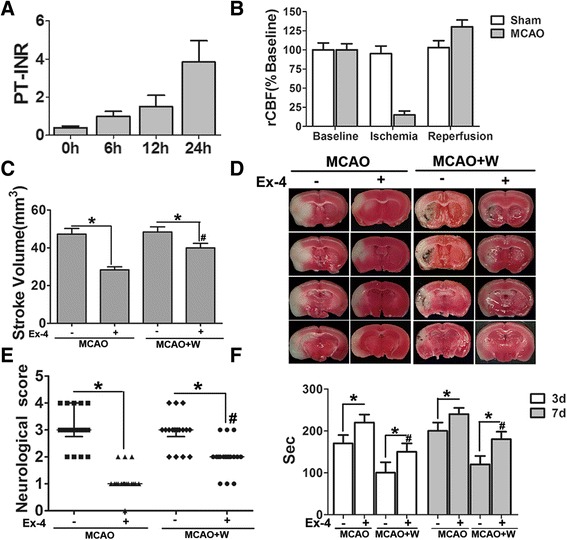
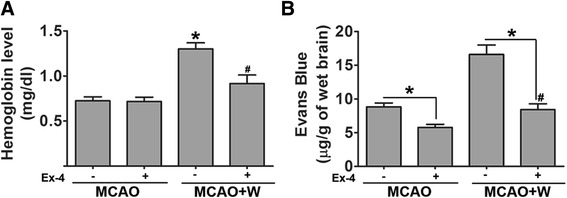
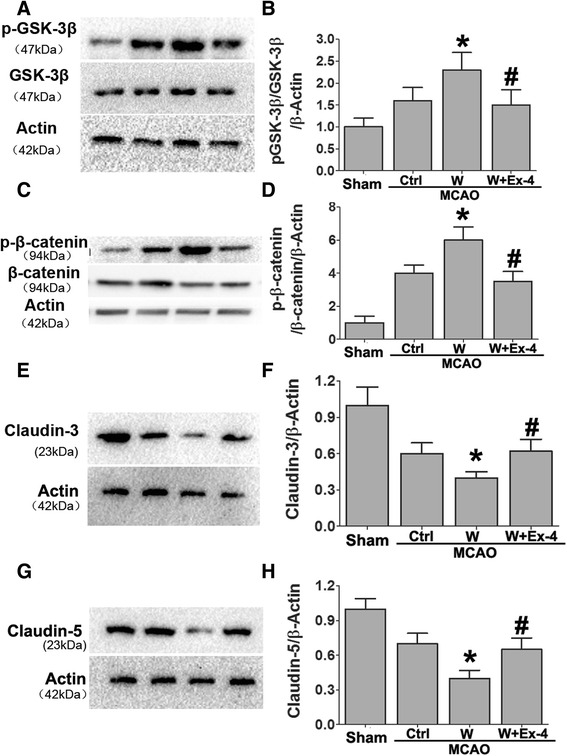
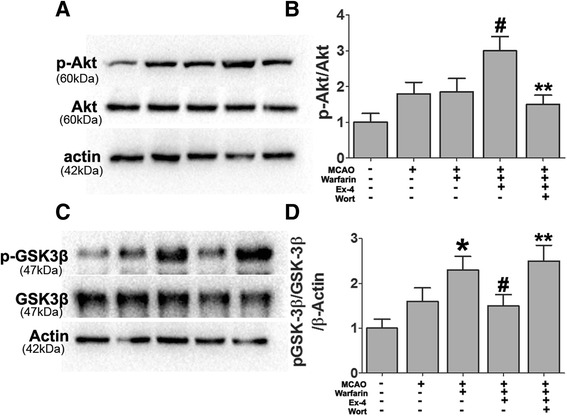
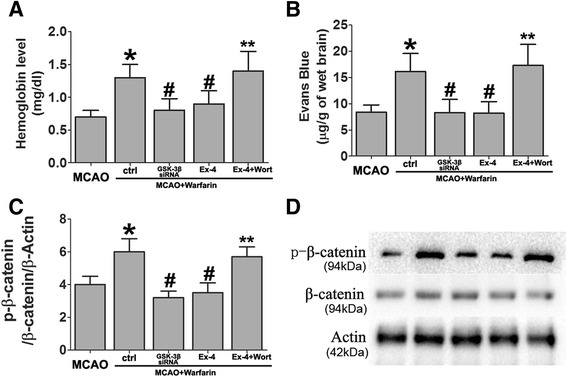
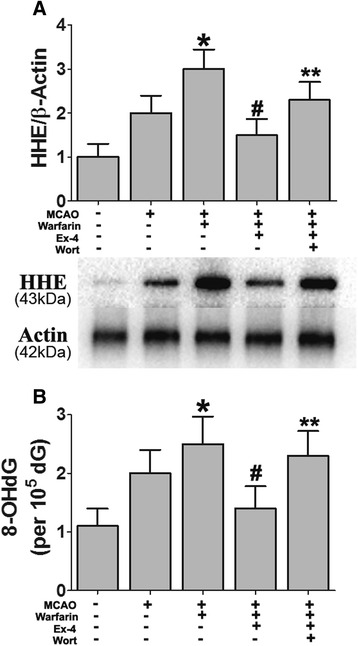
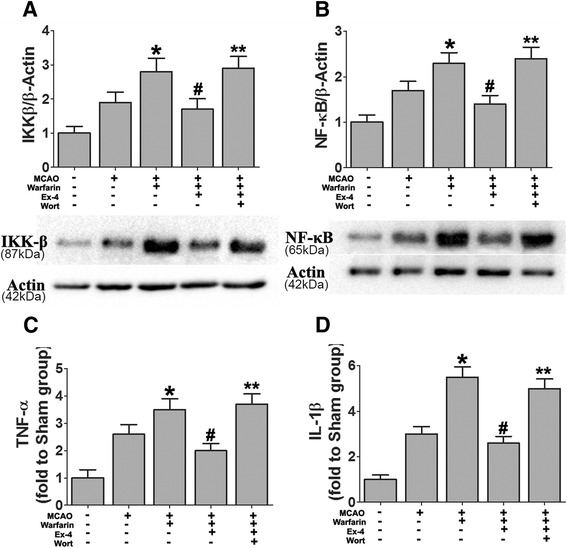
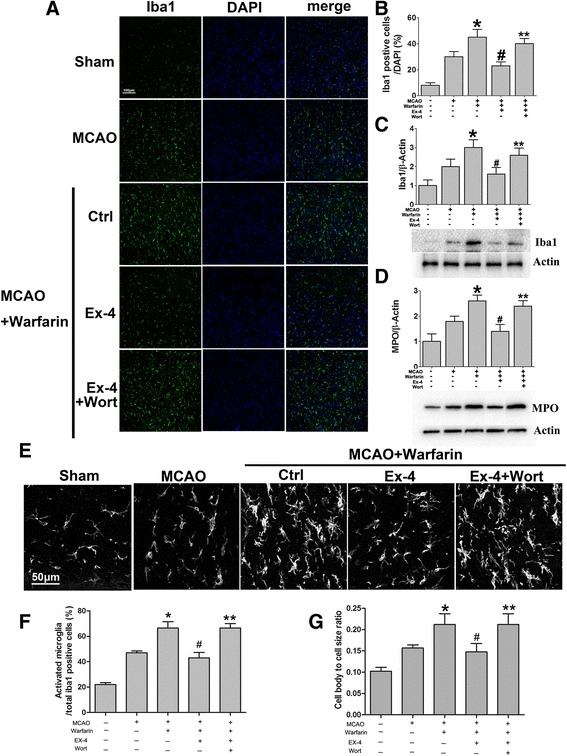
BACKGROUND: As the number of patients with cardioembolic ischemic stroke is predicted to be double by 2030, increased burden of warfarin-associated hemorrhagic transformation (HT) after cerebral ischemia is an expected consequence. However, thus far, no effective treatment strategy is available for HT prevention in routine clinical practice. While the glucagon-like peptide-1 receptor (GLP-1R) agonist exendin-4 (Ex-4) is known to protect against oxidative stress and neuronal cell death caused by ischemic brain damage, its effect on preventing warfarin-associated HT after cerebral ischemia is yet unknown. Therefore, we hypothesized that Ex-4 would stabilize the blood-brain barrier (BBB) and suppress neuroinflammation through PI3K-Akt-induced inhibition of glycogen synthase kinase-3β (GSK-3β) after warfarin-associated HT post-cerebral ischemia. METHODS: We used male C57BL/6 mice for all experiments. A 5-mg warfarin sodium tablet was dissolved in animals' drinking water (effective warfarin uptake 0.04 mg (2 mg/kg) per mouse). The mice were fed for 0, 6, 12, and 24 h with ad libitum access to the treated water. To study the effects of Ex-4, temporary middle cerebral artery occlusion (MCAO) was performed. Then, either Ex-4 (10 mg/kg) or saline was injected through the tail vein, and in the Ex-4 + wortmannin group, PI3K inhibitor wortmannin was intravenously injected, after reperfusion. The infarct volume, neurological deficits, and integrity of the BBB were assessed 72 h post MCAO. One- or two-way ANOVA was used to test the difference between means followed by Newman-Keuls post hoc testing for pair-wise comparison. RESULTS: We observed that Ex-4 ameliorated warfarin-associated HT and preserved the integrity of the BBB after cerebral ischemia through the PI3K/Akt/GSK-3β pathway. Furthermore, Ex-4 suppressed oxidative DNA damage and lipid peroxidation, attenuated pro-inflammatory cytokine expression levels, and suppressed microglial activation and neutrophil infiltration in warfarin-associated HT post-cerebral ischemia. However, these effects were totally abolished in the mice treated with Ex-4 + the PI3K inhibitor-wortmannin. The PI3K/Akt-GSK-3β signaling pathway appeared to contribute to the protection afforded by Ex-4 in the warfarin-associated HT model. CONCLUSIONS: GLP-1 administration could reduce warfarin-associated HT in mice. This beneficial effect of GLP-1 is associated with attenuating neuroinflammation and BBB disruption by inactivating GSK-3β through the PI3K/Akt pathway.
Overview
The claims and statistics of this paper haven’t been checked yet.
Free: it reads the open-access text and checks the first 5 claims that cite a source we can check. Create a free account to check every claim.
Integrity signals
Registry
Cites
Statistics
Figures
Verification
Claims the paper makes
The claims and statistics of this paper haven’t been checked yet.
Free: it reads the open-access text and checks the first 5 claims that cite a source we can check. Create a free account to check every claim.
Claims other papers make about this one
Each is checked against this paper’s own text: does it say what the citing paper says it does?
The source backs part of the claim, not all of it — or backs it for a different population, condition or comparison.
In the citing paper
“Exendin-4 also appears to preserve the integrity of the BBB after cerebral ischemia by inactivating glycogen synthase kinase-3β (GSK-3β), a serine/threonine protein kinase, through the PI3K/Akt pathway [78].”
From Protection against stroke with glucagon-like peptide-1 receptor agonists: a comprehensive review of potential mechanisms (2022) · cites this paper as [78]
Experimental — accuracy not yet measured
Self-check
Percentages, sums and reported differences re-computed from the paper’s own numbers.
The self-check needs the paper’s full text.
Citations
Cites
2 retracted
Li, L., McBride, D. W., Doycheva, D., Dixon, B. J., Krafft, P. R., Zhang, J. H., & Tang, J. (2015) · Experimental Neurology · doi:10.1016/j.expneurol.2014.12.020 · Cited by 109
RetractedZhao, R., Zhang, Z., Song, Y., Wang, D., Qi, J., & Wen, S. (2010) · Journal of Ethnopharmacology · doi:10.1016/j.jep.2010.11.054 · Cited by 53
RetractedAtrial fibrillation as an independent risk factor for stroke: the Framingham study
Wolf, P. A., Abbott, R. D., & Kannel, W. B. (1991) · Stroke · doi:10.1161/01.str.22.8.983 · Cited by 7,388 · cited 1×
“Discussion Atrial fibrillation is a severe independent risk factor of stroke, its attributable risk increasing with age up to more than 20 % [47].”
BackgroundGo, A. S., Hylek, E. M., Phillips, K. A., Chang, Y., Henault, L. E., Selby, J. V., & Singer, D. E. (2001) · JAMA · doi:10.1001/jama.285.18.2370 · Cited by 6,205
Lopez, A. D., Mathers, C. D., Ezzati, M., Jamison, D. T., & Murray, C. J. (2006) · The Lancet · doi:10.1016/s0140-6736(06)68770-9 · Cited by 5,630
Inhibition of glycogen synthase kinase-3 by insulin mediated by protein kinase B
Cross, D. A. E., Alessi, D. R., Cohen, P., Andjelkovich, M., & Hemmings, B. A. (1995) · Nature · doi:10.1038/378785a0 · Cited by 5,244 · cited 1×
“PI3K/Akt plays a crucial role in the cell death/survival pathway through several different downstream targets including GSK-3β [52].”
BackgroundHart, R. G., Pearce, L. A., & Aguilar, M. I. (2007) · Annals of Internal Medicine · doi:10.7326/0003-4819-146-12-200706190-00007 · Cited by 4,793 · cited 1×
“INR-driven oral anticoagulation with vitamin K antagonists to an INR of 2–3 reduces the risk of an ischemic stroke by over 60 % and has been the standard of stroke prevention in patients with AF [48].”
BackgroundBiology of Incretins: GLP-1 and GIP
Baggio, L. L., & Drucker, D. J. (2007) · Gastroenterology · doi:10.1053/j.gastro.2007.03.054 · Cited by 3,639 · cited 1×
“Both GLP-1 and Ex-4 have multiple physiologic functions, such as the induction of glucose-dependent insulin release, inhibition of glucagon secretion, stimulation of B cell replication, and antiapoptotic action [13].”
BackgroundThe immunology of stroke: from mechanisms to translation
Iadecola, C., & Anrather, J. (2011) · Nature Medicine · doi:10.1038/nm.2399 · Cited by 2,596 · cited 1×
“Inflammation has been recognized as a key contributor to the pathophysiology of cerebral ischemia [55].”
BackgroundApoptotic Mechanisms After Cerebral Ischemia
Broughton, B. R. S., Reutens, D. C., & Sobey, C. G. (2009) · Stroke · doi:10.1161/strokeaha.108.531632 · Cited by 1,266
Cited by
Sun, J., Li, H., Jin, Y., Yu, J., Mao, S., Su, K.-P., Ling, Z., & Liu, J. (2021) · Brain, Behavior, and Immunity · doi:10.1016/j.bbi.2020.10.014 · Cited by 264
Shan, Y., Tan, S., Lin, Y., Liao, S., Zhang, B., Chen, X., Wang, J., Deng, Z., Zeng, Q., Zhang, L., et al. (2019) · Journal of Neuroinflammation · doi:10.1186/s12974-019-1638-6 · Cited by 188
Sposito, A. C., Berwanger, O., de Carvalho, L. S. F., & Saraiva, J. F. K. (2018) · Cardiovascular Diabetology · doi:10.1186/s12933-018-0800-2 · Cited by 171
Short-chain fatty acids-producing probiotics: A novel source of psychobiotics
Cheng, Y., Liu, J., & Ling, Z. (2021) · Critical Reviews in Food Science and Nutrition · doi:10.1080/10408398.2021.1920884 · Cited by 169
Crosstalk between Inflammation and the BBB in Stroke
Huang, Y., Chen, S., Luo, Y., & Han, Z. (2020) · Current Neuropharmacology · doi:10.2174/1570159x18666200620230321 · Cited by 168
Protective properties of GLP‐1 and associated peptide hormones in neurodegenerative disorders
Hölscher, C. (2022) · British Journal of Pharmacology · doi:10.1111/bph.15508 · Cited by 145
GLP-1’s role in neuroprotection: a systematic review
Erbil, D., Eren, C. Y., Demirel, C., Küçüker, M. U., Solaroğlu, I., & Eser, H. Y. (2019) · Brain Injury · doi:10.1080/02699052.2019.1587000 · Cited by 126
Díaz-Cañestro, C., Merlini, M., Bonetti, N. R., Liberale, L., Wüst, P., Schumacher, S. B., Klohs, J., Costantino, S., Miranda, M. X., Schoedon, G., et al. (2018) · International Journal of Cardiology · doi:10.1016/j.ijcard.2017.12.060 · Cited by 94
Vergès, B., Aboyans, V., Angoulvant, D., Boutouyrie, P., Cariou, B., Hyafil, F., Mohammedi, K., & Amarenco, P. (2022) · Cardiovascular Diabetology · doi:10.1186/s12933-022-01686-3 · Cited by 72
“Exendin-4 also appears to preserve the integrity of the BBB after cerebral ischemia by inactivating glycogen synthase kinase-3β (GSK-3β), a serine/threonine protein kinase, through the PI3K/Akt pathway [78].”
BackgroundBasalay, M. V., Davidson, S. M., & Yellon, D. M. (2019) · Cardiovascular Drugs and Therapy · doi:10.1007/s10557-019-06915-8 · Cited by 68
Yang, X., Qiang, Q., Li, N., Feng, P., Wei, W., & Hölscher, C. (2022) · Frontiers in Neurology · doi:10.3389/fneur.2022.844697 · Cited by 58
The pleiotropic of GLP-1/GLP-1R axis in central nervous system diseases
Zhang, L., Zhang, W., & Tian, X. (2023) · International Journal of Neuroscience · doi:10.1080/00207454.2021.1924707 · Cited by 54
Maskery, M. P., Holscher, C., Jones, S. P., Price, C. I., Strain, W. D., Watkins, C. L., Werring, D. J., & Emsley, H. C. (2021) · Journal of Cerebral Blood Flow & Metabolism · doi:10.1177/0271678x20952011 · Cited by 51
Zhang, Q., Li, Q., Liu, S., Zheng, H., Ji, L., Yi, N., Bao, W., Zhu, X., Sun, W., Liu, X., et al. (2022) · Diabetes Research and Clinical Practice · doi:10.1016/j.diabres.2022.109806 · Cited by 51
Rocha‐Ferreira, E., Poupon-Bejuit, L., Zelco, A., Leverin, A., Nair, S., Jonsdotter, A., Carlsson, Y., Thornton, C., Hagberg, H., & Rahim, A. A. (2018) · Brain · doi:10.1093/brain/awy220 · Cited by 52
Direct and indirect effects of lipids on microglia function
Leyrolle, Q., Layé, S., & Nadjar, A. (2019) · Neuroscience Letters · doi:10.1016/j.neulet.2019.134348 · Cited by 50
Shandilya, A., Mehan, S., Kumar, S., Sethi, P., Narula, A. S., Alshammari, A., Alharbi, M., & Alasmari, A. F. (2022) · Molecules · doi:10.3390/molecules27123878 · Cited by 50
From metabolism to mind: The expanding role of the GLP-1 receptor in neurotherapeutics
Roy, A., Dawson, V. L., & Dawson, T. M. (2025) · Neurotherapeutics · doi:10.1016/j.neurot.2025.e00712 · Cited by 47
Darsalia, V., Klein, T., Nyström, T., & Patrone, C. (2018) · Neuropharmacology · doi:10.1016/j.neuropharm.2017.08.022 · Cited by 43
Liu, C., Tian, Q., Wang, J., He, P., Han, S., Guo, Y., Chen, Y., Wang, G., Wei, H. L., & Li, M. (2022) · Molecular Neurobiology · doi:10.1007/s12035-022-03092-y · Cited by 42
McIntyre, R. S., Rasgon, N., Goldberg, J. F., Wong, S., Le, G. H., Mansur, R. B., Rosenblat, J. D., Teopiz, K. M., & Stahl, S. M. (2025) · CNS Spectrums · doi:10.1017/s1092852925000124 · Cited by 40
Xie, Y., Wang, Y., Ding, H., Guo, M. A., Wang, X., Dong, Q., & Cui, M. (2019) · Journal of Neuroinflammation · doi:10.1186/s12974-019-1460-1 · Cited by 38
Self-citationZhao, C., Bai, X., Wen, A., Wang, J., & Ding, Y. (2024) · Pharmacological Research · doi:10.1016/j.phrs.2024.107527 · Cited by 32
Kumar, S., Mehan, S., Khan, Z., Gupta, G. D., & Narula, A. S. (2024) · Molecular Neurobiology · doi:10.1007/s12035-023-03902-x · Cited by 31
Liu, C., Sun, S., Xie, J., Li, H., Li, T., Wu, Q., Zhang, Y., Bai, X., Wang, J., Wang, X., et al. (2022) · Molecular Neurobiology · doi:10.1007/s12035-022-02811-9 · Cited by 28
Self-citationZhang, G., Kim, S., Gu, X., Yu, S. P., & Wei, L. (2019) · Neuroscience Bulletin · doi:10.1007/s12264-019-00446-w · Cited by 28
Zhao, Y., Tian, S., Zhang, J., Cheng, X., Huang, W., Cao, G., Chang, Y., Wang, H., Nie, G., & Qiu, W. (2022) · Nano Today · doi:10.1016/j.nantod.2022.101457 · Cited by 26
Augestad, I. L., Dekens, D., Karampatsi, D., Elabi, O., Zabala, A., Pintana, H., Larsson, M., Nyström, T., Paul, G., Darsalia, V., et al. (2022) · British Journal of Pharmacology · doi:10.1111/bph.15524 · Cited by 21
Yuhuan, C., Liu, M., Zuo, L., Wang, H., & Liu, J. (2022) · Immunopharmacology and Immunotoxicology · doi:10.1080/08923973.2022.2052893 · Cited by 19
Zhu, H., Liu, Z.-P., Yang, W., Dong, D.-W., Zhao, Y. H., Yang, B. Y., Huang, L., Zhang, Y., & Xu, A.-D. (2018) · Frontiers in Neuroscience · doi:10.3389/fnins.2018.00962 · Cited by 18
Michaelsen, M. K., Drasbek, K. R., Valentin, J. B., Svart, M. V., Larsen, J. B., Kruuse, C. R., Simonsen, C. Z., & Blauenfeldt, R. A. (2025) · Stroke · doi:10.1161/strokeaha.125.053075 · Cited by 15
Ismaeil, A., Babiker, F. A., & Al‐Sabah, S. (2022) · Pharmaceuticals · doi:10.3390/ph15060720 · Cited by 15
Si, J., Yu, K., Hao, J., Wang, J., & Zhang, L. (2025) · Therapeutic Advances in Neurological Disorders · doi:10.1177/17562864251332035 · Cited by 11
Sharma, S., Mehan, S., Khan, Z., Tiwari, A., Kumar, A., Gupta, G. D., Narula, A. S., & Kalfin, R. E. (2024) · Current Molecular Medicine · doi:10.2174/0115665240317650240924041923 · Cited by 9
Prebiotics and probiotics and Parkinson's disease
Amani, R., & Mehrabani, S. (2023) · Elsevier eBooks · doi:10.1016/b978-0-323-90052-2.00034-2 · Cited by 9
An Overview of Prospective Drugs for Type 1 and Type 2 Diabetes
Wu, P., Liu, Z., Jiang, X., & Fang, H. (2019) · Current Drug Targets · doi:10.2174/1389450120666191031104653 · Cited by 9
Poupon-Bejuit, L., Geard, A. F., Millicheap, N., Rocha‐Ferreira, E., Hagberg, H., Thornton, C., & Rahim, A. A. (2024) · EMBO Molecular Medicine · doi:10.1038/s44321-024-00079-1 · Cited by 8
Wang, H., Ko, H., Leung, T. W. H., Huang, J., Sai, J., Liang, Y., Li, H., Zhang, J., Cao, Q., Zang, W., et al. (2025) · Nature Communications · doi:10.1038/s41467-025-66167-z · Cited by 7
Exendin-4 Reversed the PC12 Cell Damage Induced by circRNA CDR1as/miR-671/GSK3β Signaling Pathway
Quan, H., Chen, Q., Wang, K., Wang, Q., Lü, M., Zhang, Y., Qiang, S., Xue, S., Lin, H., Zhu, H., et al. (2020) · Journal of Molecular Neuroscience · doi:10.1007/s12031-020-01698-2 · Cited by 7
Self-citationThe role of GLP-1 receptor in pain disorders and its pharmacological properties
Jing, F., Zeng, Y., Yu, Q.-L., & Fu, C. (2025) · European Journal of Pharmacology · doi:10.1016/j.ejphar.2025.178345 · Cited by 6
The treament of hyperglycemia in acute ischemic stroke with incretin-based drugs
Ferrari, F., Moretti, A., & Villa, R. F. (2020) · Pharmacological Research · doi:10.1016/j.phrs.2020.105018 · Cited by 6
Chen, Y., Zhang, C., Zhao, L., Chen, R., Zhang, P., Li, J., Zhang, X., & Zhang, X. (2023) · EXPERIMENTAL ANIMALS · doi:10.1538/expanim.23-0070 · Cited by 5
Can glucagon-like peptide-1 (GLP-1) analogues make neuroprotection a reality?
Basalay, M. V., Davidson, S. M., & Yellon, D. M. (2020) · Neural Regeneration Research · doi:10.4103/1673-5374.280313 · Cited by 4
Samanidou, V., Tsamis, K., Ceasovschih, A., Koufakis, T., Patoulias, D., Rizos, E. C., Rizzo, M., Milionis, H. J., & Barkas, F. (2026) · Journal of Central Nervous System Disease · doi:10.1177/11795735261444425 · Cited by 4
Ruchika, F., Lee, D. J., Feghali, J., Alam, M., Shah, H. A., Horowitz, M. A., Xu, R., Caplan, J. M., Jackson, C. M., Huang, J., et al. (2026) · Neurosurgery · doi:10.1227/neu.0000000000004079 · Cited by 2
Shandilya, A., & Mehan, S. (2021) · Research Square · doi:10.21203/rs.3.rs-721622/v1 · Cited by 1
Augestad, I. L., Dekens, D. W., Karampatsi, D., Elabi, O. F., Zabala, A., Pintana, H., Larsson, M., Nyström, T., Paul, G., Darsalia, V., et al. (2021) · Research Square · doi:10.21203/rs.3.rs-210113/v1 · Cited by 1
Burrows, A. E. (2026) · e-space (Manchester Metropolitan University) · doi:10.83056/mmu.32479275
Bioinformatics strategy to identify the pathogenesis of intracerebral hemorrhage
Sun, J., Suo, H., Liu, Z.-K., Liu, Z., Lu, Z.-K., Liu, T., & Yin, H. (2024) · New discovery. · doi:10.61958/ndxr6013
AVC, nouveaux traitements : place des agonistes du récepteur du GLP-1
Vergès, B. L. (2024) · Médecine des Maladies Métaboliques · doi:10.1016/j.mmm.2024.07.005
Yang, C., Zheng, H., Wang, H., He, Y., Liu, X., & Miao, L. (2026) · Food Science and Human Wellness · doi:10.26599/fshw.2026.9251116
Negida, Y., Khand, Y., Hawas, Y., Yadav, V., Mohamed, K. M. H., & Saha, R. K. (2026) · medRxiv · doi:10.64898/2026.04.29.26352109
Chen, M., Tan, X., Hu, D., Sun, H., Feng, J., Yunying, L., Song, X., Lin, Q., & He, F. (2026) · European Journal of Pharmacology · doi:10.1016/j.ejphar.2026.178914
Essibayi, M. A., & Lakhani, D. A. (2026) · Neurosurgery · doi:10.1227/neu.0000000000004122
Jin, J., Fang, L., & Li, W. (2026) · Discovery Medicine · doi:10.24976/discov.med.202638212.219
Wang, Z., Xue, S., Zhou, X., Yuan, M., & Sun, X. (2026) · Expert Review of Clinical Immunology · doi:10.1080/1744666x.2026.2747225
Findeis, J., Koschker, A., & Winterholler, M. (2026) · Epilepsia · doi:10.1002/epi.70527
Metadata
- Authors
- Chen, F., Wang, W., Ding, H., Yang, Q., Dong, Q., & Cui, M.
- Affiliations
- Shanghai Medical College of Fudan University (CN)
- Corresponding author
- Dong, Qiang
- Cui, Mei
- Venue
- Journal of Neuroinflammation
- Published
- 2016-08-26
- Volume
- 13
- Issue
- 1
- Pages
- 204-204
- ISSN
- 1742-2094 (ISSN-L)
- PMC
- PMC5002167
- OpenAlex
- W2514294108
- Cited by
- 52
- References
- 58
- Citations by year
- 2026: 6 · 2025: 6 · 2024: 5 · 2023: 2 · 2022: 9 · 2021: 6 · 2020: 6 · 2019: 7 · 2018: 4 · 2017: 1
- FWCI
- 3.74
- Type
- journal article
- Language
- en
- Open access
- gold
- doi.org
- Licence
- cc-by
- Locations
- Journal of Neuroinflammation (publishedVersion, cc-by)
- PubMed Central (publishedVersion, cc-by)
- PubMed (publishedVersion)
- Funders
- National Natural Science Foundation of China (81471173, 81271295, 81571109)
- Topics
- Health Sciences › Medicine › Clinical Neurology › Acute Ischemic Stroke Management
- Health Sciences › Medicine › Clinical Neurology › Intracerebral and Subarachnoid Hemorrhage Research
- Life Sciences › Neuroscience › Neurology › Barrier Structure and Function Studies
- Keywords
- exendin-4, warfarin, hemorrhagic transformation, cerebral ischemia, ischemic stroke, blood-brain barrier, PI3K/Akt/GSK-3β signaling, neuroinflammation, oxidative stress, microglial activation, neutrophil infiltration, inflammatory cytokines, wortmannin, GLP-1 receptor agonists, middle cerebral artery occlusion
- MeSH terms
- Exenatide, Glucagon-Like Peptide-1 Receptor Agonists, Animals, Anticoagulants, Blood-Brain Barrier, Brain, Brain Ischemia, Disease Models, Animal, Gene Expression Regulation, Hemorrhage, Hypoglycemic Agents, Male, Mice, Inbred C57BL, Nervous System Diseases, Peptides, Venoms, Warfarin, Signal Transduction, Cytokines, Microglia, Infarction, Middle Cerebral Artery, Brain Infarction, Mice
About these checks
Registry, retraction, Cites and statistics results are computed, not judged, with one exception: a printed reference that no index lists is read once by a model before it counts as a citation error. Claims are extracted by a model and kept only when their quote appears verbatim in the text; each cited source is then checked, with a model’s help, for whether it says what the claim relies on. Those verdicts can be wrong — read the claim’s quote and the cited source before relying on one.
Statistics and arithmetic are recomputed, not judged.
Confidence bands are shown only for fields calibrated on our annotated test set. None is calibrated yet, so no band is shown.
What counts as a claim ›How we measure confidence ›How we check this ›
Are you an author, or do you see a problem with this page? Request a review
Data sources
Bibliographic data: Semantic Scholar, OpenAlex, Crossref.
Contains information from the Semantic Scholar Academic Graph Datasets, made available under the ODC Attribution License (ODC-BY 1.0).
Semantic Scholar’s data is described in: Kinney, R., et al. (2023). The Semantic Scholar Open Data Platform. arXiv:2301.10140.
