

The DOI matches its Crossref record; 2 of the 2 references it cites were found in a registry or an index.
Molecular epidemiology, genetic variability and evolution of HTLV-1 with special emphasis on African genotypes
Open accessAbstract
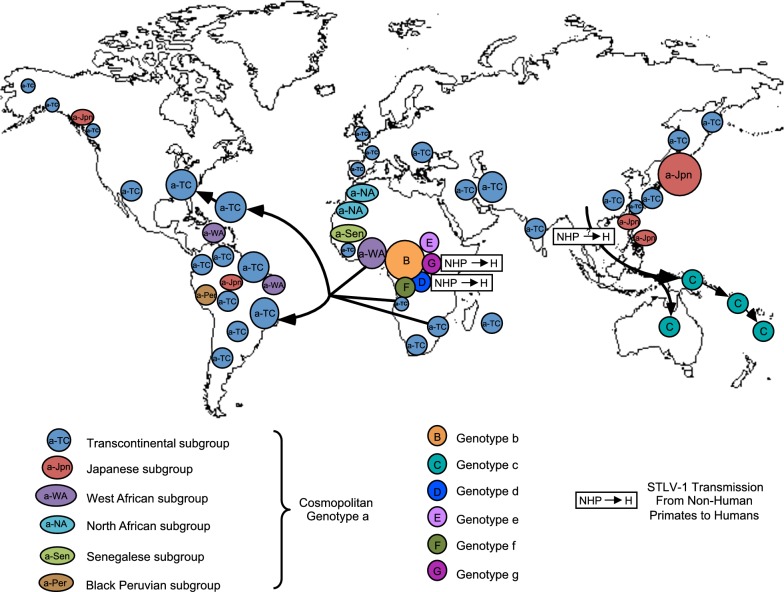
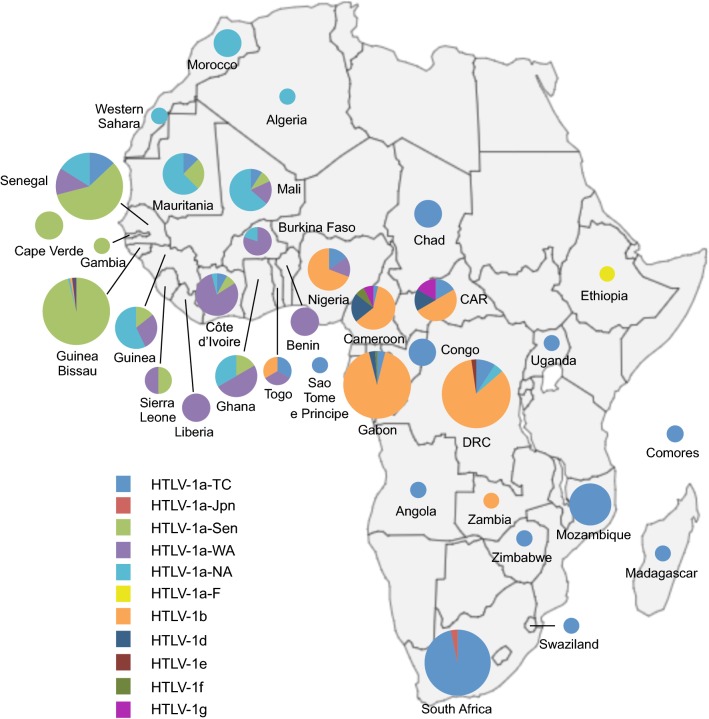
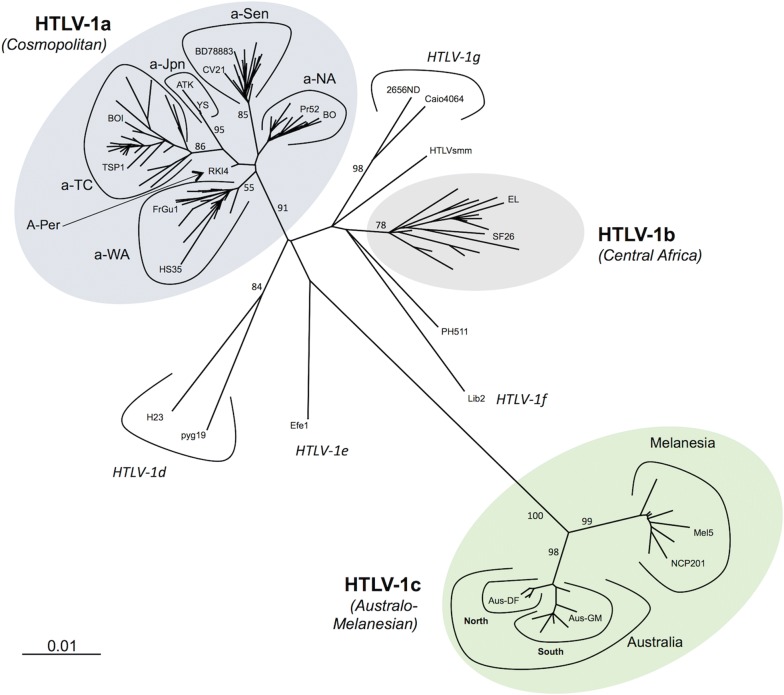
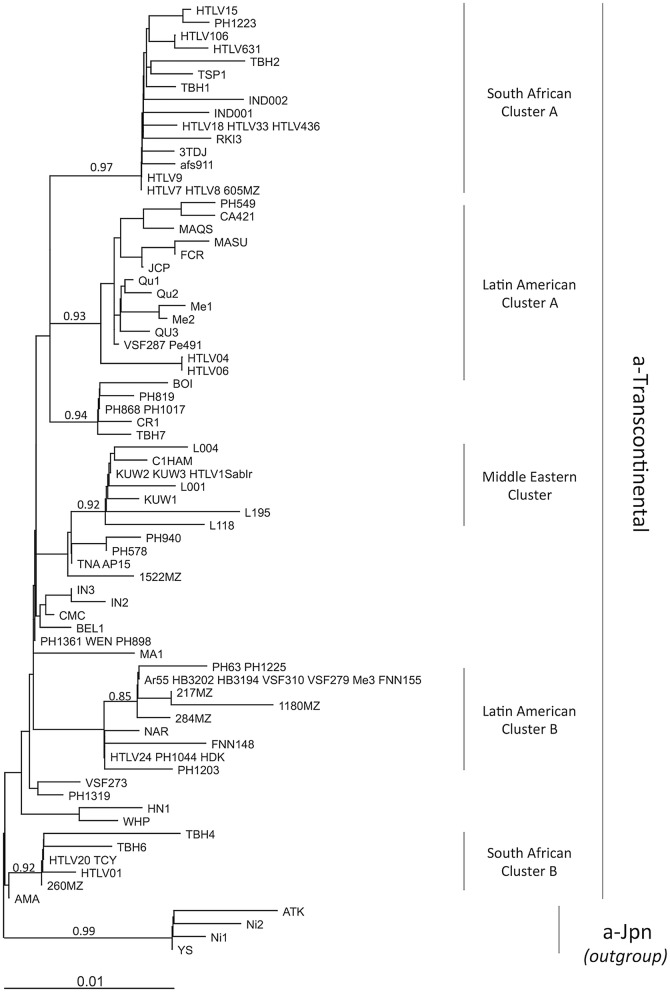
Human T cell leukemia virus (HTLV-1) is an oncoretrovirus that infects at least 10 million people worldwide. HTLV-1 exhibits a remarkable genetic stability, however, viral strains have been classified in several genotypes and subgroups, which often mirror the geographic origin of the viral strain. The Cosmopolitan genotype HTLV-1a, can be subdivided into geographically related subgroups, e.g. Transcontinental (a-TC), Japanese (a-Jpn), West-African (a-WA), North-African (a-NA), and Senegalese (a-Sen). Within each subgroup, the genetic diversity is low. Genotype HTLV-1b is found in Central Africa; it is the major genotype in Gabon, Cameroon and Democratic Republic of Congo. While strains from the HTLV-1d genotype represent only a few percent of the strains present in Central African countries, genotypes -e, -f, and -g have been only reported sporadically in particular in Cameroon Gabon, and Central African Republic. HTLV-1c genotype, which is found exclusively in Australo-Melanesia, is the most divergent genotype. This reflects an ancient speciation, with a long period of isolation of the infected populations in the different islands of this region (Australia, Papua New Guinea, Solomon Islands and Vanuatu archipelago). Until now, no viral genotype or subgroup is associated with a specific HTLV-1-associated disease. HTLV-1 originates from a simian reservoir (STLV-1); it derives from interspecies zoonotic transmission from non-human primates to humans (ancient or recent). In this review, we describe the genetic diversity of HTLV-1, and analyze the molecular mechanisms that are at play in HTLV-1 evolution. Similar to other retroviruses, HTLV-1 evolves either through accumulation of point mutations or recombination. Molecular studies point to a fairly low evolution rate of HTLV-1 (between 5.6E−7 and 1.5E−6 substitutions/site/year), supposedly because the virus persists within the host via clonal expansion (instead of new infectious cycles that use reverse transcriptase).
Overview
The claims and statistics of this paper haven’t been checked yet.
Run the check — free, no account needed. It reads the open-access text and checks the sources it cites.
Integrity signals
Registry
Cites
Statistics
Figures
Verification
Claims the paper makes
The claims and statistics of this paper haven’t been checked yet.
Run the check — free, no account needed. It reads the open-access text and checks the sources it cites.
Claims other papers make about this one
Each is checked against this paper’s own text: does it say what the citing paper says it does?
The source backs part of the claim, not all of it — or backs it for a different population, condition or comparison.
In the citing paper
“The global prevalence of HTLV-1 has been estimated to be anywhere between 3 and 30 million cases [18,19]”
From Current State of Therapeutics for HTLV-1 (2024) · cites this paper as [19]
Experimental — accuracy not yet measuredThe source backs part of the claim, not all of it — or backs it for a different population, condition or comparison.
In the citing paper
“An ongoing issue of HTLV-1-infected cell lines is the underrepresentation of more divergent subtypes, with recent studies suggesting that different HTLV-1 subtypes exert significantly different influences over the host immune system compared to the dominant cosmopolitan subtype [19].”
From Current State of Therapeutics for HTLV-1 (2024) · cites this paper as [19]
Experimental — accuracy not yet measured
Self-check
Percentages, sums and reported differences re-computed from the paper’s own numbers.
The self-check needs the paper’s full text.
Citations
Cites
Poiesz, B. J., Ruscetti, F. W., Gazdar, A. F., Bunn, P. A., Minna, J. D., & Gallo, R. C. (1980) · Proceedings of the National Academy of Sciences · doi:10.1073/pnas.77.12.7415 · Cited by 5,043
Human T-Lymphotropic Virus Type I (HTLV-I) Seroprevalence in Jamaica
Murphy, E., Figueroa, P., Gibbs, W. N., Holding-Cobham, M., Cranston, B., Malley, K., Bodner, A. J., Alexander, S. S., & Blattner, W. A. (1991) · American Journal of Epidemiology · doi:10.1093/oxfordjournals.aje.a115824 · Cited by 199
Research works printed but not linked: 145
- Takatsuki K, Uchiyama T, Sagawa K, Yodoi J. Adult T cell leukemia in Japan. In: Seno S, Takaku F, Irino S, editors. Topics in hematology. Amsterdam: Excerpta Medica; 1977. p. 73–7.
- Gessain A, Barin F, Vernant JC, Gout O, Maurs L, Calender A, de The G. Antibodies to human T-lymphotropic virus type-I in patients with tropical spastic paraparesis. Lancet. 1985;2:407–10. · DOI
- Osame M, Usuku K, Izumo S, Ijichi N, Amitani H, Igata A, Matsumoto M, Tara M. HTLV-I associated myelopathy, a new clinical entity. Lancet. 1986;1:1031–2. · DOI
- Martin F, Taylor GP, Jacobson S. Inflammatory manifestations of HTLV-1 and their therapeutic options. Expert Rev Clin Immunol. 2014;10:1531–46. · DOI
- Gessain A, Cassar O. Epidemiological aspects and world distribution of HTLV-1 infection. Front Microbiol. 2012;3:388. · DOI · Paper page
- Proietti FA, Carneiro-Proietti AB, Catalan-Soares BC, Murphy EL. Global epidemiology of HTLV-I infection and associated diseases. Oncogene. 2005;24:6058–68. · DOI
- Verdonck K, Gonzalez E, Van Dooren S, Vandamme AM, Vanham G, Gotuzzo E. Human T-lymphotropic virus 1: recent knowledge about an ancient infection. Lancet Infect Dis. 2007;7:266–81. · DOI · Paper page
- Hewitt PE, Davison K, Howell DR, Taylor GP. Human T-lymphotropic virus lookback in NHS blood and transplant (England) reveals the efficacy of leukoreduction. Transfusion. 2013;53:2168–75. · DOI
- Cesaire R, Kerob-Bauchet B, Bourdonne O, Maier H, Amar KO, Halbout P, Dehee A, Desire N, Dantin F, Bera O, Lezin A. Evaluation of HTLV-I removal by filtration of blood cell components in a routine setting. Transfusion. 2004;44:42–8. · DOI
- Seiki M, Hattori S, Hirayama Y, Yoshida M. Human adult T-cell leukemia virus: complete nucleotide sequence of the provirus genome integrated in leukemia cell DNA. Proc Natl Acad Sci USA. 1983;80:3618–22. · DOI · Paper page
- Bazarbachi A, Huang M, Gessain A, Saal F, Saib A, Peries J, De The H, Galibert F. Human T-cell-leukemia virus type I in post-transfusional spastic paraparesis: complete proviral sequence from uncultured blood cells. Int J Cancer. 1995;63:494–9. · DOI
- Malik KT, Even J, Karpas A. Molecular cloning and complete nucleotide sequence of an adult T cell leukaemia virus/human T cell leukaemia virus type I (ATLV/HTLV-I) isolate of Caribbean origin: relationship to other members of the ATLV/HTLV-I subgroup. J Gen Virol. 1988;69(Pt 7):1695–710. · DOI
- Paine E, Garcia J, Philpott TC, Shaw G, Ratner L. Limited sequence variation in human T-lymphotropic virus type 1 isolates from North American and African patients. Virology. 1991;182:111–23. · DOI
- Evangelista A, Maroushek S, Minnigan H, Larson A, Retzel E, Haase A, Gonzalez-Dunia D, McFarlin D, Mingioli E, Jacobson S, et al. Nucleotide sequence analysis of a provirus derived from an individual with tropical spastic paraparesis. Microb Pathog. 1990;8:259–78. · DOI
- Hemelaar J. Implications of HIV diversity for the HIV-1 pandemic. J Infect. 2013;66:391–400. · DOI
- Komurian F, Pelloquin F, de The G. In vivo genomic variability of human T-cell leukemia virus type I depends more upon geography than upon pathologies. J Virol. 1991;65:3770–8. · DOI
- Miura T, Fukunaga T, Igarashi T, Yamashita M, Ido E, Funahashi S, Ishida T, Washio K, Ueda S, Hashimoto K, et al. Phylogenetic subtypes of human T-lymphotropic virus type I and their relations to the anthropological background. Proc Natl Acad Sci USA. 1994;91:1124–7. · DOI
- Vidal AU, Gessain A, Yoshida M, Tekaia F, Garin B, Guillemain B, Schulz T, Farid R, De The G. Phylogenetic classification of human T cell leukaemia/lymphoma virus type I genotypes in five major molecular and geographical subtypes. J Gen Virol. 1994;75(Pt 12):3655–66. · DOI
- Gasmi M, Farouqi B, d’Incan M, Desgranges C. Long terminal repeat sequence analysis of HTLV type I molecular variants identified in four north African patients. AIDS Res Hum Retrovir. 1994;10:1313–5. · DOI
- Van Dooren S, Gotuzzo E, Salemi M, Watts D, Audenaert E, Duwe S, Ellerbrok H, Grassmann R, Hagelberg E, Desmyter J, Vandamme AM. Evidence for a post-Columbian introduction of human T-cell lymphotropic virus [type I] [corrected] in Latin America. J Gen Virol. 1998;79(Pt 11):2695–708. · DOI
- Trevino A, Alcantara LC Jr, Benito R, Caballero E, Aguilera A, Ramos JM, de Mendoza C, Rodriguez C, Garcia J, Rodriguez-Iglesias M, et al. Molecular epidemiology and clinical features of human T cell lymphotropic virus type 1 infection in Spain. AIDS Res Hum Retrovir. 2014;30(9):856–62. · DOI
- Zehender G, Ebranati E, De Maddalena C, Gianelli E, Riva A, Rusconi S, Massetto B, Rankin F, Acurie M, Galli M. Description of a “trans-Saharan” strain of human T-lymphotropic virus type 1 in West Africa. J Acquir Immune Defic Syndr. 2008;47:269–73. · DOI
- Mahe A, Meertens L, Ly F, Sow PS, Diop CT, Samb ND, Diop OM, Valensi F, Gessain A. Human T-cell leukaemia/lymphoma virus type 1-associated infective dermatitis in Africa: a report of five cases from Senegal. Br J Dermatol. 2004;150:958–65. · DOI
- Diop S, Calattini S, Abah-Dakou J, Thiam D, Diakhate L, Gessain A. Seroprevalence and molecular epidemiology of human T-Cell leukemia virus type 1 (HTLV-1) and HTLV-2 in blood donors from Dakar, Senegal. J Clin Microbiol. 2006;44:1550–4. · DOI
- Mahieux R, Ibrahim F, Mauclere P, Herve V, Michel P, Tekaia F, Chappey C, Garin B, Van Der Ryst E, Guillemain B, et al. Molecular epidemiology of 58 new African human T-cell leukemia virus type 1 (HTLV-1) strains: identification of a new and distinct HTLV-1 molecular subtype in Central Africa and in Pygmies. J Virol. 1997;71:1317–33. · DOI
- Gessain A, Gallo RC, Franchini G. Low degree of human T-cell leukemia/lymphoma virus type I genetic drift in vivo as a means of monitoring viral transmission and movement of ancient human populations. J Virol. 1992;66:2288–95. · DOI
- Brucato N, Cassar O, Tonasso L, Tortevoye P, Migot-Nabias F, Plancoulaine S, Guitard E, Larrouy G, Gessain A, Dugoujon JM. The imprint of the slave trade in an African American population: mitochondrial DNA, Y chromosome and HTLV-1 analysis in the Noir Marron of French Guiana. BMC Evol Biol. 2010;10:314. · DOI
- Alcantara LC, de Oliveira T, Gordon M, Pybus O, Mascarenhas RE, Seixas MO, Goncalves M, Hlela C, Cassol S, Galvao-Castro B. Tracing the origin of Brazilian HTLV-1 as determined by analysis of host and viral genes. AIDS. 2006;20:780–2. · DOI
- Rego FF, Alcantara LC, Moura Neto JP, Miranda AC, Pereira Ode S, Goncalves Mde S, Galvao-Castro B. HTLV type 1 molecular study in Brazilian villages with African characteristics giving support to the post-Columbian introduction hypothesis. AIDS Res Hum Retrovir. 2008;24:673–7. · DOI
- Amoussa AE, Wilkinson E, Giovanetti M, de Almeida Rego FF, Araujo TH, de Souza Goncalves M, de Oliveira T, Alcantara LC. HTLV-1aA introduction into Brazil and its association with the trans-Atlantic slave trade. Infect Genet Evol. 2017;48:95–101. · DOI
- Pirayeshfard L, Sharifi Z, Amini-Kafiabad S, Haghnazari Sadaghiani N. Phylogenetic analysis of HTLV-1 in Iranian blood donors, HIV-1 positive patients and patients with beta thalassemia. J Med Virol. 2018;90:1398–405. · DOI
- Mirhosseini A, Mohareri M, Arab R, Rezaee SA, Shirdel A, Koshyar MM, Allahyari A, Bari A, Rahimi H, Mozaheb Z, et al. Complete sequence of human T cell leukemia virus type 1 in ATLL patients from Northeast Iran, Mashhad revealed a prematurely terminated protease and an elongated pX open reading frame III. Infect Genet Evol. 2019;73:460–9. · DOI
- Otani M, Honda N, Xia PC, Eguchi K, Ichikawa T, Watanabe T, Yamaguchi K, Nakao K, Yamamoto T. Distribution of two subgroups of human T-lymphotropic virus type 1 (HTLV-1) in endemic Japan. Trop Med Health. 2012;40:55–8. · DOI
- Eguchi K, Fujii H, Oshima K, Otani M, Matsuo T, Yamamoto T. Human T-lymphotropic virus type 1 (HTLV-1) genetic typing in Kakeroma Island, an island at the crossroads of the ryukyuans and Wajin in Japan, providing further insights into the origin of the virus in Japan. J Med Virol. 2009;81:1450–6. · DOI
- Otani M, Eguchi K, Ichikawa T, Takenaka Takano K, Watanabe T, Yamaguchi K, Nakao K, Yamamoto T. Phylogeography of human T-lymphotropic virus type 1 (HTLV-1) lineages endemic to Japan. Trop Med Health. 2012;40:117–24. · DOI
- Vidal AU, Gessain A, Yoshida M, Mahieux R, Nishioka K, Tekaia F, Rosen L, De The G. Molecular epidemiology of HTLV type I in Japan: evidence for two distinct ancestral lineages with a particular geographical distribution. AIDS Res Hum Retrovir. 1994;10:1557–66. · DOI
- Yamashita M, Ishida T, Ohkura S, Miura T, Hayami M. Phylogenetic characterization of a new HTLV type 1 from the Ainu in Japan. AIDS Res Hum Retrovir. 2001;17:783–7. · DOI
- Calvignac-Spencer S, Adjogoua EV, Akoua-Koffi C, Hedemann C, Schubert G, Ellerbrok H, Leendertz SA, Pauli G, Leendertz FH. Origin of human T-lymphotropic virus type 1 in rural Cote d’Ivoire. Emerg Infect Dis. 2012;18:830–3. · DOI
- Desrames A, Cassar O, Gout O, Hermine O, Taylor GP, Afonso PV, Gessain A. Northern african strains of human T-lymphotropic virus type 1 arose from a recombination event. J Virol. 2014;88:9782–8. · DOI
- Talarmin A, Vion B, Ureta-Vidal A, Du Fou G, Marty C, Kazanji M. First seroepidemiological study and phylogenetic characterization of human T-cell lymphotropic virus type I and II infection among Amerindians in French Guiana. J Gen Virol. 1999;80(Pt 12):3083–8. · DOI
- Fortes-Lima C, Gessain A, Ruiz-Linares A, Bortolini MC, Migot-Nabias F, Bellis G, Moreno-Mayar JV, Restrepo BN, Rojas W, Avendano-Tamayo E, et al. Genome-wide ancestry and demographic history of African-descendant maroon communities from French Guiana and Suriname. Am J Hum Genet. 2017;101:725–36. · DOI
- van Tienen C, de Silva TI, Alcantara LC, Onyango CO, Jarju S, Goncalves N, Vincent T, Aaby P, Whittle H, van der Loeff MS, Cotten M. Molecular epidemiology of endemic human T-lymphotropic virus type 1 in a rural community in Guinea-Bissau. PLoS Negl Trop Dis. 2012;6:e1690. · DOI
- Caron M, Besson G, Padilla C, Makuwa M, Nkoghe D, Leroy E, Kazanji M. Revisiting human T-cell lymphotropic virus types 1 and 2 infections among rural population in Gabon, central Africa thirty years after the first analysis. PLoS Negl Trop Dis. 2018;12:e0006833. · DOI
- Hogan CA, Iles J, Frost EH, Giroux G, Cassar O, Gessain A, Dion MJ, Ilunga V, Rambaut A, Yengo-Ki-Ngimbi AE, et al. Epidemic history and iatrogenic transmission of blood-borne viruses in mid-20th century Kinshasa. J Infect Dis. 2016;214:353–60. · DOI
- Sherman MP, Saksena NK, Dube DK, Yanagihara R, Poiesz BJ. Evolutionary insights on the origin of human T-cell lymphoma/leukemia virus type I (HTLV-I) derived from sequence analysis of a new HTLV-I variant from Papua New Guinea. J Virol. 1992;66:2556–63. · DOI
- Saksena NK, Sherman MP, Yanagihara R, Dube DK, Poiesz BJ. LTR sequence and phylogenetic analyses of a newly discovered variant of HTLV-I isolated from the Hagahai of Papua New Guinea. Virology. 1992;189:1–9. · DOI
- Gessain A, Yanagihara R, Franchini G, Garruto RM, Jenkins CL, Ajdukiewicz AB, Gallo RC, Gajdusek DC. Highly divergent molecular variants of human T-lymphotropic virus type I from isolated populations in Papua New Guinea and the Solomon Islands. Proc Natl Acad Sci USA. 1991;88:7694–8. · DOI
- Gessain A, Boeri E, Yanagihara R, Gallo RC, Franchini G. Complete nucleotide sequence of a highly divergent human T-cell leukemia (lymphotropic) virus type I (HTLV-I) variant from melanesia: genetic and phylogenetic relationship to HTLV-I strains from other geographical regions. J Virol. 1993;67:1015–23. · DOI
- Cassar O, Capuano C, Bassot S, Charavay F, Duprez R, Afonso PV, Abel M, Walter H, Mera W, Martin PM, et al. Human T lymphotropic virus type 1 subtype C melanesian genetic variants of the Vanuatu Archipelago and Solomon Islands share a common ancestor. J Infect Dis. 2007;196:510–21. · DOI
- Cassar O, Charavay F, Touzain F, Jeannin P, Grangeon JP, Laumond S, Chungue E, Martin PM, Gessain A. A novel human T-lymphotropic virus type 1c molecular variant in an indigenous individual from New Caledonia, Melanesia. PLoS Negl Trop Dis. 2017;11:e0005278. · DOI
- Cassar O, Einsiedel L, Afonso PV, Gessain A. Human T-cell lymphotropic virus type 1 subtype C molecular variants among Indigenous Australians: new insights into the molecular epidemiology of HTLV-1 in Australo-Melanesia. PLoS Negl Trop Dis. 2013;7(9):e2418. · DOI
- Salemi M, Van Dooren S, Audenaert E, Delaporte E, Goubau P, Desmyter J, Vandamme AM. Two new human T-lymphotropic virus type I phylogenetic subtypes in seroindeterminates, a Mbuti pygmy and a Gabonese, have closest relatives among African STLV-I strains. Virology. 1998;246:277–87. · DOI
- Wolfe ND, Heneine W, Carr JK, Garcia AD, Shanmugam V, Tamoufe U, Torimiro JN, Prosser AT, Lebreton M, Mpoudi-Ngole E, et al. Emergence of unique primate T-lymphotropic viruses among central African bushmeat hunters. Proc Natl Acad Sci USA. 2005;102:7994–9. · DOI
- Koralnik IJ, Gessain A, Klotman ME, Lo Monico A, Berneman ZN, Franchini G. Protein isoforms encoded by the pX region of human T-cell leukemia/lymphotropic virus type I. Proc Natl Acad Sci USA. 1992;89:8813–7. · DOI
- Bai XT, Nicot C. Overview on HTLV-1 p12, p8, p30, p13: accomplices in persistent infection and viral pathogenesis. Front Microbiol. 2012;3:400. · DOI
- Edwards D, Fenizia C, Gold H, de Castro-Amarante MF, Buchmann C, Pise-Masison CA, Franchini G. Orf-I and orf-II-encoded proteins in HTLV-1 infection and persistence. Viruses. 2011;3:861–85. · DOI
- Lairmore MD, Albrecht B, D’Souza C, Nisbet JW, Ding W, Bartoe JT, Green PL, Zhang W. In vitro and in vivo functional analysis of human T cell lymphotropic virus type 1 pX open reading frames I and II. AIDS Res Hum Retrovir. 2000;16:1757–64. · DOI
- Valeri VW, Hryniewicz A, Andresen V, Jones K, Fenizia C, Bialuk I, Chung HK, Fukumoto R, Parks RW, Ferrari MG, et al. Requirement of the human T-cell leukemia virus p12 and p30 products for infectivity of human dendritic cells and macaques but not rabbits. Blood. 2010;116:3809–17. · DOI
- Furukawa Y, Usuku K, Izumo S, Osame M. Human T cell lymphotropic virus type I (HTLV-I) p12I is dispensable for HTLV-I transmission and maintenance of infection in vivo. AIDS Res Hum Retrovir. 2004;20:1092–9. · DOI
- Iniguez AM, Gastaldello R, Gallego S, Otsuki K, Vicente AC. HTLV-1 p12I protein sequences from South America: truncated proteins and common genetic signatures. AIDS Res Hum Retrovir. 2006;22:466–9. · DOI
- Rosadas C, Vicente ACP, Zanella L, Cabral-Castro MJ, Peralta JM, Puccioni-Sohler M. First report of HTLV-1 truncated p12 protein in Brazil. Virulence. 2017;8:1445–9. · DOI
- Martins ML, Soares BC, Ribas JG, Thorun GW, Johnson J, Kroon EG, Carneiro-Prioetti AB, Bonjardim CA. Giph: frequency of p12K and p12R alleles of HTLV type 1 in HAM/TSP patients and in asymptomatic HTLV type 1 carriers. AIDS Res Hum Retrovir. 2002;18:899–902. · DOI
- Florins A, Gillet N, Boxus M, Kerkhofs P, Kettmann R, Willems L. Even attenuated bovine leukemia virus proviruses can be pathogenic in sheep. J Virol. 2007;81:10195–200. · DOI
- Afonso PV, Fagrouch Z, Deijs M, Niphuis H, Bogers W, Gessain A, van der Hoek L, Verschoor EJ. Absence of accessory genes in a divergent simian T-lymphotropic virus type 1 isolated from a bonnet macaque (Macaca radiata). PLoS Negl Trop Dis. 2019;13:e0007521. · DOI
- Locatelli S, Peeters M. Cross-species transmission of simian retroviruses: how and why they could lead to the emergence of new diseases in the human population. Aids. 2012;26:659–73. · DOI
- Mossoun A, Calvignac-Spencer S, Anoh AE, Pauly MS, Driscoll DA, Michel AO, Nazaire LG, Pfister S, Sabwe P, Thiesen U, et al. Bushmeat hunting and zoonotic transmission of simian T-lymphotropic virus 1 in Tropical West and Central Africa. J Virol. 2017;91:e02479-16. · DOI
- Ayouba A, Duval L, Liegeois F, Ngin S, Ahuka-Mundeke S, Switzer WM, Delaporte E, Ariey F, Peeters M, Nerrienet E. Nonhuman primate retroviruses from Cambodia: high simian foamy virus prevalence, identification of divergent STLV-1 strains and no evidence of SIV infection. Infect Genet Evol. 2013;18:325–34. · DOI
- Liegeois F, Lafay B, Switzer WM, Locatelli S, Mpoudi-Ngole E, Loul S, Heneine W, Delaporte E, Peeters M. Identification and molecular characterization of new STLV-1 and STLV-3 strains in wild-caught nonhuman primates in Cameroon. Virology. 2008;371:405–17. · DOI
- Van Dooren S, Verschoor EJ, Fagrouch Z, Vandamme AM. Phylogeny of primate T lymphotropic virus type 1 (PTLV-1) including various new Asian and African non-human primate strains. Infect Genet Evol. 2007;7:374–81. · DOI
- Mahieux R, Chappey C, Meertens L, Mauclere P, Lewis J, Gessain A. Molecular characterization and phylogenetic analyses of a new simian T cell lymphotropic virus type 1 in a wild-caught african baboon (Papio anubis) with an indeterminate STLV type 2-like serology. AIDS Res Hum Retrovir. 2000;16:2043–8. · DOI
- Mahieux R, Chappey C, Georges-Courbot MC, Dubreuil G, Mauclere P, Georges A, Gessain A. Simian T-cell lymphotropic virus type 1 from Mandrillus sphinx as a simian counterpart of human T-cell lymphotropic virus type 1 subtype D. J Virol. 1998;72:10316–22. · DOI
- Mahieux R, Pecon-Slattery J, Gessain A. Molecular characterization and phylogenetic analyses of a new, highly divergent simian T-cell lymphotropic virus type 1 (STLV-1marc1) in Macaca arctoides. J Virol. 1997;71:6253–8. · DOI
- Gabet AS, Gessain A, Wattel E. High simian T-cell leukemia virus type 1 proviral loads combined with genetic stability as a result of cell-associated provirus replication in naturally infected, asymptomatic monkeys. Int J Cancer. 2003;107:74–83. · DOI
- Homma T, Kanki PJ, King NW Jr, Hunt RD, O’Connell MJ, Letvin NL, Daniel MD, Desrosiers RC, Yang CS, Essex M. Lymphoma in macaques: association with virus of human T lymphotrophic family. Science. 1984;225:716–8. · DOI
- Miura M, Yasunaga J, Tanabe J, Sugata K, Zhao T, Ma G, Miyazato P, Ohshima K, Kaneko A, Watanabe A, et al. Characterization of simian T-cell leukemia virus type 1 in naturally infected Japanese macaques as a model of HTLV-1 infection. Retrovirology. 2013;10:118. · DOI
- Turpin J, Alais S, Marcais A, Bruneau J, Melamed A, Gadot N, Tanaka Y, Hermine O, Melot S, Lacoste R, et al. Whole body clonality analysis in an aggressive STLV-1 associated leukemia (ATLL) reveals an unexpected clonal complexity. Cancer Lett. 2017;389:78–85. · DOI
- Kazanji M, Mouinga-Ondeme A, Lekana-Douki-Etenna S, Caron M, Makuwa M, Mahieux R, Gessain A. Origin of HTLV-1 in hunters of nonhuman primates in Central Africa. J Infect Dis. 2015;211:361–5. · DOI
- Filippone C, Betsem E, Tortevoye P, Cassar O, Bassot S, Froment A, Fontanet A, Gessain A. A severe bite from a non-human primate is a major risk factor for HTLV-1 infection in hunters from Central Africa. Clin Infect Dis. 2015;60(11):1667–76. · DOI
- Ayouba A, Michem A, Peeters M, Vercammen F. Full-genome characterization of simian T-cell leukemia virus type 1 subtype b from a wild-born captive Gorilla gorilla gorilla with T-cell lymphoma. Genome Announc. 2017;5:e01117-17. · DOI
- Koralnik IJ, Boeri E, Saxinger WC, Monico AL, Fullen J, Gessain A, Guo HG, Gallo RC, Markham P, Kalyanaraman V, et al. Phylogenetic associations of human and simian T-cell leukemia/lymphotropic virus type I strains: evidence for interspecies transmission. J Virol. 1994;68:2693–707. · DOI
- Nerrienet E, Meertens L, Kfutwah A, Foupouapouognigni Y, Gessain A. Molecular epidemiology of simian T-lymphotropic virus (STLV) in wild-caught monkeys and apes from Cameroon: a new STLV-1, related to human T-lymphotropic virus subtype F, in a Cercocebus agilis. J Gen Virol. 2001;82:2973–7. · DOI
- Ibrahim F, de The G, Gessain A. Isolation and characterization of a new simian T-cell leukemia virus type 1 from naturally infected celebes macaques (Macaca tonkeana): complete nucleotide sequence and phylogenetic relationship with the Australo-Melanesian human T-cell leukemia virus type 1. J Virol. 1995;69:6980–93. · DOI
- de The G. Microbial genomes to write our history. J Infect Dis. 2007;196:499–501. · DOI
- Yanagihara R. Geographic-specific genotypes or topotypes of human T-cell lymphotropic virus type I as markers for early and recent migrations of human populations. Adv Virus Res. 1994;43:147–86. · DOI
- Yanagihara R, Saitou N, Nerurkar VR, Song KJ, Bastian I, Franchini G, Gajdusek DC. Molecular phylogeny and dissemination of human T-cell lymphotropic virus type I viewed within the context of primate evolution and human migration. Cell Mol Biol. 1995;41(Suppl 1):S145–61.
- Switzer WM, Salemi M, Qari SH, Jia H, Gray RR, Katzourakis A, Marriott SJ, Pryor KN, Wolfe ND, Burke DS, et al. Ancient, independent evolution and distinct molecular features of the novel human T-lymphotropic virus type 4. Retrovirology. 2009;6:9. · DOI
- Jones-Engel L, Engel GA, Schillaci MA, Rompis A, Putra A, Suaryana KG, Fuentes A, Beer B, Hicks S, White R, et al. Primate-to-human retroviral transmission in Asia. Emerg Infect Dis. 2005;11:1028–35. · DOI
- Engel GA, Small CT, Soliven K, Feeroz MM, Wang X. Zoonotic simian foamy virus in Bangladesh reflects diverse patterns of transmission and co-infection. Emerg Microbes Infect. 2013;2:1–10. · DOI
- Cook LB, Rowan AG, Melamed A, Taylor GP, Bangham CR. HTLV-1-infected T cells contain a single integrated provirus in natural infection. Blood. 2012;120:3488–90. · DOI
- Ehrlich GD, Andrews J, Sherman MP, Greenberg SJ, Poiesz BJ. DNA sequence analysis of the gene encoding the HTLV-I p21e transmembrane protein reveals inter- and intraisolate genetic heterogeneity. Virology. 1992;186:619–27. · DOI
- Mansky LM. In vivo analysis of human T-cell leukemia virus type 1 reverse transcription accuracy. J Virol. 2000;74:9525–31. · DOI
- Eberle J, Gurtler L. HIV types, groups, subtypes and recombinant forms: errors in replication, selection pressure and quasispecies. Intervirology. 2012;55:79–83. · DOI
- Cook LB, Melamed A, Demontis MA, Laydon DJ, Fox JM, Tosswill JH, de Freitas D, Price AD, Medcalf JF, Martin F, et al. Rapid dissemination of human T-lymphotropic virus type 1 during primary infection in transplant recipients. Retrovirology. 2016;13:3. · DOI
- Mortreux F, Leclercq I, Gabet AS, Leroy A, Westhof E, Gessain A, Wain-Hobson S, Wattel E. Somatic mutation in human T-cell leukemia virus type 1 provirus and flanking cellular sequences during clonal expansion in vivo. J Natl Cancer Inst. 2001;93:367–77. · DOI
- Liu HF, Vandamme AM, Kazadi K, Carton H, Desmyter J, Goubau P. Familial transmission and minimal sequence variability of human T-lymphotropic virus type I (HTLV-I) in Zaire. AIDS Res Hum Retrovir. 1994;10:1135–42. · DOI
- Van Dooren S, Pybus OG, Salemi M, Liu HF, Goubau P, Remondegui C, Talarmin A, Gotuzzo E, Alcantara LC, Galvao-Castro B, Vandamme AM. The low evolutionary rate of human T-cell lymphotropic virus type-1 confirmed by analysis of vertical transmission chains. Mol Biol Evol. 2004;21:603–11. · DOI
- Nerurkar VR, Song KJ, Saitou N, Melland RR, Yanagihara R. Interfamilial and intrafamilial genomic diversity and molecular phylogeny of human T-cell lymphotropic virus type I from Papua New Guinea and the Solomon Islands. Virology. 1993;196:506–13. · DOI
- Salemi M, Desmyter J, Vandamme AM. Tempo and mode of human and simian T-lymphotropic virus (HTLV/STLV) evolution revealed by analyses of full-genome sequences. Mol Biol Evol. 2000;17:374–86. · DOI
- Van Dooren S, Salemi M, Vandamme AM. Dating the origin of the African human T-cell lymphotropic virus type-i (HTLV-I) subtypes. Mol Biol Evol. 2001;18:661–71. · DOI
- Lemey P, Pybus OG, Van Dooren S, Vandamme AM. A Bayesian statistical analysis of human T-cell lymphotropic virus evolutionary rates. Infect Genet Evol. 2005;5:291–8. · DOI
- Reid MJ, Switzer WM, Schillaci MA, Ragonnet-Cronin M, Joanisse I, Caminiti K, Lowenberger CA, Galdikas BM, Sandstrom PA, Brooks JI. Detailed phylogenetic analysis of primate T-lymphotropic virus type 1 (PTLV-1) sequences from orangutans (Pongo pygmaeus) reveals new insights into the evolutionary history of PTLV-1 in Asia. Infect Genet Evol. 2016;43:434–50. · DOI
- Mauclère P, Afonso P, Meertens L, Plancoulaine S, Calattini S, Froment A, Van Beveren M, de Thé G, Quintana-Murci L, Mahieux R, Gessain A. HTLV-2B strains, similar to those found in several Amerindians tribes, are endemic in Centra African Bakola Pygmies. J Infect Dis. 2011;203:1316–23. · DOI
- de Mendoza C, Caballero E, Aguilera A, Requena S, de Lejarazu RO, Piron M, Gonzalez R, Jimenez A, Roc L, Trevino A, et al. Human T-lymphotropic virus type 1 infection and disease in Spain. AIDS. 2017;31:1653–63. · DOI
- Ireland G, Croxford S, Tosswill J, Raghu R, Davison K, Hewitt P, Simmons R, Taylor G. Human T-lymphotropic viruses (HTLV) in England and Wales, to 2013: testing and diagnoses. Euro Surveill. 2004;2017:22.
- Laperche S, Worms B, Pillonel J. Blood safety strategies for human T-cell lymphotropic virus in Europe. Vox Sang. 2009;96:104–10. · DOI
- Fett NM, Siddiqui J, Creswell CH, Zhang D, Lloyd R, Wood GS. Adult T-cell leukemia/lymphoma in a patient from Romania: a case report and review of the literature. J Cutan Pathol. 2008;35(Suppl 1):32–7. · DOI
- Paun L, Ispas O, Del Mistro A, Chieco-Bianchi L. HTLV-I in Romania. Eur J Haematol. 1994;52:117–8. · DOI
- Ellerbrok H, Fleischer C, Salemi M, Reinhardt P, Ludwig WD, Vandamme AM, Pauli G. Sequence analysis of the first HTLV-I infection in Germany without relations to endemic areas. AIDS Res Hum Retrovir. 1998;14:1199–203. · DOI
- Schulz TF, Calabro ML, Hoad JG, Carrington CV, Matutes E, Catovsky D, Weiss RA. HTLV-1 envelope sequences from Brazil, the Caribbean, and Romania: clustering of sequences according to geographic origin and variability in an antibody epitope. Virology. 1991;184:483–91. · DOI
- Miura T, Yamashita M, Zaninovic V, Cartier L, Takehisa J, Igarashi T, Ido E, Fujiyoshi T, Sonoda S, Tajima K, Hayami M. Molecular phylogeny of human T-cell leukemia virus type I and II of Amerindians in Colombia and Chile. J Mol Evol. 1997;44(Suppl 1):S76–82. · DOI
- Andonov A, Coulthart MB, Perez-Losada M, Crandall KA, Posada D, Padmore R, Giulivi A, Oger JJ, Peters AA, Dekaban GA. Insights into origins of Human T-cell Lymphotropic Virus Type 1 based on new strains from aboriginal people of Canada. Infect Genet Evol. 2012;12:1822–30. · DOI
- Eirin ME, Berini CA, Jones LR, Dilernia DA, Puca AA, Biglione MM. Stable human T-cell lymphotropic virus type 1 (HTLV-1) subtype a/subgroup a endemicity in Amerindians from Northwest Argentina: a health problem to be resolved. J Med Virol. 2010;82:2116–22. · DOI
- Eirin ME, Dilernia DA, Berini CA, Jones LR, Pando MA, Biglione MM. Divergent strains of human T-lymphotropic virus type 1 (HTLV-1) within the Cosmopolitan subtype in Argentina. AIDS Res Hum Retrovir. 2008;24:1237–44. · DOI
- Gascoyne RD, Kim SM, Oger JJ, Melosky BL, Dekaban GA. HTLV-I associated adult T cell leukemia/lymphoma: report of two cases from an Amerindian population in coastal northwest British Columbia. Leukemia. 1996;10:552–7.
- Paiva A, Casseb J. Origin and prevalence of human T-lymphotropic virus type 1 (HTLV-1) and type 2 (HTLV-2) among indigenous populations in the Americas. Rev Inst Med Trop Sao Paulo. 2015;57:1–13. · DOI
- Coulthart MB, Posada D, Crandall KA, Dekaban GA. On the phylogenetic placement of human T cell leukemia virus type 1 sequences associated with an Andean mummy. Infect Genet Evol. 2006;6:91–6. · DOI
- Gastaldello R, Iniguez AM, Otsuki K, Lamas G, Balangero M, Barbas MG, Mangano A, Sen L, Maturano E, Remondegui C, et al. HTLV type 1 genetic types among native descendants in Argentina. AIDS Res Hum Retrovir. 2008;24:1139–46. · DOI
- Gessain A, Pecon-Slattery J, Meertens L, Mahieux R. Origins of HTLV-1 in South America. Nat Med. 2000;6:232 (author reply 233). · DOI
- Azarpazhooh MR, Hasanpour K, Ghanbari M, Rezaee SA, Mashkani B, Hedayati-Moghaddam MR, Valizadeh N, Farid Hosseini R, Foroghipoor M, Soltanifar A, et al. Human T-lymphotropic virus type 1 prevalence in Northeastern Iran, Sabzevar: an epidemiologic-based study and phylogenetic analysis. AIDS Res Hum Retrovir. 2012;28(9):1095–101. · DOI
- Voevodin A, Gessain A. Common origin of human T-lymphotropic virus type-I from Iran, Kuwait, Israel, and La Reunion Island. J Med Virol. 1997;52:77–82. · DOI
- Voevodin A, Al-Mufti S, Farah S, Khan R, Miura T. Molecular characterization of human T-lymphotropic virus, type 1 (HTLV-1) found in Kuwait: close similarity with HTLV-1 isolates originating from Mashhad, Iran. AIDS Res Hum Retrovir. 1995;11:1255–9. · DOI
- Ohkura S, Yamashita M, Ishida T, Babu PG, Koyanagi Y, Yamamoto N, Miura T, Hayami M. Phylogenetic heterogeneity of new HTLV type 1 isolates from southern India in subgroup A. AIDS Res Hum Retrovir. 2005;21:325–30. · DOI
- Satake M, Yamaguchi K, Tadokoro K. Current prevalence of HTLV-1 in Japan as determined by screening of blood donors. J Med Virol. 2012;84:327–35. · DOI
- Blattner WA, Nomura A, Clark JW, Ho GY, Nakao Y, Gallo R, Robert-Guroff M. Modes of transmission and evidence for viral latency from studies of human T-cell lymphotrophic virus type I in Japanese migrant populations in Hawaii. Proc Natl Acad Sci USA. 1986;83:4895–8. · DOI
- Englebrecht S, van Rensburg EJ, Robson BA. Sequence variation and subtyping of human and simian T-cell lymphotropic virus type I strains from South Africa. J Acquir Immune Defic Syndr Hum Retrovirol. 1996;12:298–302. · DOI
- Mahieux R, de The G, Gessain A. The tax mutation at nucleotide 7959 of human T-cell leukemia virus type 1 (HTLV-1) is not associated with tropical spastic paraparesis/HTLV-1-associated myelopathy but is linked to the cosmopolitan molecular genotype. J Virol. 1995;69:5925–7. · DOI
- Saito M. Association between HTLV-1 genotypes and risk of HAM/TSP. Front Microbiol. 2019;10:1101. · DOI
- Einsiedel L, Fernandes L, Spelman T, Steinfort D, Gotuzzo E. Bronchiectasis is associated with human T-lymphotropic virus 1 infection in an Indigenous Australian population. Clin Infect Dis. 2012;54:43–50. · DOI · Paper page
- Einsiedel L, Pham H, Wilson K, Walley R, Turpin J, Bangham C, Gessain A, Woodman RJ. Human T-lymphotropic virus type 1c subtype proviral loads, chronic lung disease and survival in a prospective cohort of Indigenous Australians. PLoS Negl Trop Dis. 2018;12:e0006281. · DOI
- Einsiedel L, Purcell D, Schinke S, Haynes K, Taylor GP, Martin F. Highlights from the HTLV-1 symposium at the 2017 Australasian HIV and AIDS conference held jointly with the 2017 Australasian sexual health conference, November 2017, Canberra, Australia. J Virus Erad. 2018;4:48–50. · DOI
- Einsiedel L, Cassar O, Bardy P, Kearney D, Gessain A. Variant human T-cell lymphotropic virus type 1c and adult T-cell leukemia, Australia. Emerg Infect Dis. 2013;19:1639–41. · DOI
- Kirkland MA, Frasca J, Bastian I. Adult T-cell leukaemia lymphoma in an aborigine. Aust N Z J Med. 1991;21:739–41. · DOI
- Desdouits M, Cassar O, Maisonobe T, Desrames A, Aouba A, Hermine O, Mikol J, Polivka M, Penisson-Besnier I, Marcorelles P, et al. HTLV-1-associated inflammatory myopathies: low proviral load and moderate inflammation in 13 patients from West Indies and West Africa. J Clin Virol. 2013;57:70–6. · DOI
- Zanella L, Pina-Araujo II, Morgado MG, Vicente AC. Genome-wide analyses of HTLV-1aD strains from Cape Verde, Africa. Mem Inst Oswaldo Cruz. 2016;111:594–6. · DOI
- Calattini S, Betsem E, Bassot S, Chevalier SA, Tortevoye P, Njouom R, Mahieux R, Froment A, Gessain A. Multiple retroviral infection by HTLV type 1, 2, 3 and simian foamy virus in a family of Pygmies from Cameroon. Virology. 2011;410:48–55. · DOI
- Padua E, Rodes B, Perez-Pinar T, Silva AF, Jimenez V, Ferreira F, Toro C. Molecular characterization of human T cell leukemia virus type 1 subtypes in a group of infected individuals diagnosed in Portugal and Spain. AIDS Res Hum Retrovir. 2011;27:317–22. · DOI
- Kjerulff B, Honge BL, Olesen JS, Jensen MM, da Silva ZJ, Erikstrup C, Christiansen M. Phylogeny of human T-lymphotropic virus-1 subtypes in Guinea-Bissau. Trans R Soc Trop Med Hyg. 2018;112:175–80. · DOI
- Dube DK, Dube S, Erensoy S, Jones B, Bryz-Gornia V, Spicer T, Love J, Saksena N, Lechat MF, Shrager DI, et al. Serological and nucleic acid analyses for HIV and HTLV infection on archival human plasma samples from Zaire. Virology. 1994;202:379–89. · DOI
- Zanella L, Otsuki K, Marin MA, Bendet I, Vicente AC. Complete genome sequence of Central Africa human T-cell lymphotropic virus subtype 1b. J Virol. 2012;86:12451. · DOI
- Vicente AC, Gudo ES, Iniguez AM, Otsuki K, Bhatt N, Abreu CM, Vubil A, Bila D, Ferreira OC, Tanuri A, Jani IV. Genetic characterization of human T-cell lymphotropic virus type 1 in Mozambique: transcontinental lineages drive the HTLV-1 endemic. PLoS Negl Trop Dis. 2011;5:e1038. · DOI
- Etenna SL, Caron M, Besson G, Makuwa M, Gessain A, Mahe A, Kazanji M. New insights into prevalence, genetic diversity, and proviral load of human T-cell leukemia virus types 1 and 2 in pregnant women in Gabon in equatorial central Africa. J Clin Microbiol. 2008;46:3607–14. · DOI
- Vermeulen M, Sykes W, Coleman C, Custer B, Jacobs G, Jaza J, Kaidarova Z, Hlela C, Gessain A, Cassar O, et al. The prevalence of human T-lymphotropic virus type 1 & 2 (HTLV-1/2) in South African blood donors. Vox Sang. 2019;114:451–8. · DOI
- Chou KS, Okayama A, Tachibana N, Lee TH, Essex M. Nucleotide sequence analysis of a full-length human T-cell leukemia virus type I from adult T-cell leukemia cells: a prematurely terminated PX open reading frame II. Int J Cancer. 1995;60:701–6. · DOI
- Ratner L, Philpott T, Trowbridge DB. Nucleotide sequence analysis of isolates of human T-lymphotropic virus type 1 of diverse geographical origins. AIDS Res Hum Retrovir. 1991;7:923–41. · DOI
- Enose-Akahata Y, Caruso B, Haner B, Charlip E, Nair G, Massoud R, Billioux BJ, Ohayon J, Switzer WM, Jacobson S. Development of neurologic diseases in a patient with primate T lymphotropic virus type 1 (PTLV-1). Retrovirology. 2016;13:56. · DOI
Cited by
Sorted by citations
Current State of Therapeutics for HTLV-1
Wang, T. T., Hirons, A., Doerflinger, M., Morris, K. V., Ledger, S., Purcell, D. F. J., Kelleher, A. D., & Ahlenstiel, C. L. (2024) · Viruses · doi:10.3390/v16101616 · Cited by 22
“A caveat, however, is that immunocompetent HTLV-1 carrier mouse models demonstrate very little in vivo spread of infection with no evidence of disease, except for one report of tumorigenesis [125,126].”
Background
Metadata
- Authors
- Afonso, P. V., Cassar, O., & Gessain, A.
- Affiliations
- Institut Pasteur (FR)
- Corresponding author
- Afonso, Philippe V.
- Venue
- Retrovirology
- Published
- 2019-12
- Volume
- 16
- Issue
- 1
- Pages
- 39-39
- ISSN
- 1742-4690 (ISSN-L)
- PMC
- PMC6916231
- OpenAlex
- W2995144025
- Cited by
- 90
- References
- 2
- Citations by year
- 2026: 12 · 2025: 12 · 2024: 15 · 2023: 12 · 2022: 18 · 2021: 12 · 2020: 9
- FWCI
- 0.84
- Type
- journal article
- Language
- en
- Open access
- gold
- doi.org
- Licence
- Locations
- Retrovirology (publishedVersion, cc-by)
- Europe PMC (PubMed Central) (publishedVersion, cc-by)
- PubMed Central (publishedVersion, cc-by)
- PubMed (publishedVersion)
- HAL (submittedVersion, cc-by)
- DOAJ (DOAJ: Directory of Open Access Journals) (submittedVersion)
- Oskar-Bordeaux (Universite de Bordeaux) (submittedVersion, cc-by)
- Funders
- labex IBEID (ANR10-LBX-62 IBEID)
- Topics
- Life Sciences › Immunology and Microbiology › Immunology › T-cell and Retrovirus Studies
- Health Sciences › Medicine › Epidemiology › Hepatitis B Virus Studies
- Health Sciences › Medicine › Hepatology › Hepatitis Viruses Studies and Epidemiology
- Keywords
- HTLV-1, human T-cell leukemia virus, viral genotypes, genetic diversity, molecular epidemiology, viral evolution, recombination, point mutations, evolutionary rates, clonal expansion, zoonotic transmission
- MeSH terms
- Africa, Animals, Genotype, Humans, Mutation, Phylogeny, Primates, RNA, Viral, Genetic Variation, Simian T-lymphotropic virus 1, Human T-lymphotropic virus 1, HTLV-I Infections, Molecular Epidemiology, Evolution, Molecular
About these checks
Registry, retraction, Cites and statistics results are computed, not judged, with one exception: a printed reference that no index lists is read once by a model before it counts as a citation error. Claims are extracted by a model and kept only when their quote appears verbatim in the text; each cited source is then checked, with a model’s help, for whether it says what the claim relies on. Those verdicts can be wrong — read the claim’s quote and the cited source before relying on one.
Statistics and arithmetic are recomputed, not judged.
Confidence bands are shown only for fields calibrated on our annotated test set. None is calibrated yet, so no band is shown.
What counts as a claim ›How we measure confidence ›How we check this ›
Are you an author, or do you see a problem with this page? Request a review
