

Rate of gestational weight gain and preterm birth in relation to prepregnancy body mass indices and trimester: a follow-up study in China
Open accessThe DOI matches its Crossref record; 29 of the 30 references it cites were found in a registry or an index.
Abstract
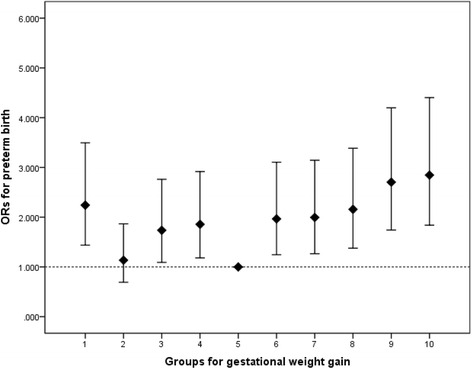
BACKGROUND: To evaluate the association between rate of gestational weight gain and preterm birth varying prepregnancy body mass indices and trimester. METHODS: Data from Maternal and Newborn's Health Monitoring System on 17475 pregnant women who delivered live singletons at ≥ 28 weeks of gestation between October 2013 and September 2014 from 12 districts/counties of 6 provinces in China and started prenatal care at ≤ 12 weeks of gestation was analyzed. Gestational weight gain was categorized by rate of weight gain during the 2(nd) and 3(rd) trimester, based on the 2009 Institute of Medicine guidelines. Multivariable binary logistic regression models were conducted to investigate the association between rate of gestational weight gain and preterm birth stratified by prepregnancy body mass indices and trimester. RESULTS: Excessive weight gain occurred in 57.9 % pregnant women, and insufficient weight gain 12.5 %. Average rate of gestational weight gain in 2(nd) and 3(rd) trimester was independently associated with preterm birth (U-shaped), and the association varied by prepregnancy body mass indices and trimesters. In underweight women, excessive gestational weight gain was positively associated with preterm birth (OR 1.93, 95 % confidence interval (CI): 1.29- 2.88) when compared with women who gained adequately. While in overweight/obese women, insufficient gestational weight gain was positively associated with preterm birth (OR 3.92, 95 % CI: 1.13-13.67). When stratifying by trimester, we found that excessive weight gain in 3(rd) trimester had a significantly positive effect on preterm birth (OR 1.27, 95 % CI: 1.02-1.58). CONCLUSIONS: Excessive gestational weight gain among underweight pregnant women, insufficient gestational weight gain among overweight/obese women and excessive gestational weight gain in 3(rd) trimester were important predictors of preterm birth.
Overview
The claims and statistics of this paper haven’t been checked yet.
Free: it reads the open-access text and checks the first 5 claims that cite a source we can check. Create a free account to check every claim.
Integrity signals
Registry
Cites
Statistics
Figures
Verification
Claims the paper makes
The claims and statistics of this paper haven’t been checked yet.
Free: it reads the open-access text and checks the first 5 claims that cite a source we can check. Create a free account to check every claim.
Claims other papers make about this one
Each is checked against this paper’s own text: does it say what the citing paper says it does?
The source backs part of the claim, not all of it — or backs it for a different population, condition or comparison.
In the citing paper
“On the other hand, insufficient GWG increases the risk of small for gestational age (SGA) infants and preterm births [11–14].”
From Association between gestational weight gain in women with gestational diabetes mellitus and adverse pregnancy outcomes: a retrospective cohort study (2021) · cites this paper as [13]
Experimental — accuracy not yet measuredThe check wasn’t confident either way, so it gives no verdict — never disputed.
In the citing paper
“According to the 2009 Institute of Medicine (IOM) guidelines, excessive GWG increases the risk of cesarean delivery, hypertensive disorders of pregnancy (HDP), GDM, and LGA infants.”
From Association between gestational weight gain in women with gestational diabetes mellitus and adverse pregnancy outcomes: a retrospective cohort study (2021) · cites this paper as [13]
Experimental — accuracy not yet measured
Self-check
Percentages, sums and reported differences re-computed from the paper’s own numbers.
The self-check needs the paper’s full text.
Citations
Cites
Epidemiology and causes of preterm birth
Goldenberg, R. L., Culhane, J. F., Iams, J. D., & Romero, R. (2008) · The Lancet · doi:10.1016/s0140-6736(08)60074-4 · Cited by 7,801 · cited 1×
“Background Preterm birth (PTB, <37 gestational weeks) has become an increasingly important global health concern, because of its association with infant mortality [1], long-term disability [2], and the high economic burden for health care it brings [3], particularly in developing countries [4].”
BackgroundWeight Gain During Pregnancy: Reexamining the Guidelines
Rasmussen, K. M., & Yaktine, A. L. (2009) · Cited by 4,493
Global, regional, and national causes of child mortality in 2008: a systematic analysis
Black, R. E., Cousens, S., Johnson, H. L., Lawn, J. E., Rudan, I., Bassani, D. G., Jha, P., Campbell, H., Walker, C. F., Cibulskis, R., et al. (2010) · The Lancet · doi:10.1016/s0140-6736(10)60549-1 · Cited by 3,058 · cited 1×
“Background Preterm birth (PTB, <37 gestational weeks) has become an increasingly important global health concern, because of its association with infant mortality [1], long-term disability [2], and the high economic burden for health care it brings [3], particularly in developing countries [4].”
BackgroundEffect of body mass index on pregnancy outcomes in nulliparous women delivering singleton babies
Bhattacharya, S., Campbell, D. M., Liston, W. A., & Bhattacharya, S. (2007) · BMC Public Health · doi:10.1186/1471-2458-7-168 · Cited by 688
Body Weight, Body Mass Index, and Incident Symptomatic Osteoarthritis of the Hand, Hip, and Knee
Oliveria, S. A., Felson, D. T., Cirillo, P. A., Reed, J. I., & Walker, A. M. (1999) · Epidemiology · doi:10.1097/00001648-199903000-00013 · Cited by 569
McDonald, S. D., Han, Z., Mulla, S., Beyene, J., & on behalf of the Knowledge Synthesis Group (2010) · BMJ · doi:10.1136/bmj.c3428 · Cited by 510
Hendler, I., Goldenberg, R. L., Mercer, B. M., Iams, J. D., Meis, P. J., Moawad, A. H., MacPherson, C. A., Caritis, S. N., Miodovnik, M., Menard, K. M., et al. (2005) · American Journal of Obstetrics and Gynecology · doi:10.1016/j.ajog.2004.09.021 · Cited by 327 · cited 1×
“Previous studies reported that gaining less weight among obese women and gaining more among underweight women are protective of PTB [11, 15, 18, 21, 22].”
ResultDefining the problem: the epidemiology of preterm birth
LUMLEY, J. (2003) · BJOG: An International Journal of Obstetrics and Gynaecology · doi:10.1016/s1470-0328(03)00011-9 · Cited by 279 · cited 1×
“Background Preterm birth (PTB, <37 gestational weeks) has become an increasingly important global health concern, because of its association with infant mortality [1], long-term disability [2], and the high economic burden for health care it brings [3], particularly in developing countries [4].”
BackgroundWu Wen, S., Goldenberg, R. L., Cutter, G. R., Hoffman, H. J., & Cliver, S. P. (1990) · American Journal of Obstetrics and Gynecology · doi:10.1016/0002-9378(90)90853-y · Cited by 225
Prepregnancy body mass index and pregnancy weight gain: associations with preterm delivery
Schieve, L. (2000) · Obstetrics & Gynecology · doi:10.1016/s0029-7844(00)00883-8 · Cited by 207 · cited 1×
“Previous studies reported that gaining less weight among obese women and gaining more among underweight women are protective of PTB [11, 15, 18, 21, 22].”
Result
Cited by
Goldstein, R. F., Abell, S. K., Ranasinha, S., Misso, M. L., Boyle, J. A., Harrison, C. L., Black, M. H., Li, N., Hu, G., Corrado, F., et al. (2018) · BMC Medicine · doi:10.1186/s12916-018-1128-1 · Cited by 515
Vats, H., Saxena, R., Sachdeva, M. P., Walia, G. K., & Gupta, V. (2021) · Obesity Research & Clinical Practice · doi:10.1016/j.orcp.2021.10.005 · Cited by 236
Liu, L., Ma, Y., Wang, N., Lin, W., Liu, Y., & Wen, D. (2019) · BMC Pregnancy and Childbirth · doi:10.1186/s12884-019-2249-z · Cited by 192
Gestational diabetes: weight gain during pregnancy and its relationship to pregnancy outcomes
Gou, B.-H., Guan, H.-M., Bi, Y.-X., & Ding, B.-J. (2019) · Chinese Medical Journal · doi:10.1097/cm9.0000000000000036 · Cited by 91
“SGA (aOR 0.49, 95% CI 0.25– 0.97, P=0.040), preterm birth (aOR 0.45, 95% CI 0.21– 0.96, P=0.041), and neonatal hypoglycemia (aOR 3.80, 95% CI 1.20–12.00, P=0.023) were associated with excessive GWG. Women with excessive GWG also had a greater likelihood of having had a cesarean delivery (aOR 1.45, 95% CI 1.13–1.87, P=…”
BackgroundMethodResultInfluentialWang, X., Zhang, X., Zhou, M., Juan, J., & Wang, X. (2019) · Nutrition & Metabolism · doi:10.1186/s12986-019-0386-z · Cited by 67
Asefa, F., Cummins, A. M., Dessie, Y., Hayen, A. D., & Foureur, M. J. (2020) · PLoS ONE · doi:10.1371/journal.pone.0231889 · Cited by 66
“Women who do not gain enough weight during pregnancy are at risk of having a baby with low birth weight (LBW) [17, 18] and pre-term birth [19].”
BackgroundDing, B., Gou, B., Guan, H., Wang, J., Bi, Y., & Hong, Z. (2021) · Archives of Gynecology and Obstetrics · doi:10.1007/s00404-021-05984-1 · Cited by 57
Shi, P., Liu, A., & Yin, X. (2021) · BMC Pregnancy and Childbirth · doi:10.1186/s12884-021-03982-4 · Cited by 49
“found that, in general, pregnant women with both insu cient and excessive GWG had a higher risk for preterm birth[13].”
BackgroundResultSu, X. J., Huang, S. J., Li, X., & Du, Q. L. (2020) · Obesity Facts · doi:10.1159/000506688 · Cited by 45
Nsereko, E., Uwase, A., Mukabutera, A., Muvunyi, C. M., Rulisa, S., Ntirushwa, D., Moreland, P. J., Corwin, E. J., Santos, N., Nzayirambaho, M., et al. (2020) · BMC Pregnancy and Childbirth · doi:10.1186/s12884-020-03037-0 · Cited by 47
Zhang, C., Lai, J., Liu, K., Yang, N., Zeng, G., Mao, L., Li, Z., Teng, Y., Xia, W., Dai, N., et al. (2021) · Public Health Nutrition · doi:10.1017/s1368980021001622 · Cited by 41
“Preterm delivery was defined as delivery occurring before 37 completed weeks of gestation(34).”
BackgroundLi, Y., Wang, X., Jiang, F., Chen, W., Li, J., & Chen, X. (2021) · Lipids in Health and Disease · doi:10.1186/s12944-021-01565-y · Cited by 45
“Most studies showed that circulating lipid patterns were different between GDM and normal pregnancy, nevertheless, results have been inconsistent [27].”
ResultWang, Y., Ma, H., Feng, Y., Zhan, Y., Wu, S., Cai, S., Shi, Y., Chen, Y., Ma, L., & Jiang, Y. (2020) · BMC Pregnancy and Childbirth · doi:10.1186/s12884-020-03323-x · Cited by 31
Goin, D. E., Gómez, A. M., Farkas, K., Zimmerman, S. C., Matthay, E. C., & Ahern, J. (2019) · Epidemiology · doi:10.1097/ede.0000000000001044 · Cited by 29
Yang, J., Wang, M., Tobias, D. K., Rich-Edwards, J. W., Darling, A. M., Abioye, A. I., Pembe, A. B., Madzorera, I., & Fawzi, W. W. (2022) · Reproductive Health · doi:10.1186/s12978-022-01441-7 · Cited by 32
“Furthermore, studies have proposed a link between excessive GWG and higher risk of preterm birth through mechanisms related to proinflammatory response [41].”
BackgroundPrepregnancy Obesity Is Not Associated with Iron Utilization during the Third Trimester
Koenig, M. D., Klikuszowian, E., O'Brien, K. O., Pauls, H. A., Steffen, A. D., deMartelly, V. A., Ruchob, R., Welke, L., Hemphill, N. O., LaBomascus, B., et al. (2020) · Journal of Nutrition · doi:10.1093/jn/nxaa065 · Cited by 26
“Other measures Gestational weight gain was determined as the average weekly rate of weight gain between the first weight in pregnancy recorded in the medical record and the weight at the research visit at week 34–36 of gestation divided by the number of weeks between the measures (39).”
MethodZhang, X., & Xiao, Y. (2019) · Diabetes Therapy · doi:10.1007/s13300-019-0589-3 · Cited by 22
Hasan, S. M. T., Khan, M. A., & Ahmed, T. (2021) · International Journal of Environmental Research and Public Health · doi:10.3390/ijerph18126519 · Cited by 26
Associations between gestational weight gain and preterm birth in Puerto Rico
Eick, S. M., Welton, M., Claridy, M. D., Velasquez, S. G., Mallis, N., & Cordero, J. F. (2020) · BMC Pregnancy and Childbirth · doi:10.1186/s12884-020-03292-1 · Cited by 21
Zhang, L., Zheng, W., Liu, C., Liang, X., Zhang, L., Tian, Z., & Li, G. (2020) · Diabetology & Metabolic Syndrome · doi:10.1186/s13098-020-00595-3 · Cited by 22
Xu, M., Guo, Y., Zhang, L., & Lu, Q. (2022) · PeerJ · doi:10.7717/peerj.13067 · Cited by 19
“In China, excessive weight gain occurred in more than 50% pregnant women ( Huang et al., 2016 ).”
Rate of gestational weight gain trajectory is associated with adverse pregnancy outcomes
Yong, H. Y., Shariff, Z. M., Appannah, G., Rejali, Z., Yusof, B. N. M., BINDELS, J. G., Tee, Y. Y. S., & van der Beek, E. M. (2020) · Public Health Nutrition · doi:10.1017/s1368980020002372 · Cited by 17
Wu, W., Luo, D., Ruan, X., Gu, C., Lu, W., Lian, K., & Mu, X. (2022) · Frontiers in Nutrition · doi:10.3389/fnut.2022.919651 · Cited by 15
Shekaili, H. A. A., Hashmi, I. A., & Omari, O. A. (2024) · Midwifery · doi:10.1016/j.midw.2024.103929 · Cited by 17
Wen, J., Lv, A., Aihemaitijiang, S., Li, H., Zhou, Y., & Liu, J. (2024) · Nutrition Reviews · doi:10.1093/nutrit/nuae027 · Cited by 17
Misgina, K. H., van der Beek, E. M., Boezen, H. M., Mulugeta, A., & Groen, H. (2021) · BMC Pregnancy and Childbirth · doi:10.1186/s12884-021-04171-z · Cited by 14
Zhou, Y., Li, H., Zhang, Y., Zhang, L., Liu, J., & Liu, J. (2019) · British Journal Of Nutrition · doi:10.1017/s0007114519001247 · Cited by 14
Choi, B. Y., Hong, S., Jeon, M., Park, J. Y., Oh, K. J., & Hong, J. (2020) · Obstetrics & Gynecology Science · doi:10.5468/ogs.20133 · Cited by 12
Krebs, F., Lorenz, L., Nawabi, F., Alayli, A., & Stock, S. (2022) · International Journal of Environmental Research and Public Health · doi:10.3390/ijerph19105863 · Cited by 19
Total gestational weight change and rate of change in pregnant Taiwanese women
Wen, F., Lee, C., Lin, C., & Lin, H. (2019) · Taiwanese Journal of Obstetrics and Gynecology · doi:10.1016/j.tjog.2019.01.005 · Cited by 12
Wu, Y., Ma, Y., Wu, K., Zhao, W., Hu, H., Yang, Q., Huang, A., & Chen, D. (2019) · Journal of Human Hypertension · doi:10.1038/s41371-018-0150-2 · Cited by 12
Self-citationGestational weight management and pregnancy outcomes among women of advanced maternal age
Lin, J., Fu, Y., Han, Q., Yan, J., Chen, R., & Zhang, H. (2019) · Experimental and Therapeutic Medicine · doi:10.3892/etm.2019.7752 · Cited by 14
“This may be explained by nutrient deficiencies with insufficient body fluid expansion in women with low BMIs that increases the spontaneous incidence of PTB (15), and by the triggering of gestational hypertension, pre-eclampsia and other inadvertent pregnancy outcomes that can lead to an increase in iatrogenic PTB in…”
BackgroundLorenz, L., Krebs, F., Nawabi, F., Alayli, A., & Stock, S. (2022) · International Journal of Environmental Research and Public Health · doi:10.3390/ijerph19106122 · Cited by 17
You, Z., Shan, L., Cheng, S., Xia, Y., Zhao, Y., Zhang, H., & Zhao, Z. (2023) · Food & Function · doi:10.1039/d3fo01550e · Cited by 15
Association between Gestational Weight Gain and Maternal and Birth Outcomes in Northern Ghana
Niyi, J. L., Li, Z., & Zumah, F. (2024) · BioMed Research International · doi:10.1155/2024/5526942 · Cited by 10
Prepregnancy Obesity Does Not Impact Placental Iron Trafficking
Tussing-Humphreys, L. M., LaBomascus, B., O'Brien, K. O., Nemeth, E., Sangkhae, V., Steffen, A. D., Castellanos, K., deMartelly, V. A., Ruchob, R., Welke, L., et al. (2021) · Journal of Nutrition · doi:10.1093/jn/nxab191 · Cited by 9
Liu, Q., Xia, W., Xiong, X., Li, J., Li, Y., Xu, S., & Li, Y. (2022) · Current Medical Science · doi:10.1007/s11596-022-2547-y · Cited by 9
Wu, B., Shabanova, V., Taylor, S. N., & Hawley, N. L. (2024) · Obesity · doi:10.1002/oby.23979 · Cited by 5
“Additionally, recent studies have questioned the use of total GWG in analyses of PTB because we cannot confirm whether inadequate total GWG causes PTB or whether women experiencing PTB do not have enough time for adequate total GWG [14].”
BackgroundResultLiu, J. H., Li, H., Wang, X., Liu, B., He, D., Zhang, G., & Gao, Y. (2025) · BMC Pregnancy and Childbirth · doi:10.1186/s12884-025-07383-9 · Cited by 4
“[41, 42].”
Relationship between Weight Pre-Pregnancy and Weight Gain during Pregnancy with Preterm Birth
Dönmez, S., & Güner, Ö. (2017) · Journal of Nutrition and Health Sciences · doi:10.15744/2393-9060.4.207 · Cited by 3
Effect of Lifestyle Intervention Program for Overweight and Obesity Pregnant Women
Choi, H. K., & Kim, H. O. (2020) · Journal of Korean Academy of Nursing · doi:10.4040/jkan.19228 · Cited by 4
“또한 임신 중 과도한 체중 증가는 임 신 중독증, 임신성 당뇨, 난산 등의 위험을 증가시키는 등 임부와 신 생아의 건강을 위협하는 요인이 된다[4-6].”
Nepal, J., Chaudhary, K., Adhikari, B., Shrestha, A., Shrestha, A., Pudasainee‐Kapri, S., & Rawal, S. (2024) · PLOS Global Public Health · doi:10.1371/journal.pgph.0003546 · Cited by 3
Lian, S., Huang, Y., Li, J., Nie, J., Li, M., Zhou, J., He, J., & Liu, C. (2024) · Journal of Assisted Reproduction and Genetics · doi:10.1007/s10815-024-03024-w · Cited by 2
“For instance, two Chinese studies discovered that underweight women with insufficient GWG showed no significant association with PTB, which may be due to the limited sample size and potential racial/ethnic bias [23, 24].”
Astuti, Y., Hidayat, Y. M., & Rohmawati, E. (2020) · Jurnal Gizi Indonesia (The Indonesian Journal of Nutrition) · doi:10.14710/jgi.9.1.33-41 · Cited by 6
“Pada bayi, EGWG dapat berdampak pada terjadinya bayi dengan besar masa kehamilan (BMK), kelahiran prematur, dan makrosomia.(2,11,12) Di Indonesia, berbagai komplikasi yang berhubungan dengan penambahan berat badan hamil di atas masih banyak terjadi.”
BackgroundEating Habits During Pregnancy of Women Giving Birth Very Prematurely: An Exploratory Analysis
Teixeira, B., Cardoso, M., Dias, C. C., Pereira‐da‐Silva, L., & Silva, D. E. (2023) · Acta Médica Portuguesa · doi:10.20344/amp.18419 · Cited by 4
Xiang, X., Huang, Y. C., Wang, Z., Li, Z., & Dang, S. (2024) · BMC Public Health · doi:10.1186/s12889-024-19445-2 · Cited by 2
“GWG below guidelines has been found associated with a higher risk of preterm birth [11, 12], which was possibly due to low GWG deducing macronutrient and micronutrient deficiency, or leading pathogenic status of mothers such as anemia and preeclampsia [36, 37].”
BackgroundLiu, Z., Zhou, X., & Zhu, J. (2025) · European Journal of Clinical Pharmacology · doi:10.1007/s00228-024-03800-8 · Cited by 2
“In 2010, the overall incidence of pre-pregnancy overweight and obesity in China was 41.8%, and pre-pregnancy overweight and obesity were found to exacerbate maternal obesity during pregnancy, leading to increased rates of prenatal overweight and obesity [7, 8].”
InfluentialCommunity violence and pregnancy: An understudied exposure in the etiology of adverse birth outcomes
Goin, D. E. (2019) · eScholarship (California Digital Library) · Cited by 3
Frane, R. D., Duante, C. A., Goyena, E. A., Santos, M. C. D., Lat, H. T., Mendoza, D. K. C., Labrador, J. P. H., Tajan, M. G., Benavidez-Fabi, K. M. N., & Padolina, C. S. (2025) · Women s Health · doi:10.1177/17455057251379225 · Cited by 3
Xiang, X., Wang, W., Yu, Y., & Dang, S. (2025) · Nursing Open · doi:10.1002/nop2.70378 · Cited by 1
Body Composition Changes During Pregnancy and Effects of Physical Exercise
Pimenta, N. M., & van Poppel, M. N. M. (2018) · Springer eBooks · doi:10.1007/978-3-319-91032-1_4 · Cited by 2
Body Composition Changes During Pregnancy and Effects of Physical Exercise
Pimenta, N. M., Hausmann, F., Falcó, C., & van Poppel, M. N. M. (2022) · Springer eBooks · doi:10.1007/978-3-031-06137-0_4 · Cited by 2
Preconception strategies to improve maternal and newborn outcomes in Blantyre Urban, Malawi
Kadango, A. (2017) · Unisa Institutional Repository (University of South Africa) · Cited by 1
An eHealth-based intervention against metabolic risks during pregnancy: learnings and challengesPreprint
Wang, X., Huang, N., Qiao, H., Zhang, D., Guang-hui, L., Fan, L., Shi, G., Liu, J., Jin, Y., Ma, H., et al. (2020) · Research Square · doi:10.21203/rs.3.rs-58896/v1
“As a risk factor itself, eGWG entails increased chance of gestational diabetes mellitus (GDM), fetal macrosomia, preterm birth, and postpartum weight retention (1, 2).”
BackgroundMukherjee, S. G., & Bhattacharjee, I. (2022) · International Journal of Reproduction Contraception Obstetrics and Gynecology · doi:10.18203/2320-1770.ijrcog20221277
Wu, Q., Li, H., Wei, W., Lin, X., Yu, W., & Zhang, X. (2023) · Clinical and Experimental Obstetrics & Gynecology · doi:10.31083/j.ceog5001006
“In comparison, excessive GWG among Chinese women was significantly correlated with PTB (OR: 1.93, 95% CI: 1.29– 2.88) [14].”
BackgroundResultInfluentialKesesuaian Peningkatan Berat Badan Selama Kehamilan Berhubungan dengan Luaran Kehamilan
Indriyani, S., Asih, F. R., & Rachman, M. (2023) · OKSITOSIN Jurnal Ilmiah Kebidanan · doi:10.35316/oksitosin.v10i2.3103
Preeclampsia and Preterm Delivery Risk: The Significance of Obesity in Pregnancy
Perić, T. P., Bogavac, M. A., & Belopavlovic, Z. (2024) · Биомедицинска истраживања · doi:10.59137/bii202401373p
“Inadequate gestational weight gain in underweight pregnant women, excessive gestational weight gain in over-weight/obese women, and excessive gestation - al weight gain in the third trimester emerged as significant predictors of preterm birth [26].”
BackgroundHằng, N. T., Trà, B. T. C., Trang, L. T. Q., Khánh, Đ. N., & Hằng, N. T. (2025) · Tạp chí Y học Cộng đồng · doi:10.52163/yhc.v66icd6.2304
Xiang, X., Huang, Y., Wang, Z., Li, Z., & Dang, S. (2024) · Figshare · doi:10.6084/m9.figshare.26749283
Wang, Y., Ma, H., Feng, Y., Zhan, Y., Wu, S., Cai, S., Shi, Y., Chen, Y., Ma, L., & Jiang, Y. (2020) · Figshare · doi:10.6084/m9.figshare.13233297
Yang, J., Wang, M., Tobias, D. K., Rich-Edwards, J. W., Darling, A. M., Abioye, A. I., Pembe, A. B., Madzorera, I., & Fawzi, W. W. (2022) · Figshare · doi:10.6084/m9.figshare.20086190
Ye, X., Li, P., & Shi, C. (2026) · Frontiers in Global Women s Health · doi:10.3389/fgwh.2026.1777069
“On the other hand, insufficient GWG is significantly associated with low birth weight (10, 11) and preterm labor (12).”
Metadata
- Authors
- Huang, A., Ji, Z., Zhao, W., Hu, H., Yang, Q., & Chen, D.
- Affiliations
- Chinese Center For Disease Control and Prevention (CN)
- Peking University (CN)
- Corresponding author
- Yang, Qi
- Chen, Dafang
- Venue
- Reproductive Health
- Published
- 2016-08-12
- Volume
- 13
- Issue
- 1
- Pages
- 93-93
- ISSN
- 1742-4755 (ISSN-L)
- PMC
- PMC4983027
- OpenAlex
- W2509062350
- Cited by
- 60
- References
- 28
- Citations by year
- 2026: 1 · 2025: 3 · 2024: 9 · 2023: 3 · 2022: 9 · 2021: 8 · 2020: 13 · 2019: 10 · 2018: 2 · 2017: 2
- FWCI
- 6.02
- Type
- journal article
- Language
- en
- Open access
- gold
- doi.org
- Licence
- Locations
- Reproductive Health (publishedVersion, cc-by)
- Europe PMC (PubMed Central) (publishedVersion, cc-by)
- PubMed Central (publishedVersion, cc-by)
- PubMed (publishedVersion)
- Topics
- Health Sciences › Medicine › Obstetrics and Gynecology › Gestational Diabetes Research and Management
- Health Sciences › Medicine › Pediatrics, Perinatology and Child Health › Maternal and Neonatal Healthcare
- Health Sciences › Medicine › Pediatrics, Perinatology and Child Health › Birth, Development, and Health
- Keywords
- gestational weight gain, preterm birth, pre-pregnancy body mass index, underweight pregnancy, overweight and obesity in pregnancy, Institute of Medicine guidelines
- MeSH terms
- China, Female, Follow-Up Studies, Humans, Infant, Newborn, Male, Obesity, Pregnancy, Pregnancy Complications, Pregnancy Outcome, Risk Factors, Thinness, Weight Gain, Body Mass Index, Premature Birth, Overweight
About these checks
Registry, retraction, Cites and statistics results are computed, not judged, with one exception: a printed reference that no index lists is read once by a model before it counts as a citation error. Claims are extracted by a model and kept only when their quote appears verbatim in the text; each cited source is then checked, with a model’s help, for whether it says what the claim relies on. Those verdicts can be wrong — read the claim’s quote and the cited source before relying on one.
Statistics and arithmetic are recomputed, not judged.
Confidence bands are shown only for fields calibrated on our annotated test set. None is calibrated yet, so no band is shown.
What counts as a claim ›How we measure confidence ›How we check this ›
Are you an author, or do you see a problem with this page? Request a review
Data sources
Bibliographic data: Semantic Scholar, OpenAlex, Crossref.
Contains information from the Semantic Scholar Academic Graph Datasets, made available under the ODC Attribution License (ODC-BY 1.0).
Semantic Scholar’s data is described in: Kinney, R., et al. (2023). The Semantic Scholar Open Data Platform. arXiv:2301.10140.
