

Correlates of intimate partner violence among pregnant and parenting adolescents: a cross-sectional household survey in Blantyre District, Malawi
Open accessThe DOI matches its Crossref record; 43 of the 43 references it cites were found in a registry or an index; none of the 19 sources its claims cite is checked for support yet.
Abstract
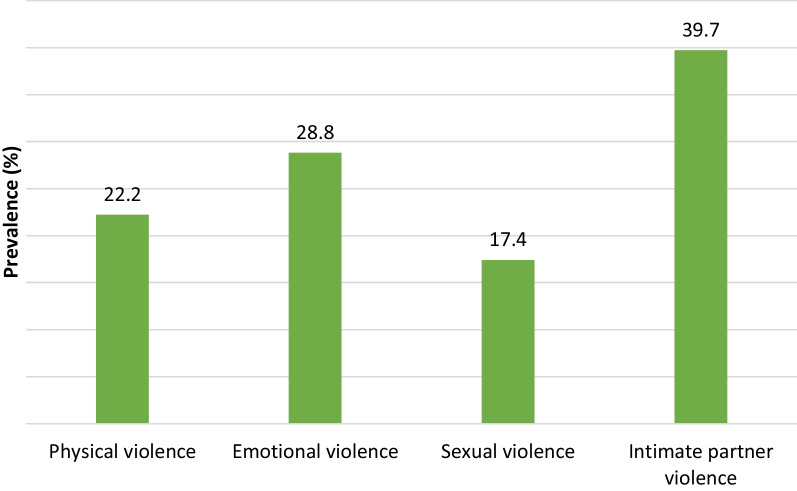
Background: Despite efforts from the government and developmental partners to eliminate gender-based violence, intimate partner violence (IPV) remains a pervasive global health and human rights problem, affecting up to 753 million women and girls globally. Few studies on IPV have focused on pregnant and parenting adolescent (PPA) girls in Africa, although the region has the highest rates of adolescent childbearing. This limited attention results in the neglect of pregnant and parenting adolescents in policies and interventions addressing IPV in the region. Our study examined IPV prevalence and its individual, household, and community-level correlates among pregnant and parenting adolescent girls (10–19 years) in Blantyre District, Malawi. Methods: We collected data from a cross-section of pregnant and parenting adolescent girls (n = 669) between March and May 2021. The girls responded to questions on socio-demographic and household characteristics, lifetime experience of IPV (i.e., sexual, physical, and emotional violence), and community-level safety nets. We used multilevel mixed-effect logistic regression models to examine the individual, household, and community-level factors associated with IPV. Results: The lifetime prevalence of IPV was 39.7% (n = 266), with more girls reporting emotional (28.8%) than physical (22.2%) and sexual (17.4%) violence. At the individual level, girls with secondary education (AOR: 1.72; 95% CI: 1.16–2.54), who engaged in transactional sex (AOR: 2.29; 95% CI: 1.35–3.89), and accepted wife-beating (AOR: 1.97; 95% CI: 1.27–3.08) were significantly more likely to experience IPV compared to those with no education/primary education, who never engaged in transactional sex and rejected wife beating. Girls aged 19 (AOR: 0.49; 95% CI: 0.27–0.87) were less likely to report IPV than those aged 13–16. At the household level, girls with fair and poor partner support had higher odds of experiencing IPV, but the effect size did not reach a significant level in the parsimonious model. A high perception of neighborhood safety was associated with a lower likelihood of experiencing IPV (AOR: 0.81; 95% CI: 0.69–0.95). Conclusion: Intimate partner violence is rife among pregnant and parenting adolescent girls in Malawi, underscoring the need for appropriate interventions to curb the scourge. Interventions addressing IPV need to target younger adolescents, those engaging in transactional sex, and those having weaker community-level safety nets. Interventions to change social norms that drive the acceptance of gender-based violence are also warranted.
Overview
CoChat Summary
TL;DR
In a cross-sectional survey of 669 pregnant and parenting adolescent girls in Blantyre District, Malawi, lifetime intimate partner violence prevalence was 39.7%. Higher odds were associated with secondary education, transactional sex, and wife-beating endorsement, while older age (19) and greater perceived neighborhood safety were associated with lower odds.
Key findings
- Lifetime IPV prevalence was 39.7% (n = 266); more girls reported emotional violence (28.8%) than physical (22.2%) or sexual (17.4%) violence. IPV prevalence was highest among girls who endorsed wife-beating (54.6%), engaged in transactional sex (56.4%), and received inadequate partner support (56.7%).
- In the adjusted model, secondary education (AOR: 1.72; 95% CI: 1.16–2.54), transactional sex (AOR: 2.29; 95% CI: 1.35–3.89), and endorsing wife-beating (AOR: 1.97; 95% CI: 1.27–3.08) were significantly associated with higher odds of IPV; age 19 was associated with lower odds than ages 13–16 (AOR: 0.49; 95% CI: 0.27–0.87).
- Higher perceived neighborhood safety was associated with lower odds of IPV (AOR: 0.81; 95% CI: 0.69–0.95). Fair or poor partner support had higher odds in the household-only model, but the effect did not reach significance in the parsimonious model.
Methods
- Cross-sectional household survey in rural and urban Blantyre District, Malawi, conducted March–May 2021; 669 pregnant and parenting adolescent girls aged 10–19 completed the survey (10 of 679 identified refused). Sampling used two-stage cluster random selection of 66 enumeration areas followed by household listing.
- IPV was measured using 15 previously validated Demographic and Health Survey questions on sexual, physical, and emotional violence; any experience was coded as IPV. Independent variables were individual-, household-, and community-level factors based on the socio-ecological model.
- Multilevel mixed-effect logistic regression models were fitted in Stata 15, including null, individual, household, community, and parsimonious models; 95% confidence intervals and p < 0.05 were used, with ICC and AIC/BIC for model comparison.
Limitations
- Stated by the authors: the cross-sectional design means causal relationships cannot be inferred; self-reporting may underestimate IPV due to social desirability bias; and findings are limited to Blantyre rather than all of Malawi.
- Evident in the text: only one participant had no formal education, so the no education and primary education categories were combined, limiting separate estimates for those groups.
Model-written summary. Check it against the paper before relying on it.
Integrity signals
Registry
Cites
Statistics
Figures
Verification
Claims the paper makes
0 Valid · 0 Not valid · 11 Not checked · 47 Own results and interpretations
A result the paper reports from its own data — it cites no other source for it, so there is none to check. The quote shows it is in the paper.
In the paper
“girls with secondary education (AOR: 1.72; 95% CI: 1.16–2.54), who engaged in transactional sex (AOR: 2.29; 95% CI: 1.35–3.89), and accepted wife-beating (AOR: 1.97; 95% CI: 1.27–3.08) were significantly more likely to experience IPV compared to those with no education/primary education, who never engaged in transactional sex and rejected wife beating.”
§ Correlates of intimate partner violence among pregnant and parenting adolescents: a cross-sectional household survey in Blantyre District, Malawi > Abstract > Results
plainstates an association- Asserted: passes — The authors put it forward as true.
- Checkable: passes — It can be checked against evidence.
- Load-bearing: passes — The paper’s conclusions depend on it.
- Based: passes — The paper gives a reason why it holds.
A result the paper reports from its own data — it cites no other source for it, so there is none to check. The quote shows it is in the paper.
In the paper
“The lifetime prevalence of IPV was 39.7% (n = 266)”
- Also stated in: § Descriptive findings · plain
“While the prevalence of IPV was 39.7%”
§ Correlates of intimate partner violence among pregnant and parenting adolescents: a cross-sectional household survey in Blantyre District, Malawi > Abstract > Results
plainn = 266- Asserted: passes — The authors put it forward as true.
- Checkable: passes — It can be checked against evidence.
- Load-bearing: passes — The paper’s conclusions depend on it.
- Based: passes — The paper gives a reason why it holds.
- Also stated in: § Descriptive findings · plain
A result the paper reports from its own data — it cites no other source for it, so there is none to check. The quote shows it is in the paper.
In the paper
“A high perception of neighborhood safety was associated with a lower likelihood of experiencing IPV (AOR: 0.81; 95% CI: 0.69–0.95).”
§ Correlates of intimate partner violence among pregnant and parenting adolescents: a cross-sectional household survey in Blantyre District, Malawi > Abstract > Results
plainstates an association- Asserted: passes — The authors put it forward as true.
- Checkable: passes — It can be checked against evidence.
- Load-bearing: passes — The paper’s conclusions depend on it.
- Based: passes — The paper gives a reason why it holds.
- Rests on an assumption not shown here.
A result the paper reports from its own data — it cites no other source for it, so there is none to check. The quote shows it is in the paper.
In the paper
“Girls aged 19 (AOR: 0.49; 95% CI: 0.27–0.87) were less likely to report IPV than those aged 13–16.”
§ Correlates of intimate partner violence among pregnant and parenting adolescents: a cross-sectional household survey in Blantyre District, Malawi > Abstract > Results
plainstates an association- Asserted: passes — The authors put it forward as true.
- Checkable: passes — It can be checked against evidence.
- Load-bearing: passes — The paper’s conclusions depend on it.
- Based: passes — The paper gives a reason why it holds.
A result the paper reports from its own data — it cites no other source for it, so there is none to check. The quote shows it is in the paper.
In the paper
“girls with secondary education (AOR: 1.72; 95% CI: 1.16–2.54), who engaged in transactional sex (AOR: 2.29; 95% CI: 1.35–3.89), and accepted wife-beating (AOR: 1.97; 95% CI: 1.27–3.08) were significantly more likely to experience IPV compared to those with no education/primary education, who never engaged in transactional sex and rejected wife beating.”
§ Correlates of intimate partner violence among pregnant and parenting adolescents: a cross-sectional household survey in Blantyre District, Malawi > Abstract > Results
plainstates an association- Asserted: passes — The authors put it forward as true.
- Checkable: passes — It can be checked against evidence.
- Load-bearing: passes — The paper’s conclusions depend on it.
- Based: passes — The paper gives a reason why it holds.
33 more claims
Create a free account to see all 58 claims and to verify the 19 references still open.
- It may state two separate claims as one. 7
- Probably not a substantial claim. 15
Self-check
Percentages, sums and reported differences re-computed from the paper’s own numbers.
Each contradiction between two passages listed here was confirmed by an independent check.
Rated minor: it would not touch a result — a value no result rests on, a p-value that stays on the same side of the significance level, or a conflict that is clerical, resolved elsewhere in the paper, or outside its own findings.
In the paper
§ Correlates of intimate partner violence among pregnant and parenting adolescents: a cross-sectional household survey in Blantyre District, Malawi > Results > Descriptive findings
“The mean age of the participants was 17.9 (SD 0.04) years.”
§ Correlates of intimate partner violence among pregnant and parenting adolescents: a cross-sectional household survey in Blantyre District, Malawi > Results > Descriptive findings
“only one participant was 13 years old”
Rated minor: it would not touch a result — a value no result rests on, a p-value that stays on the same side of the significance level, or a conflict that is clerical, resolved elsewhere in the paper, or outside its own findings.
In the paper
§ Correlates of intimate partner violence among pregnant and parenting adolescents: a cross-sectional household survey in Blantyre District, Malawi > Results > Descriptive findings
“IPV prevalence was highest among girls who endorsed wife-beating (54.6%)”
§ Correlates of intimate partner violence among pregnant and parenting adolescents: a cross-sectional household survey in Blantyre District, Malawi > Results > Descriptive findings
“| Endorse beating | 71 (45.8) | 84 (54.2) |”
Rated minor: it would not touch a result — a value no result rests on, a p-value that stays on the same side of the significance level, or a conflict that is clerical, resolved elsewhere in the paper, or outside its own findings.
In the paper
“| Living with one parent | 102 (21.3) | 74 (27.8) | 176 (26.3) |”
§ Correlates of intimate partner violence among pregnant and parenting adolescents: a cross-sectional household survey in Blantyre District, Malawi > Results > Descriptive findings
Reported 21.3 · recomputed 25.310174
Rated minor: it would not touch a result — a value no result rests on, a p-value that stays on the same side of the significance level, or a conflict that is clerical, resolved elsewhere in the paper, or outside its own findings.
In the paper
§ Correlates of intimate partner violence among pregnant and parenting adolescents: a cross-sectional household survey in Blantyre District, Malawi > Results > Descriptive findings
“| No | 356 (62.7) | 217 (37.3) |”
§ Correlates of intimate partner violence among pregnant and parenting adolescents: a cross-sectional household survey in Blantyre District, Malawi > Results > Descriptive findings
“| No | 365 (90.6) | 217 (81.6) | 582 (87.0) |”
Rated minor: it would not touch a result — a value no result rests on, a p-value that stays on the same side of the significance level, or a conflict that is clerical, resolved elsewhere in the paper, or outside its own findings.
In the paper
§ Correlates of intimate partner violence among pregnant and parenting adolescents: a cross-sectional household survey in Blantyre District, Malawi > Results > Descriptive findings
“| No | 257 (63.6) | 55.3 (60.3) | 404.0 (60.3) |”
§ Correlates of intimate partner violence among pregnant and parenting adolescents: a cross-sectional household survey in Blantyre District, Malawi > Results > Descriptive findings
“| No | 257 (63.6) | 147 (36.4) |”
Citations
Cites
The Ecology of Human Development: Experiments by Nature and Design
Bronfenbrenner, U. (1979) · Harvard University Press eBooks · doi:10.4159/9780674028845 · Cited by 26,084
Abramsky, T., Watts, C. H., Garcia-Moreno, C., Devries, K., Kiss, L., Ellsberg, M., Jansen, H. A., & Heise, L. (2011) · BMC Public Health · doi:10.1186/1471-2458-11-109 · Cited by 1,413 · cited 1×
“Contrary to previous studies [37, 38], our study shows that PPAs with secondary education had higher odds of IPV than those with no education/primary education.”
ResultFulu, E., Jewkes, R., Roselli, T., & Garcia-Moreno, C. (2013) · The Lancet Global Health · doi:10.1016/s2214-109x(13)70074-3 · Cited by 523 · cited 1×
“Abused and violated boys are more likely to become perpetrators themselves [11].”
BackgroundBreadth of the socio-ecological model
Kilanowski, J. F. (2017) · Journal of Agromedicine · doi:10.1080/1059924x.2017.1358971 · Cited by 493 · cited 1×
“Existing research suggests that factors influencing IPV operate at multiple levels, including individual, household, and community [12].”
BackgroundIntimate Partner Violence During Pregnancy: Maternal and Neonatal Outcomes
Alhusen, J. L., Ray, E., Sharps, P., & Bullock, L. (2015) · Journal of Women's Health · doi:10.1089/jwh.2014.4872 · Cited by 481 · cited 1×
“In addition, studies have linked IPV to poor sexual and reproductive health (SRH) and child health outcomes, including HIV, unintended pregnancies, pregnancy loss, suboptimal breastfeeding, and infant and child mortality [6, 7].”
BackgroundHierarchical Linear Modeling: Guide and Applications
Garson, G. (2013) · Sage eBooks · doi:10.4135/9781483384450 · Cited by 438
Intimate partner violence and HIV infection among women: a systematic review and meta-analysis
Li, Y., Marshall, C. M., Rees, H. C., Nunez, A., Ezeanolue, E. E., & Ehiri, J. E. (2014) · Journal of the International AIDS Society · doi:10.7448/ias.17.1.18845 · Cited by 411
The Continuation of Intimate Partner Violence From Adolescence to Young Adulthood
Cui, M., Ueno, K., Gordon, M., & Fincham, F. D. (2013) · Journal of Marriage and Family · doi:10.1111/jomf.12016 · Cited by 189 · cited 1×
“Exposure to sexual violence during adolescence places the survivors on a lifelong trajectory of violence [5, 10].”
BackgroundOgum Alangea, D., Addo-Lartey, A. A., Sikweyiya, Y., Chirwa, E. D., Coker-Appiah, D., Jewkes, R., & Adanu, R. M. K. (2018) · PLOS ONE · doi:10.1371/journal.pone.0200874 · Cited by 187 · cited 4×
“This finding is consistent with Alangea et al. in a study among women in the central region of Ghana [42].”
BackgroundInfluentialConquest by force: A narcissistic reactance theory of rape and sexual coercion.
Baumeister, R. F., Catanese, K. R., & Wallace, H. M. (2002) · Review of General Psychology · doi:10.1037//1089-2680.6.1.92 · Cited by 176 · cited 1×
“Sexually entitled men are often controlling and could become violent if denied having spent on their women [46].”
Background
Research works printed but not linked: 4
- The Ministry of Gender C, Disability and Social Welfare (Republic of Malawi). Violence Against Children and Young Women in Malawi, Findings from a National Survey 2013 In Book Violence Against Children and Young Women in Malawi, Findings from a National Survey 2013 (Editor eds.). City: The Ministry of Gender, Children, Disability and Social Welfare (Republic of Malawi); 2013.
- National Statistical Office. Malawi population and housing census 2018. In Book Malawi population and housing census 2018. (Editor eds.). City: National Statistical Office; 2018.
- National Statistical Office (NSO) and ICF Macro. Malawi demographic and health survey 2015/16 (final report). In Book Malawi demographic and health survey 2015/16 (final report) (Editor eds.). City: National Statistical Office (NSO) and ICF Macro; 2016.
- Popkin SJ Leventhal T Weismann G Girls in the ‘hood: The importance of feeling safe 2008 Washington, DC The Urban Institute
Cited by
Shukla, S., Kharade, A., Böhret, I., Jumaniyazova, M., Meyer, S. R., Abejirinde, I. O., Shenderovich, Y., & Steinert, J. (2025) · Journal of Global Health · doi:10.7189/jogh.15.04102 · Cited by 8
Muzingili, T., & Mafa, I. H. (2024) · Journal of Asian and African Studies · doi:10.1177/00219096241263961 · Cited by 6
“Studies by Wilson et al. (2021), Peisch et al. (2016) and Nwafor et al. (2023), in concurrence, show that a significant number of cases of IPV go unreported because these incidents take place in private settings where there are no witnesses.”
DINAMIKA KEKERASAN DALAM RUMAH TANGGA: TINJAUAN LITERATUR
Kusumawaty, I., Yunike, Y., & Winta, M. V. I. (2024) · Berajah Journal · Cited by 6
Mossie, T. B., Fenta, H. M., Tadesse, M., & Dagnaw, A. T. (2026) · PLoS ONE · doi:10.1371/journal.pone.0331422 · Cited by 1
“Overall, the programs and interventions in SSA in decreasing and eliminating violence against women did not show a marked progress in terms of the proportion of IPV [5,34,35].”
Pelatihan pemaafan untuk membantu mengoptimalkan kesejahteraan subjektif perempuan korban KDRT
Kusumawaty, I., Yunike, Y., Cahyati, P., Winta, M. V. I., & Pratiwi, M. M. S. (2024) · Abdimas Siliwangi · Cited by 1
Okot, J., Anena, C., Okema, J. N., Amuku, D. O., Otunnu, J. E., Lamwaka, B. O., Lutara, I. D., Watum, F., Nsubuga, Y., Bongomin, F., et al. (2025) · BMC Public Health · doi:10.1186/s12889-025-24465-7 · Cited by 1
“As well as other countries such as Malawi and Sri Lanka 38.6% and 39.7% respectively [10, 19].”
InfluentialMulungu, C., Ditoro, T., & Matshara, C. M. (2025) · Journal of Life Science and Public Health · doi:10.69739/jlsph.v1i1.902
Oduaran, C. A., & Onyencho, V. C. (2024) · E-Journal of Religious and Theological Studies · doi:10.38159/erats.202410610
“34 This study does not align with a previous study where attitudinal acceptance of the participants resulted in better mental health.”
ResultVoices from Rural Thailand: Understanding the Root Causes of Adolescent Pregnancy
Laisuwannachart, P., Chamroonsawasdi, K., Vatanasomboon, P., & Kittipichai, W. (2024) · Public Health of Indonesia · doi:10.36685/phi.v10i4.870
“Additionally, they are often subjected to discrimination, stigmatization (Govender et al., 2020), repeat pregnancies (Sobngwi-Tambekou et al., 2022), and increased vulnerability to physical and sexual violence (Islam, 2024; Nwafor et al., 2023).”
Suffering in Silence: Narratives of Sexual Violence among Adolescent Mothers in Uganda
Kakuru, D. M., Kyomuhendo, G. B., Kamusiime, A., & Mucina, M. K. (2025) · Girlhood Studies · doi:10.3167/ghs.2025.180207
Mamba, S., & Beharry-Ramraj, A. (2024) · E-Journal of Humanities Arts and Social Sciences · doi:10.38159/ehass.2024592
Okot, J., Anena, C., Okema, J. N., Amuku, D. O., Otunnu, J. E., Lamwaka, B. O., Lutara, I. D., Nsubuga, Y., Bongomin, F., Pebolo, P. F., et al. (2024) · Research Square · doi:10.21203/rs.3.rs-4707070/v1
Balarezo, M. G. S. (2023) · renati
DOMESTIC VIOLENCE: LITERATURE REVIEW: DOMESTIC VIOLENCE: LITERATURE REVIEW
Safrudin, B. (2024) · Journal of Nursing
Metadata
- Authors
- Nwafor, J. A., Chamdimba, E., Ajayi, A. I., Ushie, B. A., Munthali, A. C., Thakwalakwa, C., & Kabiru, C. W.
- Affiliations
- African Population and Health Research Center (KE)
- University of Malawi (MW)
- Corresponding author
- Ajayi, Anthony Idowu
- ORCID
- Venue
- Reproductive Health
- Published
- 2023-04-13
- Volume
- 20
- Issue
- 1
- Pages
- 60-60
- ISSN
- 1742-4755 (ISSN-L)
- PMC
- PMC10099731
- OpenAlex
- W4365452248
- Cited by
- 14
- References
- 43
- Citations by year
- 2026: 1 · 2025: 4 · 2024: 8 · 2023: 1
- FWCI
- 2.29
- Type
- journal article
- Language
- en
- Open access
- gold
- doi.org
- Licence
- cc-by
- creativecommons.org/licenses/by/4.0 (tdm)
- creativecommons.org/licenses/by/4.0 (vor)
- Locations
- Reproductive Health (publishedVersion, cc-by)
- PubMed Central (publishedVersion, cc-by)
- PubMed (publishedVersion)
- Strathprints: The University of Strathclyde institutional repository (University of Strathclyde) (acceptedVersion, cc-by)
- DOAJ (DOAJ: Directory of Open Access Journals) (submittedVersion)
- Greater South Information System
- Funders
- Styrelsen för Internationellt Utvecklingssamarbete (No. 12103)
- International Development Research Centre (No. 109813 – 001)
- Topics
- Social Sciences › Health › Intimate Partner and Family Violence
- Health Sciences › Medicine › Public Health, Environmental and Occupational Health › Adolescent Sexual and Reproductive Health
- Social Sciences › Psychology › Clinical Psychology › Child Abuse and Trauma
- Keywords
- intimate partner violence, pregnant adolescents, parenting adolescents, adolescent girls, gender-based violence, emotional abuse, transactional sex, partner support, neighborhood safety, community safety net, adolescent childbearing, risk factors for violence, violence prevention policy, Malawi
- MeSH terms
- Intimate Partner Violence, Adolescent, Cross-Sectional Studies, Female, Humans, Malawi, Pregnancy, Risk Factors, Sexual Partners, Prevalence, Parenting
About these checks
Registry, retraction, Cites and statistics results are computed, not judged, with one exception: a printed reference that no index lists is read once by a model before it counts as a citation error. Claims are extracted by a model and kept only when their quote appears verbatim in the text; each cited source is then checked, with a model’s help, for whether it says what the claim relies on. Those verdicts can be wrong — read the claim’s quote and the cited source before relying on one.
A language model drew the claims from the paper on 2026-11-29, under version 3 of the claim definition (model deepseek-v4.1-flash, prompt extract-v3).
A second model labelled each claim on 2026-11-29 (model jev-1.13-20260917, definition revision gold-guideline-v0.2).
Statistics and arithmetic are recomputed, not judged.
Confidence bands are shown only for fields calibrated on our annotated test set. None is calibrated yet, so no band is shown.
What counts as a claim ›How we measure confidence ›How we check this ›
Are you an author, or do you see a problem with this page? Request a review
Data sources
Bibliographic data: Semantic Scholar, OpenAlex, Crossref.
Contains information from the Semantic Scholar Academic Graph Datasets, made available under the ODC Attribution License (ODC-BY 1.0).
Semantic Scholar’s data is described in: Kinney, R., et al. (2023). The Semantic Scholar Open Data Platform. arXiv:2301.10140.
