

Possible involvement of l-arginine-nitric oxide pathway in the antidepressant activity of Auraptene in mice
Open accessPublished version of a preprint
The DOI matches its Crossref record; 50 of the 51 references it cites were found in a registry or an index; none of the 25 sources its claims cite is checked for support yet.
Abstract
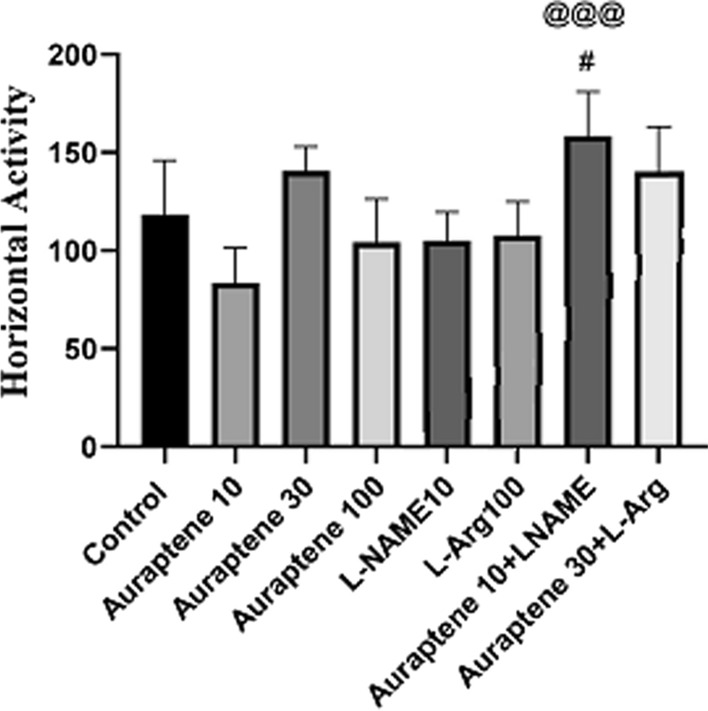
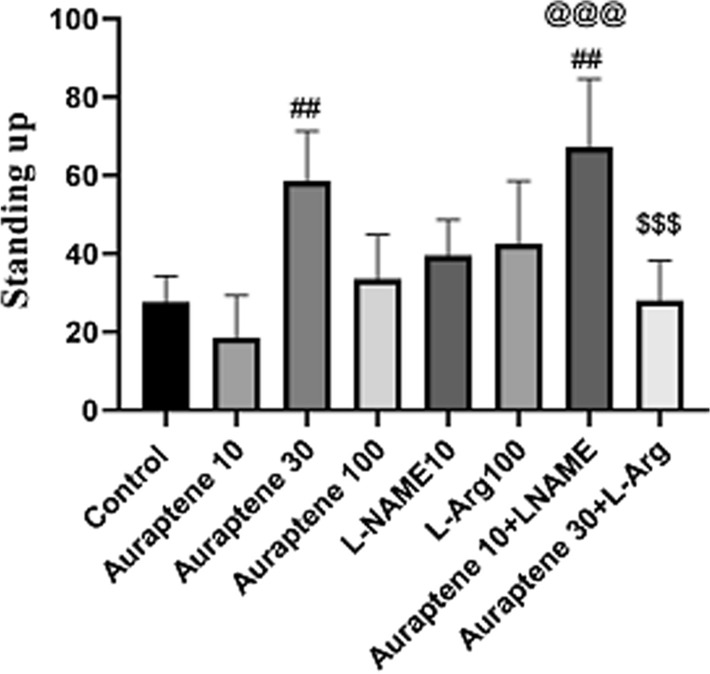
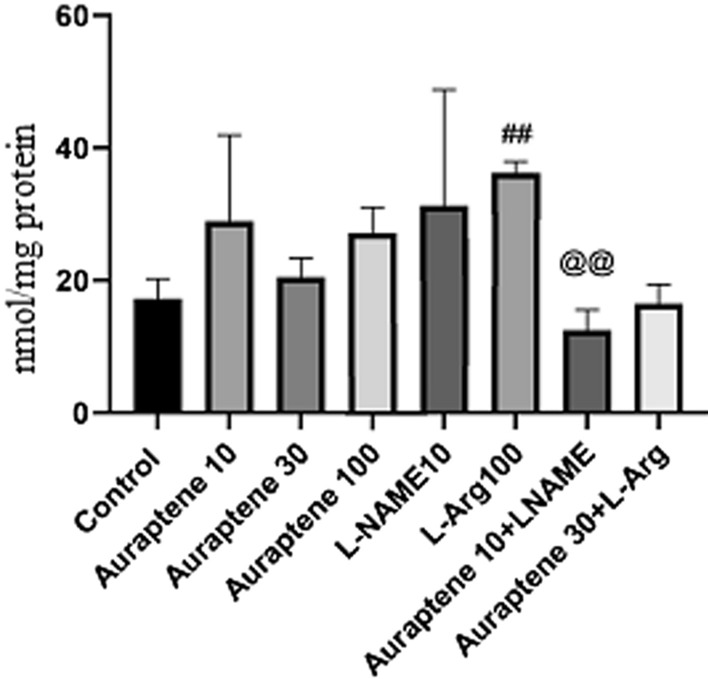
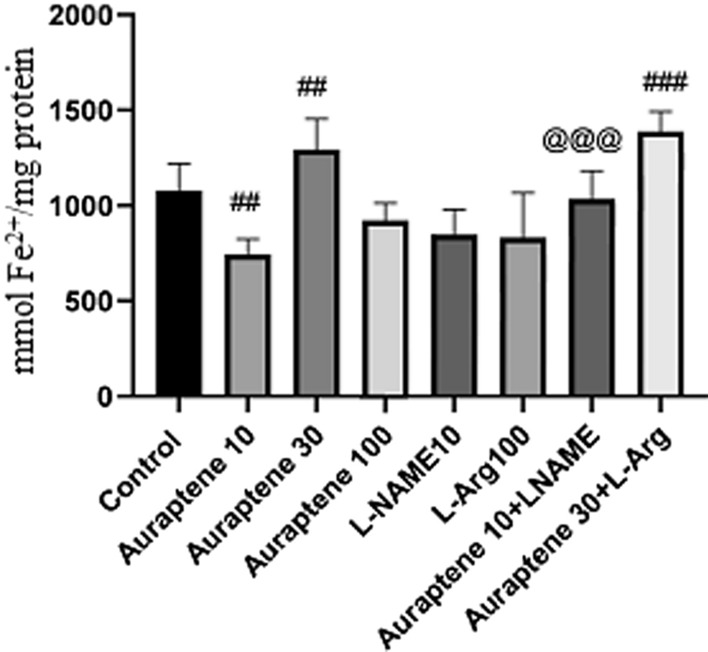
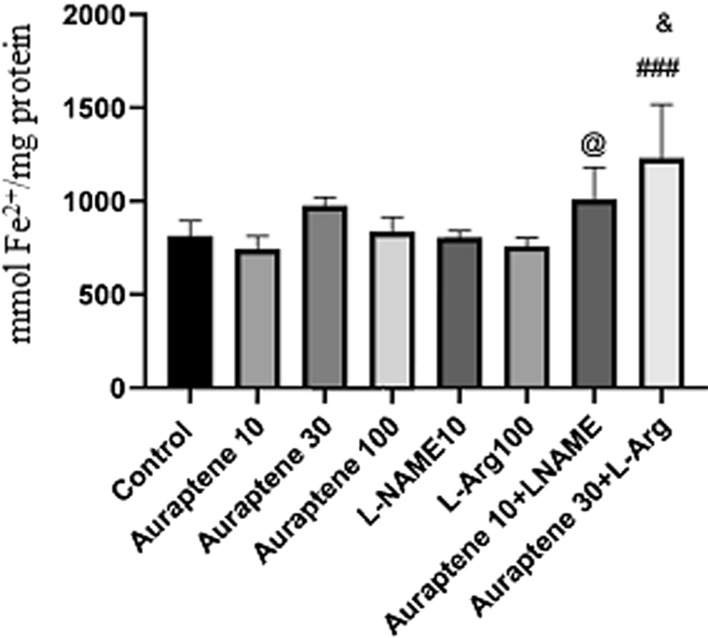
Background: Depression is one of the most common mental illnesses worldwide. Nitric oxide (NO) is involved in the pathophysiology of depression. Auraptene (a coumarin derivative) has been shown to possess pharmacological effects on neurological diseases. Purpose: The present study aimed to investigate the possible role of the NO pathway in Auraptene antidepressant effects in male mice. Methods: Behavioral tests were used to assess depression-like behaviors. The mice received Auraptene at 10, 30, and 100 mg/kg, the combination of the sub-effective (ineffective) dose of Auraptene (10 mg/kg) and L-NAME, and the combination of the effective dose of Auraptene (30 mg/kg) and L-arginine. Finally, OFT, TST, FST, brain, serum MDA level, antioxidant capacity, hippocampus, and serum NO level were measured. Results: The data analysis showed that Auraptene (30 mg/kg) improved depression-like behaviors. Auraptene (30 mg/kg) also significantly reduced serum NO levels (P < 0.05) and significantly increased serum MDA (10 mg/kg, P < 0.05). Auraptene at 30 mg/kg also increased serum antioxidant capacity (P < 0.01). Co-administration of L-NAME and the sub-effective dose of Auraptene enhanced the effects of Auraptene. However, co-administration of the effective dose of Auraptene and L-arginine reduced the impacts of Auraptene. Conclusions: The results showed that Auraptene causes antidepressant effects in a dose-dependent manner and acts as a prooxidant at 100 mg/kg, and exacerbates oxidative stress. The antidepressant effects of this active molecule are exerted by reducing the NO level in the hippocampus and serum, increasing the antioxidant capacity, and reducing the MDA level in the serum.
Overview
CoChat Summary
TL;DR
Auraptene showed antidepressant-like effects in male mice, most clearly at 30 mg/kg, and the effects were linked to changes in the nitric oxide (NO) pathway and oxidative stress markers. NOS inhibition with L-NAME potentiated Auraptene’s effects, while L-arginine attenuated them.
Key findings
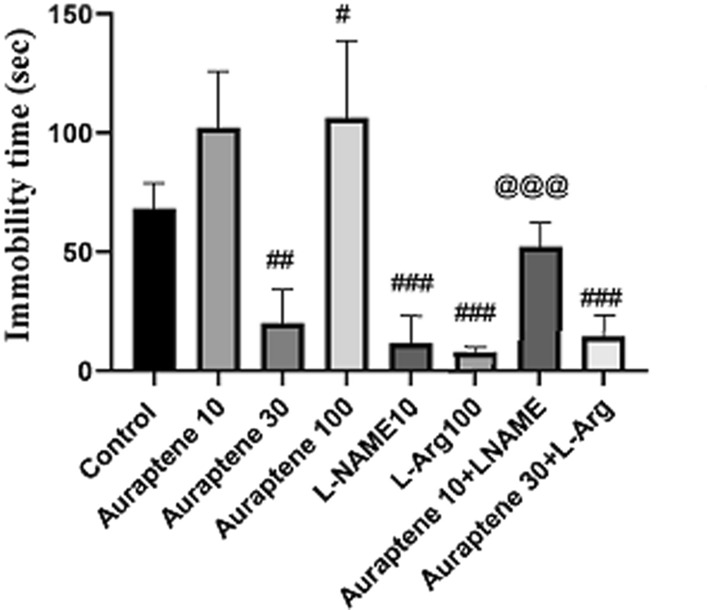
- Auraptene at 30 mg/kg improved depression-like behavior, reducing immobility in both the TST (P < 0.01) and FST (P < 0.05) versus normal saline.
- Auraptene at 30 mg/kg significantly reduced serum NO (P < 0.05) and increased serum antioxidant capacity (P < 0.01), while the authors conclude it also lowered MDA and NO in brain/serum.
- Auraptene at 10 mg/kg increased serum MDA (P < 0.05) and reduced serum antioxidant capacity (P < 0.001), whereas 100 mg/kg increased brain NO (P < 0.001) and was concluded to act as a prooxidant.
- Co-administration effects supported NO involvement: L-NAME + sub-effective Auraptene (10 mg/kg) enhanced behavioral and biochemical effects, while L-arginine + effective Auraptene (30 mg/kg) reduced Auraptene’s behavioral benefit and changed oxidative markers in the opposite direction.
Methods
- Design: Experimental mouse study with 8 groups of 80 male NMRI mice total (n = 10/group): saline, Auraptene 10/30/100 mg/kg, L-NAME 10 mg/kg, L-arginine 100 mg/kg, Auraptene 10 mg/kg + L-NAME, and Auraptene 30 mg/kg + L-arginine.
- Measures: Behavioral tests (OFT, TST, FST) plus biochemical assays of serum/brain MDA, total antioxidant capacity, and serum/brain NO (including hippocampal NO).
- Analysis: One-way ANOVA with Tukey’s post hoc test; results reported as mean ± SEM with P < 0.05 as significant.
Limitations
- The paper explicitly states that the mechanisms are not entirely determined and that further studies are necessary to identify the exact mechanisms involved.
- Evident from the text: the study was done only in male mice, so the findings may not generalize to females or humans.
- Evident from the text: the work assessed acute, short-term dosing only; it does not address long-term efficacy or safety.
Model-written summary. Check it against the paper before relying on it.
Integrity signals
Registry
Cites
Statistics
Figures
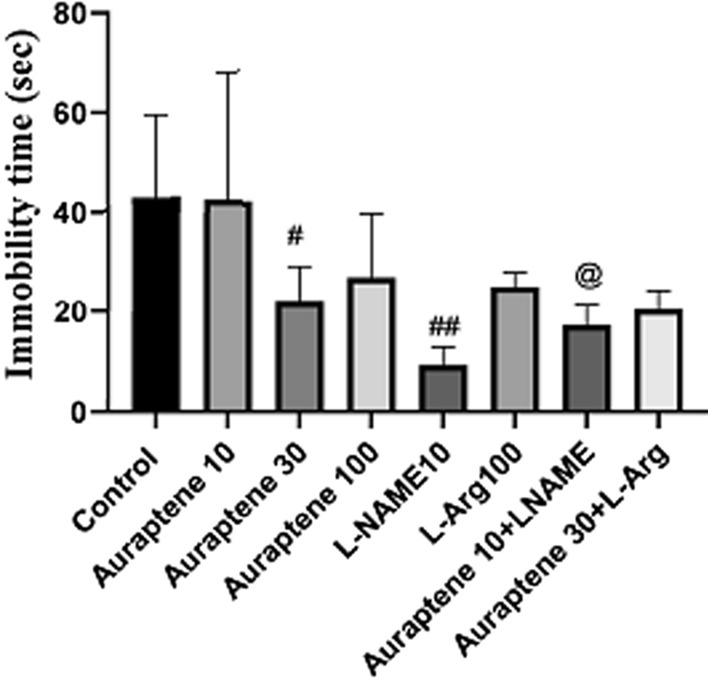
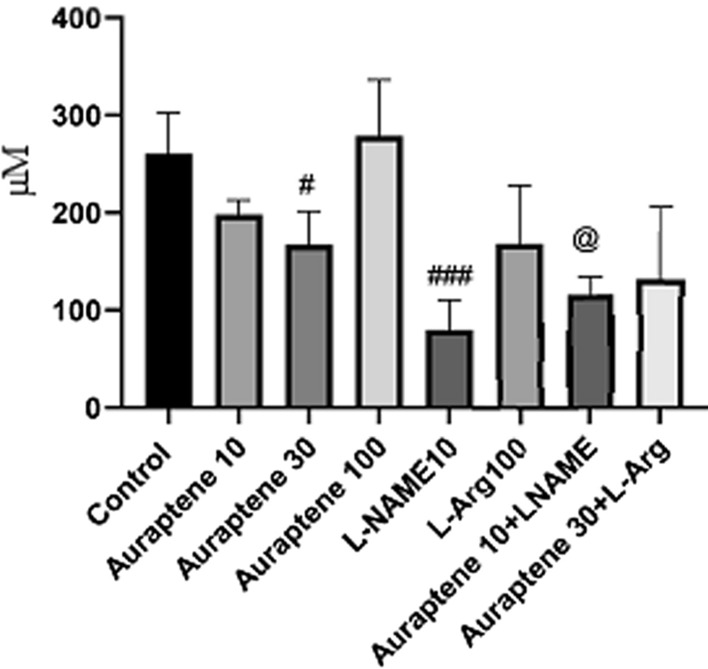
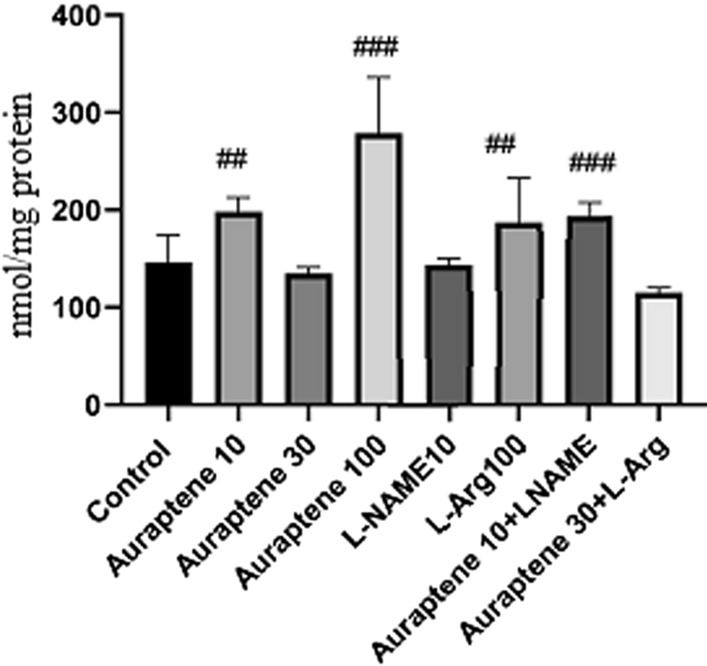
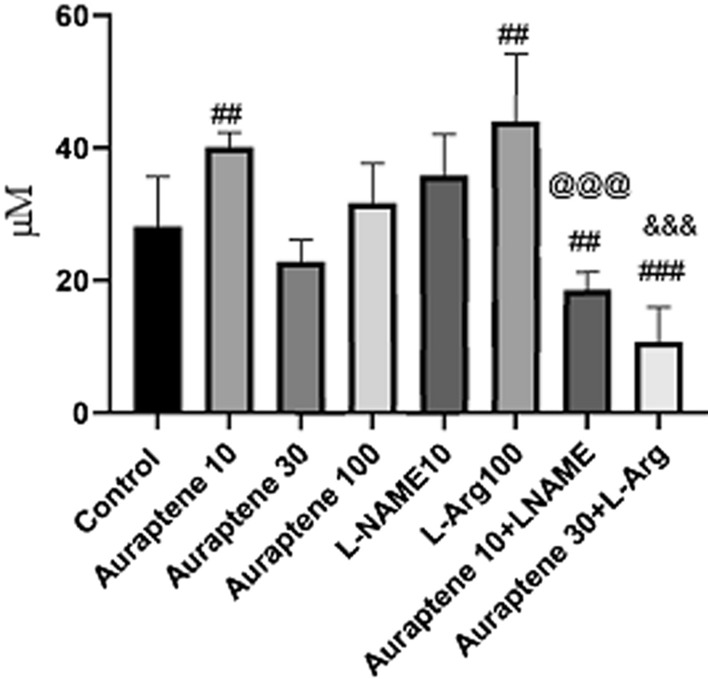
Verification
Claims the paper makes
0 Valid · 0 Not valid · 14 Not checked · 66 Own results and interpretations
A result the paper reports from its own data — it cites no other source for it, so there is none to check. The quote shows it is in the paper.
In the paper
“administration of Auraptene at 30 mg/kg significantly increased the number of vertical movements in the OFT compared to the normal saline group (P < 0.01)”
§ Possible involvement of l-arginine-nitric oxide pathway in the antidepressant activity of Auraptene in mice > Results > The number of vertical movements in the OFT
plainstates a cause- Asserted: passes — The authors put it forward as true.
- Checkable: passes — It can be checked against evidence.
- Load-bearing: passes — The paper’s conclusions depend on it.
- Based: passes — The paper gives a reason why it holds.
A result the paper reports from its own data — it cites no other source for it, so there is none to check. The quote shows it is in the paper.
In the paper
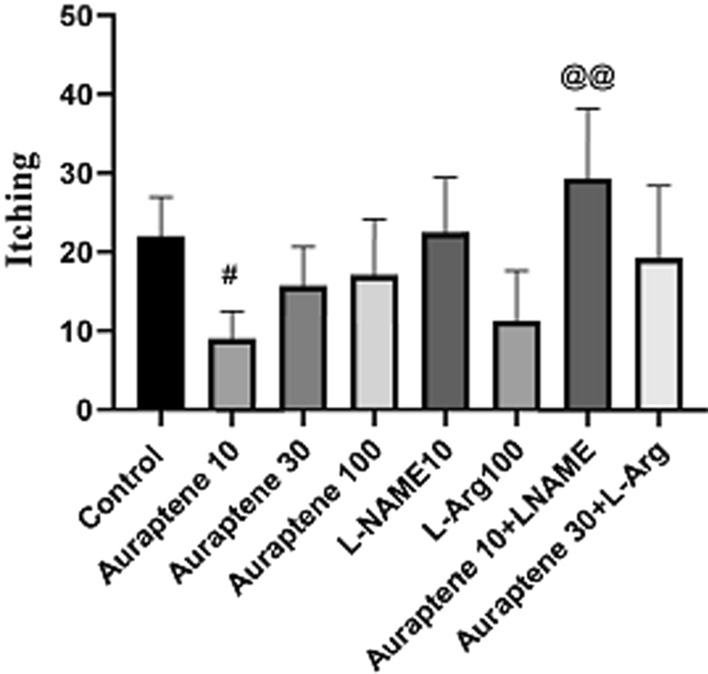
“administration of Auraptene at a dose of 10 mg/kg significantly reduced the amount of scratching in the OFT compared to the normal saline group (P < 0.05)”
§ Possible involvement of l-arginine-nitric oxide pathway in the antidepressant activity of Auraptene in mice > Results > The amount of scratching in the OFT
plainstates a cause- Asserted: passes — The authors put it forward as true.
- Checkable: passes — It can be checked against evidence.
- Load-bearing: passes — The paper’s conclusions depend on it.
- Based: passes — The paper gives a reason why it holds.
A result the paper reports from its own data — it cites no other source for it, so there is none to check. The quote shows it is in the paper.
In the paper
“However, co-administration of the effective dose of Auraptene and L-arginine reduced the impacts of Auraptene.”
§ Possible involvement of l-arginine-nitric oxide pathway in the antidepressant activity of Auraptene in mice > Abstract > Results
plainstates a cause- Asserted: passes — The authors put it forward as true.
- Checkable: passes — It can be checked against evidence.
- Load-bearing: passes — The paper’s conclusions depend on it.
- Based: passes — The paper gives a reason why it holds.
A result the paper reports from its own data — it cites no other source for it, so there is none to check. The quote shows it is in the paper.
In the paper
“the administration of Auraptene at doses of 30 and 100 mg/kg did not make any significant difference with the normal saline group”
§ Possible involvement of l-arginine-nitric oxide pathway in the antidepressant activity of Auraptene in mice > Results > The amount of scratching in the OFT
plain- Asserted: passes — The authors put it forward as true.
- Checkable: passes — It can be checked against evidence.
- Load-bearing: unclear — It is unclear whether the paper’s conclusions depend on it.
- Based: passes — The paper gives a reason why it holds.
A result the paper reports from its own data — it cites no other source for it, so there is none to check. The quote shows it is in the paper.
In the paper
“the Administration of Auraptene (30 mg/kg) significantly reduced the duration of immobility in the TST compared to the normal saline group (P < 0.01)”
§ Possible involvement of l-arginine-nitric oxide pathway in the antidepressant activity of Auraptene in mice > Results > The duration of immobility in the TST
plainstates a cause- Asserted: passes — The authors put it forward as true.
- Checkable: passes — It can be checked against evidence.
- Load-bearing: passes — The paper’s conclusions depend on it.
- Based: passes — The paper gives a reason why it holds.
55 more claims
Create a free account to see all 80 claims and to verify the 25 references still open.
- The quote only partly states this claim. 2
- It may state two separate claims as one. 14
- Probably not a substantial claim. 6
Claims other papers make about this one
Each is checked against this paper’s own text: does it say what the citing paper says it does?
The cited source doesn’t support the claim as written.
In the citing paper
“According to some research, L-arginine may improve sexual function and have a positive impact on the cellular and molecular processes underlying Major Depressive Disorder [24–26].”
From Effect of l-arginine compared to placebo on sexual function in women with major depressive disorder: a randomized controlled trial (2024) · cites this paper as [24]
Checked by a reasoning model — may be wrong.
Experimental — accuracy not yet measured
Self-check
Percentages, sums and reported differences re-computed from the paper’s own numbers.
Each contradiction between two passages listed here was confirmed by an independent check.
Rated major: it would touch a result — a value a result rests on, reported and recomputed p-values on opposite sides of the significance level, two passages that conflict with no sign which is right, or a cited work retracted before this paper was published.
In the paper
§ Possible involvement of l-arginine-nitric oxide pathway in the antidepressant activity of Auraptene in mice > Abstract > Results
“Auraptene at 30 mg/kg also increased serum antioxidant capacity (P < 0.01).”
§ Possible involvement of l-arginine-nitric oxide pathway in the antidepressant activity of Auraptene in mice > Results > The serum and brain antioxidant capacity
“Auraptene at 30 mg/kg significantly reduced the serum capacity of antioxidants compared to the normal saline group (P < 0.01).”
Citations
Cites
1 retracted
Ghanbarabadi, M., Iranshahi, M., Amoueian, S., Mehri, S., Motamedshariaty, V. S., & Mohajeri, S. A. (2016) · Neuroscience Letters · doi:10.1016/j.neulet.2016.04.047 · Cited by 44 · cited 1×
“Furthermore, Auraptene mitigated nerve damage and enhanced memory following cerebral ischemia [35].”
BackgroundRetractedBenzie, I. F. F., & Strain, J. J. (1999) · Methods in Enzymology · doi:10.1016/s0076-6879(99)99005-5 · Cited by 3,929
Henry, M. A. (1995) · The Journal of the American Dental Association · doi:10.14219/jada.archive.1995.0108 · Cited by 3,416
Kandel, E. R., Koester, J. D., Mack, S. H., & Siegelbaum, S. A. (1985) · Cited by 1,180
Maes, M., Galecki, P., Chang, Y. S., & Berk, M. (2011) · Progress in Neuro-Psychopharmacology and Biological Psychiatry · doi:10.1016/j.pnpbp.2010.05.004 · Cited by 1,140 · cited 1×
“It has been well-determined that reduced antioxidant capacity is associated with increased MDA levels [43].”
BackgroundMeasurement of nitrate and nitrite in biological samples using nitrate reductase and Griess reaction
Granger, D. L., Taintor, R. R., Boockvar, K. S., & Hibbs, J. B. (1996) · Methods in Enzymology · doi:10.1016/s0076-6879(96)68016-1 · Cited by 510
Relationship of neurotransmitters to the symptoms of major depressive disorder.
Nutt, D. (2008) · PubMed · Cited by 490
Sarandol, A., Sarandol, E., Eker, S. S., Erdinc, S., Vatansever, E., & Kirli, S. (2007) · Human Psychopharmacology: Clinical and Experimental · doi:10.1002/hup.829 · Cited by 486 · cited 1×
“It has been explained that the total antioxidant capacity of serum is significantly reduced in people with major depressive disorder [4].”
BackgroundHashimoto, K. (2019) · Psychiatry and Clinical Neurosciences · doi:10.1111/pcn.12902 · Cited by 335 · cited 1×
“Moreover, inhibition of NO production potentiated the antidepressant effects of some agents [38, 39].”
BackgroundChemistry and Biological Activity of Natural and Synthetic Prenyloxycoumarins †
Curini, M., Cravotto, G., Epifano, F., & Giannone, G. (2006) · Current Medicinal Chemistry · doi:10.2174/092986706775197890 · Cited by 292 · cited 2×
“Auraptene is found in many plants of the citrus genus, such as grapefruit and oranges [13], and has valuable medicinal properties, including anti-cancer, antibacterial, antifungal, anti-inflammatory, and antioxidant.”
Background
Research works printed but not linked: 1
- Sun L-Q Information on research and application of ginseng, the king of traditional and herbal medicines Asian J Drug Metabolism Pharmacokinet 2004 4 4 261 84
Cited by
Winiarska‐Mieczan, A., Kwiecień, M., Jachimowicz-Rogowska, K., Donaldson, J., Tomaszewska, E., & Baranowska‐Wójcik, E. (2023) · International Journal of Molecular Sciences · doi:10.3390/ijms24032258 · Cited by 155
“As a result of the increased synthesis of NO by cells of the immune response in the inflammatory focus, not only does the pool of ROS increase but also that of reactive forms of nitrogen (RNS), which is referred to as nitrosative stress [92].”
BackgroundInfluentialKhaledi, F., Dehkordi, H. T., Zarean, E., Shahrani, M., & Amini-Khoei, H. (2023) · PLoS ONE · doi:10.1371/journal.pone.0292631 · Cited by 27
Self-citationNeurotrophic basis to the pathogenesis of depression and phytotherapy
Wang, H., Yang, Y., Pei, G., Wang, Z., & Chen, N. (2023) · Frontiers in Pharmacology · doi:10.3389/fphar.2023.1182666 · Cited by 32
Galluzzi, S., Zanardini, R., Ferrari, C., Gipponi, S., Passeggia, I., Rampini, M., Sgrò, G., Genovese, S., Fiorito, S., Palumbo, L., et al. (2022) · Nutrition Journal · doi:10.1186/s12937-022-00817-6 · Cited by 20
“They included levels of brain-derived neurotrophic factor and insulin-like growth factor-1 [71, 72], nitric oxide, thiobarbituric acid reactive substances, and superoxide dismutase [71, 73], and pro- and anti-inflammatory molecules and cytokines [74, 75].”
BackgroundAmini-Khoei, H., Dehkordi, H. T., & Bijad, E. (2024) · Brain and Behavior · doi:10.1002/brb3.3604 · Cited by 14
Self-citation
Metadata
- Authors
- Amini-Khoei, H., Nasiri Boroujeni, S., Maghsoudi, F., Rahimi-Madiseh, M., Bijad, E., Moradi, M., & Lorigooini, Z.
- Affiliations
- Shahrekord University of Medical Sciences (IR)
- Corresponding author
- Lorigooini, Zahra
- Venue
- Behavioral and Brain Functions
- Published
- 2022-02-14
- Volume
- 18
- Issue
- 1
- Pages
- 4-4
- ISSN
- 1744-9081 (ISSN-L)
- PMC
- PMC8842875
- OpenAlex
- W4226178612
- Cited by
- 28
- References
- 51
- Citations by year
- 2026: 6 · 2025: 7 · 2024: 7 · 2023: 5 · 2022: 3
- FWCI
- 3.29
- Type
- journal article
- Language
- en
- Open access
- gold
- doi.org
- Licence
- cc-by
- creativecommons.org/licenses/by/4.0 (tdm)
- creativecommons.org/licenses/by/4.0 (vor)
- Locations
- Behavioral and Brain Functions (publishedVersion, cc-by)
- Research Square (acceptedVersion, cc-by)
- PubMed Central (publishedVersion, cc-by)
- PubMed (publishedVersion)
- DOAJ (DOAJ: Directory of Open Access Journals) (submittedVersion, cc-by-sa)
- Funders
- Shahrekord University of Medical Sciences (2782)
- Topics
- Health Sciences › Medicine › Pharmacology (medical) › Treatment of Major Depression
- Health Sciences › Medicine › Complementary and alternative medicine › Medicinal Plant Extracts Effects
- Life Sciences › Neuroscience › Biological Psychiatry › Tryptophan and brain disorders
- Keywords
- auraptene, coumarins, antidepressant effects, depression-like behavior, nitric oxide pathway, L-arginine, L-NAME, oxidative stress, malondialdehyde, antioxidant capacity, hippocampus, pro-oxidant activity, dose-dependent effects
- MeSH terms
- Animals, Antidepressive Agents, Arginine, Behavior, Animal, Coumarins, Depression, Male, Nitric Oxide, Swimming, Mice
About these checks
Registry, retraction, Cites and statistics results are computed, not judged, with one exception: a printed reference that no index lists is read once by a model before it counts as a citation error. Claims are extracted by a model and kept only when their quote appears verbatim in the text; each cited source is then checked, with a model’s help, for whether it says what the claim relies on. Those verdicts can be wrong — read the claim’s quote and the cited source before relying on one.
A language model drew the claims from the paper on 2026-10-11, under version 3 of the claim definition (model deepseek-v4.1-flash, prompt extract-v3).
A second model labelled each claim on 2026-10-11 (model jev-1.13-20260917, definition revision gold-guideline-v0.2).
Statistics and arithmetic are recomputed, not judged.
Confidence bands are shown only for fields calibrated on our annotated test set. None is calibrated yet, so no band is shown.
What counts as a claim ›How we measure confidence ›How we check this ›
Are you an author, or do you see a problem with this page? Request a review
How to cite
Cite CoChat for the checks on this page, and the paper for its own findings.
- This page
- CoChat. (2026). Citation check: Possible involvement of l-arginine-nitric oxide pathway in the antidepressant activity of Auraptene in mice. https://app.cochat.ai/papers/10.1186/s12993-022-00189-1
- The paper
- Amini-Khoei, H., Nasiri Boroujeni, S., Maghsoudi, F., Rahimi-Madiseh, M., Bijad, E., Moradi, M., & Lorigooini, Z. (2022). Possible involvement of l-arginine-nitric oxide pathway in the antidepressant activity of Auraptene in mice. Behavioral and Brain Functions. https://doi.org/10.1186/s12993-022-00189-1
Data sources
Bibliographic data: Semantic Scholar, OpenAlex, Crossref.
Contains information from the Semantic Scholar Academic Graph Datasets, made available under the ODC Attribution License (ODC-BY 1.0).
Semantic Scholar’s data is described in: Kinney, R., et al. (2023). The Semantic Scholar Open Data Platform. arXiv:2301.10140.
