

Genomic Bayesian functional regression models with interactions for predicting wheat grain yield using hyper-spectral image data
Open accessThe DOI matches its Crossref record; 25 of the 26 references it cites were found in a registry or an index.
Abstract
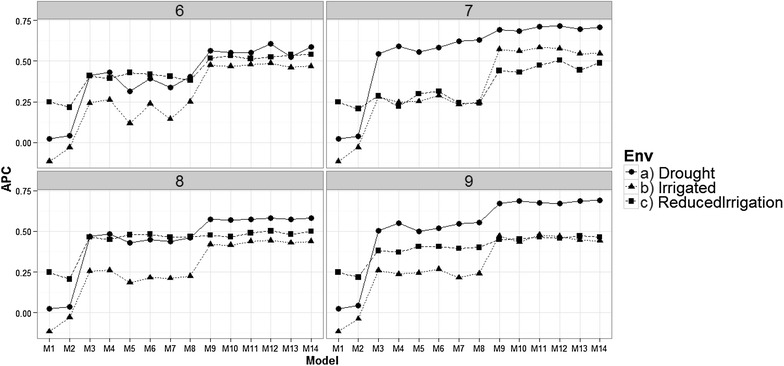
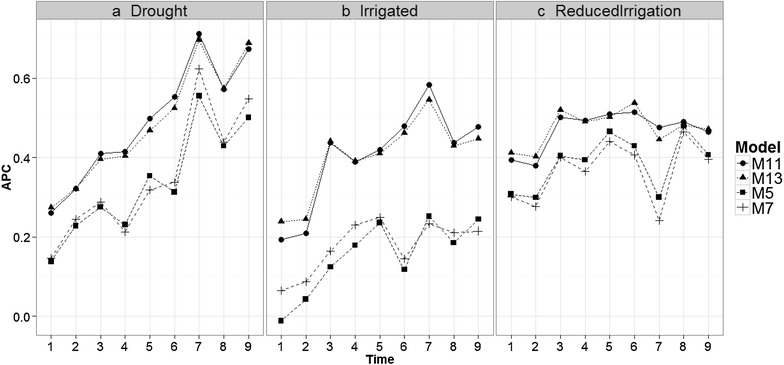
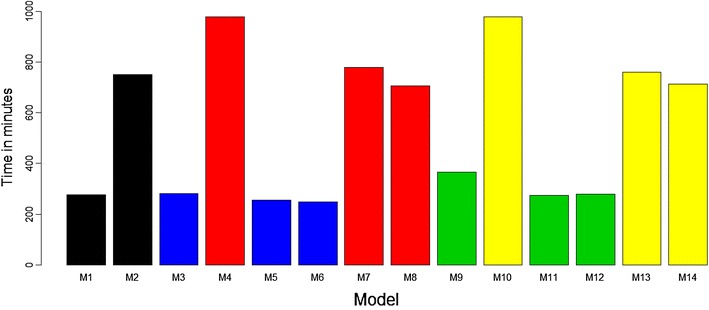
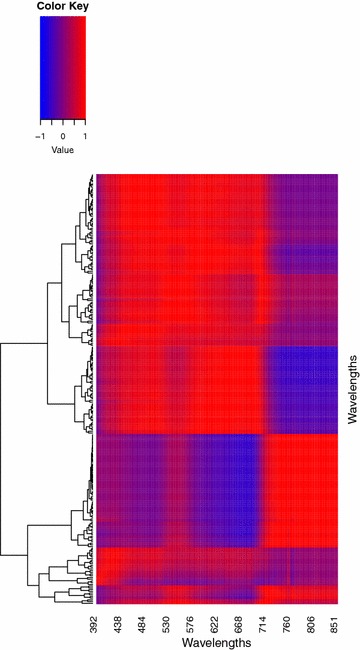
BACKGROUND: Modern agriculture uses hyperspectral cameras that provide hundreds of reflectance data at discrete narrow bands in many environments. These bands often cover the whole visible light spectrum and part of the infrared and ultraviolet light spectra. With the bands, vegetation indices are constructed for predicting agronomically important traits such as grain yield and biomass. However, since vegetation indices only use some wavelengths (referred to as bands), we propose using all bands simultaneously as predictor variables for the primary trait grain yield; results of several multi-environment maize (Aguate et al. in Crop Sci 57(5):1-8, 2017) and wheat (Montesinos-López et al. in Plant Methods 13(4):1-23, 2017) breeding trials indicated that using all bands produced better prediction accuracy than vegetation indices. However, until now, these prediction models have not accounted for the effects of genotype × environment (G × E) and band × environment (B × E) interactions incorporating genomic or pedigree information. RESULTS: In this study, we propose Bayesian functional regression models that take into account all available bands, genomic or pedigree information, the main effects of lines and environments, as well as G × E and B × E interaction effects. The data set used is comprised of 976 wheat lines evaluated for grain yield in three environments (Drought, Irrigated and Reduced Irrigation). The reflectance data were measured in 250 discrete narrow bands ranging from 392 to 851 nm (nm). The proposed Bayesian functional regression models were implemented using two types of basis: B-splines and Fourier. Results of the proposed Bayesian functional regression models, including all the wavelengths for predicting grain yield, were compared with results from conventional models with and without bands. CONCLUSIONS: We observed that the models with B × E interaction terms were the most accurate models, whereas the functional regression models (with B-splines and Fourier basis) and the conventional models performed similarly in terms of prediction accuracy. However, the functional regression models are more parsimonious and computationally more efficient because the number of beta coefficients to be estimated is 21 (number of basis), rather than estimating the 250 regression coefficients for all bands. In this study adding pedigree or genomic information did not increase prediction accuracy.
Overview
The claims and statistics of this paper haven’t been checked yet.
Free: it reads the open-access text and checks the first 5 claims that cite a source we can check. Create a free account to check every claim.
Integrity signals
Registry
Cites
Statistics
Figures
Verification
Claims the paper makes
The claims and statistics of this paper haven’t been checked yet.
Free: it reads the open-access text and checks the first 5 claims that cite a source we can check. Create a free account to check every claim.
Claims other papers make about this one
Each is checked against this paper’s own text: does it say what the citing paper says it does?
The cited source says what the claim attributes to it.
In the citing paper
“For a maize ordinal data set, A. Montesinos-López et al. (2017) reported that models including GE achieved gains of 9–14% in prediction accuracy over models including only main effects.”
From Multimodal deep learning methods enhance genomic prediction of wheat breeding (2023) · cites this paper as A. Montesinos-López et al. (2017)
In the citing paper
“The authors observed that the models with BE interaction terms were the most accurate, while the functional regression models and the conventional models performed similarly in terms of prediction accuracy.”
From Multimodal deep learning methods enhance genomic prediction of wheat breeding (2023) · cites this paper as A. Montesinos-López et al. (2017)
Self-check
Percentages, sums and reported differences re-computed from the paper’s own numbers.
The self-check needs the paper’s full text.
Citations
Cites
Efficient Methods to Compute Genomic Predictions
VanRaden, P. M. (2008) · Journal of Dairy Science · doi:10.3168/jds.2007-0980 · Cited by 6,050
Field high-throughput phenotyping: the new crop breeding frontier
Araus, J. L., & Cairns, J. E. (2014) · Trends in Plant Science · doi:10.1016/j.tplants.2013.09.008 · Cited by 1,817 · cited 1×
“For this reason, the use of low-cost, efficient, high-throughput plant phenotyping platforms (HTPP) [2] has dramatically increased.”
BackgroundPhenomics – technologies to relieve the phenotyping bottleneck
Furbank, R. T., & Tester, M. (2011) · Trends in Plant Science · doi:10.1016/j.tplants.2011.09.005 · Cited by 1,675
THE GENOTYPICAL RESPONSE OF THE PLANT SPECIES TO THE HABITAT
TURESSON, G. (2010) · Hereditas · doi:10.1111/j.1601-5223.1922.tb02734.x · Cited by 948 · cited 1×
“For this reason, Turesson [19] pointed out that the environment often influences plant development and that the presence of a particular variety in a specific location is not just a chance occurrence; rather, the variety’s peculiar characteristics are attributable to the effect of the environment…”
BackgroundTHE INCIDENCE OF ALKAPTONURIA : A STUDY IN CHEMICAL INDIVIDUALITY.
Garrod, A. (1902) · The Lancet · doi:10.1016/s0140-6736(01)41972-6 · Cited by 789
Applied Functional Data Analysis: Methods and Case Studies
(2002) · Springer Series in Statistics · doi:10.1007/b98886 · Cited by 787
Lights, camera, action: high-throughput plant phenotyping is ready for a close-up
Fahlgren, N., Gehan, M. A., & Baxter, I. (2015) · Current Opinion in Plant Biology · doi:10.1016/j.pbi.2015.02.006 · Cited by 703
A reaction norm model for genomic selection using high-dimensional genomic and environmental data
Jarquín, D., Crossa, J., Lacaze, X., Du Cheyron, P., Daucourt, J., Lorgeou, J., Piraux, F., Guerreiro, L., Pérez, P., Calus, M., et al. (2014) · Theoretical and Applied Genetics · doi:10.1007/s00122-013-2243-1 · Cited by 687 · cited 1×
“For example, using wheat data, Jarquin et al. [10] found that the prediction accuracy of models including interaction terms was substantially higher (17–34”
MethodSelf-citationMcCouch, S., Baute, G. J., Bradeen, J., Bramel, P., Bretting, P. K., Buckler, E., Burke, J. M., Charest, D., Cloutier, S., Cole, G., et al. (2013) · Nature · doi:10.1038/499023a · Cited by 570 · cited 1×
“In plant breeding, a branch of agriculture, plant pheno-typing has become financially expensive when evaluating complex traits like grain yield in large numbers of selection candidates [8, 11].”
Rutkoski, J., Poland, J., Mondal, S., Autrique, E., Pérez, L. G., Crossa, J., Reynolds, M., & Singh, R. (2016) · G3 Genes|Genomes|Genetics · doi:10.1534/g3.116.032888 · Cited by 419 · cited 3×
“A pedigree was used to devive the additive relationship matrix ( A ) among the wheat lines [16]; the entries of matrix A equal twice the coefficient of parentage between pairs of lines.”
BackgroundMethodInfluentialSelf-citation
Cited by
Genomic Selection in Plant Breeding: Methods, Models, and Perspectives
Crossa, J., Pérez-Rodríguez, P., Cuevas, J., Montesinos-López, O., Jarquín, D., de los Campos, G., Burgueño, J., González-Camacho, J. M., Pérez-Elizalde, S., Beyene, Y., et al. (2017) · Trends in Plant Science · doi:10.1016/j.tplants.2017.08.011 · Cited by 1,839
“A recent study developed statistical models to assess hyperspectral wavelength environment interactions in HTP, incorporating genomic and pedigree G E interactions [78].”
BackgroundSelf-citationTranslating High-Throughput Phenotyping into Genetic Gain
Araus, J. L., Kefauver, S. C., Zaman-Allah, M., Olsen, M. S., & Cairns, J. E. (2018) · Trends in Plant Science · doi:10.1016/j.tplants.2018.02.001 · Cited by 790
The Modern Plant Breeding Triangle: Optimizing the Use of Genomics, Phenomics, and Enviromics Data
Crossa, J., Fritsche-Neto, R., Montesinos-Lopez, O. A., Costa-Neto, G., Dreisigacker, S., Montesinos-Lopez, A., & Bentley, A. R. (2021) · Frontiers in Plant Science · doi:10.3389/fpls.2021.651480 · Cited by 266
“, 2017), high throughput phenotyping (HTP, phenomics) (Montesinos-López et al., 2017) and historical descriptions of environmental relatedness (enviromics) (Costa-Neto et al.”
BackgroundSelf-citationFavela‐González, K. M., Hernández‐Almanza, A. Y., & De la Fuente‐Salcido, N. M. (2020) · Journal of Food Biochemistry · doi:10.1111/jfbc.13414 · Cited by 202
Breeding to adapt agriculture to climate change: affordable phenotyping solutions
Araus, J. L., & Kefauver, S. C. (2018) · Current Opinion in Plant Biology · doi:10.1016/j.pbi.2018.05.003 · Cited by 170
Krause, M. R., González-Pérez, L., Crossa, J., Pérez-Rodríguez, P., Montesinos-López, O., Singh, R. P., Dreisigacker, S., Poland, J., Rutkoski, J., Sorrells, M., et al. (2019) · G3 Genes|Genomes|Genetics · doi:10.1534/g3.118.200856 · Cited by 167
Self-citationBauer, A., Bostrom, A. G., Ball, J., Applegate, C., Cheng, T., Laycock, S., Rojas, S. M., Kirwan, J., & Zhou, J. (2019) · Horticulture Research · doi:10.1038/s41438-019-0151-5 · Cited by 158
Sandhu, K. S., Mihalyov, P. D., Lewien, M. J., Pumphrey, M., & Carter, A. H. (2021) · Frontiers in Plant Science · doi:10.3389/fpls.2021.613300 · Cited by 106
Sun, J., Poland, J., Mondal, S., Crossa, J. L., Juliana, P., Singh, R. P., Rutkoski, J. E., Jannink, J., Crespo‐Herrera, L., Govindan, V., et al. (2019) · Theoretical and Applied Genetics · doi:10.1007/s00122-019-03309-0 · Cited by 118
Self-citationMachine learning algorithms translate big data into predictive breeding accuracy
Crossa, J. L., Montesinos-López, O. A., Costa‐Neto, G., Vitale, P., Martini, J. W. R., Runcie, D. E., Fritsche‐Neto, R., Montesinos‐López, A., Pérez‐Rodríguez, P., Gerard, G., et al. (2024) · Trends in Plant Science · doi:10.1016/j.tplants.2024.09.011 · Cited by 133
Self-citationOrgan Bioprinting: Are We There Yet?
Gao, G., Huang, Y., Schilling, A. F., Hubbell, K., & Cui, X. (2018) · Advanced Healthcare Materials · doi:10.1002/adhm.201701018 · Cited by 91
Lane, H. M., Murray, S. C., Montesinos‑López, O. A., Montesinos‐López, A., Crossa, J. L., Rooney, D. K., Barrero-Farfán, I. D., Fuente, G. N. D. L., & Morgan, C. L. S. (2020) · The Plant Phenome Journal · doi:10.1002/ppj2.20002 · Cited by 92
Self-citationMegaLMM: Mega-scale linear mixed models for genomic predictions with thousands of traits
Runcie, D. E., Qu, J., Cheng, H., & Crawford, L. (2021) · Genome Biology · doi:10.1186/s13059-021-02416-w · Cited by 80
Scaling up high-throughput phenotyping for abiotic stress selection in the field
Smith, D., Potgieter, A. B., & Chapman, S. C. (2021) · Theoretical and Applied Genetics · doi:10.1007/s00122-021-03864-5 · Cited by 93
Xie, J., Fernandes, S. B., Mayfield‐Jones, D., Erice, G., Choi, M. S., Lipka, A. E., & Leakey, A. D. B. (2021) · PLANT PHYSIOLOGY · doi:10.1093/plphys/kiab299 · Cited by 82
Predicting dark respiration rates of wheat leaves from hyperspectral reflectance
Coast, O., Shah, S., Ivakov, A. A., Gaju, O., Wilson, P. B., Posch, B. C., Bryant, C. J., Negrini, A. C. A., Evans, J. R., Condon, A. G., et al. (2019) · Plant Cell & Environment · doi:10.1111/pce.13544 · Cited by 80
Tyagi, A., Mir, Z. A., Almalki, M. A., Deshmukh, R. K., & Ali, S. (2024) · Agronomy · doi:10.3390/agronomy14061128 · Cited by 95
Role of Modelling in International Crop Research: Overview and Some Case Studies
Reynolds, M. P., Kropff, M. J., Crossa, J. L., Koo, J., Kruseman, G., Milan, A. M., Rutkoski, J. E., Schulthess, U., Singh, B., Sonder, K., et al. (2018) · Agronomy · doi:10.3390/agronomy8120291 · Cited by 79
“…2017 [125]; Juliana et al., 2017 [126]; Pérez-Rodríguez et al., 2017 [127]; Montesinos-López et al., 2017 [128]; Montesinos-López et al., 2017 [129]; Montesinos-López et al., 2017 [130]; Sun et al., 2017 [131]; Jarquín et al., 2017 [132]; Dunckel et al., 2017 [133]; Cuevas et al., 2017 [134];…”
Self-citationMonitoring oil contamination in vegetated areas with optical remote sensing: A comprehensive review
Lassalle, G., Fabre, S., Crédoz, A., Dubucq, D., & Elger, A. (2020) · Journal of Hazardous Materials · doi:10.1016/j.jhazmat.2020.122427 · Cited by 81
Chu, H., Zhang, C., Wang, M., Gouda, M., Wei, X., He, Y., & Liu, Y. (2021) · Journal of Hazardous Materials · doi:10.1016/j.jhazmat.2021.126706 · Cited by 67
Robert, P., Auzanneau, J., Goudemand, E., Oury, F., Rolland, B., Heumez, E., Bouchet, S., Gouis, J. L., & Rincent, R. (2022) · Theoretical and Applied Genetics · doi:10.1007/s00122-021-04005-8 · Cited by 84
Jia, M., Li, W., Wang, K., Zhou, C., Cheng, T., Tian, Y., Zhu, Y. P., Cao, W., & Yao, X. (2019) · Computers and Electronics in Agriculture · doi:10.1016/j.compag.2019.104942 · Cited by 61
Phenomic Selection: A New and Efficient Alternative to Genomic Selection
Robert, P., Brault, C., Rincent, R., & Segura, V. (2022) · Methods in molecular biology · doi:10.1007/978-1-0716-2205-6_14 · Cited by 80
Costa, L. F., McBreen, J. C., Ampatzidis, Y. G., Guo, J. X., Gahrooei, M. R., & Babar, M. A. (2021) · Precision Agriculture · doi:10.1007/s11119-021-09852-5 · Cited by 53
Interest of phenomic prediction as an alternative to genomic prediction in grapevine
Brault, C., Lazerges, J., Doligez, A., Thomas, M., Ecarnot, M., Roumet, P., Bertrand, Y., Berger, G., Pons, T., François, P., et al. (2022) · Plant Methods · doi:10.1186/s13007-022-00940-9 · Cited by 69
Multi-Trait Genomic Prediction of Yield-Related Traits in US Soft Wheat under Variable Water Regimes
Guo, J. X., Khan, J., Pradhan, S., Shahi, D., Khan, N., Avci, M., McBreen, J. C., Harrison, S., Brown‐Guedira, G., Murphy, J. P., et al. (2020) · Genes · doi:10.3390/genes11111270 · Cited by 58
“[24,67], a brief summary of three statistical models are presented in the following sections.”
BackgroundTripodi, P., Nicastro, N., & Pane, C. (2022) · Australian Journal of Agricultural Research · doi:10.1071/cp21387 · Cited by 60
Li, J., Veeranampalayam-Sivakumar, A.-N., Bhatta, M., Garst, N. D., Stoll, H., Baenziger, P. S., Belamkar, V., Howard, R., Ge, Y., & Shi, Y. (2019) · Plant Methods · doi:10.1186/s13007-019-0508-7 · Cited by 59
Classification of Rice Yield Using UAV-Based Hyperspectral Imagery and Lodging Feature
Wang, J., Wu, B., Kohnen, M. V., Lin, D., Yang, C., Wang, X., Qiang, A., Liu, W., Kang, J., Li, H., et al. (2021) · Plant Phenomics · doi:10.34133/2021/9765952 · Cited by 49
“[1, 23, 32] [3, 21, 38] [4, 20, 36] [1, 23, 32] [9, 15, 39] [4, 20, 36] [12, 22, 30] [13, 16, 33] [5, 26, 28]”
BackgroundBruning, B., Berger, B., Lewis, M. M., Liu, H., & Garnett, T. (2020) · The Plant Phenome Journal · doi:10.1002/ppj2.20007 · Cited by 52
“More recently, hyperspectral methods have been used at the crop canopy level to estimate yield (Montesinos-López et al., 2017a), perform disease assessment (Yu et al., 2018), and quantitatively rank the salt tolerance of wheat breeding lines (Moghimi et al., 2018).”
BackgroundMethodLyra, D. H., Virlet, N., Sadeghi‐Tehran, P., Hassall, K. L., Wingen, L. U., Orford, S., Griffiths, S., Hawkesford, M. J., & Slavov, G. T. (2020) · Journal of Experimental Botany · doi:10.1093/jxb/erz545 · Cited by 51
Speranza, S., Knechtl, R., Witlaczil, R., & Schöenlechner, R. (2021) · Frontiers in Plant Science · doi:10.3389/fpls.2021.769151 · Cited by 45
Chiozza, M. V., Parmley, K. A., Higgins, R. H., Singh, A. K., & Miguez, F. E. (2021) · Field Crops Research · doi:10.1016/j.fcr.2021.108260 · Cited by 49
Multimodal deep learning methods enhance genomic prediction of wheat breeding
Montesinos-López, A., Rivera, C., Pinto, F., Piñera, F., Gonzalez, D., Reynolds, M., Pérez-Rodríguez, P., Li, H., Montesinos-López, O. A., & Crossa, J. (2023) · G3: Genes, Genomes, Genetics · doi:10.1093/g3journal/jkad045 · Cited by 41
Self-citationHigh-Throughput Phenotyping of Fire Blight Disease Symptoms Using Sensing Techniques in Apple
Jarolmasjed, S., Sankaran, S., Marzougui, A., Kostick, S. A., Si, Y., Quirós-Vargas, J., & Evans, K. M. (2019) · Frontiers in Plant Science · doi:10.3389/fpls.2019.00576 · Cited by 40
Dreisigacker, S., Crossa, J. L., Pérez‐Rodríguez, P., Montesinos-López, O. A., Rosyara, U. R., Juliana, P., Mondal, S., Crespo‐Herrera, L., Govindan, V., Singh, R. P., et al. (2021) · Crop Breeding Genetics and Genomics · doi:10.20900/cbgg20210005 · Cited by 56
“[82] were the first to propose Bayesian functional regression models that take into account the main effects of environment and genotype, all the available reflectance wavelength of the HTP data and the interaction terms (G × E and band × environment (B × E) interactions) for predicting the primary trait grain yield.”
Self-citationA generalised approach for high-throughput instance segmentation of stomata in microscope images
Jayakody, H., Petrie, P. R., de Boer, H. J., & Whitty, M. A. (2021) · Plant Methods · doi:10.1186/s13007-021-00727-4 · Cited by 44
Robert, P., Goudemand, E., Auzanneau, J., Oury, F., Rolland, B., Heumez, E., Bouchet, S., Caillebotte, A., Mary‐Huard, T., Gouis, J. L., et al. (2022) · Theoretical and Applied Genetics · doi:10.1007/s00122-022-04170-4 · Cited by 48
“More and more studies have tried to apply PS to annual crops like bread wheat (Montesinos-López et al. 2017; Rincent et al. 2018; Krause et al. 2019; Cuevas et al. 2019; Robert et al. 2022a), maize (Lane et al.”
BackgroundMatallana-Ramirez, L. P., Whetten, R. W., Sanchez, G. M., & Payn, K. G. (2021) · Frontiers in Plant Science · doi:10.3389/fpls.2021.606908 · Cited by 46
Guo, J. X., Pradhan, S., Shahi, D., Khan, J., McBreen, J. C., Bai, G., Murphy, J. P., & Babar, M. A. (2020) · Scientific Reports · doi:10.1038/s41598-020-63919-3 · Cited by 41
Field-based remote sensing models predict radiation use efficiency in wheat
Robles‐Zazueta, C. A., Molero, G., Pinto, F., Foulkes, J. M., Reynolds, M. P., & Murchie, E. H. (2021) · Journal of Experimental Botany · doi:10.1093/jxb/erab115 · Cited by 46
Sherstneva, O., Khlopkov, A., Gromova, E., Yudina, L., Vetrova, Y., Pecherina, A., Kuznetsova, D. V., Krutova, E. K., Sukhov, V., & Vodeneev, V. (2021) · Functional Plant Biology · doi:10.1071/fp21209 · Cited by 37
Kijima, S. T., Staiger, C. J., Katoh, K., Nagasaki, A., Ito, K., & Uyeda, T. Q. P. (2018) · Scientific Reports · doi:10.1038/s41598-018-22707-w · Cited by 35
Jarquín, D., Howard, R., Xavier, A., & Choudhury, S. D. (2018) · Agronomy · doi:10.3390/agronomy8040051 · Cited by 39
“[14] showed that accounting for the band (hyper-spectral image data)-by-environment interaction also improved yield predictability in wheat when compared with those models that did not include this component in the models.”
ResultThe effect of probe geometry on rind puncture resistance testing of maize stalks
Cook, D. D., Meehan, K., Asatiani, L., & Robertson, D. J. (2020) · Plant Methods · doi:10.1186/s13007-020-00610-8 · Cited by 29
A robust functional partial least squares for scalar‐on‐multiple‐function regression
Beyaztaş, U., & Shang, H. L. (2022) · Journal of Chemometrics · doi:10.1002/cem.3394 · Cited by 27
“(1999), the scalar-on-function regression model, whose response variable is scalar and predictors consist of random curves, has been well studied in chemometrics analysis of spectral data (see e.g., Ferraty and Vieu, 2002; Reiss and Odgen, 2007; Matsui et al., 2008; Jiang and Martin, 2008; Kramer et al., 2008; Aguiler…”
BackgroundMontesinos-López, O. A., Crespo‐Herrera, L., Pierre, C. S., Bentley, A. R., Santamaria, R. D. L. R., Ascencio-Laguna, J. A., Agbona, A., Gerard, G., Montesinos‐López, A., & Crossa, J. L. (2023) · Frontiers in Genetics · doi:10.3389/fgene.2023.1209275 · Cited by 35
“Furthermore, researchers are investigating the integration of other omics data (such as phenomics, transcriptomics, metabolomics, and Environics) to enhance the accuracy of GS and identify powerful predictors for the traits of interest (Montesinos-López et al., 2017; Krause et al., 2019; Monteverde et al., 2019; Costa…”
BackgroundSelf-citationGalán, R. J., Bernal-Vasquez, A.-M., Jebsen, C., Piepho, H., Thorwarth, P., Steffan, P. M., Gordillo, A., & Miedaner, T. (2021) · Theoretical and Applied Genetics · doi:10.1007/s00122-021-03779-1 · Cited by 30
Enhancing winter wheat prediction with genomics, phenomics and environmental data
Montesinos-López, O. A., Herr, A. W., Crossa, J. L., Montesinos‐López, A., & Carter, A. H. (2024) · BMC Genomics · doi:10.1186/s12864-024-10438-4 · Cited by 36
“This has been supported by studies that integrated two types of inputs [11, 12, 14–19, 20], In this study, under tested lines in untested environments, we explored the integration of three distinct sources of inputs, namely genomics, phenomics, and environmental information in soft white winter…”
MethodSelf-citationThe use of high-throughput phenotyping in genomic selection context
Persa, R., Ribeiro, P. C. D. O., & Jarquín, D. (2021) · Crop Breeding and Applied Biotechnology · doi:10.1590/1984-70332021v21sa19 · Cited by 23
“Other studies presented by Montesinos-López et al. (2017b) and Montesinos-López et al. (2018) showed the benefits of considering functional analysis to minimize data dimensionality, allowing at the same time the production of a higher signal-to-noise ratio for each observed value.”
BackgroundMethodResultInfluentialMontesinos‐López, A., Montesinos-López, O. A., Campos, G. D. L., Crossa, J. L., Burgueño, J. A., & Luna-Vázquez, F. J. (2018) · Plant Methods · doi:10.1186/s13007-018-0314-7 · Cited by 21
“[17, 18], which describes many different ways of specifying the linear predictor including genomic and pedigree information, as well as consulting Additional file 1: Part A, where we provide other examples for using the developed package.”
BackgroundMethodInfluentialSelf-citationStatistical Methods for the Quantitative Genetic Analysis of High-Throughput Phenotyping Data
Morota, G., Jarquín, D., Campbell, M. T., & Iwata, H. (2022) · Methods in molecular biology · doi:10.1007/978-1-0716-2537-8_21 · Cited by 27
“Finally, Montesinos-López et al. (2017a) and Montesinos-López et al. (2018) showed the advantages of performing functional analysis for reducing data dimensionality to extract a higher signalto-noise ratio for each observed value.”
BackgroundMethodInfluentialGenomics combined with UAS data enhances prediction of grain yield in winter wheat
Montesinos-López, O. A., Herr, A. W., Crossa, J. L., & Carter, A. H. (2023) · Frontiers in Genetics · doi:10.3389/fgene.2023.1124218 · Cited by 21
“As referenced, there continues to be a growing amount of empirical evidence that combining genomic, phenotypic, and environmental data is key to improving prediction accuracy (Montesinos-López et al., 2017; Cuevas et al., 2019; Krause et al., 2019).”
BackgroundSelf-citationFei, S., Xu, D., Chen, Z., Xiao, Y., & Ma, Y. (2023) · Field Crops Research · doi:10.1016/j.fcr.2023.108855 · Cited by 19
Rapp, G., Garcia-Montoto, V., Bouyssière, B., Thiébaud‐Roux, S., Montoya, A., Trethowan, R. M., Pratt, P., Mozet, K., Portha, J.-F., & Coniglio, L. (2020) · Journal of Cleaner Production · doi:10.1016/j.jclepro.2020.125411 · Cited by 16
A singular value decomposition Bayesian multiple-trait and multiple-environment genomic model
Montesinos-López, O. A., Montesinos‐López, A., Crossa, J. L., Kismiantini, K., Ramírez-Alcaraz, J. M., Singh, R. P., Mondal, S., & Juliana, P. (2018) · Heredity · doi:10.1038/s41437-018-0109-7 · Cited by 14
“There is evidence suggesting that even when traits are correlated, genomic-enabled prediction accuracy is not improved, as stated by Montesinos-López et al. (2017a) and as shown by Märtens et al. (2016), who compared multipletrait analysis to single-trait analysis and found no difference in terms…”
BackgroundMethodSelf-citationZavala-López, M., Flint-Garcia, S. A., & García‐Lara, S. (2020) · Frontiers in Nutrition · doi:10.3389/fnut.2020.600747 · Cited by 18
Role of the Genomics–Phenomics–Agronomy Paradigm in Plant Breeding
Chen, C. J., Rutkoski, J. E., Schnable, J. C., Murray, S. C., Wang, L., Jin, X., Stich, B., Crossa, J. L., Hayes, B. J., & Zhang, Z. (2022) · Wiley eBooks · doi:10.1002/9781119874157.ch10 · Cited by 18
Self-citationZavala-López, M., López-Tavera, E., Figueroa‐Cárdenas, J. D. D., Serna-Saldivar, S. O., & García‐Lara, S. (2017) · Journal of Cereal Science · doi:10.1016/j.jcs.2017.11.007 · Cited by 12
Simulation‐based decision‐making and implementation of tools in hybrid crop breeding pipelines
Peixoto, M. A., Coelho, I. F., Leach, K. A., Bhering, L. L., & Resende, M. F. R. (2023) · Crop Science · doi:10.1002/csc2.21139 · Cited by 15
Rocca, M., Temiz, Y., Salva, M. L., Castonguay, S., Gervais, T., Niemeyer, C. M., & Delamarche, E. (2021) · Lab on a Chip · doi:10.1039/d1lc00354b · Cited by 14
Experimental study on microstructure and mechanical properties of stalk for Glycyrrhiza Glabra
Wen, B., Li, Y., Kan, Z., Li, J., Li, L., Ge, J., Ding, L., Wang, K., & Shi, Y. (2020) · Journal of Biomechanics · doi:10.1016/j.jbiomech.2020.110198 · Cited by 11
Feature engineering of environmental covariates improves plant genomic-enabled prediction
Montesinos-López, O. A., Crespo‐Herrera, L., Pierre, C. S., Cano-Páez, B., Huerta-Prado, G. I., Mosqueda-González, B. A., Ramos-Pulido, S., Gerard, G., Alnowibet, K. A., Fritsche‐Neto, R., et al. (2024) · Frontiers in Plant Science · doi:10.3389/fpls.2024.1349569 · Cited by 13
Self-citationYassue, R. M., Galli, G., Fritsche‐Neto, R., & Morota, G. (2022) · Crop Science · doi:10.1002/csc2.20836 · Cited by 9
Ortuño, J., Stergiadis, S., Koidis, A., Smith, J., Humphrey, C. J., Whistance, L. K., & Theodoridou, K. (2021) · Plant Methods · doi:10.1186/s13007-021-00715-8 · Cited by 8
Latif, S., Gottschamel, J., Syed, T., Younus, I., Gull, K., Sameeullah, M., Batool, N., Lössl, A. G., Mariz, F. C., Müller, M., et al. (2021) · Biotechnology and Applied Biochemistry · doi:10.1002/bab.2136 · Cited by 8
Prediction of count phenotypes using high-resolution images and genomic data
Kismiantini, K., Montesinos-López, O. A., Crossa, J. L., Setiawan, E. P., & Wutsqa, D. U. (2021) · G3 Genes Genomes Genetics · doi:10.1093/g3journal/jkab035 · Cited by 7
Self-citationMegaLMM: Mega-scale linear mixed models for genomic predictions with thousands of traitsPreprint
Runcie, D. E., Qu, J., Cheng, H., & Crawford, L. A. (2020) · bioRxiv (Cold Spring Harbor Laboratory) · doi:10.1101/2020.05.26.116814 · Cited by 7
Harnessing Agronomics Through Genomics and Phenomics in Plant Breeding: A ReviewPreprint
Zhang, Z., Chen, C. J., Rutkoski, J. E., Schnable, J. C., Murray, S. C., Wang, L., Jin, X., Stich, B., Crossa, J. L., & Hayes, B. J. (2021) · Preprints.org · doi:10.20944/preprints202103.0519.v1 · Cited by 5
Self-citationWada, H. (2019) · Springer eBooks · doi:10.1007/978-981-13-9235-1_3 · Cited by 5
Changes in Camelina sativa Yield Based on Temperature and Precipitation Using FDA
Graczyk, M., Kurasiak‐Popowska, D., & Niedziela, G. (2025) · Agriculture · doi:10.3390/agriculture15192051 · Cited by 4
Martini, J. W. R., Montesinos-López, O. A., Crossa, J. L., & Ortiz, R. O. (2025) · Plant Phenomics · doi:10.1016/j.plaphe.2025.100134 · Cited by 4
Self-citationChen, K., Alexander, L. E., Mahgoub, U., Okazaki, Y., Higashi, Y., Perera, A. M., Showman, L. J., Loneman, D. M., Dennison, T. S., Lopez, M. D., et al. (2024) · PLANT PHYSIOLOGY · doi:10.1093/plphys/kiae150 · Cited by 3
“…used to predict protein trafficking routes (Paultre et al. 2016), to elucidate genomic and environmental controls over plant phenotypes (Allard et al. 2016; Di Guardo et al. 2017; Montesinos-López et al. 2017; Wang et al. 2019), and to assess gene-to-metabolome associations (Marttinen et al. 2014).”
BackgroundDigital phenotyping and genotype-to-phenotype (G2P) models to predict complex traits in cereal crops
Virlet, N., Lyra, D. H., & Hawkesford, M. J. (2022) · Burleigh Dodds series in agricultural science · doi:10.19103/as.2022.0102.12 · Cited by 5
Gálvez, N. A. D., Montesinos-López, O. A., Pérez, E. F., & Martínez, J. J. G. (2018) · RICEA Revista Iberoamericana de Contaduría Economía y Administración · doi:10.23913/ricea.v7i14.120 · Cited by 1
Self-citationMontesinos-López, O. A., Montesinos‐López, A., & Crossa, J. L. (2022) · Springer eBooks · doi:10.1007/978-3-030-89010-0_14 · Cited by 1
Self-citationDynamic product-precursor relationships underlie cuticular lipid accumulation on maize silksPreprint
Chen, K., Alexander, L. E., Mahgoub, U., Okazaki, Y., Higashi, Y., Takano, K., Loneman, D. M., Dennison, T. S., Lopez, M. D., Claussen, R., et al. (2021) · bioRxiv (Cold Spring Harbor Laboratory) · doi:10.1101/2021.03.31.437946 · Cited by 1
“…predict protein trafficking routes (Paultre et al., 2016), to elucidate genomic and environmental controls over plant phenotypes (Allard et al., 2016; Di Guardo et al., 2017; Montesinos-López et al., 2017; Wang et al., 2019), and to assess gene-to-metabolome associations (Marttinen et al., 2014).”
BackgroundMachine Learning Approach for Predicting Flowering Days in SorghumPreprint
Nishimwe, A. V., Zwiener, M., Grzybowski, M., Ge, Y., & Schnable, J. C. (2021) · doi:10.1002/essoar.10508812.1
Yassue, R. M. (2022) · Digital Library of Theses and Dissertations (Universidade de São Paulo) · doi:10.11606/t.11.2022.tde-07122022-122617
Faveri, J. D., Kelly, A. M., Paccapelo, M. V., Christopher, J., & Verbyla, A. P. (2025) · Research Square · doi:10.21203/rs.3.rs-7751913/v1
Montesinos-López, O. A., Herr, A. W., Crossa, J. L., Montesinos‐López, A., & Carter, A. H. (2024) · Figshare · doi:10.6084/m9.figshare.26728417
Self-citationBitki Islahında Kullanılan Yüksek Kapasiteli Fenotipleme Araçları
Yaman, O., & Aktaş, H. (2026) · Türk Bilim ve Mühendislik Dergisi · doi:10.55979/tjse.1957026
Metadata
- Authors
- Montesinos-López, A., Montesinos-López, O. A., Cuevas, J., Mata-López, W. A., Burgueño, J., Mondal, S., Huerta, J., Singh, R., Autrique, E., González-Pérez, L., & Crossa, J.
- Affiliations
- Universidad de Colima (MX)
- University of Quintana Roo (MX)
- Centro Internacional de Mejoramiento de Maíz Y Trigo (MX)
- Corresponding author
- Crossa, José
- ORCID
- Venue
- Plant Methods
- Published
- 2017-07-27
- Volume
- 13
- Issue
- 1
- Pages
- 62-62
- ISSN
- 1746-4811 (ISSN-L)
- PMC
- PMC5530534
- OpenAlex
- W2740104414
- Cited by
- 86
- References
- 26
- Citations by year
- 2026: 1 · 2025: 3 · 2024: 6 · 2023: 7 · 2022: 13 · 2021: 24 · 2020: 12 · 2019: 8 · 2018: 8 · 2017: 4
- FWCI
- 6.12
- Type
- journal article
- Language
- en
- Open access
- gold
- doi.org
- Licence
- cc-by
- Locations
- Plant Methods (publishedVersion, cc-by)
- PubMed Central (publishedVersion, cc-by)
- PubMed (publishedVersion)
- DOAJ (DOAJ: Directory of Open Access Journals) (submittedVersion, cc-by-sa)
- Topics
- Physical Sciences › Chemistry › Analytical Chemistry › Spectroscopy and Chemometric Analyses
- Physical Sciences › Environmental Science › Ecology › Remote Sensing in Agriculture
- Life Sciences › Agricultural and Biological Sciences › Plant Science › Smart Agriculture and AI
- Keywords
- hyperspectral reflectance, gene-environment interaction, genomic data, pedigree data, B-splines, Fourier basis, plant breeding trials
About these checks
Registry, retraction, Cites and statistics results are computed, not judged, with one exception: a printed reference that no index lists is read once by a model before it counts as a citation error. Claims are extracted by a model and kept only when their quote appears verbatim in the text; each cited source is then checked, with a model’s help, for whether it says what the claim relies on. Those verdicts can be wrong — read the claim’s quote and the cited source before relying on one.
Statistics and arithmetic are recomputed, not judged.
Confidence bands are shown only for fields calibrated on our annotated test set. None is calibrated yet, so no band is shown.
What counts as a claim ›How we measure confidence ›How we check this ›
Are you an author, or do you see a problem with this page? Request a review
Data sources
Bibliographic data: Semantic Scholar, OpenAlex, Crossref.
Contains information from the Semantic Scholar Academic Graph Datasets, made available under the ODC Attribution License (ODC-BY 1.0).
Semantic Scholar’s data is described in: Kinney, R., et al. (2023). The Semantic Scholar Open Data Platform. arXiv:2301.10140.
