

Wheat ear counting in-field conditions: high throughput and low-cost approach using RGB images
Open accessThe DOI matches its Crossref record; 41 of the 41 references it cites were found in a registry or an index.
Abstract
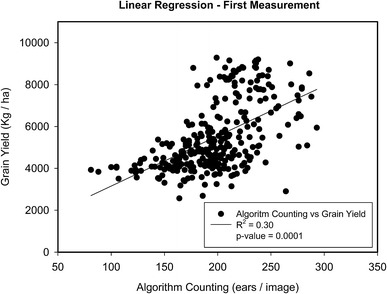
The number of ears per unit ground area (ear density) is one of the main agronomic yield components in determining grain yield in wheat. A fast evaluation of this attribute may contribute to monitoring the efficiency of crop management practices, to an early prediction of grain yield or as a phenotyping trait in breeding programs. Currently the number of ears is counted manually, which is time consuming. Moreover, there is no single standardized protocol for counting the ears. An automatic ear-counting algorithm is proposed to estimate ear density under field conditions based on zenithal color digital images taken from above the crop in natural light conditions. Field trials were carried out at two sites in Spain during the 2014/2015 crop season on a set of 24 varieties of durum wheat with two growing conditions per site. The algorithm for counting uses three steps: (1) a Laplacian frequency filter chosen to remove low and high frequency elements appearing in an image, (2) a Median filter to reduce high noise still present around the ears and (3) segmentation using Find Maxima to segment local peaks and determine the ear count within the image. The results demonstrate high success rate (higher than 90%) between the algorithm counts and the manual (image-based) ear counts, and precision, with a low standard deviation (around 5%). The relationships between algorithm ear counts and grain yield was also significant and greater than the correlation with manual (field-based) ear counts. In this approach, results demonstrate that automatic ear counting performed on data captured around anthesis correlated better with grain yield than with images captured at later stages when the low performance of ear counting at late grain filling stages was associated with the loss of contrast between canopy and ears. Developing robust, low-cost and efficient field methods to assess wheat ear density, as a major agronomic component of yield, is highly relevant for phenotyping efforts towards increases in grain yield. Although the phenological stage of measurements is important, the robust image analysis algorithm presented here appears to be amenable from aerial or other automated platforms.
Overview
The claims and statistics of this paper haven’t been checked yet.
Free: it reads the open-access text and checks the first 5 claims that cite a source we can check. Create a free account to check every claim.
Integrity signals
Registry
Cites
Statistics
Figures
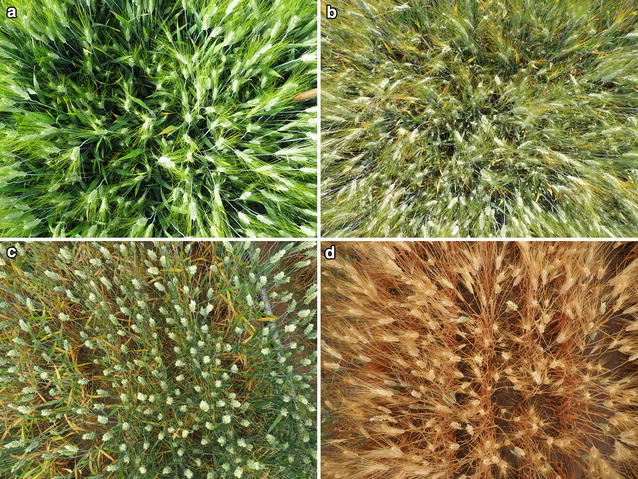

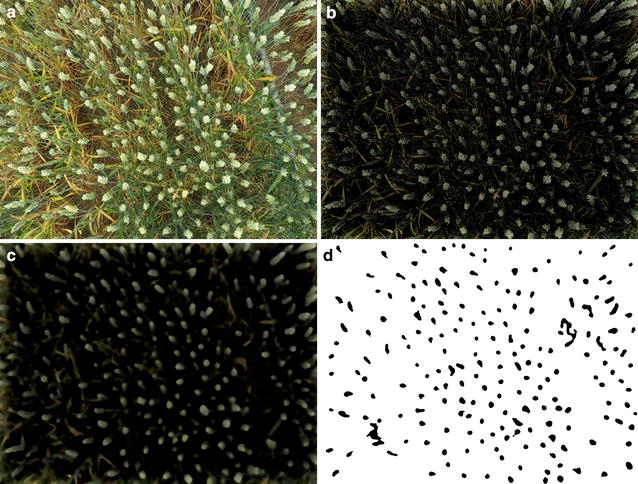
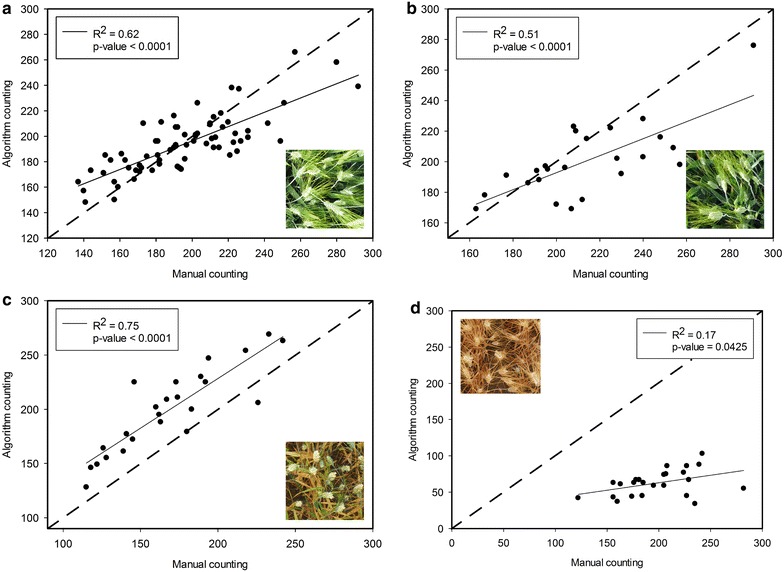
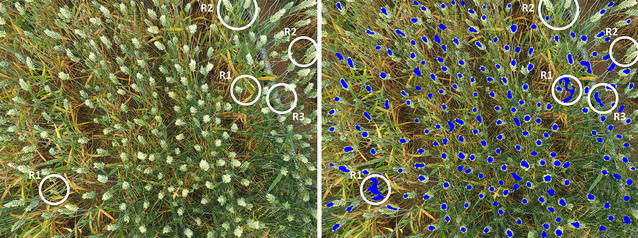
Verification
Claims the paper makes
The claims and statistics of this paper haven’t been checked yet.
Free: it reads the open-access text and checks the first 5 claims that cite a source we can check. Create a free account to check every claim.
Self-check
Percentages, sums and reported differences re-computed from the paper’s own numbers.
The self-check needs the paper’s full text.
Citations
Cites
NIH Image to ImageJ: 25 years of image analysis
Schneider, C. A., Rasband, W. S., & Eliceiri, K. W. (2012) · Nature Methods · doi:10.1038/nmeth.2089 · Cited by 64,638 · cited 1×
“The algorithm was developed in ImageJ software [31].”
MethodRemote Sensing of the Environment: An Earth Resource Perspective
Jensen, J. R. (2000) · Cited by 2,448
Center weighted median filters and their applications to image enhancement
Ko, S.-J., & Lee, Y. H. (1991) · IEEE Transactions on Circuits and Systems · doi:10.1109/31.83870 · Cited by 1,124
Blackledge, J. M. (2005) · Woodhead Publishing Limited eBooks · doi:10.1533/9780857099464 · Cited by 639
Coarse and fine regulation of wheat yield components in response to genotype and environment
Slafer, G. A., Savin, R., & Sadras, V. O. (2014) · Field Crops Research · doi:10.1016/j.fcr.2013.12.004 · Cited by 487 · cited 3×
“…frequently identified as the main agro-nomical component of yield and it appears to be the most relevant towards future increases in grain yield ([4] and Table 2 Statistical results of the relationships across the whole set of plots (288), as well as across the set of plots of each trial (72)…”
BackgroundWulder, M., Niemann, K. O., & Goodenough, D. G. (2000) · Remote Sensing of Environment · doi:10.1016/s0034-4257(00)00101-2 · Cited by 393
Pouliot, D. A., King, D. J., Bell, F. W., & Pitt, D. G. (2002) · Remote Sensing of Environment · doi:10.1016/s0034-4257(02)00050-0 · Cited by 391 · cited 1×
“Tree crown detection through aerial and high resolution satellite images has often employed smoothing filters to simplify crown form and reduce image noise [10–13].”
BackgroundAutomatic segmentation of relevant textures in agricultural images
Guijarro, M., Pajares, G., Riomoros, I., Herrera, P. J., Burgos-Artizzu, X. P., & Ribeiro, A. (2011) · Computers and Electronics in Agriculture · doi:10.1016/j.compag.2010.09.013 · Cited by 387
Physiological breeding II: a field guide to wheat phenotyping
Pask, A. J. D., Pietragalla, J., Mullan, D. M., & Reynolds, M. P. (2012) · Cited by 373
Increasing yield potential in wheat: Breaking the barriers
Reynolds, M. P., Rajaram, S., & McNab, A. S. (1996) · Cited by 337
Research works printed but not linked: 3
- Liu T Sun C Wang L Zhong X Zhu X Guo W In-field wheatear counting based on image processing technology Nongye Jixie Xuebao/Trans Chin Soc Agric Mach 2014 45 282 290
- Bourne R Image filters 2010 London Springer 137 172
- Tiago F Rasband W ImageJ user guide 2012 Bethesda National Institute of Mental Health
Cited by
Ear density estimation from high resolution RGB imagery using deep learning technique
Madec, S., Jin, X., Lu, H., De Solan, B., Liu, S., Duyme, F., Heritier, E., & Baret, F. (2019) · Agricultural and Forest Meteorology · doi:10.1016/j.agrformet.2018.10.013 · Cited by 312
High-Throughput Estimation of Crop Traits: A Review of Ground and Aerial Phenotyping Platforms
Jin, X., Zarco-Tejada, P. J., Schmidhalter, U., Reynolds, M. P., Hawkesford, M. J., Varshney, R. K., Yang, T., Nie, C., Li, Z., Ming, B., et al. (2021) · IEEE Geoscience and Remote Sensing Magazine · doi:10.1109/mgrs.2020.2998816 · Cited by 286
“RGB cameras have been widely applied to evaluate crop phenotyping traits in the field to provide measurements at an affordable price [46], [47], [162], [164], [258].”
Detection and analysis of wheat spikes using Convolutional Neural Networks
Hasan, M. M., Chopin, J. P., Laga, H., & Miklavcic, S. J. (2018) · Plant Methods · doi:10.1186/s13007-018-0366-8 · Cited by 275
A Wheat Spike Detection Method in UAV Images Based on Improved YOLOv5
Zhao, J., Zhang, X., Yan, J., Qiu, X., Yao, X., Tian, Y., Zhu, Y., & Cao, W. (2021) · Remote Sensing · doi:10.3390/rs13163095 · Cited by 201
From Open Set to Closed Set: Counting Objects by Spatial Divide-and-Conquer
Xiong, H., Lu, H., Liu, C., Liu, L., Cao, Z., & Shen, C. (2019) · 2019 IEEE/CVF International Conference on Computer Vision (ICCV) · doi:10.1109/iccv.2019.00845 · Cited by 197
“It has wide applications, such as automatic crowd management [15, 16, 17, 37, 38], traffic monitoring [14, 25], and crop yield estimation [10, 13, 23].”
BackgroundBreeding to adapt agriculture to climate change: affordable phenotyping solutions
Araus, J. L., & Kefauver, S. C. (2018) · Current Opinion in Plant Biology · doi:10.1016/j.pbi.2018.05.003 · Cited by 170
Self-citationSadeghi-Tehran, P., Virlet, N., Ampe, E. M., Reyns, P., & Hawkesford, M. J. (2019) · Frontiers in Plant Science · doi:10.3389/fpls.2019.01176 · Cited by 157
UAV and Ground Image-Based Phenotyping: A Proof of Concept with Durum Wheat
Gracia‐Romero, A., Kefauver, S. C., Fernandez-Gallego, J. A., Vergara‐Díaz, O., Nieto‐Taladriz, M. T., & Araus, J. L. (2019) · Remote Sensing · doi:10.3390/rs11101244 · Cited by 159
“As a counterpart, even if potentially of lower throughput, ground-based phenotyping on single plots using cameras or sensors held by hand [15–17] or a pole [18] represent low-cost alternatives to aerial assessments.”
BackgroundSelf-citationTasselNetv2: in-field counting of wheat spikes with context-augmented local regression networks
Xiong, H., Cao, Z., Lu, H., Madec, S., Liu, L., & Shen, C. (2019) · Plant Methods · doi:10.1186/s13007-019-0537-2 · Cited by 157
Proximal and remote sensing in plant phenomics: 20 years of progress, challenges, and perspectives
Tao, H., Xu, S., Tian, Y., Li, Z., Ge, Y., Zhang, J., Wang, Y., Zhou, G., Deng, X., Zhang, Z., et al. (2022) · Plant Communications · doi:10.1016/j.xplc.2022.100344 · Cited by 146
Wu, J., Yang, G., Yang, X., Xu, B., Han, L., & Zhu, Y. (2019) · Remote Sensing · doi:10.3390/rs11060691 · Cited by 130
“There is no doubt that image-based techniques provide a feasible, low-cost, and efficient solution for crop counting, such as wheat ear counting [17,18], oilseed rape flower counting [7], and sorghum head counting [19].”
BackgroundRapid Detection and Counting of Wheat Ears in the Field Using YOLOv4 with Attention Module
Yang, B., Gao, Z., Gao, Y., & Zhu, Y. (2021) · Agronomy · doi:10.3390/agronomy11061202 · Cited by 130
“used Fou‐ rier filtering and Fourier transform to segment wheat ears and backgrounds [15].”
MethodCrop breeding for a changing climate: integrating phenomics and genomics with bioinformatics
Marsh, J. I., Hu, H., Gill, M., Batley, J., & Edwards, D. (2021) · Theoretical and Applied Genetics · doi:10.1007/s00122-021-03820-3 · Cited by 119
“For example, to accelerate the counting of ears of wheat to determine yield, a process that is still often done manually, algorithms have been developed for ear counting from digital camera images (Fernandez-Gallego et al. 2018; Sadeghi-Tehran et al. 2019).”
BackgroundHigh-throughput field crop phenotyping: current status and challenges
Ninomiya, S. (2022) · Ikushugaku zasshi · doi:10.1270/jsbbs.21069 · Cited by 120
“…of wheat spikes has been widely performed using CNN models, challenging several of the difficulties experienced under natural conditions (Alkhudaydi et al. 2019, Fernandez-Gallego et al. 2018, Hasan et al. 2018, Madec et al. 2019, Sadeghi-Tehran et al. 2019, Xiong et al. 2019, Zhao et al. 2021a).”
MethodCrop phenotyping in a context of global change: What to measure and how to do it
Araus, J. L., Kefauver, S. C., Vergara‐Díaz, O., Gracia‐Romero, A., Rezzouk, F. Z., Segarra, J., Buchaillot, M. L., Chang-Espino, M. C., Vatter, T., Sánchez‐Bragado, R., et al. (2022) · Journal of Integrative Plant Biology · doi:10.1111/jipb.13191 · Cited by 114
Self-citationNew avenues for increasing yield and stability in C3 cereals: exploring ear photosynthesis
Sánchez‐Bragado, R., Vicente, R., Molero, G., Serret, M. D., Maydup, M. L., & Araus, J. L. (2020) · Current Opinion in Plant Biology · doi:10.1016/j.pbi.2020.01.001 · Cited by 99
Self-citationComputer vision based food grain classification: A comprehensive survey
Velesaca, H. O., Suárez, P. L., Mira, R. A., & Sappa, A. D. (2021) · Computers and Electronics in Agriculture · doi:10.1016/j.compag.2021.106287 · Cited by 98
“In spite of that, the visible spectrum is more widely used, for instance, [4] proposes a robust, low65”
BackgroundProgress in Research on Deep Learning-Based Crop Yield Prediction
Wang, Y., Zhang, Q., Feng, Y. Z., Zhang, N., Zhang, X., Li, Y., Wang, M., & Zhang, J. (2024) · Agronomy · doi:10.3390/agronomy14102264 · Cited by 132
Wheat ear counting using K-means clustering segmentation and convolutional neural network
Xu, X., Li, H., Yin, F., Xi, L., Qiao, H., Ma, Z., Shen, S., Jiang, B., & Ma, X. (2020) · Plant Methods · doi:10.1186/s13007-020-00648-8 · Cited by 94
“Fernandez-Gallego et al. [11] used local maximum peak values to count ears based on RGB color images in field conditions [12].”
BackgroundResultTasselNetV3: Explainable Plant Counting With Guided Upsampling and Background Suppression
Lü, H., Liu, L., Li, Y., Zhao, X., Wang, X., & Cao, Z. (2021) · IEEE Transactions on Geoscience and Remote Sensing · doi:10.1109/tgrs.2021.3058962 · Cited by 107
“This may explain why plant counting is often formulated as an object detection [5], [13] or an image segmentation [14], [15] problem.”
BackgroundAutomatic wheat ear counting using machine learning based on RGB UAV imagery
Fernandez-Gallego, J. A., Lootens, P., Borra‐Serrano, I., Derycke, V., Haesaert, G., Roldán-Ruíz, I., Araus, J. L., & Kefauver, S. C. (2020) · The Plant Journal · doi:10.1111/tpj.14799 · Cited by 88
Self-citationWheat Ear Recognition Based on RetinaNet and Transfer Learning
Li, J., Li, C., Fei, S., Ma, C., Chen, W., Ding, F., Wang, Y., Li, Y., Shi, J., & Xiao, Z. Y. (2021) · Sensors · doi:10.3390/s21144845 · Cited by 81
“Additionally, some spike counting methods are based on wheat spike data collected at maturity and other traits, which are not suitable for early yield prediction [9].”
BackgroundZhou, C., Ye, H., Hu, J., Shi, X., Hua, S., Yue, J., Xu, Z., & Yang, G. (2019) · Sensors · doi:10.3390/s19143106 · Cited by 75
“proposed a novel ear-counting algorithm to measure ear density under field conditions [6].”
BackgroundA deep learning method for oriented and small wheat spike detection (OSWSDet) in UAV images
Zhao, J., Yan, J., Xue, T., Wang, S., Qiu, X., Yao, X., Tian, Y., Zhu, Y. P., Cao, W., & Zhang, X. (2022) · Computers and Electronics in Agriculture · doi:10.1016/j.compag.2022.107087 · Cited by 75
Assessing durum wheat ear and leaf metabolomes in the field through hyperspectral data
Vergara‐Díaz, O., Vatter, T., Kefauver, S. C., Obata, T., Fernie, A. R., & Araus, J. L. (2020) · The Plant Journal · doi:10.1111/tpj.14636 · Cited by 68
Self-citationLi, L., Hassan, M. A., Yang, S., Jing, F., Yang, M., Rasheed, A., Wang, J., Xia, X., He, Z., & Xiao, Y. (2022) · The Crop Journal · doi:10.1016/j.cj.2022.07.007 · Cited by 69
Resources for image-based high-throughput phenotyping in crops and data sharing challenges
Danilevicz, M. F., Bayer, P. E., Nestor, B. J., Bennamoun, M., & Edwards, D. (2021) · PLANT PHYSIOLOGY · doi:10.1093/plphys/kiab301 · Cited by 70
A Multiscale Point-Supervised Network for Counting Maize Tassels in the Wild
Zheng, H., Fan, X., Bo, W., Yang, X., Tjahjadi, T., & Jin, S. (2023) · Plant Phenomics · doi:10.34133/plantphenomics.0100 · Cited by 60
“3B and [1,3,7] as shown in Fig.”
Yang, Z., Gao, S., Xiao, F., Li, G., Ding, Y., Guo, Q., Paul, M. J., & Liu, Z. (2020) · Plant Methods · doi:10.1186/s13007-020-00660-y · Cited by 59
Wheat Spike Detection and Counting in the Field Based on SpikeRetinaNet
Wen, C., Wu, J., Chen, H., Su, H., Chen, X., Li, Z., & Yang, C. (2022) · Frontiers in Plant Science · doi:10.3389/fpls.2022.821717 · Cited by 59
Automatic Wheat Ear Counting Using Thermal Imagery
Fernandez-Gallego, J. A., Buchaillot, M. L., Aparicio, N., Nieto‐Taladriz, M. T., Araus, J. L., & Kefauver, S. C. (2019) · Remote Sensing · doi:10.3390/rs11070751 · Cited by 58
“Depends of the hour of the day, 8:00 to 18:30 [10], 8:00 to 17:00 [14], 9:00 to 16:00 [9], 12:00 to 16:00 and sky (preferably diffuse light) conditions [12].”
BackgroundMethodSelf-citationDeep learning for wheat ear segmentation and ear density measurement: From heading to maturity
Dandrifosse, S., Ennadifi, E., Carlier, A., Gosselin, B. H., Dumont, B., & Mercatoris, B. (2022) · Computers and Electronics in Agriculture · doi:10.1016/j.compag.2022.107161 · Cited by 58
A Robust Method for Wheatear Detection Using UAV in Natural Scenes
He, M.-X., Peng, H., & Xin, Y.-Z. (2020) · IEEE Access · doi:10.1109/access.2020.3031896 · Cited by 56
Real-Time Detection and Counting of Wheat Spikes Based on Improved YOLOv10
Guan, S., Lin, Y., Lin, G., Su, P., Huang, S., Meng, X., Liu, P., & Yan, J. (2024) · Agronomy · doi:10.3390/agronomy14091936 · Cited by 62
Segmenting ears of winter wheat at flowering stage using digital images and deep learning
Ma, J., Li, Y., Du, K., Zheng, F., Zhang, L., Gong, Z., & Jiao, W. (2019) · Computers and Electronics in Agriculture · doi:10.1016/j.compag.2019.105159 · Cited by 58
Deep Segmentation of Point Clouds of Wheat
Ghahremani, M., Williams, K. S., Corke, F. M. K., Tiddeman, B., Liu, Y., & Doonan, J. H. (2021) · Frontiers in Plant Science · doi:10.3389/fpls.2021.608732 · Cited by 57
“Fernandez-Gallego et al. (2018) achieved correlations of up to R 2 = 0.75 between their computer vision method using 2D images of field grown wheat and manual counting.”
MethodInfluentialJin, X., Madec, S., Dutartre, D., de Solan, B., Comar, A., & Baret, F. (2019) · Plant Phenomics · doi:10.34133/2019/4820305 · Cited by 54
Detection method of wheat spike improved YOLOv5s based on the attention mechanism
Zang, H., Wang, Y., Ru, L., Zhou, M. R., Chen, D., Zhao, Q., Zhang, J., Li, G., & Zheng, G. (2022) · Frontiers in Plant Science · doi:10.3389/fpls.2022.993244 · Cited by 54
Combined Use of FCN and Harris Corner Detection for Counting Wheat Ears in Field Conditions
Wang, D., Fu, Y., Yang, G., Yang, X., Liang, D., Zhou, C., Zhang, N., Wu, H., & Zhang, D. (2019) · IEEE Access · doi:10.1109/access.2019.2958831 · Cited by 49
Xu, C., Jiang, H., Yuen, P. W. T., Ahmad, K. Z., & Chen, Y. (2020) · Computers and Electronics in Agriculture · doi:10.1016/j.compag.2020.105375 · Cited by 52
A Mixed Data-Based Deep Neural Network to Estimate Leaf Area Index in Wheat Breeding Trials
Apolo-Apolo, O. E., Ruiz, M. P., Martínez-Guanter, J., & Egea, G. (2020) · Agronomy · doi:10.3390/agronomy10020175 · Cited by 45
“Fernández-Gallego [65] also developed an algorithm for a rapid and accurate evaluation of the number of wheat ears as alternative to the manual counts.”
MethodDas, S., Christopher, J., Apan, A., Choudhury, M. R., Chapman, S. C., Menzies, N. W., & Dang, Y. P. (2021) · ISPRS Journal of Photogrammetry and Remote Sensing · doi:10.1016/j.isprsjprs.2021.01.014 · Cited by 49
High-Throughput Rice Density Estimation from Transplantation to Tillering Stages Using Deep Networks
Liu, L., Lü, H., Li, Y., & Cao, Z. (2020) · Plant Phenomics · doi:10.34133/2020/1375957 · Cited by 45
“More importantly, many counting results are closely related to the crop yield, such as the number of wheat ears per unit ground area (ear density) [5, 6] and the number of fruits [7].”
BackgroundHigh-Precision Wheat Head Detection Model Based on One-Stage Network and GAN Model
Zhang, Y., Li, M., Ma, X., Wu, X., & Wang, Y. (2022) · Frontiers in Plant Science · doi:10.3389/fpls.2022.787852 · Cited by 47
Segmentation and counting of wheat spike grains based on deep learning and textural feature
Xu, X., Geng, Q., Gao, F., Xiong, D., Qiao, H., & Ma, X. (2023) · Plant Methods · doi:10.1186/s13007-023-01062-6 · Cited by 42
“In evaluating model accuracy, the confusion matrix is mainly used to compare the predicted and true values, which is used to compare the position of each true image element with the predicted image element [9].”
MethodInfluentialKumar, D., & Kukreja, V. (2024) · Computers and Electronics in Agriculture · doi:10.1016/j.compag.2024.109005 · Cited by 37
Popescu, D., Ichim, L., & Stoican, F. (2023) · Frontiers in Plant Science · doi:10.3389/fpls.2023.1237695 · Cited by 38
del Pozo, A., Jobet, C., Matus, I. A., Méndez-Espinoza, A. M., Garriga, M., Castillo, D., & Elazab, A. (2022) · Frontiers in Plant Science · doi:10.3389/fpls.2021.732988 · Cited by 36
Tan, C., Zhang, P., Zhang, Y., Zhou, X., Wang, Z., Du, Y., Mao, W., Li, W., Wang, D., & Guo, W. (2020) · Frontiers in Plant Science · doi:10.3389/fpls.2020.00259 · Cited by 35
“Moreover, the relationship between spike number and yield at different stages was analyzed, and it was found that the spike number at the flowering stage had the highest correlation to yield (Fernandez-Gallego et al., 2018).”
BackgroundImproved Mask R-CNN Combined with Otsu Preprocessing for Rice Panicle Detection and Segmentation
Hong, S., Jiang, Z., Liu, L., Wang, J., Zhou, L., & Xu, J. (2022) · Applied Sciences · doi:10.3390/app122211701 · Cited by 36
Roth, L., Rodríguez‐Álvarez, M. X., van Eeuwijk, F. A., Piepho, H., & Hund, A. (2021) · Field Crops Research · doi:10.1016/j.fcr.2021.108314 · Cited by 36
Khoroshevsky, F., Khoroshevsky, S., & Bar-Hillel, A. (2021) · Remote Sensing · doi:10.3390/rs13132496 · Cited by 36
Lightweight YOLOv8 for Wheat Head Detection
Fang, C., & Yang, X. (2024) · IEEE Access · doi:10.1109/access.2024.3397556 · Cited by 34
“Manual counting and/or deep-learning image processing methods are often employed [10], [11]; however, manual scrutiny relies on the experience of workers, has low accuracy, and consumes a significant amount of human resources [12].”
BackgroundDetection of rice panicle density for unmanned harvesters via RP-YOLO
Sun, J., Zhou, J., He, Y., Jia, H., & Rottok, L. T. (2024) · Computers and Electronics in Agriculture · doi:10.1016/j.compag.2024.109371 · Cited by 31
Zhang, D., Wang, Z., Jin, N., Gu, C., Chen, Y., & Huang, Y. (2020) · IEEE Access · doi:10.1109/access.2020.3001652 · Cited by 34
“used image filtering technique to complete wheat ear image segmentation and wheat ear counting [15].”
MethodMa, J., Li, Y., Liu, H., Wu, Y., & Zhang, L. (2021) · Expert Systems with Applications · doi:10.1016/j.eswa.2021.116226 · Cited by 31
Vegetation Indices for Predicting the Growth and Harvest Rate of Lettuce
Ribeiro, A. L. A., Maciel, G. M., Siquieroli, A. C. S., Luz, J. M. Q., Gallis, R. B. D. A., Assis, P. H. D. S., Catão, H. C. R. M., & Yada, R. Y. (2023) · Agriculture · doi:10.3390/agriculture13051091 · Cited by 30
An Automatic Field Plot Extraction Method From Aerial Orthomosaic Images
Khan, Z., & Miklavcic, S. J. (2019) · Frontiers in Plant Science · doi:10.3389/fpls.2019.00683 · Cited by 29
“, 2018a), or for estimation of yield by counting heads (Fernandez-Gallego et al., 2018; Hasan et al., 2018; Zhou et al., 2018), must begin with establishing the precise location and perimeter of field plots.”
BackgroundLi, H., Li, Z., Dong, W., Cao, X., Wen, Z., Xiao, R., Wei, Y., Zeng, H., & Ma, X. (2021) · Computers and Electronics in Agriculture · doi:10.1016/j.compag.2021.106178 · Cited by 29
Gibbs, J. A., Burgess, A. J., Pound, M. P., Pridmore, T., & Murchie, E. H. (2019) · PLANT PHYSIOLOGY · doi:10.1104/pp.19.00141 · Cited by 29
“(Cointault and Gouton, 2007; Velumani et al., 2017; Fernandez-Gallego et al., 2018).”
Lightweight and efficient neural network with SPSA attention for wheat ear detection
Dong, Y. X., Liu, Y., Kang, H., Li, C., Liu, P., & Liu, Z. (2022) · PeerJ Computer Science · doi:10.7717/peerj-cs.931 · Cited by 26
Exploring genetic architecture for pod-related traits in soybean using image-based phenotyping
Chang, F., Lv, W., Lv, P., Xiao, Y., Yan, W., Chen, S., Zheng, L., Xie, P., Wang, L., Karikari, B., et al. (2021) · Molecular Breeding · doi:10.1007/s11032-021-01223-2 · Cited by 25
Gracia‐Romero, A., Rufo, R., Gómez-Candón, D., Soriano, J. M., Bellvert, J., Yannam, V. R. R., Gulino, D., & Lopes, M. S. (2023) · Frontiers in Plant Science · doi:10.3389/fpls.2023.1063983 · Cited by 26
“, 2012) that can be easily measured with image analysis (Fernandez-Gallego et al., 2018) and may improve the accuracy of yield prediction models.”
Backgroundde Lima, V. J., Gracia‐Romero, A., Rezzouk, F. Z., Diez–Fraile, M. C., Araus, I., Kamphorst, S. H., Júnior, A. T. D. A., Kefauver, S. C., Aparicio, N., & Araus, J. L. (2021) · Frontiers in Plant Science · doi:10.3389/fpls.2021.687622 · Cited by 26
Self-citationFrost Damage Index: The Antipode of Growing Degree Days
Tschurr, F., Kirchgeßner, N., Hund, A., Kronenberg, L., Anderegg, J., Walter, A., & Roth, L. (2023) · Plant Phenomics · doi:10.34133/plantphenomics.0104 · Cited by 26
“1), greenness [24,25], or ear density [26], can be estimated from images.”
A novel light interception trait of a hybrid rice ideotype indicative of leaf to panicle ratio
Xiao, F., Li, W., Xiao, M., Yang, Z., Cheng, W., Gao, S., Li, G., Ding, Y., Paul, M. J., & Liu, Z. (2021) · Field Crops Research · doi:10.1016/j.fcr.2021.108338 · Cited by 26
Counting spikelets from infield wheat crop images using fully convolutional networks
Alkhudaydi, T., & de la Iglesia, B. (2022) · Neural Computing and Applications · doi:10.1007/s00521-022-07392-1 · Cited by 25
Small and Oriented Wheat Spike Detection at the Filling and Maturity Stages Based on WheatNet
Zhao, J., Cai, Y., Wang, S., Yan, J., Qiu, X., Yao, X., Tian, Y., Zhu, Y. P., Cao, W., & Zhang, X. (2023) · Plant Phenomics · doi:10.34133/plantphenomics.0109 · Cited by 24
“Researchers have analyzed wheat spike images and proposed convolutional neural networks for wheat spike counting, including classification, detection, and segmentation [5,8–10].”
BackgroundMethodResultInfluentialGeng, Q., Zhang, H., Gao, M., Qiao, H., Xu, X., & Ma, X. (2024) · European Journal of Agronomy · doi:10.1016/j.eja.2024.127158 · Cited by 23
Roth, L., Marzougui, A., & Walter, A. (2025) · Journal of Plant Physiology · doi:10.1016/j.jplph.2025.154542 · Cited by 23
A survey on deep learning applications in wheat phenotyping
Zaji, A., Liu, Z., Xiao, G. G., Sangha, J. S., & Ruan, Y. (2022) · Applied Soft Computing · doi:10.1016/j.asoc.2022.109761 · Cited by 20
Xu, X., Qiao, H., Ma, X., Yin, G., Wang, Y., Zhao, J., & Li, H. (2023) · Measurement · doi:10.1016/j.measurement.2023.112849 · Cited by 21
Spectrum- and RGB-D-Based Image Fusion for the Prediction of Nitrogen Accumulation in Wheat
Xu, K., Zhang, J., Li, H., Cao, W., Zhu, Y. P., Jiang, X., & Ni, J. (2020) · Remote Sensing · doi:10.3390/rs12244040 · Cited by 20
Wheat Ear Segmentation Based on a Multisensor System and Superpixel Classification
Carlier, A., Dandrifosse, S., Dumont, B., & Mercatoris, B. (2022) · Plant Phenomics · doi:10.34133/2022/9841985 · Cited by 21
Association between unmanned aerial vehicle high‐throughput canopy phenotyping and soybean yield
Casagrande, C. R., Sant’Ana, G. C., Meda, A. R., Garcia, A., Carneiro, P. C. S., Nardino, M., & Borém, A. (2022) · Agronomy Journal · doi:10.1002/agj2.21047 · Cited by 20
CSNet: A Count-Supervised Network via Multiscale MLP-Mixer for Wheat Ear Counting
Li, Y., Wu, X., Wang, Q., Pei, Z., Zhao, K., Chen, P., & Hao, G. (2024) · Plant Phenomics · doi:10.34133/plantphenomics.0236 · Cited by 21
“Fernandez et al. [8] proposed a high-throughput and low-cost method for wheat ear counting by utilizing Laplace frequency and median filters to obtain low-noise wheat ear features.”
MethodPaddy Rice Imagery Dataset for Panicle Segmentation
Wang, H., Lyu, S., & Ren, Y. (2021) · Agronomy · doi:10.3390/agronomy11081542 · Cited by 20
“With the development of deep learning methods, convolutional neural networks have been shown to outperform human beings in diverse fields, including phenotyping [1], disease recognition [8], flowering, and ear counting [7,9,10].”
BackgroundQian, Y., Qin, Y., Wei, H., Lu, Y., Huang, Y., Liu, P., & Fan, Y. (2024) · Computers and Electronics in Agriculture · doi:10.1016/j.compag.2024.109342 · Cited by 19
Self-adversarial Training and Attention for Multi-task Wheat Phenotyping
Hu, G., Qian, L., Liang, D., & Wan, M. (2019) · Applied Engineering in Agriculture · doi:10.13031/aea.13406 · Cited by 19
Calvario, G., Alarcón, T. E., Dalmau, O., Sierra, B., & Hernández, C. (2020) · Sensors · doi:10.3390/s20216247 · Cited by 18
“In [5], a system for the automatic quantification of wheat ear was proposed based on images acquired by an RGB conventional camera.”
MethodYOLOv5-Based Model Integrating Separable Convolutions for Detection of Wheat Head Images
Shen, R., Zhen, T., & Li, Z. (2023) · IEEE Access · doi:10.1109/access.2023.3241808 · Cited by 18
“Gallego [2] used Laplacian filter and median filter to remove noise, and then used local maximum peak for wheat head counting.”
MethodJiang, Q., Huang, Z., Xu, G., & Su, Y. (2023) · Smart Agricultural Technology · doi:10.1016/j.atech.2023.100226 · Cited by 16
APW: An ensemble model for efficient wheat spike counting in unmanned aerial vehicle images
Yao, Z., Zhang, D., Tian, T., Zain, M., Zhang, W., Yang, T., Song, X., Zhu, S., Liu, T., Ma, H., et al. (2024) · Computers and Electronics in Agriculture · doi:10.1016/j.compag.2024.109204 · Cited by 17
Phenotyping genotypic performance under multistress conditions: Mediterranean wheat as a case study
Araus, J. L., Rezzouk, F. Z., Sánchez‐Bragado, R., Aparicio, N., & Serret, M. D. (2023) · Field Crops Research · doi:10.1016/j.fcr.2023.109122 · Cited by 15
Self-citationRole of the Genomics–Phenomics–Agronomy Paradigm in Plant Breeding
Chen, C. J., Rutkoski, J. E., Schnable, J. C., Murray, S. C., Wang, L., Jin, X., Stich, B., Crossa, J. L., Hayes, B. J., & Zhang, Z. (2022) · Wiley eBooks · doi:10.1002/9781119874157.ch10 · Cited by 18
Hamila, O., Henry, C. J., Molina, O. I., Bidinosti, C. P., & Henríquez, M. A. (2024) · Canadian Journal of Plant Science · doi:10.1139/cjps-2023-0127 · Cited by 14
“Another study (Fernandez-Gallego et al. 2018) attempted to estimate wheat ear density under field conditions by using images of wheat plots at different growth stages.”
Ma, J., Wu, Y., Liu, B., Zhang, W., Wang, B., Chen, Z., Wang, G., & Guo, A. (2023) · Remote Sensing · doi:10.3390/rs15235444 · Cited by 15
Yaseen, M. U., Ahmad, S., Ahmad, M., Long, J. M., Raza, H. A., Iftekhar, H., Ameer, S., & Ogunbiyi, D. (2024) · AgriEngineering · doi:10.3390/agriengineering6030143 · Cited by 13
“However, one limitation of the Happy Seeder is the inability to handle the high residue rice, which has both a heavy straw load and stubble present during wheat sowing [48].”
Żelazny, W. R., Chrpová, J., & Hamouz, P. (2021) · Biosystems Engineering · doi:10.1016/j.biosystemseng.2021.08.019 · Cited by 13
Wang, F., Li, F., Mohan, V., Dudley, R., Gu, D., & Bryant, R. (2021) · Biosystems Engineering · doi:10.1016/j.biosystemseng.2021.11.022 · Cited by 13
Zhang, D., Gu, C., Wang, Z., Zhou, X., & Li, W. (2021) · Biosystems Engineering · doi:10.1016/j.biosystemseng.2021.09.008 · Cited by 13
A Review of Field Plant Phenotyping Platform, Sensing and Navigation Technology
Rui, Z., Zhang, Z., & Chen, T. (2024) · Smart agriculture · doi:10.1007/978-981-97-4141-0_1 · Cited by 18
The estimation of wheat tiller number based on UAV images and gradual change features (GCFs)
Liu, T., Zhao, Y., Wu, F. L., Wang, J., Chen, C., Zhou, Y., Ju, C., Huo, Z., Zhong, X., Liu, S., et al. (2022) · Precision Agriculture · doi:10.1007/s11119-022-09949-5 · Cited by 12
“This approach provides not only a preliminary estimate of yield but also analyzes the effective tiller situation of the population and the individual’s status in combination with basic data, which has a positive significance for wheat research (Fernandez-Gallego et al., 2018; Sadeghi- Te Hran et al., 2019; Velumani et…”
BackgroundSampling Survey Method of Wheat Ear Number Based on UAV Images and Density Map Regression Algorithm
Wu, W. Y., Zhong, X., Lei, C., Zhao, Y., Liu, T., Sun, C., Guo, W., Sun, T., & Liu, S. (2023) · Remote Sensing · doi:10.3390/rs15051280 · Cited by 13
Yan, J., Zhao, J., Cai, Y., Wang, S., Qiu, X., Yao, X., Tian, Y., Zhu, Y. P., Cao, W., & Zhang, X. (2023) · Plant Methods · doi:10.1186/s13007-023-01020-2 · Cited by 12
“Some non-convolutional methods use image processing technology and machine learning to design feature extraction for small-sized wheat spikes detection [16, 17].”
MethodYuan, X., Li, D., Sun, P., Wang, G., & Ma, Y. (2022) · Forests · doi:10.3390/f13091459 · Cited by 12
“testing, counting and measuring the height of saplings using manual sampling estimates are not only unstable and less timely [6], but they are also labour intensive.”
MethodA generalized model for accurate wheat spike detection and counting in complex scenarios
Wen, C., Ma, Z., Ren, J., Zhang, T., Zhang, L., Chen, H., Su, H., Yang, C., Chen, H., & Guo, W. (2024) · Scientific Reports · doi:10.1038/s41598-024-75523-w · Cited by 11
“In recent decades, with the development of computer technology, image processing and machine learning techniques have been increasingly applied to extract crop phenotype parameters 14,15 .”
Cereal Crop Ear Counting in Field Conditions Using Zenithal RGB Images
Fernandez-Gallego, J. A., Buchaillot, M. L., Gracia‐Romero, A., Vatter, T., Vergara‐Díaz, O., Aparicio, N., Nieto‐Taladriz, M. T., Kerfal, S., Serret, M. D., Araus, J. L., et al. (2019) · Journal of Visualized Experiments · doi:10.3791/58695 · Cited by 13
Self-citationRGB imaging and computer vision-based approaches for identifying spike number loci for wheat
Li, L., Hassan, M. A., Wang, D., Wan, G., Beegum, S., Rasheed, A., Xia, X., He, Y., Zhang, Y., He, Z., et al. (2025) · Plant Phenomics · doi:10.1016/j.plaphe.2025.100051 · Cited by 11
“These findings are consistent with those of previous studies showing that the best SN model recognition effect is achieved when the spike is green and the stem and leaf are yellow [35,51].”
Wheat Ear Detection Algorithm Based on Improved YOLOv4
Zhao, F., Xu, L., Lv, L., & Zhang, Y. (2022) · Applied Sciences · doi:10.3390/app122312195 · Cited by 10
Metadata
- Authors
- Fernandez-Gallego, J. A., Kefauver, S. C., Gutiérrez, N. A., Nieto-Taladriz, M. T., & Araus, J. L.
- Affiliations
- Universitat de Barcelona (ES)
- Corresponding author
- Kefauver, Shawn C.
- Venue
- Plant Methods
- Published
- 2018-03-17
- Volume
- 14
- Issue
- 1
- Pages
- 22-22
- ISSN
- 1746-4811 (ISSN-L)
- PMC
- PMC5857137
- OpenAlex
- W2792794208
- Cited by
- 173
- References
- 41
- Citations by year
- 2026: 14 · 2025: 12 · 2024: 26 · 2023: 22 · 2022: 30 · 2021: 30 · 2020: 17 · 2019: 16 · 2018: 6
- FWCI
- 15.26
- Type
- journal article
- Language
- en
- Open access
- gold
- doi.org
- Licence
- cc-by
- creativecommons.org/licenses/by/4.0/ (tdm)
- Locations
- Plant Methods (publishedVersion, cc-by)
- PubMed Central (publishedVersion, cc-by)
- PubMed (publishedVersion)
- RECERCAT (Consorci de Serveis Universitaris de Catalunya) (publishedVersion, other-oa)
- DIGITAL.CSIC (Spanish National Research Council (CSIC)) (submittedVersion, cc-by-nc-sa)
- Dipòsit Digital de la Universitat de Barcelona (Universitat de Barcelona) (submittedVersion, cc-by)
- LA Referencia (Red Federada de Repositorios Institucionales de Publicaciones Científicas) (submittedVersion, cc-by-nc-sa)
- DOAJ (DOAJ: Directory of Open Access Journals) (submittedVersion, cc-by-sa)
- Funders
- Secretaría de Estado de Investigación, Desarrollo e Innovación (AGL2016-76527-R, IJCI-2014-20595)
- Universidad de Tolima (BPIN 2013000100103)
- Topics
- Life Sciences › Agricultural and Biological Sciences › Plant Science › Smart Agriculture and AI
- Physical Sciences › Environmental Science › Ecology › Remote Sensing in Agriculture
- Life Sciences › Agricultural and Biological Sciences › Plant Science › Leaf Properties and Growth Measurement
- Keywords
- ear density, durum wheat, grain yield prediction, RGB image analysis, automated image segmentation, median filter, crop phenotyping, aerial imaging, anthesis, yield components
About these checks
Registry, retraction, Cites and statistics results are computed, not judged, with one exception: a printed reference that no index lists is read once by a model before it counts as a citation error. Claims are extracted by a model and kept only when their quote appears verbatim in the text; each cited source is then checked, with a model’s help, for whether it says what the claim relies on. Those verdicts can be wrong — read the claim’s quote and the cited source before relying on one.
Statistics and arithmetic are recomputed, not judged.
Confidence bands are shown only for fields calibrated on our annotated test set. None is calibrated yet, so no band is shown.
What counts as a claim ›How we measure confidence ›How we check this ›
Are you an author, or do you see a problem with this page? Request a review
Data sources
Bibliographic data: Semantic Scholar, OpenAlex, Crossref.
Contains information from the Semantic Scholar Academic Graph Datasets, made available under the ODC Attribution License (ODC-BY 1.0).
Semantic Scholar’s data is described in: Kinney, R., et al. (2023). The Semantic Scholar Open Data Platform. arXiv:2301.10140.
