

The DOI matches its Crossref record; 417 of the 417 references it cites were found in a registry or an index.
NADPH oxidase in brain injury and neurodegenerative disorders
Open accessAbstract
Oxidative stress is a common denominator in the pathology of neurodegenerative disorders such as Alzheimer's disease, Parkinson's disease, Huntington's disease, amyotrophic lateral sclerosis, and multiple sclerosis, as well as in ischemic and traumatic brain injury. The brain is highly vulnerable to oxidative damage due to its high metabolic demand. However, therapies attempting to scavenge free radicals have shown little success. By shifting the focus to inhibit the generation of damaging free radicals, recent studies have identified NADPH oxidase as a major contributor to disease pathology. NADPH oxidase has the primary function to generate free radicals. In particular, there is growing evidence that the isoforms NOX1, NOX2, and NOX4 can be upregulated by a variety of neurodegenerative factors. The majority of recent studies have shown that genetic and pharmacological inhibition of NADPH oxidase enzymes are neuroprotective and able to reduce detrimental aspects of pathology following ischemic and traumatic brain injury, as well as in chronic neurodegenerative disorders. This review aims to summarize evidence supporting the role of NADPH oxidase in the pathology of these neurological disorders, explores pharmacological strategies of targeting this major oxidative stress pathway, and outlines obstacles that need to be overcome for successful translation of these therapies to the clinic.
Overview
The claims and statistics of this paper haven’t been checked yet.
Run the check — free, no account needed. It reads the open-access text and checks the sources it cites.
Integrity signals
Registry
Cites
Statistics
Figures
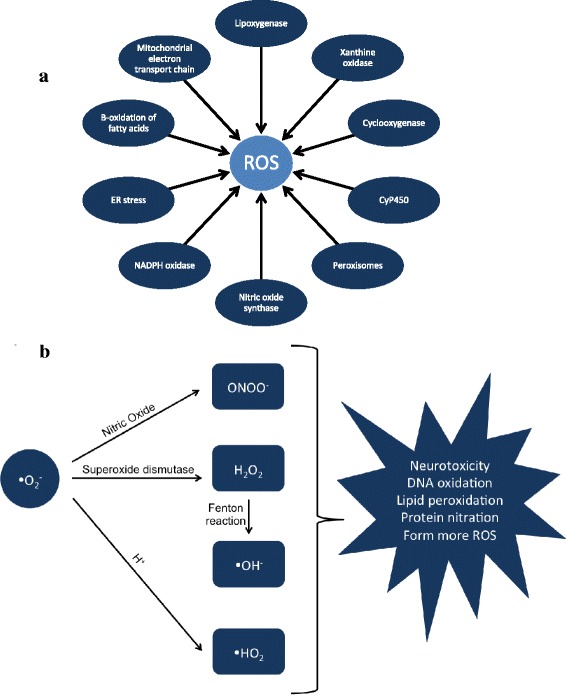
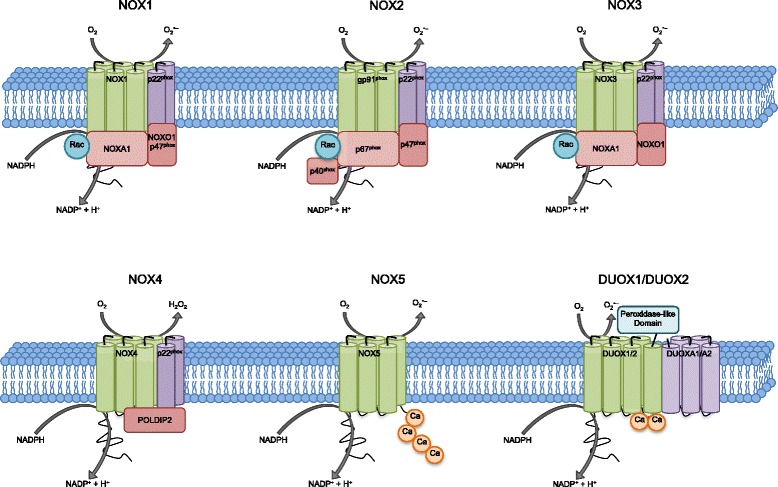
Verification
Claims the paper makes
The claims and statistics of this paper haven’t been checked yet.
Run the check — free, no account needed. It reads the open-access text and checks the sources it cites.
Claims other papers make about this one
Each is checked against this paper’s own text: does it say what the citing paper says it does?
In the citing paper
“The robust activation of NOX isoforms in response to acute neuronal injury and chronic inflammation with oxidative damage has been well documented in post-mortem tissue and models of neurodegeneration (reviewed in [83]).”
From ROS Generation in Microglia: Understanding Oxidative Stress and Inflammation in Neurodegenerative Disease (2020) · cites this paper as [83]
Self-check
Percentages, sums and reported differences re-computed from the paper’s own numbers.
The self-check needs the paper’s full text.
Citations
Cites
1 retracted
Items 401–417 of 417
Tuo, Y.-H., Liu, Z., Chen, J., Wang, Q.-Y., Li, S., Li, M., Dai, G., Wang, J., Zhang, Y., Feng, L., et al. (2016) · Journal of NeuroInterventional Surgery · doi:10.1136/neurintsurg-2016-012377 · Cited by 25
The respiratory burst of phagocytosis: Biochemistry and subcellular localization
Borregaard, N. (1985) · Immunology Letters · doi:10.1016/0165-2478(85)90164-6 · Cited by 24
Brain infarct volume after permanent focal ischemia is not dependent on Nox2 expression
Kim, H. A., Brait, V. H., Lee, S., Silva, T. M. D., Diep, H., Eisenhardt, A., Drummond, G. R., & Sobey, C. G. (2012) · Brain Research · doi:10.1016/j.brainres.2012.09.023 · Cited by 23
Sriramoju, B., Kanwar, R., Veedu, R. N., & Kanwar, J. R. (2015) · Current Topics in Medicinal Chemistry · doi:10.2174/1568026615666150413153928 · Cited by 23
Oxidative damage to DNA in plaques of MS brains
Vladimirova, O. O., O'Connor, J., Cahill, A., et al. (1998) · Multiple Sclerosis Journal · doi:10.1191/135245898678919456 · Cited by 21
Aptamers as Innovative Diagnostic and Therapeutic Agents in the Central Nervous System
de Franciscis, V., Esposito, C. L., Catuogno, S., Cellai, L., & Cerchia, L. (2009) · CNS & Neurological Disorders - Drug Targets · doi:10.2174/187152709789542023 · Cited by 20
Mechanisms of Ascorbyl Radical Formation in Human Platelet-Rich Plasma
Shyu, K., Chang, C.-C., Yeh, Y.-C., Sheu, J., & Chou, D. (2014) · BioMed Research International · doi:10.1155/2014/614506 · Cited by 18
A Reversible Aptamer Improves Outcome and Safety in Murine Models of Stroke and Hemorrhage
Blake, C. M., Wang, H., Laskowitz, D. T., & Sullenger, B. A. (2010) · Oligonucleotides · doi:10.1089/oli.2010.0262 · Cited by 13
Nakamura, Y., Tsuji, K., Shuto, M., Ogita, K., Yoneda, Y., Shimamoto, K., Shibata, T., & Kataoka, K. (1997) · Neuroscience · doi:10.1016/s0306-4522(96)00375-2 · Cited by 13
Zhou, Y. M., & Zhao, Y. (2015) · Molecular Medicine Reports · doi:10.3892/mmr.2015.3154 · Cited by 11
Cui, X.-L., Chang, B., & Myatt, L. (2009) · Biology of Reproduction · doi:10.1095/biolreprod.109.080275 · Cited by 11
A leading role for NADPH oxidase in an in-vitro study of experimental autoimmune encephalomyelitis
Seo, J., Hasan, M., Rahaman, K. A., Kang, M., Jung, B.-H., & Kwon, O. (2016) · Molecular Immunology · doi:10.1016/j.molimm.2016.02.009 · Cited by 11
Ko, E., Choi, H., Park, K., Park, J.-Y., Lee, T. R., Shin, D., & Bae, Y. (2015) · Experimental Dermatology · doi:10.1111/exd.12808 · Cited by 10
Ruwanpura, S. M., McLeod, L., Lilja, A. R., Brooks, G. D., Dousha, L. F., Seow, H. J., Bozinovski, S., Vlahos, R., Hertzog, P. J., Anderson, G. P., et al. (2013) · PLoS ONE · doi:10.1371/journal.pone.0078095 · Cited by 10
Brandes, R. P., & Schröder, K. (2014) · Circulation Research · doi:10.1161/circresaha.114.305280 · Cited by 7
Kandagaddala, L. D., Kang, M., Haque, M. M., Im, H., Seo, J., Chung, B. C., Jung, B. H., Patterson, T. A., & Kwon, O. (2012) · Journal of the Neurological Sciences · doi:10.1016/j.jns.2012.04.009 · Cited by 3
Langston, J. W., Forno, L. S., Tetrud, J., Reeves, A. G., Kaplan, J. A., & Karluk, D. (1999) · Annals of Neurology · doi:10.1002/1531-8249(199910)46:4 · Cited by 1
Cited by
Sorted by citations
Neuroinflammation: friend and foe for ischemic stroke
Jayaraj, R. L., Azimullah, S., Beiram, R., Jalal, F. Y., & Rosenberg, G. A. (2019) · Journal of Neuroinflammation · doi:10.1186/s12974-019-1516-2 · Cited by 1,479
Current Mechanistic Concepts in Ischemia and Reperfusion Injury
Wu, M., Yiang, G.-T., Liao, W.-T., Tsai, A. P., Cheng, Y., Cheng, P., Li, C.-Y., & Li, C. (2018) · Cellular Physiology and Biochemistry · doi:10.1159/000489241 · Cited by 1,401
Simpson, D. S. A., & Oliver, P. L. (2020) · Antioxidants · doi:10.3390/antiox9080743 · Cited by 1,044
“The robust activation of NOX isoforms in response to acute neuronal injury and chronic inflammation with oxidative damage has been well documented in post-mortem tissue and models of neurodegeneration (reviewed in [83]).”
BackgroundJurcău, A., & Simion, A. (2021) · International Journal of Molecular Sciences · doi:10.3390/ijms23010014 · Cited by 532
The Role of NADPH Oxidases and Oxidative Stress in Neurodegenerative Disorders
Tarafdar, A., & Pula, G. (2018) · International Journal of Molecular Sciences · doi:10.3390/ijms19123824 · Cited by 373
Metadata
- Authors
- Ma, M. W., Wang, J., Zhang, Q., Wang, R., Dhandapani, K. M., Vadlamudi, R. K., & Brann, D. W.
- Affiliations
- Augusta University (US)
- The University of Texas at San Antonio Health Science Center (US)
- Corresponding author
- Brann, Darrell W.
- ORCID
- Venue
- Molecular Neurodegeneration
- Published
- 2017-01-17
- Volume
- 12
- Issue
- 1
- Pages
- 7-7
- ISSN
- 1750-1326 (ISSN-L)
- PMC
- PMC5240251
- OpenAlex
- W2574254633
- Cited by
- 432
- References
- 417
- Citations by year
- 2026: 21 · 2025: 45 · 2024: 43 · 2023: 59 · 2022: 44 · 2021: 67 · 2020: 49 · 2019: 38 · 2018: 40 · 2017: 26
- FWCI
- 3.92
- Type
- journal article
- Language
- en
- Open access
- gold
- doi.org
- Locations
- Molecular Neurodegeneration (publishedVersion, cc-by)
- PubMed Central (publishedVersion, cc-by)
- PubMed (publishedVersion)
- Funders
- U.S. Department of Veterans Affairs (5l101BX001117)
- National Institute of Neurological Disorders and Stroke (5R01NS050730, R01NS088058)
- Topics
- Life Sciences › Biochemistry, Genetics and Molecular Biology › Molecular Biology › Redox biology and oxidative stress
- Health Sciences › Medicine › Physiology (medical) › Nitric Oxide and Endothelin Effects
- Life Sciences › Immunology and Microbiology › Immunology › Neutrophil, Myeloperoxidase and Oxidative Mechanisms
- Keywords
- NADPH oxidase, oxidative stress, neurodegenerative diseases, brain injury, ischemic brain injury, traumatic brain injury, NOX1, NOX2, NOX4, neuroprotection, antioxidant therapy, Alzheimer's disease, Parkinson's disease, Huntington's disease, amyotrophic lateral sclerosis, multiple sclerosis
- MeSH terms
- Animals, Brain Injuries, Humans, NADPH Oxidases, Neurodegenerative Diseases
About these checks
Registry, retraction, Cites and statistics results are computed, not judged, with one exception: a printed reference that no index lists is read once by a model before it counts as a citation error. Claims are extracted by a model and kept only when their quote appears verbatim in the text; each cited source is then checked, with a model’s help, for whether it says what the claim relies on. Those verdicts can be wrong — read the claim’s quote and the cited source before relying on one.
Statistics and arithmetic are recomputed, not judged.
Confidence bands are shown only for fields calibrated on our annotated test set. None is calibrated yet, so no band is shown.
What counts as a claim ›How we measure confidence ›How we check this ›
Are you an author, or do you see a problem with this page? Request a review
