

Retrospective analysis of reproductive health indicators in the United Nations High Commissioner for Refugees post-emergency camps 2007–2013
Open accessThe DOI matches its Crossref record; 21 of the 21 references it cites were found in a registry or an index.
Abstract
BACKGROUND: The United Nations Refugee Agency's Health Information System issues analytical reports on the current camp conditions and trends for priority reproductive health issues. The goal was to assess the status of reproductive health by analyzing seven indicators and comparing them to standards and host country estimates. METHODS: Data on seven indicators were extracted from the database during a seven-year period (2007 through 2013). A standardized country inclusion criterion was created based on the year of country implementation and the percentage of missing reports per camp and year. The unit of analysis was monthly camp reports by year within a country. To account for the lack of independence of monthly camp reports, the variance was computed using Taylor Series Linearization methods in SAS. RESULTS: Ten of the 23 eligible countries met the inclusion criterion. The mean camp maternal and neonatal mortality rates, except for two country years, were lower than the host country estimates for all countries and years. There was a significant increase in the percent of births attended by a skilled birth attendant (p < 0.0001), and 8 of 10 countries did not meet the standard of 100 % for all reporting years. The percent of births performed by Caesarian section (p < 0.001), were below the recommended minimum standard for nearly half of the countries every year. There was a significant increase in the percent of women screened for syphilis across years (p < 0.0001) and the percent of women who received post HIV exposure prophylaxis (p < 0.0001) and 10 % reached the standard for all reporting years, respectively. CONCLUSION: Comprehensive, consistent and comparable statistics on reproductive health provides an opportunity to assess progress towards indicator standards. Despite some improvements over time, this analysis confirms that most countries did not meet standards and that there were differences in reproductive health indicators between countries and across years. Consequently, the HIS periodic monitoring of key reproductive health indicators at the camp level should continue. Data should be used to improve intervention strategies.
Overview
The claims and statistics of this paper haven’t been checked yet.
Free: it reads the open-access text and checks the first 5 claims that cite a source we can check. Create a free account to check every claim.
Integrity signals
Registry
Cites
Statistics
Figures
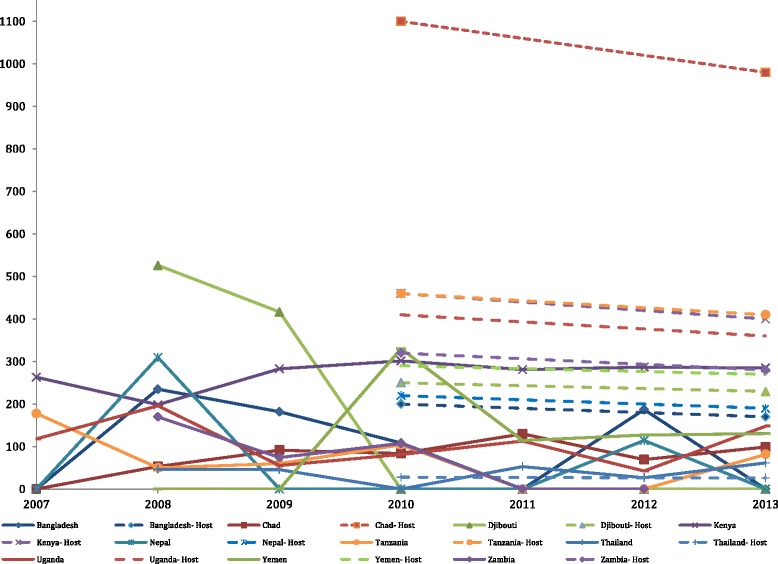
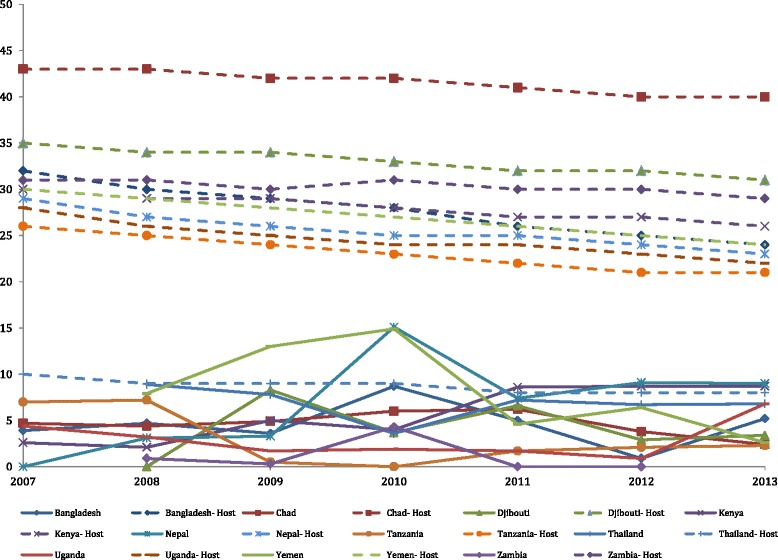
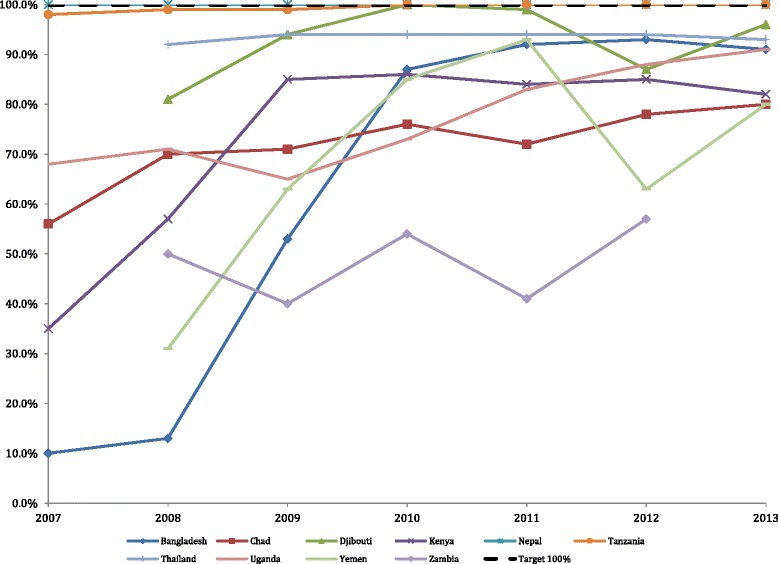
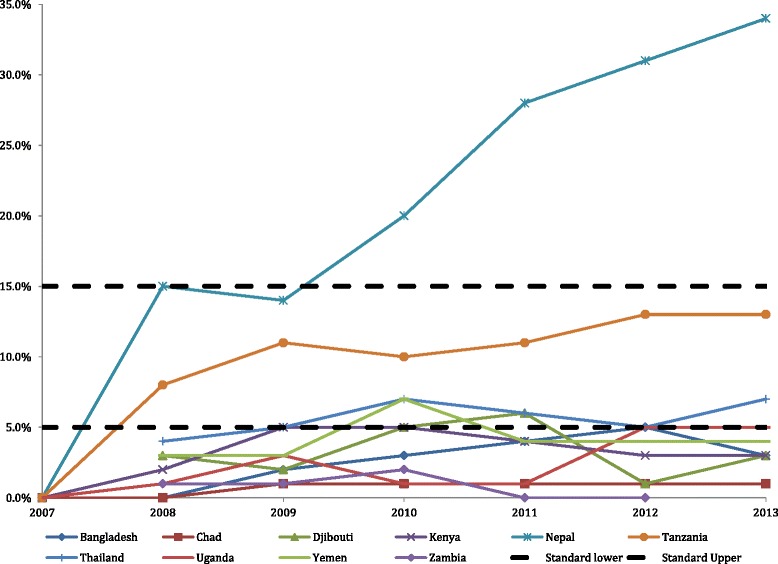
Verification
Claims the paper makes
The claims and statistics of this paper haven’t been checked yet.
Free: it reads the open-access text and checks the first 5 claims that cite a source we can check. Create a free account to check every claim.
Claims other papers make about this one
Each is checked against this paper’s own text: does it say what the citing paper says it does?
The cited source says what the claim attributes to it.
In the citing paper
“A previous study, conducted as part of the 2014 Interagency Working Group for Reproductive Health in Crisis’s Global Evaluation, − examined reproductive health indicators, including neonatal mortality, in UNHCR post-emergency camps 2007–2013 in 10 countries [19].”
From Neonatal mortality burden and trends in UNHCR refugee camps, 2006–2017: a retrospective analysis (2021) · cites this paper as [19]
Self-check
Percentages, sums and reported differences re-computed from the paper’s own numbers.
The self-check needs the paper’s full text.
Citations
Cites
United Nations High Commissioner for Refugees
(2017) · Shaping the Culture of Peace in a Multilateral World · doi:10.4324/9781315129310-7 · Cited by 1,685
Rates of caesarean section: analysis of global, regional and national estimates
Betrán, A. P., Merialdi, M., Lauer, J. A., Bing‐Shun, W., Thomas, J., Van Look, P., & Wagner, M. (2007) · Paediatric and Perinatal Epidemiology · doi:10.1111/j.1365-3016.2007.00786.x · Cited by 1,045 · cited 1×
“Two studies have shown an inverse association at population level between caesarian section rates and maternal and infant mortality in low income countries where large sectors of the population lack access to basic obstetric care [25, 26], making this indicator an important morbidity and mortality measure.”
BackgroundSuzuki, E., Mathers, C. D., Moller, A., Alkema, L., Say, L., Gemmill, A., Mills, S. L., Chou, D., & Hogan, D. R. (2014) · Cited by 680
Effectiveness of condoms in preventing sexually transmitted infections.
(2004) · Europe PMC (PubMed Central) · Cited by 655
Sexual violence against women: The scope of the problem
Dartnall, E., & Jewkes, R. (2013) · Best Practice & Research Clinical Obstetrics & Gynaecology · doi:10.1016/j.bpobgyn.2012.08.002 · Cited by 271 · cited 1×
“There were a number of limitations in this analysis [32].”
BackgroundMushahwar, I. K. (2008) · Journal of Medical Virology · doi:10.1002/jmv.21116 · Cited by 249 · cited 1×
“An outbreak such as Hepatitis E that occurred in Dadaab, Kenya disproportionally affected pregnant women [20].”
BackgroundHealth Consequences of the Increasing Caesarean Section Rates
Belizán, J. M., Althabe, F., & Cafferata, M. L. (2007) · Epidemiology · doi:10.1097/ede.0b013e318068646a · Cited by 217
Casey, S. E., Chynoweth, S. K., Cornier, N., Gallagher, M. C., & Wheeler, E. E. (2015) · Conflict and Health · doi:10.1186/1752-1505-9-s1-s3 · Cited by 157 · cited 1×
“Lastly, an assessment of family planning programs showed a gap in funding and commodities such as intrauterine devices (IUDs), permanent methods and emergency contraception [9].”
BackgroundSelf-citationMaternal syphilis: pathophysiology and treatment.
(2004) · Europe PMC (PubMed Central) · Cited by 132
Krause, S., Williams, H., Onyango, M. A., Sami, S., Doedens, W., Giga, N., Stone, E., & Tomczyk, B. (2015) · Conflict and Health · doi:10.1186/1752-1505-9-s1-s4 · Cited by 130 · cited 1×
“In contrast, disparities in emergency obstetric care and newborn care services remained unchanged [7] and clinical components of the Minimum Initial Service Package (MISP) were lacking in three settings well beyond the emergency phase [8].”
BackgroundSelf-citation
Research works printed but not linked: 2
- 1. UNHCR. Health Information System (HIS) Toolkit. 2010. http://www.unhcr. org/4a3374408.html. Accessed on 18 Mar 2015.
- 2. UNHCR. Using Data to Protect Refugee Health. 2014. http://www.unhcr.org/ pages/49c3646ce0.html. Accessed 7 Mar 2015.
Cited by
Boerma, T., Requejo, J., Victora, C. G., Amouzou, A., George, A., Agyepong, I., Barroso, C., Barros, A. J. D., Bhutta, Z. A., Black, R. E., et al. (2018) · The Lancet · doi:10.1016/s0140-6736(18)30104-1 · Cited by 517
Self-citationChynoweth, S. K., Buscher, D., Martin, S., & Zwi, A. B. (2020) · Conflict and Health · doi:10.1186/s13031-020-00288-8 · Cited by 52
Boerma, T., Tappis, H., Saad-Haddad, G., Das, J., Melesse, D. Y., DeJong, J., Spiegel, P., Black, R., Victora, C., Bhutta, Z. A., et al. (2019) · BMJ Global Health · doi:10.1136/bmjgh-2018-001300 · Cited by 50
Self-citationWhite, A. L., Min, T. H., Gross, M. M., Kajeechiwa, L., Thwin, M. M., Hanboonkunupakarn, B., Than, H. H., Zin, T. W., Rijken, M. J., Hoogenboom, G., et al. (2016) · PLoS ONE · doi:10.1371/journal.pone.0164363 · Cited by 29
Sustainability in Refugee Camps: A Comparison of the Two Largest Refugee Camps in the World
Wardeh, M., & Marques, R. C. (2020) · Journal of Refugee Studies · doi:10.1093/jrs/feaa141 · Cited by 48
Fellmeth, G. L., Plugge, E., Fazel, M. S., Charunwatthana, P., Nosten, F. H., Fitzpatrick, R. M., Simpson, J. A., & McGready, R. M. (2018) · PLoS ONE · doi:10.1371/journal.pone.0197403 · Cited by 28
Left behind on the path to 90‐90‐90: understanding and responding to HIV among displaced people
Vasylyeva, T. I., Horyniak, D., Bojórquez, I., & Pham, M. D. (2022) · Journal of the International AIDS Society · doi:10.1002/jia2.26031 · Cited by 32
Broaddus-Shea, E. T., Kobeissi, L. H., Ummer, O., & Say, L. (2019) · Conflict and Health · doi:10.1186/s13031-019-0221-1 · Cited by 23
Gee, S., Vargas, J., & Foster, A. M. (2019) · Conflict and Health · doi:10.1186/s13031-019-0195-z · Cited by 22
“service reviews in post-emergency refugee settings have found that despite their availability, the utilization rates of many key reproductive health services often fall below target, suggesting further efforts are required to identify and reduce potential barriers to care [6, 7].”
BackgroundAmaral, B. D., & Sakellariou, D. (2021) · Frontiers in Global Women s Health · doi:10.3389/fgwh.2021.699121 · Cited by 21
Gee, S., Vargas, J., & Foster, A. M. (2018) · BMC International Health and Human Rights · doi:10.1186/s12914-018-0181-3 · Cited by 22
“Nonetheless, many barriers persist and target indicators are often not met, including for services that impact newborn health such as antenatal and postnatal care utilization, skilled birth attendance, caesarean section rates, and early and exclusive breastfeeding [4, 6].”
BackgroundResultRustad, S. A., Binningsbø, H. M., Gjerløw, H., Mwesigye, F., Odokonyero, T., & Østby, G. (2021) · Frontiers in Global Women s Health · doi:10.3389/fgwh.2021.626002 · Cited by 24
“2007 and 2013 shows there has been improvement over time, and that many of the reproductive indicators for refugees mark higher compared to the host country recipients (17), suggesting that refugee women receive relatively better care than the host population.”
BackgroundBirthing across borders: ‘Contracting’ reproductive geographies
Bagelman, J., & Gitome, J. (2020) · Dialogues in Human Geography · doi:10.1177/2043820620965825 · Cited by 19
Quality of health care for refugees – a systematic review
Hahn, K., Steinhäuser, J., Wilfling, D., & Goetz, K. (2019) · BMC International Health and Human Rights · doi:10.1186/s12914-019-0205-7 · Cited by 18
Tran, N. T., Harker, K., Yaméogo, W. M. E., Kouanda, S., Millogo, T., Menna, E. D., Lohani, J., Maharjan, O., Sake, J., Odinga, E. A., et al. (2017) · Reproductive Health Matters · doi:10.1080/09688080.2017.1405678 · Cited by 14
Neonatal mortality burden and trends in UNHCR refugee camps, 2006–2017: a retrospective analysis
Tappis, H., Ramadan, M., Vargas, J., Kahi, V., Hering, H., Schulte-Hillen, C., & Spiegel, P. (2021) · BMC Public Health · doi:10.1186/s12889-021-10343-5 · Cited by 10
“A previous study, conducted as part of the 2014 Interagency Working Group for Reproductive Health in Crisis’s Global Evaluation, − examined reproductive health indicators, including neonatal mortality, in UNHCR post-emergency camps 2007–2013 in 10 countries [19].”
MethodSelf-citationAmsalu, R., Costello, J., Hasna, Z., & Handzel, E. (2022) · BMJ Global Health · doi:10.1136/bmjgh-2021-008110 · Cited by 8
Voir, R. L. (2022) · Journal of Migration and Health · doi:10.1016/j.jmh.2022.100114 · Cited by 8
Voir, R. L. (2023) · Population Research and Policy Review · doi:10.1007/s11113-023-09820-z · Cited by 9
“In addition, curfews or other movement restrictions, as well as living in particular settings such as camps or urban areas, may affect geographic accessibility to services (Whitmill et al., 2016).”
BackgroundTATISHVILI, M., MIRVELASHVILI, E., & TSIMAKURIDZE, M. (2022) · EXPERIMENTAL & CLINICAL MEDICINE GEORGIA · doi:10.52340/jecm.2022.07.35
Time Series Analysis in Reproductive Health Data
Sharma, P., Gupta, T., Kulshrestha, S., Gupta, P., Choudhury, A., Modi, D. N., & Sengupta, A. (2024) · Springer eBooks · doi:10.1007/978-981-97-7451-7_9
Tappis, H., Ramadan, M., Vargas, J., Kahi, V., Hering, H., Schulte‐Hillen, C., & Spiegel, P. (2021) · Figshare · doi:10.6084/m9.figshare.14091123
Self-citationTappis, H., Ramadan, M., Vargas, J., Kahi, V., Hering, H., Schulte‐Hillen, C., & Spiegel, P. (2021) · Figshare · doi:10.6084/m9.figshare.14091120
Self-citationTappis, H., Ramadan, M., Vargas, J., Kahi, V., Hering, H., Schulte‐Hillen, C., & Spiegel, P. (2021) · Figshare · doi:10.6084/m9.figshare.14091117
Self-citationSherally, J., Mat, M. L. J. L., van den Muijsenbergh, M. E. T. C., & van den Akker, T. (2026) · BMJ Public Health · doi:10.1136/bmjph-2025-003275 · Cited by 2
Metadata
- Authors
- Whitmill, J., Blanton, C., Doraiswamy, S., Cornier, N., Schilperood, M., Spiegel, P., & Tomczyk, B.
- Affiliations
- Emory University (US)
- Centers for Disease Control and Prevention (US)
- Office of the United Nations High Commissioner for Refugees (CH)
- Corresponding author
- Tomczyk, Barbara
- Venue
- Conflict and Health
- Published
- 2016-03-09
- Volume
- 10
- Issue
- 1
- Pages
- 3-3
- ISSN
- 1752-1505 (ISSN-L)
- PMC
- PMC4784418
- OpenAlex
- W2295820911
- Semantic Scholar
- 65f87ebbbf2ef50b426d67ccad7802aa898c09e1
- Cited by
- 25
- References
- 21
- Citations by year
- 2026: 1 · 2024: 1 · 2023: 1 · 2022: 4 · 2021: 6 · 2020: 3 · 2019: 4 · 2018: 3 · 2017: 1 · 2016: 1
- FWCI
- 3.49
- Type
- journal article
- Language
- en
- Open access
- gold
- doi.org
- Licence
- cc-by
- Locations
- Conflict and Health (publishedVersion, cc-by)
- PubMed Central (publishedVersion, cc-by)
- PubMed (publishedVersion)
- Topics
- Health Sciences › Medicine › Pediatrics, Perinatology and Child Health › Global Maternal and Child Health
- Health Sciences › Health Professions › General Health Professions › Health and Conflict Studies
- Health Sciences › Medicine › Pediatrics, Perinatology and Child Health › Maternal and Neonatal Healthcare
- Keywords
- reproductive health indicators, refugee camps, maternal mortality, neonatal mortality, skilled birth attendance, cesarean section, syphilis screening
About these checks
Registry, retraction, Cites and statistics results are computed, not judged, with one exception: a printed reference that no index lists is read once by a model before it counts as a citation error. Claims are extracted by a model and kept only when their quote appears verbatim in the text; each cited source is then checked, with a model’s help, for whether it says what the claim relies on. Those verdicts can be wrong — read the claim’s quote and the cited source before relying on one.
Statistics and arithmetic are recomputed, not judged.
Confidence bands are shown only for fields calibrated on our annotated test set. None is calibrated yet, so no band is shown.
What counts as a claim ›How we measure confidence ›How we check this ›
Are you an author, or do you see a problem with this page? Request a review
Data sources
Bibliographic data: Semantic Scholar, OpenAlex, Crossref.
Contains information from the Semantic Scholar Academic Graph Datasets, made available under the ODC Attribution License (ODC-BY 1.0).
Semantic Scholar’s data is described in: Kinney, R., et al. (2023). The Semantic Scholar Open Data Platform. arXiv:2301.10140.
