

Deep learning-based ovarian cancer subtypes identification using multi-omics data
Open accessThe DOI matches its Crossref record; 27 of the 27 references it cites were found in a registry or an index.
Abstract
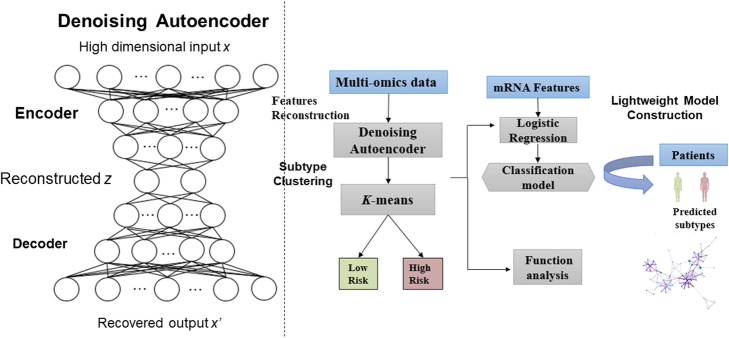
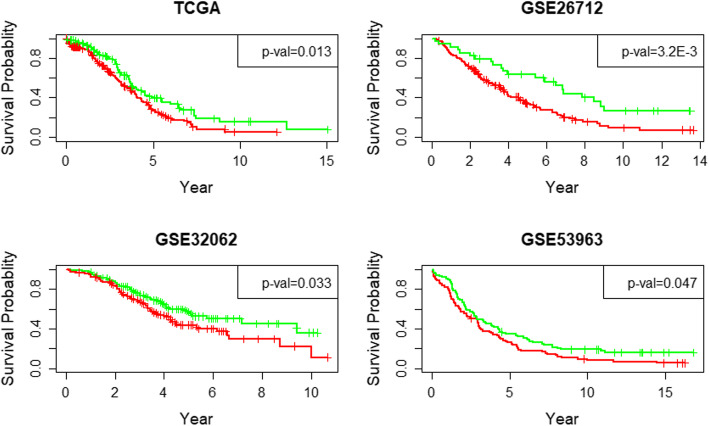
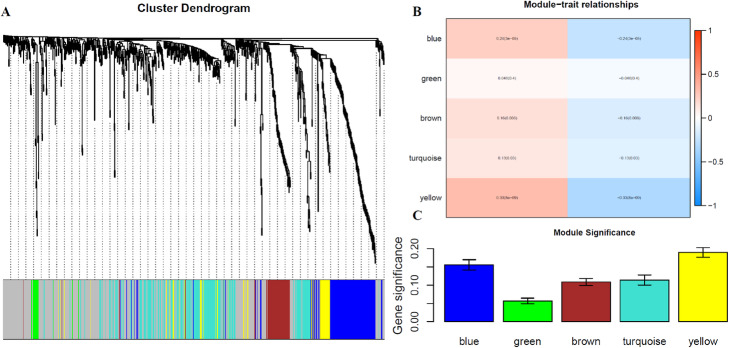
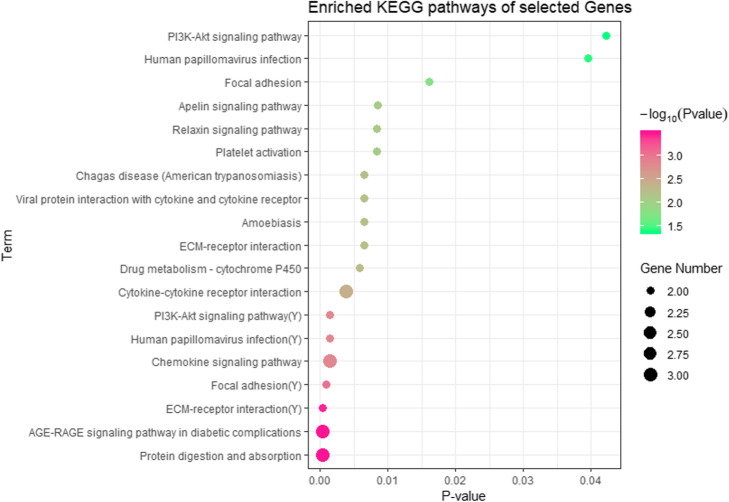
Background: Identifying molecular subtypes of ovarian cancer is important. Compared to identify subtypes using single omics data, the multi-omics data analysis can utilize more information. Autoencoder has been widely used to construct lower dimensional representation for multi-omics feature integration. However, learning in the deep architectures in Autoencoder is difficult for achieving satisfied generalization performance. To solve this problem, we proposed a novel deep learning-based framework to robustly identify ovarian cancer subtypes by using denoising Autoencoder. Results: In proposed method, the composite features of multi-omics data in the Cancer Genome Atlas were produced by denoising Autoencoder, and then the generated low-dimensional features were input into k-means for clustering. At last based on the clustering results, we built the light-weighted classification model with L1-penalized logistic regression method. Furthermore, we applied the differential expression analysis and WGCNA analysis to select target genes related to molecular subtypes. We identified 34 biomarkers and 19 KEGG pathways associated with ovarian cancer. Conclusions: The independent test results in three GEO datasets proved the robustness of our model. The literature reviewing show 19 (56%) biomarkers and 8(42.1%) KEGG pathways identified based on the classification subtypes have been proved to be associated with ovarian cancer. The outcomes indicate that our proposed method is feasible and can provide reliable results.
Overview
The claims and statistics of this paper haven’t been checked yet.
Free: it reads the open-access text and checks the first 5 claims that cite a source we can check. Create a free account to check every claim.
Integrity signals
Registry
Cites
Statistics
Figures
Verification
Claims the paper makes
The claims and statistics of this paper haven’t been checked yet.
Free: it reads the open-access text and checks the first 5 claims that cite a source we can check. Create a free account to check every claim.
Claims other papers make about this one
Each is checked against this paper’s own text: does it say what the citing paper says it does?
The source backs part of the claim, not all of it — or backs it for a different population, condition or comparison.
In the citing paper
“The applications of early nonlinear fusion methods reviewed here have shown that these methods can outperform shallow methods on prediction tasks (e.g. [35, 36]).”
From Multimodal deep learning for biomedical data fusion: a review (2022) · cites this paper as [35]
Experimental — accuracy not yet measuredThe cited source says what the claim attributes to it.
In the citing paper
“For the same clinical task, a similar workflow has been adapted by researchers, but applying denoising AEs (DAEs) [91] instead [35, 36].”
From Multimodal deep learning for biomedical data fusion: a review (2022) · cites this paper as [35]
In the citing paper
“Similarly, Denoising autoencoder has been incorporated along with L1-penalized logistic regression for identifying ovarian cancer subtypes (Guo et al., 2020).”
From Using machine learning approaches for multi-omics data analysis: A review (2021) · cites this paper as Guo et al., 2020
Self-check
Percentages, sums and reported differences re-computed from the paper’s own numbers.
The self-check needs the paper’s full text.
Citations
Cites
Moderated estimation of fold change and dispersion for RNA-seq data with DESeq2
Love, M. I., Huber, W., & Anders, S. (2014) · Genome Biology · doi:10.1186/s13059-014-0550-8 · Cited by 95,106
WGCNA: an R package for weighted correlation network analysis
Langfelder, P., & Horvath, S. (2008) · BMC Bioinformatics · doi:10.1186/1471-2105-9-559 · Cited by 27,252 · cited 6×
“The different clustered modules from WGCNA are represented by different colors.”
MethodInfluentialSilhouettes: A graphical aid to the interpretation and validation of cluster analysis
Rousseeuw, P. J. (1987) · Journal of Computational and Applied Mathematics · doi:10.1016/0377-0427(87)90125-7 · Cited by 21,392 · cited 1×
“We determined the optimal number of clusters with silhouette score [15].”
MethodExtracting and composing robust features with denoising autoencoders
Vincent, P., Larochelle, H., Bengio, Y., & Manzagol, P.-A. (2008) · Proceedings of the 25th international conference on Machine learning - ICML '08 · doi:10.1145/1390156.1390294 · Cited by 7,436 · cited 1×
“Compared to AE, DAE proposed by Vincent [12] can make the features learned by the model more robust by superimposing noise on the input.”
MethodKOBAS 2.0: a web server for annotation and identification of enriched pathways and diseases
Xie, C., Mao, X., Huang, J., Ding, Y., Wu, J., Dong, S., Kong, L., Gao, G., Li, C.-Y., & Wei, L. (2011) · Nucleic Acids Research · doi:10.1093/nar/gkr483 · Cited by 5,094 · cited 1×
“And the enriched pathways were obtained by these genes based on the KOBAS online tool [20].”
MethodNovel Molecular Subtypes of Serous and Endometrioid Ovarian Cancer Linked to Clinical Outcome
Tothill, R. W., Tinker, A. V., George, J., Brown, R., Fox, S. B., Lade, S., Johnson, D. S., Trivett, M. K., Etemadmoghadam, D., Locandro, B., et al. (2008) · Clinical Cancer Research · doi:10.1158/1078-0432.ccr-08-0196 · Cited by 1,467 · cited 2×
“One way to research the heterogeneity is identifying different molecular subtypes in ovarian cancer, and many machine learning methods have been proposed for solving this problem [1, 2].”
MethodSystematic pan-cancer analysis of tumour purity
Aran, D., Sirota, M., & Butte, A. J. (2015) · Nature Communications · doi:10.1038/ncomms9971 · Cited by 1,216 · cited 1×
“However, some caveats about our method are still worth discussion below: Firstly, TCGA samples have been reported are impure in a previous study [26].”
MethodDeep learning-based multi-omics integration robustly predicts survival in liver cancer
Chaudhary, K., Poirion, O. B., Lu, L., & Garmire, L. X. (2018) · Clinical Cancer Research · doi:10.1158/1078-0432.ccr-17-0853 · Cited by 1,091 · cited 2×
“Chaudhary et al. employed AE to reconstruct low dimensional representation from three types of omics data (mRNA, miRNA and DNA methylation), and input them into k -means to identify different molecular subtypes of the liver hepatocellular carcinoma [11].”
BackgroundMethodA framework for feature selection in clustering
Witten, D. M., & Tibshirani, R. (2010) · Journal of the American Statistical Association · doi:10.1198/jasa.2010.tm09415 · Cited by 696
Copy number signatures and mutational processes in ovarian carcinoma
Macintyre, G., Goranova, T. E., De Silva, D., Ennis, D., Piskorz, A. M., Eldridge, M., Sie, D., Lewsley, L.-A., Hanif, A., Wilson, C., et al. (2018) · Nature Genetics · doi:10.1038/s41588-018-0179-8 · Cited by 449 · cited 1×
“…ovarian cancer subtypes using DNA methylation profiling with nonnegative matrix factorization (NMF) clustering algorithm [5], Macintyre et al. proved the copy number is related to the ovarian cancer survival and the probability of platinum-resistant relapse by using NMF mixture modeling [6].”
Method
Cited by
Using machine learning approaches for multi-omics data analysis: A review
Reel, P. S., Reel, S., Pearson, E., Trucco, E., & Jefferson, E. (2021) · Biotechnology Advances · doi:10.1016/j.biotechadv.2021.107739 · Cited by 903
Multimodal deep learning for biomedical data fusion: a review
Stahlschmidt, S. R., Ulfenborg, B., & Synnergren, J. (2022) · Briefings in Bioinformatics · doi:10.1093/bib/bbab569 · Cited by 766
“For the same clinical task, a similar workflow has been adapted by researchers, but applying denoising AEs (DAEs) [91] instead [35, 36].”
MethodDeep learning-based approaches for multi-omics data integration and analysis
Ballard, J. L., Wang, Z., Li, W., Shen, L., & Long, Q. (2024) · BioData Mining · doi:10.1186/s13040-024-00391-z · Cited by 258
Artificial intelligence assists precision medicine in cancer treatment
Liao, J., Li, X., Gan, Y., Han, S., Rong, P., Wang, W., Li, W., & Zhou, L. (2023) · Frontiers in Oncology · doi:10.3389/fonc.2022.998222 · Cited by 256
Kourou, K., Exarchos, K. P., Papaloukas, C., Sakaloglou, P., Exarchos, T., & Fotiadis, D. I. (2021) · Computational and Structural Biotechnology Journal · doi:10.1016/j.csbj.2021.10.006 · Cited by 165
A benchmark study of deep learning-based multi-omics data fusion methods for cancer
Leng, D., Zheng, L., Wen, Y., Zhang, Y., Wu, L., Wang, J., Wang, M., Zhang, Z., He, S., & Bo, X. (2022) · Genome Biology · doi:10.1186/s13059-022-02739-2 · Cited by 162
“Note that the original models of all methods in this part can be found in the publications [19–22, 24, 26, 28, 29, 32–34, 38, 39].”
BackgroundMethodNam, Y., Kim, J., Jung, S., Woerner, J., Suh, E. H., Lee, D. A., Shivakumar, M., Lee, M. E., & Kim, D. (2024) · Annual Review of Biomedical Data Science · doi:10.1146/annurev-biodatasci-102523-103801 · Cited by 187
Multimodal deep learning approaches for single-cell multi-omics data integration
Athaya, T., Ripan, R. C., Li, X., & Hu, H. (2023) · Briefings in Bioinformatics · doi:10.1093/bib/bbad313 · Cited by 109
“[63] applied denoising autoencoders to multi-omics ovarian cancer data to identify cancer subtypes.”
MethodDhillon, A., Singh, A., & Bhalla, V. K. (2022) · Archives of Computational Methods in Engineering · doi:10.1007/s11831-022-09821-9 · Cited by 96
Ziyambe, B., Yahya, A., Mushiri, T., Tariq, M. U., Abbas, Q., Babar, M. A., Albathan, M., Asim, M., Hussain, A., & Jabbar, S. (2023) · Diagnostics · doi:10.3390/diagnostics13101703 · Cited by 98
“[41] used deep and machine-learning techniques for clustering and classification in ovarian cancer subtyping using gene expression features.”
BackgroundMethodWysocka, M., Wysocki, O., Zufferey, M., Landers, D., & Freitas, A. (2023) · BMC Bioinformatics · doi:10.1186/s12859-023-05262-8 · Cited by 105
“phenotypic features of the patients) [108].”
Deep learning for rare disease: A scoping review
Lee, J. H., Liu, C., Kim, J., Chen, Z., Sun, Y., Rogers, J. R., Chung, W. K., & Weng, C. (2022) · Journal of Biomedical Informatics · doi:10.1016/j.jbi.2022.104227 · Cited by 100
Methods for multi-omic data integration in cancer research
Lemus, E. H., & Ochoa, S. (2024) · Frontiers in Genetics · doi:10.3389/fgene.2024.1425456 · Cited by 80
Single-Cell Techniques and Deep Learning in Predicting Drug Response
Wu, Z., Lawrence, P. J., Ma, A., Zhu, J., Xu, D., & Ma, Q. (2020) · Trends in Pharmacological Sciences · doi:10.1016/j.tips.2020.10.004 · Cited by 80
“The DL based integrative analysis could accurately answer biological questions, including tumor type classification and prognostication prediction [80, 81].”
Pandiyan, S., & Wang, L. (2022) · Computers in Biology and Medicine · doi:10.1016/j.compbiomed.2022.106140 · Cited by 70
Zhao, J. Y., Zhao, B., Song, X., Lyu, C., Chen, W., Xiong, Y., & Wei, D. (2023) · Briefings in Bioinformatics · doi:10.1093/bib/bbad025 · Cited by 61
Advances in artificial intelligence for the diagnosis and treatment of ovarian cancer (Review)
Wang, Y., Lin, W., Zhuang, X., Wang, X., He, Y., Li, L., & Lyu, G. (2024) · Oncology Reports · doi:10.3892/or.2024.8705 · Cited by 55
Self-citationOvarian cancer beyond imaging: integration of AI and multiomics biomarkers
Hatamikia, S., Nougaret, S., Panico, C., Avesani, G., Nero, C., Boldrini, L., Sala, E., & Woitek, R. (2023) · European Radiology Experimental · doi:10.1186/s41747-023-00364-7 · Cited by 56
“Of these seven studies, four [43–46] used ML and three [8, 13, 14] used DL.”
BackgroundResultInfluentialSmall data, big challenges: Machine- and deep-learning strategies for data-limited drug discovery
Pallikkavaliyaveetil, N., & Chandrasekaran, S. (2025) · Advanced Drug Delivery Reviews · doi:10.1016/j.addr.2025.115762 · Cited by 71
Omics Data and Data Representations for Deep Learning-Based Predictive Modeling
Tsimenidis, S., Vrochidou, Ε., & Papakostas, G. A. (2022) · International Journal of Molecular Sciences · doi:10.3390/ijms232012272 · Cited by 46
“In [124], the same process was applied for ovarian cancer using a denoising AE instead of a regular or a stacked AE for the feature extraction procedure, which was followed by a feature selection procedure through logistic regression.”
BackgroundMethodJuwono, F. H., Wong, W. K., Pek, H. T., Sivakumar, S., & Acula, D. D. (2022) · Biomedical Signal Processing and Control · doi:10.1016/j.bspc.2022.103785 · Cited by 39
Hormaty, S., Seiwan, A. N., Rasheed, B. H., Parvaz, H., Gharahzadeh, A., & Ghaznavi, H. (2025) · Cancer Medicine · doi:10.1002/cam4.71224 · Cited by 33
“However, despite advancements in genomics [31], proteomics [32], radiomics [33], and multi-omics integration [34], biomarker-based ML models remain the most practical and clinically feasible approach for ovarian cancer prediction.”
Deep Learning‐Based Multiomics Data Integration Methods for Biomedical Application
Wen, Y., Zheng, L., Leng, D., Dai, C., Jing, L., Zhang, Z., He, S., & Bo, X. (2023) · Advanced Intelligent Systems · doi:10.1002/aisy.202200247 · Cited by 23
A comprehensive survey on the use of deep learning techniques in glioblastoma
Hachimy, I. E., Kabelma, D., Echcharef, C., Hassani, M., Benamar, N., & Hajji, N. (2024) · Artificial Intelligence in Medicine · doi:10.1016/j.artmed.2024.102902 · Cited by 21
Nanotechnology and artificial intelligence in cancer treatment
Mukheja, Y., Pal, K., Ahuja, A., Sarkar, A., Kumar, B., Kuhad, A., Chopra, K., & Jain, M. K. (2025) · Next research. · doi:10.1016/j.nexres.2025.100179 · Cited by 19
Alahmadi, A. M. (2024) · Results in Engineering · doi:10.1016/j.rineng.2024.102651 · Cited by 18
Plasma circular RNA hsa_circ_0001821 acts as a novel diagnostic biomarker for malignant tumors
Song, Y., Cao, P., & Li, J. (2021) · Journal of Clinical Laboratory Analysis · doi:10.1002/jcla.24009 · Cited by 14
A hybrid deep learning approach for detection and segmentation of ovarian tumours
Maria, H. H., Jossy, A. M., & Malarvizhi, S. (2023) · Neural Computing and Applications · doi:10.1007/s00521-023-08569-y · Cited by 13
“factors, clinical features, and treatments [3, 4].”
A primer on applying AI synergistically with domain expertise to oncology
Kim, J., Kusko, R. L., Zeskind, B. J., Zhang, J., & Escalante-Chong, R. (2021) · Biochimica et Biophysica Acta (BBA) - Reviews on Cancer · doi:10.1016/j.bbcan.2021.188548 · Cited by 14
Subbannayya, Y., Fiore, R. D., Urru, S. A. M., & Calleja‐Agius, J. (2021) · Biomedicines · doi:10.3390/biomedicines9101481 · Cited by 15
“A deep learning-based approach has also been used to analyze multi-omics data from ovarian cancers and identify subtypes [93].”
MethodRani, N. D., & Babu, M. (2024) · Computer Methods and Programs in Biomedicine · doi:10.1016/j.cmpb.2024.108358 · Cited by 12
Chai, H., Deng, W., Wei, J., Guan, T., He, M., Liang, Y., & Li, L. K. (2024) · Interdisciplinary Sciences Computational Life Sciences · doi:10.1007/s12539-024-00641-y · Cited by 13
“To improve the model’s ability to resist noise, Guo used the denoising Autoencoder (DAE) to obtain low-dimensional representation of omics data for distinguishing ovarian cancer subtypes [16].”
Self-citationNapravnik, M., Hržić, F., Tschauner, S., & Štajduhar, I. (2024) · BioData Mining · doi:10.1186/s13040-024-00373-1 · Cited by 12
“The process of DICOM tag feature extraction was done using principal component analysis (PCA) [26] and autoencoders (AEs) [16, 27].”
MethodXu, J., Yao, Y., Xu, B., Li, Y., & Su, Z. (2021) · Future Oncology · doi:10.2217/fon-2021-1059 · Cited by 12
Ovarian cancer data analysis using deep learning: A systematic review
Hira, M. T., Razzaque, M. A., & Sarker, M. H. (2024) · Engineering Applications of Artificial Intelligence · doi:10.1016/j.engappai.2024.109250 · Cited by 30
Li, M., Guo, H., Wang, K., Kang, C., Yin, Y., & Zhang, H. (2024) · Computers in Biology and Medicine · doi:10.1016/j.compbiomed.2024.108614 · Cited by 11
Yu, S., Li, J., Ye, Z., Zhang, M., Guo, X., Wang, X., Liu, L., Wang, Y., Zhou, X., Fu, W., et al. (2025) · Cell Regeneration · doi:10.1186/s13619-025-00246-w · Cited by 11
“To enhance the accuracy and efficiency of machine learning models on MC-IBD cohort, we utilized deep learning techniques, including the AE, DAE, SVAE, and CNN algorithms (Guo et al. 2020; Lee et al. 2020; Leng et al. 2022; Mohaiminul Islam et al. 2020; Seal et al. 2020).”
Self-citationBorah, K., Das, H. S., Budhathoki, R. K., Aurangzeb, K., & Mallik, S. (2025) · Briefings in Bioinformatics · doi:10.1093/bib/bbaf115 · Cited by 11
Farmanullah, F., Liang, X., Khan, F. A., Salim, M., Rehman, Z. U., Khan, M., Talpur, H. S., Schreurs, N. M., Gouda, M., Khan, S., et al. (2021) · Journal of Genetic Engineering and Biotechnology · doi:10.1186/s43141-021-00235-x · Cited by 7
Self-citationPhan, N. N., Chattopadhyay, A. S., Lee, T.-T., Yin, H.-I., Lu, T., Lai, L., Hwa, H., Tsai, M., & Chuang, E. Y.-Y. (2021) · Briefings in Bioinformatics · doi:10.1093/bib/bbab283 · Cited by 5
Deep Learning Perspective for Preliminary Detection and Classification of Ovarian Cancer
Pavithra, S., Kumar, L. A., & Phaniraj, H. (2024) · IEEE International Conference for Convergence in Technology (I2CT) · doi:10.1109/i2ct61223.2024.10543469 · Cited by 6
Cancer type and survival prediction based on transcriptomic feature map
Yan, M., Dong, Z., Zhu, Z., Qiao, C., Wang, M., Teng, Z., Xing, Y., Liu, G., Liu, G., Cai, L., et al. (2025) · Computers in Biology and Medicine · doi:10.1016/j.compbiomed.2025.110267 · Cited by 9
Yao, X., Wang, T., Yang, Q., Wang, J., Qi, Y., Xu, T., Wei, Z., Cui, Y., Cao, H., & Yun, K. (2025) · Genes · doi:10.3390/genes16111246 · Cited by 6
“This design prevents the network from learning a trivial identity mapping and yields more robust latent feature representations [17,18].”
Sajjad, R., Khan, M. F., Nawaz, A., Ali, M. T., & Adil, M. (2022) · Journal of Computing & Biomedical Informatics · doi:10.56979/302/2022/72 · Cited by 4
“edu/dataset Specificity=98% 3 [64] DL framework- Auto encoder, logistic regression, K-mean clustering.”
BackgroundDeep Clustering-Based Immunotherapy Prediction for Gastric Cancer mRNA Vaccine Development
Lan, H., Zhao, J., Yuan, L., Li, M., Pu, X., & Guo, Y. (2025) · International Journal of Molecular Sciences · doi:10.3390/ijms26062453 · Cited by 3
“In recent years, AEs have been instrumental in subtype identification across various cancers, such as ovarian, breast, lung adenocarcinoma, and hematopoietic cancers [14–17]. mRNA vaccines targeting tumor-specific antigens are a promising immunotherapy approach.”
Wang, J., Huang, X., Kuang, H., & Cheng, Y. (2025) · Interdisciplinary Sciences Computational Life Sciences · doi:10.1007/s12539-025-00789-1 · Cited by 3
Wang, H., Han, X., Ren, J., Cheng, H., Li, H., Li, Y., & Li, X. (2023) · Mathematical Biosciences & Engineering · doi:10.3934/mbe.2024031 · Cited by 5
Exploration into Plasma Hsa_circ_0052184 as a New Biomarker of Colorectal Cancer Prognosis
Zheng, E., & Xiao, D. (2023) · Pharmacogenomics and Personalized Medicine · doi:10.2147/pgpm.s413451 · Cited by 3
HSSG: Identification of Cancer Subtypes Based on Heterogeneity Score of A Single Gene
Pang, S., Wu, W., Zhang, Y., Wang, S., Niu, M., Zhang, K., & Yin, W. (2022) · Cells · doi:10.3390/cells11152456 · Cited by 3
“used a denoising autoencoder to fuse multi-omics data for ovarian cancer subtype identification [10].”
MethodBelharar, F. Z., Belharar, O., Retal, S., Kharmoum, N., & Ziti, S. (2025) · Lecture notes in networks and systems · doi:10.1007/978-3-032-01967-7_20 · Cited by 2
Ekta, & Bhatia, V. (2025) · International Journal of Information Technology · doi:10.1007/s41870-025-02955-6 · Cited by 2
Dynamic Bernstein GCN for Pan-Cancer Subtype Classification Using RNA-Seq and CNV Data
Gubbala, S., Amilpur, S., & Dasari, C. M. (2026) · IEEE Transactions on Computational Biology and Bioinformatics · doi:10.1109/tcbbio.2026.3651305 · Cited by 3
Explainable Transfer Learning for Histopathological Image Classification of Ovarian Cancer
Rahman, M. M., Reem, S. Z., Rahaman, M. A., Bepery, C., Ashiqussalehin, M., & Hossain, M. J. (2025) · Journal of Computer Science and Technological Enquiry · doi:10.65496/jcste.2025.44 · Cited by 3
Qi, H., Yang, W., Zou, W., & Hu, Y. (2024) · Quantitative Biology · doi:10.1002/qub2.43 · Cited by 2
“Gu et al. generated composite features from multi ‐ omics data in cancer genome mapping by using denoising autoencoders to robustly identify ovarian cancer subtypes [16].”
Wang, H., Han, X., Niu, S., Cheng, H., Ren, J., & Duan, Y.-M. (2024) · PLoS ONE · doi:10.1371/journal.pone.0315924 · Cited by 3
Jamalpour, Z., Ghaderi, S., & Fathian-Kolahkaj, M. (2024) · Journal of Gynecology Obstetrics and Human Reproduction · doi:10.1016/j.jogoh.2024.102888 · Cited by 1
A generative deep neural network for pan-digestive tract cancer survival analysis
Xu, L., Lan, T., Huang, Y., Wang, L., Lin, J., Song, X., Tang, H., Cao, H., & Chai, H. (2025) · BioData Mining · doi:10.1186/s13040-025-00426-z · Cited by 1
“In Guo’s work on cancer subtyping, the denoising Autoencoder was adopted as a replacement for the Autoencoder to enhance model robustness against the noise [13].”
Self-citationMOGAN for LUAD Subtype Classification by Integrating Three Omics Data Types
He, H., Wang, L., & Ma, M.-Y. (2025) · Cancer Innovation · doi:10.1002/cai2.160 · Cited by 1
“Some researchers have used deep learning methods to identify subtypes [43, 44] but did not fully consider the interactions among different omics.”
Khan, M. W., Ahmed, G., Shahzad, M., Namoun, A., Hussain, S., & Alanazi, M. H. (2025) · Diagnostics · doi:10.3390/diagnostics15212730 · Cited by 1
“Denoising autoencoders are used to generate combined and low-dimensional features from multi-OMICs data [20].”
Machine learning prediction of germline BRCA1/2 pathogenic variants in patients with ovarian cancer
Innella, G., Erini, G., Leo, A. D., Godino, L., Caramanna, L., Ferrari, S., Miccoli, S., Perrone, A. M., Zamagni, C., Iaco, P. D., et al. (2025) · BMJ Health & Care Informatics · doi:10.1136/bmjhci-2025-101751 · Cited by 1
Human organ-on-a-chip technology as a catalyst for drug discovery
Posey, R. R., Özkan, A., & Ingber, D. E. (2026) · Advanced Drug Delivery Reviews · doi:10.1016/j.addr.2026.115920 · Cited by 2
A Survey on Cancer Molecular Subtype Classification using Deep learning
Wahid, M., Ahmed, G., Hussain, S., & Ansari, A. A. (2023) · International Conference on Computing, Mathematics and Engineering Technologies (iCoMET) · doi:10.1109/icomet57998.2023.10099055 · Cited by 3
“In [18], multi-omics data is used for molecular subtyping of ovarian cancer.”
An Analysis For Early Diagnosis To Detect Ovarian Cancer
Thenmozhi, T. (2023) · Journal of Propulsion Technology · doi:10.52783/tjjpt.v44.i4.1857 · Cited by 1
“Sometimes, the tumor is seen bilaterally; around 5% of primary mucinous tumors are bilateral [7].”
BackgroundCancerAI: A Deep Learning Framework for Ovarian Cancer Prediction
Revathy, G., Maheswari, P. U., Madhavi, S., Vijay Anand, P., Begum, R. V., & Hundal, J. (2024) · International Conference on Electronics and Sustainable Communication Systems (ICESC) · doi:10.1109/icesc60852.2024.10689884 · Cited by 1
“Utilizing gene expression data, this study employs advanced deep learning and machine learning approaches to cluster and classify ovarian cancer subtypes [11].”
MethodDeep learning approaches for interpreting Non-coding regions in Ovarian cancer
Beg, A., Shah, S. N. A., & Parveen, R. (2024) · Elsevier eBooks · doi:10.1016/b978-0-443-27523-4.00017-2 · Cited by 2
Towards Classification of Ovarian Cancer: A Vision Transformer Model
Ani, S. R., Jasmin, T., Nera, R. S., Arefin, F., Uddin, M. M., Khan, M., & Tuhin, R. A. (2024) · International Conference on Computer and Information Technology (ICCIT) · doi:10.1109/iccit64611.2024.11022029 · Cited by 1
Lee, H.-S., Lee, I.-H., Kang, K., Jung, M., Yang, S. G., Kwon, T.-W., & Lee, D.-Y. (2021) · Natural Product Communications · doi:10.1177/1934578x211055024
Tsimenidis, S., & Papakostas, G. A. (2023) · Lecture notes in networks and systems · doi:10.1007/978-981-19-9379-4_36
Paranjpe, I., Wang, X., Anandakrishnan, N., Haydak, J. C., Vleck, T. T. V., DeFronzo, S., Li, Z., Mendoza, A., Liu, R., Fu, J., et al. (2023) · medRxiv · doi:10.1101/2023.09.06.23295120 · Cited by 1
“Recently, deep learning techniques have been applied to clinical and genomics datasets to uncover subphenotypes of Parkinson’s disease 14 , cancer 15,16 , autism spectrum disorder 17 , acute kidney injury 18 , and type 2 diabetes 19,20 .”
BackgroundSpeckle Noise Removal From Biomedical MRI Images and Classification by MSVM
Karthik, B., & V., K. R. C. (2024) · Advances in medical diagnosis, treatment, and care (AMDTC) book series · doi:10.4018/979-8-3693-1243-8.ch014
Enhancing multi-omics cancer subtype classification using explainable convolutional neural networks
Mohammed, N. A., & Mohammed, M. A. (2025) · Elsevier eBooks · doi:10.1016/b978-0-443-23979-3.00017-8
Zhou, D., Zhang, J., Ma, J., Xi, X., & Ma, R. (2025) · Research Square · doi:10.21203/rs.3.rs-6216837/v1 · Cited by 1
AI and ML in Ovarian Cancer Diagnosis: A Comprehensive Survey and Critical Analysis
Sharma, S., Bajaj, A., & Abraham, A. (2025) · Lecture notes in networks and systems · doi:10.1007/978-3-031-78931-1_9
Leveraging GANs in Deep Learning for Enhanced Ovarian Cyst Detection
Anila, S., & Mythily, M. (2025) · International Conference on Computing Technologies & Data Communication (ICCTDC) · doi:10.1109/icctdc64446.2025.11158766
“Reference [16] introduced a Denoising Autoencoder (DAE) combined with k-means clustering (DAE-kmeans) model for the classification of ovarian cancer subtypes using multi-omics data, demonstrating superior performance compared to traditional methods.”
Machine Learning and Deep Learning Techniques on OMICS Data
Guha, A., & Goswami, S. (2025) · Lecture notes in networks and systems · doi:10.1007/978-981-96-6534-1_11
Revolutionizing Oncology: AI Driven Approaches to Early Cancer Diagnosis
Sahu, S. S., Ranjithkumar, S., Asati, U., Dabral, D., Mohole, S., & Tripathi, Y. (2025) · International Conference on Innovative Mechanisms for Industry Applications · doi:10.1109/icimia67127.2025.11200652
“DCNNs with augmented data reach 78.2% precision [17], while on the other hand multi-omics data enhances molecular subtyping [18].”
InfluentialProgressive fusion networks with adaptive graph structure learning for cancer subtype classification
Sun, W., Zhang, P., & Li, L. (2025) · Neural Networks · doi:10.1016/j.neunet.2025.108284 · Cited by 1
Leng, D., Zheng, L., Wen, Y., Zhang, Y., Wu, L., Wang, J., Wang, M., Zhang, Z., He, S., & Bo, X. (2022) · Figshare · doi:10.6084/m9.figshare.20461986
Wysocka, M., Wysocki, O., Zufferey, M., Landers, D., & Freitas, A. (2024) · Figshare · doi:10.6084/m9.figshare.26589750
Wysocka, M., Wysocki, O., Zufferey, M., Landers, D., & Freitas, A. (2024) · Figshare · doi:10.6084/m9.figshare.26589753
Leng, D., Zheng, L., Wen, Y., Zhang, Y., Wu, L., Wang, J., Wang, M., Zhang, Z., He, S., & Bo, X. (2022) · Figshare · doi:10.6084/m9.figshare.20461983
Developping and exploring the interest of deep learning approaches in the field of multi-omics data
Beaude, A. (2024) · theses.fr (ABES) · doi:10.70675/717fb1ffz8eaaz47d6z88c4zec38f96c9ae2
Tarek, Z., & Hassan, E. (2026) · Journal of Engineering and Applied Science · doi:10.1186/s44147-026-00995-8
Artificial intelligence in ovarian cancer: advancing in precision diagnosis and clinical management
Shao, M., Wang, T., Ji, L., Xu, L., Zhang, Y., Wang, D. Q., Jia, C., Chen, L., Zhang, H., Yan, W., et al. (2026) · Frontiers in Immunology · doi:10.3389/fimmu.2026.1795144
Emerging Technologies and Innovations
Lucchetti, D., Colella, F., Toma, F., Cellini, B., & Sgambato, A. (2026) · Current clinical pathology · doi:10.1007/978-3-032-18790-1_18
CEDR: robust consensus cancer subtyping with multi-omics data via ensemble dimensionality reduction
Cao, H., Xu, Z., Lin, S., Du, G., Wang, T., Wang, J., Yang, X., Fang, R., Luo, Y., Zeng, P., et al. (2026) · Briefings in Bioinformatics · doi:10.1093/bib/bbag232
“…often consistent with cluster numbers, enabling precise cancer patient subtyping by mapping data into a unified low-dimensional space, interpreting dominant cluster features, and mitigating the “curse of dimensionality” to enhance pattern extraction while reducing noise and redundancy [6–9].”
Artificial Intelligence Techniques for Diagnosis of Gynecological Malignancies: A Systematic Review
Emam, M. M., Ibrahim, D. S., & Houssein, E. H. (2026) · Archives of Computational Methods in Engineering · doi:10.1007/s11831-026-10711-7
Mapping ovarian cellular and molecular landscape across the lifespan of women: a scoping review
Obukhova, D., Loid, M., Schor, M., Brunner, H. G., Salumets, A., & Esteki, M. Z. (2026) · Human Reproduction Update · doi:10.1093/humupd/dmag018
“…regulation in older age groups, while seven studies on MII oocytes (Grøndahl et al. , 2010; Battaglia et al. , 2016; Barrag � an et al. , 2017; Zhang et al. , 2020; Yuan et al. , 2021; Wu et al. , 2022a; Zhang, Yang, et al. , 2025) showed no agreement on age-affected genes or pathways…”
Li, J., Ye, T., Xiao, Y., Zhao, M., Jiang, L., Chen, S., Guo, F., & Tang, J. (2026) · Briefings in Bioinformatics · doi:10.1093/bib/bbag435
“Representative approaches include Autoencoders (AEs) [ 17, 18], Denoising Autoencoders (DAEs) [ 19, 20], and Variational Autoencoders (VAEs) [ 21, 22].”
Metadata
- Authors
- Guo, L.-Y., Wu, A.-H., Wang, Y.-X., Zhang, L.-P., Chai, H., & Liang, X.-F.
- Affiliations
- Guangzhou University of Chinese Medicine (CN)
- Guangdong Provincial Hospital of Chinese Medicine (CN)
- Sun Yat-sen University (CN)
- Corresponding author
- Chai, Hua
- Venue
- BioData Mining
- Published
- 2020-08-24
- Volume
- 13
- Issue
- 1
- Pages
- 10-10
- ISSN
- 1756-0381 (ISSN-L)
- PMC
- PMC7447574
- OpenAlex
- W3080469858
- Semantic Scholar
- 8aa7e1764db6a54c28ed20fb5f3a6ce7cfa17803
- Cited by
- 89
- References
- 27
- Citations by year
- 2026: 9 · 2025: 23 · 2024: 22 · 2023: 14 · 2022: 10 · 2021: 10 · 2020: 1
- FWCI
- 2.84
- Type
- journal article
- Language
- en
- Open access
- gold
- doi.org
- Licence
- cc-by
- creativecommons.org/licenses/by/4.0 (tdm)
- creativecommons.org/licenses/by/4.0 (vor)
- Locations
- BioData Mining (publishedVersion, cc-by)
- PubMed Central (publishedVersion, cc-by)
- PubMed (publishedVersion)
- DOAJ (DOAJ: Directory of Open Access Journals) (submittedVersion, cc-by-sa)
- Funders
- Natural Science Foundation of Guangdong Province (2019A1515012207)
- Natural Science Foundation of China (81601280)
- Topics
- Life Sciences › Biochemistry, Genetics and Molecular Biology › Molecular Biology › Gene expression and cancer classification
- Life Sciences › Biochemistry, Genetics and Molecular Biology › Molecular Biology › Bioinformatics and Genomic Networks
- Health Sciences › Medicine › Oncology › Ovarian cancer diagnosis and treatment
- Keywords
- ovarian cancer, molecular subtypes, multi-omics integration, denoising autoencoder, K-means clustering, biomarker discovery, KEGG pathways, differential gene expression, weighted gene co-expression network analysis, cancer subtyping
About these checks
Registry, retraction, Cites and statistics results are computed, not judged, with one exception: a printed reference that no index lists is read once by a model before it counts as a citation error. Claims are extracted by a model and kept only when their quote appears verbatim in the text; each cited source is then checked, with a model’s help, for whether it says what the claim relies on. Those verdicts can be wrong — read the claim’s quote and the cited source before relying on one.
Statistics and arithmetic are recomputed, not judged.
Confidence bands are shown only for fields calibrated on our annotated test set. None is calibrated yet, so no band is shown.
What counts as a claim ›How we measure confidence ›How we check this ›
Are you an author, or do you see a problem with this page? Request a review
Data sources
Bibliographic data: Semantic Scholar, OpenAlex, Crossref.
Contains information from the Semantic Scholar Academic Graph Datasets, made available under the ODC Attribution License (ODC-BY 1.0).
Semantic Scholar’s data is described in: Kinney, R., et al. (2023). The Semantic Scholar Open Data Platform. arXiv:2301.10140.
