

Long-term upregulation of cortical glutamatergic AMPA receptors in a mouse model of chronic visceral pain
Open accessThe DOI matches its Crossref record; 59 of the 59 references it cites were found in a registry or an index.
Abstract
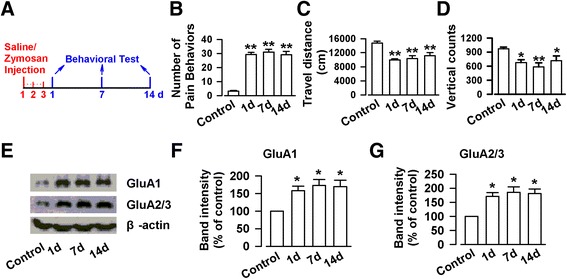
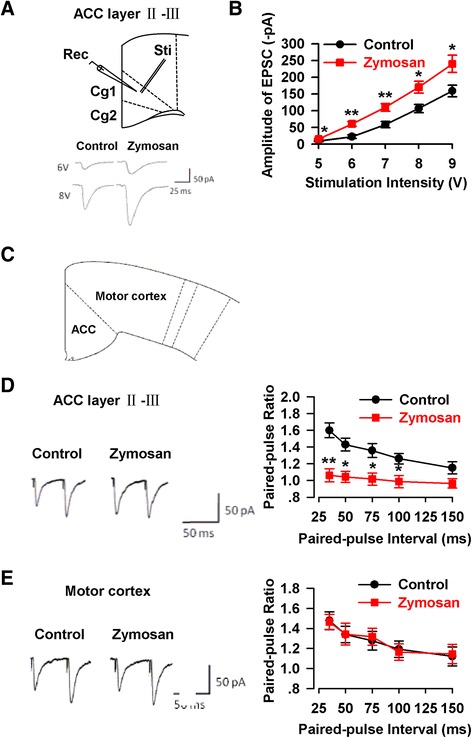
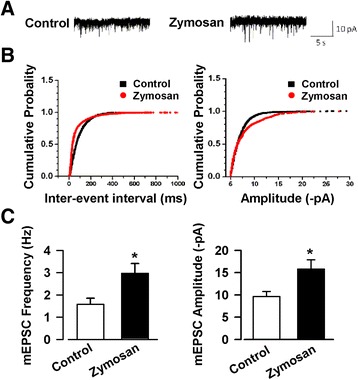
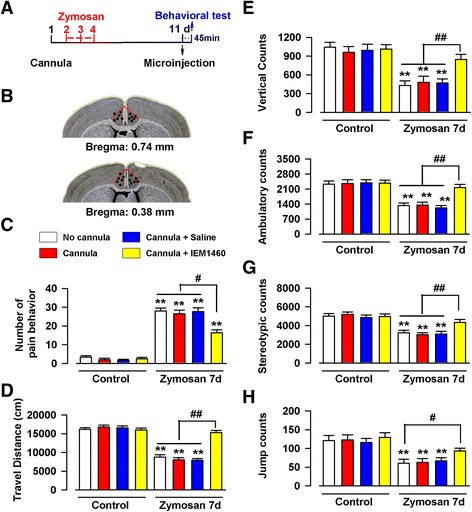
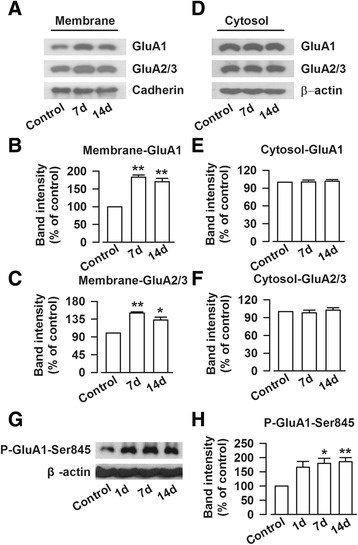
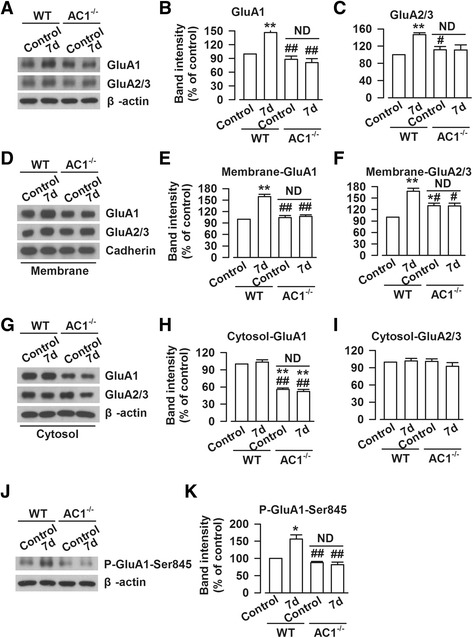
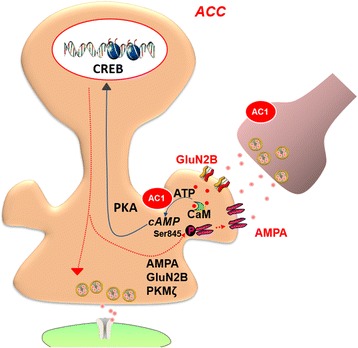
BACKGROUND: Irritable bowel syndrome (IBS) is one of the most common functional gastrointestinal disorders and it causes long-lasting visceral pain and discomfort. AMPA receptor mediated long-term potentiation (LTP) has been shown to play a critical role in animal models of neuropathic and inflammatory pain. No report is available for central changes in the ACC of mice with chronic visceral pain. RESULTS: In this study, we used integrative methods to investigate potential central plastic changes in the anterior cingulate cortex (ACC) of a visceral pain mouse model induced by intracolonic injection of zymosan. We found that visceral pain induced an increased expression of AMPA receptors (at the post synapses) in the ACC via an enhanced trafficking of the AMPA receptors to the membrane. Both GluA1 and GluA2/3 subunits were significantly increased. Supporting biochemical changes, excitatory synaptic transmission in the ACC were also significantly enhanced. Microinjection of AMPA receptor inhibitor IEM1460 into the ACC inhibited visceral and spontaneous pain behaviors. Furthermore, we found that the phosphorylation of GluA1 at the Ser845 site was increased, suggesting that GluA1 phosphorylation may contribute to AMPA receptor trafficking. Using genetically knockout mice lacking calcium-calmodulin stimulated adenylyl cyclase subtype 1 (AC1), we found that AMPA receptor phosphorylation and its membrane trafficking induced by zymosan injection were completely blocked. CONCLUSIONS: Our results provide direct evidence for cortical AMPA receptors to contribute to zymosan-induced visceral and spontaneous pain and inhibition of AC1 activity may help to reduce chronic visceral pain.
Overview
The claims and statistics of this paper haven’t been checked yet.
Free: it reads the open-access text and checks the first 5 claims that cite a source we can check. Create a free account to check every claim.
Integrity signals
Registry
Cites
Statistics
Figures
Verification
Claims the paper makes
The claims and statistics of this paper haven’t been checked yet.
Free: it reads the open-access text and checks the first 5 claims that cite a source we can check. Create a free account to check every claim.
Claims other papers make about this one
Each is checked against this paper’s own text: does it say what the citing paper says it does?
In the citing paper
“Furthermore, these alterations have been proposed to act in a positive feedback manner, as increased AC1 activity can reciprocally drive increases in the GluN2B subunit of NMDA-Rs (234) as well as increase the phosphorylation and expression of α-amino-3-hydroxy-5-methyl-4-isoxazolepropionic acid (AMPA) receptors (235, 238).”
From Physiological roles of mammalian transmembrane adenylyl cyclase isoforms (2022) · cites this paper as [235]
Self-check
Percentages, sums and reported differences re-computed from the paper’s own numbers.
The self-check needs the paper’s full text.
Citations
Cites
3 retracted
Fan, J., Wu, X., Cao, Z., Chen, S., Owyang, C., & Li, Y. (2009) · Gastroenterology · doi:10.1053/j.gastro.2009.01.069 · Cited by 63 · cited 1×
“Finally, the GluN2B-containing NMDA receptors, postsynaptic CaMKII, and extracellular signal-regulated kinase-1 and −2 (ERK1/2) in the ACC mediate visceral pain in animals [46–49].”
RetractedWu, X., Gao, J., Yan, J., Fan, J., Owyang, C., & Li, Y. (2008) · American Journal of Physiology-Gastrointestinal and Liver Physiology · doi:10.1152/ajpgi.00452.2007 · Cited by 50 · cited 1×
“Finally, the GluN2B-containing NMDA receptors, postsynaptic CaMKII, and extracellular signal-regulated kinase-1 and −2 (ERK1/2) in the ACC mediate visceral pain in animals [46–49].”
RetractedLi, Y., Zhang, X., Liu, H., Cao, Z., Chen, S., Cao, B., & Liu, J. (2012) · Journal of Neurochemistry · doi:10.1111/j.1471-4159.2012.07717.x · Cited by 25 · cited 1×
“Finally, the GluN2B-containing NMDA receptors, postsynaptic CaMKII, and extracellular signal-regulated kinase-1 and −2 (ERK1/2) in the ACC mediate visceral pain in animals [46–49].”
RetractedPKA phosphorylation of AMPA receptor subunits controls synaptic trafficking underlying plasticity
Esteban, J. A., Shi, S.-H., Wilson, C., Nuriya, M., Huganir, R. L., & Malinow, R. (2003) · Nature Neuroscience · doi:10.1038/nn997 · Cited by 894 · cited 1×
“In this regard, protein kinase A (PKA) has been shown to play roles in plasticity-related AMPA receptor trafficking [33, 34].”
The interaction between Stargazin and PSD-95 regulates AMPA receptor surface trafficking
Bats, C., Groc, L., & Choquet, D. (2007) · Neuron · doi:10.1016/j.neuron.2007.01.030 · Cited by 590 · cited 1×
“Previous studies in the hippocampus and ACC show that trafficking of AMPA receptors to the membrane play important roles in synaptic potentiation [29–31].”
Cortical excitation and chronic pain
Zhuo, M. (2008) · Trends in Neurosciences · doi:10.1016/j.tins.2008.01.003 · Cited by 535 · cited 2×
“Cumulative evidence supports the notion that forebrain neurons including those in the ACC and insular cortex play a crucial role for pain-related perception [13, 14].”
Self-citationTillisch, K., Mayer, E. A., & Labus, J. S. (2011) · Gastroenterology · doi:10.1053/j.gastro.2010.07.053 · Cited by 412 · cited 1×
“In addition, human brain imaging studies revealed that the long-term structural changes in the brain of IBS patients, suggesting the role of central brain areas in IBS related chronic visceral pain [6–9].”
Alleviating Neuropathic Pain Hypersensitivity by Inhibiting PKMζ in the Anterior Cingulate Cortex
Li, X.-Y., Ko, H.-G., Chen, T., Descalzi, G., Koga, K., Wang, H., Kim, S. S., Shang, Y., Kwak, C., Park, S.-W., et al. (2010) · Science · doi:10.1126/science.1191792 · Cited by 410 · cited 1×
“Cumulative evidence consistently suggests that neurons of the ACC are involved in pain-related perception, especially in chronic pain [21, 35–38].”
Self-citationPresynaptic and Postsynaptic Amplifications of Neuropathic Pain in the Anterior Cingulate Cortex
Xu, H., Wu, L.-J., Wang, H., Zhang, X., Vadakkan, K. I., Kim, S. S., Steenland, H. W., & Zhuo, M. (2008) · The Journal of Neuroscience · doi:10.1523/jneurosci.1812-08.2008 · Cited by 370 · cited 6×
“The percentage increase in the phosphorylation was similar on day 7 and 14, which were comparable with that in the ACC of neuropathic pain animal model [32].”
Self-citationA new model of visceral pain and referred hyperalgesia in the mouse
Laird, J. M. A., Martinez-Caro, L., Garcia-Nicas, E., & Cervero, F. (2001) · Pain · doi:10.1016/s0304-3959(01)00275-5 · Cited by 350
Cited by
Tsuda, M., Koga, K., Chen, T., & Zhuo, M. (2017) · Journal of Neurochemistry · doi:10.1111/jnc.14001 · Cited by 173
Self-citationPhysiological roles of mammalian transmembrane adenylyl cyclase isoforms
Ostrom, K. F., LaVigne, J. E., Brust, T. F., Seifert, R., Dessauer, C. W., Watts, V. J., & Ostrom, R. S. (2022) · Physiological Reviews · doi:10.1152/physrev.00013.2021 · Cited by 131
Mechanisms of Channel Block in Calcium-Permeable AMPA Receptors
Twomey, E. C., Yelshanskaya, M. V., Vassilevski, A. A., & Sobolevsky, A. I. (2018) · Neuron · doi:10.1016/j.neuron.2018.07.027 · Cited by 106
“IEM-1460 (micromolar potency) attenuates epileptic seizures (Gmiro and Serdyuk, 2008; Szczurowska and Mare s, 2015) and may reduce visceral pain (Kopach et al., 2016; Liu et al., 2015) and CP-AMPAR activity related to schizophrenia (Umino et al.”
Stress-Induced Chronic Visceral Pain of Gastrointestinal Origin
Greenwood-Van Meerveld, B., & Johnson, A. C. (2017) · Frontiers in Systems Neuroscience · doi:10.3389/fnsys.2017.00086 · Cited by 97
Descending facilitation: From basic science to the treatment of chronic pain
Zhuo, M. (2017) · Molecular Pain · doi:10.1177/1744806917699212 · Cited by 90
Self-citationMatisz, C. E., & Gruber, A. J. (2021) · Neuroscience & Biobehavioral Reviews · doi:10.1016/j.neubiorev.2021.12.020 · Cited by 74
Anxiolytic effects of Formononetin in an inflammatory pain mouse model
Wang, X., Guan, S., Liu, A., Yue, J., Hu, L., Zhang, K., Yang, L.-K., Lu, L., Tian, Z., Zhao, M., et al. (2019) · Molecular Brain · doi:10.1186/s13041-019-0453-4 · Cited by 65
“The activation of CREB leads to the phosphorylation of GluA1-containing AMPA [34], another important glutamate receptor closely related to the regulation of anxiety [35].”
BackgroundInfluentialSelf-citationPalmitoylation as a Functional Regulator of Neurotransmitter Receptors
Naumenko, V. S., & Ponimaskin, E. G. (2018) · Neural Plasticity · doi:10.1155/2018/5701348 · Cited by 65
“In addition, these receptors are involved in the regulation of pain sensation [167].”
BackgroundKoga, K., Shimoyama, S., Yamada, A., Furukawa, T., Nikaido, Y., Furue, H., Nakamura, K., & Ueno, S. (2018) · Molecular Pain · doi:10.1177/1744806918783478 · Cited by 58
“Chronic pain facilitated glutamatergic transmitter release in the layer II/III pyramidal neurons from the ACC.(10,13,14,36) Glutamatergic GluK receptors are located on presynaptic terminals and the postsynaptic membrane in the ACC.”
BackgroundAnterior Cingulate Cortex Mediates Hyperalgesia and Anxiety Induced by Chronic Pancreatitis in Rats
Ren, D., Li, J., Qiu, X.-T., Wan, F., Wu, Z.-Y., Fan, B., Zhang, M., Chen, T., Li, H., Bai, Y., et al. (2021) · Neuroscience Bulletin · doi:10.1007/s12264-021-00800-x · Cited by 56
“visceral pain have been conducted in a rat model of visceral hypersensitivity (VH) [20, 21].”
BackgroundInfluentialSelf-citationZhang, H., & Bramham, C. R. (2020) · Frontiers in Synaptic Neuroscience · doi:10.3389/fnsyn.2020.00026 · Cited by 52
Reduced acute nociception and chronic pain in Shank2 −/− mice
Ko, H., Oh, S. B., Zhuo, M., & Kaang, B. (2016) · Molecular Pain · doi:10.1177/1744806916647056 · Cited by 49
“However, defects in the brain such as anterior cingulate cortex and somatosensory cortex can cause these impaired pain responses in Shank2 KO mice.(15,16) Shank2 is expressed in the nervous system, including spinal cord and brain (source: GeneCards, GCID: GC11M070467).”
BackgroundSelf-citationCortical plasticity as synaptic mechanism for chronic pain
Zhuo, M. (2019) · Journal of Neural Transmission · doi:10.1007/s00702-019-02071-3 · Cited by 47
Self-citationLong term effects of lipopolysaccharide on satellite glial cells in mouse dorsal root ganglia
Blum, E., Procacci, P., Conte, V., Sartori, P., & Hanani, M. (2016) · Experimental Cell Research · doi:10.1016/j.yexcr.2016.11.026 · Cited by 42
“This conclusion is likely to hold for similar toxins, such as zymosan, which causes pain for over 14 days after its application [6,16], but this requires further work.”
BackgroundHan, S., Wang, J., Zhang, W., & Tian, X. (2024) · Molecular Neurobiology · doi:10.1007/s12035-024-04073-z · Cited by 40
“It is widely accepted that upregulation of AMPARs-mediated LTP in ACC underlies the unpleas-ant experience of chronic pain [89, 148, 149].”
Long-term cortical synaptic changes contribute to chronic pain and emotional disorders
Zhuo, M. (2018) · Neuroscience Letters · doi:10.1016/j.neulet.2018.11.048 · Cited by 37
“Enhancement of AMPA receptor mediated responses in the ACC has also been reported in animal models of visceral pain [18, 19].”
Self-citationLi, X., Shi, W., Chen, Q., Hao, S., Miao, H., Miao, Z., Xu, F., Bi, G., & Zhuo, M. (2023) · Communications Biology · doi:10.1038/s42003-023-05589-1 · Cited by 33
“In an animal model of nerve injury, ACC synaptic transmission was signi fi cantly enhanced through increased expression of post-synaptic AMPA receptors 2,40,47 .”
BackgroundSelf-citationAnalgesic effects of adenylyl cyclase inhibitor NB001 on bone cancer pain in a mouse model
Kang, W.-B., Yang, Q., Guo, Y.-Y., Wang, L., Wang, D.-S., Cheng, Q., Li, X.-M., Tang, J., Zhao, J.-N., Liu, G., et al. (2016) · Molecular Pain · doi:10.1177/1744806916652409 · Cited by 32
Self-citationZhou, Y., Li, R.-J., Li, M., Liu, X., Zhu, H., Ju, Z., Miao, X., & Xu, G. (2016) · Molecular Pain · doi:10.1177/1744806916646381 · Cited by 32
The nucleus tractus solitarius mediates hyperalgesia induced by chronic pancreatitis in rats
Bai, Y., Chen, Y.-B., Qiu, X.-T., Chen, Y., Ma, L., Li, Y.-Q., Sun, H., Zhang, M., Zhang, T., Chen, T., et al. (2019) · World Journal of Gastroenterology · doi:10.3748/wjg.v25.i40.6077 · Cited by 32
Self-citationCyclic AMP‐dependent positive feedback signaling pathways in the cortex contributes to visceral pain
Liu, S., Wang, X., Yue, J., Yang, L., Li, X., Hu, L., Lu, J., Song, Q., Zhang, K., Yang, Q., et al. (2020) · Journal of Neurochemistry · doi:10.1111/jnc.14903 · Cited by 30
Self-citationTaylor, B. K., Sinha, G. P., Donahue, R. R., Grachen, C. M., Morón, J. A., & Doolen, S. (2019) · Experimental Neurology · doi:10.1016/j.expneurol.2019.01.003 · Cited by 28
“Previous studies suggest that inhibition of NMDA, AC1, PKA, PKC and PI3 kinase activation prevents hyperalgesia and CP-AMPAR signaling in the presence of inflammatory injury (Liu et al., 2015; Lu et al., 2003; Park et al., 2009; Wigerblad et al., 2017).”
Darvish-Ghane, S., Quintana, C., Beaulieu, J., & Martin, L. J. (2020) · Molecular Brain · doi:10.1186/s13041-020-00661-x · Cited by 26
Supraspinal Mechanisms of Intestinal Hypersensitivity
Любашина, О. А., Sivachenko, I. B., & Panteleev, S. S. (2020) · Cellular and Molecular Neurobiology · doi:10.1007/s10571-020-00967-3 · Cited by 26
“It was found in particular that expression of AMPA receptors raised due to their enhanced trafficking to postsynaptic membrane (Liu et al. 2015).”
BackgroundInfluentialDopaminergic Modulation of Excitatory Transmission in the Anterior Cingulate Cortex of Adult Mice
Darvish-Ghane, S., Yamanaka, M., & Zhuo, M. (2016) · Molecular Pain · doi:10.1177/1744806916648153 · Cited by 26
Self-citationJarrin, S., Pandit, A. S., Roche, M., & Finn, D. P. (2020) · Frontiers in Behavioral Neuroscience · doi:10.3389/fnbeh.2020.00139 · Cited by 26
Li, X., Song, Q., Chen, T., & Zhuo, M. (2017) · Molecular Pain · doi:10.1177/1744806917719847 · Cited by 21
Self-citationWang, Y., Zuo, Z., Wu, C., Liu, L., Feng, Z., & Li, X. (2017) · Frontiers in Molecular Neuroscience · doi:10.3389/fnmol.2017.00289 · Cited by 18
“Other studies applied various chemicals, including ζ-pseudosubstrate inhibitory peptide (ZIP; Li et al., 2010), IEM1460 (Liu et al., 2015) and clonidine (Zuo et al., 2015), to the ACC locally, and unmasking effects on the aversion induced by peripheral nerve injury were observed, whereas lesion (Qu et al., 2011) or in…”
BackgroundSabnis, S. S., Narasimhan, K. K. S., Chettiar, P. B., Gakare, S. G., Shelkar, G. P., Asati, D. G., Thakur, S. S., & Dravid, S. M. (2024) · British Journal of Pharmacology · doi:10.1111/bph.16296 · Cited by 17
“…of AMPA receptor subunit up-regulation in chronic pain states and changes in NMDA receptor subunits, especially GluN2B expression, in the spinal cord (Abe et al., 2005; Gandhi et al., 2021; Hildebrand et al., 2014; Jing et al., 2022; Liu et al., 2015; Nakazato et al., 2005; Wu et al., 2014).”
BackgroundImplication of system xc− in neuroinflammation during the onset and maintenance of neuropathic pain
Beckers, P., do Nascimento, I. B., Charlier, M., Desmet, N., Massie, A., & Hermans, E. (2024) · Journal of Neuroinflammation · doi:10.1186/s12974-024-03112-9 · Cited by 16
“The reinforcement of glutamate transmission can be attributed to different mechanisms, such as an enhanced neuronal release of glutamate causing an increased activation of glutamate receptors and associated downstream signaling pathways [39, 40].”
BackgroundEffects of CPEB1 in the anterior cingulate cortex on visceral pain in mice
Wang, X., Yue, J., Hu, L., Tian, Z., Yang, L.-K., Lu, L., Zhao, M., & Liu, S. (2019) · Brain Research · doi:10.1016/j.brainres.2019.02.001 · Cited by 15
Self-citationRodent Model of Irritable Bowel Syndrome
Wang, Y., Bi, Z., Wang, E., Sun, B., Zheng, Y., Zhong, L. L. D., & Yuan, J. (2017) · International Journal of Gastroenterology Disorders & Therapy · doi:10.15344/2393-8498/2017/131 · Cited by 14
“[33] gave rats’ intracolonic injection with 0.”
FMRP acts as a key messenger for visceral pain modulation
Yang, L.-K., Lu, L., Feng, B., Wang, X., Yue, J., Li, X., Zhuo, M., & Liu, S. (2020) · Molecular Pain · doi:10.1177/1744806920972241 · Cited by 14
Self-citationTrapping of spermine, Kukoamine A, and polyamine toxin blockers in GluK2 kainate receptor channels
Gangwar, S. P., Yelshanskaya, M. V., Aktolun, M., Yen, L. Y., Newton, T. P., Strømgaard, K., Kurnikova, M. G., & Sobolevsky, A. I. (2024) · Nature Communications · doi:10.1038/s41467-024-54538-x · Cited by 13
“…toxin analog 1-naphthyl acetyl spermine (NASPM) 65 – 67 , which reduces oxidative stress and protects neurons after ischemia 68,69 , and IEM-1460 adamantane derivative 67,70 that attenuates epileptic seizures 71,72 and reduces visceral pain 73,74 and receptor activity related to schizophrenia 75 .”
Zhang, B., Xue, H., Wang, W., Chen, T., Su, M., Kang, N., Yang, J., Bian, Z., Wang, F., & Tang, X. (2020) · Proteome Science · doi:10.1186/s12953-020-0157-9 · Cited by 13
“Calmodulin, an important molecule in Ca-CaMcalcium/calmodulin-dependent protein kinase II (CaMKII) signaling, plays an important role in chronic visceral pain [26, 27].”
Emerging role of glutamate in the pathophysiology and therapeutics of Gulf War illness
Wang, X., Ali, N., & Lin, C. G. (2021) · Life Sciences · doi:10.1016/j.lfs.2021.119609 · Cited by 13
Hu, J., Chen, X., Cheng, J., Kong, F., Xia, H., & Wu, J. (2021) · Neuroreport · doi:10.1097/wnr.0000000000001684 · Cited by 12
Decoding chronic pain: the glutamate-GABA tug of war in the cerebral cortex
Huang, D., Dong, Y., He, L., Zhou, R., Zhou, J., Yang, S., & Yu, S. (2025) · Frontiers in Molecular Neuroscience · doi:10.3389/fnmol.2025.1572775 · Cited by 11
Zhang, W., Zhang, X., Lei, M., Zhang, D., Qin, G., Zhou, J., Ji, L., & Chen, L. (2024) · Antioxidants · doi:10.3390/antiox13060725 · Cited by 11
Structural Insights into Function of Ionotropic Glutamate Receptors
Yelshanskaya, M. V., & Sobolevsky, A. I. (2022) · Biochemistry (Moscow) Supplement Series A Membrane and Cell Biology · doi:10.1134/s1990747822040043 · Cited by 10
Yi, Z.-L., Lu, J.-N., Zhu, J., He, T., Xu, Y., Huang, Z., Li, Y., & Xu, G.-Y. (2024) · Molecular Pain · doi:10.1177/17448069241260349 · Cited by 7
Self-citationZhu, T., Chen, B., Han, H., Lu, X., Chen, Z., Ye, T., Zhao, H., Zheng, M., & Huang, C. (2023) · Behavioural Pharmacology · doi:10.1097/fbp.0000000000000738 · Cited by 6
“So, is there a possibility that a single zymosan A injection produces a sustained antidepressant effect via the AMPA receptor-BDNF signaling pathway? Indeed, this hypothesis may be supported by previous studies, as zymosan A has been shown to promote AMPA receptor phosphorylation and membrane trafficking in the anteri…”
ResultKader, L., Willits, A., Meriano, S., Christianson, J. A., La, J., Feng, B., Knight, B. E., Kosova, G., DeBerry, J. J., Coates, M. D., et al. (2024) · Journal of Pain · doi:10.1016/j.jpain.2024.104572 · Cited by 4
“4 ZYM-induced VH has been studied preclinically using both rat and mouse models, 11,13 yet differential susceptibility among substrains has yet to be fully leveraged to explore genetic determinants of VH susceptibility.”
Cheng, Y., Huang, P., Meng, B., Gan, L., Wu, D., & Cao, Y. (2018) · Archives of Oral Biology · doi:10.1016/j.archoralbio.2018.11.012 · Cited by 4
Zhang, M., Zhang, M., Wei, Y., Lu, Y.-C., Wang, J., Yang, S.-M., Zhu, Z., Chen, Q., Zhao, M., Dong, J., et al. (2022) · Biochemical and Biophysical Research Communications · doi:10.1016/j.bbrc.2022.07.075 · Cited by 3
Self-citationRegulating AMPA Receptors with Isoxazole-4-Carboxamide Derivatives: An Electrophysiological Study
Qneibi, M., Hawash, M., Bdir, S., Bdair, M., Idais, T., Sarhan, I., & Touqan, J. (2025) · Journal of Xenobiotics · doi:10.3390/jox15020040 · Cited by 1
Duan, R., Zhang, T., Lu, S., Zhu, L., Zhang, Q., Bai, Y., Wang, K., & Duan, L. (2025) · Journal of Translational Internal Medicine · doi:10.1016/s0016-5085(25)01023-6 · Cited by 1
AMPA receptor, neuroimaging, and chronic pain
Sakai, Y., Kawate, M., Wakaizumi, K., & Miyazaki, T. (2026) · Journal of Anesthesia · doi:10.1007/s00540-026-03729-5 · Cited by 1
“…documented in animal models—such as increased AMPAR expression in ACC, insula, nucleus accumbens, and amygdala under chronic pain conditions [40–42, 45, 53, 87]— this concordance would establish the clinical applicability of preclinical discoveries and validate AMPAR density as a quantitative…”
InfluentialFourrier, C. (2016) · theses.fr (ABES) · doi:10.70675/f615d04ez283bz49e8zbb9az367e02bd5370 · Cited by 1
Dwyer, T. S., Shrinidhi, A., Aryal, S., Berchtold, M. W., Munk, M., Klein, A. H., Koss, W. A., Flaherty, D. P., & Watts, V. J. (2026) · Molecular Pharmacology · doi:10.1016/j.molpha.2026.100121
Medial prefrontal cortex in chronic pain: Integrating circuit, epigenetics, and molecular insights
Xiang, Z., Wu, Q., Xu, X., & Xu, H. (2026) · Biochemical and Biophysical Research Communications · doi:10.1016/j.bbrc.2026.153932
Shimoyama, S., Ishikawa, T., Oke, Y., Kawabata, R., 尾崎, 紀., Ueno, S., Noguchi, K., Zhuo, M., & Koga, K. (2026) · Cell Reports · doi:10.1016/j.celrep.2026.117492
Self-citationNeuroligins and Neuropathic Pain: Insights into Synaptic Plasticity and Pain Transmission
García‐Domínguez, M. (2026) · Biology · doi:10.3390/biology15141180
“These changes are mediated by enhanced glutamatergic transmission, particularly via upregulated NMDA and AMPA receptor activity, alongside concurrent dysfunction of GABAergic and glycinergic inhibitory signaling [17,18].”
Chronic joint pain drives sex-specific changes in hippocampal glutamatergic signaling and sleep
Stepanova, V., Lefevre, N., Villegas, A.-R., Magnusson, K. R., & Kloefkorn, H. E. (2026) · npj Biomedical Innovations. · doi:10.1038/s44385-026-00104-7
“Normalized residual AMPAR upregulation in males is consistent with prior studies in chronic pain models that report increased AMPAR expression in the nucleus accumbens and prefrontal cortex 44,45 .”
Metadata
- Authors
- Liu, S.-B., Zhang, M.-M., Cheng, L.-F., Shi, J., Lu, J.-S., & Zhuo, M.
- Affiliations
- University of Toronto (CA)
- Xi'an Jiaotong University (CN)
- Corresponding author
- Zhuo, Min
- Venue
- Molecular Brain
- Published
- 2015-11-19
- Volume
- 8
- Issue
- 1
- Pages
- 76-76
- ISSN
- 1756-6606 (ISSN-L)
- PMC
- PMC4653882
- OpenAlex
- W2176291309
- Semantic Scholar
- 25ab4f177ff3d530a3687c0866808dc65767520c
- Cited by
- 55
- References
- 59
- Citations by year
- 2026: 6 · 2025: 3 · 2024: 7 · 2023: 4 · 2022: 2 · 2021: 5 · 2020: 6 · 2019: 6 · 2018: 5 · 2017: 6 · 2016: 5
- FWCI
- 3.93
- Type
- journal article
- Language
- en
- Open access
- gold
- doi.org
- Licence
- cc-by
- Locations
- Molecular Brain (publishedVersion, cc-by)
- PubMed Central (publishedVersion, cc-by)
- PubMed (publishedVersion)
- TSpace (University of Toronto) (submittedVersion)
- Funders
- CIHR (258523)
- Canadian Network for Research and Innovation in Machining Technology, Natural Sciences and Engineering Research Council of Canada (402555)
- Topics
- Health Sciences › Medicine › Physiology (medical) › Pain Mechanisms and Treatments
- Life Sciences › Neuroscience › Cellular and Molecular Neuroscience › Neuroscience and Neuropharmacology Research
- Health Sciences › Medicine › Gastroenterology › Gastrointestinal motility and disorders
- Keywords
- chronic visceral pain, AMPA receptors, anterior cingulate cortex, zymosan, irritable bowel syndrome, GluA1 phosphorylation, AMPA receptor trafficking, excitatory synaptic transmission, spontaneous pain, central sensitization
- MeSH terms
- Adamantane, Adenylyl Cyclases, Animals, Behavior, Animal, Calcium, Cell Membrane, Disease Models, Animal, Glutamates, Gyrus Cinguli, Injections, Models, Biological, Synaptic Transmission, Phosphorylation, Phosphoserine, Time Factors, Zymosan, Up-Regulation, Gene Deletion, Receptors, AMPA, Excitatory Postsynaptic Potentials, Protein Transport, Irritable Bowel Syndrome, Mice, Visceral Pain, Chronic Pain
About these checks
Registry, retraction, Cites and statistics results are computed, not judged, with one exception: a printed reference that no index lists is read once by a model before it counts as a citation error. Claims are extracted by a model and kept only when their quote appears verbatim in the text; each cited source is then checked, with a model’s help, for whether it says what the claim relies on. Those verdicts can be wrong — read the claim’s quote and the cited source before relying on one.
Statistics and arithmetic are recomputed, not judged.
Confidence bands are shown only for fields calibrated on our annotated test set. None is calibrated yet, so no band is shown.
What counts as a claim ›How we measure confidence ›How we check this ›
Are you an author, or do you see a problem with this page? Request a review
Data sources
Bibliographic data: Semantic Scholar, OpenAlex, Crossref.
Contains information from the Semantic Scholar Academic Graph Datasets, made available under the ODC Attribution License (ODC-BY 1.0).
Semantic Scholar’s data is described in: Kinney, R., et al. (2023). The Semantic Scholar Open Data Platform. arXiv:2301.10140.
