

A full response chain surge capacity test of a small rural hospital, prehospital resources and collaborating organisations
Open accessThe DOI matches its Crossref record; 47 of the 47 references it cites were found in a registry or an index.
Abstract
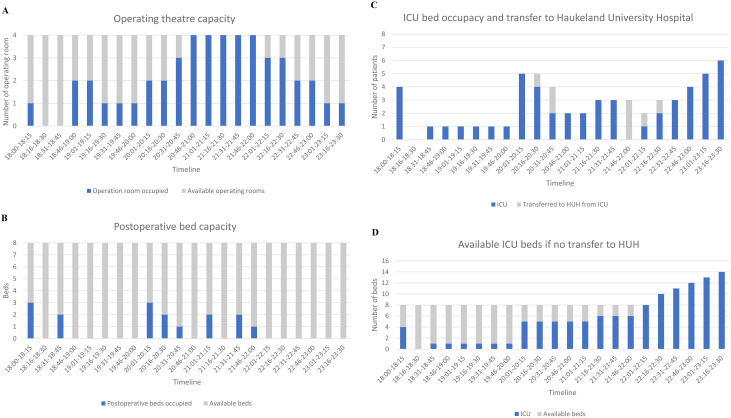
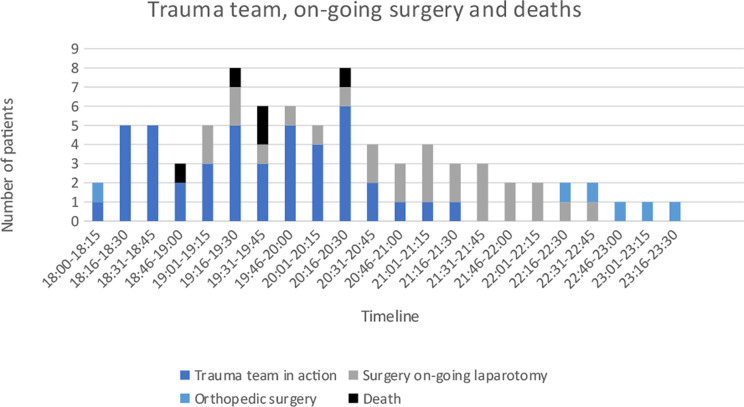
Background: Increased surge capacity is key in mass casualty incidents. Rural hospitals face other challenges in terms of transport capacity and available resources. The aim was to examine if a simulation system previously used to test surge capacity at large hospitals, could be used to test surge capacity at a small rural hospital. Method: A qualitative study was conducted to assess surge capacity at a small rural hospital using a previously validated simulation system. The simulation system was adopted to the Norwegian trauma system and local context. New simulated patient cards were developed, inspired by traffic victims. A tunnel accident scenario involving a bus, a heavy goods vehicle and a motorcyclist was used. Test staff ensured that real consumption of time and resources were followed. 98 persons representing 16 organisations, participated. A post-test survey was collected. Results: Access to the scene and transport resources were bottlenecks in the initial phase. The emergency department and lack of surgeons and anaesthetic doctors in the trauma team became the first and most prominent in-hospital surge capacity limiting factors. Operating theatre reached surge capacity, but never exceeded. The intensive care unit avoided depletion of beds/staff/ventilators due to transfer of patients to the trauma centre. Surge capacity was enhanced by obtaining staff, blood and equipment from the trauma centre. Water lock systems and replenishment routines for chest tube trays was inadequate. Blood supply was insufficient in the initial phase and a lack of overview of blood products was identified. Some communication gaps and deficiencies in victim identification were detected. The hospital participants evaluated the method as useful in assessing hospital surge capacity. Half of the participants requested increased time to learn the system pre-test. The inclusion of several organisations in the mass casualty incident exercise was appreciated and ranked high as a simulation training. Conclusion: The simulation system provided detailed data to determine surge capacity and capacity-limiting factors in the mass casualty incidents response at a rural hospital and performed as a training tool for staff. Methods to improve pre-test simulation system knowledge should be examined. Broad inclusion of cooperating organisations was found beneficial.
Overview
The claims and statistics of this paper haven’t been checked yet.
Free: it reads the open-access text and checks the first 5 claims that cite a source we can check. Create a free account to check every claim.
Integrity signals
Registry
Cites
Statistics
Figures
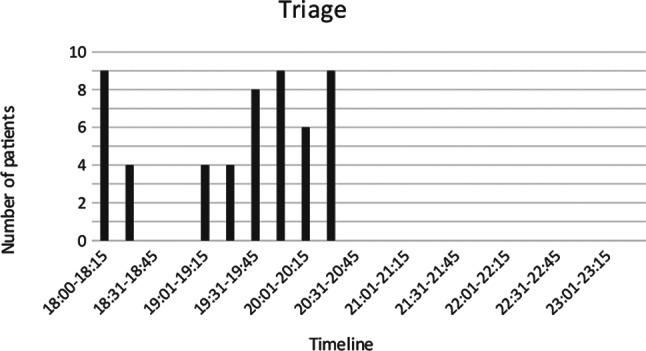
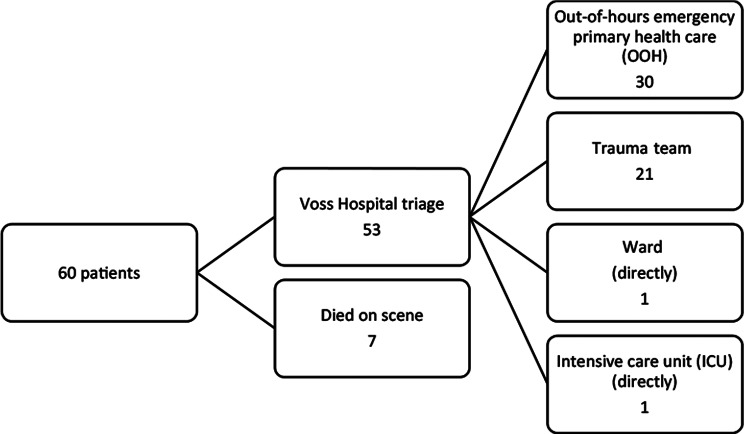
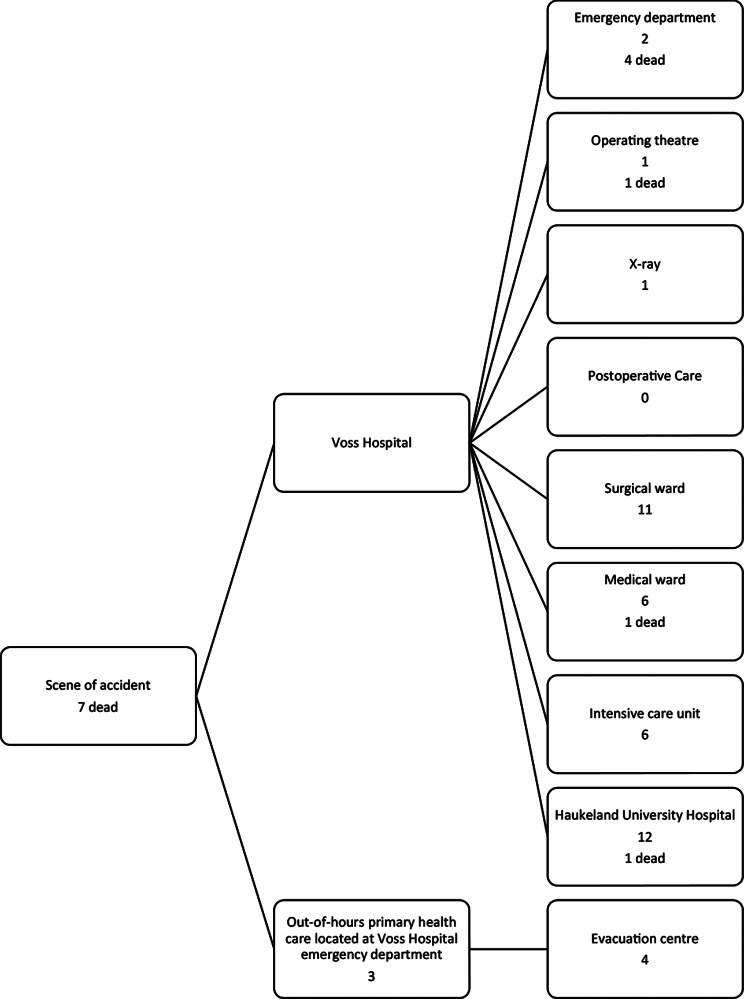
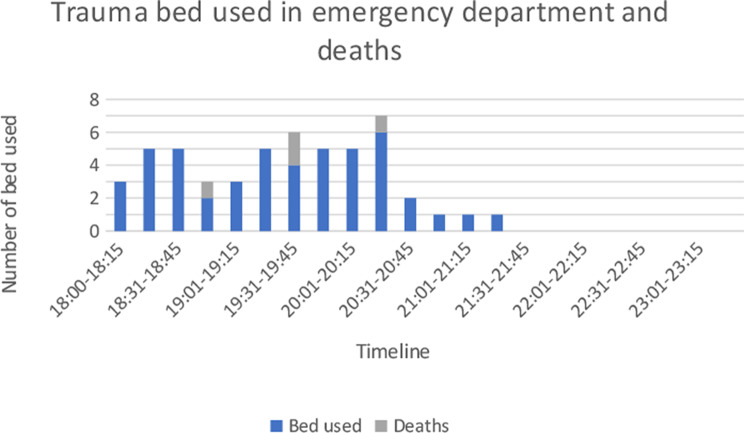
Verification
Claims the paper makes
The claims and statistics of this paper haven’t been checked yet.
Free: it reads the open-access text and checks the first 5 claims that cite a source we can check. Create a free account to check every claim.
Self-check
Percentages, sums and reported differences re-computed from the paper’s own numbers.
The self-check needs the paper’s full text.
Citations
Cites
Holcomb, J. B., Tilley, B. C., Baraniuk, S., Fox, E. E., Wade, C. E., Podbielski, J. M., del Junco, D. J., Brasel, K. J., Bulger, E. M., Callcut, R. A., et al. (2015) · JAMA · doi:10.1001/jama.2015.12 · Cited by 2,526
Aylwin, C. J., König, T. C., Brennan, N. W., Shirley, P. J., Davies, G., Walsh, M. S., & Brohi, K. (2006) · The Lancet · doi:10.1016/s0140-6736(06)69896-6 · Cited by 420
The medical response to multisite terrorist attacks in Paris
Hirsch, M., Carli, P., Nizard, R., Riou, B., Baroudjian, B., Baubet, T., Chhor, V., Chollet-Xemard, C., Dantchev, N., Fleury, N., et al. (2015) · The Lancet · doi:10.1016/s0140-6736(15)01063-6 · Cited by 335
Meyer, D. E., Vincent, L. E., Fox, E. E., O'Keeffe, T., Inaba, K., Bulger, E., Holcomb, J. B., & Cotton, B. A. (2017) · Journal of Trauma and Acute Care Surgery · doi:10.1097/ta.0000000000001531 · Cited by 329
Refining Surge Capacity: Conventional, Contingency, and Crisis Capacity
Hick, J. L., Barbera, J. A., & Kelen, G. D. (2009) · Disaster Medicine and Public Health Preparedness · doi:10.1097/dmp.0b013e31819f1ae2 · Cited by 241
Surge Capacity for Healthcare Systems: A Conceptual Framework
Kaji, A., Koenig, K. L., & Bey, T. (2006) · Academic Emergency Medicine · doi:10.1111/j.1553-2712.2006.tb01641.x · Cited by 190
How Does Casualty Load Affect Trauma Care in Urban Bombing Incidents? A Quantitative Analysis
Hirshberg, A., Scott, B. G., Granchi, T. S., Wall, M. J., Mattox, K. L., & Stein, M. (2005) · The Journal of Trauma: Injury, Infection, and Critical Care · doi:10.1097/01.ta.0000159243.70507.86 · Cited by 127
Sollid, S. J., Rimstad, R., Rehn, M., Nakstad, A. R., Tomlinson, A.-E., Strand, T., Heimdal, H., Nilsen, J., Sandberg, M., & Collaborating group (2012) · Scandinavian Journal of Trauma, Resuscitation and Emergency Medicine · doi:10.1186/1757-7241-20-3 · Cited by 94
Kelen, G. D., McCarthy, M. L., Kraus, C. K., Ding, R., Hsu, E. B., Li, G., Shahan, J. B., Scheulen, J. J., & Green, G. B. (2009) · Disaster Medicine and Public Health Preparedness · doi:10.1097/dmp.0b013e3181a5e7cd · Cited by 74
The twin terrorist attacks in Norway on July 22, 2011: The trauma center response
Gaarder, C., Jørgensen, J., Kolstadbraaten, K. M., Isaksen, K. S., Skattum, J., Rimstad, R., Gundem, T., Holtan, A., Wallöe, A., Pillgram-Larsen, J., et al. (2012) · The Journal of Trauma: Injury, Infection, and Critical Care · doi:10.1097/ta.0b013e31825a787f · Cited by 65
Hospital Emergency Surge Capacity: An Empiric New York Statewide Study
Kanter, R. K., & Moran, J. R. (2006) · Annals of Emergency Medicine · doi:10.1016/j.annemergmed.2006.10.019 · Cited by 65
Rimstad, R., & Sollid, S. J. M. (2015) · International Journal of Emergency Medicine · doi:10.1186/s12245-015-0052-9 · Cited by 64
Overall Asessment of the Response to Terrorist Bombings in Trains, Madrid, 11 March 2004
Turégano‐Fuentes, F., Pérez-Díaz, D., Sanz-Sánchez, M., & Ortiz-Alonso, J. (2008) · European Journal of Trauma and Emergency Surgery · doi:10.1007/s00068-008-8805-2 · Cited by 63
Characteristics of Medical Surge Capacity Demand for Sudden-impact Disasters
Stratton, S. J., & Tyler, R. D. (2006) · Academic Emergency Medicine · doi:10.1197/j.aem.2006.05.008 · Cited by 62
Abir, M., Davis, M. M., Sankar, P., Wong, A. C., & Wang, S. C. (2012) · Prehospital and Disaster Medicine · doi:10.1017/s1049023x12001513 · Cited by 58
Enhancing Hospital Surge Capacity for Mass Casualty Events
Peleg, K., & Kellermann, A. L. (2009) · JAMA · doi:10.1001/jama.2009.1119 · Cited by 57
Apelseth, T. O., Arsenovic, M. G., & Strandenes, G. (2022) · Transfusion · doi:10.1111/trf.16968 · Cited by 56
Self-citationManaging Multiple-Casualty Incidents: A Rural Medical Preparedness Training Assessment
Glow, S. D., Colucci, V. J., Allington, D. R., Noonan, C. W., & Hall, E. C. (2013) · Prehospital and Disaster Medicine · doi:10.1017/s1049023x13000423 · Cited by 54
Montán, K. L., Hrečkovski, B., Dobson, B. A., Örtenwall, P., Montán, C., Khorram‐Manesh, A., & Lennquist, S. (2013) · European Journal of Trauma and Emergency Surgery · doi:10.1007/s00068-013-0350-y · Cited by 50
Self-citationThe Surge Capacity for People in Emergencies (SCOPE) study in Australasian hospitals
Traub, M., Bradt, D. A., & Joseph, A. (2007) · The Medical Journal of Australia · doi:10.5694/j.1326-5377.2007.tb00971.x · Cited by 50
Civilian walking blood bank emergency preparedness plan
Holcomb, J. B., Spinella, P. C., Apelseth, T. O., Butler, F. K., Cannon, J. W., Cap, A. P., Corley, J. B., Doughty, H. A., Fitzpatrick, M. H., Goldkind, S. F., et al. (2021) · Transfusion · doi:10.1111/trf.16458 · Cited by 48
Self-citationRural hospital mass casualty response to a terrorist shooting spree
Waage, S., Poole, J. C., & Thorgersen, E. B. (2013) · British journal of surgery · doi:10.1002/bjs.9203 · Cited by 38
Gabbe, B. J., Veitch, W. G., Curtis, K. A., Martin, K., Gómez, D., Civil, I. D., Moran, C., Teague, W. J., Holland, A. J. A., Lecky, F. E., et al. (2020) · EClinicalMedicine · doi:10.1016/j.eclinm.2020.100322 · Cited by 38
Bradt, D. A., Aitken, P., FitzGerald, G., Swift, R., O’Reilly, G., & Bartley, B. H. (2009) · Academic Emergency Medicine · doi:10.1111/j.1553-2712.2009.00501.x · Cited by 33
Assessment of hospital surge capacity using the MACSIM simulation system: a pilot study
Montán, K. L., Riddez, L., Lennquist, S., Olsberg, A. C., Lindberg, H., Gryth, D., & Örtenwall, P. (2016) · European Journal of Trauma and Emergency Surgery · doi:10.1007/s00068-016-0686-1 · Cited by 31
Self-citationSwedish emergency hospital surgical surge capacity to mass casualty incidents
Blimark, M., Örtenwall, P., Lönroth, H., Mattsson, P., Boffard, K. D., & Robinson, Y. (2020) · Scandinavian Journal of Trauma Resuscitation and Emergency Medicine · doi:10.1186/s13049-020-0701-8 · Cited by 31
How do I get an emergency civilian walking blood bank running?
Kaada, S. H., Apelseth, T. O., Hagen, K. G., Kristoffersen, E. K., Gjerde, S., Sønstabø, K., Halvorsen, H., Hervig, T. A., Sunde, G. A., Dahle, G. O., et al. (2019) · Transfusion · doi:10.1111/trf.15184 · Cited by 29
Self-citationHow do I implement a whole blood–based blood preparedness program in a small rural hospital?
Apelseth, T. O., Strandenes, G., Kristoffersen, E. K., Hagen, K. G., Braathen, H., & Hervig, T. A. (2020) · Transfusion · doi:10.1111/trf.16057 · Cited by 29
Self-citationSunde, G. A., Bjerkvig, C. K., Bekkevold, M., Kristoffersen, E. K., Strandenes, G., Bruserud, Ø., Apelseth, T. O., & Heltne, J.-K. (2022) · Scandinavian Journal of Trauma Resuscitation and Emergency Medicine · doi:10.1186/s13049-022-01051-z · Cited by 27
Self-citationExercising for mass casualty preparedness
Moss, R., & Gaarder, C. (2021) · British Journal of Anaesthesia · doi:10.1016/j.bja.2021.10.016 · Cited by 26
Franc, J. M., Ingrassia, P. L., Verde, M., Colombo, D., & Corte, F. D. (2014) · Prehospital and Disaster Medicine · doi:10.1017/s1049023x1400123x · Cited by 25
Montán, K. L., Khorram‐Manesh, A., Örtenwall, P., & Lennquist, S. (2011) · American Journal of Disaster Medicine · doi:10.5055/ajdm.2011.0068 · Cited by 25
Self-citationMontán, K. L., Örtenwall, P., Blimark, M., Montán, C., & Lennquist, S. (2022) · European Journal of Trauma and Emergency Surgery · doi:10.1007/s00068-022-02081-z · Cited by 25
Self-citationSarzynski, S. H., Mancera, A. G., Yek, C., Rosenthal, N. A., Kartashov, A. I., Hick, J. L., Mitchell, S. H., Neupane, M., Warner, S., Sun, J., et al. (2024) · JAMA Network Open · doi:10.1001/jamanetworkopen.2023.56174 · Cited by 25
Hagen, K. G., Strandenes, G., Kristoffersen, E. K., Braathen, H., Sivertsen, J., Bjerkvig, C. K., Sommerfelt‐Pettersen, N., Aasheim, I. B., Lunde, T. H. F., Hervig, T. A., et al. (2021) · Transfusion · doi:10.1111/trf.16490 · Cited by 24
Self-citationSöderin, L., Agri, J., Hammarberg, E., Montán, K. L., & Montán, C. (2022) · European Journal of Trauma and Emergency Surgery · doi:10.1007/s00068-022-02170-z · Cited by 23
Self-citationvTrain: A Novel Curriculum for Patient Surge Training in a Multi-User Virtual Environment (MUVE)
Greci, L. S., Ramloll, R., Hurst, S., Garman, K., Beedasy, J., Pieper, E. B., Huang, R., Higginbotham, E., & Agha, Z. (2013) · Prehospital and Disaster Medicine · doi:10.1017/s1049023x13000083 · Cited by 20
Bayram, J. D., & Zuabi, S. (2012) · Prehospital and Disaster Medicine · doi:10.1017/s1049023x12000428 · Cited by 18
The Impact of Trauma Systems on Disaster Preparedness: A Systematic Review
Bachman, S. L., Demeter, N. E., Lee, G. G., Burke, R. V., Valente, T. W., & Upperman, J. S. (2014) · Clinical Pediatric Emergency Medicine · doi:10.1016/j.cpem.2014.09.004 · Cited by 14
Gulland, A. (2017) · BMJ · doi:10.1136/bmj.j4309 · Cited by 14
Paris City Disaster: Response to the Recent Terror Attacks and Lessons Learned
Carli, P. A., & Télion, C. (2018) · Current Trauma Reports · doi:10.1007/s40719-018-0119-1 · Cited by 13
A national study of in-hospital preparedness for Mass Casualty Incidents and disasters
Ugelvik, K. S., Thomassen, Ø., Braut, G. S., Geisner, T., Sjøvold, J. E., & Montán, C. (2025) · European Journal of Trauma and Emergency Surgery · doi:10.1007/s00068-024-02685-7 · Cited by 12
Self-citationInteragency Coordination: A Case Study of the 2005 London Train Bombings
Strom, K. J., & Eyerman, J. (2008) · PsycEXTRA Dataset · doi:10.1037/e481392008-002 · Cited by 11
Hunt, P. (2018) · BMJ Military Health · doi:10.1136/jramc-2018-000935 · Cited by 11
Ugelvik, K. S., Thomassen, Ø., Braut, G. S., Geisner, T., Sjøvold, J. E., Agri, J., & Montán, C. (2023) · European Journal of Trauma and Emergency Surgery · doi:10.1007/s00068-023-02386-7 · Cited by 9
Self-citationOsborn, D., & Easthope, L. (2018) · Disaster Medicine and Public Health Preparedness · doi:10.1017/dmp.2018.38 · Cited by 8
Response to Major Incidents and Disasters: An Important Part of Trauma Management
Lennquist, S. (2013) · Springer eBooks · doi:10.1007/978-3-540-88124-7_4 · Cited by 2
Research works printed but not linked: 1
- McLean CR, Lee YT, Jain S. Integration of Incident Management Simulation-based Training Applications. Proceedings of the 2007 Fall Simulation Interoperability Workshop. Orlando, US; 2007. https://tsapps.nist.gov/publication/get_pdf.cfm?pub_id=822749. Dec 07 2024.
Cited by
Vernon-Elliot, J., Hollo, Z., Amaratunge, L., Sadka, N., & Rao, P. (2026) · British Journal of Anaesthesia · doi:10.1016/j.bja.2026.07.027
Paramedicine Literature Search: March-May 2025
Maxwell, S., & Morrissey, B. (2025) · International Journal of Paramedicine · doi:10.56068/vgxw1674
Säämänen, S. (2026) · Theseus (Ammattikorkeakoulujen)
Metadata
- Authors
- Ugelvik, K. S., Montán, K. L., Thomassen, Ø., Braut, G. S., Geisner, T., Todnem, S. L., Njå, O., Seim, E., Apelseth, T. O., Sjøvold, J. E., Sunde, G. A., Kasin, S., & Montán, C.
- Affiliations
- Haukeland University Hospital (NO)
- Karolinska Institutet (SE)
- Stiftelsen Norsk Luftambulanse (NO)
- Western Norway University of Applied Sciences (NO)
- Bergen Kommune (NO)
- University of Stavanger (NO)
- UiT The Arctic University of Norway (NO)
- Corresponding author
- Ugelvik, Kristina Stølen
- ORCID
- Venue
- Scandinavian Journal of Trauma, Resuscitation and Emergency Medicine
- Published
- 2025-03-28
- Volume
- 33
- Issue
- 1
- Pages
- 55-55
- ISSN
- 1757-7241 (ISSN-L)
- PMC
- PMC11954251
- OpenAlex
- W4408954090
- Cited by
- 1
- References
- 46
- Citations by year
- 2026: 1
- FWCI
- 1.29
- Type
- journal article
- Language
- en
- Open access
- gold
- doi.org
- Licence
- cc-by
- creativecommons.org/licenses/by/4.0 (tdm)
- creativecommons.org/licenses/by/4.0 (vor)
- Locations
- Scandinavian Journal of Trauma Resuscitation and Emergency Medicine (publishedVersion, cc-by)
- PubMed Central (publishedVersion, cc-by)
- PubMed (publishedVersion)
- DOAJ (DOAJ: Directory of Open Access Journals) (submittedVersion, cc-by-sa)
- Funders
- University of Bergen
- Topics
- Health Sciences › Health Professions › Emergency Medical Services › Disaster Response and Management
- Health Sciences › Medicine › Emergency Medicine › Trauma and Emergency Care Studies
- Social Sciences › Decision Sciences › Management Science and Operations Research › Facility Location and Emergency Management
- Keywords
- hospital surge capacity, mass casualty incidents, rural hospitals, simulation-based training, interhospital collaboration, trauma systems, blood supply, operating theatre capacity, intensive care unit, victim identification, communication gap
- MeSH terms
- Cooperative Behavior, Disaster Planning, Emergency Medical Services, Hospitals, Rural, Humans, Norway, Qualitative Research, Mass Casualty Incidents, Surge Capacity
About these checks
Registry, retraction, Cites and statistics results are computed, not judged, with one exception: a printed reference that no index lists is read once by a model before it counts as a citation error. Claims are extracted by a model and kept only when their quote appears verbatim in the text; each cited source is then checked, with a model’s help, for whether it says what the claim relies on. Those verdicts can be wrong — read the claim’s quote and the cited source before relying on one.
Statistics and arithmetic are recomputed, not judged.
Confidence bands are shown only for fields calibrated on our annotated test set. None is calibrated yet, so no band is shown.
What counts as a claim ›How we measure confidence ›How we check this ›
Are you an author, or do you see a problem with this page? Request a review
Data sources
Bibliographic data: Semantic Scholar, OpenAlex, Crossref.
Contains information from the Semantic Scholar Academic Graph Datasets, made available under the ODC Attribution License (ODC-BY 1.0).
Semantic Scholar’s data is described in: Kinney, R., et al. (2023). The Semantic Scholar Open Data Platform. arXiv:2301.10140.
