

Functions and regulation of lipocalin-2 in gut-origin sepsis: a narrative review
Open accessThe DOI matches its Crossref record; 83 of the 83 references it cites were found in a registry or an index.
Abstract
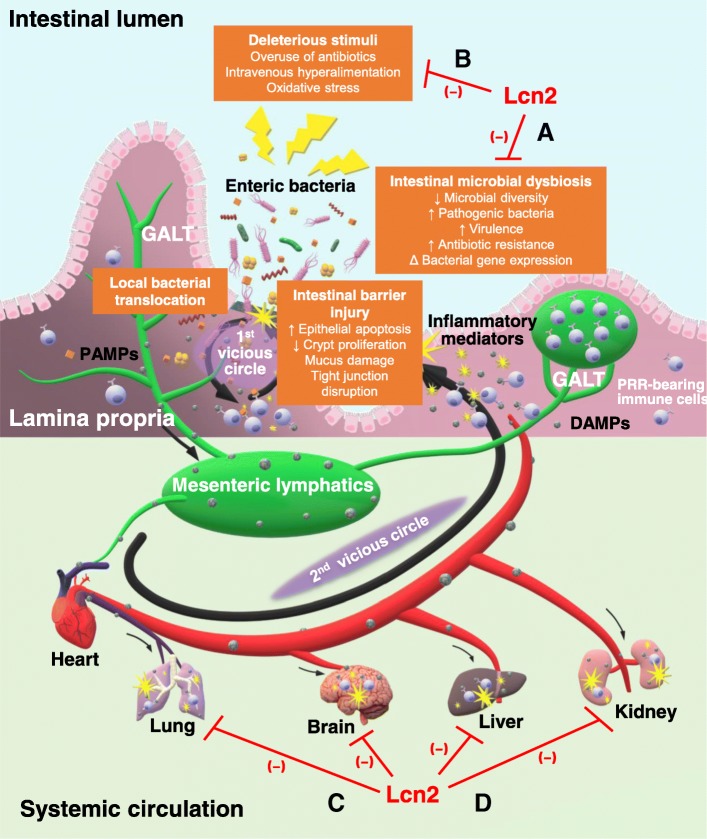
Lipocalin-2 (Lcn2), an innate immune protein, has come to be recognized for its roles in iron homeostasis, infection, and inflammation. In this narrative review, we provide a comprehensive description based on currently available evidence of the clinical implications of Lcn2 and its therapeutic potency in gut-origin sepsis. Lcn2 appears to mitigate gut barrier injury via maintaining homeostasis of the microbiota and exerting antioxidant strategy, as well as by deactivating macrophages and inducing immune cell apoptosis to terminate systemic hyper-inflammation. We propose that development of a therapeutic strategy targeting lipocalin-2 could be highly promising in the management of gut-origin sepsis.
Overview
The claims and statistics of this paper haven’t been checked yet.
Free: it reads the open-access text and checks the first 5 claims that cite a source we can check. Create a free account to check every claim.
Integrity signals
Registry
Cites
Statistics
Figures
Verification
Claims the paper makes
The claims and statistics of this paper haven’t been checked yet.
Free: it reads the open-access text and checks the first 5 claims that cite a source we can check. Create a free account to check every claim.
Claims other papers make about this one
Each is checked against this paper’s own text: does it say what the citing paper says it does?
In the citing paper
“Fecal lactoferrin and lipocalin-2 are additional neutrophil-derived proteins detectable in stool and are well-validated proxies for gut inflammation and barrier stress in IBD.124,125”
From Gut dysbiosis in oncology: a risk factor for immunoresistance (2026) · doi:10.1038/s41422-025-01212-6 · cites this paper as [124]
Self-check
Percentages, sums and reported differences re-computed from the paper’s own numbers.
The self-check needs the paper’s full text.
Citations
Cites
The third international consensus definitions for sepsis and septic shock (Sepsis-3).
Singer, M., Deutschman, C. S., Seymour, C. W., Shankar-Hari, M., Annane, D., Bauer, M., Bellomo, R., Bernard, G. R., Chiche, J.-D., Coopersmith, C. M., et al. (2016) · JAMA · doi:10.1001/jama.2016.0287 · Cited by 28,250
Surviving Sepsis Campaign: International guidelines for management of sepsis and septic shock: 2016.
Rhodes, A., Evans, L. E., Alhazzani, W., Levy, M. M., Antonelli, M., Ferrer, R., Kumar, A., Sevransky, J. E., Sprung, C. L., Nunnally, M. E., et al. (2017) · Intensive Care Medicine · doi:10.1007/s00134-017-4683-6 · Cited by 6,621
Circulating mitochondrial DAMPs cause inflammatory responses to injury
Zhang, Q., Raoof, M., Chen, Y., Sumi, Y., Sursal, T., Junger, W., Brohi, K., Itagaki, K., & Hauser, C. J. (2010) · Nature · doi:10.1038/nature08780 · Cited by 3,812
Fleischmann, C., Scherag, A., Adhikari, N. K. J., Hartog, C. S., Tsaganos, T., Schlattmann, P., Angus, D. C., & Reinhart, K. (2016) · American Journal of Respiratory and Critical Care Medicine · doi:10.1164/rccm.201504-0781oc · Cited by 3,548
Lipocalin 2 mediates an innate immune response to bacterial infection by sequestrating iron
Flo, T. H., Smith, K. D., Sato, S., Rodriguez, D. J., Holmes, M. A., Strong, R. K., Akira, S., & Aderem, A. (2004) · Nature · doi:10.1038/nature03104 · Cited by 1,877
Iron Metabolism in Pathogenic Bacteria
Ratledge, C., & Dover, L. G. (2000) · Annual Review of Microbiology · doi:10.1146/annurev.micro.54.1.881 · Cited by 1,539
Goetz, D. H., Holmes, M. A., Borregaard, N., Bluhm, M. E., Raymond, K. N., & Strong, R. K. (2002) · Molecular Cell · doi:10.1016/s1097-2765(02)00708-6 · Cited by 1,355
Isolation and primary structure of NGAL, a novel protein associated with human neutrophil gelatinase
Kjeldsen, L., Johnsen, A. H., Sengeløv, H., & Borregaard, N. (1993) · Journal of Biological Chemistry · doi:10.1016/s0021-9258(18)82217-7 · Cited by 1,284
Smythies, L. E., Sellers, M. T., Clements, R. H., Mosteller‐Barnum, M., Meng, G., Benjamin, W. H., Orenstein, J. M., & Smith, P. D. (2005) · Journal of Clinical Investigation · doi:10.1172/jci19229 · Cited by 928 · cited 1×
“Thus, they retain avid phagocytic and bactericidal activity without initiating overt inflammation [50].”
BackgroundA Cell-Surface Receptor for Lipocalin 24p3 Selectively Mediates Apoptosis and Iron Uptake
Devireddy, L. R., Gazin, C., Zhu, X., & Green, M. R. (2005) · Cell · doi:10.1016/j.cell.2005.10.027 · Cited by 672
Cited by
Sepsis—Pathophysiology and Therapeutic Concepts
Jarczak, D., Kluge, S., & Nierhaus, A. (2021) · Frontiers in Medicine · doi:10.3389/fmed.2021.628302 · Cited by 453
“This immunosuppressive protein is considered a “hot candidate” for therapeutic use in abdominal sepsis (243, 244).”
BackgroundThe Chelating Ability of Plant Polyphenols Can Affect Iron Homeostasis and Gut Microbiota
Scarano, A., Laddomada, B., Blando, F., Santis, S. D., Verna, G., Chieppa, M., & Santino, A. (2023) · Antioxidants · doi:10.3390/antiox12030630 · Cited by 153
Iron homeostasis and disorders revisited in the sepsis
Liu, Q., Wu, J., Zhang, X., Wu, X., Zhao, Y., & Ren, J. (2021) · Free Radical Biology and Medicine · doi:10.1016/j.freeradbiomed.2021.01.025 · Cited by 116
Lipocalin 2 as a link between ageing, risk factor conditions and age-related brain diseases
Dekens, D. W., Eisel, U. L. M., Gouweleeuw, L., Schoemaker, R. G., Deyn, P. P. D., & Naudé, P. J. W. (2021) · Ageing Research Reviews · doi:10.1016/j.arr.2021.101414 · Cited by 99
“Local and circulating Lcn2 levels are increased in these diseases, and can have harmful or protective effects (Bolignano et al., 2009; Lu et al., 2019; Østvik et al., 2013; Stallhofer et al., 2015; Viau et al., 2010).”
BackgroundBanerjee, S., Mohammed, A., Wong, H. R., Palaniyar, N., & Kamaleswaran, R. (2021) · Frontiers in Immunology · doi:10.3389/fimmu.2021.592303 · Cited by 85
“Specifically, Lipocalin-2 ( LCN2 ), an innate immune protein has been associated with maintaining an intestinal barrier against oxidative stress, having immunosuppressive character, and protects against multi-organ dysfunction ( 60–62).”
BackgroundHuang, W., Chen, H., He, Q. Z., Xie, W., peng, Z., Ma, Q., Huang, Q., Chen, Z., & Liu, Y. (2023) · Food & Function · doi:10.1039/d3fo01684f · Cited by 73
Molecular Evolution of Transition Metal Bioavailability at the Host–Pathogen Interface
Antelo, G. T., Vila, A. J., Giedroc, D. P., & Capdevila, D. A. (2021) · Trends in Microbiology · doi:10.1016/j.tim.2020.08.001 · Cited by 63
Yang, B., Zhang, L., Chen, Y., Bai, Y., Jia, J., Feng, J., Liu, K., & Zhou, J. F. (2020) · International Immunopharmacology · doi:10.1016/j.intimp.2020.106596 · Cited by 59
Li, J., Pan, Y., Yang, J., Wang, J., Jiang, Q., Dou, H., & Hou, Y. (2022) · Frontiers in Immunology · doi:10.3389/fimmu.2022.945234 · Cited by 63
Mertens, C., Kuchler, L., Solà, A., Guiteras, R., Grein, S., Brüne, B., von Knethen, A., & Jung, M. (2020) · International Journal of Molecular Sciences · doi:10.3390/ijms21207527 · Cited by 38
Liu, W., Guo, X., Jin, L., Hong, T., Zhang, Q., Su, F., Shen, Y. X., Li, S., & He, B. (2022) · Frontiers in Cardiovascular Medicine · doi:10.3389/fcvm.2022.1009726 · Cited by 32
Female obesity: Association with endocrine disruption and reproductive dysfunction
Baraskar, K., Thakur, P., Shrivastava, R., & Shrivastava, V. K. (2021) · Obesity Medicine · doi:10.1016/j.obmed.2021.100375 · Cited by 29
Gut dysbiosis in oncology: a risk factor for immunoresistance
(2026) · doi:10.1038/s41422-025-01212-6 · Cited by 24
“124,125 Although these stool in fl ammatory markers were originally developed in the context of IBD, they can be translatable to other contexts of dysbiosis (e.g., cancer) as non-invasive proxies for microbiota-driven mucosal immune activation.”
Iron trafficking in patients with Indian Post kala-azar dermal leishmaniasis
Dighal, A., Mukhopadhyay, D., Sengupta, R., Moulik, S., Mukherjee, S., Roy, S., Chaudhuri, S. J., Das, N. K., & Chatterjee, M. (2020) · PLoS neglected tropical diseases · doi:10.1371/journal.pntd.0007991 · Cited by 20
“Accordingly, it may be proposed that in PKDL cases, the increased expression of Lcn-2 may be attributed to the increased lesional mRNA expression of IL-10 (Fig 2E), along with raised circulating levels of pro- (TNF-α, IL-6, IL-1β and IL-8) and anti-inflammatory (IL4, IL-10, IL-13 and TGF-β) cytokines, the latter being…”
BackgroundPlasma Hsa-miR-92a-3p in correlation with lipocalin-2 is associated with sepsis-induced coagulopathy
Wang, Y., Wang, H., Zhang, C., Zhang, C., Yang, H., Gao, R., & Tong, Z. (2020) · BMC Infectious Diseases · doi:10.1186/s12879-020-4853-y · Cited by 20
Transcriptomic responses from improved murine sepsis models can better mimic human surgical sepsis
Efron, P. A., Darden, D. B., Wang, Z., Nacionales, D. C., Lopez, M.-C., Hawkins, R. B., Cox, M. C., Rincon, J. C., Ungaro, R. F., Dirain, M. L. S., et al. (2020) · The FASEB Journal · doi:10.1096/fj.202002150r · Cited by 21
Inflammatory liver diseases and susceptibility to sepsis
Lü, H. (2024) · Clinical Science · doi:10.1042/cs20230522 · Cited by 20
Tsui, F. W. L., Lin, A., Sarı, İ., Zhang, Z., Tsui, H. W., & Inman, R. D. (2021) · Arthritis Research & Therapy · doi:10.1186/s13075-021-02521-y · Cited by 16
Han, J., Balasubramanian, I., Flores, J. A., Bandyopadhyay, S., Yang, J., Liu, Y., Singh, R., Setty, P., Kiela, P. R., Ferraris, R. P., et al. (2024) · Journal of Biological Chemistry · doi:10.1016/j.jbc.2024.107424 · Cited by 17
VanBuskirk, K., Mweetwa, M. N., Kolterman, T., Raghavan, S. S., Ahmed, T., Ali, A., Begum, S. K. N., Besa, E. C., Denno, D. M., Jamil, Z., et al. (2024) · American Journal of Clinical Nutrition · doi:10.1016/j.ajcnut.2024.02.033 · Cited by 13
“Its role in innate immunity is thought to be the sequestration of iron, limiting bacterial growth [25], and to ameliorate deleterious stimuli in the gut to promote homeostasis of gut micro fl ora [26].”
Fluctuating selection on bacterial iron regulation in the mammalian gut
Barreto, H. C., Abreu, B., & Gordo, I. (2022) · Current Biology · doi:10.1016/j.cub.2022.06.017 · Cited by 10
Barreto, H. C., Abreu, B., & Gordo, I. (2021) · doi:10.1101/2021.12.30.474527 · Cited by 12
Deng, X., Wang, J., Wu, Q., Pan, L., Mou, T., & Du, C. (2022) · Clinica Chimica Acta · doi:10.1016/j.cca.2022.05.022 · Cited by 10
Identification of key genes as potential diagnostic biomarkers in sepsis by bioinformatics analysis
Lin, G., Li, N., Liu, J., Sun, J. H., Zhang, H., Gui, M., Zeng, Y., & Tang, J. (2024) · PeerJ · doi:10.7717/peerj.17542 · Cited by 14
“A number of studies have found that LCN-2 expression is upregulated in sepsis ( Lu et al., 2019 ; Mertens et al., 2020 ).”
BackgroundFactors affecting neutrophil functions during sepsis: human microbiome and epigenetics
Ma, Y., Zhao, Y., & Zhang, X. (2024) · Journal of Leukocyte Biology · doi:10.1093/jleuko/qiae107 · Cited by 10
Chen, S., Wang, C., Chen, Q., Zhao, D., Liu, Y., Zhao, S., Fu, S., He, X., Yang, B., Zhao, Q., et al. (2022) · Frontiers in Veterinary Science · doi:10.3389/fvets.2022.813170 · Cited by 9
“, IL-1β, IL-6, and TNF-α) in response to lipopolysaccharide stimulation by activating the NF-κB-STAT3 loop (35).”
BackgroundActivation of STAT6 in Intestinal Epithelial Cells Predisposes to Gut Inflammation
Westermann, S., Radtke, D., Krämer, L., Wirtz, S. J., & Voehringer, D. (2024) · European Journal of Immunology · doi:10.1002/eji.202451394 · Cited by 8
Qu, Z., Wu, Y., Jiang, Y., Fan, J., Cao, L., Dong, Y., Fang, S., & Gu, S. (2025) · Nutrients · doi:10.3390/nu17172886 · Cited by 11
“NGAL is involved in barrier integrity and microbial regulation, making it a valuable indicator of gut mucosal health [22].”
Review of lipocalin-2-mediated effects in diabetic retinopathy
Zhang, Y., Song, X., Qi, T., & Zhou, X. (2024) · International Ophthalmology · doi:10.1007/s10792-024-03015-x · Cited by 8
“Lipocalin-2 (LCN2), also known as neutrophil gelatinase-associated lipocalin (NGAL), sideroca-lin, or oncogene 24p3, is a significant protein within the realm of the immune system [8].”
LCN2 and ELANE overexpression induces sepsis
Wang, T., Han, J.-G., Dong, W., & Yu, Y.-H. (2024) · Medicine · doi:10.1097/md.0000000000037255 · Cited by 8
“[35] LCN2 is an inflammation-related protein, and its expression levels typically increase during inflammatory states.”
BackgroundInterleukin-36 Receptor Signaling Attenuates Epithelial Wound Healing in C57BL/6 Mouse Corneas
Chen, Q., Gao, N., & Yu, F. X. (2023) · Cells · doi:10.3390/cells12121587 · Cited by 7
Li, H., Wang, X., Yang, Q., Cheng, L., & Zeng, H. (2023) · Open Life Sciences · doi:10.1515/biol-2022-0549 · Cited by 10
“LCN2 de fi ciency dysregulates the host iron homeostasis and exacerbates endotoxin - induced sepsis [ 16 ] , therefore development of a therapeutic strategy targeting lipocalin - 2 could be highly promising in the management of gut - origin sepsis [ 17 ] .”
Liao, C., Ku, R.-H., Li, L.-H., Wu, C.-M., & Yang, T. (2023) · Journal of Antimicrobial Chemotherapy · doi:10.1093/jac/dkad179 · Cited by 6
Bacterial Organelles in Iron Physiology
Ferrara, K. M., Gupta, K. R., & Pi, H. (2024) · Molecular Microbiology · doi:10.1111/mmi.15330 · Cited by 6
“During inflammation, neutrophils migrate to the gut mucosa and release iron-sequestration proteins such as lactoferrin, lipocalin-2, and calprotectin to the intestinal lumen, with lipocalin-2 also secreted by intestinal epithelial cells (Sipponen et al. 2008; Lu et al. 2019).”
Luo, Y. J., Wan, J., Luo, C., Liu, H., Zhou, Y., Chen, J., Duan, Y., Ning, X., Zhou, Z., Wang, K., et al. (2020) · Current Eye Research · doi:10.1080/02713683.2020.1842462 · Cited by 6
“Through these interactions, LCN-2 can potentially affect cellular iron metabolism and various inflammatory responses.(45) Furthermore, lipocanin-2 can interact and stabilize pro-matrix metalloproteinase 9 (MMP9), thereby modulating the degradation of extracellular matrix (ECM) components.”
BackgroundMukhopadhyay, S., & Aich, P. (2020) · bioRxiv (Cold Spring Harbor Laboratory) · doi:10.1101/2020.05.07.082669 · Cited by 8
Wu, J., Cao, X., Huang, L., & Quan, Y. (2024) · Heliyon · doi:10.1016/j.heliyon.2024.e36831 · Cited by 5
Soares, C. M. T., Viana, A. G. D. A., Carvalho, R. P. R., Barros, E., Ramírez-López, C. J., Moura, A. A., & Machado‐Neves, M. (2024) · Journal of Reproductive Immunology · doi:10.1016/j.jri.2024.104401 · Cited by 6
Chen, H., Chen, E., Lu, Y., & Xu, Y. H. (2023) · Frontiers in Genetics · doi:10.3389/fgene.2023.1264873 · Cited by 6
“Additionally, we have found a clinical correlation between LCN2 and sepsis of intestinal origin (Lu et al., 2019).”
BackgroundHuang, J., Liu, Y., Xie, Q., Liang, G., Kong, H., Liu, M., Wang, Y., Zhang, S., & Li, X. (2020) · Mediators of Inflammation · doi:10.1155/2020/8925973 · Cited by 6
“Lcn2 can combat gut-origin sepsis via maintaining homeostasis of the microbiota to alleviate gut barrier injury [54].”
BackgroundCD121b-positive neutrophils predict immunosuppression in septic shock
Chen, J., Zhang, J., Chen, S., Qin, J., Hu, X., Xi, S., Zhang, L., Zhou, M., Zhou, Y., Fu, B., et al. (2025) · Frontiers in Immunology · doi:10.3389/fimmu.2025.1565797 · Cited by 5
“We also measured the concentrations of IL-6 and LCN2, establishing serum markers of sepsis (29, 30).”
Stark, K. A., Rinaldi, G., Costain, A. H., Clare, S., Tolley, C., Almeida, A., McCarthy, C. A., Harcourt, K., Brandt, C., Lawley, T. D., et al. (2024) · Animal Microbiome · doi:10.1186/s42523-024-00318-3 · Cited by 5
de la Fuente, A., Sánchez, J. L., Roncero, L. M. V., García, M. M., Barrado, M. E. S., Sánchez-Hernandez, M. V., García‐Mateo, N., Rico-Feijoó, J., Muñoz-Bellvís, L., de Castro, R. G., et al. (2024) · International Journal of Infectious Diseases · doi:10.1016/j.ijid.2024.107142 · Cited by 2
Biomy, H., Ramadan, N., Ameen, S. G., Kandil, A. E. D., & Galal, Z. (2021) · Benha Medical Journal · doi:10.21608/bmfj.2021.73302.1410 · Cited by 2
“Iron homeostasis, inflammation, microbial infection, organogenesis, neurodegeneration, and tumorigenesis have all been linked to NGAL [12].”
BackgroundYin, N., Sun, R., Hu, B., Liu, J., Yang, X.-H., & Wang, J. (2024) · Infection and Drug Resistance · doi:10.2147/idr.s496918 · Cited by 2
Wang, A. R., Tucker, M., Goodson, M. L., Ehrlich, A. K., & Cummings, B. P. (2025) · Physiological Reports · doi:10.14814/phy2.70524 · Cited by 1
“Lcn2 is an innate immune protein that plays a role in iron homeostasis, gut inflammation, and microbial infection (Lu et al., 2019; Moschen et al., 2017).”
Invasive Candidiasis in Surgical Patients
Sganga, G., Fransvea, P., Pepe, G., Grezia, M. D., & Cozza, V. (2021) · Hot topics in acute care surgery and trauma · doi:10.1007/978-3-030-62116-2_20 · Cited by 1
Huang, W. M., Chen, H., He, Q. Z., Xie, W., peng, Z., Ma, Q., Huang, Q., Chen, Z., & Liu, Y. (2023) · Research Square · doi:10.21203/rs.3.rs-2512251/v1 · Cited by 1
李, 素. (2024) · Traditional Chinese Medicine · doi:10.12677/tcm.2024.131012 · Cited by 1
The interaction between the microbiome, diet and health
Walsh, C. M., & Haasbroek, C. (2021) · South African Journal of Clinical Nutrition · doi:10.1080/16070658.2021.1966226
“Dysbiosis is defined as the overgrowth of a pathogenic microbiome leading to decreased GI barrier function and dysregulation of the immune system.(8) Although functionally related microbes can compensate for the function of other missing species, certain conditions, such as obesity, non-communicable diseases and other…”
BackgroundTsui, F. W. L., Lin, A., Sarı, İ., Zhang, Z., Tsui, H. W., & Inman, R. D. (2021) · doi:10.21203/rs.3.rs-194998/v1
SERUM LIPOCALIN IN PATIENTS WITH ACUTE PANCREATITIS
Сафина, Н. А., CHIKAEV, V. F., PETUKHOV, D. M., & BONDAREV, Y. V. (2023) · The Bulletin of Contemporary Clinical Medicine · doi:10.20969/vskm.2023.16(6).46-51
Алексеевна, С. О., Фефелова, Е. В., Maksimenya, M. V., Терешков, П. П., Михайловна, К. Т., & Perelomova, A. A. (2024) · Сибирский журнал клинической и экспериментальной медицины · doi:10.29001/2073-8552-2024-39-3-89-95
Stark, K. A., Rinaldi, G., Costain, A. H., Clare, S., Tolley, C., Almeida, A., McCarthy, C. A., Harcourt, K., Brandt, C., Lawley, T. D., et al. (2024) · Figshare · doi:10.6084/m9.figshare.26738982
Tsui, F. W. L., Lin, A., Sarı, İ., Zhang, Z., Tsui, H. W., & Inman, R. D. (2021) · Figshare · doi:10.6084/m9.figshare.14600449
Stark, K. A., Rinaldi, G., Costain, A. H., Clare, S., Tolley, C., Almeida, A., McCarthy, C. A., Harcourt, K., Brandt, C., Lawley, T. D., et al. (2024) · Figshare · doi:10.6084/m9.figshare.26738979
Stark, K. A., Rinaldi, G., Costain, A. H., Clare, S., Tolley, C., Almeida, A., McCarthy, C. A., Harcourt, K., Brandt, C., Lawley, T. D., et al. (2024) · Figshare · doi:10.6084/m9.figshare.26738985
Stark, K. A., Rinaldi, G., Costain, A. H., Clare, S., Tolley, C., Almeida, A., McCarthy, C. A., Harcourt, K., Brandt, C., Lawley, T. D., et al. (2024) · Figshare · doi:10.6084/m9.figshare.26738988
Stark, K. A., Rinaldi, G., Costain, A. H., Clare, S., Tolley, C., Almeida, A., McCarthy, C. A., Harcourt, K., Brandt, C., Lawley, T. D., et al. (2024) · Figshare · doi:10.6084/m9.figshare.26738991
Non-apoptotic Regulated Cell Death Mechanisms in Sepsis and their Therapeutic Potential
Mitre, A. O., Neag, M. A., Bâldea, I., Filip, G. A., Mitre, B., & Pârvu, A. E. (2026) · Inflammation · doi:10.1007/s10753-025-02356-8 · Cited by 3
“The non-heme iron transporters like lactoferrin and lipocalin-2 are also elevated in sepsis, con - tributing to iron sequestration [66 , 67 ].”
Le récepteur minéralocorticoide : une cible potentielle dans la fibrose intestinale ?
Amamou, A. (2020) · theses.fr (ABES) · doi:10.70675/ec2e0df7z8ae1z4feczaf08z10bcbd86d2f3
Julien, L. A. (2020) · theses.fr (ABES) · doi:10.70675/87fe6365z7ce8z43f8zbecbzf1b4ca746558 · Cited by 2
Zheng, X., Ding, Y. P., Wang, F., Tang, J., Han, Z., & Chen, X. (2026) · Frigid Zone Medicine · doi:10.1515/fzm-2026-0003
Liu, X.-Y., Liu, T., Chai, J., Wu, Y., Liu, H.-S., Qu, Y., Zhou, H., Xu, C., & Chi, Y. (2026) · Frontiers in Immunology · doi:10.3389/fimmu.2026.1855955 · Cited by 1
“Lcn2, produced by gastric and intestinal epithelial cells, enters the circulation and modulates immune cell function (85).”
Li, J., Li, Y., Song, C., Su, J., Wang, L., & Dong, S. (2026) · Frontiers in Immunology · doi:10.3389/fimmu.2026.1822078
“As a secreted acute-phase protein, LCN2 is rapidly induced under in fl ammatory and oxidative stress conditions, where it can sequester iron and limit bacterial growth, thereby exerting host-protective effects in certain infection settings (36, 37).”
Metadata
- Authors
- Lu, F., Inoue, K., Kato, J., Minamishima, S., & Morisaki, H.
- Affiliations
- Keio University (JP)
- Corresponding author
- Morisaki, Hiroshi
- Venue
- Critical Care
- Published
- 2019-08-02
- Volume
- 23
- Issue
- 1
- Pages
- 269-269
- ISSN
- 1364-8535 (ISSN-L)
- PMC
- PMC6679544
- OpenAlex
- W2964788436
- Cited by
- 60
- References
- 83
- Citations by year
- 2026: 5 · 2025: 3 · 2024: 17 · 2023: 8 · 2022: 5 · 2021: 11 · 2020: 11
- FWCI
- 0.98
- Type
- journal article
- Language
- en
- Open access
- gold
- doi.org
- Licence
- cc-by
- creativecommons.org/licenses/by/4.0/ (tdm)
- creativecommons.org/licenses/by/4.0/ (vor)
- Locations
- Critical Care (publishedVersion, cc-by)
- PubMed Central (publishedVersion, cc-by)
- PubMed (publishedVersion)
- DOAJ (DOAJ: Directory of Open Access Journals) (submittedVersion, cc-by-sa)
- Topics
- Health Sciences › Medicine › Critical Care and Intensive Care Medicine › Sepsis Diagnosis and Treatment
- Life Sciences › Immunology and Microbiology › Immunology › Inflammation biomarkers and pathways
- Life Sciences › Immunology and Microbiology › Immunology › Immune Response and Inflammation
- Keywords
- neutrophil gelatinase-associated lipocalin, iron homeostasis, gut microbiota, antioxidant defense, macrophage deactivation, immune cell apoptosis, systemic hyperinflammation, innate immunity, therapeutic targeting
- MeSH terms
- Lipocalin-2, Gastrointestinal Diseases, Humans, Inflammation, Iron, Sepsis
About these checks
Registry, retraction, Cites and statistics results are computed, not judged, with one exception: a printed reference that no index lists is read once by a model before it counts as a citation error. Claims are extracted by a model and kept only when their quote appears verbatim in the text; each cited source is then checked, with a model’s help, for whether it says what the claim relies on. Those verdicts can be wrong — read the claim’s quote and the cited source before relying on one.
Statistics and arithmetic are recomputed, not judged.
Confidence bands are shown only for fields calibrated on our annotated test set. None is calibrated yet, so no band is shown.
What counts as a claim ›How we measure confidence ›How we check this ›
Are you an author, or do you see a problem with this page? Request a review
Data sources
Bibliographic data: Semantic Scholar, OpenAlex, Crossref.
Contains information from the Semantic Scholar Academic Graph Datasets, made available under the ODC Attribution License (ODC-BY 1.0).
Semantic Scholar’s data is described in: Kinney, R., et al. (2023). The Semantic Scholar Open Data Platform. arXiv:2301.10140.
