

OrthoFinder: phylogenetic orthology inference for comparative genomics
Open accessPublished version of a preprint
The DOI matches its Crossref record; 51 of the 51 references it cites were found in a registry or an index; 39 of the 42 sources its claims cite were checked for support.
Abstract
Here, we present a major advance of the OrthoFinder method. This extends OrthoFinder’s high accuracy orthogroup inference to provide phylogenetic inference of orthologs, rooted gene trees, gene duplication events, the rooted species tree, and comparative genomics statistics. Each output is benchmarked on appropriate real or simulated datasets, and where comparable methods exist, OrthoFinder is equivalent to or outperforms these methods. Furthermore, OrthoFinder is the most accurate ortholog inference method on the Quest for Orthologs benchmark test. Finally, OrthoFinder’s comprehensive phylogenetic analysis is achieved with equivalent speed and scalability to the fastest, score-based heuristic methods. OrthoFinder is available at https://github.com/davidemms/OrthoFinder .
Overview
CoChat Summary
TL;DR
OrthoFinder is updated to perform fully phylogenetic orthology inference from protein sequences, inferring orthogroups, rooted gene trees, a rooted species tree, gene duplication events, orthologs, and comparative genomics statistics. It reports the highest ortholog inference accuracy on Quest for Orthologs benchmarks while remaining fast and scalable, with some accuracy–speed trade-offs and rooting limitations.
Key findings
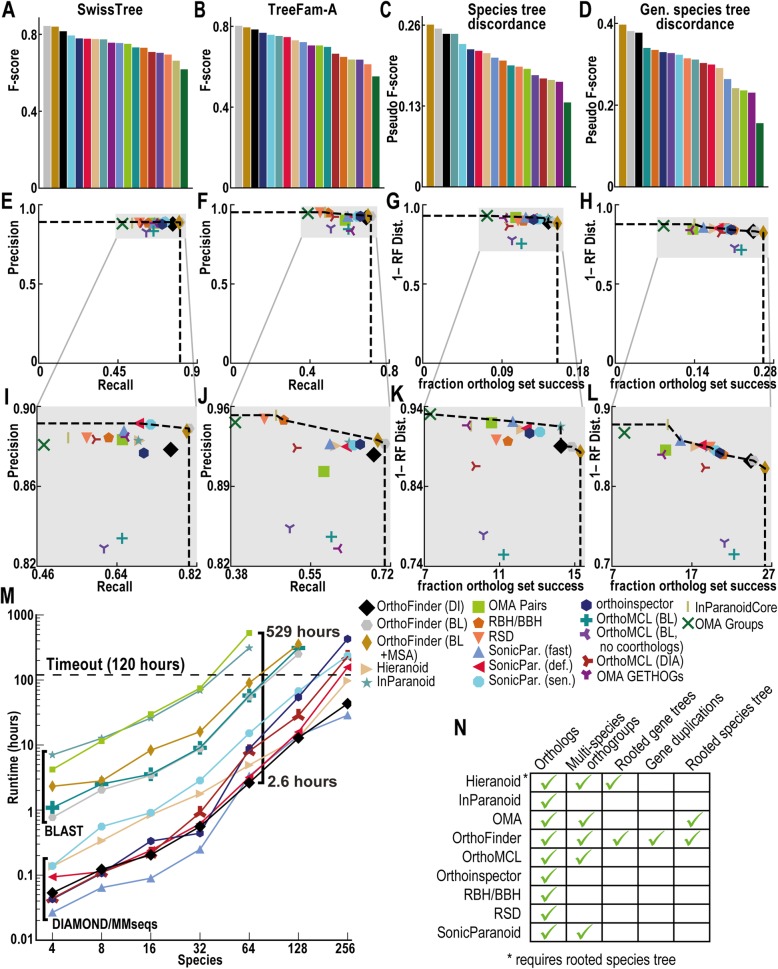
- On Quest for Orthologs 2011_04, the default fastest OrthoFinder was 3–24% more accurate on SwissTree and 2–30% more accurate on TreeFam-A than any other method; other OrthoFinder configurations were a further 1–3% more accurate.
- On the Species Tree Discordance Tests, all OrthoFinder versions had equal or higher pseudo-F-score than all other methods; the default version scored 0–45% higher on STDT and 10–59% higher on GSTDT.
- Default OrthoFinder ran in 192 s on 4 fungal species and 1.8 days on 256 species with 16 threads, making it the second quickest method; SonicParanoid was fastest at 1.2 days on 256 species.
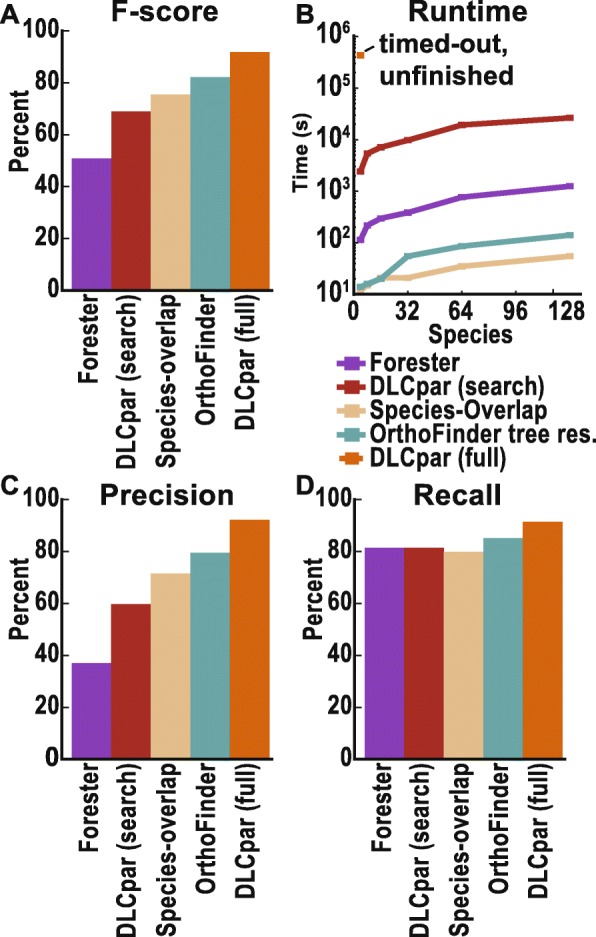
- The novel hybrid duplication-loss-coalescence algorithm raised duplication F-score from 72% with species-overlap to 80%; DLCpar (full) was most accurate at 91.8% but could not process a 4-species dataset (2259 trees, 12,958 genes) in 120 h, while OrthoFinder analyzed 18,651 trees and 948,449 genes from 128 fungi in 141 s.
Methods
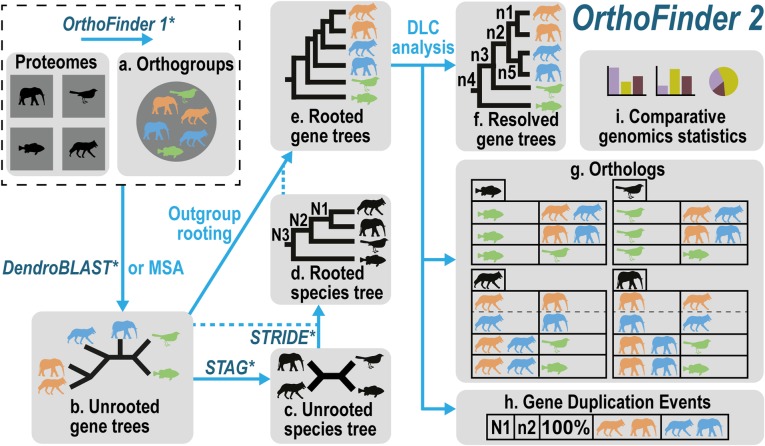
- Input is one FASTA file per species; orthogroups are inferred with the original OrthoFinder algorithm, unrooted gene trees with DendroBLAST, the species tree with STAG, the species tree root with STRIDE, gene trees are rooted using the species tree, and orthologs/duplications are inferred with a novel hybrid species-overlap plus duplication-loss-coalescence algorithm.
- Benchmarks used Quest for Orthologs 2011_04 on 66 species across Eukarya, Bacteria, and Archaea; simulated flies (12,000 trees, 12 species, 12,032 duplications), primates (7500 trees, 17 species, 16,066 duplications), and metazoa (2000 trees, 40 species, 4967 duplications); performance was tested on 4–256 fungal proteomes.
- Analyses compared precision, recall, F-score, pseudo-F-score, Robinson-Foulds agreement, and runtime against methods including Forester, DLCpar (full/search), species-overlap, Notung, and other orthology inference tools.
Limitations
- Stated: STRIDE may fail to identify the species tree root, or only exclude the root from clades, when gene trees contain few duplications; DLCpar (full) was more accurate but not scalable; the default fastest OrthoFinder is less accurate than other OrthoFinder configurations; the authors cannot test all possible multiple sequence alignment and tree inference combinations.
- Evident: STDT and GSTDT lack ground-truth orthologs, so pseudo-F-score substitutes for standard precision/recall; benchmarking is limited to specific Quest for Orthologs datasets and simulated data; OrthoFinder is second fastest, not fastest, on the 256-species dataset; no competitor method also provides gene trees or identifies gene duplication events, so the data-richness advantage is not an accuracy comparison.
Model-written summary. Check it against the paper before relying on it.
Integrity signals
Registry
Cites
Statistics
Figures
Verification
Claims the paper makes
23 Valid · 10 Not valid · 1 Not checked · 62 Own results and interpretations
The cited sources support only part of this claim — read each source’s verdict below.
In the paper
“STRIDE was developed to enable the rooting of the species tree using only information available in the set of gene trees.”
§ OrthoFinder: phylogenetic orthology inference for comparative genomics > Methods > Species tree inference and rooting
What the sources say
- Partly supportedcites [22] Emms DM Kelly S STRIDE: species tree root inference from gene duplication events Mol Biol Evol 2017 34 12 3267 3278 10.1093/molbev/msx259 29029342 PMC5850722 sourceExperimental — accuracy not yet measured
The Introduction says STRIDE uses duplication events from unrooted gene trees to locate the root. But the Results (Application of STRIDE to Real Species Data Sets; page unavailable) say it was run with both gene trees and a published unrooted species tree, so the claim that it uses only information in the gene trees omits a required input. (LLM, conf=0.88)
plainstates a cause- Asserted: passes — The authors put it forward as true.
- Checkable: passes — It can be checked against evidence.
- Load-bearing: passes — The paper’s conclusions depend on it.
- Based: passes — The paper gives a reason why it holds.
- Partly supported
The cited sources support only part of this claim — read each source’s verdict below.
In the paper
“The original OrthoFinder orthogroup inference method is still the most accurate method on the independent Orthobench test set [10] and thus is used for this step.”
§ OrthoFinder: phylogenetic orthology inference for comparative genomics > Methods > Use of orthogroups for gene tree inference
What the sources say
- Partly supportedcites [10] Emms DM Kelly S OrthoFinder: solving fundamental biases in whole genome comparisons dramatically improves orthogroup inference accuracy Genome Biol 2015 16 157 10.1186/s13059-015-0721-2 26243257 PMC4531804 sourceExperimental — accuracy not yet measured
The ‘OrthoFinder outperforms all other methods from the OrthoBench analysis’ section reports that OrthoFinder had the highest F-score among methods applied to OrthoBench, and the Evaluation section describes the dataset as independently evaluated. The 2015 paper does not establish that the original method is *still* the most accurate after that comparison. (LLM, conf=0.84)
plain- Asserted: passes — The authors put it forward as true.
- Checkable: passes — It can be checked against evidence.
- Load-bearing: passes — The paper’s conclusions depend on it.
- Based: passes — The paper gives a reason why it holds.
- Partly supported
The cited sources support only part of this claim — read each source’s verdict below.
In the paper
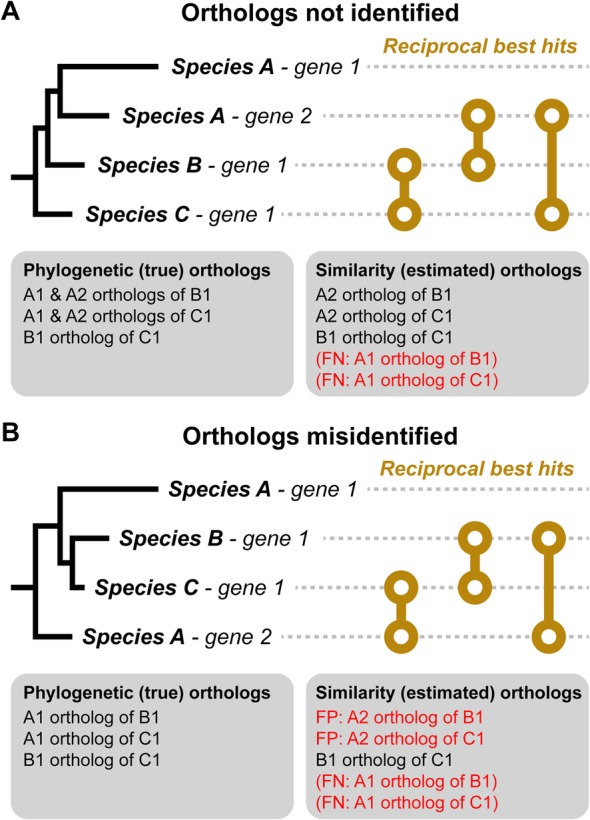
“However, such score-based estimates of the phylogenetic relationship between genes are confounded by multiple factors. For example, variable sequence evolution rates between genes frequently lead to both false-positive and false-negative errors [14, 15] (Fig. 1).”
§ OrthoFinder: phylogenetic orthology inference for comparative genomics > Background
What the sources say
- Partly supportedcites [14] Lafond M Miardan MM Sankoff D Accurate prediction of orthologs in the presence of divergence after duplication Bioinformatics 2018 34 366 375 10.1093/bioinformatics/bty242 PMC6022570 29950018 sourceExperimental — accuracy not yet measured
The Introduction (page unavailable) explains that accelerated mutation after duplication can make orthologous genes dissimilar, so similarity-based methods may fail to identify them—a false negative. It does not establish that variable evolutionary rates frequently cause false-positive errors as well, or support that frequency claim. (LLM, conf=0.82)
- Not checked — no full text of the sourcecites [15] Fitch WM Distinguishing homologous from analogous proteins Sys Zool 1970 19 99 10.2307/2412448 5449325 source
plainstates a cause- Asserted: passes — The authors put it forward as true.
- Checkable: passes — It can be checked against evidence.
- Load-bearing: passes — The paper’s conclusions depend on it.
- Based: passes — The paper gives a reason why it holds.
- Partly supported
Every source the paper cites for this claim was checked and supports it.
In the paper
“A new algorithm, Species Tree from All Genes (STAG), was developed to allow species tree inference even for species sets with few or no complete sets of one-to-one orthologs present in all species [33].”
§ OrthoFinder: phylogenetic orthology inference for comparative genomics > Methods > Species tree inference and rooting
What the sources say
- Supportedcites [33] Emms D, Kelly S. STAG: species tree inference from all genes. bioRxiv. 2018. https://www.biorxiv.org/content/10.1101/267914v1. source
The Discussion says complete one-to-one orthogroups are comparatively rare and that STAG uses orthogroups containing all species regardless of gene copy number. This supports the claim that STAG enables species-tree inference when few or no complete one-to-one ortholog sets are available. Page numbers are not provided in our copy. (LLM, conf=0.94)
plainstates a cause- Asserted: passes — The authors put it forward as true.
- Checkable: passes — It can be checked against evidence.
- Load-bearing: passes — The paper’s conclusions depend on it.
- Based: passes — The paper gives a reason why it holds.
- Supported
The sources with a verdict support this claim; the rest weren’t checked yet, have no full text we could read, or their verdicts aren’t rated yet.
In the paper
“The accuracy of key component algorithms of OrthoFinder has been independently assessed in this work and in dedicated publications [5, 10, 22, 24, 33].”
§ OrthoFinder: phylogenetic orthology inference for comparative genomics > Results > OrthoFinder has the highest ortholog inference accuracy
What the sources say
- Not checked — no full text of the sourcecites [5] Buchfink B Xie C Huson DH Fast and sensitive protein alignment using DIAMOND Nat Methods 2015 12 59 60 10.1038/nmeth.3176 25402007 source
- Supportedcites [10] Emms DM Kelly S OrthoFinder: solving fundamental biases in whole genome comparisons dramatically improves orthogroup inference accuracy Genome Biol 2015 16 157 10.1186/s13059-015-0721-2 26243257 PMC4531804 source
The ‘An improved method for orthogroup delimitation improves overall accuracy’ section assesses the accuracy of OrthoFinder’s gene-pair selection and clustering approach and reports precision, recall, and F-score. The Evaluation section describes testing against the independently evaluated OrthoBench dataset. This dedicated publication therefore supports the citation’s contribution to the statement about assessed component-algorithm accuracy. (LLM, conf=0.88)
- Supportedcites [22] Emms DM Kelly S STRIDE: species tree root inference from gene duplication events Mol Biol Evol 2017 34 12 3267 3278 10.1093/molbev/msx259 29029342 PMC5850722 source
The Results section, “STRIDE Identifies the Correct Root of Species Trees Given Simulated Gene Tree Data Sets” (page not provided), assesses STRIDE’s rooting accuracy on three simulated datasets and reports its duplication-detection precision and recall. This supports citing the dedicated STRIDE publication for an accuracy assessment of an algorithm used in the OrthoFinder workflow; the paper does not assess every OrthoFinder component. (LLM, conf=0.86)
- Supportedcites [24] Kelly S Maini PK DendroBLAST: approximate phylogenetic trees in the absence of multiple sequence alignments PLoS One 2013 8 e58537 10.1371/journal.pone.0058537 23554899 PMC3598851 source
The Methods section, “Comparison of DendroBLAST against other inference methods,” describes an accuracy evaluation against reference trees using five metrics. The Results sections report DendroBLAST’s performance relative to other tree-inference methods. This supports the citation’s role as a dedicated publication assessing the accuracy of a component algorithm; it does not need to assess every OrthoFinder component. (LLM, conf=0.91)
- Supportedcites [33] Emms D, Kelly S. STAG: species tree inference from all genes. bioRxiv. 2018. https://www.biorxiv.org/content/10.1101/267914v1. source
The paper evaluates the accuracy of STAG species-tree inference against literature-derived trees across 12 biological datasets (Results and Discussion; page numbers unavailable). The Discussion also states that STAG was designed to integrate with OrthoFinder and can run directly from its results. This supports citing the publication as a dedicated assessment of a component algorithm. (LLM, conf=0.91)
plain- Asserted: passes — The authors put it forward as true.
- Checkable: passes — It can be checked against evidence.
- Load-bearing: passes — The paper’s conclusions depend on it.
- Based: passes — The paper gives a reason why it holds.
39 more claims · 8 with their cited sources checked
Create a free account to see all 96 claims and every source verdict.
- Probably not a substantial claim. 18
- It may state two separate claims as one. 40
- The quote only partly states this claim. 2
Claims other papers make about this one
Each is checked against this paper’s own text: does it say what the citing paper says it does?
The source backs part of the claim, not all of it — or backs it for a different population, condition or comparison.
In the citing paper
“The original OrthoFinder algorithm applied a per-species-pair gene-length normalization that accounted for both evolutionary distance and gene-length dependence in pairwise bit scores between sequences12.”
From OrthoFinder: improved phylogenetic orthology inference with enhanced accuracy and scalability (2026) · cites this paper as [12]
Experimental — accuracy not yet measuredThe source backs part of the claim, not all of it — or backs it for a different population, condition or comparison.
In the citing paper
“In previous versions of OrthoFinder, orthologs were defined phylogenetically, whereas orthogroups were defined solely based on Markov Cluster Algorithm (MCL) clustering of sequence similarity search results12,16.”
From OrthoFinder: improved phylogenetic orthology inference with enhanced accuracy and scalability (2026) · cites this paper as [12]
Experimental — accuracy not yet measuredThe source backs part of the claim, not all of it — or backs it for a different population, condition or comparison.
In the citing paper
“Other sequence similarity approaches such as OrthoFinder (Emms and Kelly, 2019; Emms and Kelly, 2015) leverage graphs and gene trees to test for orthology, permitting more robust analyses in systems with gene copy number (CNV) or presence–absence variation (PAV).”
From GENESPACE tracks regions of interest and gene copy number variation across multiple genomes (2022) · cites this paper as Emms and Kelly, 2019
Experimental — accuracy not yet measuredThe cited source says what the claim attributes to it.
In the citing paper
“We used two different methods for identifying orthologues—a simple mutual-best-hits method and an alternative orthologue-clustering approach (OrthoFinder47; Supplementary Information 10 and 11), and obtained comparable results using both approaches”
From Ancient gene linkages support ctenophores as sister to other animals (2023) · cites this paper as [47]
The cited source says what the claim attributes to it.
In the citing paper
“Gene tree-based methods determine whether the evolutionary lineages of two genes coalesce in a speciation or a duplication node (12–14).”
From Integrating gene annotation with orthology inference at scale (2023) · cites this paper as [12]
4 more claims about this paper
Create a free account to see every claim other papers make about this one.
Self-check
Percentages, sums and reported differences re-computed from the paper’s own numbers.
Each contradiction between two passages listed here was confirmed by an independent check.
Rated minor: it would not touch a result — a value no result rests on, a p-value that stays on the same side of the significance level, or a conflict that is clerical, resolved elsewhere in the paper, or outside its own findings.
In the paper
§ OrthoFinder: phylogenetic orthology inference for comparative genomics > Methods > Ortholog inference and identification of gene duplication events from gene trees
“The hybrid algorithm was able to analyze the complete set of orthogroup trees for the 128 fungi species in 141 s; this was 9 times faster than Forester and 187 times faster than DLCpar (search) (Fig. 5d).”
§ OrthoFinder: phylogenetic orthology inference for comparative genomics > Results > OrthoFinder implements a novel duplication-loss-coalescent algorithm for identifying gene duplication events and orthologs
“Figure: Fig. 5 a Duplication F-score, on simulated gene trees. b Runtime to analyse all trees from the 4 to 128 species Fungi datasets (see Methods), a maximum time of 120 hours (4.3x10 seconds) was allowed. DLCpar (full) did not complete the smallest dataset in this time limit and so only the lower bound for the first time point is shown. c-d Precision and recall”
Rated minor: it would not touch a result — a value no result rests on, a p-value that stays on the same side of the significance level, or a conflict that is clerical, resolved elsewhere in the paper, or outside its own findings.
In the paper
§ OrthoFinder: phylogenetic orthology inference for comparative genomics > Methods > Chordata dataset
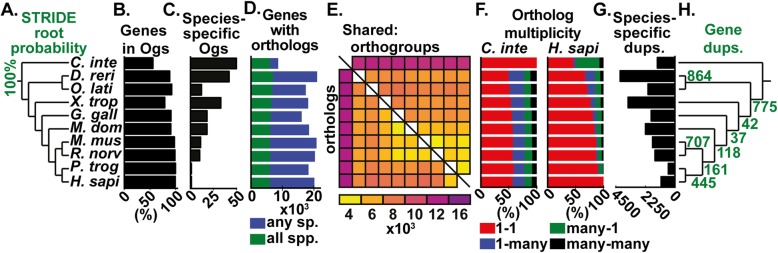
“The data for the OrthoFinder analysis of the ten Chordata species for the illustration of the results of an OrthoFinder analysis (Fig. 2a–h)”
§ OrthoFinder: phylogenetic orthology inference for comparative genomics > Results > OrthoFinder algorithm overview and summary of results files
“Figure: Fig. 3 Summary of OrthoFinder analysis of a set of Chordata species:”
Citations
Cites
MAFFT Multiple Sequence Alignment Software Version 7: Improvements in Performance and Usability
Katoh, K., & Standley, D. M. (2013) · Molecular Biology and Evolution · doi:10.1093/molbev/mst010 · Cited by 46,209 · cited 4×
“Katoh K, Standley DM. MAFFT multiple sequence alignment software version 7: improvements in performance and usability.”
MethodInfluentialRAxML version 8: a tool for phylogenetic analysis and post-analysis of large phylogenies
Stamatakis, A. (2014) · Bioinformatics · doi:10.1093/bioinformatics/btu033 · Cited by 32,291 · cited 4×
“For each successful ortholog set, an MSA is constructed and a gene tree inferred using RAxML [28].”
MethodInfluentialIQ-TREE: A Fast and Effective Stochastic Algorithm for Estimating Maximum-Likelihood Phylogenies
Nguyen, L.-T., Schmidt, H. A., von Haeseler, A., & Minh, B. Q. (2015) · Molecular Biology and Evolution · doi:10.1093/molbev/msu300 · Cited by 26,046
BLAST+: architecture and applications
Camacho, C., Coulouris, G., Avagyan, V., Ma, N., Papadopoulos, J., Bealer, K., & Madden, T. L. (2009) · BMC Bioinformatics · doi:10.1186/1471-2105-10-421 · Cited by 22,074 · cited 3×
“Currently, supported methods for step 1 include BLAST [4] and MMseqs2 [6].”
MethodFastTree 2 – Approximately Maximum-Likelihood Trees for Large Alignments
Price, M. N., Dehal, P. S., & Arkin, A. P. (2010) · PLoS ONE · doi:10.1371/journal.pone.0009490 · Cited by 14,894
Fast and sensitive protein alignment using DIAMOND
Buchfink, B., Xie, C., & Huson, D. H. (2015) · Nature Methods · doi:10.1038/nmeth.3176 · Cited by 14,201
OrthoMCL: Identification of Ortholog Groups for Eukaryotic Genomes
Li, L., Stoeckert, C. J., & Roos, D. S. (2003) · Genome Research · doi:10.1101/gr.1224503 · Cited by 5,707
MMseqs2 enables sensitive protein sequence searching for the analysis of massive data sets
Steinegger, M., & Söding, J. (2017) · Nature Biotechnology · doi:10.1038/nbt.3988 · Cited by 4,840
Emms, D. M., & Kelly, S. (2015) · Genome Biology · doi:10.1186/s13059-015-0721-2 · Cited by 3,408
Self-citationETE 3: Reconstruction, Analysis, and Visualization of Phylogenomic Data
Huerta-Cepas, J., Serra, F., & Bork, P. (2016) · Molecular Biology and Evolution · doi:10.1093/molbev/msw046 · Cited by 2,231
Cited by
Items 7,201–7,300 of 7,986
Nie, Y., Yang, K., Cao, C., & Huang, Y. (2026) · BMC Genomics · doi:10.1186/s12864-026-12729-4
“5.5 [55] with all default parameters.”
InfluentialLouzada-Flores, V. N., Cokelaer, T., Fuentes-Carias, M., Pescher, P., Ferreira, T. R., Latrofa, M. S., Mendoza‐Roldan, J. A., Otranto, D., Späth, G. F., & Louradour, I. (2026) · NAR Molecular Medicine · doi:10.1093/narmme/ugag015
“5.5 [ 52 ] and could assign 16 413 genes (94.4% of the total) into 7 627 orthogroups.”
InfluentialZhou, M., Li, T., Zhu, X., Liu, S., Cong, B., & Zhao, L. (2026) · International Journal of Molecular Sciences · doi:10.3390/ijms27062618 · Cited by 1
“I 1.5) [82].”
InfluentialLiu, F., Zhang, X., Xu, Y., Liang, L., Gu, Z., Ma, Y., Pan, Y., Li, R., Xu, L., Song, C., et al. (2026) · Industrial Crops and Products · doi:10.1016/j.indcrop.2026.123031
Biocontrol potential and molecular basis of predation in a marine raptorial ciliate
Pan, J., Ni, J., Wang, Y., Deng, Z., Yue, H., Dong, K., Li, Y., Lei, Z., Ma, Z., Hu, G., et al. (2026) · The ISME Journal · doi:10.1093/ismejo/wrag053
“5.4 [57].”
InfluentialTorres‐Sánchez, M. (2026) · Journal of Evolutionary Biology · doi:10.1093/jeb/voag017
Wang, Y., Chen, B., Xiang, G., Wang, Y., Yang, R., Li, X., Yuan, S., Zhao, Y., Zhang, G., Qin, M., et al. (2026) · Plant Biotechnology Journal · doi:10.1111/pbi.70612 · Cited by 1
Lin, L., Chen, Y., Chen, Y., Sun, S., Liang, X., Zhu, Y., Zhu, C., Wu, S., Zeng, X., Jiang, R., et al. (2026) · Research Square · doi:10.21203/rs.3.rs-8704689/v1 · Cited by 1
Li, H., Cai, L., Mou, Q., Sun, Y., Yang, K., Liang, Y., Li, H., & Pang, H. (2026) · Pest Management Science · doi:10.1002/ps.70719
Larsen, E. M., Paulsen, J., & Allen, J. L. (2026) · The Bryologist · doi:10.1639/0007-2745-129.1.029
Herráez-Pérez, A., & Zardoya, R. (2026) · BMC Genomics · doi:10.1186/s12864-026-12745-4 · Cited by 1
“5.5 [51], with default parameters.”
InfluentialChen, Y., Xia, C., Liu, Z., Wang, L., Xia, Z., & Yu, X. (2026) · Tropical Plants · doi:10.48130/tp-0026-0004
Pelosi, J. A., Curry, T. R., Pearse, A. R., Smith, M. C., & Dlugosch, K. M. (2026) · G3 Genes Genomes Genetics · doi:10.1093/g3journal/jkag065 · Cited by 1
Yue, W., Cai, K., Liu, L., Li, Y., Ge, F., Wang, Q., Cai, S., & Wang, J. (2026) · Research Square · doi:10.21203/rs.3.rs-9029460/v1
Haplotype-Resolved Genome of the Critically Endangered, Paleo-endemic Tree, Eidothea hardeniana
Soni, A., Furtado, A., Rossetto, M., & Henry, R. J. (2026) · Genome Biology and Evolution · doi:10.1093/gbe/evag071
“Comparative Orthology was conducted using OrthoFinder (Emms and Kelly 2019).”
Dore, G. A., Barloy, D., & Barloy-Hubler, F. (2026) · Gigabyte · doi:10.46471/gigabyte.176
Warring, S. D., McGowan, J., Kilias, E. S., Lipscombe, J., Alacid, E., Barker, T., Catchpole, L., Gharbi, K., McTaggart, S. J., Richards, T. A., et al. (2026) · Microbial Genomics · doi:10.1099/mgen.0.001642
“5.4) [38].”
InfluentialShort repeats drive mitochondrial genome expansion and record hybridization in CamelliaPreprint
Zhang, F., & Gao, L.-Z. (2026) · bioRxiv (Cold Spring Harbor Laboratory) · doi:10.64898/2026.03.16.711854
Garcia, K. L. M., Alemania, D. K. V., & Opulencia, R. B. (2026) · Frontiers in Microbiology · doi:10.3389/fmicb.2026.1782430 · Cited by 1
“1.0 (Emms and Kelly, 2019) based on 1,869 orthogroups with 100% of species carrying single-copy genes in any orthogroup.”
InfluentialTsang, S. S. K., Nong, W., Xie, Y., Qu, Z., Yip, H. Y., Gaitan-Espitia, J. D., Tai, A. P. K., Yeung, Y. Y., Tobe, S. S., Bendena, W. G., et al. (2026) · Genome Biology and Evolution · doi:10.1093/gbe/evag073 · Cited by 1
“Orthology of differential expression genes identified in different species was performed by OrthoFinder (version 2.5.4) (Emms and Kelly 2019) using the msa method for gene tree inference and the diamond sequence search program.”
InfluentialGrégoire, M., Pateyron, S., Brunaud, V., Tamby, J. P., Benghelima, L., Martin‐Magniette, M., & Girin, T. (2026) · bioRxiv (Cold Spring Harbor Laboratory) · doi:10.64898/2026.03.18.712634
Choi, H., Choi, H., Park, C. S., Jung, W.-K., Kim, T., & An, Y. K. (2026) · Animal Cells and Systems · doi:10.1080/19768354.2026.2643995
“Single copy orthologous genes among 13 crustacean species were identified using OrthoFinder2 (Emms and Kelly 2019).”
Tong, W., Zhuang, Y., Wang, J., Ma, Q., Ding, Y., Tian, P., Xiao, J., & Wang, X. (2026) · INTERNATIONAL JOURNAL OF SYSTEMATIC AND EVOLUTIONARY MICROBIOLOGY · doi:10.1099/ijsem.0.007106
Genetic regulatory landscape of gene expression during leaf and stem development in common tobacco
Yin, M., Zhang, Z., Hou, Y., Wan, Y., Luo, Q., Wang, C., Zhang, X., Sun, H., Long, J., Cai, J., et al. (2026) · Journal of genetics and genomics/Journal of Genetics and Genomics · doi:10.1016/j.jgg.2026.03.016
Convergent Evolution between Endosymbiotic Bacteria in Feather-Feeding Lice
Topchyan, M., Bala, M. M., Johnson, K. P., Walden, K. K. O., & Boyd, B. M. (2026) · Journal of Parasitology · doi:10.1645/25-63
Pan-transcriptome analysis of pine wilt disease-resistant and susceptible Pinus species and a hybrid
Choi, B. Y., Lee, D., Jung, J., Kim, Y.-G., Park, Y., Kang, K., & Shim, D. (2026) · Frontiers in Genetics · doi:10.3389/fgene.2026.1743952
“Orthologous gene groups across the five Pinus species and one hybrid and A. thaliana were identified using OrthoFinder v. 2.5.5 (Emms and Kelly, 2019).”
InfluentialShelke, T., Gupta, V., & Gupta, I. (2026) · Journal of Computational Biology · doi:10.1177/15578666261426005
“To understand this, the species tree generated from OrthoFinder (version 2.5.5) (Emms and Kelly, 2019) was used as a reference against the tree generated using IQtree (version 2.3.0) (Minh et al., 2020) with only the interested immune genes.”
InfluentialYu, X., Hunt, B. J., Wang, S., Troczka, B. J., Shangguan, C., Zhu, W., Kuang, Y., & Bass, C. (2026) · Pest Management Science · doi:10.1002/ps.70744
“2) as sourced from NCBI or United States Department of Agriculture (USDA) i5k Workspace using Ortho fi nder 3.0.1b1 28 to de fi ne orthologous gene groups.”
InfluentialJeon, D., Lee, S., Choi, S., Paterson, A. H., & Kim, C. (2026) · BMC Plant Biology · doi:10.1186/s12870-026-08635-2
“5.4) [24].”
InfluentialWu, H., Wang, J., Geng, T., Yao, Y., Lin, P., Wang, S., & Xu, L. (2026) · Scientific Data · doi:10.1038/s41597-026-07117-2
Zhu, H., Huo, C., Wang, L. H., Cao, J., Pan, Z., Ma, Z., Yuan, Y., & Zhao, Z. (2026) · bioRxiv (Cold Spring Harbor Laboratory) · doi:10.64898/2026.03.24.712282
“Subsequently, Gene-family expansion and contraction dynamics were analyzed using CAFE5 (Mendes et al. 2020), with the ultrametric species tree and the OrthoFinder-derived orthogroups as input.”
InfluentialXie, Y., Bai, H., Liu, X., Feng, J., Xie, S., & Nan, F. (2026) · BMC Genomics · doi:10.1186/s12864-026-12788-7 · Cited by 1
“The orthologous genomes and single-copy orthologous genes of 12 species were analyzed using OrthoFinder [39].”
Liu, D., Liu, J., Xie, P., Zhao, L., Kang, H., Zeng, Q., Li, S., Wang, X., & Zhang, P. (2026) · The Innovation Life · doi:10.59717/j.xinn-life.2026.100245
Evolution of key enzymes in the alkaloid biosynthetic pathway of Ranunculales
Dai, Z., Xu, F., Wei, X., Qiao, Z., Wang, W., Zhou, Z., Zhang, G., Dong, Y., Li, X., Hu, Y., et al. (2026) · Agrobiodiversity · doi:10.48130/abd-0026-0003
Katsuma, S., Matsuda–Imai, N., Muro, T., Yoda, M., Kawaoka, S., & Kiuchi, T. (2026) · mBio · doi:10.1128/mbio.00074-26
Tanaka, H., Ono, E., Segawa, T., Murata, J., Takagi, H., Uegaki, Y., Toyonaga, H., Shiraishi, A., Takagi, M., Toyoda, A., et al. (2026) · bioRxiv (Cold Spring Harbor Laboratory) · doi:10.64898/2026.03.27.714335
Lucini, F., Lebreton, A., Seifollahi, E., Barry, K., Haridas, S., Ahrendt, S. R., Hayes, R. D., LaButti, K. M., Pangilinan, J. L., Riley, R. W., et al. (2026) · Fungal Genetics and Biology · doi:10.1016/j.fgb.2026.104077
Runnels, C. M., Miller, J., & Gordus, A. G. (2026) · bioRxiv (Cold Spring Harbor Laboratory) · doi:10.64898/2026.03.30.715290
“Within the subtree containing all the entelegyne spiders, and thus all extant orb-weavers, OrthoFinder recovered 107,987 HOGs, which range from species-specific gene families to genes with at least one ortholog in all 98 entelegyne spider species ( Supplementary Table S2 ).”
InfluentialGenomic Expansion and Adaptation in a Parasitoid Wasp Eretmocerus hayati (Hymenoptera: Aphelinidae)
Zhong, Y., Fan, Y., Ruan, R., Xi, D., Luo, H., Li, C., Liu, H., & Liu, Y. (2026) · Insects · doi:10.3390/insects17040369 · Cited by 1
“5.4) [23,24] with the parameter “-m MSA” was used to identify orthologous and paralogous gene groups.”
InfluentialKamal, M. M., Cheng, Y., Yang, C.-L., Liu, C.-F. J., Ku, C., & Leu, J. (2026) · bioRxiv (Cold Spring Harbor Laboratory) · doi:10.64898/2026.03.31.715701
Genomics, transcriptomics, and laboratory experiments link bioconvection to nitrogen fixation
Nezio, F. D., Diaz-Miyar, J., Buetti‐Dinh, A., Roman, S., Fava, T., Paganini, D., & Storelli, N. (2026) · Frontiers in Microbiology · doi:10.3389/fmicb.2026.1760084 · Cited by 1
Geneslator: an R package for comprehensive gene identifier conversion and annotation
Cavallaro, G., Micale, G., Privitera, G. F., Pulvirenti, A., Forte, S., & Alaimo, S. (2026) · BMC Bioinformatics · doi:10.1186/s12859-026-06617-7
Zhang, K., Li, K., Feng, J., Liu, W., Feng, J., Fan, W., & Shan, X. (2026) · Scientific Reports · doi:10.1038/s41598-026-46203-8
Sensitivity of genome-wide tests for mitonuclear genetic incompatibilities
Kuster, S. A., Schumer, M. E., Havird, J. C., & Sloan, D. B. (2026) · Philosophical Transactions of the Royal Society B Biological Sciences · doi:10.1098/rstb.2025.0084 · Cited by 4
“OrthoFinder v. 2.5.4 [48] was then run with the primary translated transcript for each Xiphophorus sequence and the full sets of human and mouse protein sequences.”
InfluentialYamamoto, K., Watanabe, F., Murakami, R., Hinako, K. U. B. O., Iino, T., Ohkuma, M., Matsutani, M., Sakamoto, H., Saitoh, H., & Tanaka, N. (2026) · INTERNATIONAL JOURNAL OF SYSTEMATIC AND EVOLUTIONARY MICROBIOLOGY · doi:10.1099/ijsem.0.007113
Fan, J., Ma, D., Zhu, H., Lin, M., Zhong, Z., Tian, Y., Li, B., & Chi, J. (2026) · Genomics · doi:10.1016/j.ygeno.2026.111240
Xu, J., Gao, W., Jia, Z., Feng, J., Lei, W., Zhu, L., Yan, H., Zhuo, P., Wang, J., & Zou, J. (2026) · Developmental & Comparative Immunology · doi:10.1016/j.dci.2026.105717
Zhao, C.-X., An, X., Jin, M., Guo, X.-Y., & Su, J.-Q. (2026) · Ecotoxicology and Environmental Safety · doi:10.1016/j.ecoenv.2026.120091
A stage-resolved map of dynamic septin interactions required for infection by the rice blast fungusPreprint
Eisermann, I., Sahu, N., Garduño‐Rosales, M., Derbyshire, P., Menke, F. L. H., Ma, W., & Talbot, N. J. (2026) · bioRxiv (Cold Spring Harbor Laboratory) · doi:10.64898/2026.04.02.716073
New genomic insights into ciliates with loricae (Eukaryota: Alveolata)
Zhang, Y., Warren, A., & Li, L. (2026) · Zoological Journal of the Linnean Society · doi:10.1093/zoolinnean/zlag048
Etude de virus réactivés à partir d'échantillons de cryosol
Christo-Foroux, E. (2020) · theses.fr (ABES) · doi:10.70675/99df3d87z2052z4882zaa89z0a8d4eda07f5 · Cited by 1
Zheng, M., Sun, G., Han, X., Sun, Y., Liu, S., Li, X., Guan, J., Zhang, Q., & Zhou, J. (2026) · Scientific Data · doi:10.1038/s41597-026-07160-z
“0.1b1) 50 , followed by multiple sequence alignment with MAFFT (v7.”
Ramirez-Chamorro, L. (2020) · theses.fr (ABES) · doi:10.70675/96f83048zbb80z433ezb0bbz9b51aeeab4bf
Évolution des gènes et génomes après duplication complète du génome chez les poissons téléostéens
Parey, E. (2021) · theses.fr (ABES) · doi:10.70675/ae8068bczf028z4169zbce3z1d87800eb1cc · Cited by 1
Zhang, X., He, W., Wang, X., Charlesworth, D., & Wang, W. (2026) · New Phytologist · doi:10.1111/nph.71149
Long, W., Wang, J., Luo, L., Zhou, L., Chen, W., Luo, L., Xu, W., Li, Y., Yan, L., Cai, Y., et al. (2026) · Plants · doi:10.3390/plants15071111
“5 [37] with default parameters (inflation value = 1.5).”
InfluentialGuo, A., Xing, Q., Zhang, H., Manawasinghe, I. S., Zhang, W., Wang, X., & Yan, J. (2026) · Applied and Environmental Microbiology · doi:10.1128/aem.01619-25
“Gene family analysis of the proteins was performed using OrthoFinder to extract single-copy genes (41).”
The genome sequence of the gastric gland parasite, Cryptosporidium proliferans
Wiśniewska, M. M., Tůmová, L., Silberman, J. D., Salomaki, E. D., Bielawski, J. P., Táborský, P., Hlásková, L., Sak, B., Kváč, M., & Kolísko, M. (2026) · iScience · doi:10.1016/j.isci.2026.115597
“Orthofinder 56 analysis revealed no variation in orthogroup presence among gastric species as the 10 orthogroups initially identified as unique to C. proliferans are also present in other gastric species genomes and were simply mis-predicted.”
InfluentialScarsini, M. (2021) · theses.fr (ABES) · doi:10.70675/92173af2z521ez448ez9649z8f04b1a5ec97 · Cited by 5
Exploring the genomic complexity of bacterial infection in 3D
Matthey-Doret, C. (2021) · theses.fr (ABES) · doi:10.70675/4303e26ezb6baz423dz92ffz3a3ca67a8ef4
Multi-omics data integration and interactive visual data mining to explore mitochondrial dynamics
Marchianò, F. (2022) · theses.fr (ABES) · doi:10.70675/eb60a1f9zb03bz48d8z8b03zcb18fa2f49d8
Ancient IL-6-STAT5 signaling orchestrates inflammation in jawless vertebratesPreprint
Fontenla-Iglesias, F., Boulay, J., Rast, J. P., Hirano, M., Au‐Yeung, B. B., Lamas, J., Li, W., Boehm, T. L. J., Cooper, M. D., & Das, S. (2026) · bioRxiv (Cold Spring Harbor Laboratory) · doi:10.64898/2026.04.02.716188
“0) unique orthologs were identified using OrthoFinder (Emms and Kelly 2019) and the resulting data were used as input to construct ribbon diagrams for selected species using the MacrosyntR package in R (El Hilali and Copley 2023).”
Genome diversity and evolutionary routes to lignocellulose degradation in wood decay fungi
Hage, H. (2021) · theses.fr (ABES) · doi:10.70675/56f36d6ezb0e6z4e4fz80cdzbb4eca01b862
Treitli, S. C., Mies, U. S., Radek, R., Zinnhardt, P. A., Silva, J. M. K., Reuter, L., Röhr, N. A., Platt, K., Hervé, V., Plarre, R., et al. (2026) · BMC Biology · doi:10.1186/s12915-026-02591-x
“The predicted protein sequences from all the genomes were downloaded from NCBI and clustered into orthogroups using OrthoFinder2 [80].”
A near telomere-to-telomere genome reveals yellow camellias evolution and flavonols biosynthesis
Fan, M., Jiang, H., Qu, Y., Zhang, Y., Li, X., & Wang, Y. (2026) · Industrial Crops and Products · doi:10.1016/j.indcrop.2026.123200
Systèmes endosymbiotiques héritables chez les tiques
Buysse, M. (2022) · theses.fr (ABES) · doi:10.70675/70dba80az9a9dz4735z9269zf9fa5aab9bad
Etude des Pithoviridae à travers leur pangénome et métagénomes
Rigou, S. (2022) · theses.fr (ABES) · doi:10.70675/9cbbb1d7z2b84z4abfza77fz236f8ea53372
Sharma, H. K., Mallikarjuna, M. G., Keerthi, G. M., Mallick, N., Murukan, N., Sathee, L., & Jha, S. K. (2026) · Research Square · doi:10.21203/rs.3.rs-9114016/v1 · Cited by 1
Duhamel, M. (2022) · theses.fr (ABES) · doi:10.70675/7668b44az0a0ez46d3z8ee7zb60c6c38f267
Evolution de symbioses virales récentes au sein de guêpes parasitoïdes Campopleginae
de Araujo, A. C. (2022) · theses.fr (ABES) · doi:10.70675/47cca94ez18d9z46d6zafe6z70d91c9bc978
Tan, L., Zhu, S., Ye, J., & Jiao, W. (2026) · Molecular Biology and Evolution · doi:10.1093/molbev/msag075
Déchiffrer le réseau moléculaire contrôlant la pluripotence du porc
Dufour, A. (2024) · theses.fr (ABES) · doi:10.70675/6694a20az0df0z414bz9bbez1b753d188739
Detection and functional analysis of horizontal gene transfer events in the ciliate Euplotes
Wang, R., Wang, X., Meng, Q., Liu, X., Yan, H., Zhang, Z., Fu, Y., & Liang, A. (2026) · Frontiers in Microbiology · doi:10.3389/fmicb.2026.1782463
“1.1 with default parameters (Emms and Kelly, 2019), which has been used to identify orthologous gene clusters of Euplotes species in previous studies (Feng et al., 2022; Jin et al., 2023).”
InfluentialOrigin and evolutionary trajectory of microRNA genes in Arabidopsis species
Pavan, F. (2024) · theses.fr (ABES) · doi:10.70675/ab5c4ecez5ac1z4c92zadffz8f16ce2c54c7
Multiscale Analysis of Life Cycle Gene Expression Regulation in Brown Algae
Ratchinski, P. (2024) · theses.fr (ABES) · doi:10.70675/ee3a6114z2fc7z4a55za06ezf5dde2189425
Dietary adaptations in the genomes and microbiomes of convergent myrmecophagous mammals
Teullet, S. (2023) · theses.fr (ABES) · doi:10.70675/08ec5382z144ez4864zb18fz2a2e20b8539c
Deep archaeal phylogeny and evolutionary dynamics of DPANNs
Baker, B. A. (2024) · theses.fr (ABES) · doi:10.70675/d2a702bfzb170z4a5fz9317z2d27179942d0 · Cited by 1
Genomic and ecological bases of aphids adaptation in the context of fruit tree domestication
Olvera-Vazquez, S. G. (2023) · theses.fr (ABES) · doi:10.70675/9ae42da2z5917z4b4ez9492z2ff2cb6ccba8
Ocampo-Padilla, C., Takata, Y., Nozawa, S., Harada, Y., Ando, K., & Watanabe, K. (2026) · Journal of Fungi · doi:10.3390/jof12040270
“5.4 [20] with default parameters.”
InfluentialEvolution of the eukaryote (epi)genome : Insights from orphan protists
Blaz, J. (2023) · theses.fr (ABES) · doi:10.70675/68387a32zd0bfz4f4fz89f9zfa56c5677bb4
Cheng, R., Zhang, X., Tan, J., Sun, J., Zhou, S., He, X., & Xie, D. (2026) · Cladistics · doi:10.1111/cla.70035 · Cited by 1
“5.2 (Emms and Kelly, 2019) to identify single-copy orthologous genes (SCGs).”
InfluentialBouguerba-Collin, A. (2025) · theses.fr (ABES) · doi:10.70675/9088c249zeb37z4826zbcc2ze3898a07d32f
Bouderka, F. (2024) · theses.fr (ABES) · doi:10.70675/3d2ed8abz09a5z42a4z9c14z58de20b92eb9
Contribution des éléments transposable au changement d’hôte des espèces de Drosophila cactophiles
de Oliveira, D. S. (2024) · theses.fr (ABES) · doi:10.70675/22c4a674zaa1dz4928z9e57z9b8a41571358
Wang, Y., Chen, Y., Kang, D., Yao, Z., Qi, Y., Fan, Z., Fu, J., & Yang, W. (2026) · Journal of Systematics and Evolution · doi:10.1111/jse.70070
“5.4 (Emms & Kelly, 2019) was fi rst used to infer orthogroups using BLASTP v2.”
InfluentialPicazo-Aragonés, J., Dötterl, S., Paun, O., Terrab, A., & Balao, F. (2026) · Horticulture Research · doi:10.1093/hr/uhag130 · Cited by 1
“5.5 was used to obtain orthogroups and estimate the gene trees [ 85].”
InfluentialChromosome-level genome assembly of a thick-walled variety of moso bamboo
Chang, Y., Ma, Y., Deng, Y., Zhang, W., Jiang, Z., & Hu, T. (2026) · Industrial Crops and Products · doi:10.1016/j.indcrop.2026.123194
Piet, Q. (2024) · theses.fr (ABES) · doi:10.70675/c93ba1d1zbdf9z4480zaca5zed96c30a76ee · Cited by 1
Structure et développement des muscles striés de Pelagia noctiluca
Salmon, B. (2025) · theses.fr (ABES) · doi:10.70675/e88112cez654fz4c1bz942ezafdc9e54973b
Tsiouri, O., Argyri, A., Skiada, V., Avramidou, M., Dadami, E., Vasileiadis, S., & Papadopoulou, K. Κ. (2026) · Scientific Reports · doi:10.1038/s41598-026-47792-0 · Cited by 2
Sierra, G. P., Orejuela, A., Orozco, C. I., Pérez‐Mesa, P. A., Alseekh, S., Fernández-Hilario, R., Alonso, J. L. F., Smith, S. D., Fernie, A., & Roda, F. (2026) · Taxon · doi:10.1002/tax.70130
Henot, M., Baird, R. B., Duncan, F., Lee, J. S. Y., & Ross, L. (2026) · bioRxiv (Cold Spring Harbor Laboratory) · doi:10.64898/2026.04.09.717474
“We analysed only X-linked genes with recognisable, single-copy gametologs between the X and X’ inversion, identified with Orthofinder (Emms and Kelly, 2019).”
Detcharoen, M., Saksongmuang, V., & Nilsai, A. (2026) · Journal of Insect Science · doi:10.1093/jisesa/ieag031
Specialised root hair cells facilitate rhizobial infectionPreprint
Frank, M., Liu, H., Fechete, L. I., Salfeld, J., van Beveren, F., Birkeskov, E. K. S., Rübsam, H., Abel, N. B., Nadzieja, M., Lei, M., et al. (2026) · bioRxiv (Cold Spring Harbor Laboratory) · doi:10.64898/2026.04.10.717526
“5.5 65 with the parameter ‘-”
Influential
Metadata
- Authors
- Emms, D. M., & Kelly, S.
- Affiliations
- University of Oxford (GB)
- Corresponding author
- Kelly, Steven
- Venue
- Genome Biology
- Published
- 2019-11-14
- Volume
- 20
- Issue
- 1
- Pages
- 238-238
- ISSN
- 1465-6906 (ISSN-L)
- 1474-760X
- PMC
- PMC6857279
- OpenAlex
- W2988396470
- Semantic Scholar
- 94eb4b5f09b5767b3d2f2f0a1c10604f517f2381
- Cited by
- 7,676
- References
- 49
- Citations by year
- 2026: 1354 · 2025: 1592 · 2024: 1601 · 2023: 1155 · 2022: 984 · 2021: 689 · 2020: 263 · 2019: 32
- FWCI
- 168.65
- Type
- journal article
- Language
- en
- Open access
- gold
- doi.org
- Licence
- cc-by
- creativecommons.org/licenses/by/4.0/ (tdm)
- creativecommons.org/licenses/by/4.0/ (vor)
- Locations
- Genome biology (publishedVersion, cc-by)
- bioRxiv (Cold Spring Harbor Laboratory) (acceptedVersion, cc-by)
- PubMed Central (publishedVersion, cc-by)
- PubMed (publishedVersion)
- DOAJ (DOAJ: Directory of Open Access Journals) (submittedVersion, cc-by-sa)
- Funders
- ERC (637765)
- Royal Society (UF140484)
- Topics
- Life Sciences › Biochemistry, Genetics and Molecular Biology › Molecular Biology › Genomics and Phylogenetic Studies
- Life Sciences › Biochemistry, Genetics and Molecular Biology › Genetics › Chromosomal and Genetic Variations
- Life Sciences › Biochemistry, Genetics and Molecular Biology › Molecular Biology › Bioinformatics and Genomic Networks
- Keywords
- OrthoFinder, orthogroups, phylogenetic inference, gene trees, gene duplication, comparative genomics, benchmarking
- MeSH terms
- Algorithms, Animals, Phylogeny, Software, Genomics
About these checks
Registry, retraction, Cites and statistics results are computed, not judged, with one exception: a printed reference that no index lists is read once by a model before it counts as a citation error. Claims are extracted by a model and kept only when their quote appears verbatim in the text; each cited source is then checked, with a model’s help, for whether it says what the claim relies on. Those verdicts can be wrong — read the claim’s quote and the cited source before relying on one.
The claim verdicts this report counts are experimental: their accuracy is not yet measured.
A language model drew the claims from the paper on 2026-11-02, under version 3 of the claim definition (model deepseek-v4.1-flash, prompt extract-v3).
A second model labelled each claim on 2026-11-02 (model jev-1.13-20260917, definition revision gold-guideline-v0.2).
Cited sources are checked with a language model’s help (gpt-6-sol).
Statistics and arithmetic are recomputed, not judged.
Confidence bands are shown only for fields calibrated on our annotated test set. None is calibrated yet, so no band is shown.
What counts as a claim ›How we measure confidence ›How we check this ›
Are you an author, or do you see a problem with this page? Request a review
Data sources
Bibliographic data: Semantic Scholar, OpenAlex, Crossref.
Contains information from the Semantic Scholar Academic Graph Datasets, made available under the ODC Attribution License (ODC-BY 1.0).
Semantic Scholar’s data is described in: Kinney, R., et al. (2023). The Semantic Scholar Open Data Platform. arXiv:2301.10140.
