

The DOI matches its Crossref record; 186 of the 190 references it cites were found in a registry or an index.
Digital tools for the recruitment and retention of participants in randomised controlled trials: a systematic map
Open accessAbstract
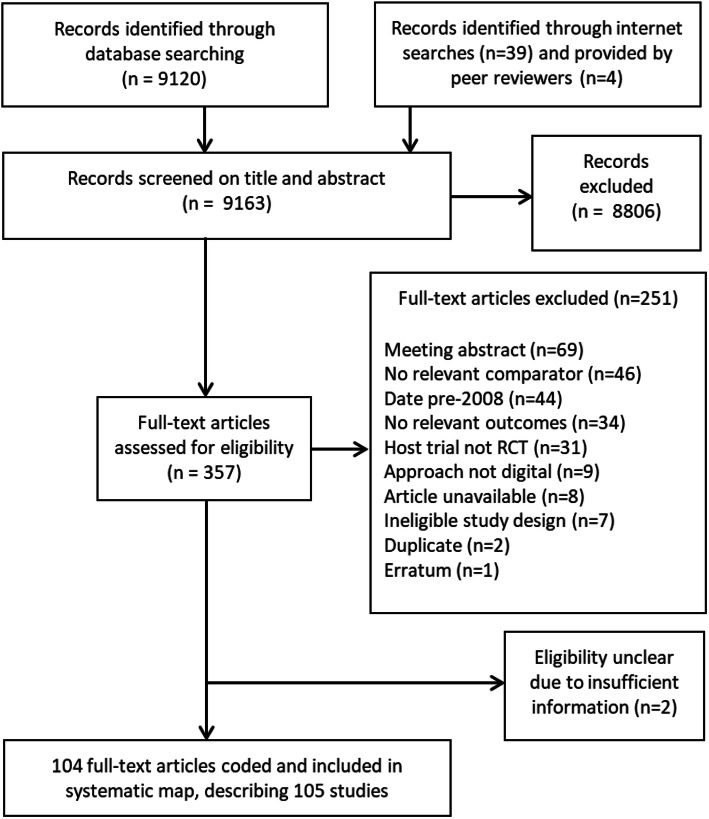
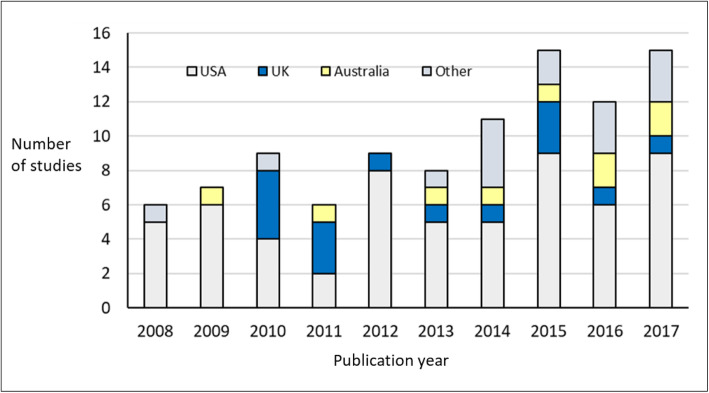
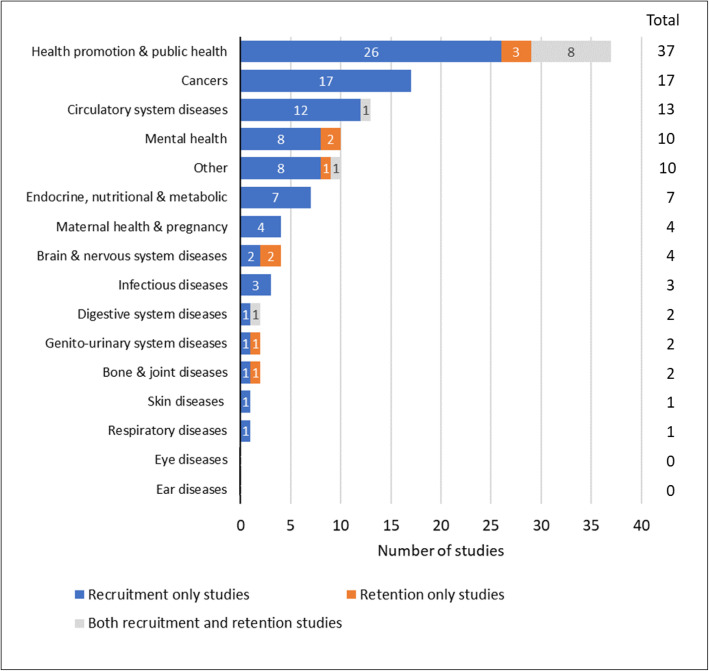
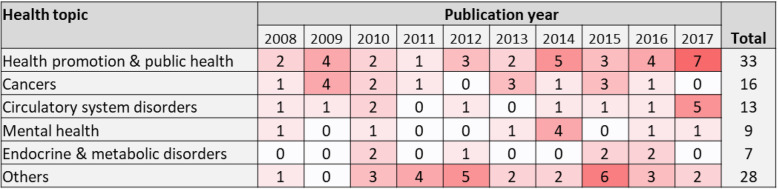
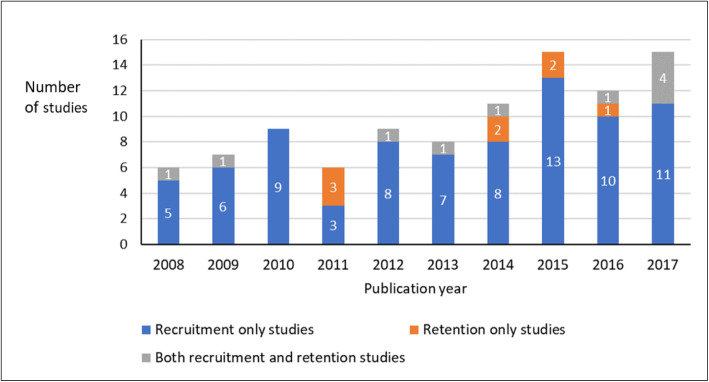
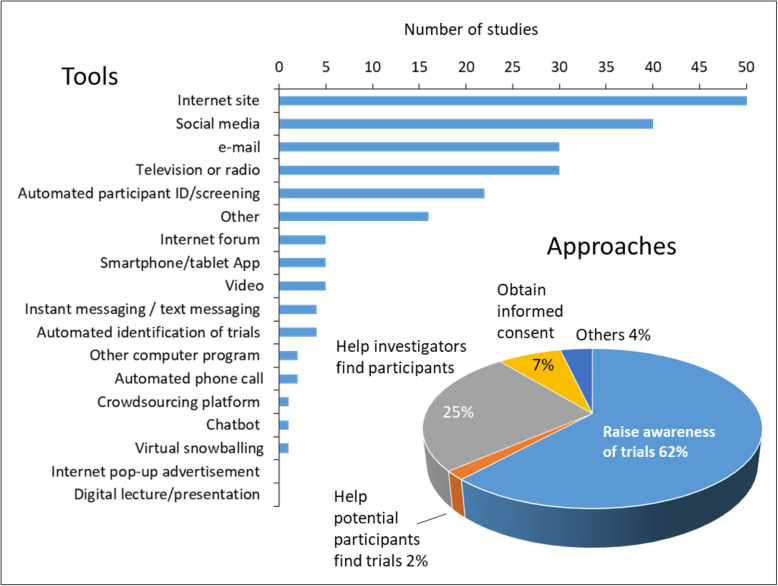
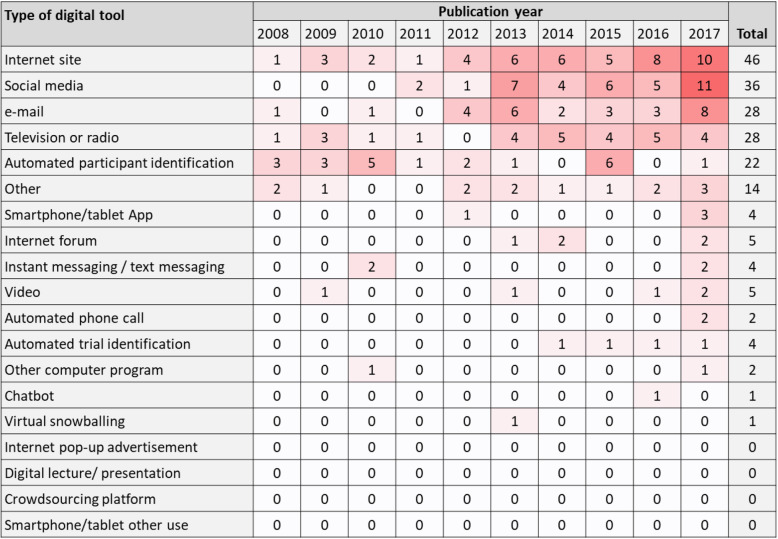
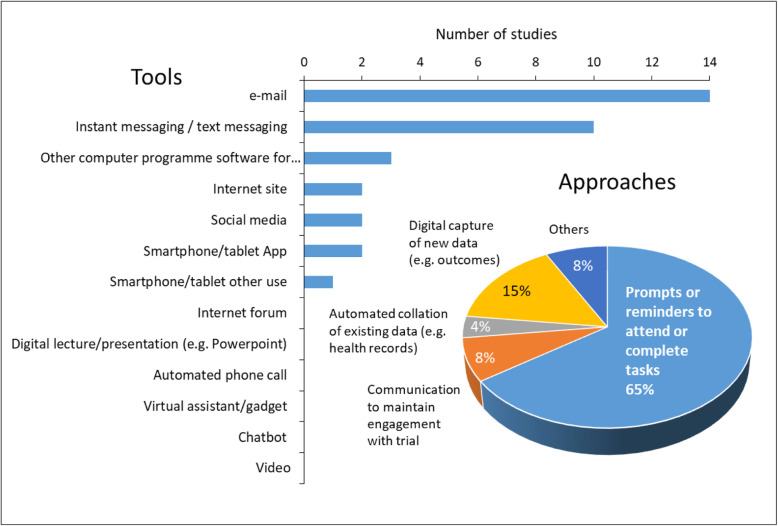
Background: Recruiting and retaining participants in randomised controlled trials (RCTs) is challenging. Digital tools, such as social media, data mining, email or text-messaging, could improve recruitment or retention, but an overview of this research area is lacking. We aimed to systematically map the characteristics of digital recruitment and retention tools for RCTs, and the features of the comparative studies that have evaluated the effectiveness of these tools during the past 10 years. Methods: We searched Medline, Embase, other databases, the Internet, and relevant web sites in July 2018 to identify comparative studies of digital tools for recruiting and/or retaining participants in health RCTs. Two reviewers independently screened references against protocol-specified eligibility criteria. Included studies were coded by one reviewer with 20% checked by a second reviewer, using pre-defined keywords to describe characteristics of the studies, populations and digital tools evaluated. Results: We identified 9163 potentially relevant references, of which 104 articles reporting 105 comparative studies were included in the systematic map. The number of published studies on digital tools has doubled in the past decade, but most studies evaluated digital tools for recruitment rather than retention. The key health areas investigated were health promotion, cancers, circulatory system diseases and mental health. Few studies focussed on minority or under-served populations, and most studies were observational. The most frequently-studied digital tools were social media, Internet sites, email and tv/radio for recruitment; and email and text-messaging for retention. One quarter of the studies measured efficiency (cost per recruited or retained participant) but few studies have evaluated people’s attitudes towards the use of digital tools. Conclusions: This systematic map highlights a number of evidence gaps and may help stakeholders to identify and prioritise further research needs. In particular, there is a need for rigorous research on the efficiency of the digital tools and their impact on RCT participants and investigators, perhaps as studies-within-a-trial (SWAT) research. There is also a need for research into how digital tools may improve participant retention in RCTs which is currently underrepresented relative to recruitment research. Registration: Not registered; based on a pre-specified protocol, peer-reviewed by the project’s Advisory Board.
Overview
The claims and statistics of this paper haven’t been checked yet.
Run the check — free, no account needed. It reads the open-access text and checks the sources it cites.
Integrity signals
Registry
Cites
Statistics
Figures
Verification
Claims the paper makes
The claims and statistics of this paper haven’t been checked yet.
Run the check — free, no account needed. It reads the open-access text and checks the sources it cites.
Claims other papers make about this one
Each is checked against this paper’s own text: does it say what the citing paper says it does?
The cited source says what the claim attributes to it.
In the citing paper
“However, study recruitment using digital platforms is becoming more common. 27”
Self-check
Percentages, sums and reported differences re-computed from the paper’s own numbers.
The self-check needs the paper’s full text.
Citations
Cites
Preferred Reporting Items for Systematic Reviews and Meta-Analyses: the PRISMA statement
Moher, D., Liberati, A., Tetzlaff, J., Altman, D. G., & for the PRISMA Group (2009) · BMJ · doi:10.1136/bmj.b2535 · Cited by 83,823
Preferred reporting items for systematic reviews and meta-analyses: the PRISMA Statement.
(2009) · PubMed Central · Cited by 44,859
Liberati, A., Altman, D. G., Tetzlaff, J., Mulrow, C., Gøtzsche, P. C., Ioannidis, J. P. A., Clarke, M., Devereaux, P. J., Kleijnen, J., & Moher, D. (2009) · PLoS Medicine · doi:10.1371/journal.pmed.1000100 · Cited by 28,164
Liberati, A., Altman, D. G., Tetzlaff, J., Mulrow, C., Gotzsche, P. C., Ioannidis, J. P. A., Clarke, M., Devereaux, P. J., Kleijnen, J., & Moher, D. (2009) · BMJ · doi:10.1136/bmj.b2700 · Cited by 17,648
Hoffmann, T. C., Glasziou, P. P., Boutron, I., Milne, R., Perera, R., Moher, D., Altman, D. G., Barbour, V., Macdonald, H., Johnston, M., et al. (2014) · BMJ · doi:10.1136/bmj.g1687 · Cited by 10,548
Self-citationBonevski, B., Randell, M., Paul, C. L., Chapman, K. L., Twyman, L., Bryant, J., Brozek, I., & Hughes, C. (2014) · BMC Medical Research Methodology · doi:10.1186/1471-2288-14-42 · Cited by 1,495
How to increase value and reduce waste when research priorities are set
Chalmers, I., Bracken, M. B., Djulbegovic, B., Garattini, S., Grant, J., Gülmezoglu, A. M., Howells, D. W., Ioannidis, J. P. A., & Oliver, S. (2014) · The Lancet · doi:10.1016/s0140-6736(13)62229-1 · Cited by 1,436
McDonald, A. M., Knight, R. C., Campbell, M. K., Entwistle, V. A., Grant, A. M., Cook, J. A., Elbourne, D. R., Francis, D., Garcia, J., Roberts, I., et al. (2006) · Trials · doi:10.1186/1745-6215-7-9 · Cited by 946
A methodology for systematic mapping in environmental sciences
James, K. L., Randall, N. P., & Haddaway, N. R. (2016) · Environmental Evidence · doi:10.1186/s13750-016-0059-6 · Cited by 769
The Use of Facebook in Recruiting Participants for Health Research Purposes: A Systematic Review
Whitaker, C., Stevelink, S. A. M., & Fear, N. T. (2017) · Journal of Medical Internet Research · doi:10.2196/jmir.7071 · Cited by 731
Research works printed but not linked: 13
- Lopienski K. Retention in clinical trials—keeping patients on protocols: forte research systems; 2015. Available from: https://forteresearch.com/news/infographic/infographic-retention-in-clinical-trials-keeping-patients-on-protocols/.
- Frampton GK, Shepherd J. Ambiguity of study population analysis and reporting in asthma clinical trials. Z Evid Fortbild Qual Gesundhwes. 2008;102(Suppl 6):76–7.
- Griesel D. Clinical trial recruitment in the digital era: some smart ideas. 2015. Available from: http://www.appliedclinicaltrialsonline.com/clinical-trial-recruitment-digital-era-some-smart-ideas.
- Clinithink Limited. A paradigm shift in patient recruitment for clinical trials. White paper. 2017.
- Alheresh R, Allaire SH, Lavalley MP, Vaughan M, Emmetts R, Keysor JJ. ‘Work it’ recruitment: lessons learned from an arthritis work disability prevention randomized trial. Arthritis Rheum. 2013;10:S1220.
- Polak E, Apfel A, Privitera M, Buse D, Haut S. Daily diaries in epilepsy research: does electronic format improve adherence? Epilepsy Curr. 2014;1:180.
- Rellis L, Haidari G, Ridgers H, Jones CB, Miller A, Shattock R, et al. How the use of social media and online platforms can enhance recruitment to HIV clinical trials. HIV Med. 2015;2:64–5.
- PRIORITY Study. Prioritising recruitment and retention in randomised trials (PRioRiTy) Galway. Ireland: University of Galway; 2019. Available from: https://priorityresearch.ie/wp-content/uploads/2017/04/priority-research-logo-small.jpg.
- Pew Research Center. Social media use by age. 2018.
- Sensis. Sensis social media report 2017. How Australian people and businesses are using social media. 2017.
- Office for National Statistics. Internet users in the UK: 2016. 2016.
- Pew Research Center. Internet/broadband fact sheet. 2017.
- Parker A, Arundel C, Beard D, Bower P, Brocklehurst P, Coleman E, et al. PROMoting THE USE OF SWATs (PROMETHEUS): routinely embedding recruitment and retention interventions within randomised trials. Trials. 2019;20(Suppl 1:579):160.
Cited by
Sorted by citations
Social Media Use for Research Participant Recruitment: Integrative Literature Review
Darko, E. M., Kleib, M., & Olson, J. (2022) · Journal of Medical Internet Research · doi:10.2196/38015 · Cited by 274
Social media can have an impact on how we manage and investigate the COVID-19 pandemic
Cuello‐García, C. A., Gaxiola, G. P., & van Amelsvoort, L. G. P. M. (2020) · Journal of Clinical Epidemiology · doi:10.1016/j.jclinepi.2020.06.028 · Cited by 198
The Role of Social Media in Enhancing Clinical Trial Recruitment: Scoping Review
Darmawan, I., Bakker, C., Brockman, T. A., Patten, C. A., & Eder, M. (2020) · Journal of Medical Internet Research · doi:10.2196/22810 · Cited by 153
Increasing Participation of Women in Cardiovascular Trials
Cho, L., Vest, A. R., O’Donoghue, M. L., Ogunniyi, M. O., Sarma, A. A., Denby, K. J., Lau, E. S., Poole, J. E., Lindley, K. J., & Mehran, R. (2021) · Journal of the American College of Cardiology · doi:10.1016/j.jacc.2021.06.022 · Cited by 149
Using digital technologies in clinical trials: Current and future applications
Rosa, C., Marsch, L. A., Winstanley, E. L., Brunner, M., & Campbell, A. N. C. (2020) · Contemporary Clinical Trials · doi:10.1016/j.cct.2020.106219 · Cited by 115
Butler, P. M., Yang, J. F., Brown, R. Z., Hobbs, M., Becker, A., Penalver-Andres, J. A., Syz, P., Muller, S., Cosne, G., Juraver, A., et al. (2025) · Nature Medicine · doi:10.1038/s41591-024-03475-9 · Cited by 66
Whatnall, M. C., Hutchesson, M. J., Sharkey, T., Haslam, R. L., Bezzina, A., Collins, C. E., Tzelepis, F., & Ashton, L. (2021) · Public Health Nutrition · doi:10.1017/s1368980021001129 · Cited by 52
Werutsky, G., Barrios, C. H., Cardona, A. F., Albergaria, A., Valencia, A., Ferreira, C. G., Rolfo, C. D., de Azambuja, E., Rabinovich, G. A., Sposetti, G., et al. (2021) · The Lancet Oncology · doi:10.1016/s1470-2045(21)00523-4 · Cited by 45
Anastasi, J. K., Capili, B., Norton, M., McMahon, D. J., & Marder, K. S. (2024) · Frontiers in Pain Research · doi:10.3389/fpain.2023.1330937 · Cited by 43
Evans, H. E. L., Galvao, D. A., Forbes, C. C., Girard, D., Vandelanotte, C., Newton, R. U., Vincent, A. D., Wittert, G., Kichenadasse, G., Chambers, S. K., et al. (2021) · Cancers · doi:10.3390/cancers13235925 · Cited by 35
Behavioural approaches to recruitment and retention in clinical trials: a systematic mapping review
Coffey, T., Duncan, E., Morgan, H. M., Lawrie, L., & Gillies, K. (2022) · BMJ Open · doi:10.1136/bmjopen-2021-054854 · Cited by 35
Micaux, C., Wiklander, M., Eriksson, L. E., Wettergren, L., & Lampic, C. (2022) · JMIR Cancer · doi:10.2196/33239 · Cited by 31
Mental health services implementation in Colombia–A systematic review
Garavito, G. A. A., Burgess, R. A., Sanguineti, M. C. D., Peters, L. E. R., & Juan, N. V. S. (2023) · PLOS Global Public Health · doi:10.1371/journal.pgph.0001565 · Cited by 31
Mazzochi, A. T., Dennis, M. S., & Chun, H.-Y. Y. (2023) · Trials · doi:10.1186/s13063-022-06959-6 · Cited by 30
Ethical Issues in Social Media Recruitment for Clinical Studies: Ethical Analysis and Framework
Zimmermann, B. M., Willem, T., Bredthauer, C. J., & Buyx, A. (2021) · Journal of Medical Internet Research · doi:10.2196/31231 · Cited by 27
Herrera-Espejel, P. S., & Rach, S. (2023) · JMIR Public Health and Surveillance · doi:10.2196/50814 · Cited by 28
Leveraging digital tools to enhance diversity and inclusion in clinical trial recruitment
Tomiwa, T., Wong, E., Miller, H., Ogungbe, O., Byiringiro, S., Plante, T. B., & Himmelfarb, C. D. (2024) · Frontiers in Public Health · doi:10.3389/fpubh.2024.1483367 · Cited by 29
Michaud, T. L., Estabrooks, P. A., You, W., Ern, J., Scoggins, D., Gonzales, K., King, K. M., Dai, H. D., & Su, D. (2022) · Preventive Medicine · doi:10.1016/j.ypmed.2022.107141 · Cited by 23
ACE: the Advanced Cohort Engine for searching longitudinal patient records
Callahan, A., Polony, V., Posada, J. D., Banda, J. M., Gombar, S., & Shah, N. H. (2021) · Journal of the American Medical Informatics Association · doi:10.1093/jamia/ocab027 · Cited by 22
Kasson, E. M., Vázquez, M. M., Doroshenko, C., Fitzsimmons‐Craft, E. E., Wilfley, D. E., Taylor, C. B., & Cavazos‐Rehg, P. A. (2021) · International Journal of Environmental Research and Public Health · doi:10.3390/ijerph18157979 · Cited by 21
Zhao, Y. (2024) · International Journal of Qualitative Methods · doi:10.1177/16094069231221374 · Cited by 19
Email-Based Recruitment Into the Health eHeart Study: Cohort Analysis of Invited Eligible Patients
Ng, M. Y., Olgin, J. E., Marcus, G. M., Lyles, C. R., & Pletcher, M. J. (2023) · Journal of Medical Internet Research · doi:10.2196/51238 · Cited by 18
Okpara, C., Ioannidis, G., Thabane, L., Adachi, J. D., Rabinovich, A., Hewston, P. A., Lee, J., McArthur, C., Kennedy, C. C., Woo, T., et al. (2023) · Pilot and Feasibility Studies · doi:10.1186/s40814-023-01346-7 · Cited by 16
Cho, E., Gilmer, M. J., Friedman, D. L., Hendricks‐Ferguson, V. L., Hinds, P. S., & Akard, T. F. (2021) · Progress in Palliative Care · doi:10.1080/09699260.2021.1898077 · Cited by 17
Patchwood, E., Foote, H., Vail, A., Cotterill, S., Hill, G., The WAterS PCPI Group, & Bowen, A. (2024) · Clinical Rehabilitation · doi:10.1177/02692155241239879 · Cited by 15
“27 It can increase reach to certain communities, including those likely to opt into an online intervention, but is threatened by digital poverty and may result in a sample that is skewed towards lower stroke morbidity and higher social economic status, which may limit fi ndings.”
BackgroundMiller, H., Plante, T. B., Gleason, K. T., Charleston, J. B., MITCHELL, C. M., Miller, E. R., Appel, L. J., & Juraschek, S. P. (2021) · Contemporary Clinical Trials · doi:10.1016/j.cct.2021.106598 · Cited by 15
Gamble, E., Linehan, C., & Heavin, C. (2022) · Journal of Medical Internet Research · doi:10.2196/38159 · Cited by 16
Jalkanen, K., Järvenpää, R., Tilles‐Tirkkonen, T., Martikainen, J. A., Aarnio, E., Männikkö, R., Rantala, E., Karhunen, L. J., Kolehmainen, M., Harjumaa, M., et al. (2021) · JMIR Diabetes · doi:10.2196/21356 · Cited by 16
Clancy, B., Bonevski, B., English, C., Baker, A. L., Turner, A., Magin, P., Pollack, M., Callister, R., & Guillaumier, A. (2022) · Journal of Medical Internet Research · doi:10.2196/33291 · Cited by 12
Faro, J. M., Nagawa, C. S., Orvek, E., Smith, B., Blok, A. C., Houston, T. K., Kamberi, A., Allison, J. J., Person, S. D., & Sadasivam, R. S. (2021) · Contemporary Clinical Trials · doi:10.1016/j.cct.2021.106314 · Cited by 12
Wang, E., Keller, H., Mourtzakis, M., Rodrigues, I. B., Steinke, A., Ashe, M. C., Thabane, L., Brien, S., Funnell, L., Cheung, A. M., et al. (2022) · Applied Physiology, Nutrition, and Metabolism · doi:10.1139/apnm-2022-0195 · Cited by 12
Terceiro, L., Mustafa, M. I., Hägglund, M., & Kharko, A. (2024) · JMIR Research Protocols · doi:10.2196/65099 · Cited by 12
Trinquart, L., Liu, C., McManus, D. D., Nowak, C., Lin, H., Spartano, N. L., Borrelli, B., Benjamin, E. J., & Murabito, J. M. (2023) · Journal of Medical Internet Research · doi:10.2196/40784 · Cited by 11
Development of the ehive Digital Health App: Protocol for a Centralized Research Platform
Hirten, R. P., Danieletto, M., Landell, K., Zweig, M., Golden, E., Orlov, G., Rodrigues, J., Alleva, E., Ensari, I., Böttinger, E. P., et al. (2023) · JMIR Research Protocols · doi:10.2196/49204 · Cited by 11
Evaluation of response to incentive recruitment strategies in a social media-based survey
Ichimiya, M., Muller-Tabanera, H., Cantrell, J., Bingenheimer, J. B., Gerard, R., Hair, E. C., Donati, D., Rao, N., & Evans, W. D. (2023) · Digital Health · doi:10.1177/20552076231178430 · Cited by 10
Treweek, S. P., & Briel, M. (2020) · Trials · doi:10.1186/s13063-020-04361-8 · Cited by 10
Xu, W., Zhang, Y., Wang, Z., Dorsey, S. G., Starkweather, A. R., & Kim, K. (2023) · BMC Nursing · doi:10.1186/s12912-023-01365-y · Cited by 11
Clohessy, S., Arvanitis, T. N., Rashid, U., Craddock, C., Evans, M., Toro, C. T., & Elliott, M. T. (2024) · BMJ Open · doi:10.1136/bmjopen-2023-076613 · Cited by 10
Byiringiro, S., García, J. Y., Farrell, N., Ogungbe, B., Barsha, R. A. A., Miller, H., Whitaker, E. M., Wang, P. J., Rosa, W. E., Bierer, B. E., et al. (2025) · Trials · doi:10.1186/s13063-025-08820-y · Cited by 8
The Patient Motivation Pyramid and Patient-Centricity in Early Clinical Development
van Iersel, T. M., Courville, J., van Doorne, C., Koster, R. A., & Fawcett, C. (2021) · Current Clinical Pharmacology · doi:10.2174/1574884716666210427115820 · Cited by 8
Daniels, A. M., Law, K., Snyder, L. G., Diehl, K., Goin‐Kochel, R. P., Feliciano, P., & Chung, W. K. (2023) · Journal of Clinical and Translational Science · doi:10.1017/cts.2023.697 · Cited by 10
User journey method: a case study for improving digital intervention use measurement
Lukka, L., Vesterinen, M., Salonen, A., Bergman, V.-R., Torkki, P. M., Palva, S., & Palva, J. M. (2025) · BMC Health Services Research · doi:10.1186/s12913-025-12641-9 · Cited by 9
Ajayi, T., Kueper, J. K., Ariniello, L. M., Ho, D., Delgado, F., Beal, M. F., Waalen, J., Baca-Motes, K., & Ramos, E. (2025) · JMIR Formative Research · doi:10.2196/70149 · Cited by 9
Serrano‐Gallardo, P., Cassetti, V., Boone, A. L. D., & González, M. M. P. (2022) · International Journal of Environmental Research and Public Health · doi:10.3390/ijerph191710765 · Cited by 8
Vaterkowski, M., Daniel, C., Rosa, A. L., Kalra, D., Jaulent, M., Lamé, G., & Kempf, E. (2025) · International Journal of Medical Informatics · doi:10.1016/j.ijmedinf.2025.105900 · Cited by 8
Life Satisfaction, Anxiety, Stress, Depression, and Resilience: A Multigroup Latent Class Analysis
Kyriazos, T. A., & Poga, M. (2024) · Trends in Psychology · doi:10.1007/s43076-024-00396-x · Cited by 6
Huebner, H., Kurbacher, C. M., Kuesters, G. M., Hartkopf, A. D., Lux, M. P., Huober, J., Volz, B., Taran, F., Overkamp, F., Tesch, H., et al. (2020) · BMC Cancer · doi:10.1186/s12885-020-07546-1 · Cited by 6
Raeside, R., Todd, A., Barakat, S., Rom, S., Boulet, S., Maguire, S., Williams, K., Mihrshahi, S., Hackett, M. L., Redfern, J., et al. (2024) · JMIR Pediatrics and Parenting · doi:10.2196/62919 · Cited by 5
Insights from UKCTOCS for design, conduct and analyses of large randomised controlled trials
Menon, U., Gentry‐Maharaj, A., Burnell, M., Apostolidou, S., Ryan, A., Kalsi, J., Singh, N., Fallowfield, L. J., McGuire, A. J., Campbell, S. C., et al. (2023) · Health Technology Assessment · doi:10.3310/cldc7214 · Cited by 5
Best practices for recruitment in veterinary clinical trials
Quigley, M., McKenna, C., & Webb, T. L. (2024) · Frontiers in Veterinary Science · doi:10.3389/fvets.2024.1418747 · Cited by 10
Online randomised trials with children: A scoping review protocol
Lepage, S., Conway, A., Goodson, N., Wicks, P. J., & Devane, D. (2022) · HRB Open Research · doi:10.12688/hrbopenres.13566.1 · Cited by 3
Email recruitment for chronic pain clinical trials: results from the LAMP trial
Ferguson, J. E., Campbell, E. H., Bangerter, A. K., Cross, L. J. S., Allen, K. D., Behrens, K., Branson, M., Calvert, C., Friedman, J. K., Hennessy, S., et al. (2024) · Trials · doi:10.1186/s13063-024-08301-8 · Cited by 5
Factors that influence recruitment to COVID-19 vaccine trials: a qualitative evidence synthesis
Biesty, L., Sheehan, S., Meskell, P., Dowling, M., Glenton, C., Shepperd, S., Chan, X. H. S., Cox, R. J., Devane, D., Booth, A., et al. (2024) · Trials · doi:10.1186/s13063-024-08670-0 · Cited by 5
Min, D., Yun, J.-Y., Parslow, C., Jajodia, A., & Han, H. (2025) · Journal of Medical Internet Research · doi:10.2196/55082 · Cited by 4
Confidentiality and Privacy in Digital Clinical Trials
Aizenberg, M., & Brandolini, A. (2023) · Collaborative bioethics · doi:10.1007/978-3-031-29455-6_11 · Cited by 4
Grudziąż-Sękowska, J., Sękowski, K. B., Pinkas, J., & Jankowski, M. (2024) · BMJ Open · doi:10.1136/bmjopen-2023-083362 · Cited by 4
Exploring the pragmatic-explanatory spectrum across cardiovascular clinical trials
Harrington, J., Gouda, P., Ezekowitz, J. A., & Mentz, R. J. (2021) · Contemporary Clinical Trials · doi:10.1016/j.cct.2021.106646 · Cited by 4
Killeen, S. L., Byrne, D. F., Geraghty, A. A., Yelverton, C. A., van Sinderen, D., Cotter, P. D., Murphy, E. F., O'Reilly, S. L., & McAuliffe, F. M. (2022) · International Journal of Environmental Research and Public Health · doi:10.3390/ijerph192113832 · Cited by 4
Online randomised trials with children: A scoping review
Lepage, S., Conway, A., Goodson, N., Wicks, P. J., Flight, L., & Devane, D. (2023) · PLoS ONE · doi:10.1371/journal.pone.0280965 · Cited by 4
Milliken, T., Beiler, D. L., Hoffman, S., Olenginski, A., & Troiani, V. (2024) · JMIR Formative Research · doi:10.2196/38189 · Cited by 4
Calvert, C., Barber, V. S., Appelbe, D. E., Sprange, K., Nollett, C. L., Lugg-Widger, F. V., Tanner, S., & Richards, D. B. (2025) · Trials · doi:10.1186/s13063-024-08687-5 · Cited by 3
Zheng, S., Castro, Ó., Mair, J. L., Jabir, A. I., Tan, S. Y. X., Shenoi, A., Negi, S., Mathews, R. A., Koh, R. W. S., Yan, X., et al. (2026) · International Journal of Behavioral Nutrition and Physical Activity · doi:10.1186/s12966-025-01869-7 · Cited by 2
Coffey, T., Young, N., & Gillies, K. (2025) · Trials · doi:10.1186/s13063-025-08808-8 · Cited by 3
MODERN DIGITAL TOOLS AS A MEANS OF MOTIVATING FUTURE TEACHERS FOR SCIENTIFIC RESEARCH
Волянюк, А. (2025) · OPEN EDUCATIONAL E-ENVIRONMENT OF MODERN UNIVERSITY · doi:10.28925/2414-0325.2025.183 · Cited by 8
Muldowney, L. A., Hynes, S. M., Oglesby, M. H., & Dwyer, C. P. (2024) · HRB Open Research · doi:10.12688/hrbopenres.13776.2 · Cited by 3
How to improve participant compliance and retention in clinical trials:A Scoping ReviewPreprint
Yu, M., Lin, Z., Liang, C., Li, C., Zhang, Z., Liu, K., Li, X., Liu, J., & Fei, Y. (2020) · Research Square · doi:10.21203/rs.3.rs-52627/v2 · Cited by 3
Online randomised trials with children: A scoping review protocolPreprint
Lepage, S., Conway, A., Goodson, N., Wicks, P. J., & Devane, D. (2022) · medRxiv · doi:10.1101/2022.04.15.22273742 · Cited by 2
Doherty, L., Arundel, C., Coleman, E., Byrne, A. K., & Jones, K. (2025) · Clinical Trials · doi:10.1177/17407745251320888 · Cited by 2
Chung, J. E., Cramer, E. M., Uche, S., & Hughley, A. (2025) · Health Communication · doi:10.1080/10410236.2025.2476684 · Cited by 2
Boatman, D., Kennedy-Rea, S. K., Mason, J. R., Thayer, J., REECE, R. P., Bailey, J., Hansen, S., Norton, C., McCoy, M. P., & Hodder, S. (2026) · Contemporary Clinical Trials Communications · doi:10.1016/j.conctc.2026.101610 · Cited by 2
Artificial Intelligence, Digital Health Research, and the Clinical Nurse Specialist
Siedlecki, S. L. (2023) · Clinical Nurse Specialist · doi:10.1097/nur.0000000000000763 · Cited by 2
Mapping Digital Recruitment Tools Using Advanced Convergent Qualitative Meta-integration
Memon, M., Soomro, N., & Qazi, S. W. (2024) · Vision The Journal of Business Perspective · doi:10.1177/09722629231220989 · Cited by 4
Mental health services implementation in Colombia – a systematic reviewPreprint
Garavito, G. A. A., Burgess, R. A., Sanguineti, M. C. D., Peters, L. E. R., & Juan, N. V. S. (2023) · medRxiv · doi:10.1101/2023.01.17.23284625 · Cited by 2
Reynolds, D. J., Perrotta, M., & Maeilli, G. (2025) · Trials · doi:10.1186/s13063-025-08993-6 · Cited by 1
Laird, B., Moyer, S. W., Huberty, J., Bodnar-Deren, S. M., & Kinser, P. A. (2025) · JMIR Pediatrics and Parenting · doi:10.2196/72580 · Cited by 1
Türkmen, C., Karakuş, A., Yilmaz, S., Şengül, F., & Sığırtmaç, İ. C. (2025) · American Journal of Occupational Therapy · doi:10.5014/ajot.2025.051237 · Cited by 1
Yeganeh, M. R., & Fricker, S. A. (2025) · IEEE International Requirements Engineering Conference Workshops (REW) · doi:10.1109/rew66121.2025.00086 · Cited by 1
Engaging migrants and immigrants in genetics research
Valdez-Aguilar, M., Conklin, J., & Abebe, D. (2025) · Nature Genetics · doi:10.1038/s41588-025-02373-1 · Cited by 2
Hulstaert, F., Harrison, J., Nevens, H., Stocquart, N., Marynen, E., Pouppez, C., Neyt, M., Verleye, L., & Vrijens, F. (2026) · Trials · doi:10.1186/s13063-026-09511-y · Cited by 1
Brown, E. L., Paul‐Ward, A., Neff, D. F., Webb, F. J., Vieira, E. R., & Gaillard, T. R. (2023) · Gerontology and Geriatric Medicine · doi:10.1177/23337214231179826 · Cited by 1
Muldowney, L. A., Hynes, S. M., Oglesby, M. H., & Dwyer, C. P. (2023) · HRB Open Research · doi:10.12688/hrbopenres.13776.1 · Cited by 3
The role of patient ergonomics in improving health research participation
Zayas‐Cabán, T., & Rogers, C. C. (2024) · Applied Ergonomics · doi:10.1016/j.apergo.2024.104458 · Cited by 2
Challenging assumptions: narrative analysis of interviews for digital health development
Bradway, M., Álvarez-Malé, M. L., Wägner, A. M., & Dyb, K. (2025) · BMC Digital Health · doi:10.1186/s44247-025-00211-2 · Cited by 1
Online randomised trials with children: A scoping reviewPreprint
Lepage, S., Conway, A., Goodson, N., Wicks, P. J., Flight, L., & Devane, D. (2023) · medRxiv · doi:10.1101/2023.01.14.23284508 · Cited by 1
How to improve participant compliance in clinical trials: A Scoping Review of process factorsPreprint
Yu, M., Lin, Z., Liang, C., Li, C., Zhang, Z., Liu, K., Li, X., Liu, J., & Fei, Y. (2020) · Research Square · doi:10.21203/rs.3.rs-52627/v1
Innovative Recruitment Channels
Singha, S., Singha, R., Natal, M. S., Ruben, V. M., & Haokip, A. D. (2024) · Advances in human resources management and organizational development book series · doi:10.4018/979-8-3693-1938-3.ch014
Raeside, R., Todd, A., Barakat, S., Rom, S., Boulet, S., Maguire, S., Williams, K., Mihrshahi, S., Hackett, M. L., Redfern, J., et al. (2024) · doi:10.2196/preprints.62919
Forging a Career in Digital Health Research
Hirten, R. P. (2024) · Gastroenterology · doi:10.1053/j.gastro.2024.07.013
Clinical researchers’ insights on key data for eligibility screening in clinical studies
Idnay, B., Gordon, E. R., Johnson, A. S., Nestor, J. G., Marder, K. S., & Weng, C. (2024) · Journal of Clinical and Translational Science · doi:10.1017/cts.2024.617
Kellett, S., Rahi, J. S., Solebo, A. L., & on behalf of the UNICORN Study Group (2024) · Research Methods in Medicine & Health Sciences · doi:10.1177/26320843241296076
Major, J., Mahnken, K., Ghebrehiwet, M., Clark, P., Autaubo, J., Wilson, A., Checketts, J. X., Ford, A. I., & Vassar, M. B. (2025) · JAAOS Global Research and Reviews · doi:10.5435/jaaosglobal-d-24-00242
A Bibliometric Analysis of Digital Recruitment Research from 2004 to 2024
Muta'al, M. R., & Muthohirin, M. (2024) · Jurnal Prajaiswara · doi:10.55351/prajaiswara.v5i2.136
Jones, S. H., Byford, S., Coleman, E., Creswell, C., Cryle, L., Duffy, A. C., Fortier, S., Hewitt, C. E., Lobban, F. A., Lodge, C., et al. (2025) · BMC Psychiatry · doi:10.1186/s12888-025-07214-3
Attard, C., Rubeis, V. D., MacMillan, H. L., Barlow, J., Ratcliffe, J., Duku, E., Bennett, T. A., & González, A. (2025) · Children and Youth Services Review · doi:10.1016/j.childyouth.2025.108584
Revolutionizing patient recruitment experience in trials using the design-thinking framework
Patkar, S., & Dalal, J. (2025) · Perspectives in Clinical Research · doi:10.4103/picr.picr_38_25
Kramer, M., Ho, A. K., Lamprecht, E., Maxwell, K. L., Newlands, A. F., Price, J. L., Roberts, L., & Finlay, K. A. (2025) · International Journal of Medical Informatics · doi:10.1016/j.ijmedinf.2025.106175
Zhou, M., Yang, F., Wu, W. D., Zhou, X., Li, Y., & Zhong, H. (2025) · medRxiv · doi:10.64898/2025.12.06.25341655
Mazzochi, A. T., Dennis, M., & Chun, H.-Y. Y. (2023) · Figshare · doi:10.6084/m9.figshare.22605337
Mazzochi, A. T., Dennis, M. S., & Chun, H.-Y. Y. (2023) · Figshare · doi:10.6084/m9.figshare.22605352
Metadata
- Authors
- Frampton, G. K., Shepherd, J., Pickett, K., Griffiths, G., & Wyatt, J. C.
- Affiliations
- University of Southampton (GB)
- Southampton General Hospital (GB)
- Corresponding author
- Frampton, Geoff K.
- Venue
- Trials
- Published
- 2020-06-05
- Volume
- 21
- Issue
- 1
- Pages
- 478-478
- ISSN
- 1745-6215 (ISSN-L)
- PMC
- PMC7273688
- OpenAlex
- W3033583499
- Cited by
- 119
- References
- 190
- Citations by year
- 2026: 12 · 2025: 24 · 2024: 22 · 2023: 27 · 2022: 11 · 2021: 14 · 2020: 9
- FWCI
- 2.37
- Type
- journal article
- Language
- en
- Open access
- gold
- doi.org
- Locations
- Trials (publishedVersion, cc-by)
- PubMed Central (publishedVersion, cc-by)
- PubMed (publishedVersion)
- DOAJ (DOAJ: Directory of Open Access Journals) (submittedVersion, cc-by-sa)
- ePrints Soton (University of Southampton) (submittedVersion)
- Funders
- National Institute for Health Research
- Topics
- Social Sciences › Health › Social Media in Health Education
- Health Sciences › Medicine › Public Health, Environmental and Occupational Health › Ethics in Clinical Research
- Health Sciences › Health Professions › General Health Professions › Mobile Health and mHealth Applications
- Keywords
- participant recruitment, participant retention, randomized controlled trials, digital tools, social media, text messaging, email, data mining, recruitment efficiency, cost per participant, underserved populations, research gaps
- MeSH terms
- Stakeholder Participation, United Kingdom, Humans, Software, Randomized Controlled Trials as Topic, Efficiency, Organizational, Patient Selection, Health Care Surveys, Text Messaging, Social Media
About these checks
Registry, retraction, Cites and statistics results are computed, not judged, with one exception: a printed reference that no index lists is read once by a model before it counts as a citation error. Claims are extracted by a model and kept only when their quote appears verbatim in the text; each cited source is then checked, with a model’s help, for whether it says what the claim relies on. Those verdicts can be wrong — read the claim’s quote and the cited source before relying on one.
Statistics and arithmetic are recomputed, not judged.
Confidence bands are shown only for fields calibrated on our annotated test set. None is calibrated yet, so no band is shown.
What counts as a claim ›How we measure confidence ›How we check this ›
Are you an author, or do you see a problem with this page? Request a review
