

Possibilities and challenges for developing a successful vaccine for leishmaniasis
Open accessThe DOI matches its Crossref record; 138 of the 140 references it cites were found in a registry or an index.
Abstract
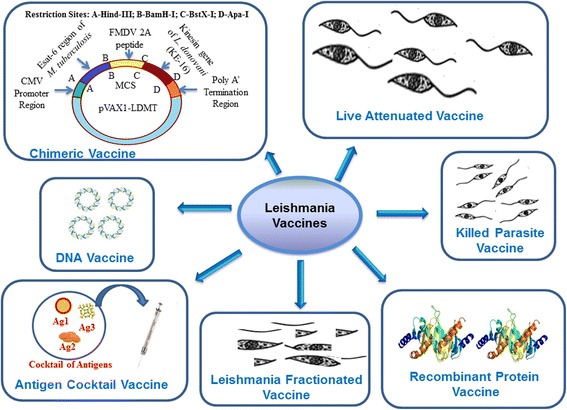
Leishmaniasis is a vector-borne disease caused by different species of protozoan parasites of the genus Leishmania. It is a major health problem yet neglected tropical diseases, with approximately 350 million people worldwide at risk and more than 1.5 million infections occurring each year. Leishmaniasis has different clinical manifestations, including visceral (VL or kala-azar), cutaneous (CL), mucocutaneous (MCL), diffuse cutaneous (DCL) and post kala-azar dermal leishmaniasis (PKDL). Currently, the only mean to treat and control leishmaniasis is by rational medications and vector control. However, the number of available drugs is limited and even these are either exorbitantly priced, have toxic side effects or prove ineffective due to the emergence of resistant strains. On the other hand, the vector control methods are not so efficient. Therefore, there is an urgent need for developing a safe, effective, and affordable vaccine for the prevention of leishmaniasis. Although in recent years a large body of researchers has concentrated their efforts on this issue, yet only three vaccine candidates have gone for clinical trial, until date. These are: (i) killed vaccine in Brazil for human immunotherapy; (ii) live attenuated vaccine for humans in Uzbekistan; and (iii) second-generation vaccine for dog prophylaxis in Brazil. Nevertheless, there are at least half a dozen vaccine candidates in the pipeline. One can expect that, in the near future, the understanding of the whole genome of Leishmania spp. will expand the vaccine discovery and strategies that may provide novel vaccines. The present review focuses on the development and the status of various vaccines and potential vaccine candidates against leishmaniasis.
Overview
The claims and statistics of this paper haven’t been checked yet.
Free: it reads the open-access text and checks the first 5 claims that cite a source we can check. Create a free account to check every claim.
Integrity signals
Registry
Cites
Statistics
Figures
Verification
Claims the paper makes
The claims and statistics of this paper haven’t been checked yet.
Free: it reads the open-access text and checks the first 5 claims that cite a source we can check. Create a free account to check every claim.
Claims other papers make about this one
Each is checked against this paper’s own text: does it say what the citing paper says it does?
The source backs part of the claim, not all of it — or backs it for a different population, condition or comparison.
In the citing paper
“Macrophages manage to kill some of the phagocytozed parasites but also constitute a replicative niche [287,288].”
From Functions of ROS in Macrophages and Antimicrobial Immunity (2021) · cites this paper as [288]
Experimental — accuracy not yet measured
Self-check
Percentages, sums and reported differences re-computed from the paper’s own numbers.
The self-check needs the paper’s full text.
Citations
Cites
Akira, S., & Takeda, K. (2004) · Nature reviews. Immunology · doi:10.1038/nri1391 · Cited by 8,312 · cited 1×
“major murine model, the absence of TLR2 led to an increased number of cutaneous lesions [37] and TLR2 and 3 were involved in the phagocytosis of L.”
BackgroundLeishmaniasis Worldwide and Global Estimates of Its Incidence
Alvar, J., Vélez, I. D., Bern, C., Herrero, M., Desjeux, P., Cano, J., Jannin, J., Boer, M. D., & the WHO Leishmaniasis Control Team (2012) · PLoS ONE · doi:10.1371/journal.pone.0035671 · Cited by 5,141 · cited 1×
“Approximately 12 million people are infected with a species of Leishmania at any given time point [1].”
BackgroundKorn, T., Bettelli, E., Oukka, M., & Kuchroo, V. K. (2009) · Annual Review of Immunology · doi:10.1146/annurev.immunol.021908.132710 · Cited by 4,873 · cited 2×
“It may be because these cells are involved in the recruitment, migration and activation of neutrophils [18].”
BackgroundCD4+CD25+ regulatory T cells control Leishmania major persistence and immunity
Belkaid, Y., Piccirillo, C. A., Mendez, S., Shevach, E. M., & Sacks, D. L. (2002) · Nature · doi:10.1038/nature01152 · Cited by 1,725 · cited 1×
“The presence of these cells may, however, precondition the skin for survival of Leishmania parasites and favour long-term parasite survival [27].”
BackgroundThe Inflammasome NLRs in Immunity, Inflammation, and Associated Diseases
Davis, B. K., Wen, H., & Ting, J. P.-Y. (2011) · Annual Review of Immunology · doi:10.1146/annurev-immunol-031210-101405 · Cited by 1,618 · cited 1×
“NLRs and inflammasomes are linked to several autoimmune and inflammatory diseases as well as infections [46].”
BackgroundIL-22 Increases the Innate Immunity of Tissues
Wolk, K., Kunz, S., Witte, E., Friedrich, M., Asadullah, K., & Sabat, R. (2004) · Immunity · doi:10.1016/j.immuni.2004.07.007 · Cited by 1,359 · cited 1×
“IL-22 is also produced by Th17 cells, and to a lesser extent by natural killer and Th1 cells [18], which are particularly involved in immunity in epithelial and mucosal levels [19].”
BackgroundThe Regulation of Immunity to Leishmania major
Reiner, S. L. (1995) · Annual Review of Immunology · doi:10.1146/annurev.immunol.13.1.151 · Cited by 1,297 · cited 1×
“However, current knowledge is mostly based on experimental animal models and cannot be extrapolated to humans or dogs [7].”
BackgroundLeishmaniasis: complexity at the host–pathogen interface
Kaye, P., & Scott, P. (2011) · Nature Reviews Microbiology · doi:10.1038/nrmicro2608 · Cited by 988 · cited 1×
“Since the immune defence against Leishmania infection and cure from disease involves adaptive and innate cellular immune responses, it is perceivable that immunity depends on pathogen-specific CD4+ and CD8+ T cells with regulatory as well as effector functions of phagocytic effector cells [116, 117].”
BackgroundFunction of Nod‐like receptors in microbial recognition and host defense
Franchi, L., Warner, N., Viani, K., & Nuñez, G. (2009) · Immunological Reviews · doi:10.1111/j.1600-065x.2008.00734.x · Cited by 903 · cited 1×
“NLRs cooperate with TLRs and regulate inflammatory and apoptotic response and play key roles in the regulation of innate immune response [45].”
BackgroundOrigin, homeostasis and function of Langerhans cells and other langerin-expressing dendritic cells
Merad, M., Ginhoux, F., & Collin, M. (2008) · Nature Reviews Immunology · doi:10.1038/nri2455 · Cited by 850 · cited 1×
“cialized type of dendritic cells (DC) only present in the skin and skin-draining lymph nodes [62].”
Background
Cited by
Items 101–200 of 214
Antinarelli, L. M. R., Glanzmann, N., Mendonça, D. V. C., Lage, D. P., Oliveira‐da‐Silva, J. A., Tavares, G. S. V., Carvalho, A. M. R. S., de Freitas, C. S., Martins, V. T., Duarte, M. C., et al. (2022) · Parasitology Research · doi:10.1007/s00436-022-07544-1 · Cited by 10
“In contrast, disease progression is related with the occurrence of polarized Th2-type response, which results in the production of anti-inflammatory cytokines, such as IL-4, IL-10 and IL-13, among others, which deactivate parasitized macrophages, contributing to the development of disease (Gollob et al. 2014; Srivasta…”
BackgroundCiccone, V., Diotallevi, A., Gómez-Benmansour, M., Maestrini, S., Mantellini, F., Mari, G., Galluzzi, L., Lucarini, S., & Favi, G. (2024) · RSC Advances · doi:10.1039/d4ra02790f · Cited by 9
Pance, A. (2021) · Vaccines · doi:10.3390/vaccines9020105 · Cited by 10
“Treatment options for this disease are limited and the available drugs are highly toxic, which together with domestic dogs being the main reservoir of the parasites, make the need for chemotherapy for both animals and humans an urgent matter [55,56].”
BackgroundMendonça, D. V. C., Tavares, G. S. V., Pereira, I. A. G., Oliveira‐da‐Silva, J. A., Ramos, F. F., Lage, D. P., Machado, A. S., Carvalho, L. M., Reis, T. A. R., Carvalho, A. M. R. S., et al. (2021) · Experimental Parasitology · doi:10.1016/j.exppara.2021.108205 · Cited by 9
Savar, N. S., Shengjuler, D., Doroudian, F., Vallet, T., Kain, A. M., Arashkia, A., Khamesipour, A., Lundstrom, K. H., Vignuzzi, M., & Niknam, H. M. (2022) · Parasitology International · doi:10.1016/j.parint.2022.102577 · Cited by 10
Doehl, J. S. P., Ashwin, H. M., Brown, N., Romano, A., Carmichael, S., Pitchford, J. W., & Kaye, P. M. (2021) · Frontiers in Immunology · doi:10.3389/fimmu.2021.795554 · Cited by 12
Lage, D. P., Martins, V. T., Vale, D. L., de Freitas, C. S., Pimenta, B. L., Moreira, G. J. L., Ramos, F. F., Pereira, I. A. G., Bandeira, R. S., de Jesus, M. M., et al. (2023) · Acta Tropica · doi:10.1016/j.actatropica.2023.106986 · Cited by 9
Silva, R. D. F. E., de Oliveira, B. C., da Silva, A. A., de Castro, M. C. A. B., Ferreira, L. F., Hernandes, M. Z., de Brito, M. E. F., Neto, O. P. D. M., Rezende, A. M., & Pereira, V. R. A. (2020) · Frontiers in Immunology · doi:10.3389/fimmu.2019.03145 · Cited by 9
“Moreover, one of the main challenges facing the development of a vaccine is the identification of the best type or set of antigens to correctly induce immunity against Leishmania, since traditional whole parasite vaccines have major safety concerns (13, 14).”
BackgroundImmuno-metabolic signaling in leishmaniasis: insights gained from mathematical modeling
Khandibharad, S., & Singh, S. (2023) · Bioinformatics Advances · doi:10.1093/bioadv/vbad125 · Cited by 8
Self-citationAbdoul‐Latif, F. M., Oumaskour, K., Abdallah, N., Ainane, A., Aboubaker, I. H., Mérito, A., Mohamed, H., & Ainane, T. (2024) · Pharmaceuticals · doi:10.3390/ph17040523 · Cited by 8
Zanganeh, E., Soudi, S., & Hosseini, A. Z. (2020) · PubMed Central · doi:10.22074/cellj.2020.6838 · Cited by 9
“Different vaccine generations have been developed based on the killed parasite, liveattenuated parasites, and DNA vaccine; however, they failed to be used in human vaccination because of their limitations, such as lesion development or long-lasting recovery (6, 7).”
BackgroundTargeting Kinetoplastid and Apicomplexan Thymidylate Biosynthesis as an Antiprotozoal Strategy
Valente, M., Vidal, A. E., & González‐Pacanowska, D. (2018) · Current Medicinal Chemistry · doi:10.2174/0929867325666180926154329 · Cited by 8
Perspectives on Leishmania Species and Stage-specific Adaptive Mechanisms
Subramanian, A., & Sarkar, R. R. (2018) · Trends in Parasitology · doi:10.1016/j.pt.2018.09.004 · Cited by 8
Zhang, J., Lv, T., Tan, S., LingQi, Y., Chi, Y., Chen, J., Fan, X., & Lu, X. (2025) · Parasites & Vectors · doi:10.1186/s13071-025-06756-5 · Cited by 7
Faridnia, R., Kalani, H., Hezarjaribi, H. Z., Denny, P. W., Rafiei, A., Fakhar, M., & Virgílio, S. (2020) · Microbial Pathogenesis · doi:10.1016/j.micpath.2020.104406 · Cited by 7
Flaih, M. H., Alwaily, E. R., Hafedh, A. A., & Hussein, K. R. (2024) · Infection and Chemotherapy · doi:10.3947/ic.2023.0073 · Cited by 7
“Only 30 of 500 species of the sandfly genus Phlebotomus have been implicated in the transmission of leishmaniasis [2–4].”
BackgroundAntitrypanosomal and Antileishmanial Activities
Alberti, A. S., Cerny, N., Bivona, A. E., & Cazorla, S. I. (2018) · Springer eBooks · doi:10.1007/978-3-319-78274-4_8 · Cited by 7
González, M. A. C., Gonçalves, A. A. M., Ottino, J., Leite, J. C., Resende, L. A., Melo-Júnior, O. A. D. O., Silveira, P., Cardoso, M. S., Fujiwara, R. T., Bueno, L. L., et al. (2023) · Vaccines · doi:10.3390/vaccines11010111 · Cited by 8
Imported cases of cutaneous leishmaniasis in Cuba, 2017: role of human movement
Monzote, L., Gonzalez, D. C., Blanco, O., Fraga, J., Capó, V. A., Herrera, A., & Montalvo, A. M. (2022) · Tropical Diseases Travel Medicine and Vaccines · doi:10.1186/s40794-022-00171-9 · Cited by 6
“nor vector control is effective in most of the settings with a predominant peridomiciliary transmission where these parasitoses are endemic [32, 33], which makes harder the task.”
BackgroundDirkx, L., Loyens, M., Acker, S. I. V., Bulté, D., Claes, M., Radwanska, M., Magez, S., & Caljon, G. (2024) · The FASEB Journal · doi:10.1096/fj.202400715r · Cited by 6
Anti-parasitic Antibodies from Phage Display
Goulart, L. R., Ribeiro, V. D. S., & Costa‐Cruz, J. M. (2017) · Advances in experimental medicine and biology · doi:10.1007/978-3-319-72077-7_8 · Cited by 7
de Vasconcelos, T. C. B., Bruno, S. F., de Miranda, L. H. M., Conceição‐Silva, F., Belo, V. S., & Figueiredo, F. B. (2019) · Ciência Rural · doi:10.1590/0103-8478cr20180984 · Cited by 7
Overview of Leishmaniasis with Special Emphasis on Kala-azar in South Asia
Collaborators, Chang, K. P., & Kolli, B. K. (2017) · Neglected tropical diseases · doi:10.1007/978-3-319-68493-2_1 · Cited by 8
Sirolimus enhances the protection achieved by a DNA vaccine against Leishmania infantum
Martínez-Flórez, A., Martori, C., Monteagudo, P. L., Rodríguez, F., Alberola, J., & Rodríguez, A. (2020) · Parasites & Vectors · doi:10.1186/s13071-020-04165-4 · Cited by 6
Lage, D. P., Machado, A. S., Vale, D. L., de Freitas, C. S., Linhares, F. P., Cardoso, J. M. D. O., Pereira, I. A. G., Ramos, F. F., Tavares, G. S. V., Ludolf, F., et al. (2022) · Cytokine · doi:10.1016/j.cyto.2022.155865 · Cited by 9
Assessment of knowledge and perceptions on leishmaniasis: An island-wide study in Sri Lanka
Dewasurendra, R., Silva, H., Samaranayake, N., Manamperi, N. H., de Silva, N., Karunanayake, P., Senarath, U., Senanayake, S., Zhou, G., & Karunaweera, N. D. (2022) · PLoS neglected tropical diseases · doi:10.1371/journal.pntd.0010821 · Cited by 6
“The situation is compounded by the absence of a vaccine [9].”
BackgroundSampaio, R. B., Fonseca, B. D. P. F. E., Bahulkar, A., & Szymanski, B. K. (2017) · Scientometrics · doi:10.1007/s11192-017-2346-6 · Cited by 6
Leishmania plasma membrane – general composition, structure and biological functions
Rios-Barros, L. V., Chiaradia, R. M., Serravite, A. M., Horta, M. F., & Castro‐Gomes, T. (2025) · Current topics in membranes · doi:10.1016/bs.ctm.2025.06.009 · Cited by 5
Yona, C. M., Dey, A. K., Moshiro, E., Lupala, A. S., & Macha, M. E. (2026) · Parasitologia · doi:10.3390/parasitologia6020016 · Cited by 7
“While vaccines for canine leishmaniasis exist, no prophylactic vaccines are available for human leishmaniasis, despite extensive research efforts and testing of clinically prepared vaccines in various human trials (Table 2) [13].”
Exploring hydrophilic 2,2-di(indol-3-yl)ethanamine derivatives against Leishmania infantum
Centanni, A., Diotallevi, A., Buffi, G., Olivieri, D., Santarém, N., Lehtinen, A. K., Yli‐Kauhaluoma, J. T., Cordeiro‐da‐Silva, A., Kiuru, P. S., Lucarini, S., et al. (2024) · PLoS ONE · doi:10.1371/journal.pone.0301901 · Cited by 5
“Currently, no valid vaccine against the disease is on the market [5].”
Dikhit, M. R., Pranav, A., Kumar, A., & Sen, A. (2025) · Acta Tropica · doi:10.1016/j.actatropica.2025.107600 · Cited by 5
Aunguldee, T., Gerdprasert, O., Tangteerawatana, P., Jariyapongskul, A., Leelayoova, S., & Wongsatayanon, B. T. (2021) · The Journal of Infection in Developing Countries · doi:10.3855/jidc.14472 · Cited by 5
Vaccine Designing Technology against Leishmaniasis: Current Challenges and Implication
Gupta, J., Menon, Y., Kumar, S., & Jain, C. K. (2024) · Current Drug Discovery Technologies · doi:10.2174/0115701638291767240513113400 · Cited by 5
Zacharova, M. K., Tulloch, L. B., Gould, E., Fraser, A. L., King, E. F. B., Menzies, S. K., Smith, T., & Florence, G. J. (2019) · European Journal of Organic Chemistry · doi:10.1002/ejoc.201900541 · Cited by 5
Fong, A. A. B., Pineda, V. J., Calzada, J. E., Laurenti, M. D., Passero, L. F. D., Beltrán, D., Chaves, L. F., Saldaña, A., & González, K. A. (2025) · Pathogens · doi:10.3390/pathogens14121263 · Cited by 4
“While TNF-α plays a key role in parasite killing, it is also implicated in tissue destruction during chronic inflammation [19,59,60].”
Review of host-directed immunotherapy and candidate agents against leishmaniasis
Tamir, M., Teketelew, B. B., Berta, D. M., Angelo, A. A., Mekuanint, A., Cherie, N., Mekonnen, G. G., Abere, A., & Eshetu, T. (2025) · Frontiers in Tropical Diseases · doi:10.3389/fitd.2025.1450908 · Cited by 4
Lafleur, A., Daffis, S., Mowbray, C. E., & Arana, B. A. (2022) · Interdisciplinary Research in Medical Sciences Specialty · doi:10.51847/3raukacxk8 · Cited by 4
Flanley, C. M., Ramalho-Ortigão, M., Coutinho-Abreu, I. V., Mukbel, R., Hanafi, H. A., El-Hossary, S. S., Fawaz, E. Y., Hoel, D. F., Bray, A. W., Stayback, G., et al. (2020) · PLoS neglected tropical diseases · doi:10.1371/journal.pntd.0007489 · Cited by 4
“All sand flies were collected from three natural populations and were subjected to similar analyses that we previously performed for PpSP15 [14] to ascertain those salivary proteins that demonstrate similar characteristics to PpSP15 as it has been extensively studied as a vaccine target [53].”
MethodNovel nanotechnology-based approaches in the treatment of leishmaniasis
Dasauni, K., Bisht, D., & Nailwal, T. K. (2021) · Elsevier eBooks · doi:10.1016/b978-0-12-822800-5.00005-6 · Cited by 6
Genotyping the causative agents of cutaneous leishmaniasis in Ahvaz southwest of Iran
Lorestani, R. Z., Arjmand, R., Saki, J., Jelowdar, A., & Salmanzadeh, S. (2020) · Journal of Parasitic Diseases · doi:10.1007/s12639-020-01198-5 · Cited by 4
Oliveira-Maciel, D., dos-Santos, J. S., Oliveira-Silva, G., de Mello, M. F., da Fonseca-Martins, A. M., Carneiro, M. P. D., Ramos, T. D., Firmino-Cruz, L., Gomes, D. C. O., Rossi‐Bergmann, B., et al. (2021) · Microorganisms · doi:10.3390/microorganisms9061272 · Cited by 4
Zamani, P., Alavizadeh, S. H., Fakhraee, F., Badiee, A., Jalali, S. A., Chavoshian, O., Khamesipour, A., Kheiri, M. T., Mahboudi, F., & Jaafari, M. R. (2021) · Journal of Drug Delivery Science and Technology · doi:10.1016/j.jddst.2021.102633 · Cited by 4
Chang, K. P., Reynolds, J. M., Liu, Y., & He, J. J. (2022) · Vaccines · doi:10.3390/vaccines10020248 · Cited by 5
Naz, S., Aroosh, A., Raza, N., Islam, A., Özbel, Y., Töz, S. O., Ahmed, H., & Waseem, S. (2022) · Acta Tropica · doi:10.1016/j.actatropica.2022.106659 · Cited by 4
Kushwaha, V., & Capalash, N. (2023) · Acta Tropica · doi:10.1016/j.actatropica.2023.106867 · Cited by 4
Lage, D. P., Vale, D. L., Maia, F. A. G., Martins, V. T., Silva, M. G. P., Galvani, N. C., Cardoso, M. D. M., Moreira, G. J. L., Sombrio, E. M., de Freitas, C. S., et al. (2024) · Parasitology · doi:10.1017/s0031182024001240 · Cited by 3
“(2022), and a human vaccine still does not exist (Srivastava et al ., 2016; Figure 4.”
Gondal, H. Y., Nisar, M., & Choudhary, M. I. (2018) · Current Bioactive Compounds · doi:10.2174/1573407214666180516101031 · Cited by 3
Ramos, F. F., Tavares, G. S. V., Ludolf, F., Machado, A. S., Santos, T. T. O., Gonçalves, I. A. P., Dias, A. C. S., Alves, P. T., Fraga, V. G., Bandeira, R. S., et al. (2021) · Parasitology · doi:10.1017/s0031182021001505 · Cited by 3
Review of Molecular Approaches in Leishmaniasis Vaccines: Implications and Restrictions
Bafghi, A. F., Rezaee, E., Ahmadi, S., Gholamrezaei, M., & Firouzeh, N. (2022) · International Journal of Infection · doi:10.5812/iji-121894 · Cited by 3
“Although there are different approaches to designing vaccines against leishmaniasis (Figure 4) (35), molecular approaches are investigated in this review.”
BackgroundBoelaert, M., Alves, F. P., & Sundar, S. (2023) · Elsevier eBooks · doi:10.1016/b978-0-7020-7959-7.00053-1 · Cited by 3
Fadaie, M., Shahmoradi, Z., & Khanahmad, H. (2024) · Research in Pharmaceutical Sciences · doi:10.4103/rps.rps_145_24 · Cited by 3
“Ongoing research and novel techniques are crucial for successfully overcoming the hurdles in leishmania vaccine development, such as the complicated life cycle of the parasite and the need for a well-balanced immune response (40,41).”
Drug Repurposing in Search of Anti-Infectives: Need of the Hour in the Multidrug Resistance Era!
Sahu, N. U., Shah, C. P., Machhar, J. S., & Kharkar, P. S. (2019) · Elsevier eBooks · doi:10.1016/b978-0-12-816125-8.00014-6 · Cited by 4
Diagnostic techniques for visceral leishmaniasis: An overview of methods used in East Africa
Orucho, V. O., Gupta, A. R., Masai, R. J., Ondari, E. N., Singh, O. P., Nyagaka, B., & Selvapandiyan, A. (2024) · Diagnostic Microbiology and Infectious Disease · doi:10.1016/j.diagmicrobio.2024.116655 · Cited by 2
Buono, A., Diotallevi, A., Maestrini, S., Verboni, M., Kiuru, P. S., Galluzzi, L., Duranti, A., Olivieri, D., & Lucarini, S. (2025) · Chemistry - A European Journal · doi:10.1002/chem.202500637 · Cited by 2
de Jesus, M. M., Lage, D. P., Pimenta, B. L., Moreira, G. J. L., Pereira, I. A. G., Câmara, R. S. B., Silva, A. L. A., Tavares, G. S. V., Falcão, K. O. M., Dias, S. S. G., et al. (2025) · Pathogens · doi:10.3390/pathogens14121202 · Cited by 2
“Although effective, miltefosine is not recommended for pregnant women [12] and resistant strains have been identified in India and Brazil [13].”
Özavci, H., & Kaplan, M. (2019) · TURKISH JOURNAL OF MEDICAL SCIENCES · doi:10.3906/sag-1808-98 · Cited by 2
“infantum acidic ribosomal protein P0 (LiPO), proteophosphoglycan (papLe22), LACK, LeIF, TSA and LmSIP-1 proteins (11, 28).”
BackgroundStem cells therapy research for the treatment of parasitic infections
Elsawey, A. M., Etewa, S. E., & Aboulfotouh, N. I. (2022) · Parasitologists United Journal · doi:10.21608/puj.2022.156355.1185 · Cited by 2
Heat Shock Proteins as Emerging Therapeutic and Vaccine Targets Against Leishmaniasis
Yadav, S., Anand, A., & Goyal, N. (2023) · Springer eBooks · doi:10.1007/978-981-99-6999-9_10 · Cited by 2
Mahapatra, B., Singh, A., Banerjee, A., Sirohi, S., Singh, S., Dubey, V. K., & Singh, R. K. (2024) · Vaccine · doi:10.1016/j.vaccine.2024.126373 · Cited by 2
Self-citationSamaranayake, N. (2020) · Elsevier eBooks · doi:10.1016/b978-0-12-821202-8.00002-5 · Cited by 2
Nemade, S. V., & Shinde, K. J. (2021) · Springer eBooks · doi:10.1007/978-981-16-4047-6_21 · Cited by 2
Singh, R. P., Anand, A., Mahapatra, B., Saini, S., Singh, A., Singh, A., Kumar, V., DAS, P., Singh, S., & Singh, R. (2023) · Molecular Immunology · doi:10.1016/j.molimm.2023.09.014 · Cited by 2
Self-citationDevelopment of a multi-epitope peptide vaccine against human leishmaniases
Pissarra, J. (2019) · theses.fr (ABES) · doi:10.70675/61ab1ee1z0ff4z42cezb1c0zd2dcaf3b1eec · Cited by 3
Visceral and Tegumentary Leishmaniasis
Osuolale, O. (2023) · Springer eBooks · doi:10.1007/978-3-031-24355-4_11 · Cited by 1
Adams, I., Kwapong, A. A., Boafo, E. A., Twum, E., & Amponsah, S. K. (2024) · Wiley eBooks · doi:10.1002/9781394188741.ch22 · Cited by 1
Çolak, N. G. (2025) · Studies in natural products chemistry · doi:10.1016/b978-0-443-23752-2.00011-6 · Cited by 1
Genetic Manipulation Tools in Leishmania: From CRISPR/Cas9 to Vaccine Strategies for Disease Control
GÜNDOĞDU, M., & İşlek, Z. (2025) · Acta Parasitologica · doi:10.1007/s11686-025-01161-5 · Cited by 1
“This genetic material is absorbed by host cells, causing the host to produce these parasite proteins, which prompts the immune system of the host to identify and build a defense against the Leishmania infection [ 67].”
Thakur, S., Kaur, S., Kaushik, D., Kumar, K., Salunke, D. B., & Kaur, S. (2026) · International Journal of Biological Macromolecules · doi:10.1016/j.ijbiomac.2026.150931 · Cited by 1
Orphan Medications: An Innovative and Promising Approach against Leishmaniasis
Choudhari, V., Satpute, S., & Pai, K. R. (2026) · Current Microbiology · doi:10.1007/s00284-026-04765-w · Cited by 1
Vaccinia Virus-Derived Vectors in Leishmaniases Vaccine Development
de Oliveira, D. M., Campos, J. M., Silva, S. D. O., & Melo, M. N. (2019) · IntechOpen eBooks · doi:10.5772/intechopen.85302 · Cited by 1
Vaccine Design, Nanoparticle Vaccines and Biomaterial Applications
Misra, P., & Singh, S. (2020) · Springer eBooks · doi:10.1007/978-981-15-3350-1_1 · Cited by 1
Self-citationReview of Development of Live Vaccines against Leishmaniasis
Haddad, M. H. F., Lomei, J., Shokri, A., Habibpour, H., Rezvan, H., Nourian, A., & Mahmoudi, M. R. (2021) · Journal of Child Science · doi:10.1055/s-0041-1731336 · Cited by 1
Global Remodeling of Host Proteome in Response to Leishmania Infection
Reyaz, E., Puri, N., & Selvapandiyan, A. (2023) · ACS Infectious Diseases · doi:10.1021/acsinfecdis.3c00492 · Cited by 2
Soyer, T. G., Câmara, R. S. B., Pereira, I. A. G., Ramos, F. F., de Jesus, M. M., Ludolf, F., Costa, G. D. P., Lage, D. P., de Freitas, C. S., Vale, D. L., et al. (2024) · Parasite Immunology · doi:10.1111/pim.13037 · Cited by 1
“In addition, diagnosis is hampered by the variable sensitivity and specificity of the tests, and there is no human vaccine available [24, 25].”
BackgroundBanesh, S., Gupta, N., Reddy, C. V., N, M. U. V., Patil, N., Uddhavesh, S., & Saudagar, P. (2024) · Heliyon · doi:10.1016/j.heliyon.2024.e31306 · Cited by 1
“The development of an effective vaccine against leishmaniasis has been a challenge due to the complex biology of the parasite and the diverse clinical manifestations of the disease [51].”
Larijani, A., Kia-Karimi, A., Rahmati, M., & Derakhshan, R. (2024) · Journal of visualized medicine. · doi:10.30699/jovm.006.e0109 · Cited by 1
Investigating macrophage polarization in cutaneous leishmaniasis
AlMoshary, M. (2026) · Journal of Vector Borne Diseases · doi:10.4103/jvbd.jvbd_174_24 · Cited by 1
Santos, S. D. S. (2017) · Digital Library of Theses and Dissertations (Universidade de São Paulo) · doi:10.11606/t.9.2017.tde-07122016-084358
MOLECULAR DOCKING STUDIES OF PHYTOCHEMICALS AGAINST LEISHMANIA DONOVANI TRYPANOTHIONE REDUCTASE
Kothandan, R., Sivaramakrishnan, M., Sharavanan, V. J., Sivasubramanian, R., & Rapheal, V. S. (2018) · International Research Journal of Pharmacy · doi:10.7897/2230-8407.0919
Novos derivados da iminodibenzila para ação anti-leishmânia
Arndt, A. (2017) · Digital Library of Theses and Dissertations (Universidade de São Paulo) · doi:10.11606/t.46.2017.tde-21062017-075742
Antiviral Nucleoside Inhibitors of Leishmania RNA Virus 1: Discovery and Mechanism
Robinson, J. I. (2017) · Open Scholarship Institutional Repository (Washington University in St. Louis) · doi:10.7936/k7930sk6 · Cited by 1
A Laboratory Strain of Leishmania major: Protective Effects on Experimental Leishmaniasis
Namavari, M., Namazi, F., Asadi-Manesh, R., Hosseini, M. H., Nazıfı, S., & Asadpour, M. (2019) · Acta Parasitologica · doi:10.2478/s11686-019-00068-2
Ciências da saúde: ensino, formação e pesquisa
Santos, Y. D. S. (2021) · Amplla Editora eBooks · doi:10.51859/amplla.cse238.1121-0
Development of a successful vaccine for leishmaniasis: possibilities and challenges
Keerti, K., & Kumar, V. (2021) · Elsevier eBooks · doi:10.1016/b978-0-12-822800-5.00006-8
The endophytic fungus Stemphylium globuliferum – secondary metabolites and biological activities
Schrör, J.-P. (2018) · bonndoc (University of Bonn) · Cited by 2
van Schalkwyk, D. A. (2021) · Wiley eBooks · doi:10.1002/9780470015902.a0029350
ALTERAÇÕES MICROESTRUTURAIS EM ÓRGÃOS ALVO DA INFECÇÃO PORL. INFANTUM
Fonseca, C. M. B., & JÚNIOR, A. M. C. (2022) · Editora Pasteur eBooks · doi:10.29327/558209.3-12
Moore, C. M., Campos, A., & Altadill, A. (2019) · Radiopaedia.org · doi:10.53347/rid-70483
Ahmed, T. S., Abdallah, E. I., Wdidi, S., Hamouda, D., Muddathir, A. R. M., Omer, A. E., & Eltayeb, L. B. (2022) · International Journal Of Pharmaceutical Research And Allied Sciences · doi:10.51847/4vhqthzxyb
Essentials in Leishmaniasis Elimination
Badhwar, S., Selvapandiyan, A., & Puri, N. (2023) · Springer eBooks · doi:10.1007/978-981-99-6999-9_3 · Cited by 1
Atypical Leishmania donovani Infections in Sri Lanka: Challenges for Control and Elimination
Karunaweera, N. D., & Dewasurendra, R. (2023) · Springer eBooks · doi:10.1007/978-981-99-6999-9_8
Revolutionizing Parasitic Disease Control: The Role of mRNA Vaccines
(2024) · International Journal of Veterinary Science · doi:10.47278/book.cam/2024.141
A Review of the Progress in the Development of Leishmaniasis Vaccines
Khaghanzadeh, N., Javadi, F., & Samiei, A. (2024) · مجله دانشگاه علوم پزشکی اردبیل · doi:10.61186/jarums.24.2.129
Lage, D. P., Vale, D. L., Silva, M. G. P., Martins, V. T., Gonçalves, A. A. M., Silva, K. A., Moreira, G. J. L., Olegário, R. D., Rizzatti, F. C., de Freitas, C. S., et al. (2025) · Cellular Immunology · doi:10.1016/j.cellimm.2025.104949
KRISHNAN, S. (2025) · SSRN Electronic Journal · doi:10.2139/ssrn.5417566
Abdulqader, A., Abdulsada, F. M., Al-Dulemey, M. Q., & Shamsir, M. S. (2025) · Acta Tropica · doi:10.1016/j.actatropica.2025.107949
Bridging the gap between innate and adaptive immunity in dog leishmaniasis
BOLAS, A. S. V. (2022) · Portuguese National Funding Agency for Science, Research and Technology (RCAAP Project by FCT)
Cellular dynamics of immune evasion during Leishmania major infection
Zayats, R. (2023) · Mspace (University of Manitoba)
Control de la leishmaniosis canina: evaluación de nuevas alternativas profilácticas y terapéuticas
Miret Riquelmes, J. A. (2021) · Library Open Repository (Universidad Complutense Madrid) · Cited by 1
Metadata
- Authors
- Srivastava, S., Shankar, P., Mishra, J., & Singh, S.
- Affiliations
- All India Institute of Medical Sciences (IN)
- Corresponding author
- Singh, Sarman
- Venue
- Parasites & Vectors
- Published
- 2016-05-12
- Volume
- 9
- Issue
- 1
- Pages
- 277-277
- ISSN
- 1756-3305 (ISSN-L)
- PMC
- PMC4866332
- OpenAlex
- W2385321340
- Cited by
- 201
- References
- 139
- Citations by year
- 2026: 10 · 2025: 15 · 2024: 18 · 2023: 15 · 2022: 22 · 2021: 34 · 2020: 20 · 2019: 22 · 2018: 18 · 2017: 25 · 2016: 2
- FWCI
- 3.31
- Type
- journal article
- Language
- en
- Open access
- gold
- doi.org
- Licence
- cc-by
- Locations
- Parasites & Vectors (publishedVersion, cc-by)
- PubMed Central (publishedVersion, cc-by)
- PubMed (publishedVersion)
- Funders
- European Commission, FP7 (Grant No. 602773 (HEALTH-F3-2013-602773) under the category FP7-Health-2013-Innovation)
- Topics
- Health Sciences › Medicine › Public Health, Environmental and Occupational Health › Research on Leishmaniasis Studies
- Health Sciences › Medicine › Infectious Diseases › Leprosy Research and Treatment
- Health Sciences › Medicine › Infectious Diseases › Brucella: diagnosis, epidemiology, treatment
- Keywords
- leishmaniasis, Leishmania, vaccine development, vaccine candidate, neglected tropical diseases, visceral leishmaniasis, cutaneous leishmaniasis, mucocutaneous leishmaniasis, diffuse cutaneous leishmaniasis, post-kala-azar dermal leishmaniasis, live attenuated vaccine, inactivated vaccine, whole genome sequencing, drug resistance
- MeSH terms
- Animals, Dog Diseases, Dogs, Humans, Leishmania, Leishmaniasis, Vaccines, Attenuated, Vaccines, Inactivated, Leishmaniasis Vaccines
About these checks
Registry, retraction, Cites and statistics results are computed, not judged, with one exception: a printed reference that no index lists is read once by a model before it counts as a citation error. Claims are extracted by a model and kept only when their quote appears verbatim in the text; each cited source is then checked, with a model’s help, for whether it says what the claim relies on. Those verdicts can be wrong — read the claim’s quote and the cited source before relying on one.
Statistics and arithmetic are recomputed, not judged.
Confidence bands are shown only for fields calibrated on our annotated test set. None is calibrated yet, so no band is shown.
What counts as a claim ›How we measure confidence ›How we check this ›
Are you an author, or do you see a problem with this page? Request a review
Data sources
Bibliographic data: Semantic Scholar, OpenAlex, Crossref.
Contains information from the Semantic Scholar Academic Graph Datasets, made available under the ODC Attribution License (ODC-BY 1.0).
Semantic Scholar’s data is described in: Kinney, R., et al. (2023). The Semantic Scholar Open Data Platform. arXiv:2301.10140.
