

The DOI matches its Crossref record; 136 of the 136 references it cites were found in a registry or an index.
Fourteen anti-tick vaccine targets are variably conserved in cattle fever ticks
Open accessPublished version of a preprint
Abstract
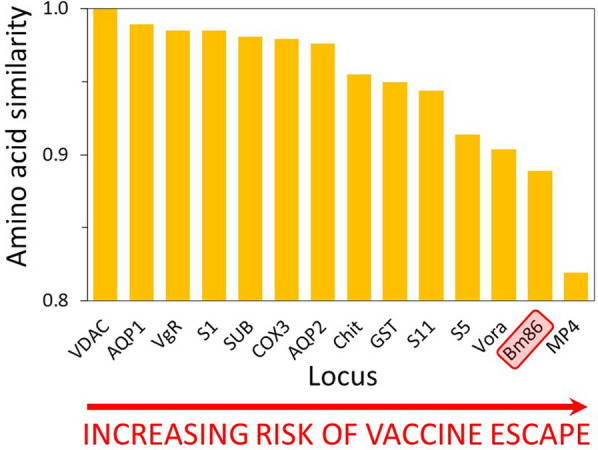
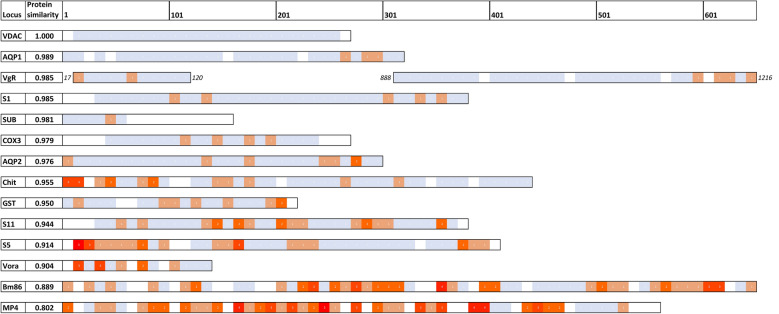
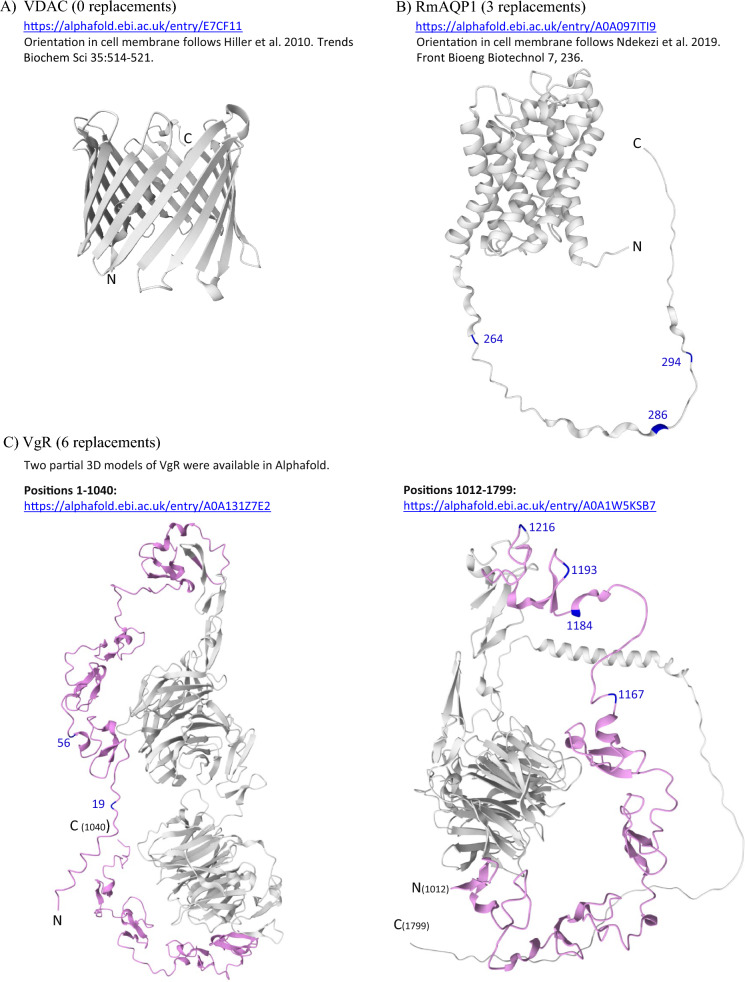
Background: Rhipicephalus ( Boophilus ) microplus causes significant cattle production losses worldwide because it transmits Babesia bovis and B. bigemina , the causative agents of bovine babesiosis. Control of these ticks has primarily relied on treatment of cattle with chemical acaricides, but frequent use, exacerbated by the one-host lifecycle of these ticks, has led to high-level resistance to multiple classes of acaricides. Consequently, new approaches for control, such as anti-tick vaccines, are critically important. Key to this approach is targeting highly conserved antigenic epitopes to reduce the risk of vaccine escape in heterologous tick populations. Methods: We evaluated amino acid conservation within 14 tick proteins across 167 R. microplus collected from geographically diverse locations in the Americas and Pakistan using polymerase chain reaction (PCR) amplicon sequencing and in silico translation of exons. Results: We found that amino acid conservation varied considerably across these proteins. Only the voltage-dependent anion channel (VDAC) was fully conserved in all R. microplus samples (protein similarity 1.0). Four other proteins were highly conserved: the aquaporin RmAQP1 (0.989), vitellogenin receptor (0.985), serpin-1 (0.985), and subolesin (0.981). In contrast, the glycoprotein Bm86 was one of the least conserved (0.889). The Bm86 sequence used in the original Australian TickGARD vaccine carried many amino acid replacements compared with the R. microplus populations examined here, supporting the hypothesis that this vaccine target is not optimal for use in the Americas. By mapping amino acid replacements onto predicted three-dimensional (3D) protein models, we also identified amino acid changes within several small-peptide vaccines targeting portions of the aquaporin RmAQP2, chitinase, and Bm86. Conclusions: These findings emphasize the importance of thoroughly analyzing protein variation within anti-tick vaccine targets across diverse tick populations before selecting candidate vaccine antigens. When considering protein conservation alone, RmAQP1, vitellogenin receptor, serpin-1, subolesin, and especially VDAC rank as high-priority anti-tick vaccine candidates for use in the Americas and perhaps globally.
Overview
The claims and statistics of this paper haven’t been checked yet.
Run the check — free, no account needed. It reads the open-access text and checks the sources it cites.
Integrity signals
Registry
Cites
Statistics
Figures
Verification
Claims the paper makes
The claims and statistics of this paper haven’t been checked yet.
Run the check — free, no account needed. It reads the open-access text and checks the sources it cites.
Self-check
Percentages, sums and reported differences re-computed from the paper’s own numbers.
The self-check needs the paper’s full text.
Citations
Cites
Highly accurate protein structure prediction with AlphaFold
Jumper, J., Evans, R., Pritzel, A., Green, T., Figurnov, M., Ronneberger, O., Tunyasuvunakool, K., Bates, R., Žídek, A., Potapenko, A., et al. (2021) · Nature · doi:10.1038/s41586-021-03819-2 · Cited by 43,764
Varadi, M., Anyango, S., Deshpande, M., Nair, S., Natassia, C., Yordanova, G., Yuan, D., Stroe, O., Wood, G., Laydon, A., et al. (2022) · Nucleic Acids Research · doi:10.1093/nar/gkab1061 · Cited by 7,850
The global importance of ticks
JONGEJAN, F., & UILENBERG, G. (2004) · Parasitology · doi:10.1017/s0031182004005967 · Cited by 2,091
Statistical methods for detecting molecular adaptation
Yang, Z., & Bielawski, J. P. (2000) · Trends in Ecology & Evolution · doi:10.1016/s0169-5347(00)01994-7 · Cited by 1,788
Overview: Ticks as vectors of pathogens that cause disease in humans and animals
Fuente, J. D. L. (2008) · Frontiers in Bioscience · doi:10.2741/3200 · Cited by 934
Bock, R. E., Jackson, L. A., de VOS, A., et al. (2004) · Parasitology · doi:10.1017/s0031182004005190 · Cited by 895
Accumulation of Yolk Proteins in Insect Oocytes
Raikhel, A. S., & Dhadialla, T. S. (1992) · Annual Review of Entomology · doi:10.1146/annurev.en.37.010192.001245 · Cited by 742
Willadsen, P. C., Riding, G. A., McKENNA, R. V., KEMP, D. H., Tellam, R. L., Nielsen, J. N., Lahnstein, J., Cobon, G. S., & Gough, J. M. (1989) · The Journal of Immunology · doi:10.4049/jimmunol.143.4.1346 · Cited by 395
Trager, W. (1939) · Journal of Parasitology · doi:10.2307/3272160 · Cited by 392
A ten-year review of commercial vaccine performance for control of tick infestations on cattle
de la Fuente, J., Almazán, C., Canales, M., de la Lastra, J. M. P., Kocan, K. M., & Willadsen, P. C. (2007) · Animal Health Research Reviews · doi:10.1017/s1466252307001193 · Cited by 390
Research works printed but not linked: 5
- Wikel SK, Allen JR. Immunological basis of host resistance to ticks. Physiology of ticks. Amsterdam: Elsevier; 1982. p. 169–96.
- Cobon G, Hungerford J, Woodrow M, Smith D, Willadsen P. Vaccination against Boophilus microplus: the Australian field experience. In: Fuente JDL, editor. Recombinant vaccines for the control of cattle tick. La Habana: Elfos Scientiae; 1995. p. 163–76.
- Martínez-Maza NT, Hernández-Ortiz R, Valdez-Espinoza UM, Castro-Saines E, Aguilar-Díaz H, Lagunes-Quintanilla R. Molecular analysis of a polypeptide of the RmS-17 protein for the development of a vaccine against Rhipicephalus microplus ticks in Mexico. Ecosistemas y recursos agropecuarios. 2020;7:e2537.
- Hall TA. BioEdit: a user-friendly biological sequence alignment editor and analysis program for Widows 95/98/NT. Nucleic Acids Symp Ser. 1999;41:95–8.
- Freeman JM, Davey RB, Kappmeyer LS, Kammlah DM, Olafson PU. Bm86 midgut protein sequence variation in South Texas cattle fever ticks. Parasit Vectors. 2010;3:101. · DOI
Metadata
- Authors
- Busch, J. D., Stone, N. E., Pemberton, G. L., Roberts, M. L., Turner, R. E., Thornton, N. B., Sahl, J. W., Lemmer, D., Buckmeier, G., Davis, S. K., Guerrero-Solorio, R. I., Karim, S., Klafke, G., Thomas, D. B., Olafson, P. U., Ueti, M., Mosqueda, J., Scoles, G. A., & Wagner, D. M.
- Affiliations
- Northern Arizona University (US)
- Translational Genomics Research Institute (US)
- Agricultural Research Service (US)
- Washington State University (US)
- Autonomous University of Queretaro (MX)
- University of Southern Mississippi (US)
- Corresponding author
- Busch, Joseph D.
- ORCID
- Venue
- Parasites & Vectors
- Published
- 2025-04-15
- Volume
- 18
- Issue
- 1
- Pages
- 140-140
- ISSN
- 1756-3305 (ISSN-L)
- PMC
- PMC12001435
- OpenAlex
- W4409445452
- Cited by
- 4
- References
- 136
- Citations by year
- 2026: 2 · 2025: 2
- FWCI
- 3.57
- Type
- journal article
- Language
- en
- Open access
- gold
- doi.org
- Licence
- cc-by
- creativecommons.org/licenses/by/4.0 (tdm)
- creativecommons.org/licenses/by/4.0 (vor)
- Locations
- Parasites & Vectors (publishedVersion, cc-by)
- Research Square (acceptedVersion, cc-by)
- PubMed Central (publishedVersion, cc-by)
- PubMed (publishedVersion)
- Aquila Digital Community (University of Southern Mississippi) (submittedVersion)
- DOAJ (DOAJ: Directory of Open Access Journals) (submittedVersion, cc-by-sa)
- Funders
- USDA-NIFA-AFRI (2018-67015-28301)
- USDA-APHIS-VS (AP20VSSPRS00C117)
- USDA-ARS (NACA 2021 58-2090-1-037)
- National Institute of Food and Agriculture (2015-67015-23047)
- Northern Arizona University (Hooper Undergraduate Research Award (HURA) to R. E. Turner)
- US Department of State Pakistan-US Science and Technology Cooperation Program Award (PGA-P21049)
- Topics
- Life Sciences › Immunology and Microbiology › Parasitology › Vector-borne infectious diseases
- Life Sciences › Biochemistry, Genetics and Molecular Biology › Molecular Biology › vaccines and immunoinformatics approaches
- Life Sciences › Agricultural and Biological Sciences › Ecology, Evolution, Behavior and Systematics › Study of Mite Species
- Keywords
- Rhipicephalus microplus, cattle ticks, tick vaccine, amino acid sequence variation, voltage-dependent anion channel, vitellogenin receptor, subolesin, vaccine escape, bovine babesiosis, tick acaricide resistance, vaccine antigen selection
- MeSH terms
- Americas, Amino Acid Sequence, Animals, Epitopes, Babesiosis, Cattle, Cattle Diseases, Pakistan, Tick Infestations, Vaccines, Conserved Sequence, Rhipicephalus, Arthropod Proteins
About these checks
Registry, retraction, Cites and statistics results are computed, not judged, with one exception: a printed reference that no index lists is read once by a model before it counts as a citation error. Claims are extracted by a model and kept only when their quote appears verbatim in the text; each cited source is then checked, with a model’s help, for whether it says what the claim relies on. Those verdicts can be wrong — read the claim’s quote and the cited source before relying on one.
Statistics and arithmetic are recomputed, not judged.
Confidence bands are shown only for fields calibrated on our annotated test set. None is calibrated yet, so no band is shown.
What counts as a claim ›How we measure confidence ›How we check this ›
Are you an author, or do you see a problem with this page? Request a review
How to cite
Cite CoChat for the checks on this page, and the paper for its own findings.
- This page
- CoChat. (2026). Citation check: Fourteen anti-tick vaccine targets are variably conserved in cattle fever ticks. https://app.cochat.ai/papers/10.1186/s13071-025-06683-5
- The paper
- Busch, J. D., Stone, N. E., Pemberton, G. L., Roberts, M. L., Turner, R. E., Thornton, N. B., Sahl, J. W., Lemmer, D., Buckmeier, G., Davis, S. K., Guerrero-Solorio, R. I., Karim, S., Klafke, G., Thomas, D. B., Olafson, P. U., Ueti, M., Mosqueda, J., Scoles, G. A., & Wagner, D. M. (2025). Fourteen anti-tick vaccine targets are variably conserved in cattle fever ticks. Parasites & Vectors. https://doi.org/10.1186/s13071-025-06683-5
Data sources
Bibliographic data: Semantic Scholar, OpenAlex, Crossref.
Contains information from the Semantic Scholar Academic Graph Datasets, made available under the ODC Attribution License (ODC-BY 1.0).
Semantic Scholar’s data is described in: Kinney, R., et al. (2023). The Semantic Scholar Open Data Platform. arXiv:2301.10140.
